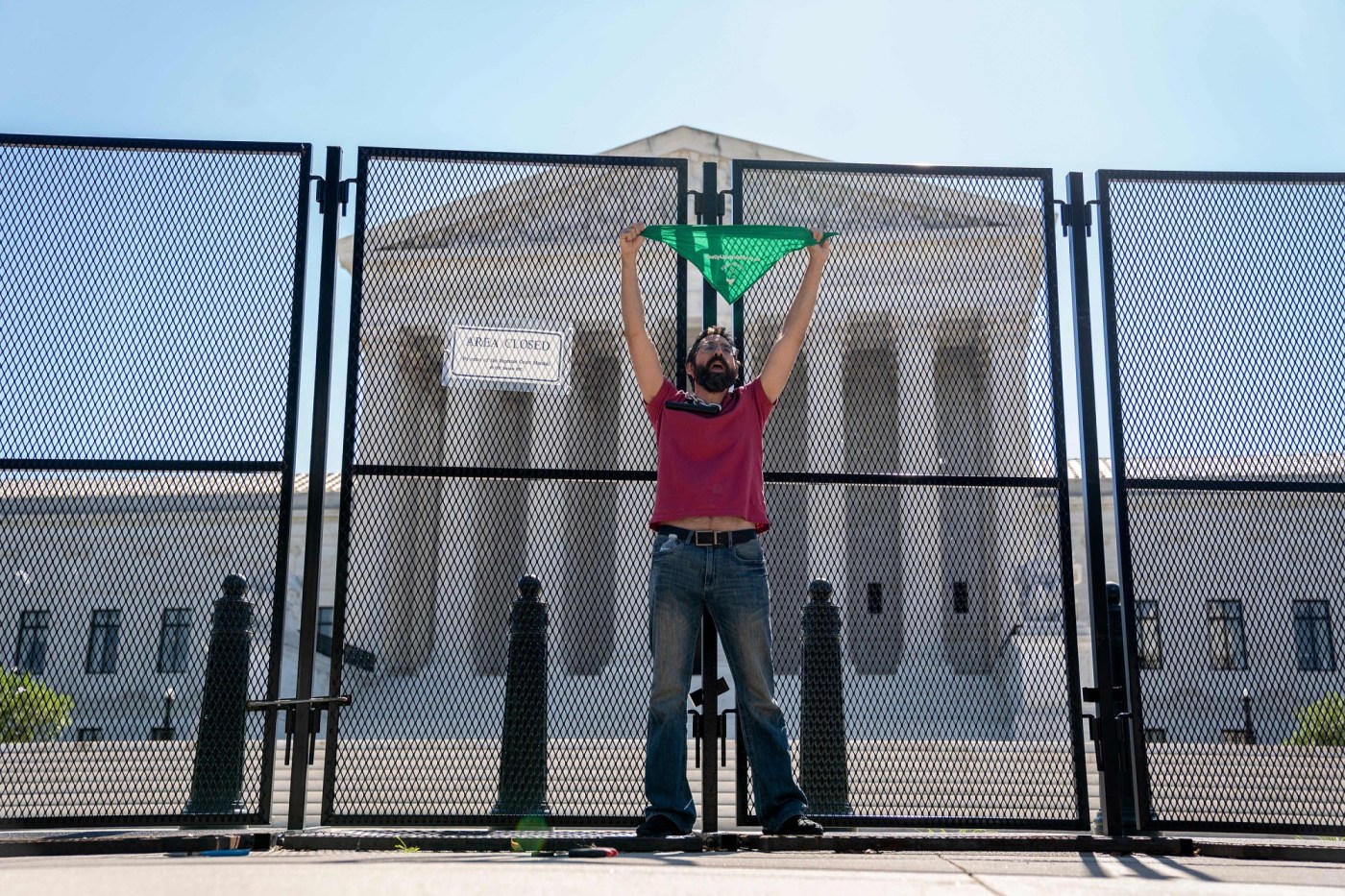
Doctors saw younger men seeking vasectomies after Roe v. Wade was overturned

posted in: News | 0

By Emily Alpert Reyes, Los Angeles Times

Kori Thompson had long wrestled with the idea of having a child.

The 24-year-old worried about the world a kid would face as climate change overtook the globe, fearing the environmental devastation and economic strain that could follow. He had been thinking about getting a vasectomy ever since he learned about the sterilization procedure from a television show.

But “the thing that actually triggered it was the court decision,” Thompson said.

After the Supreme Court overturned Roe v. Wade nearly two years ago, paving the way for states to usher in new restrictions on abortion, doctors started seeing more young adults seeking vasectomies or getting their tubes tied, emerging research has found.

An analysis by University of Utah researchers, released as an abstract in the Journal of Urology, found that after Dobbs v. Jackson Women’s Health Organization, a rising share of vasectomy patients were under the age of 30.

Related Articles

Health |


Partner talks in their sleep? Here’s how to slumber soundly

Health |


FDA said it never inspected dental lab that made controversial AGGA device

Health |


Their first baby came with medical debt. These parents won’t have another

Health |


McDonald’s MVP Alice Kane marks 35 years at Stillwater restaurant

Health |


Do zinc products really help shorten a cold? It’s hard to say

That percentage went from 6.2% to 9.8% after the Supreme Court decision, based on their analysis of a national database that includes hundreds of millions of patients.

Among the young patients who pursued the procedure is Thompson, who decided to get a vasectomy in the aftermath of the court ruling. In Georgia where he lives, abortion is illegal roughly six weeks into a pregnancy — a point before some people may learn that they are pregnant.

“If it’s effectively illegal,” Thompson said, “then I felt that this was necessary.” His girlfriend also disliked the effects of hormonal birth control, “so now I’ve decided to go on permanent birth control. It’s way easier.”

The University of Utah researchers found that before the Supreme Court ruling, vasectomy rates were consistently higher in states categorized as “hostile” or “illegal” for abortion by the Center for Reproductive Rights, compared to states that were not as restrictive. The same was true after the ruling.

Yet researchers also found an overall uptick in vasectomy rates after the Dobbs decision — both in states where abortion is heavily restricted and those where it is not.

In California, where state leaders have vowed to protect abortion rights, the rate of men getting vasectomies rose after the court decision, from roughly 7 to 13 per 100,000 potential patients, the Utah team found.

“We’re just seeing an overall increase in vasectomies — regardless of political climate” in each state, said Dr. Jessica Schardein, a urologist at the University of Utah. Schardein said the Supreme Court ruling and increased marketing for vasectomies may have gotten more people thinking about the procedure.

“People in general, even if they don’t have a uterus, are taking responsibility for their reproductive health,” Schardein said.

Her team also examined tubal sterilizations — a medical procedure often called “getting your tubes tied,” performed on the fallopian tubes connected to the uterus — and found that after the court decision, there was an increase in the percentage of patients ages 18 to 30 among those undergoing the procedure.

“People in general, even if they don’t have a uterus, are taking responsibility for their reproductive health.” —Dr. Jessica Schardein, University of Utah urologist 

In Riverside County, Jacob Snow decided to get a vasectomy after the birth of his third child, concluding it was a safer option than his wife had for sterilization. “There’s no reason why all the blame and stress and trying to stop a pregnancy should be placed on the female when I can stop it at my end,” the 28-year-old said.

Even though Snow was already a parent, the doctor balked because of his age, he said. “They said I might change my mind in the future,” Snow recalled. “They flat out just refused.”

Vasectomies are intended to be permanent. The surgery may be able to be reversed with other procedures, but physicians caution that doing so is not a guaranteed option.

Snow ultimately found another doctor to do the procedure. Besides the pushback from the first physician, Snow said some men have been aghast when he tells them he had a vasectomy, saying it would make them feel like less of a man. But Snow said he doesn’t “feel that reproducing is how I need to prove that I’m a man.”

The University of Utah findings, presented at the annual meeting of the American Urological Assn., have been echoed in other recent research.

Last month, researchers from the University of Pittsburgh School of Public Health and Boston University published findings in JAMA Health Forum showing “an abrupt increase” in vasectomies and tube tying following Dobbs, with a sharper increase in tubal ligation.

The difference “likely reflects the fact that young women are overwhelmingly responsible for preventing pregnancy and disproportionately experience the health, social and economic consequences of abortion bans,” University of Pittsburgh assistant professor Jacqueline Ellison said in a statement.

Another analysis in the Journal of Urology that included multiple medical centers around the country — including UCLA — found that after the Dobbs decision, the typical patient seeking a vasectomy was younger than before. Researchers also found that an increased share were childless.

There was also a rise in the number of patients consulting doctors about the medical procedure, said Dr. Kara Watts, a urologist at Montefiore Medical Center in New York City — and longer waits to get the surgery after a consultation. If wait times weren’t an issue, Watts said, “the numbers would probably be even more dramatic.”

Researchers detected a similar trend in the UC San Diego health system, where there was a rise in men seeking consultations about vasectomies after the Dobbs decision, as well as increased rates of patients going through with the procedure after their consultations, according to another review presented at the urology meeting.

Even though California has enshrined abortion rights in its state constitution, “I think that vasectomy consultations and completion rates still increased due to the national media coverage on the Supreme Court ruling,” said Dr. Vi Nguyen, one of the authors of the analysis.

And at Ohio State University, urologists surveyed patients about why they chose to get vasectomies and found that after the Dobbs decision, they were more likely to cite concerns about abortion access or say that “they did not want to bring children into the current political climate.”

Other reasons for wanting a vasectomy, such as health concerns, did not change after Dobbs, the survey found. Dr. Jessica Yih, an assistant professor of urology at the Ohio State University, wasn’t surprised.

“Immediately after the Dobbs ruling, many people were extremely concerned about their reproductive rights,” Yih said in an email. “We had a threefold increase in referrals of patients who were wanting to be scheduled to discuss vasectomies and the number of vasectomies performed around this time increased dramatically.”

Abortion has been a sharply contested issue in Ohio, where a law banning abortion after six weeks of pregnancy initially went into effect after the Dobbs ruling. That ban was later put on hold in court, and Ohio voters have since backed protections for abortion access in its state constitution.

“Many patients told us at our clinics that they wanted their vasectomies done as soon as possible due to concerns about restrictions in abortion access,” Yih said.

©2024 Los Angeles Times. Visit at latimes.com. Distributed by Tribune Content Agency, LLC.

Stranded in the ER, seniors await hospital care and suffer avoidable harm

posted in: News | 0

By Judith Graham, KFF Health News

Every day, the scene plays out in hospitals across America: Older men and women lie on gurneys in emergency room corridors moaning or suffering silently as harried medical staff attend to crises.

Even when physicians determine these patients need to be admitted to the hospital, they often wait for hours — sometimes more than a day — in the ER in pain and discomfort, not getting enough food or water, not moving around, not being helped to the bathroom, and not getting the kind of care doctors deem necessary.

“You walk through ER hallways, and they’re lined from end to end with patients on stretchers in various states of distress calling out for help, including a number of older patients,” said Hashem Zikry, an emergency medicine physician at UCLA Health.

Physicians who staff emergency rooms say this problem, known as ER boarding, is as bad as it’s ever been — even worse than during the first years of the COVID-19 pandemic, when hospitals filled with desperately ill patients.

Related Articles

Health |


Partner talks in their sleep? Here’s how to slumber soundly

Health |


FDA said it never inspected dental lab that made controversial AGGA device

Health |


Their first baby came with medical debt. These parents won’t have another

Health |


McDonald’s MVP Alice Kane marks 35 years at Stillwater restaurant

Health |


Do zinc products really help shorten a cold? It’s hard to say

While boarding can happen to all ER patients, adults 65 and older, who account for nearly 20% of ER visits, are especially vulnerable during long waits for care. Also, seniors may encounter boarding more often than other patients. The best estimates I could find, published in 2019, before the COVID-19 pandemic, suggest that 10% of patients were boarded in ERs before receiving hospital care. About 30% to 50% of these patients were older adults.

“It’s a public health crisis,” said Aisha Terry, an associate professor of emergency medicine at George Washington University School of Medicine and Health Sciences and the president of the board of the American College of Emergency Physicians, which sponsored a summit on boarding in September.

What’s going on? I spoke to almost a dozen doctors and researchers who described the chaotic situation in ERs. They told me staff shortages in hospitals, which affect the number of beds available, are contributing to the crisis. Also, they explained, hospital administrators are setting aside more beds for patients undergoing lucrative surgeries and other procedures, contributing to bottlenecks in ERs and leaving more patients in limbo.

Then, there’s high demand for hospital services, fueled in part by the aging of the U.S. population, and backlogs in discharging patients because of growing problems securing home health care and nursing home care, according to Arjun Venkatesh, chair of emergency medicine at the Yale School of Medicine.

The impact of long ER waits on seniors who are frail, with multiple medical issues, is especially serious. Confined to stretchers, gurneys, or even hard chairs, often without dependable aid from nurses, they’re at risk of losing strength, forgoing essential medications, and experiencing complications such as delirium, according to Saket Saxena, a co-director of the geriatric emergency department at the Cleveland Clinic.

“It’s a public health crisis.” —Aisha Terry, president of the board of the American College of Emergency Physicians

When these patients finally secure a hospital bed, their stays are longer and medical complications more common. And new research finds that the risk of dying in the hospital is significantly higher for older adults when they stay in ERs overnight, as is the risk of adverse events such as falls, infections, bleeding, heart attacks, strokes, and bedsores.

Ellen Danto-Nocton, a geriatrician in Milwaukee, was deeply concerned when an 88-year-old relative with “strokelike symptoms” spent two days in the ER a few years ago. Delirious, immobile, and unable to sleep as alarms outside his bed rang nonstop, the older man spiraled downward before he was moved to a hospital room. “He really needed to be in a less chaotic environment,” Danto-Nocton said.

Several weeks ago, Zikry of UCLA Health helped care for a 70-year-old woman who’d fallen and broken her hip while attending a basketball game. “She was in a corner of our ER for about 16 hours in an immense amount of pain that was very difficult to treat adequately,” he said. ERs are designed to handle crises and stabilize patients, not to “take care of patients who we’ve already decided need to be admitted to the hospital,” he said.

How common is ER boarding and where is it most acute? No one knows, because hospitals aren’t required to report data about boarding publicly. The Centers for Medicare & Medicaid Services retired a measure of boarding in 2021. New national measures of emergency care capacity have been proposed but not yet approved.

“It’s not just the extent of ED boarding that we need to understand. It’s the extent of acute hospital capacity in our communities,” said Venkatesh of Yale, who helped draft the new measures.

In the meantime, some hospital systems are publicizing their plight by highlighting capacity constraints and the need for more hospital beds. Among them is Massachusetts General Hospital in Boston, which announced in January that ER boarding had risen 32% from October 2022 to September 2023. At the end of that period, patients admitted to the hospital spent a median of 14 hours in the ER and 26% spent more than 24 hours.

Maura Kennedy, Mass General’s chief of geriatric emergency medicine, described an 80-something woman with a respiratory infection who languished in the ER for more than 24 hours after physicians decided she needed inpatient hospital care.

“She wasn’t mobilized, she had nothing to cognitively engage her, she hadn’t eaten, and she became increasingly agitated, trying to get off the stretcher and arguing with staff,” Kennedy told me. “After a prolonged hospital stay, she left the hospital more disabled than she was when she came in.”

When I asked ER doctors what older adults could do about these problems, they said boarding is a health system issue that needs health system and policy changes. Still, they had several suggestions.

“Have another person there with you to advocate on your behalf,” said Jesse Pines, chief of clinical innovation at US Acute Care Solutions, the nation’s largest physician-owned emergency medicine practice. And have that person speak up if they feel you’re getting worse or if staffers are missing problems.

Alexander Janke, a clinical instructor of emergency medicine at the University of Michigan, advises people, “Be prepared to wait when you come to an ER” and “bring a medication list and your medications, if you can.”

To stay oriented and reduce the possibility of delirium, “make sure you have your hearing aids and eyeglasses with you,” said Michael Malone, medical director of senior services for Advocate Aurora Health, a 20-hospital system in Wisconsin and northern Illinois. “Whenever possible, try to get up and move around.”

Friends or family caregivers who accompany older adults to the ER should ask to be at their bedside, when possible, and “try to make sure they eat, drink, get to the bathroom, and take routine medications for underlying medical conditions,” Malone said.

Older adults or caregivers who are helping them should try to bring “things that would engage you cognitively: magazines, books … music, anything that you might focus on in a hallway where there isn’t a TV to entertain you,” Kennedy said.

“Experienced patients often show up with eye masks and ear plugs” to help them rest in ERs with nonstop stimulation, said Zikry of UCLA. “Also, bring something to eat and drink in case you can’t get to the cafeteria or it’s a while before staffers bring these to you.”

KFF Health News is a national newsroom that produces in-depth journalism about health issues and is one of the core operating programs of KFF — the independent source for health policy research, polling and journalism.

©2024 Kaiser Health News. Visit khn.org. Distributed by Tribune Content Agency, LLC.

Lynx pull away in second overtime to beat Storm 102-93 and remain unbeaten

posted in: News | 0

Napheesa Collier and Kayla McBride each drained a 3-point shot early in the second overtime and the Minnesota Lynx went on to beat Seattle 102-93 late Friday.

Collier led Minnesota with 29 points and nine rebounds, McBride scored 19 points and Alanna Smith recorded 16 points to go with six blocks and five rebounds as the Lynx improved to 2-0 for the first time since 2019.

A steal by McBride on Seattle’s first possession of overtime No. 2 led to Collier scoring from deep for the Lynx. McBride hit from deep the next time Minnesota had the ball for a 6-point lead. McBride scored on a drive and Alanna Smith knocked down another 3 with 1:25 left. Collier then converted a feed from Bridget Carleton to ice it.

What a different final frame of regulation it was for the Lynx.

In Tuesday’s 83-70 win at Seattle, the Lynx used a 17-4 run to start the fourth quarter and cruise to victory.

It appeared a repeat performance was to occur.

Its lead whittled to two, starters Collier and Courtney Williams returned to the game and Minnesota went on an 11-0 run for some breathing room.

McBride drilled a 3, Collier scored on a layup after a steal by Smith and offensive rebounds by Collier and Carleton. Williams followed a 3-point play by Collier with a steal and layup before Carleton added a pair of free throws for a 74-61 lead.

But.

Up by nine with 3:30 left, Smith made a pair of free throws; however, a 3-pointer from Jewell Loyd and a free throw Nneka Ogwumike and two more from Loyd got the Storm within five with 1:18 left.

Minnesota’s lead at 3, the Lynx couldn’t find a quality shot and Collier’s off-balance shot amongst three defenders was off the mark. Loyd was tripped up on a drive with 26 seconds left and the shot was blocked by Smith and went out of bounds. Video review upheld the call that it was Lynx ball.

McBride, maybe the team’s best free-throw shooter, missed a  pair of free throws with 24.1 seconds left and fouled Loyd at the other end. Loyd made all three with 15.6 ticks left.

Williams missed a jumper for Minnesota, and out of a time out, Loyd did the same for Seattle and the 7,208 in attendance had a free 5 minutes of action.

Minnesota had chance to win the game in the first overtime, but Collier’s second free throw with 2.7 seconds rimmed out forcing another overtime period. Neither team led by more than two points in the first overtime.

Seattle turned the ball over 25 times, resulting in 35 Lynx points. Not that Minnesota can brag because it turned the ball over 27 times, but Seattle only netted 22 points off those miscues.

Minnesota shot 44.3% and was 13 for 30 from outside the arc, including Alissa Pili’s first career points when the team’s top draft pick swished home a shot from the right corner.

Miller arced a rainbow 3 to start the second quarter. Sika Koné made a steal in the defensive end before putting back a Miller miss at the other end for a 27-16 lead. Koné played her first game with Minnesota, arriving earlier in the week after finishing her season in Spain. She finished with two points and five rebounds in three first-half minutes.

McBride capped a 20-4 run with a four-point play midway through the second for a 36-20 Lynx lead. However, Seattle scored the next 11 points, aided by four Minnesota turnovers to get within five.


In St. Paul speech, Trump claims he can win Minnesota if GOP leaders ‘guard’ vote in Minnesota

posted in: Politics | 0

Former President and Republican Presidential candidate Donald Trump speaks during the Minnesota Republican Party annual Lincoln Reagan Dinner at the the RiverCentre in St. Paul on Friday May 17, 2024. (John Autey / Pioneer Press)

Former President and Republican Presidential candidate Donald Trump speaks during the Minnesota Republican Party annual Lincoln Reagan Dinner at the the RiverCentre in St. Paul on Friday, May 17, 2024. (John Autey / Pioneer Press)

Minnesota Congressman Pete Stauber, R-8th district, front left, and Congresswoman Michelle Fischbach, R-7th district, front right, stand for the National Anthem during the Minnesota Republican Party annual Lincoln Reagan Dinner at the the RiverCentre in St. Paul on Friday, May 17, 2024. (John Autey / Pioneer Press)

Clarence Richard from Minnetonka expresses his opinion to people on their way to the Minnesota Republican Party annual Lincoln Reagan Dinner at the RiverCentre in St. Paul on Friday, May 17, 2024. “As a U.S. Army veteran I fear for this country if Trump is elected.” said Richard. (John Autey / Pioneer Press)

Former President and Republican Presidential candidate Donald Trump points to a supporter during his speech at the Minnesota Republican Party annual Lincoln Reagan Dinner at the the RiverCentre in St. Paul on Friday May 17, 2024. (John Autey / Pioneer Press)

Minnesota State Senator John R. Jasinski, R-Faribault, takes a picture during the Minnesota Republican Party annual Lincoln Reagan Dinner at the the RiverCentre in St. Paul on Friday, May 17, 2024. (John Autey / Pioneer Press)

Minnesota Congressman Tom Emmer, R-6th district, talks to fellow Republicans during the Minnesota Republican Party annual Lincoln Reagan Dinner at the the RiverCentre in St. Paul on Friday, May 17, 2024. (John Autey / Pioneer Press)

Minnesota Congresswoman Michelle Fischbach, R-7th district, sits down for a meal during the Minnesota Republican Party annual Lincoln Reagan Dinner at the the RiverCentre in St. Paul on Friday, May 17, 2024. (John Autey / Pioneer Press)

Former President and Republican Presidential candidate Donald Trump bids his supporters farewell after his speech at the Minnesota Republican Party annual Lincoln Reagan Dinner at the the RiverCentre in St. Paul on Friday, May 17, 2024. (John Autey / Pioneer Press)

Minnesota Congressman Tom Emmer, R-6th district, claps at the completion of the national anthem during the Minnesota Republican Party annual Lincoln Reagan Dinner at the the RiverCentre in St. Paul on Friday, May 17, 2024. (John Autey / Pioneer Press)

Supporters cheer as former President and Republican Presidential candidate Donald Trump speaks during the Minnesota Republican Party annual Lincoln Reagan Dinner at the the RiverCentre in St. Paul on Friday, May 17, 2024. (John Autey / Pioneer Press)

Former President and Republican Presidential candidate Donald Trump points to a supporter during his speech at the Minnesota Republican Party annual Lincoln Reagan Dinner at the the RiverCentre in St. Paul on Friday, May 17, 2024. (John Autey / Pioneer Press)

Former President and Republican Presidential candidate Donald Trump is welcomed by the crowd during the Minnesota Republican Party annual Lincoln Reagan Dinner at the the RiverCentre in St. Paul on Friday, May 17, 2024. (John Autey / Pioneer Press)

of

Expand

In a speech to Minnesota Republican donors Friday night in St. Paul, former President Donald Trump spent much of his time blaming President Joe Biden’s economic policies for inflation and expressed confidence he could win the state in November — despite Minnesota remaining a Democratic stronghold where no Republican has won a statewide election since 2006.

In the hour and 20-minute speech, the former president even went as far as to claim he won Minnesota in 2020, despite losing by 7 percentage points and there being no evidence of electoral fraud in the state. He urged GOP officials to “guard the vote” in Minnesota.

Trump also said he would reverse Biden Administration policies restricting mining in northern Minnesota and reinstitute tariffs on foreign steel to protect domestic production, claiming “the Iron Range came roaring back to life” when he was president.

“On day one we’ll throw out Bidennomics and we will reinstate MAGAnomics,” Trump said. “We will stop the Biden stupid spending spree, we will end his inflation death spiral.”

The ex-president came to St. Paul as his trial for hush money payments to a porn actress continues in New York. He last appeared in court Thursday in a case that’s just one of more than 90 felony charges he faces across several state and federal jurisdictions.

Trump called the charges “bulls—” and “lawfare” waged against him by Democrats.

“I’m being indicted for you. And never forget, our enemies want to take me away because I will never let them take away your freedom,” he said, to cheers and applause.

Trump delivered his remarks to the Minnesota Republican Party’s Lincoln Reagan Dinner, a fundraiser with ticket prices topping out at $100,000 for 10 seats and photo opportunities with the former president.

More than a thousand Trump backers packed a ballroom at the RiverCentre for the speech. They included House Majority Whip and Trump Minnesota campaign chair Tom Emmer, GOP state lawmakers who had stepped away from lengthy end-of-session floor debates, and Mike Lindell, the CEO of Chaska-based MyPillow, who has promoted Trump’s false claims that the 2020 election was stolen from him by Biden.

Ahead of the speech, state GOP Chairman David Hann thanked Trump for visiting, saying the former president views Minnesota as a battleground state. Trump said he views Minnesota as winnable in November and called on Minnesota Republicans to make sure that happens.

“We have all the votes we need, and I’m counting on the chairman and Tom and everybody to make sure that just, just give us an honest count,” said Trump, alluding to supposed electoral fraud. “We’re going to turn this state.”

At a 2020 rally in Duluth, Trump said he wouldn’t return to Minnesota if he lost the state to Biden, but he downplayed his statements in an interview with KSTP-TV this week, saying he believed he had actually won the state.

Minnesota Congressman Tom Emmer, R-6th district, claps at the completion of the national anthem during the Minnesota Republican Party annual Lincoln Reagan Dinner at the the RiverCentre in St. Paul on Friday, May 17, 2024. (John Autey / Pioneer Press)

Trump lost Minnesota to Biden by 7 percentage points and to Hillary Clinton by 2 percentage points in 2016. And no Republican has won Minnesota since Richard Nixon in 1972.

Still, that hasn’t stopped the Trump campaign from keeping its sights on the state, claiming it has a chance of winning in 2024. Recent polling shows Trump and Biden close to tied— with a KSTP poll putting the current president at 44% and the former president at 42%.

In a statement ahead of Trump’s visit, Democratic-Farmer-Labor Party Chairman Ken Martin said the state Republican Party is “tying its fate” to the ex-president in the November election.

“Minnesota voters have repeatedly rejected Donald Trump and his efforts to ban abortion, take away their health insurance, and attack our democracy,” Martin said. Republicans up and down the ballot will have to answer for why they are abandoning Minnesota values and kissing Donald Trump’s ring.”

Trump’s visit is the kickoff for the Minnesota Republican Party’s 2024 convention Friday and Saturday, where state delegates will endorse their pick to challenge U.S. Sen. Amy Klobuchar and work on changes to the party’s platform.

The Minnesota GOP has faced financial hardship over the last decade, and the amount of cash it has on hand is dwarfed by that of the DFL. The dinner is major fundraising opportunity for Republicans to gather cash for the election season.

Plates at the dinner started at $500, growing to $2,500 for individual VIP seats. Tickets topped out at $100,000 for 10 seats and three photo opportunities with Trump.

It’s not clear how much of the money will go to Trump and the Minnesota GOP, though Emmer said his own campaign is donating $100,000 to state Republicans to aid in their 2024 presidential election efforts.

Emmer noted the Minnesota Republican Party is out of debt for the first time in a decade, but it’s still at a severe advantage compared with the Democrats. The state GOP had a little over $57,000 in its coffers at the end of March, compared with the DFL’s $1.4 million.

Emmer is the chair of Trump’s Minnesota campaign after the former president sank the now-House Majority Whip’s bid to become Speaker of the House in 2023. At the time, the president called him a “globalist RINO” — or Republican in name only.

Despite that, Emmer, who represents Minnesota’s Fifth Congressional District, praised the former president during his Friday visit.

“President Trump’s visit to our great state is a true testament to his grit, determination and fighting spirit,” he said. “No sham trial is going to keep President Trump off the campaign trail.”

Related Articles

Politics |


Minnesota House vote delayed on constitutional amendment on abortion, other rights

Politics |


Familiar playbook as GOP tries to break DFL trifecta in MN

Politics |


Former President Donald Trump to visit St. Paul Friday. What are the security expenses for the city?

Politics |


MN Legislature: GOP bonding threats won’t stop abortion measure, DFL leaders say

Politics |


Tax for paid leave would grow under changes approved by Minnesota House