Alice Munro, Nobel literature winner revered as short story master, dead at 92

posted in: News | 0

By HILLEL ITALIE (AP National Writer)

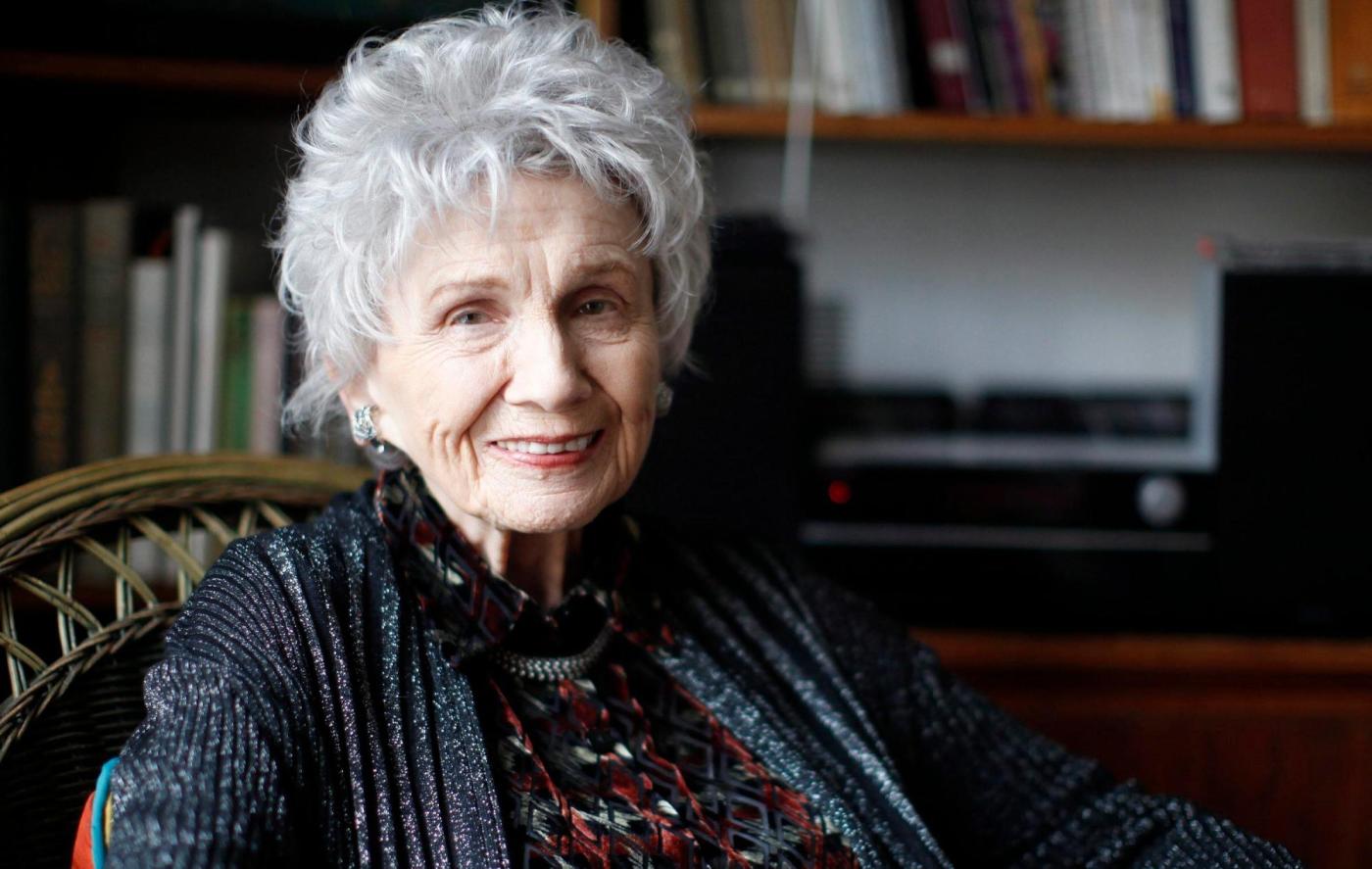
Nobel laureate Alice Munro, the Canadian literary giant who became one of the world’s most esteemed contemporary authors and one of history’s most honored short story writers, has died at age 92.

A spokesperson for publisher Penguin Random House Canada said Munro, winner of the Nobel literary prize in 2013, died Monday at home in Port Hope, Ontario. Munro had been in frail health for years and often spoke of retirement, a decision that proved final after the author’s 2012 collection, “Dear Life.”

Often ranked with Anton Chekhov, John Cheever and a handful of other short story writers, Munro achieved stature rare for an art form traditionally placed beneath the novel. She was the first lifelong Canadian to win the Nobel and the first recipient cited exclusively for short fiction. Echoing the judgment of so many before, the Swedish academy pronounced her a “master of the contemporary short story” who could “accommodate the entire epic complexity of the novel in just a few short pages.”

Munro, little known beyond Canada until her late 30s, also became one of the few short story writers to enjoy ongoing commercial success. Sales in North America alone exceeded 1 million copies and the Nobel announcement raised “Dear Life” to the high end of The New York Times’ bestseller list for paperback fiction. Other popular books included “Too Much Happiness,” “The View from Castle Rock” and “The Love of a Good Woman.”

Over a half century of writing, Munro perfected one of the greatest tricks of any art form: illuminating the universal through the particular, creating stories set around Canada that appealed to readers far away. She produced no single definitive work, but dozens of classics that were showcases of wisdom, technique and talent — her inspired plot twists and artful shifts of time and perspective; her subtle, sometimes cutting humor; her summation of lives in broad dimension and fine detail; her insights into people across age or background, her genius for sketching a character, like the adulterous woman introduced as “short, cushiony, dark-eyed, effusive. A stranger to irony.”

Her best known fiction included “The Beggar’s Maid,” a courtship between an insecure young woman and an officious rich boy who becomes her husband; “Corrie,” in which a wealthy young woman has an affair with an architect “equipped with a wife and young family”; and “The Moons of Jupiter,” about a middle-aged writer who visits her ailing father in a Toronto hospital and shares memories of different parts of their lives.

“I think any life can be interesting,” Munro said during a 2013 post-prize interview for the Nobel Foundation. “I think any surroundings can be interesting.”

Disliking Munro, as a writer or as a person, seemed almost heretical. The wide and welcoming smile captured in her author photographs was complemented by a down-to-earth manner and eyes of acute alertness, fitting for a woman who seemed to pull stories out of the air the way songwriters discovered melodies. She was admired without apparent envy, placed by the likes of Jonathan Franzen, John Updike and Cynthia Ozick at the very top of the pantheon. Munro’s daughter, Sheila Munro, wrote a memoir in which she confided that “so unassailable is the truth of her fiction that sometimes I even feel as though I’m living inside an Alice Munro story.” Fellow Canadian author Margaret Atwood called her a pioneer for women, and for Canadians.

“Back in the 1950s and 60s, when Munro began, there was a feeling that not only female writers but Canadians were thought to be both trespassing and transgressing,” Atwood wrote in a 2013 tribute published in the Guardian after Munro won the Nobel. “The road to the Nobel wasn’t an easy one for Munro: the odds that a literary star would emerge from her time and place would once have been zero.”

Although not overtly political, Munro witnessed and participated in the cultural revolution of the 1960s and ’70s and permitted her characters to do the same. She was a farmer’s daughter who married young, then left her husband in the 1970s and took to “wearing miniskirts and prancing around,” as she recalled during a 2003 interview with The Associated Press. Many of her stories contrasted the generation of Munro’s parents with the more open-ended lives of their children, departing from the years when housewives daydreamed “between the walls that the husband was paying for.”

Moviegoers would become familiar with “The Bear Came Over the Mountain,” the improbably seamless tale of a married woman with memory loss who has an affair with a fellow nursing home patient, a story further complicated by her husband’s many past infidelities. “The Bear” was adapted by director Sarah Polley into the feature film “Away from Her,” which brought an Academy Award nomination for Julie Christie. In 2014, Kristen Wiig starred in “Hateship, Loveship,” an adaptation of the story “Hateship, Friendship, Courtship, Loveship, Marriage,” in which a housekeeper leaves her job and travels to a distant rural town to meet up with a man she believes is in love with her — unaware the romantic letters she has received were concocted by his daughter and a friend.

Even before the Nobel, Munro received honors from around the English-language world, including Britain’s Man Booker International Prize and the National Book Critics Circle award in the U.S., where the American Academy of Arts and Letters voted her in as an honorary member. In Canada, she was a three-time winner of the Governor General’s Award and a two-time winner of the Giller Prize.

Munro was a short story writer by choice, and, apparently, by design. Judith Jones, an editor at Alfred A. Knopf who worked with Updike and Anne Tyler, did not want to publish “Lives of Girls & Women,” her only novel, writing in an internal memo that “there’s no question the lady can write but it’s also clear she is primarily a short story writer.”

Munro would acknowledge that she didn’t think like a novelist.

“I have all these disconnected realities in my own life, and I see them in other people’s lives,” she told the AP. “That was one of the problems, why I couldn’t write novels. I never saw things hanging together too well.”

Alice Ann Laidlaw was born in Wingham, Ontario, in 1931, and spent much of her childhood there, a time and place she often used in her fiction, including the four autobiographical pieces that concluded “Dear Life.” Her father was a fox farmer, her mother a teacher and the family’s fortunes shifted between middle class and working poor, giving the future author a special sensitivity to money and class. Young Alice was often absorbed in literature, starting with the first time she was read Hans Christian Andersen’s “The Little Mermaid.” She was a compulsive inventor of stories and the “sort of child who reads walking upstairs and props a book in front of her when she does the dishes.”

A top student in high school, she received a scholarship to study at the University of Western Ontario, majoring in journalism as a “cover-up” for her pursuit of literature. She was still an undergraduate when she sold a story about a lonely teacher, “The Dimensions of a Shadow,” to CBC Radio. She was also publishing work in her school’s literary journal.

One fellow student read “Dimensions” and wrote to the then-Laidlaw, telling her the story reminded him of Chekhov. The student, Gerald Fremlin, would become her second husband. Another fellow student, James Munro, was her first husband. They married in 1951, when she was only 20, and had four children, one of whom died soon after birth.

Settling with her family in Vancouver, Alice Munro wrote between trips to school, housework and helping her husband at the bookstore that they co-owned and would turn up in some of her stories. She wrote one book in the laundry room of her house, her typewriter placed near the washer and dryer. Flannery O’Connor, Carson McCullers and other writers from the American South inspired her, through their sense of place and their understanding of the strange and absurd.

Isolated from the literary center of Toronto, she did manage to get published in several literary magazines and to attract the attention of an editor at Ryerson Press (later bought out by McGraw Hill). Her debut collection, “Dance of the Happy Shades,” was released in 1968 with a first printing of just under 2,700 copies. A year later it won the Governor’s General Award and made Munro a national celebrity — and curiosity. “Literary Fame Catches City Mother Unprepared,” read one newspaper headline.

“When the book first came they sent me a half dozen copies. I put them in the closet. I didn’t look at them. I didn’t tell my husband they had come, because I couldn’t bear it. I was afraid it was terrible,” Munro told the AP. “And one night, he was away, and I forced myself to sit down and read it all the way through, and I didn’t think it was too bad. And I felt I could acknowledge it and it would be OK.”

By the early ’70s, she had left her husband, later observing that she was not “prepared to be a submissive wife.” Her changing life was best illustrated by her response to the annual Canadian census. For years, she had written down her occupation as “housewife.” In 1971, she switched to “writer.”

Over the next 40 years, her reputation and readership only grew, with many of her stories first appearing in The New Yorker. Her prose style was straightforward, her tone matter of fact, but her plots revealed unending disruption and disappointments: broken marriages, violent deaths, madness and dreams unfulfilled, or never even attempted. “Canadian Gothic” was one way she described the community of her childhood, a world she returned to when, in middle age, she and her second husband relocated to nearby Clinton.

“Shame and embarrassment are driving forces for Munro’s characters,” Atwood wrote, “just as perfectionism in the writing has been a driving force for her: getting it down, getting it right, but also the impossibility of that.”

She had the kind of curiosity that would have made her an ideal companion on a long train ride, imagining the lives of the other passengers. Munro wrote the story “Friend of My Youth,” in which a man has an affair with his fiancee’s sister and ends up living with both women, after an acquaintance told her about some neighbors who belonged to a religion that forbade card games. The author wanted to know more — about the religion, about the neighbors.

Even as a child, Munro had regarded the world as an adventure and mystery and herself as an observer, walking around Wingham and taking in the homes as if she were a tourist. In “The Peace of Utrecht,” an autobiographical story written in the late 1960s, a woman discovers an old high school notebook and remembers a dance she once attended with an intensity that would envelop her whole existence.

“And now an experience which seemed not at all memorable at the time,” Munro wrote, “had been transformed into something curiously meaningful for me, and complete; it took in more than the girls dancing and the single street, it spread over the whole town, its rudimentary pattern of streets and its bare trees and muddy yards just free of the snow, over the dirt roads where the lights of cars appeared, jolting toward the town, under an immense pale wash of sky.”

Related Articles

Books |


Readers and writers: 3 fiction choices from Minnesota authors

Books |


Literary calendar for week of May 12

Books |


Winners of the 2024 Minnesota Book Awards

Books |


Literary pick for week of May 5: It’s a big week at Red Balloon Bookshop

Books |


Literary calendar for week of May 5

Palestinians mark 76 years of dispossession as a potentially even larger catastrophe unfolds in Gaza

posted in: Society | 0

By JOSEPH KRAUSS (Associated Press)

JERUSALEM (AP) — Palestinians on Wednesday will mark the 76th year of their mass expulsion from what is now Israel, an event that is at the core of their national struggle. But in many ways, that experience pales in comparison to the calamity now unfolding in Gaza.

Palestinians refer to it as the Nakba, Arabic for catastrophe. Some 700,000 Palestinians — a majority of the prewar population — fled or were driven from their homes before and during the 1948 Arab-Israeli war that followed Israel’s establishment.

After the war, Israel refused to allow them to return because it would have resulted in a Palestinian majority within its borders. Instead, they became a seemingly permanent refugee community that now numbers some 6 million, with most living in slum-like urban refugee camps in Lebanon, Syria, Jordan and the Israeli-occupied West Bank.

In Gaza, the refugees and their descendants make up around three-quarters of the population.

Israel’s rejection of what Palestinians say is their right of return has been a core grievance in the conflict and was one of the thorniest issues in peace talks that last collapsed 15 years ago. The refugee camps have always been the main bastions of Palestinian militancy.

Now, many Palestinians fear a repeat of their painful history on an even more cataclysmic scale.

All across Gaza, Palestinians in recent days have been loading up cars and donkey carts or setting out on foot to already overcrowded tent camps as Israel expands its offensive. The images from several rounds of mass evacuations throughout the seven-month war are strikingly similar to black-and-white photographs from 1948.

Mustafa al-Gazzar, now 81, still recalls his family’s monthslong flight from their village in what is now central Israel to the southern city of Rafah, when he was 5. At one point they were bombed from the air, at another, they dug holes under a tree to sleep in for warmth.

Al-Gazzar, now a great-grandfather, was forced to flee again over the weekend, this time to a tent in Muwasi, a barren coastal area where some 450,000 Palestinians live in a squalid camp. He says the conditions are worse than in 1948, when the U.N. agency for Palestinian refugees was able to regularly provide food and other essentials.

“My hope in 1948 was to return, but my hope today is to survive,” he said. “I live in such fear,” he added, breaking into tears. “I cannot provide for my children and grandchildren.”

Related Articles


Thomas Friedman: Biden’s real mistake in pausing military aid to Israel


Misery deepens in Gaza’s Rafah as Israeli troops press operation


Letters: Boorish behavior disrupts graduation, undermines support for the cause


Seth Greenland: Have we learned nothing? The protester’s taunt, ‘Go back to Poland,’ is grotesque


South Africa again requests emergency measures from world court to restrain Israel’s actions in Gaza

The war in Gaza, which was triggered by Hamas’ Oct. 7 attack into Israel, has killed over 35,000 Palestinians, according to local health officials, making it by far the deadliest round of fighting in the history of the conflict. The initial Hamas attack killed some 1,200 Israelis. Hamas has been designated as a terrorist organization by the United States, Canada and the European Union.

The war has forced some 1.7 million Palestinians — around three quarters of the territory’s population — to flee their homes, often multiple times. That is well over twice the number that fled before and during the 1948 war.

Israel has sealed its border. Egypt has only allowed a small number of Palestinians to leave, in part because it fears a mass influx of Palestinians could generate another long-term refugee crisis.

The international community is strongly opposed to any mass expulsion of Palestinians from Gaza — an idea embraced by far-right members of the Israeli government, who refer to it as “voluntary emigration.”

Israel has long called for the refugees of 1948 to be absorbed into host countries, saying that calls for their return are unrealistic and would endanger its existence as a Jewish-majority state. It points to the hundreds of thousands of Jews who came to Israel from Arab countries during the turmoil following its establishment, though few of them want to return.

Even if Palestinians are not expelled from Gaza en masse, many fear that they will never be able to return to their homes or that the destruction wreaked on the territory will make it impossible to live there. A recent U.N. estimate said it would take until 2040 to rebuild destroyed homes.

The Jewish militias in the 1948 war with the armies of neighboring Arab nations were mainly armed with lighter weapons like rifles, machine guns and mortars. Hundreds of depopulated Palestinian villages were demolished after the war, while Israelis moved into Palestinian homes in Jerusalem, Jaffa and other cities.

In Gaza, Israel has unleashed one of the deadliest and most destructive military campaigns in recent history, at times dropping 2,000-pound (900-kilogram) bombs on dense, residential areas. Entire neighborhoods have been reduced to wastelands of rubble and plowed-up roads, many littered with unexploded bombs.

The World Bank estimates that $18.5 billion in damage has been inflicted on Gaza, roughly equivalent to the gross domestic product of the entire Palestinian territories in 2022. And that was in January, in the early days of Israel’s devastating ground operations in Khan Younis and before it went into Rafah.

Yara Asi, a Palestinian assistant professor at the University of Central Florida who has done research on the damage to civilian infrastructure in the war, says it’s “extremely difficult” to imagine the kind of international effort that would be necessary to rebuild Gaza.

Even before the war, many Palestinians spoke of an ongoing Nakba, in which Israel gradually forces them out of Gaza, the West Bank and east Jerusalem, territories it captured during the 1967 war that the Palestinians want for a future state. They point to home demolitions, settlement construction and other discriminatory policies that long predate the war, and which major rights groups say amount to apartheid, allegations Israel denies.

Asi and others fear that if another genuine Nakba occurs, it will be in the form of a gradual departure.

“It won’t be called forcible displacement in some cases. It will be called emigration, it will be called something else,” Asi said.

“But in essence, it is people who wish to stay, who have done everything in their power to stay for generations in impossible conditions, finally reaching a point where life is just not livable.”

Associated Press journalists Wafaa Shurafa and Mohammad Jahjouh in Rafah, Gaza Strip, contributed.

MN Secretary of State announces new location for candidate filings

posted in: News | 0

Due to construction at the State Office Building, candidate filings for 2024 will be held on the fifth floor of the Veterans Service Building located at 20 W. 12th Street in St. Paul.

Minnesotans interested in running for most public offices must file during the period which begins on Tuesday, May 21. Filing locations vary depending on the office the candidate is seeking. Those candidates required to file with the Office of the Minnesota Secretary of State must use the Veterans Service Building location this year.

Hours for candidate filing with the Office of the Minnesota Secretary of State are 8 a.m. to 4:30 p.m. from Monday through Friday, except on the final day of filing, June 4, when filings will be accepted until 5 p.m. The office will be closed on Monday, May 27 for Memorial Day and no candidate filings will be accepted.

Candidate filing requirements vary depending on the office, whether the office is partisan or nonpartisan, and whether the candidate is a member of a major or minor political party or is unaffiliated. Petitions are required for candidates for partisan office who are not affiliated with a major political party.

Here’s a rundown of where to file:

•Candidates for president, vice-president, U.S. senator, and U.S. representative must file with the Office of the Minnesota Secretary of State. The filing dates and process for president and vice-president vary for candidates of a major political party or non-major political party.

• Candidates for state senator, state representative, and any judicial office may file with the Office of the Minnesota Secretary of State or the county auditor of the county in which the candidate resides.

• Candidates for county offices must file with their county auditor.

• Municipal candidates must file with their municipal clerk.

• School district candidates must file with their school district clerk.

• Candidates for special districts, such as hospital or park districts, should contact the district’s office for information on the filing process.

To learn more about filing as a candidate in Minnesota go to: sos.state.mn.us.

Those candidates wanting to withdraw their filing have until Thursday, June 6 at 5 p.m. For more information go to sos.state.mn.us.

The names of the candidates who have filed will be updated online at candidates.sos.mn.gov throughout the filing process.

Related Articles

Politics |


DFL disavows local endorsement of northwestern Minnesota candidate with assault conviction

Politics |


Minnesota House OKs election bill allowing lawsuits over discrimination

Politics |


Biden and Trump dominate Super Tuesday races and move closer to a November rematch

Politics |


Minnesota’s presidential primary is underway. Here’s what to know.

Politics |


What to expect in the South Carolina Republican presidential primary

David Sanborn, Grammy-winning saxophonist who played on hundreds of albums, dies at 78

posted in: News | 0

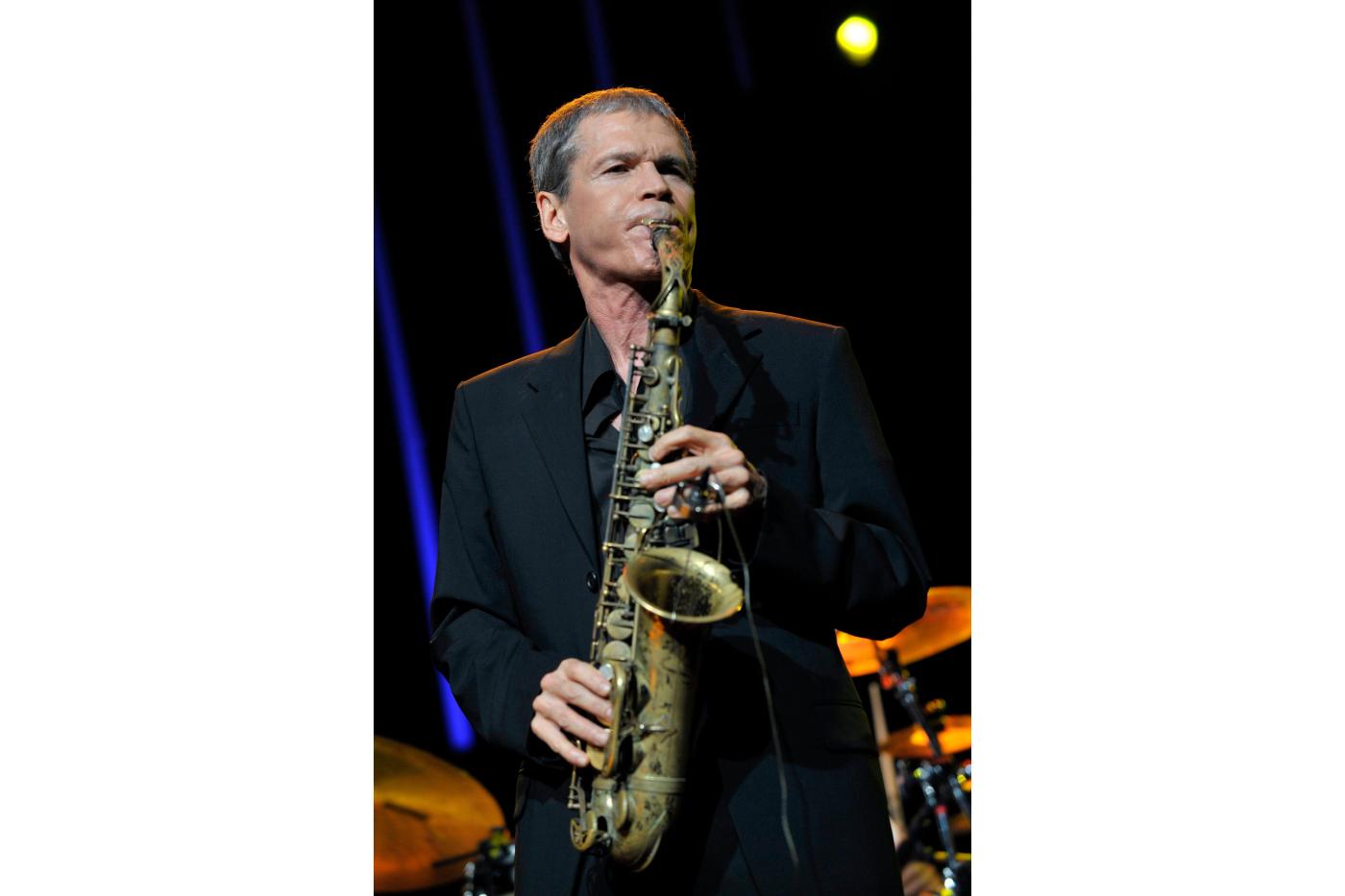
NEW YORK (AP) — David Sanborn, the Grammy-winning saxophonist who played lively solos on such hits as David Bowie’s “Young Americans” and James Taylor’s “How Sweet It Is (To Be Loved By You)” and enjoyed his own highly successful recording career as a performer of melodic, contemporary jazz, has died at age 78.

A spokesperson confirmed that Sanborn died Sunday in Tarrytown, New York. The cause was complications from prostate cancer.

“The news of the loss of David Sanborn to the music world has deeply saddened me,” pianist Bob James, who collaborated with Sanborn on the Grammy-winning “Double Vision” album, wrote on Facebook. “I was so privileged to share major highlights of my career in partnership with him. His legacy will live on through the recordings. Every note he played came straight from his heart, with a passionate intensity that could make an ordinary tune extraordinary.”

Equally versatile and prolific, Sanborn enjoyed rare fame and popularity for a saxophone player. He released eight gold albums and one platinum album; sat in frequently with the “Late Night With David Letterman” band led by Paul Shaffer; and even co-hosted a show, “Night Music,” that included appearances by Miles Davis, Eric Clapton, Lou Reed and many others.

“Jazz has always transformed and absorbed what’s around it,” he told DownBeat magazine in 2017. “Real musicians don’t have any time to spend thinking about limited categories.”

A native of Tampa, Florida, whose family moved to Kirkwood, Missouri, Sanborn took up the saxophone as a boy after recovering from a severe bout with polio and being advised by a doctor to strengthen his lungs. By his mid-teens, he had performed with blues greats Albert King and Little Milton, and he would soon join the Paul Butterfield Blues Band, their shows including a set at the Woodstock festival in 1969.

From the 1970s and after, Sanborn was among the busiest musicians in the business. He was a session player for dozens of top artists, from Bowie and Taylor to the Rolling Stones and Stevie Wonder, and made more than 20 solo albums, including the Grammy winners “Straight to the Heart” and “Double Vision.” He continued to tour frequently even after his cancer diagnosis in 2018 and had already planned shows for next year.