
Kenneth Seeskin: AI can’t do soul-searching. Here’s why we need philosophy

posted in: All news | 0

As Bob Dylan once said: “The times, they are a-changin’.”

One only need to look to the emergence of artificial intelligence to know the lyrics from this 1964 song continue to ring true today. But for all its strengths — from offering travel tips to investment advice to writing term papers and poetry — AI content is also a double-edged sword, littered with bogus references and conclusions based on biased studies or incomplete information.

And AI comes with a price to pay. For many people, that price will be measured in dollars and cents, as AI takes over jobs that used to belong to human beings. Why pay someone to write a report or plan a budget if AI can do it by pushing a button? Even if someone’s job is not taken over, AI may require them to undergo significant retraining to keep it.

But there is another price to pay, which cannot be measured in dollars and cents: the cost of intellectual stagnation. At its best, AI reflects the current thinking on a particular issue. That may be a good starting point. But what if the current thinking is wrong? What if we need a whole new way of looking at things? Where will new ideas come from?

Unless there are people willing to challenge the current thinking, the price we pay is intellectual stagnation.

Consider the kinds of questions that go beyond the retrieval of information or the completion of technical tasks, the hard questions that many of us face from time to time. Does God exist? Are some actions unforgivable? If someone you love committed a serious crime, would you turn them into the police? Should terminally ill patients be allowed to take their own lives? Here AI is of limited value. There is no way to tackle these questions without deep reflection and a great deal of soul-searching.

In the face of growing conformity, critical thinking skills are needed more than ever. According to a study, released last year, by the Journal of the American Philosophical Association that looked at 600,000 college students, those who majored in philosophy not only ranked higher than all others on verbal and logical reasoning, but also displayed more open-mindedness and intellectual curiosity. There is even evidence that philosophy majors have a higher acceptance rate to medical school than students who major in traditional subjects such as chemistry or biology.

While some may be surprised by these results, I am not. Standardized tests don’t just measure a student’s recall of facts; they also try to determine whether students can analyze arguments and are sensitive to verbal nuances. Because they are trained to question basic assumptions, define key terms and construct logical arguments on their own, philosophy majors often have an advantage over others.

When I taught basic classes in philosophy, for example, I made sure that for every thinker we read arguing for one position, we read an equally important thinker arguing for the opposite: an atheist and a believer, a materialist and an idealist, a defender of morality and a critic of it. Papers and exams were structured so that students had to analyze arguments both for and against a particular position and decide which side is right. In addition to the ability to analyze arguments, I hoped to instill a willingness to consider unconventional approaches to problems.

So while intellectual stagnation may not have an immediate effect on one’s pocketbook, it is a serious problem at a time when people have become so entrenched in their political views that they no longer listen to people who do not share them — in other words, a time when simple slogans and dogmatic pronouncements have become all too common. In this case, the price we pay is a deterioration in public discourse and a corresponding rise in prejudice and misunderstanding.

I am not arguing, of course, that philosophy has a monopoly on critical thinking. It often borrows insights from other subjects. It rarely produces established results in the way the sciences do, and other majors in the liberal arts also encourage creative thinking.

But if the recent study of college students is accurate, philosophy, though not a panacea, does an especially good job of preparing them for the AI age we are entering.

Kenneth Seeskin is professor emeritus of philosophy and the Philip M. and Ethel Klutznick professor of Jewish civilization at Northwestern University. He wrote this column for the Chicago Tribune.

Related Articles


Andreas Kluth: At Davos, the world rebalanced against a bully


Ronald Brownstein: What’s the endgame for Trump’s offensive against blue cities?


Abby McCloskey: Too many kids already know someone who’s been deepfaked


Thomas Friedman: Trump’s politics aren’t America First. They’re Me First.


Lara Williams: America is missing a real problem in the Arctic
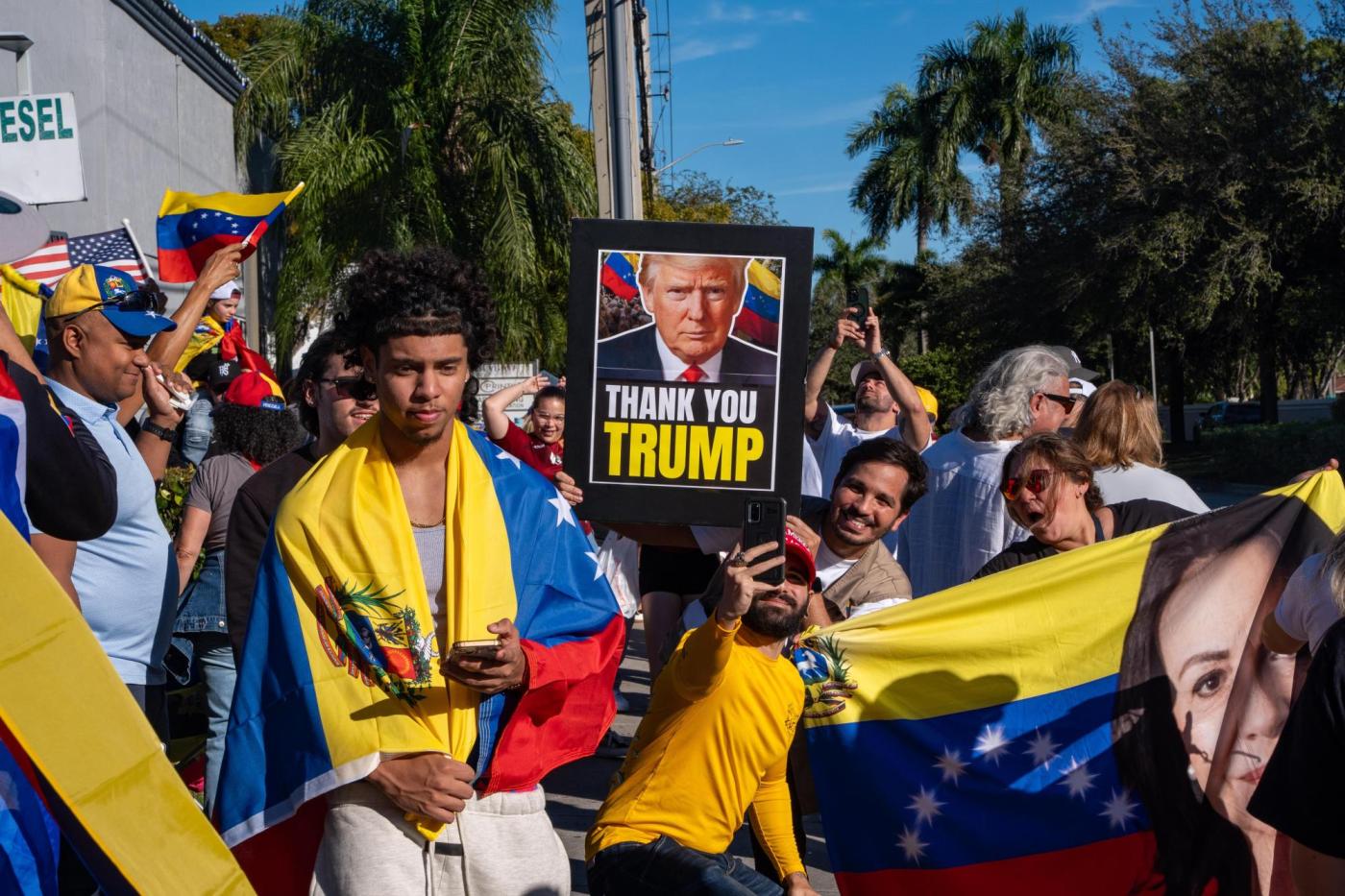
Aaron Coy Moulton: This time the US isn’t hiding why it’s toppling a Latin American nation

posted in: All news | 0

In the aftermath of the U.S. military strike that seized Venezuelan President Nicolás Maduro on Jan. 3, the Trump administration has emphasized its desire for unfettered access to Venezuela’s oil more than conventional foreign policy objectives, such as combating drug trafficking or bolstering democracy and regional stability.

During his first news conference after the operation, President Donald Trump claimed oil companies would play an important role and that the oil revenue would help fund any further intervention in Venezuela.

Soon after, “Fox & Friends” hosts asked Trump about this prediction.

“We have the greatest oil companies in the world,” Trump replied, “ the biggest, the greatest, and we’re gonna be very much involved in it.”

As a historian of U.S.-Latin American relations, I’m not surprised that oil or any other commodity is playing a role in U.S. policy toward the region. What has taken me aback, though, is the Trump administration’s openness about how much oil is driving its policies toward Venezuela.

U.S. military intervention in Latin America has largely been covert. And when the U.S. orchestrated the coup that ousted Guatemala’s democratically elected president in 1954, the U.S. covered up the role that economic considerations played in that operation.

By the early 1950s, Guatemala had become a top source for the bananas Americans consumed, as it remains today.

The United Fruit Company, based in Boston, owned more than 550,000 acres of Guatemalan land, largely thanks to its deals with previous dictatorships. These holdings required the intense labor of impoverished farmworkers who were often forced from their traditional lands. Their pay was rarely stable, and they faced periodic layoffs and wage cuts.

The international corporation networked with dictators and local officials in Central America, many Caribbean islands and parts of South America to acquire immense estates for railroads and banana plantations.

The locals called it the pulpo — “octopus” in Spanish — because the company seemingly had a hand in shaping the region’s politics, economies and everyday life. The Colombian government brutally crushed a 1928 strike by United Fruit workers, killing hundreds of people.

The company’s seemingly unlimited clout in the countries where it operated gave rise to the stereotype of Central American nations as “banana republics.”

In Guatemala, a country historically marked by extreme inequality, a broad coalition formed in 1944 to overthrow its repressive dictatorship in a popular uprising. Inspired by the anti-fascist ideals of World War II, the coalition sought to make the nation more democratic and its economy more fair.

After decades of repression, the nation democratically elected Juan José Arévalo and then Jacobo Árbenz, under whom, in 1952, Guatemala implemented a land reform program that gave landless farmworkers their own undeveloped plots. Guatemala’s government asserted that these policies would build a more equitable society for Guatemala’s impoverished, Indigenous majority.

United Fruit denounced Guatemala’s reforms as the result of a global conspiracy. It alleged that most of Guatemala’s unions were controlled by Mexican and Soviet communists and painted the land reform as a ploy to destroy capitalism.

United Fruit sought to enlist the U.S. government in its fight against the elected government’s policies. While its executives did complain that Guatemala’s reforms hurt its financial investments and labor costs, they also cast any interference in its operations as part of a broader communist plot.

It did this through an advertising campaign in the U.S. and by taking advantage of the anti-communist paranoia that prevailed at the time.

United Fruit executives began to meet with officials in the Truman administration as early as 1945. Despite the support of sympathetic ambassadors, the U.S. government apparently wouldn’t intervene directly in Guatemala’s affairs.

The company turned to Congress.

It hired well connected lobbyists to portray Guatemala’s policies as part of a communist plot to destroy capitalism and the United States. In February 1949, multiple members of Congress denounced Guatemala’s labor reforms as communist.

Sen. Claude Pepper called the labor code “obviously intentionally discriminatory against this American company” and “a machine gun aimed at the head of this American company.”

Two days later, Rep. John McCormack echoed that statement, using the exact same words to denounce the reforms.

Sen. Henry Cabot Lodge Jr., Sen. Lister Hill and Rep. Mike Mansfield also went on the record, reciting the talking points outlined in United Fruit memos.

No lawmaker said a word about bananas.

Seventy-seven years later, we may see many echoes of past interventions, but now the U.S. government has dropped the veil: In his appearance after the strike that seized Maduro this month, Trump said “oil” 21 times.

Aaron Coy Moulton is an associate professor of Latin American history at Stephen F. Austin State University in Texas and the author of “ Caribbean Blood Pacts: Guatemala and the Cold War Struggle for Freedom.” This column for the Los Angeles Times was produced in collaboration with the Conversation.

Related Articles


Andreas Kluth: At Davos, the world rebalanced against a bully


Ronald Brownstein: What’s the endgame for Trump’s offensive against blue cities?


Abby McCloskey: Too many kids already know someone who’s been deepfaked


Thomas Friedman: Trump’s politics aren’t America First. They’re Me First.


Lara Williams: America is missing a real problem in the Arctic
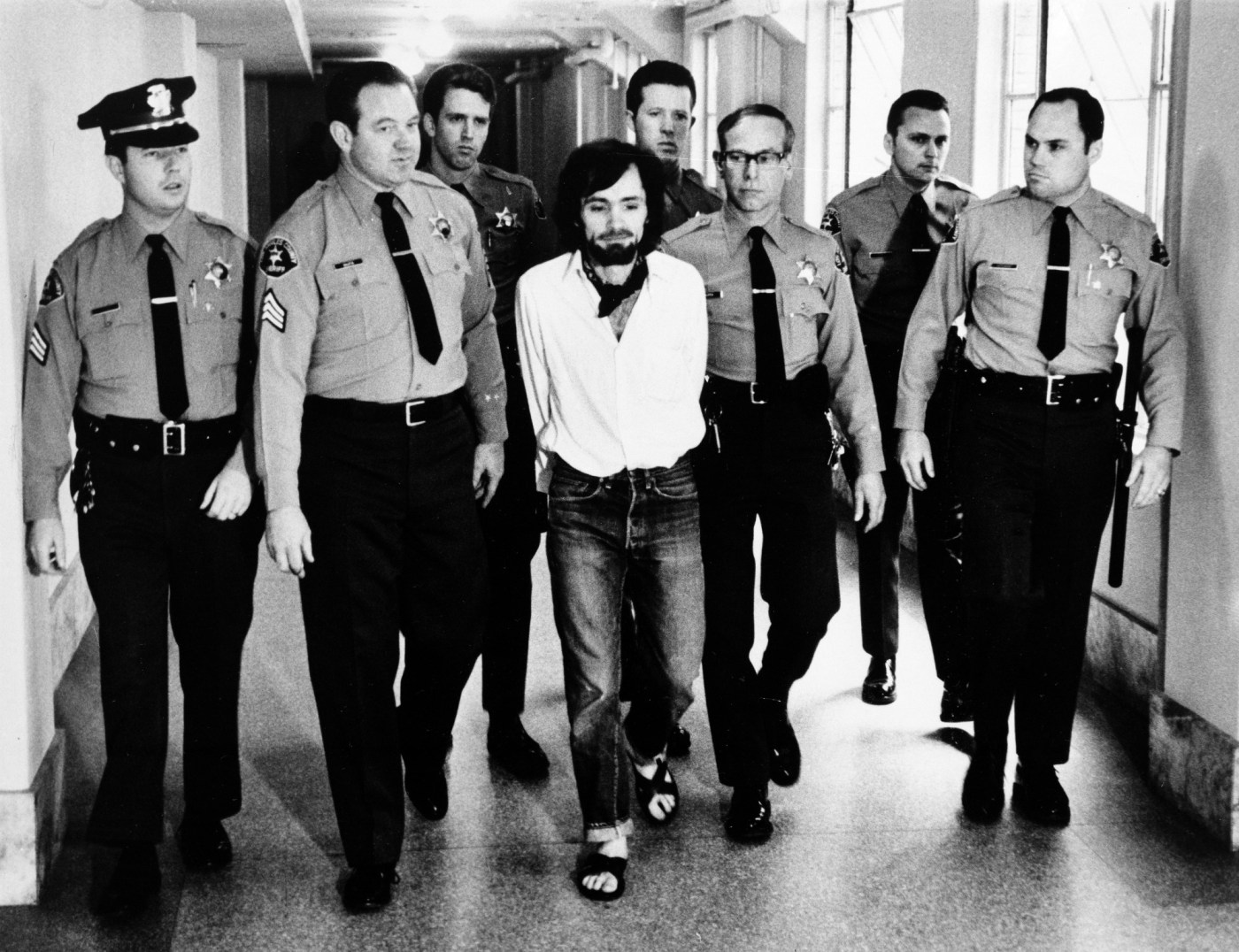
Today in History: January 25, Charles Manson convicted of murder, conspiracy

posted in: All news | 0

Today is Sunday, Jan. 25, the 25th day of 2026. There are 340 days left in the year.

Today in history:

On Jan. 25,1971, Charles Manson and three of his followers were convicted in Los Angeles of murder and conspiracy in the 1969 slayings of seven people, including actor Sharon Tate.

Also on this date:

In 1924, the first Winter Olympic Games opened in Chamonix (shah-moh-NEE’), France.

Related Articles


Immigrant families protest at Texas facility housing 5-year-old boy, father detained in Minnesota


Today in History: January 24, suicide bomber kills 37 at Moscow airport


Prosecutors allege gang members tried to kill Indiana judge to derail domestic abuse trial


Meta pauses teen access to AI characters


Powdered whole milk could be a culprit in the ByHeart botulism outbreak, tests show

In 1945, the World War II Battle of the Bulge ended as the German army concluded its final offensive on the Western Front; approximately 19,000 U.S. soldiers were killed during the five-week campaign.

In 1945, Grand Rapids, Michigan, became the first city to add fluoride to its public water supply.

In 1961, President John F. Kennedy held the first live televised presidential news conference.

In 2004, NASA’s Opportunity rover landed on Mars and sent its first pictures of the planet to Earth; originally planned as a 90-day mission, the rover remained operational for over 15 years, traveling a total of 28 miles across the planet’s surface.

In 2011, Egyptians began nationwide protests that forced longtime autocrat Hosni Mubarak to step down amid the Arab Spring uprisings that swept the Middle East and North Africa.

In 2021, President Joe Biden signed an order reversing a Pentagon policy that largely barred transgender people from military service.

In 2024, Alabama conducted the nation’s first execution using nitrogen gas, putting to death Kenneth Eugene Smith for his conviction in the 1988 murder-for-hire killing of a pastor’s wife.

Today’s birthdays:

Football Hall of Famer Carl Eller is 84.
Actor Leigh Taylor-Young is 81.
Actor Jenifer Lewis is 69.
Hockey Hall of Famer Chris Chelios is 64.
Actor Ana Ortiz is 55.
Actor Mia Kirshner is 51.
Ukrainian President Volodymyr Zelenskyy is 48.
Soccer manager and former player Xavi is 46.
Singer-songwriter Alicia Keys is 45.
Football Hall of Famer Patrick Willis is 41.
Actor-singer Ariana DeBose is 35.
Rapper Lil Mosey is 24.

Understated Matt Boldy makes bold return for Wild

posted in: All news | 0

For a person with “BOLD” right there in his name, Matt Boldy is not one you would call boisterous or demonstrative. Except when celebrating a goal – which he has done 28 times this season.

His comments to the media are generally understated. His proclamations, win or lose, are generally anything but bold. He describes the game in straightforward terms with little hyperbole.

But after missing four games due to injury, it became clear right from the start of Saturday night’s Hockey Day Minnesota finale versus Florida that Boldy wasn’t just back on the ice, he was back in the game. Boldly.

“It felt good to be back with the guys and out there and competing with them,” Boldy said of his return. “So it was fun.”

The real fun – specifically the real loud fun – came in the third period with the Wild and Panthers tied 2-2 and Florida on one of its six power plays in the game.

Boldy had picked off a pass while shorthanded early in the game and had made a rush to the Panthers net that was thwarted. When he did it a second time, there was no thwarting to be had by Florida goalie Sergei Bobrovsky.

Boldy said he was just trying to hold the blue line, and was able to be in the right spot. The more descriptive call of the play saw the Wild forward step in front of a Florida pass at the defensive blue line and head off on a break away from there, snapping a wrist shot past Bobrovsky to briefly give Minnesota a 3-2 lead.

Minnesota Wild left wing Matt Boldy (12) skates on the ice during the first period of an NHL hockey game against the Colorado Avalanche, Sunday, Dec. 21, 2025, in St. Paul, Minn. (AP Photo/Bailey Hillesheim)

The Panthers re-tied the game on the same power play, and ended up winning in overtime, but the story for the Wild was Boldy’s return, and what him being healthy and effective could mean for this team, and for Team USA when Boldy wears red, white and blue in Italy next month.

“It was nice to have him back. He’s an impactful guy that plays a lot of key situations and key minutes,” Wild coach John Hynes said, raving about Boldy’s smarts and offensive instincts, not only on the goal but on the first period shorthanded rush and Boldy’s assist on the Wild’s first goal of the game.

For the defenders who have to face him in practice, those instincts and Boldy’s shot are things they know all too well.

“He’s such a skilled player for us. He drives this team on the offense,” Wild goalie Filip Gustavsson said. “He scored on the breakaway on the PK, sacrificing his body there, blocking shots, then going down and scoring. So I love having him back.”

Not only was he out, but his entire line, with Marcus Johansson and Joel Eriksson Ek, missed the Wild’s three-game trip to Buffalo, Toronto and Montreal. As good as the TV coverage of Wild games has gotten, Boldy didn’t care for being a spectator.

“It stinks to miss games,” Boldy said. “You feel like you can’t make a difference out there and it sucks to watch. I think everyone would say that. I’m just happy it wasn’t too long and I was able to come back.”

Boldy’s four-game absence came not as the result of a big hit or a blocked shot but rather a nagging ailment that got worse over time. After getting an assist in a home loss to Winnipeg on Jan. 15, he and the trainers determined it was time to give his body some time off to heal.

“It got to the point where it felt a little more nagging than I would’ve liked,” Boldy said. “To be able to take care of it and get it to feeling good again was important.”

And the importance of having Boldy back, healthy and contributing, can hardly be understated. Even if the man himself would rarely be bold enough to say so.

Related Articles


Panthers spoil the Wild’s Hockey Day fun in overtime


Hockey Day Minnesota bound for Maple Grove in 2028


Yakov Trenin’s hits arrive on time to boost Wild


Four Wild games coming to over-the-air TV this season


Acquiring Quinn Hughes was expensive. It’s been a bargain