Judge in Tennessee blocks effort to put Elvis Presley’s former home Graceland up for sale

posted in: News | 0

By ADRIAN SAINZ (Associated Press)

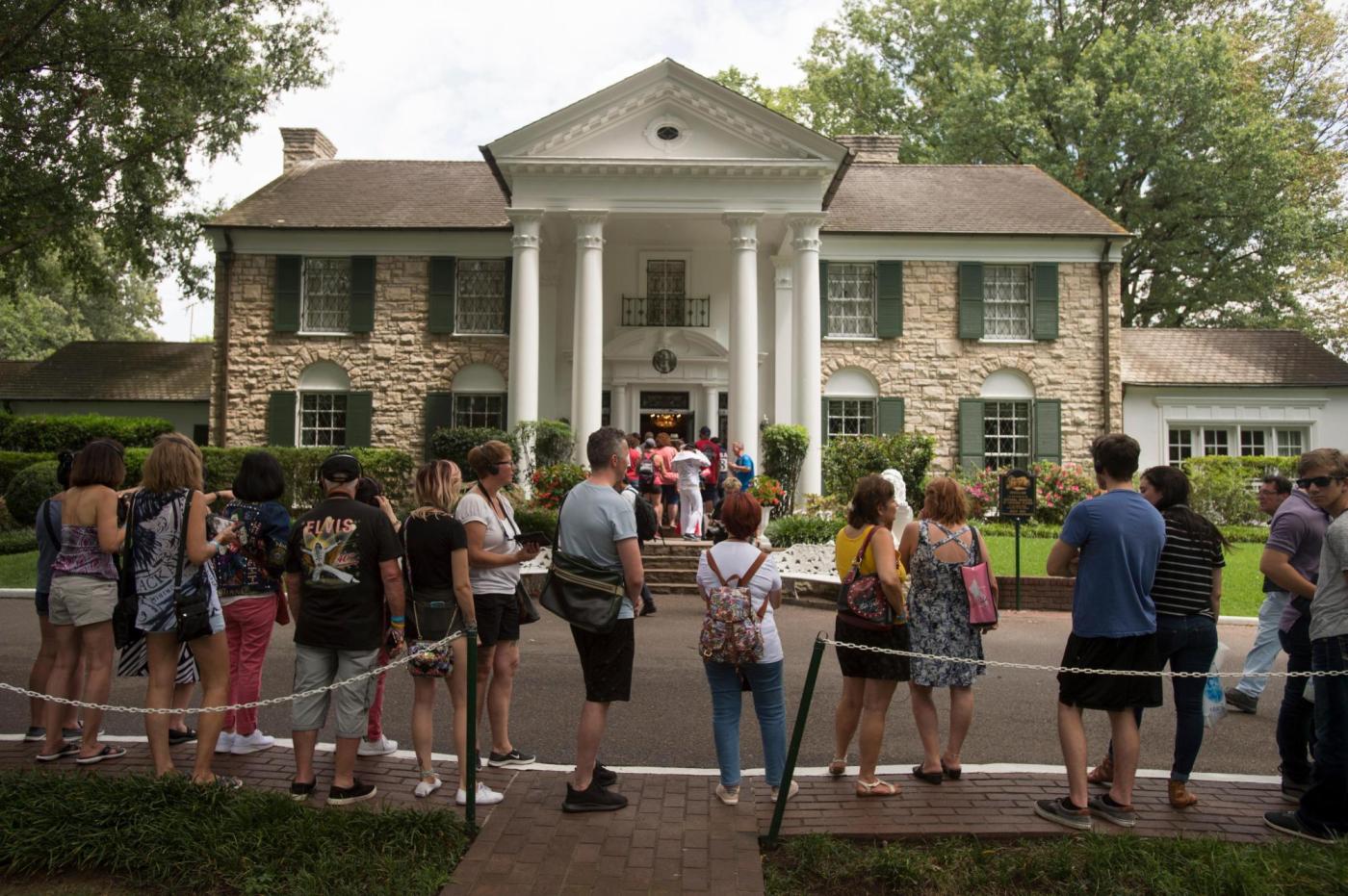
MEMPHIS, Tenn. (AP) — A Tennessee judge on Wednesday blocked the auction of Graceland, the former home of Elvis Presley, by a company that claimed his estate failed to repay a loan that used the property as collateral.

Shelby County Chancellor JoeDae Jenkins issued a temporary injunction against the proposed auction that had been scheduled for Thursday this week. Jenkins’ injunction essentially keeps in place a previous restraining order that he had issued after Presley’s granddaughter Riley Keough filed a lawsuit to fight off what she said was a fraudulent scheme.

A public notice for a foreclosure sale of the 13-acre estate in Memphis posted earlier in May said Promenade Trust, which controls the Graceland museum, owes $3.8 million after failing to repay a 2018 loan. Keough, an actor, inherited the trust and ownership of the home after the death of her mother, Lisa Marie Presley, last year.

Naussany Investments and Private Lending said Lisa Marie Presley had used Graceland as collateral for the loan, according to the foreclosure sale notice. Keough, on behalf of the Promenade Trust, alleged in her lawsuit that Naussany presented fraudulent documents regarding the loan in September 2023.

Neither Keough nor lawyers for Nassauny Investments were in court Wednesday.

“Lisa Maria Presley never borrowed money from Naussany Investments and never gave a deed of trust to Naussany Investments,” Keough’s lawyer wrote in a lawsuit.

Kimberly Philbrick, the notary whose name is listed on Nassauny’s documents, indicated that she never met Lisa Marie Presley nor notarized any documents for her, the court filing said.

Graceland opened as a museum and tourist attraction in 1982 as a tribute to Elvis Presley, the singer and actor who died in August 1977 at age 42. It draws hundreds of thousands of visitors each year. A large Presley-themed entertainment complex across the street from the museum is owned by Elvis Presley Enterprises.

Who has the best public parks in the nation? Study: The Twin Cities — and Washington, D.C.

posted in: News | 0

St. Paul, long a powerhouse player in a national ranking of municipal park systems, once again placed in the top three performers this year, edged out by Minneapolis and repeat first-place winner Washington, D.C. in the Trust for Public Land’s annual ParkScore index.

“This is the 10th year that St. Paul was included in the ranking, and it’s been a 10-year battle for those top positions,” said Sophie Vorhoff, Minnesota sstate director with the Trust for Public Land. “This year, Minneapolis barely edged out St. Paul, whereas St. Paul barely edged out Minneapolis last year. These are two of the foremost park systems in the country.”

The index is presented as something of a friendly competition between the 100 most populous cities in the country, and a strong general barometer of which municipalities are investing in park space, amenities and access. Both Minneapolis and St. Paul have made strides toward ensuring that all residents live within a 10-minute walk of a public park, with the index finding that both cities can say that’s true for 99% of each city’s population.

The index has also begun in recent years to evaluate equity, or the size and number of parks and amenities in neighborhoods with large populations of low-income residents and residents of color.

St. Paul Parks and Recreation is working with residents in the vicinity of Central Village Park on Central Avenue and Mackubin Street to plan a 50th anniversary celebration for the park this July, and investing in a new public park within the Heights, at the soon-to-be-redeveloped site of the former Hillcrest Country Club on the city’s East Side.

“St. Paul made some real gains this year in its equity stats,” Vorhoff said. “The city has made some real advancement in terms of thoughtfully investing in its park system to make sure that everyone, no matter their income or the color of their skin, has access to a high quality park. … There’s still room for growth, but we’ve been really impressed in terms of how much St. Paul’s numbers have improved.”

‘This crisis of isolation and loneliness’

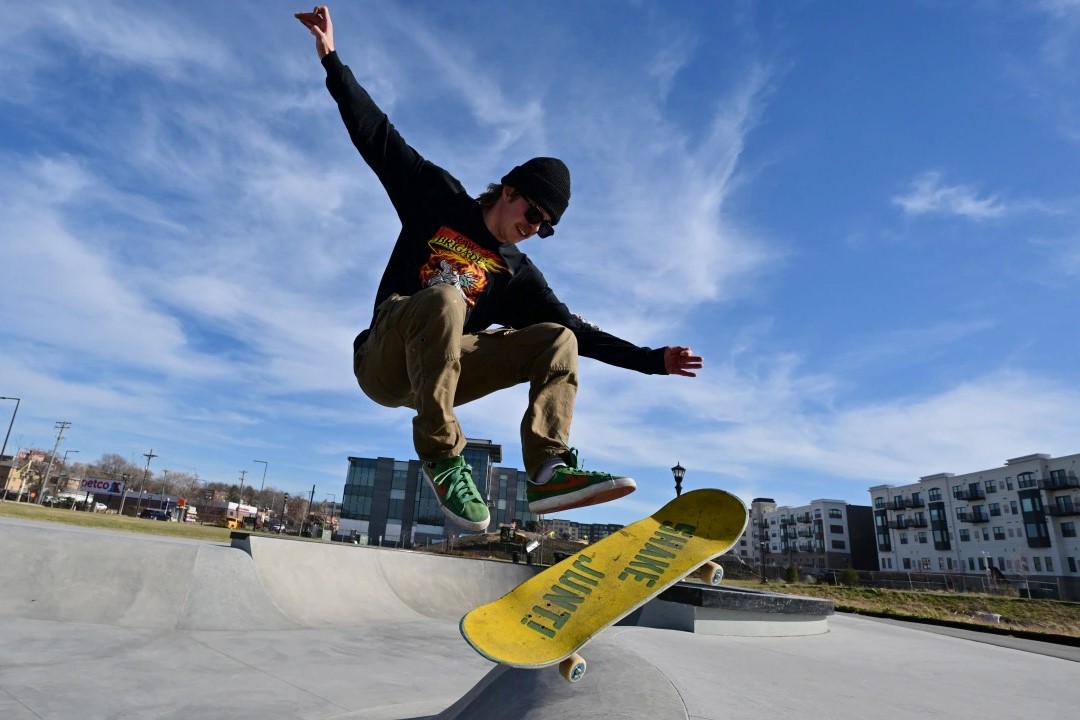
Minneapolis recently opened two new dog parks, added some parks bathrooms and acquired the 53-acre Upper Harbor Terminal land for redevelopment, which will include a 20-acre regional park along the Mississippi River. St. Paul has in recent years opened new parks amenities at Highland Bridge, including a dog park, a skate park, multiple playgrounds, pickleball and basketball courts bordering a canal-like water feature.

“Across the country, there’s this crisis of isolation and loneliness, and parks are where you can come together and rebuild that social connection,” Vorhoff said. “I have a three-year-old and a baby and I’m spending a lot of time at Highland Bridge parks. … I have found that Highland Bridge has really social parks for parents. Maybe people are really excited about the new investment there.”

Alongside its annual index, the Trust for Public Land issued a new research report, “The Power of Parks to Strengthen Community,” that found that residents of cities ranking in the top quarter of the ParkScore index were 60% more likely to have volunteered in the past 12 months than residents of lower-ranking cities.

Residents of higher-ranking cities were also 26% more likely to form friendships with people in different socio-economic groups, a proven strategy toward increasing economic mobility and reducing inequality.

Other factors considered in ParkScore

Among the 100 ParkScore cities indexed, there was on average 45% less park space in low-income neighborhoods and neighborhoods where most residents identify as people of color than in more affluent neighborhoods and predominantly white neighborhoods. Those disparities were less evident in St. Paul, home to some 270 parks, but even more evident in Minneapolis, according to the index.

St. Paul continues to fare well above average when it comes to parks spending per capita, a ratio that is poised to increase with a new 1% sales tax approved by voters last November with the goal of funding a backlog of road reconstruction and a wide variety of park maintenance and new parks projects.

The pandemic drew many people outdoors, inspiring many cities to leverage federal stimulus dollars to increase investments in their outdoor spaces. Nationally, average park spending per resident increased to a new high of $124, up from $108 the year prior.

Cities were ranked in this year’s ParkScore index based on the percentage of residents living within a 10-minute walk of a park, park equity, a city’s median park size and the percentage of city area dedicated to parks, park spending per resident and the availability of six particular amenities: basketball hoops, off-leash dog parks, splashpads and other water-play structures, recreation and senior centers, playgrounds and restrooms.

The top 10 cities, based on their index ranking between 1-100, were Washington, D.C. (84.8), Minneapolis (82.5), St. Paul, (81.6), Irvine, Calif. (80.1), Arlington, Va. (79.2), Seattle, Wash. (77.4), San Francisco, Calif. (76.5), Cincinnati, Ohio, (75.8), Portland, Ore. (74) and Chicago, Ill. (71.8).

For more information, visit tpl.org.

Related Articles

Local News |


St. Paul student with Down syndrome receives national anti-bullying award

Local News |


‘It’s not a bandwagon. It’s a party bus’: Everybody is on board with the Timberwolves, even lifelong hockey fans

Local News |


Amtrak launches the Borealis, a second daily train between St. Paul and Chicago

Local News |


Bruce Corrie: We have a distinct opportunity in downtown St. Paul

Local News |


Minneapolis investment group buys Schmidt Brewery’s Rathskeller on St. Paul’s West Seventh

St. Paul schools could pass $1B budget again despite looming revenue shortfalls

posted in: All news | 0

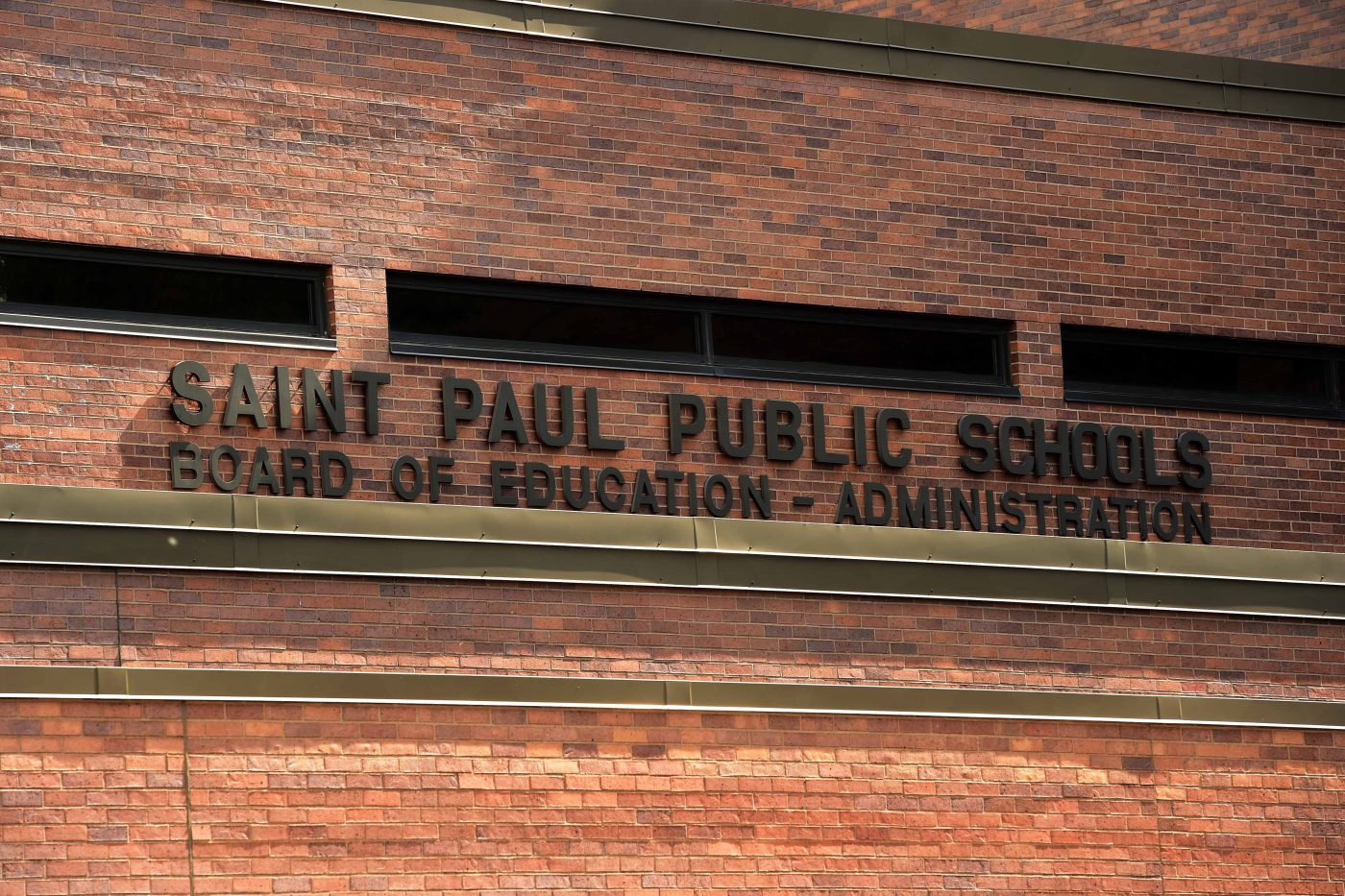
St. Paul’s school board could pass a $1 billion budget for the second year in a row, though it will have to spend about $37 million from its general fund reserves in order to do so.

That’s according to St. Paul Public Schools finance chief Tom Sager, who briefed school board members Tuesday as the district works toward setting its next budget, which it will adopt next month.

Another $1 billion budget comes as the district expects to take in significantly less revenue than it did last year due to the expiration of federal pandemic aid. In all, the district plans to spend about $170 million more than it will be taking in – though much of that will be from funds that aren’t directly controlled by school board policy, like the capitol project fund and debt service fund.

Sager said that while his presentation is not a final recommendation, it provides “a clear picture of where this budget is heading.”

St. Paul schools face a more than $100 million shortfall largely driven by the expiration of funding from the federal American Rescue Plan Act and district leaders have been working toward identifying budget cuts for the upcoming year.

Areas for reductions identified so far included cuts to training for teachers aimed at achieving district math and literacy goals and community education.

District leaders notified schools of budget allocations earlier this spring and schools have been working to identify cuts in order to work with budget shortfalls. Already, some schools are looking at eliminating arts and music programs to work with smaller budgets. Special-education interpreters are also facing cuts.

So how is the budget in 10-digit territory once again even after the announcement of a major shortfall?

While other programs are losing money from the general fund — about $114 million due to the expiration of funds from the American Rescue Plan Act — there’s been a boost in construction spending and debt service payments.

Sager said favorable bond sales for previously approved building construction is why there will be more spending on projects.

Construction projects, which are financed from a different source of money than general operating expenses for the district, are set to grow by $89 million, and debt payments, which also come from a separate fund, are expected to grow by close to $10 million.

Those aren’t directly under school board control and aren’t related to cuts to other programs or staff.

During public comment at Tuesday’s meeting, students in arts and music programs asked the board to reconsider reductions in general fund expenses. There’s more time for the school board to review community priorities before it sets its final budget.

St. Paul schools aren’t alone in seeing budget strain. Many districts across the state have budget shortfalls despite a significant bump in state funding for education last year. And that’s despite record state aid delivered in last year’s budget. The district is set to receive more than $56 million in additional ongoing state aid tied to inflation.

More than 70% of Minnesota’s metro school districts expect deficits, according to the Association of Metropolitan School Districts.

The biggest is in St. Paul, which is the state’s second-largest district with about 33,000 students. Minneapolis Public Schools, also among the state’s biggest with about 30,000 students, has a deficit of around $90 million.

Related Articles

Education |


Markus Flynn: Beyond Brown — the unfinished journey toward educational equity

Education |


‘So much to see right in our back yard’: Longtime St. Paul tour guide leads her last trip

Education |


St. Paul schools names John Thein as interim superintendent — again

Education |


St. Paul high school 4-year graduation rate drops amid slight statewide decline

Education |


Markus Flynn: With a coalition and collective action, we’ll address the scarcity of Black male teachers

Loons player Emanuel Reynoso seen in troubling video

posted in: News | 0

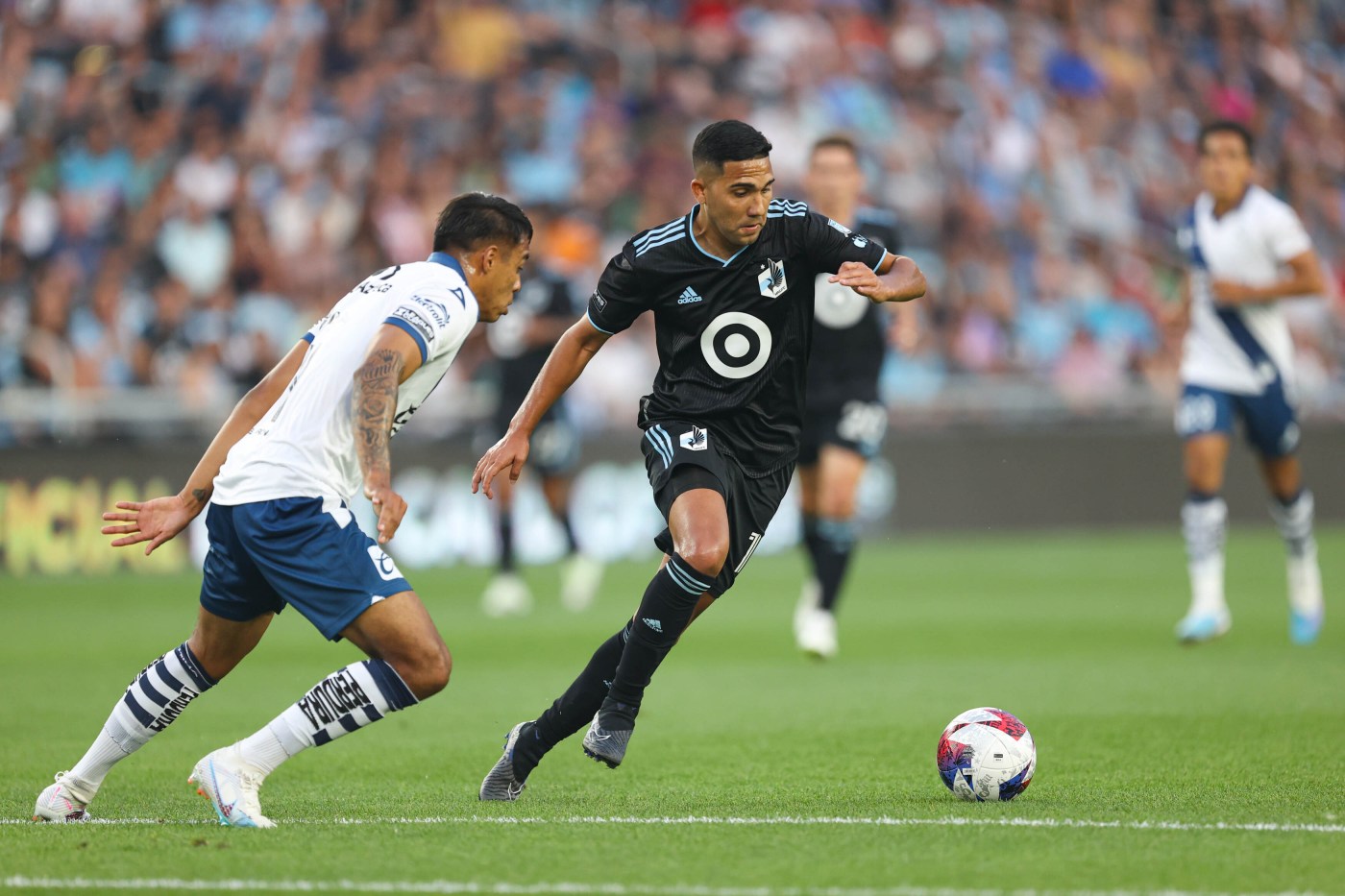
Emanuel Reynoso has a checkered past with guns and another troubling incident has surfaced.

The Cordoba, Argentina news outlet El Doce shared a short video Tuesday of the current Minnesota United midfielder holding a bag with what appears to be several stacks of cash. An unidentified man also is in the video holding the likeness of a handgun and more bundles of money.

ElDoce.tv — according to a translation from Spanish — said the source who shared the video is from the same area where Reynoso’s family lives in Argentina. The source remained anonymous but said Reynoso and friends have been a nuisance during Reynoso’s time away from Minnesota over the previous two months.

Minnesota United midfielder Emanuel Reynoso, right, is in a screenshot of a video posted by El Doce.tv on Tuesday. The Argentina news outlet shows Reynoso holding a bag with what appears to be stacks of money and an unidentified man holding the likeness of a handgun and more money. Via ElDoce.tv

The Loons are looking to offload Reynoso, with Club Tijuana in Mexico’s Liga MX becoming a potential suitor via a transfer deal on Tuesday.

MNUFC did not immediately respond to a request for comment late Tuesday night.

Reynoso was supposed to only briefly leave Minnesota after making his season debut against Los Angeles FC on March 15. He had a team-organized U.S. green card appointment in Argentina the week of March 18 and the plan was for him to promptly return to Minnesota and continue with the MLS season.

But Reynoso, 28, remained in Argentina and MNUFC deemed it an unexcused absence. He returned to Minnesota around May 10 and was put on a return-to-play protocol that required him to workout on his own for the time being.

Reynoso has had previous run-ins with the law in Argentina. In December 2021, he was accused of hitting and threatening a then-16-year-old boy with a gun in Cordoba. Reynoso was detained in jail for approximately 10 days until posting bail.

When he returned to Minnesota, he addressed that accusation of assault, saying “everything was solved.”

Reynoso acknowledged to the Pioneer Press in 2020 that he was present at a shooting in Argentina in 2017 but said he “didn’t participate.” Prosecutors said at least 20 bullets were fired but no one was injured, The Clarin newspaper reported.

When Reynoso was age 18 in 2014, he said he suffered a gunshot wound in his left leg when he and friends were riding motorcycles. Two other people on motorcycles sped past Reynoso before confronting him, he shared.

“They tried to rob me, and that’s when they shot me,” Reynoso said. “It hit my knee.”

Reynoso also didn’t report to Minnesota for the first five months of the 2023 season and was suspended without pay by MLS. He came back in May and played in 18 matches starting in June. He said that absence was due to personal matters.

Reynoso, who has watched the last two MNUFC games from the stands at Allianz Field, is currently under contract with United until the end of the 2025 season. He is the club’s second-highest paid player at $2.2 million, according to MLS Players Association.

He has scored 22 goals and contributed 20 primary assists in 90 MLS games for the Loons since 2020.