Other voices: Fix America’s cruel and unusual tax code

posted in: News | 0

The Internal Revenue Service recently piloted a program to help Americans cope with their notoriously complex tax system. Direct File was meant to help taxpayers in 12 states prepare and submit their returns electronically. Some 19 million people were eligible to use it. Thanks partly to a rollout late in the tax-preparation season, fewer than 1% of them actually did.

The IRS was pleased with the results nonetheless: Taxpayers who used the system said they liked it, according to a survey, and the idea all along was to “start small, make sure it works and then build from there.” Fine. So what about next steps? “No decision has been made about the future of Direct File at this time,” the agency says.

Dull as the topic of tax administration might seem, it demands far more ambition and urgency. Each year Americans spend roughly 2 billion hours and more than $30 billion on personal tax-preparation fees. This compliance burden falls disproportionately on the less well-off. The system’s complexity also means that credits often go unclaimed; again, in relative terms, the lower-paid suffer the biggest losses. At the top of the income scale, in contrast, complications yield loopholes — and every loophole dictates higher taxes for the rest.

A working Direct File system would be a start, but it’s the least of what’s required to disentangle the mess Congress has created. Next year, legislators will have to think about tax reform as changes in the 2017 Tax Cuts and Jobs Act expire. They should use the moment to simplify the system and follow the example of many other advanced economies: Spare taxpayers the need to fill out any return at all.

Two complementary strategies would make this feasible.

First, go one better than Direct File by tasking the IRS to pre-populate the main tax form for most taxpayers. The agency already has much, and in many cases all, of the information it needs. According to one recent study, roughly 70 million returns — upward of 40% of the total — could be accurately pre-filled.

Second, simplify the code. This is desirable in its own right, because endless accretion of complexities is self-defeating. (Each new incentive or accommodation confounds the others.) In addition, a simpler code would allow more comprehensive use of pre-filled returns. A recent report from the Brookings Institution suggests some options. To be sure, even the least ambitious of these ideas is radical by contemporary standards. It would repeal itemized deductions, preferential rates for capital gains and dividends, head-of-household filing status and the alternative minimum tax, and replace existing personal credits with refundable ones of $1,000 for each family member and a work-related credit that phases out as income rises.

A tall order, politically speaking — yet consider the benefits. By design, it would be both revenue-neutral and fairer than the current code. It would also be vastly easier for the IRS to administer and for taxpayers to understand and endure. With such a system, pre-populated returns could be standard practice.

As it stands, the U.S. system delights the tax-prep industry but imposes enormous avoidable costs on the country’s citizens. It’s abysmal by international standards and violates the Eighth Amendment’s prohibition against cruel and unusual punishment. Next year, changes to the tax code will be unavoidable. For once, maybe Congress can come up with a reform worth the name.

— The Bloomberg Opinion editorial board

Related Articles

Opinion |


Pamela Paul: What flies on campus won’t necessarily fly in the bigger world off campus

Opinion |


Other voices: China embraced electric vehicles. The U.S. didn’t. Now we’re paying the price

Opinion |


Robert Pearl: Medical malpractice in the age of AI: Who will bear the blame?

Opinion |


Jacobson, Jokela: What should we fear with AI in medicine?

Opinion |


F.D. Flam: Fake scientific studies are a problem that’s getting harder to solve

In new Grand Ave window displays, 30 years of festive Circus Juventas costumes

posted in: News | 0

To mark its 30th anniversary, the youth circus school Circus Juventas is displaying more than 30 costumes from past shows in windows on Grand Avenue.

The window displays, themed with props and descriptive cards, are along the corner of Grand and Victoria Street, in the former Pottery Barn store that closed earlier this year.

Costumes from previous Circus Juventas shows, as well as other pieces of youth circus memorabilia, are shown in window displays on May 29, 2024. The displays, in the former Pottery Barn store on the corner of Grand Avenue and Victoria Street, are set to remain in place until June 15. (Jared Kaufman / Pioneer Press)

The Circus Juventas costumes are currently scheduled to be on display until June 15, but the show could be extended further into the summer pending the approval of the building’s owner, the State Teachers Retirement System of Ohio.

That company, a pension fund based in Columbus, has been the subject of some criticism over rising vacancy rates among its Grand Avenue real estate holdings. The company has been quite receptive to the costume display project, though, said Carolyn Will, a Circus Juventas spokesperson who helped coordinate the show.

And the timing of the exhibition coincides with Grand Old Day, the recently revived annual street festival that’s set to take place this year on Sunday, June 2. This year’s Grand Old Day will stretch from Snelling Avenue to Dale Street, a smaller footprint than in years past, but will include a parade, several music stages and live wrestling.

St. Paul Mayor Melvin Carter, City Council member Rebecca Noecker and Grand Avenue Business Association president Chris Jensen spoke at an unveiling event for the window displays Wednesday morning.

A centerpiece of the exhibition is a pair of costumes Circus Juventas founders Dan and Betty Butler wore during their own circus performing careers; the couple met as teenagers at the Sailor Circus in Sarasota, Fla.

Last fall, the Butlers passed the St. Paul youth circus to new leaders: Rob Dawson, a Cirque du Soleil alum, became executive director, and the Butlers’ daughter, Rachel Butler-Norris — who, for the past 15 years, has been the assistant artistic director alongside her mother — took on the artistic director role in her own right.

Circus Juventas executive director Rob Dawson, right, and artistic director Rachel Butler-Norris smile in front of window displays of past Circus Juventas costumes on May 29, 2024. Dawson and Butler-Norris took over their roles from Circus Juventas founders Dan and Betty Butler in fall 2023. (Photo courtesy Gabrielle Ripley)

“Taking over from them has been surreal, and I’m trying to honor their legacy always, but this 30th year especially,” Butler-Norris said after the unveiling event. “And I’m really happy and proud to be able to see their costumes.”

Because many performers are able to keep their costumes after Circus Juventas shows close, tracking them down was a logistical challenge, Butler-Norris said.

And currently, the school’s costume designers are busy creating pieces for Circus Juventas’s summer show, “Jangala,” The annual show, which tells a new story each year, highlights the school’s top performers with professional-grade production value.

“Jangala” runs for 15 performances between July 26 and Aug. 11. Tickets go on sale June 10 at circusjuventas.org.

Related Articles

Arts |


Russell’s Bar and Grill to open in Tavern on Grand space

Arts |


Nacho mania: Seven of our favorite plates of chips, cheese and more in the east metro

Arts |


Spring and summer arts and entertainment: 20+ family-friendly community festivals and celebrations worth checking out in 2024

Arts |


St. Paul’s Grand Old Day set to return on Sunday, June 2

Arts |


Literary pick for week of March 10: ‘Oskar’s Voyage’

Pamela Paul: What flies on campus won’t necessarily fly in the bigger world off campus

posted in: Adventure | 0

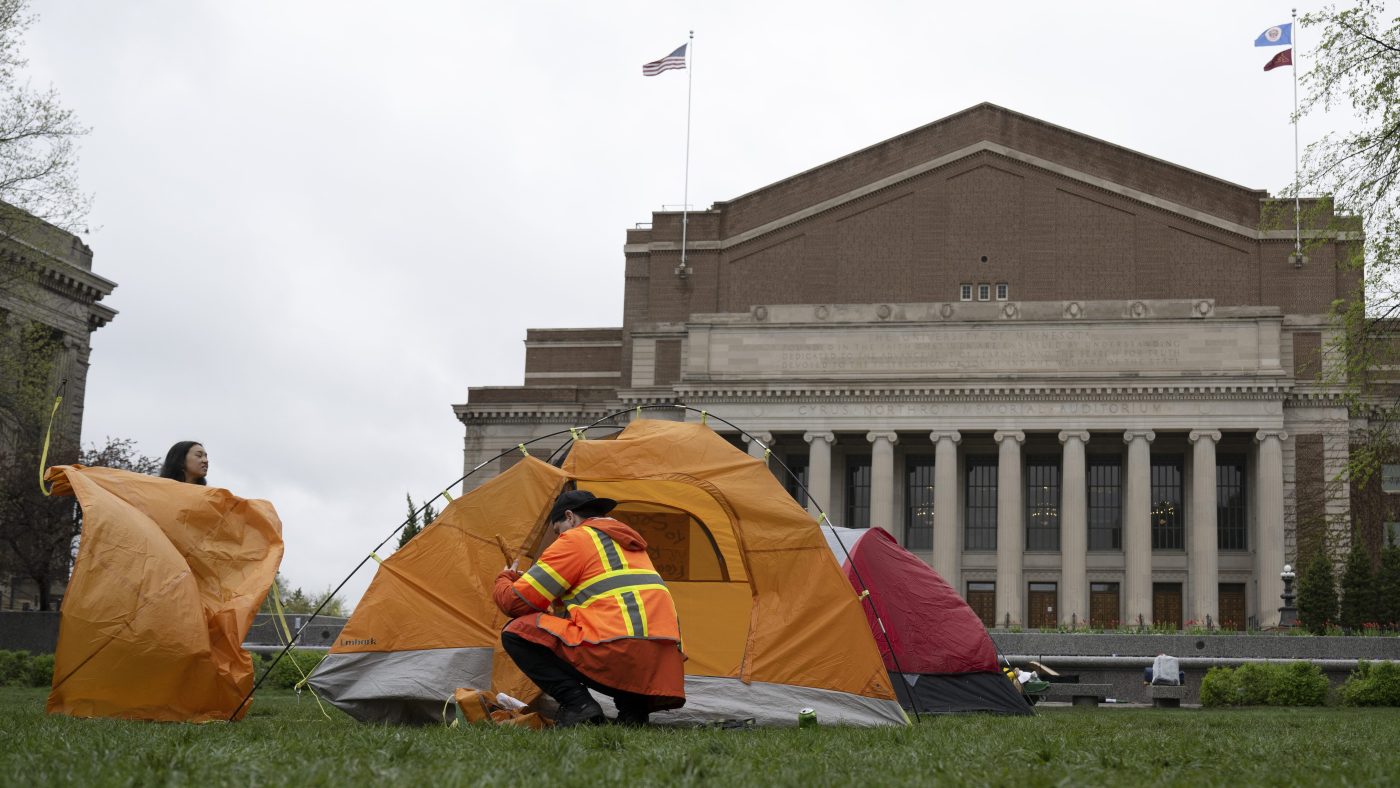
The encampments have been cleared; campuses have emptied; protester and counterprotester alike have moved on to internships, summer gigs and in some cases, the start of their postgraduate careers.

Leaving aside what impact, if any, the protests had on global events, let’s consider the more granular effect the protests will have on the protesters’ job prospects and future careers.

Certainly, that matters, too. After all, this generation is notable for its high levels of ambition and pre-professionalism. They have tuition price tags to justify and loans to repay. A 2023 survey of Princeton University seniors found that nearly 60% took jobs in finance, consulting, tech and engineering, up from 53% in 2016.

A desire to protect future professional plans no doubt factored into the protesters’ cloaking themselves in masks and kaffiyehs. According to a recent report in The New York Times, “The fear of long-term professional consequences has also been a theme among pro-Palestine protesters since the beginning of the war.”

Activism has played a big part of many of these young people’s lives and academic success. From the children’s books they read (“The Hate U Give,” “I Am Malala”), to the young role models that were honored, (Greta Thunberg, David Hogg), to the social justice movements that were praised (Black Lives Matter, MeToo, climate justice), Gen Z has been told it’s on them to clean up the boomers’ mess. Resist!

College application essays regularly ask students to describe their relationship with social justice, their leadership experience and their pet causes. “Where are you on your journey of engaging with or fighting for social justice?” asked one essay prompt Tufts University offered applicants in 2022. What are you doing to ensure the planet’s future?

Across the curriculum, from the social sciences to the humanities, courses are steeped in social justice theory and calls to action. Cornell University’s library publishes a study guide to a 1969 building occupation in which students armed themselves. Harvard University offers a social justice graduate certificate. “Universities spent years saying that activism is not just welcome but encouraged on their campuses,” Tyler Austin Harper noted recently in The Atlantic. “Students took them at their word.”

Imagine the surprise of one freshman who was expelled at Vanderbilt University after students forced their way into an administrative building. As he told The Associated Press, protesting in high school was what helped get him into college in the first place; he wrote his admissions essay on organizing walkouts, and got a scholarship for activists and organizers.

Things could still work out well for many of these kids. Some professions — academia, politics, community organizing, nonprofit work — are well served by a resume brimming with activism. But a lot has changed socially and economically since boomer activists marched from the streets to the workplace, many of them building solid middle-class lives as teachers, creatives and professionals, without crushing anxiety about student debt. In a demanding and rapidly changing economy, today’s students yearn for the security of high-paying employment.

Not all employers will look kindly on an encampment stint. When a group of Harvard student organizations signed an open letter blaming Israel for Hamas’ Oct. 7 attacks, billionaire Bill Ackman requested on the social platform X that Harvard release the names of the students involved “so as to insure that none of us inadvertently hire any of their members.” Soon after, a conservative watchdog group posted names and photos of the students on a truck circling Harvard Square.

Calling students out for their political beliefs is admittedly creepy. But Palestinian protests lacked the moral clarity of the anti-apartheid demonstrations. Along with protesters demanding that Israel stop killing civilians in the Gaza Strip, others stirred fears of antisemitism by justifying the Oct. 7 massacre, tearing down posters of kidnapped Israelis, shoving “Zionists” out of encampments and calling for “globalizing the intifada” and making Palestine “free from the river to the sea.”

In November, two dozen leading law firms wrote to top law schools implying that students who participated in what they called antisemitic activities, including calling for “the elimination of the state of Israel,” would not be hired. More than 100 firms have since signed on. One of those law firms, Davis Polk, rescinded job offers to students whose organizations had signed the letter Ackman criticized. Davis Polk said those sentiments were contrary to the firm’s values. Another major firm withdrew an offer to a student at New York University who also blamed Israel for the Oct. 7 attack. In a Wall Street Journal op-ed, a professor at the University of California, Berkeley School of Law urged employers to not hire those of his students he said were antisemitic.

Two partners at corporate law firms, who asked to speak anonymously since other partners didn’t want them to talk to the media, said that participating in this year’s protests, especially if it involves an arrest, could easily foreclose opportunities at their firm. At one of those firms, hiring managers scan applicants’ social media histories for problems. (Well before Oct. 7, students had keyed into this possibility, scrubbing campus activism from their resumes.)

Also, employers generally want to hire people who can get along and fit into their company culture, rather than trying to agitate for change. They don’t want politics disrupting the workplace.

“There is no right answer,” Steve Cohen, a partner at a boutique litigation firm, Pollock Cohen, said when I asked if protesting might count against an applicant. “But if I sense they are not tolerant of opinions that differ from their own, it’s not going to be a good fit.” (That matches my experience with Cohen, who had worked on Ronald Reagan’s presidential campaign and hired me, a die-hard liberal, as an editorial assistant back in 1994.)

Corporate America is fundamentally risk-averse. As The Wall Street Journal reported, companies are drawing “a red line on office activists.” Numerous employers, including Amazon, are cracking down on political activism in the workplace, the Journal reported. Google recently fired 28 people.

For decades, employers used elite colleges as a kind of human resources proxy to vet potential candidates and make their jobs easier by doing a first cut. Given that those same elite schools were hotbeds of activism this year, that calculus may no longer prove as reliable. Forbes reported that employers are beginning to sour on the Ivy League. “The perception of what those graduates bring has changed. And I think it’s more related to what they’re actually teaching and what they walk away with,” an architectural firm told Forbes.

The American university has long been seen as a refuge from the real world, a sealed community unto its own. The outsize protests this past year showed that in a social media-infused, cable-news-covered world, the barrier has become more porous. What flies on campus doesn’t necessarily pass in the real world.

The toughest lesson for young people of this generation may be that while they’ve been raised to believe in their right to change the world, the rest of the world may neither share nor be ready to indulge their particular vision.

Pamela Paul writes a column for the New York Times.

Related Articles

Opinion |


Other voices: China embraced electric vehicles. The U.S. didn’t. Now we’re paying the price

Opinion |


Robert Pearl: Medical malpractice in the age of AI: Who will bear the blame?

Opinion |


Marc Champion: Yes, Israel is being held to a different standard. But …

Opinion |


Jacobson, Jokela: What should we fear with AI in medicine?

Opinion |


F.D. Flam: Fake scientific studies are a problem that’s getting harder to solve
Trump will try to turn his guilty verdict into campaign fuel

posted in: All news | 0

NEW YORK — Being convicted of a felony — let alone 34 of them – is the kind of blow that would normally tank any politician’s ambitions.

Donald Trump will instead try to turn what might otherwise be a career-ending judgment into campaign fuel.

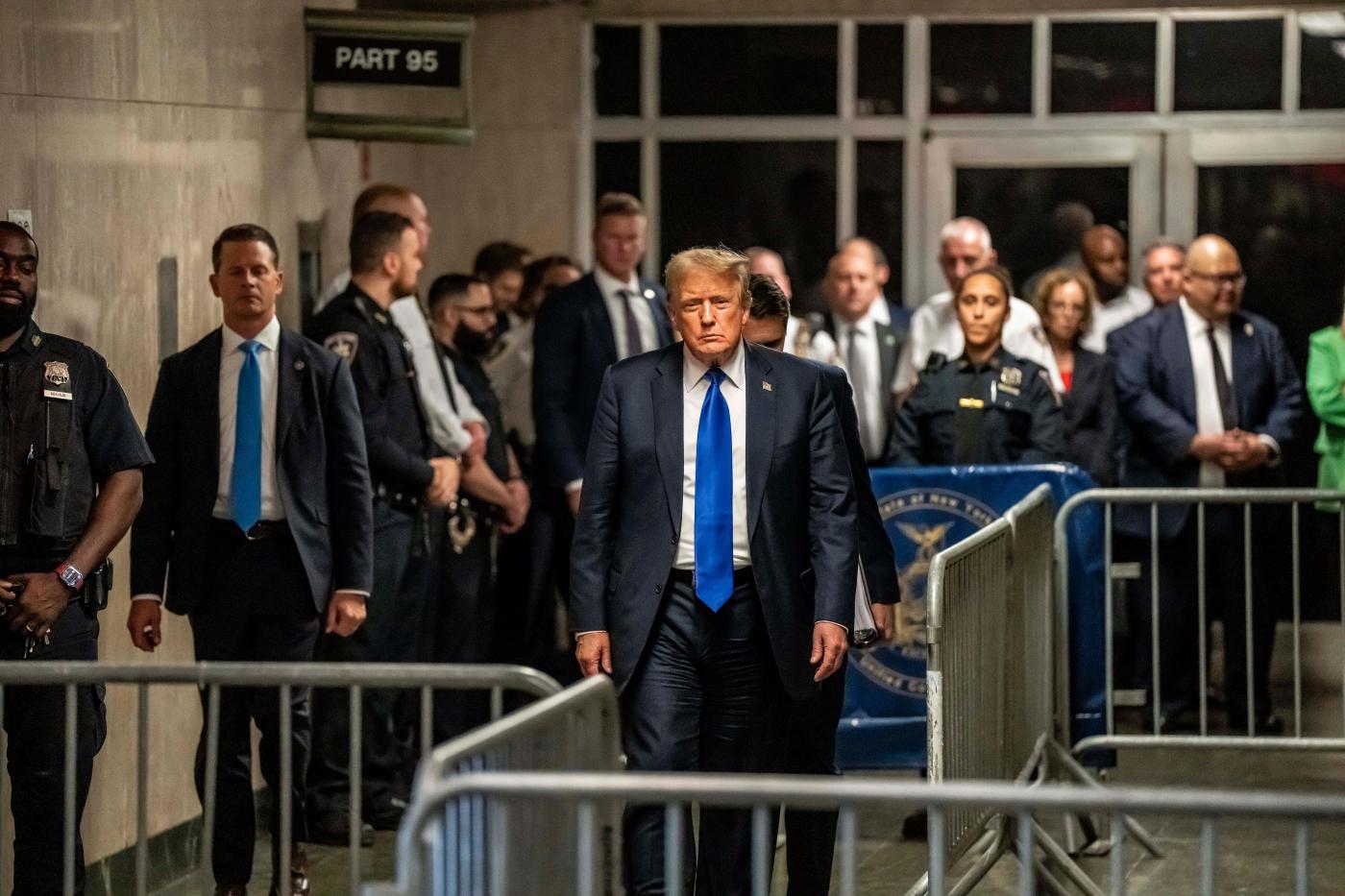
Trump will return to the campaign trail with a news conference at his namesake tower in Manhattan on Friday, a day after he was convicted of trying to illegally influence the 2016 election by falsifying business records to hide a hush money payment to a porn actor who claimed they had sex. His lawyers and allies described him as defiant and ready to fight a verdict they argue is illegitimate and driven by politics.

No former president or presumptive party nominee has ever faced a felony conviction or the prospect of prison time, and Trump is expected to keep his legal troubles central to his campaign. He has long argued without evidence that the four indictments against him were orchestrated by Democratic President Joe Biden to try to keep him out of the White House.

“There is nobody who is more defiant,” said Trump spokesman Jason Miller on Fox News hours after the verdict was read. “He’s ready to get out there and start fighting again.”

Trump and his campaign had been preparing for a guilty verdict for days, even as they held out hope for a hung jury. On Tuesday, Trump railed that not even Mother Teresa, the nun and saint, could beat the charges, which he repeatedly labeled as “rigged.”

His top aides on Wednesday released a memo in which they insisted a verdict would have no impact on the election, whether Trump was convicted or acquitted.

The news nonetheless landed with a jolt. Trump, his team and reporters at the courthouse had been under the impression that the jury on Thursday would wrap up deliberations for the day at 4:30 p.m. Trump sat smiling and chatting with his lawyers as the proceedings seemed to be coming to a close.

Trump had spent the hours before the verdict was announced sequestered in the private courtroom where he had spent breaks throughout the trial, huddled with his attorneys and campaign aides, eating from a revolving lunch menu of McDonald’s, pizza, and subs.

As the jury was deciding his fate, he filled his time making calls, firing off social media missives and chatting with friends, including developer Steve Witkoff, who joined him in court, and North Dakota Gov. Doug Burgum, who is considered a top vice presidential contender.

In a sign that they expected deliberations to continue, Trump’s holding room was outfitted with a television Thursday, according to two people familiar with the setup who, like others, spoke on condition of anonymity to discuss the case.

Instead, Merchan announced that a verdict had been reached. Thirty minutes later, Trump listened as the jury delivered a guilty verdict on every count. Trump sat stone-faced while the verdict was read.

His campaign fired off a flurry of fundraising appeals, and GOP allies rallied to his side. One text message called him a “political prisoner,” even though he hasn’t yet found out if he will be sentenced to prison. The campaign also began selling black “Make America Great Again” caps to reflect a “dark day in history.”

Aides reported an immediate rush of contributions so intense that WinRed, the platform the campaign uses for fundraising, crashed.

Trump campaign spokesman Brian Hughes cited the outpouring as a sign “that Americans have seen this sham trial as the political election interference that Biden and Democrats have always intended.”

“November 5th,” he said, echoing Trump, “is the day Americans will deliver the real verdict!”

Trump has long complained that the trial limited his campaign appearances for several weeks. “I want to campaign,” he had told reporters Thursday morning before a verdict was reached.

It is unclear, however, how much Trump’s schedule will ramp up in the days ahead. He held only a handful of public campaign events as the trial unfolded, despite the fact that he had Wednesdays, as well as evenings and weekends, to do what he wished.

He’s set in the upcoming two months to have his first debate with Biden, announce a running mate and formally accept his party’s nomination at the Republican National Convention.

But before he goes to Milwaukee for the RNC, Trump will have to return to court on July 11 for sentencing. He could face penalties ranging from a fine or probation up to four years in prison.

Related Articles

National Politics |


Donald Trump is convicted of a felony. Here’s how that affects the 2024 presidential race

National Politics |


Trump could still vote for himself after New York conviction if he’s not in prison on Election Day

National Politics |


Guilty: Trump becomes first former U.S. president convicted of felony crimes

National Politics |


Trump’s hush money trial verdict could come this week. Here’s what each outcome could mean for the election

National Politics |


Jurors in Trump hush money trial end 1st day of deliberations after asking to rehear testimony