Other voices: Trumponomics 2.0? Think ‘inflation’

posted in: Politics | 0

Whoever wins November’s election, inflation will present them with an immediate challenge. More than two years after the Federal Reserve started raising interest rates to alleviate a pandemic-era price spike, the so-called core consumer price index remains well above the central bank’s target. It’s a bit puzzling, then, that former President Donald Trump’s economic agenda seems to be dedicated to raising prices.

What policies would a second Trump administration pursue? The former president hasn’t been a model of clarity on the campaign trail, but some general themes have emerged.

Tariffs, one of Trump’s only consistent enthusiasms, are a sure thing. Starting in 2018, his administration imposed several rounds of duties, prompting predictable retaliation. Combined, these measures eliminated jobs, slashed incomes and cost consumers about $51 billion annually. Now Trump wants to impose tariffs of 60% on Chinese-made products and 10% on other imports. Bloomberg Economics estimates that this would raise consumer prices by 2.5% over two years and reduce growth by 0.5%. Trump has also promised a 100% duty on imported cars. Details TBD — one analyst describes the likely effect as “catastrophic” — but the point is that trade wars of this kind are always prone to raising prices.

Trump’s plans for monetary policy pose a similar risk. According to media reports, his advisers are laying the groundwork for the president to weigh in directly on interest-rate decisions. (His campaign has vaguely disputed these reports.) The rationale for central-bank independence — among the most successful policy innovations of the post-war era — is that politicized monetary policy will tend to have a pro-inflationary bias. In this case, a self-fulfilling prophecy is likely: Consumers and businesses, expecting the Fed to tolerate higher inflation under Trump, will behave in ways that (once again) boost prices.

More directly, the former president is toying with devaluing the dollar. Although the hope is to revive domestic manufacturing, exactly how he’d carry out this plan isn’t clear. (Like many products of Trump World, it seems to be premised on a lot of needless belligerence.) On balance, such manipulation is likely to invite retaliation, erode faith in the dollar and do little to actually boost exports. By raising the cost of imported goods and inputs for domestic producers, it would also (perhaps you’ve sensed a pattern) increase prices.

Trump’s tax plans, finally, would tend in the same direction. He says he’ll extend the expiring provisions of the Tax Cuts and Jobs Act of 2017 and has at times mused about a further reduction in the corporate rate, to 15% from 21%. Recall that the drafters of the law tied themselves in knots to avoid acknowledging its true costs (hence the expirations). Extending it in full would cost about $3.8 trillion by 2033. A 15% corporate rate would cost perhaps a half-trillion more. Trump’s plans for further tax cuts — “I’ll give you a Trump middle class, upper class, lower class, business class big tax cut,” he said at a rally recently — remain rather nebulous, but fiscal discipline does not sound like the governing priority. It’s safe to say (at risk of repetition) that these policies, too, will contribute to higher prices.

Some caveats are in order. Trump doesn’t always mean what he says. He rarely gets what he wants from subordinates. Many of these policies may never come into effect, or may be partly neutralized by the Fed if they do. But what do you get, all else equal, when you add much higher tariffs, a politicized central bank, a deliberately weakened currency and an enormous surge in public borrowing, at a time of already-elevated inflation?

It would be best to not find out.

— The Bloomberg Opinion editorial board

Related Articles

Opinion |


David Brooks: We haven’t hit peak populism yet

Opinion |


As a key labor union pushes into the South, red states push back

Opinion |


As the election nears, Biden pushes a slew of rules on the environment and other priorities

Opinion |


Trump swaps bluster for silence, and possibly sleep, in his hush money trial

Opinion |


Zeynep Tufekci: Scarlett Johansson’s voice isn’t the only thing AI companies want

When suspect shot rifle rounds at Ramsey County sheriff’s deputy, he ducked, swerved and survived

posted in: News | 0

Something wasn’t right as Ramsey County Sheriff’s Deputy Joe Kill pursued a vehicle that wouldn’t pull over. He could feel it.

The driver darkened the vehicle’s headlights and kept turning left onto St. Paul’s streets, in a square pattern. Kill felt they were trying to bait him to get close to the vehicle, so he started backing off.

When he followed them onto the next street, about 30 feet behind, Kill saw the front-seat passenger was part way out the window and sitting on its ledge. He was aiming a tan rifle in the deputy’s direction. Then, he started shooting.

The deputy ducked, swerved the squad to get out of the line of fire, and felt pain just below his shoulder. He knew he’d been hit but wasn’t immediately sure if it was by a rifle round, shrapnel or what it was.

“Six inches higher and the bullet would have come through the windshield and struck him directly,” Sheriff Bob Fletcher told the Ramsey County Board of Commissioners recently.

It was shrapnel that struck Kill and it caused deep-tissue bruising. Kill has returned to work, though he’s still seeing a physical therapist nearly three months after his injuries.

Kill faced the near-death experience less than two weeks after a man with a rifle fired more than 100 rounds at public safety officers, mortally wounding Burnsville officers Matthew Ruge and Paul Elmstrand, along with Burnsville firefighter/paramedic Adam Finseth.

Assaults on law enforcement in Minnesota have been increasing since 2020, statewide data show.

On average, 388 officers were assaulted each year in the decade up to 2019. There were an average of 1,065 officers assaulted annually between 2020 and last year, according to statistics maintained by the Minnesota Bureau of Criminal Apprehension. Most of the assaults resulted in minor or no injuries.

When the Ramsey County Board recognized the sheriff’s office earlier this month during National Police Week, a time for memorializing fallen officers, Fletcher told them he’s seen the work become more perilous in his nearly 47 years in law enforcement.

“The weaponry, the assault rifles, the type of guns that are out there make this job far more dangerous and I will say the attitude toward police, of course has in some cases deteriorated over the years,” Fletcher said. “I think we’re making progress. I think we’ve re-established some relationships and I see signs of improvement there.”

Veteran and hometown officer becomes deputy

Joe Kill, 40, has public service in his blood. His grandfather, John Kill, served in the U.S. Navy during World War II.

When John Kill returned to St. Paul, he became a firefighter. He was a captain in 1972 when he collapsed and died while fighting a fire at Carroll Avenue and Mackubin Street.

Ramsey County Sheriff’s Deputy Joe Kill’s badge is secured to his thigh holster while he sits at his desk in the Ramsey County Law Enforcement Center. (John Autey / Pioneer Press)

Joe Kill joined the Minnesota National Guard and served as a military police officer from 2011 to 2018. He deployed to Guantanamo Bay, Cuba, where he worked in the detention camp.

In Minnesota, he worked as a federal security officer before becoming a community service officer and then a police officer in White Bear Lake, where he grew up.

He became a Ramsey County sheriff’s deputy about three years ago, as the sheriff’s office started its Carjacking and Auto Theft (CAT) team. Kill was a lead investigator on the team, which is tasked with finding suspects, and looking for stolen and carjacked vehicles. Kill was on patrol in that role on March 1 when a St. Paul officer tried to pull over a vehicle, but the driver continued on.

“Immediately it came by me and then I attempted to stop it,” Kill said. He was near the St. Paul Police Department’s Eastern District station when the vehicle drove away from him, heading into the Dayton’s Bluff area.

Related Articles

Crime & Public Safety |


St. Paul man found guilty of kidnapping and robbing woman at gunpoint from Arden Hills parking lot

Crime & Public Safety |


Authorities identify man shot by Crookston officer after allegedly brandishing hatchet

Crime & Public Safety |


Youth programming key to keeping lid on summer gun violence, St. Paul community leaders say

Crime & Public Safety |


Lake Elmo woman who was missing since Thursday night found safe, BCA says

Crime & Public Safety |


Man fatally shot on Green Line platform in St. Paul was 23-year-old from Mounds View

The Honda went through a red light. Kill, driving an unmarked squad, activated its emergency lights and sirens. The driver kept going, but didn’t travel over 30 mph and turned off the Honda’s headlights.

Beyond the driver continuing to take left turns, it wasn’t a normal pursuit because young people who flee from the CAT team typically drive excessively fast, Kill said.

When the rifle fire started on Euclid and Forest streets, Kill said the rounds sounded like a ball-peen hammer hitting his squad. The Honda left the area.

There were bullet fragments at Kill’s feet — what remained from the rounds going through the squad’s hood, the motor and the panel between the engine and passenger compartments.

“The term ‘shrapnel’ really gets contorted,” Fletcher said. “What struck him was a tumbling bullet.”

‘Absolutely helpless’

It was a Friday night and Fletcher was livestreaming his “Live on Patrol,” a broadcast of his patrols that draws large numbers of viewers on Facebook and YouTube, when Kill radioed that shots were fired and he’d been struck by something. The sheriff and other law enforcement, already on the way to the area to provide backup to Kill, hurried to him.

Paramedics checked on Kill at the scene and then Kill’s boss drove him to Regions Hospital, where he had X-rays and was released.

Kill had been struck at the top of his bullet-resistant vest and “the impact shook through the side of my body,” Kill said. A specialist determined his ribs had been displaced. He has numbness through his right arm and couldn’t turn his neck to the right side for awhile.

He’s been going to physical therapy three times a week for his shoulder injury.

Ramsey County Sheriff’s Deputies Joe Kill, right, and Molly Grandner talk about a case they are working on. Grandner, Kill’s significant other, was out of state when he was shot and felt “absolutely helpless,” she said. (John Autey / Pioneer Press)

Kill’s significant other, Molly Grandner, was out of state and Kill was supposed to join them the next day for a vacation with their 1-year-old daughter, and their children from previous relationships.

Grandner’s mother, who was with her, woke up to a phone call saying Kill had been injured, but was OK and was at Regions Hospital. She broke the news to Grandner, who is also a Ramsey County sheriff’s deputy and who investigates violent crime.

Grandner felt “absolutely helpless” since she was far away: “No plane could have got me there fast enough. There was nothing I could do. I had to rely on our team of law enforcement and trust that he was going to be in good hands.”

Attempted-murder charges

Less than two weeks later, the Ramsey County attorney’s office charged Trevion Figgs, 20, with attempted murder. He told investigators he hadn’t tried to kill anyone.

“Figgs asked investigators what they wanted, and they told him they wanted to know why it happened — why it was worth it to fire an assault rifle at the deputy over a traffic stop,” according to the criminal complaint. “Figgs said, ‘Why? If you’re going to put me in jail for the rest of my life anyway …’ Figgs then said he wasn’t going to admit to something he didn’t do.”

After the shots-fired incident, the Ramsey County attorney’s office also charged Figgs with attempted murder in a June 26 shooting in St. Paul’s Payne-Phalen area. A man, then 19, was shot in the back while walking. Police collected 27 shell casings in the area.

A friend of the victim had reportedly posted “negative social media comments” about Marleisha Davenport, a 15-year-old from South St. Paul who was fatally shot in Minneapolis on May 18, 2023. The 19-year-old was shot by someone who drove by in a vehicle, from which there were shouts of, “Long live Marleisha,” the complaint said.

Figgs declined an interview request from the Pioneer Press, and his attorney said he didn’t have a comment at this time.

Prosecutors also charged a 16-year-old girl and a 17-year-old boy, the alleged driver, with attempted murder in the case involving the deputy. The county attorney’s office is seeking to have their cases moved from juvenile to adult court.

Recovering physically and mentally

Ramsey County Sheriff’s Deputies, from left, Joe Kill, Molly Grandner and Joseph Miller walk to a court hearing for Trevion Figgs, the man accused of shooting at Kill’s squad car, at the Ramsey County Law Enforcement Center in St. Paul on May 1, 2024. (John Autey / Pioneer Press)

Kill was on leave from work for about a month to recover physically and to also start processing what happened.

Fletcher assigned him to a unit the sheriff’s office recently started — he’s now an acting sergeant of a team investigating non-fatal shootings. The sheriff said he didn’t want to put Kill back in the CAT unit right away, so he wouldn’t be pursuing vehicles at nighttime and continually reliving memories of what happened, though Kill may choose to return at some point.

He’s good at the work, Fletcher said. Kill recently testified in federal court in an Arden Hills carjacking case he investigated — a 61-year-old was robbed of her vehicle at gunpoint and a then-56-year-old man was charged. A jury found the man guilty on Thursday.

Both Kill and Grandner said their parents worry about them and Kill’s oldest child, an 18-year-old, is acutely aware of his work.

Kill believes assaults on law enforcement officers have increased because “people think they don’t have to listen to us or they think there’s no rules, and the consequences are low.”

Before Kill was hurt, Grandner had thought about the dangers of Kill’s job on the CAT team.

“They are chasing these kids that have no regard for the public,” she said. “All the kids have guns either on them or in the car. It was honestly a matter of time and I was praying that when that day came, Joe was prepared. And thank God he was.”

Related Articles

Crime & Public Safety |


Youth programming key to keeping lid on summer gun violence, St. Paul community leaders say

Crime & Public Safety |


Lake Elmo woman who was missing since Thursday night found safe, BCA says

Crime & Public Safety |


St. Paul City Council, mayor’s office still wrangling with special event costs

Crime & Public Safety |


Pedestrian struck last week on South Robert Street in West St. Paul dies

Crime & Public Safety |


Weather hampers search for 2 canoeists missing in Boundary Waters after waterfalls plunge

Skywatch: Little crown of night sky may pop a new star this summer

posted in: News | 0

Corona Borealis, a Latin name that translates to “Northern Crown,” has always been one of my favorite constellations. It’s small but distinct and bright enough to see even moderately light-polluted skies. This time of year, as evening twilight ends, it puts on a great show nearly overhead in the very high southeastern sky. Sometime this summer, though, it could really surprise us with a new star … more on that in a bit.

(Mike Lynch)

Corona Borealis, the little crown of stars, is not alone in the night sky. It hangs to the lower left of a much larger constellation, Bootes the Herdsman, which resembles a giant celestial kite flying diagonally above.  The tail of this celestial kite is marked by the very bright star Arcturus, which is also the brightest star in the evening sky in late spring and summer. Even with the naked eye, Arcturus stands out with its distinctive orange hue, shining at us from about 215 trillion miles away.

This time of year, it resembles a sideways letter C. However, with just a touch of imagination, Corona Borealis reveals its beauty, a crown or a tiara, a celestial adornment fit for a beauty queen like Miss America. In Australia, it’s seen as a boomerang, and you certainly see why. Admittedly, Corona Borealis may not be a constellation that astronomers get overly excited about. There’s not much to see within its boundaries with a telescope, even a larger one. It lacks prominent star clusters, nebulae or galaxies. In fact, many amateur astronomers affectionately refer to it as “Core Bore.”

The brightest star in the Northern Crown is Alphecca, pronounced al-feck-ah, a hot bluish-white star about 75 light-years away. The light we see from Alphecca tonight left that star in 1949 when the average price of gas in the United States was 17 cents a gallon.  Like many stars, Alphecca is an Arabic name that roughly translates to English as “broken,” referring to the fact that it’s the bright star in a broken ring of stars, which is what Corona Borealis truly is since it’s only a half-ring of stars.

(Mike Lynch)

Just off the lower left of the left side of the sideways C is an extremely faint star, T-Coronae Borealis. There’s no way you can see that star with the naked eye. You’ll have a moderately large telescope, but even then, it’s extremely difficult to find. So why am I bringing it up? Because there is a decent chance that it’ll suddenly dramatically brighten into a new naked star, at least temporarily. T-Coronae Borealis is also known as the “Blaze Star,” but it sure doesn’t blaze that often. In the last 150 years, it’s only blazed up for a few days back in 1866 and again in 1946, but many astronomers predict it could blaze again sometime this summer, give or take.

So, what’s going on? T-Coronae Borealis, about 3,000 light-years away, is a double star system comprising a large red giant star and a dying white dwarf star. As the two orbit each other, the intense gravity of the white dwarf pulls gas off the red giant star. The details are complicated, but the white dwarf star can only acquire so much additional gas before it becomes extremely unstable and ignites in a brief flash of nuclear fusion on its surface, triggering what is known as a nova outburst. When this happens to T-Coronae Borealis it temporarily becomes as bright as Alphecca and also as bright as nearby Polaris, the North Star. In about a week, though, T-Coronae Borealis fades back to obscurity.

Keep your eyes on Corona Borealis. The Northern Crown might soon process another jewel when the Blaze Star blazes away!

Celestial happening this week

This coming Friday morning during early morning twilight, the last quarter crescent moon will be parked just to the lower left of the planet Saturn. Even with a small telescope, you should be able to make out Saturn’s ring system. Off to the far lower left, near the horizon, is the much fainter planet Mars.

Mike Lynch is an amateur astronomer and retired broadcast meteorologist for WCCO Radio in Minneapolis/St. Paul. He is the author of “Stars: a Month by Month Tour of the Constellations,” published by Adventure Publications and available at bookstores and adventurepublications.net. Mike is available for private star parties. You can contact him at mikewlynch@comcast.net.

Related Articles

Outdoors |


Skywatch: Arcturus is the great star of summer and on the rise … for now

Outdoors |


Skywatch: Star hopping in the spring sky

Outdoors |


Skywatch: We’re getting dumped on

Outdoors |


Skywatch: Springtime skies with a touch of summer

Outdoors |


Skywatch: A memorable solar eclipse trip

How many bird species nest in Minnesota? A new book has the answer.

posted in: News | 0

When T.S. Roberts wrote the last really big Minnesota bird book in 1932, “Birds of Minnesota,” ravens were dwindling, bald eagles were scarce and most everyone assumed the giant subspecies of resident Canada goose was extinct.

Flash-forward to 2024, when a new really big bird book, “The Breeding Birds of Minnesota,” is published, ravens are thriving, bald eagles have rebounded beyond anyone’s wildest dreams and there are so many giant Canada geese breeding across the state that they are soiling golf courses and parks in many cities.

“A lot has changed in the nearly 100 years since Roberts tried to document all the species that breed in Minnesota,” said Jerry Niemi, co-author of the new book with fellow ornithologists Jan Green and Lee Pfannmuller. “Roberts thought that ravens were going extinct. It’s exciting to see they are actually thriving in Minnesota.”

Other species that have recovered since Roberts’ two-volume set was published are trumpeter swans, wild turkeys, sandhill cranes and pelicans.

Trumpeter swans, which disappeared from Minnesota and most of North America by the 1950s due to unregulated shooting, have made a remarkable comeback after being reintroduced here in recent decades. (Laura Erickson / Duluth Media Group)

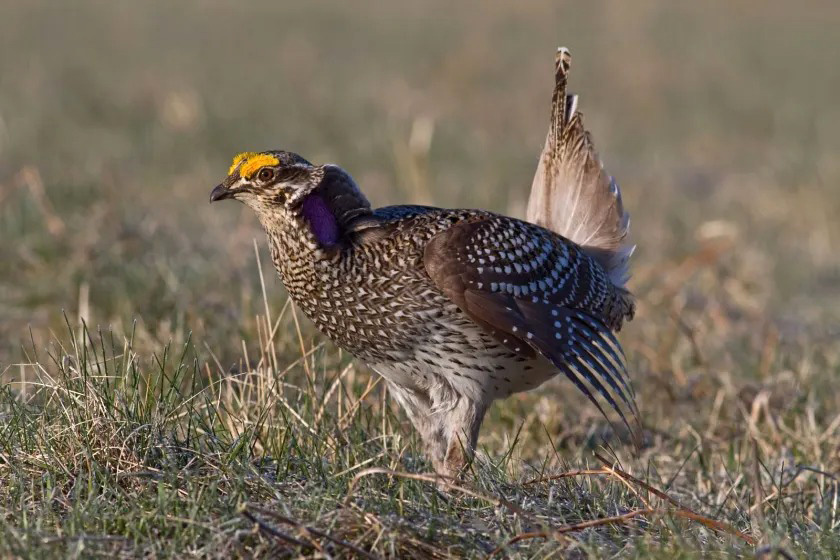
Of course, not all species are doing as well. Sharp-tailed grouse were a thriving upland game species when Roberts wrote his books. Now they are blinking out, fading to zero, across much of their former range in eastern Minnesota. Black terns and eastern meadowlarks have also dwindled. Piping plovers are just barely hanging on.

Clay-colored sparrows were found in nearly every one of the state’s 87 counties, Roberts noted in 1932, and were thriving as recently as the 1990s, but have since crashed to just a quarter of their higher abundance.

“Our goal with the book was to provide a snapshot of where we are compared to where things were. We wanted to include some history on each species,” Niemi said of the 650-page book that includes chapters on all 250 species of birds believed to be nesting in Minnesota. There is some historical data on Minnesota birds in the book dating back to the 1800s.

Other changes since Roberts first published his treatise have been more gradual. The eastern screech owl was the most common owl in the state, according to Roberts’ work. But, more recently, there have been only a few dozen documented statewide. Instead, great horned and barred owls have grown in number and range, likely responsible for the demise of the screech owl, Pfannmuller noted.

Many of the changes since 1932 have been caused by people: cutting forests, lighting fires, transforming prairie to crop fields, draining and plowing wetlands, expanding cities and suburbs, building homes on lakes and in forests, and otherwise altering or destroying habitat. Windows in buildings, lights and vehicles all take a toll on birds. Across the continent, overall bird numbers are down 30% since 1970.

A major change is how many formerly southern species are moving north, Pfannmuller said, pushed by increasing climate change caused by human activities. The red-bellied woodpecker was only seen in extreme southern Minnesota when Roberts made his surveys in the 1930s, near the Iowa border, Pfannmuller said.

Now, as average temperatures have warmed across the state, the woodpecker is seen across Minnesota. The tufted titmouse and northern cardinal, previously rare across much of the state, also have moved north and settled in.

But humans can also help birds. Simply not randomly shooting ravens, hawks and eagles, along with banning the harmful pesticide DDT, allowed many species, like eagles, cormorants and osprey, to return from the brink. People used to shoot birds of prey at Duluth’s Hawk Ridge. Now, they come from all over the world to watch them migrate.

Decades of birding and biology

(Courtesy of the University of Minnesota Press)

Niemi, a retired biology professor from Duluth, was the longtime director of the Center for Water and the Environment at the Natural Resources Research Institute at the University of Minnesota-Duluth. His research focused on birds, the Great Lakes, conservation and natural resource sustainability, and he’s been an avid birder for more than a half-century.

Pfannmuller, of Minneapolis, is the book’s lead author. She’s now retired from posts as executive director at Audubon Minnesota and was director of the Ecological Resources Division of the Minnesota Department of Natural Resources.

Duluth master birder Green, who has been observing and studying Minnesota birds since the 1960s, also was a co-author of the new book. She has been involved with the National Audubon Society, the Duluth and Minnesota Audubon Societies, the Minnesota Ornithologists’ Union and several DNR advisory committees, including the Minnesota Forest Resources Council. She has authored many Minnesota bird books and guides and is co-founder of Hawk Ridge Bird Observatory.

Years in the making

“Breeding Birds of Minnesota” is the culmination of work that started more than 15 years ago when the state’s Legislative-Citizen Commission on Minnesota Resources funded a massive, statewide field project to find out what birds were residents of the state — those that actually nested here and weren’t just passing through. More than 800 researchers fanned out across 1,500 townships in Minnesota and listened and watched for birds.

“We hit about 99% of all townships in the state, even in the Boundary Waters. … I think we might have been unable to get to a few in the Red Lake bog,” Niemi said.

Results of the yearslong field effort called the Minnesota Breeding Bird Atlas were published on a website in 2016. But Niemi, Green and Pfannmuller believed the real value of all that bird research would be to pack it into a book that more people would use — not just other scientists and bird experts, but teachers, librarians and backyard bird lovers.

In 1932, when T.S. Roberts published the first guide to all the birds known to nest in Minnesota, the author surmised that ravens would soon be gone from the state. Instead, nearly 100 years later, they are doing well across Minnesota. (David Brislance via Forum News Service)

“It was long overdue. Most states had already conducted two or even three atlas-type efforts,” Niemi said. “We felt the book needed to be done to capture all the work that was done for the atlas.”

In 2017, the trio started writing chapters for each of the 250 species — each one gets at least two full pages in the book — tracking down photographs — all taken in Minnesota by Minnesota photographers, Niemi noted — and researching the history of those birds in Minnesota for decades, even centuries past. They didn’t finish and send it on to the editors until 2023. It’s available to the public starting this month, published by the University of Minnesota Press.

The book offers an incredibly detailed accounting of not just where the birds are found now, but where they used to be, how abundant they are and what their future might look like given current climate and habitat trends. There are also chapters explaining the state’s diverse habitat regions, from boreal forests to hardwoods and prairie.

“Breeding Birds of Minnesota’’ is definitely not a pocket guide. It’s a massive, coffee-table-sized bible of all Minnesota birds, with photos of each species and detailed maps of their distribution. It’s laden with science and history but includes a mostly easy-to-use table of contents of where in the book to look them up among their type of bird. There’s even a section on birds that once called Minnesota home but no longer exists, like the passenger pigeon and swallow-tailed kite.

“And we joked that you can also use the book for weight training,” Pfannmuller said.

“We thought since we had all the data available (from the field surveys) that putting it into a book would be easy,” Niemi said. “But it took us six years to finish it.”

All three authors are long retired from their professional careers but stuck with the effort even without being compensated for their work.

Golden-winged warblers are found nesting only in certain types of evergreen forests and northern Minnesota is the center of their breeding population, with by far the most of any state or province. (Mike Lentz / Forum News Service)

“It was a labor of love — pretty much a full-time job much of that time,” Pfannmuller said.

The pandemic caused some delays. But the book was slow to finish in part because the authors insisted on writing something on each bird that would not just enlighten but also entertain readers.

“What motivated us is that, while there are several very good field guides to Minnesota birds already out there, nothing had been done that captures the history of all the species we have,” Pfannmuller said. “We’re hoping that everyone who loves birds in Minnesota, and maybe wants to know a little more about them than you’d find in a smaller birding guide, might enjoy this book.”

About the book

“The Breeding Birds Of Minnesota: History, Ecology and Conservation”
By Lee A. Pfannmuller, Gerald J. Niemi and Janet C. Green
University of Minnesota Press, 616 pages, $59.95
upress.umn.edu/book-division/books/the-breeding-birds-of-minnesota

Related Articles

Outdoors |


Peregrine falcon chicks hatched and visible on DNR FalconCam in downtown St. Paul

Outdoors |


This might be the coolest campground in Colorado that no one knows about

Outdoors |


Moose kills Alaska man attempting to take photos of her newborn calves

Outdoors |


Scott Miller, Scott Duffus set Minnesota River paddling record

Outdoors |


‘Not Afraid to Look’ sculpture arrives in Park Rapids to be a part of this summer’s sculpture trail