Noah Feldman: The Supreme Court doesn’t agree on what racism is

posted in: News | 0

According to the Supreme Court, it’s perfectly fine for state legislatures to draw congressional districts according to political party — they just can’t gerrymander by race. This simple-sounding rule poses a serious practical problem, however, in places where there is a high correlation between being Black and voting Democratic. The conservative majority of the court, in a 6-3 decision issued last week, made it much harder for plaintiffs to prove that race, not partisanship, is the reason a given district has been gerrymandered.

The case, Alexander v. South Carolina State Conference of the NAACP, is an object lesson in the conflict between two competing theories of how we should think about racism in America today.

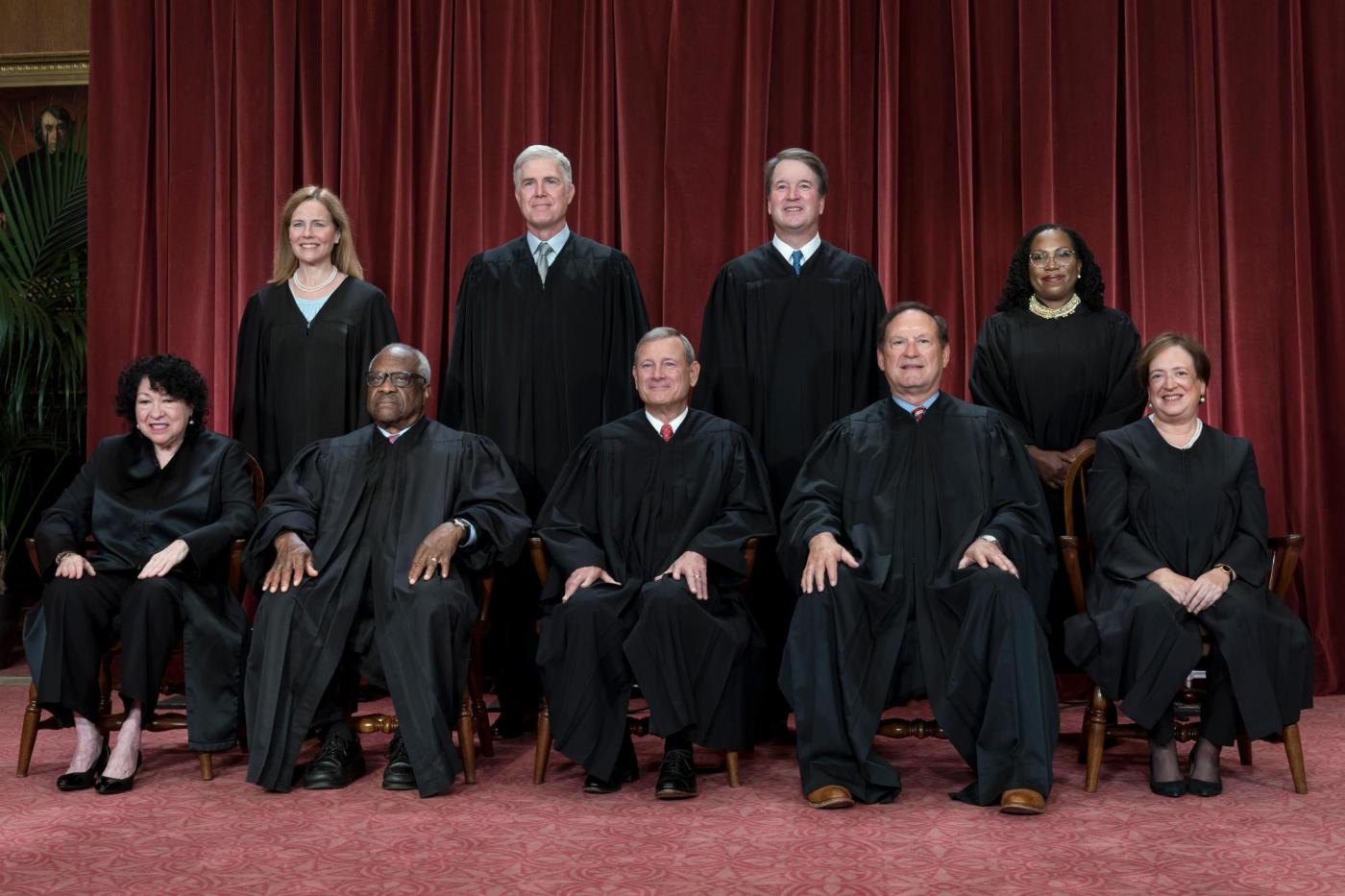
The decisions and dissents are a bit technical. Justice Samuel Alito wrote the majority opinion, which was joined by all the court’s conservatives. Alito argues that courts should assume that legislatures are acting in “good faith.” In other words, faced with a gerrymander in a place like South Carolina where at least 90% of Black voters vote Democratic, we should not presume race was the motivating factor for the Republican-dominated state legislature. To convince the court otherwise, the plaintiffs should compare the contested map with an “alternative map” of a district gerrymandered purely on partisan grounds but not racial ones. In the absence of such an alternative map, Alito wrote, the court should infer that partisanship, not race, was the underlying motive — making the district constitutional.

In dissent, Justice Elena Kagan, joined by the court’s two other liberals, excoriated the good-faith assumption and the requirement of the alternative map. Her point was that, according to Supreme Court precedent, the justices are supposed to accept the gerrymandering decisions of district courts unless those lower court decisions are clearly erroneous. The majority, she emphasized, violated this principle by imposing the presumption of good faith and the requirement of an alternative map.

So much for the law: What’s going on behind the doctrine?

The answer is a profound disagreement about racism between the court’s two factions. Alito and the conservatives think that the Constitution should protect Black people only from the most virulent bigotry — the kind that led South Carolina to embrace slavery until it lost the Civil War and segregation until the Civil Rights movement produced the Voting Rights Act of 1965.

More than that, they believe that such explicit racism has now effectively disappeared. The judicial presumption of good faith is implicitly based on the notion that the white South Carolina Republicans who gerrymandered the district just want Republicans to be elected to Congress and wouldn’t care if those Republicans happen to be Black. Put another way, the court’s conservatives assume that the South Carolina legislature is sticking it to Black South Carolinians because they are Democrats, not because they are Black.

Kagan and the court’s other liberals see it differently. First, they don’t agree that overt racism is dead. A presumption of good faith is therefore premature, to put it mildly. The law shouldn’t be rigged to make it harder to prove racism than to prove other kinds of legal claims.

Second, the court’s liberals implicitly believe that racism today must be understood as more than just personal bigotry. The core idea of structural or systemic racism is that, even if we could all wake up one day miraculously free of any biases, the structures of racial disadvantage created over hundreds of years of slavery and segregation would still be with us. And Black people would still, on average, be more likely to live in locations determined by that history, as is the case in South Carolina. Under this way of thinking, the fact that South Carolina Republicans can gerrymander Black people into a district to limit the influence of Democrats isn’t a neutral act or even a purely partisan one.

At a legal level, you could see the Supreme Court’s split in this case as a consequence of its refusal to find partisan gerrymandering unconstitutional. Kagan tried hard to get Justice Anthony Kennedy, the court’s swing vote from about 2006 to his retirement in 2018, to hold partisan gerrymandering to be a constitutional violation. She came close, leading Kennedy to at least entertain the possibility, but in the end, she lost the flight. Now the court is differently configured, and the conservatives are following the logical implications of their acceptance of partisan gerrymandering.

At a more fundamental level, the divide on the court reflects a divide in the country about race and racism. In that respect, this case is similar to last year’s major decision on affirmative action in college admissions. We can expect more of the same in the years to come.

Noah Feldman is a Bloomberg Opinion columnist. A professor of law at Harvard University, he is author, most recently, of “To Be a Jew Today: A New Guide to God, Israel, and the Jewish People.”

Related Articles

Opinion |


Pamela Paul: What flies on campus won’t necessarily fly in the bigger world off campus

Opinion |


Other voices: China embraced electric vehicles. The U.S. didn’t. Now we’re paying the price

Opinion |


Robert Pearl: Medical malpractice in the age of AI: Who will bear the blame?

Opinion |


Marc Champion: Yes, Israel is being held to a different standard. But …

Opinion |


Jacobson, Jokela: What should we fear with AI in medicine?
Florida sheriff’s office fires deputy who fatally shot Black airman at home

posted in: News | 0

By TERRY SPENCER (Associated Press)

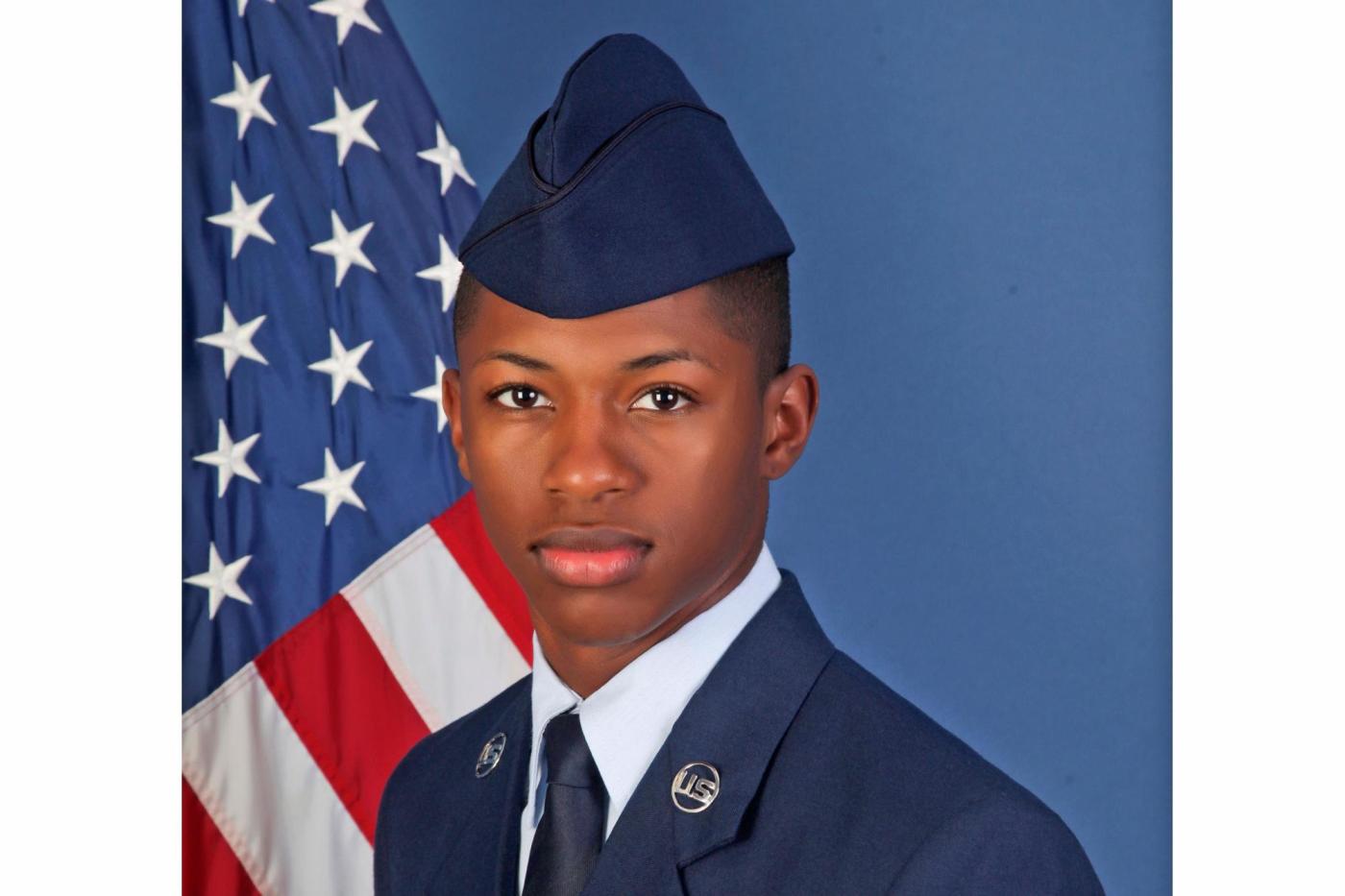
A Florida sheriff on Friday fired a deputy who fatally shot a Black airman at his home while holding a handgun pointed to the ground.

Okaloosa County Sheriff Eric Aden fired Deputy Eddie Duran, who fatally shot Senior Airman Roger Fortson on May 3 after responding to a domestic violence call and being directed to Fortson’s apartment.

Body camera video shows that when the deputy arrived outside Fortson’s door, he stood silently for 20 seconds outside and listened, but no voices inside are heard on his body camera.

He then pounded on the door, but didn’t identify himself. He then moved to the side of the door, about 5 feet away (1.5 meters). He waited 15 seconds before pounding on the door again. This time he yelled, “Sheriff’s office — open the door!” He again moved to the side.

Less then 10 seconds later, he moved back in front of the door and pounded again, announcing himself once more.

Fortson, 23, opened the door, his legally purchased gun in his right hand. It was at his side, pointing to the ground. The deputy said “Step back” then immediately began firing. Fortson fell backward onto the floor.

Only then did the deputy yell, “Drop the gun!”

Aden said Duran was wrong to fire his weapon.

“This tragic incident should have never occurred,” Aden said in his statement. “The objective facts do not support the use of deadly force as an appropriate response to Mr. Fortson’s actions. Mr. Fortson did not commit any crime. By all accounts, he was an exceptional airman and individual.”

No phone number could be immediately found for Duran.

A criminal investigation by the Florida Department of Law Enforcement is ongoing.

Mexico’s drug cartels and gangs appear to be playing a wider role in Sunday’s elections than before

posted in: News | 0

By FABIOLA SÁNCHEZ and ARMANDO SOLÍS (Associated Press)

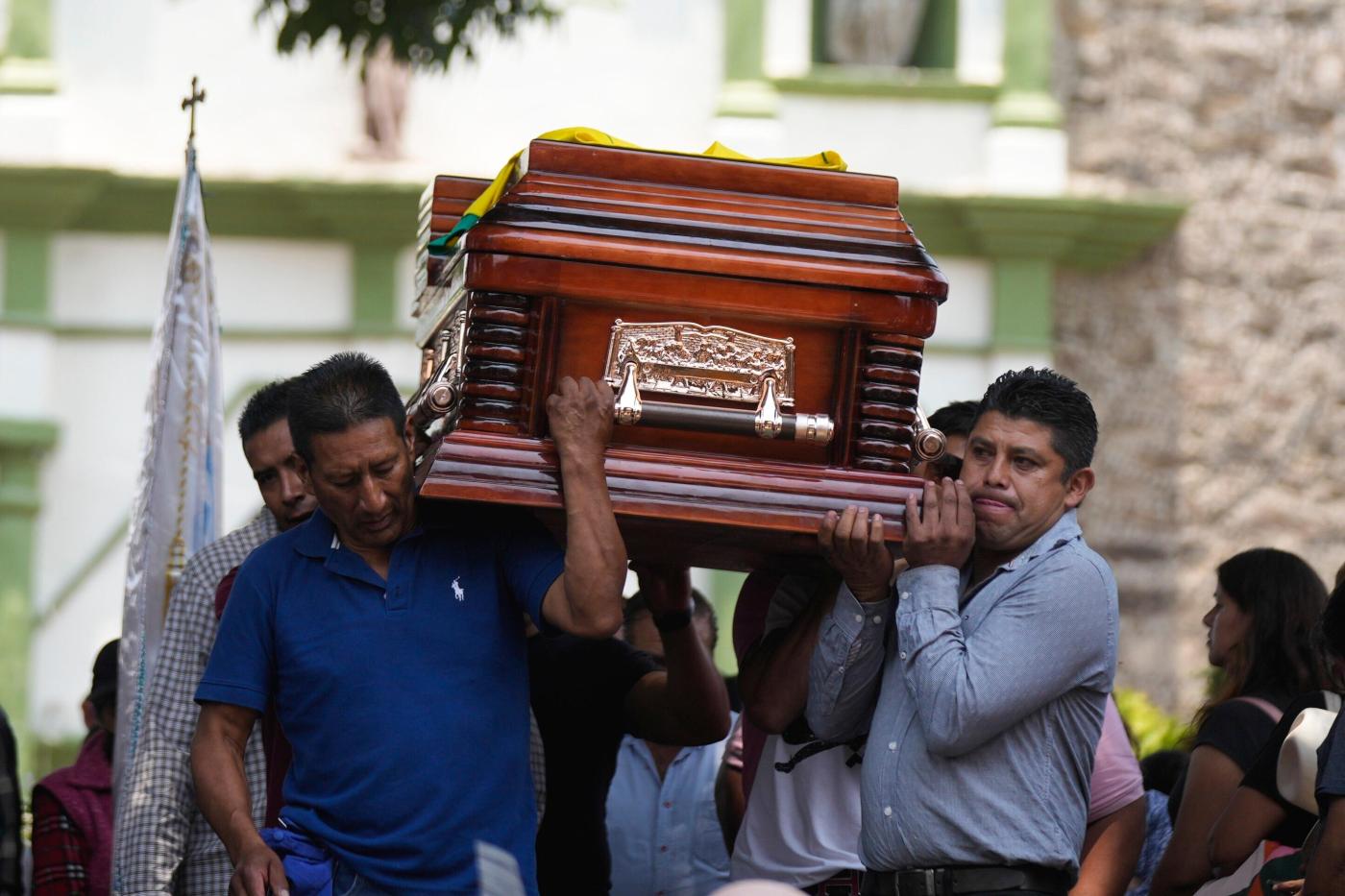
COTIJA, Mexico (AP) — Mexico’s drug cartels and gangs appear to be playing a wider role in Sunday’s elections that will determine the presidency, nine governorships and about 19,000 mayorships and other local posts.

The country’s powerful drug cartels have long staged targeted assassinations of mayoral and other local candidates who threaten their control. Gangs in Mexico depend on controlling local police chiefs, and taking a share of municipal budgets; national politics appear to interest them less.

But in the runup to Sunday’s vote, gangs have increasingly taken to spraying whole campaign rallies with gunfire, burning ballots or preventing the setting up of polling stations — even putting up banners seeking to influence voters.

Security analyst David Saucedo says it’s likely some drug gangs will try to force voters to cast ballots for their favored candidates.

“It it is reasonable to assume that the cartels will mobilize their support bases during Sunday’s elections,” Saucedo said. “They have loyal voters who they have won over through the distribution of food packages, cash, medicine and infrastructure projects. They will use them to support narco-candidates.”

In some places, it appears the gangs are encouraging people to vote while discouraging voting in areas controlled by their rivals.

On Friday, electoral authorities reported that assailants burned a house where ballots were being stored ahead of Sunday in the violence-wracked town of Chicomuselo, in the southern state of Chiapas. While they did not say who was behind the attack, the town is completely dominated by two warring drug cartels, Jalisco and Sinaloa.

On May 14, gunmen apparently linked to a cartel shot and killed 11 people in a single day in Chicomuselo. On May 17, five people were killed along with a mayoral candidate when gunmen opened fire on a crowd in the town of La Concordia, Chiapas, about 45 miles (75 kilometers) east of Chicomuselo.

Targeted assassinations of local candidates continued. On Wednesday, dramatic video images showed a mayoral candidate in the southern state of Guerrero being shot in the head at point-blank rage with a pistol.

And mass attacks on campaign rallies, once exceedingly rare in Mexico, are becoming common.

Also on Wednesday, the last official day of campaigning, unidentified gunmen opened fire a couple of blocks away from a mayoral candidate’s final campaign rally in the western state of Michoacan, sending hundreds of people scrambling for safety.

“It seemed like a normal evening, like the campaign closers of other candidates,” said Angélica Chávez, a homemaker who was at the rally in Cotija. “Then there were gunshots, several rounds of gunfire very close. And then people started running and diving to the ground, crouching.”

Chávez was hurt in the stampede and had to take refuge in a local church.

In Celaya, a city in Guanajuato, gunmen opened fire on a campaign event in April, killing a mayoral candidate and wounding three of her supporters.

Saucedo, the analyst, sees the shootings as a sign that narco gangs are no longer willing to see their handpicked candidates lose.

“Rather than allow the victory of a candidate who is not in line with their criminal interests, or allow a candidate linked to a rival drug gang to win, they use this tactic,” Saucedo said. “What we’re seeing in the final stretch is pretty desperate strategy on the part of some groups of drug traffickers.”

Saucedo said that such attempts at narco-control of local politics had been seen previously in some particularly violent states, like Tamaulipas. “What was once limited … is now spreading to include the whole country,” he said.

The National Electoral Institute says it has had to cancel plans for 170 polling places, mostly in Chiapas and Michoacan and mostly because of security problems. In Chiapas, electoral authorities say there are places they can’t even go to.

In the northern border city of Nuevo Laredo, a shadowy group that local media reports link to the dominant Northeast drug cartel has put up posters claiming one mayoral candidate is linked to the rival Gulf drug cartel.

Authorities have not confirmed the origin of the crude poster, which includes a photoshopped image of the candidate waving an assault rifle and wearing a bulletproof vest with the Gulf cartel’s insignia.

In the state of Morelos, just south of Mexico City, residents awoke this week to find a banner strung over a road claiming a gubernatorial candidate was tied to rival drug gangs. The banner was signed by a local drug boss whose name is unknown, “the Commander of the Three Letters.”

Another apparently gang-related banner threatened that anyone trying to buy votes would be “punished severely.” That banner was signed by “Those who have always called the shots here.”

Such events appear to indicate that past calculations by the cartels — take out the strongest candidate you don’t like, and the remaining major-party candidate will win by default — have become more complicated.

In one town in Michoacan, Maravatio, the gangs apparently tried to eliminate any doubts as to who will win this year and killed off three candidates for town mayor who were not to their liking.

___

Sánchez reported from Mexico City. Associated Press writers Mark Stevenson in Mexico City and Edgar H. Clemente in Tapachula, Mexico, contributed to this report.

Pentagon chief extends deployment of aircraft carrier, ships in the Red Sea as Houthi attacks go on

posted in: Politics | 0

By LOLITA C. BALDOR (Associated Press)

WASHINGTON (AP) — The U.S. Navy aircraft carrier strike group that for months has launched crucial strikes against Houthi rebels in Yemen to protect military and commercial ships in the Red Sea and Gulf of Aden will remain in the region for at least another month, according to U.S. officials.

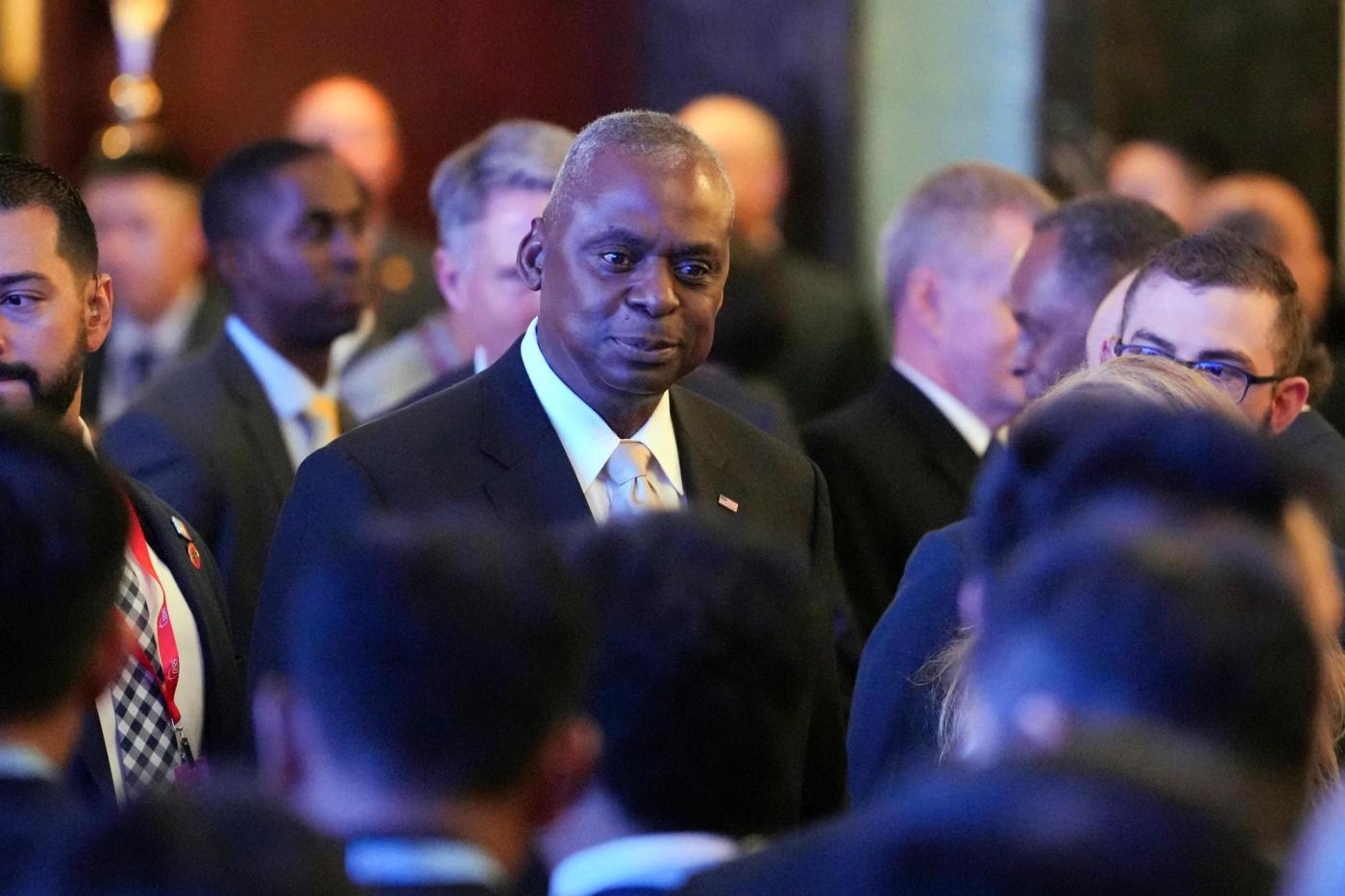
U.S. Defense Secretary Lloyd Austin signed the order last week to extend the four ships’ deployment for a second time, rather than bring the carrier, the USS Dwight D. Eisenhowe r, and its three warships home. The other ships in the strike group are the USS Philippine Sea, a cruiser, and two destroyers, the USS Gravely and the USS Mason. All together they include about 6,000 sailors.

The decision means the sailors and the carrier’s Air Wing won’t be home until the middle of the summer, according to the officials, who spoke on condition of anonymity to discuss a decision not made public. The officials declined to provide exact dates.

A normal ship deployment lasts for about seven months, and the ships left their homeport of Norfolk, Virginia, in October. Austin approved the first order to extend their deployment about four weeks ago.

Austin had weighed the decision for a further extension for some time. Navy leaders routinely press to bring ships home in order to maintain a repair schedule and give sailors a needed break. But U.S. Central Command leaders have long argued that having a carrier in the region is critical for international security, including as a deterrent to Iran.

In recent months, the ships have played a critical role in protecting commercial and military vessels from a dramatic surge in attacks in the Red Sea and Gulf of Aden by the Iranian-backed Houthis in Yemen. And officials say that a significant U.S. naval commitment to the region sends a strong signal to the commercial shipping industry that vessels can get protection as they travel the crucial transit route through the Red Sea, from the Suez Canal to the Bab el-Mandeb Strait.

About 12% of the world’s trade typically passes through the waterway that separates Africa and the Arabian Peninsula, including oil, natural gas, grain and everything from toys to electronics.

The Houthis have attacked ships since November, saying they want to force Israel to end its offensive in the Gaza Strip against Hamas. But the ships targeted by the Houthis have largely had little or no connection to Israel, the U.S. or other nations involved in the war. The rebels have also fired missiles toward Israel, though they have largely fallen short or been intercepted.

The Eisenhower and its strike group have been involved in routine operations against the Houthis all year. They also have participated in five major joint missions with British forces to target dozens of the militant group’s drones, missile launchers and other facilities and targets.

The ships are also spearheading Operation Prosperity Guardian, which was announced by Austin in December as a multinational mission to ensure security and freedom of navigation in the Red Sea and Gulf of Aden.

On Thursday, for example, F/A-18 fighter jets off the Eisenhower struck an array of targets in Yemen, in response to a recent increase in attacks by the group. And other ships in the strike group also launched missiles as part of the operation.

Any decision to bring the carrier home would leave the region without the ship-based fighter jets, and commanders would have to rely more heavily on land-based aircraft or other warships, which don’t have fighter jets, to take out Houthi drones or other munitions that are preparing to launch.

According to Lt. Cmdr. Lauren Chatmas, the strike group’s aircraft have flown more than 12,100 sorties, totaling over 27,200 flight hours, and they’ve launched more than 350 air-to-surface weapons and more than 50 air-to-air missiles. The warships have each traveled more than 55,000 miles, and they’ve launched more than 100 Standard and Tomahawk missiles. In all, the strike group has gone after about 430 either pre-planned or dynamic targets in its mission to defend U.S., coalition and merchant ships.