‘So much death’: Lawmakers weigh stricter speed limits, safer roads for pedestrians

posted in: Society | 0

By Vanessa G. Sánchez, KFF Health News

LOS ANGELES — The party was winding down. Its young hosts, María Rivas Cruz and her fiancé, Raymond Olivares, had accompanied friends to their car to bid them farewell. As the couple crossed a four-lane main road back to the home they had just bought, Rivas Cruz and Olivares were struck by a car fleeing an illegal street race. The driver was going 70 in a 40-mph zone.

Despite years of pleading for a two-lane road, lower speed limits, safety islands, and more marked crosswalks, residents say the county had done little to address speeding in this unincorporated pocket of southeastern Los Angeles. Since 2012, this half-mile stretch of Avalon Boulevard had logged 396 crashes, injuring 170 and killing three.

Olivares, 27, a civil engineer for the city of Los Angeles, became the fourth fatality when he was hurled across the street, hit by a second car, and instantly killed. Rivas Cruz was transported to a hospital, where she remained in a coma for two weeks. Once awake, the elementary school teacher underwent a series of reconstructive surgeries to repair her arm, jaw, and legs.

In the aftermath of the February 2023 crash, the county installed protective steel posts midway across the street. But residents, who had sought a platformed center divider and speed cameras, said that wasn’t enough.

“It’s just a band-aid on a cut. This is supposed to solve it, but it doesn’t, and that is what hurts,” said Rivas Cruz, who now at age 28 walks with a cane and lives with chronic pain. “I go to sleep, and I’m like, ‘It’s just a dream, it’s just a dream.’ And it’s not.”

The nation’s road system covers 4 million miles and is governed by a patchwork of federal, state, and local jurisdictions that often operate in silos, making systemic change difficult and expensive. But amid the highest number of pedestrians killed in decades, localities are pushing to control how speed limits are set and for more accountability on road design. This spring, New York and Michigan passed laws allowing local jurisdictions to lower speed limits. In Los Angeles, voters approved a measure that forces the city to act on its own safety improvement plan, mandating that the car-loving metropolis redesign streets, add bike lanes, and protect cyclists, transit riders, and pedestrians.

Still, there’s plenty of political resistance to speed enforcement. In California’s Statehouse, Sen. Scott Wiener (D-San Francisco) proposed requiring GPS-equipped smart devices in new cars and trucks to prevent excessive speeding. But after pushback, the state lawmaker watered down his bill to require all vehicles sold in the state starting in 2032 to have only warning systems that alert drivers when they exceed the speed limit by more than 10 mph.

Although the Biden administration is championing Vision Zero — its commitment to zero traffic deaths — and injecting more than $20 billion in funding for transportation safety programs through the Infrastructure Investment and Jobs Act, road safety advocates and some lawmakers argue that the country is still far from making streets and vehicles safe, or slowing drivers down.

“We are not showing the political will to use the proven safety tools that exist,” said Leah Shahum, founder of Vision Zero Network, a nonprofit organization advancing Vision Zero in communities across the country.

Still a crisis

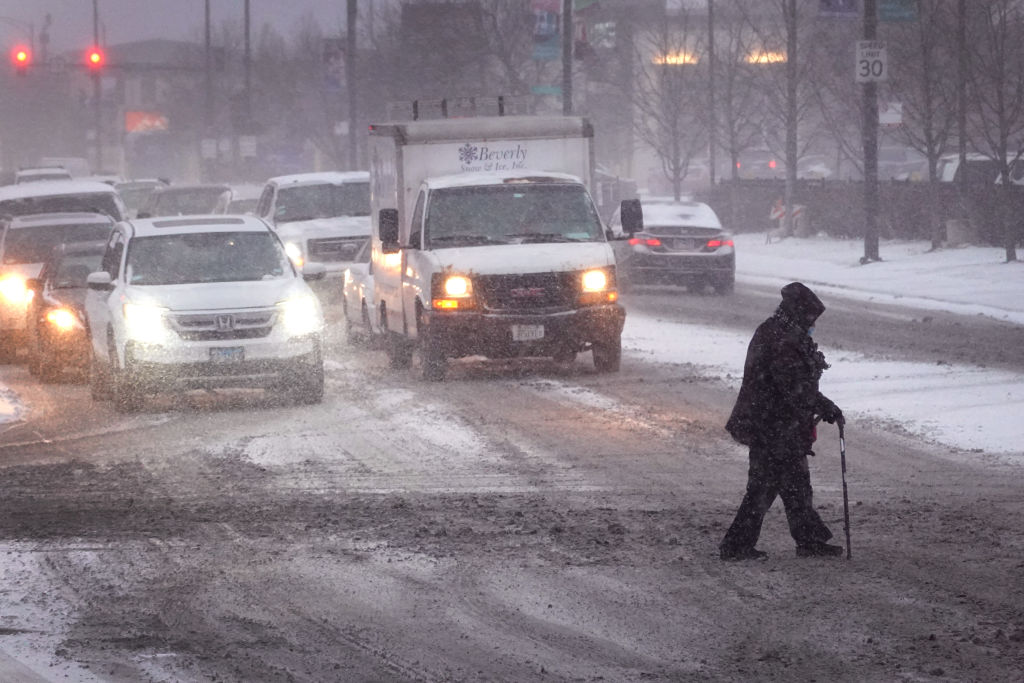
The need for safer roads took on urgency during the covid pandemic. Fatalities rose even as lockdown mandates emptied streets. In 2022, more than 42,500 people died on American roads, and at least 7,522 pedestrians were fatally struck — the highest tally of pedestrian deaths in more than four decades.

Experts cite several reasons for the decline in road safety. During the lockdowns, reckless driving increased while traffic enforcement declined. SUVs and trucks have become larger and heavier, thus deadlier when they hit a pedestrian. Other factors persist as streets remain wide to accommodate vehicles, and in some states speed limits have gradually increased.

Early estimates of motor vehicle fatalities show a slight decrease from 2022 to 2023, but pedestrian fatalities are still notably above pre-pandemic numbers. “It’s an encouraging start, but the numbers still constitute a crisis,” Transportation Secretary Pete Buttigieg wrote in February of roadway deaths.

The Biden administration has directed $15.6 billion to road safety until 2026 and $5 billion in local grants to prevent roadway deaths and injuries. Under the U.S. Department of Transportation’s new “vulnerable road user” rule, states with 15% or more deaths involving pedestrians, bicyclists, or motorcyclists compared with all road deaths must match federal dollars in their safety improvement spending.

Road safety advocates argue the federal government missed an opportunity to eliminate outdated standards for setting speed limits when it revised traffic guidelines last year. The agency could have eliminated guidance recommending setting speed limits at or below how fast 85% of drivers travel on uncongested roads. Critics contend that what’s known as the 85th percentile rule encourages traffic engineers to set speed limits at levels unsafe for pedestrians.

But the Federal Highway Administration wrote in a statement that while the 85th percentile is the typical method, engineers rarely rely solely on this rule. It also noted that states and some local agencies have their own criteria for setting speed limits.

In response, grassroots efforts to curtail speeding have sprouted across communities. In April, Michigan passed legislation granting local governments authority to round down when setting speed limits.

And after four years of lobbying, New York state passed Sammy’s Law, named after 12-year-old Sammy Cohen Eckstein, who was killed by a driver in Brooklyn in 2013. The law, which will take effect in June, allows New York City to lower its speed limits to 20 mph in designated areas.

“With this legislation, I hope we can learn more children’s names because of their accomplishments, their personalities, and their spirit — not their final moments,” said Sammy’s mother, Amy Cohen.

Push for pedestrian safety

Advocates would also like the federal government to factor in pedestrian safety on the five-star vehicle safety rating scale. However, the National Highway Traffic Safety Administration has proposed a separate pass/fail test that would be posted only on the agency’s website, not on labels consumers would see at the dealership.

Related Articles

National Politics |


Election monitors nervously practice for the ‘big dance in November’

National Politics |


Alito’s flag controversy foreshadows contentious Supreme Court rulings

National Politics |


Election certification disputes in a handful of states spark concerns over 2024 presidential contest

National Politics |


Election officials, retired lawmakers plead for more money to protect voting

National Politics |


Greater focus on crime sparks another wave of juvenile justice bills

Automakers like BMW questioned the effectiveness of a program testing pedestrian protections in vehicles arguing that in European countries that adopted such a regulation, it’s not been clear whether it led to fewer deaths and injuries. According to the campaign finance site Open Secrets, automakers spent about $49 million lobbying in 2023 compared with $2.2 million spent by advocates for highway and auto safety.

“The federal government has the biggest punch when it comes to requiring improved vehicle safety design,” said Wiener, the California state lawmaker.

Although Wiener modified his proposal to restrict excessive speeding, he has advanced companion legislation that would require Caltrans, the state transportation agency, to make improvements such as adding crosswalks and curb extensions on state-owned surface streets to better serve pedestrians, cyclists, and transit users.

When that bill was heard in a committee, opponents, including engineering firms and contractors, cautioned it would remove flexibility and hamper the state’s ability to deliver a safe and efficient transportation system. Lawmakers have until Aug. 31 to act on his bills.

In Los Angeles, hope for change arrived in March when voters passed Measure HLA, which requires the city to invest $3.1 billion in road safety over the next decade. Rivas Cruz’s house, however, sits eight blocks outside the jurisdiction of the city initiative.

It’s been more than a year since the crash, but Rivas Cruz finds reminders everywhere: in the mirror, when she looks at the scars left on her face after several surgeries. When she walks on the street that still lacks the infrastructure that would have protected her and Raymond.

Stories of pedestrians killed in this Latino working-class neighborhood are too common, said Rivas Cruz. In September, she attended a memorial of a 14-year-old who was killed by a reckless driver.

“There’s so much death going on,” the Los Angeles Unified School District teacher said from her mother’s living room on a spring afternoon. “The representatives have failed us. Raymond and I were giving back to the community. He was a civil engineer working for the city, and I’m a LAUSD teacher. Where is our help?”

This article was produced by KFF Health News, which publishes California Healthline, an editorially independent service of the California Health Care Foundation.

KFF Health News is a national newsroom that produces in-depth journalism about health issues and is one of the core operating programs at KFF—an independent source of health policy research, polling, and journalism. Learn more about KFF.
Stillwater residents to vote on local sales tax for riverfront improvements

posted in: News | 0

Voters in Stillwater this fall will be asked to support a half-percent sales tax on general purchases to pay for improvements at parks along the St. Croix River.

The Stillwater City Council voted unanimously Tuesday night to authorize the referendum. If approved by voters, the sales tax is expected to raise up to $6.2 million over a 10-year period starting in 2025, city officials said.

State law requires the tax to automatically sunset once funds required for the projects are collected, or in 10 years, whichever occurs first.

Based on a University of Minnesota Extension study on the city’s sales tax statistics from 2020, Stillwater officials estimate the city could generate $970,000 each year with about 46 percent of that coming from nonresidents. City Administrator Joe Kohlmann, however, said he expects that the amount raised could be even higher, considering the the pandemic and civil unrest of 2020.

The sales tax would help pay for projects along the city’s riverfront including:

Renovation of the Aiple house and construction of a parking lot at Lumberjack Landing Park, a new park north of downtown Stillwater
Picnic shelter, turf, irrigation and signage at Bridgeview Park, a new park south of downtown Stillwater
Riverbank stabilization

The money raised by the sales tax would supplement the $6 million grant the city received last year from the Minnesota Legislature for park improvements, said Stillwater City Council member Mike Polehna.

“It will enable us to finish the entire riverfront,” Polehna said. “We’re a lucky community to have control of basically the entire waterfront in front of Stillwater. What an amenity for the community to develop all that. We are going to have the most awesome waterfront in the state of Minnesota.”

Mayor Ted Kozlowski said the benefit of the sales tax is that it “doesn’t put the entire burden (of paying for these improvements) on the property-tax payers in Stillwater,” since the sales tax is paid by visitors as well as residents.

“It will be nice to get some additional dollars from people outside of our community to fund these things,” he said.

Part of the money for the restoration of the Aiple house at Lumberjack Landing was donated by resident Geri Freels, who gave $1 million to the city in 2021 after reading an article in the Pioneer Press about the city’s plans for the park.

Related Articles

Local News |


‘Survivor’ favorite and North St. Paul native Carolyn Wiger to compete on ‘The Traitors’

Local News |


Gary Kriesel named grand marshal of Lumberjack Days parade

Local News |


After I-694 crash, Maplewood mother grapples with loss of two children in 15 days

Local News |


Forest Lake city administrator finalist withdraws; another added

Local News |


Tour seven gardens designed by master gardeners in Washington County

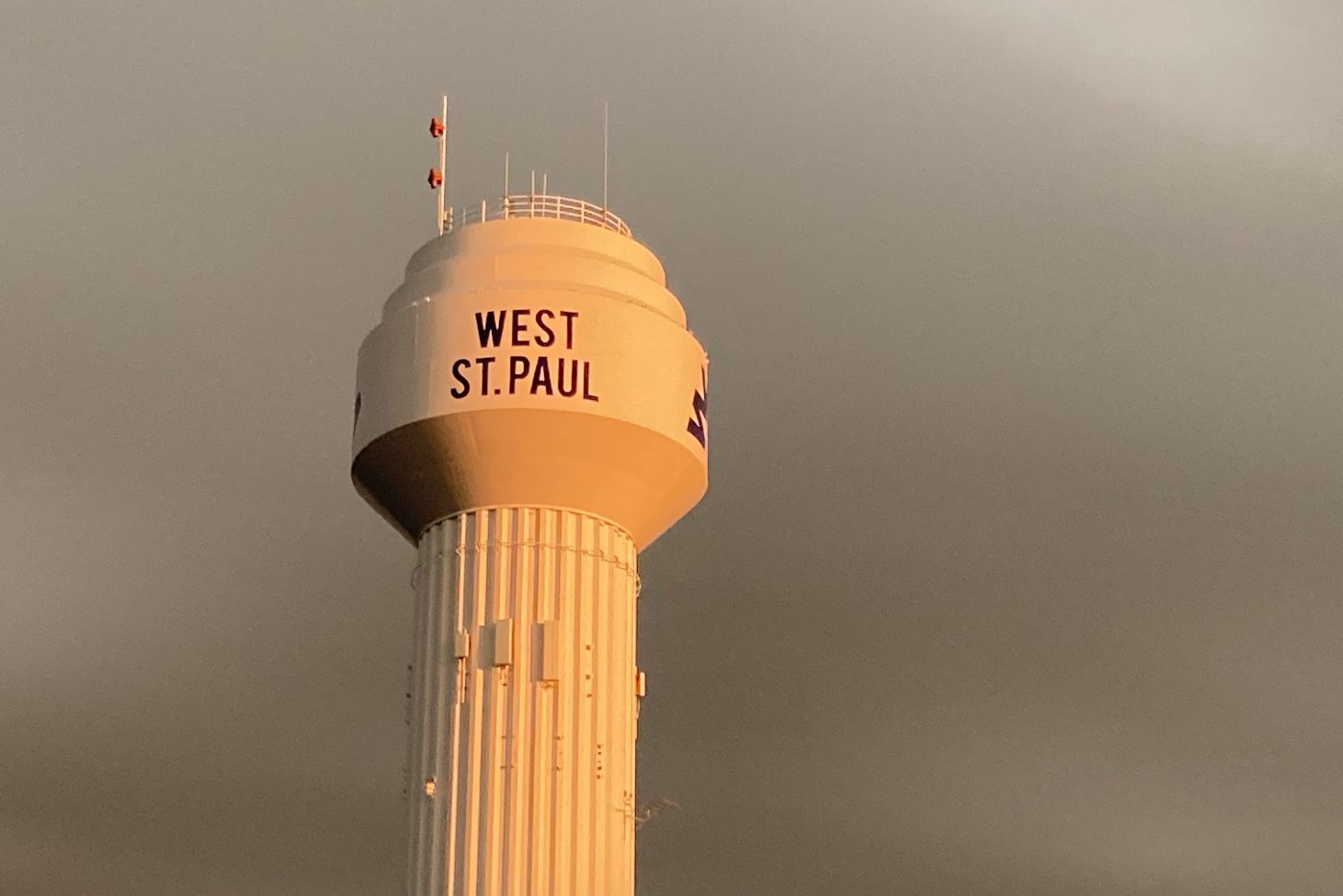
West St. Paul Days features several days of food, music and other activities

posted in: News | 0

West St. Paul Days are taking place this week with several days of activities scheduled — including music, food trucks, a parade and more.

At 7 p.m. on Friday at the West St. Paul Sports Complex, at 1650 Oakdale Ave., a K-9 training demonstration from police from West St. Paul, Apple Valley, Lakeville and Dakota County will feature their skills and public safety abilities. Food trucks will be available at 6 p.m. as well as live music featuring PopROCKS starting at 6:45 p.m. At approximately 9:45 p.m. a firework display will take place.

At 10:30 a.m. on Saturday attendees can take part in the Explore West St. Paul Days Parade as it travels north along Charlton St. from Runge Lane to Bernard St. W. There will be a sensory-friendly quiet zone between Langer Circle and Emerson Ave. W. There also will be local art vendors, environmental displays and other local organizations at WestFest from noon to 3 p.m. at Harmon Park, at 230 Bernard St. W. There will be food trucks and a beer tent starting at 6 p.m. at the West St. Paul Sports Complex, at 1650 Oakdale Ave., with a concert featuring Free and Easy Band starting at 7 p.m.

At 8:30 a.m. on Sunday, a community bike rider — the West St. Paul Rider — will begin at Garlough Park. Water and snack stops will be provided.

Also this weekend attendees can look over the Citywide Garage Sale list for deals and explore events hosted by local businesses around West St. Paul.

For more information, including the schedule of events and locations, visit ExploreWSP.com. Stay connected with us on social media using the hashtag #ExploreWSP.

Related Articles

Local News |


Pedestrian struck last week on South Robert Street in West St. Paul dies

Local News |


Recently rebuilt segment of South Robert Street could receive additional safety improvements; residents invited to weigh in

Local News |


Pedestrian in ‘very critical condition’ after being hit by pickup truck in West St. Paul

Local News |


Shooter sentenced to nearly 11 years for West St. Paul park slaying in 2021

Local News |


Owner of Minneapolis-St. Paul-West St. Paul Mexican restaurants charged with tax crimes

Ringo Starr talks candidly: ‘I’m giving away all the secrets here!’

posted in: News | 0

By George Varga, The San Diego Union-Tribune

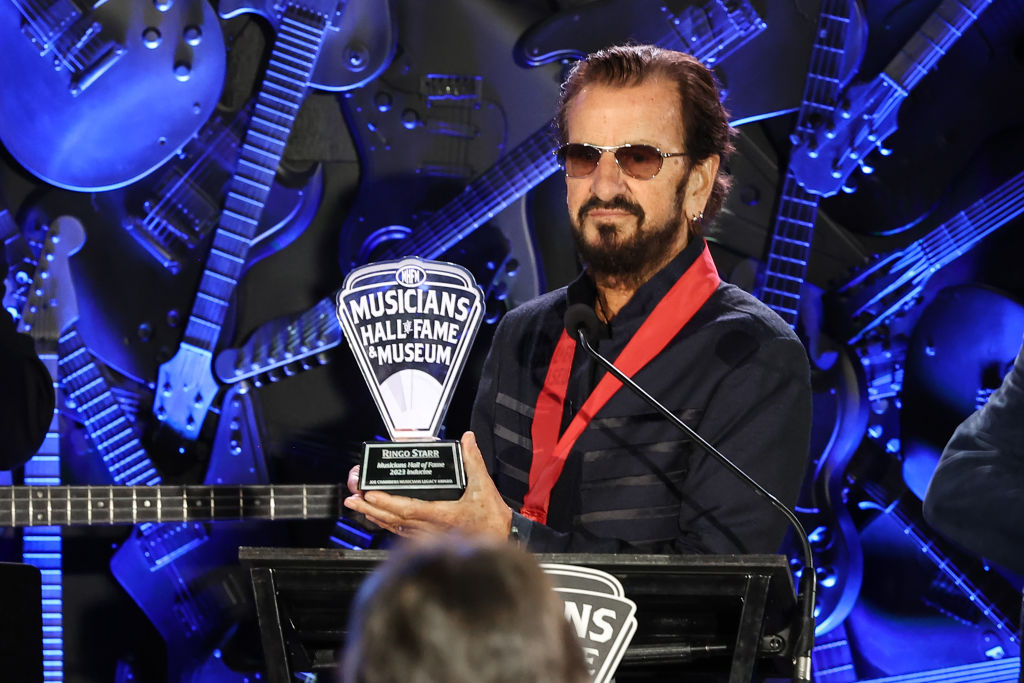
Ringo Starr is on the phone from Las Vegas and he’s got lots of fab things to talk about, including some that have been largely kept under wraps.

“I’m giving away all the secrets here!” said Starr, who has been inducted into the Rock & Roll Hall of Fame as a solo artist and as a member of The Beatles.

Simultaneously thoughtful and animated, the illustrious drummer, vocalist and bandleader happily discussed a number of topics. They included his upcoming country album with “O Brother, Where Art Thou?” music mastermind T Bone Burnett; a possible new Beatles’ project with Oscar-winning film director Peter Jackson; and the yet-to-be-determined future of “The Beatles LOVE by Cirque du Soleil,” which on July 6 will conclude its 18-year run at The Mirage in Las Vegas.

And there’s more.

On May 31, Starr released his fifth EP since 2021. Entitled “Crooked Boy,” the four-song release is a collaboration with former San Diego singer-songwriter Linda Perry, the former leader of the band 4 Non Blondes. His eighth book, “Beats & Threads: Fashion of a Beatle,” was published in November. Proceeds from the limited-edition book go to the Lotus Foundation, the charity that Starr and his wife, Barbara Bach, founded to aid economically challenged families, children and the elderly.

Before his interviewer could pose a single question, however, Starr had something he was eager to trumpet. He and his All Starr Band today are announcing two new Southern California performances as part of their 2024 tour.

The first is Sept. 7 at San Diego’s Humphreys Concerts by the Bay. The second is Sept. 8 at the Greek Theatre in Los Angeles. Tickets for the Humphreys show go on sale at 10 a.m. Friday at humphreysconcerts.com.

‘A special venue for me’

“Great news! We’re coming back to Humphreys, brother!” said Starr, who has regularly performed there since 1995. “It is a special venue for me.”

A longtime Beverly Hills resident, Starr will turn 84 on July 7. His recording and performing schedule indicate he has no intention of slowing down anytime soon.

The All Starr Band’s 2024 spring tour opened May 22 at The Venetian in Las Vegas and includes concerts Wednesday and Thursday at Mexico City’s Auditorio Nacional. Their fall tour will open with the Sept. 7 San Diego show at Humphreys. It will conclude with a Sept. 25 date at New York City’s Radio City Music Hall.

The band’s lineup features Toto guitarist Steve Lukather, Men At Work leader Colin Hay, Average White Band mainstay Hamish Stuart, saxophonist, flutist and keyboardist Warren Ham, and former Maynard Ferguson/David Lee Roth drummer Gregg Bissonette.

Edgar Winter, a longtime All Star member, has been sitting out the spring tour due to illness. He is expected to rejoin the band in time for its Sept. 7 San Diego gig at Humphreys. Winter’s spot is temporarily being filled by Aerosmith touring keyboardist and guitarist Buck Johnson.

Starr spoke with the San Diego Union-Tribune on May 31. This interview has been edited for length and clarity.

Q: In our interview last year, you told me the Greek Theatre is your favorite place to play. Is Humphreys a close second?

A: Yeah. I do love the Greek — because I get to go home after the show! I love the sound and the people who are there to (provide) support. But Humphreys is a special venue for me. I’ve always loved it. At times they’ve tried to put me in other venues down there in San Diego, and I’ve said: “No. I play at Humphreys.”

Q: Do you have a special message for the “boat people” who watch your shows at Humphreys for free from the adjacent marina?

A: Oh, yes: “You tight bastards — buy a ticket!” Ha ha ha ha!

Q: Your recent collaborator, Linda Perry, used to live in San Diego. What do you like most about working with her?

A: Oh, she’s great … She’s a great writer, she’s fun to be with. You know, we just get on. I mean, doing the EPs, I’ve been calling people that I’ve never worked with, just to (have a) change … I thought: “Well, I’m gonna work with people I don’t know.”

I didn’t know Linda. I mean, I knew about her, but I didn’t know her. I gave her a call and she gave me a song, and it was really great. Then she said: “When are you gonna let me do an EP (with) you?” And I said, “Great,” and that’s what she did. She called it “Crooked Boy,” and they used a very nice photo of me on the cover.

Q: The great bassist Nathan East is from San Diego. He told me that — beyond admiring you as a musician and a person — he is impressed that you phone him personally when you want him to do a recording session.

A: Yeah, well, that’s what I do, you know? I call and say: “Hi. I’m doing this (record). If you’d like to join in, it would be great!” I mean, with Nathan, we’ve come to a place now where I only call him when I want bass on (at least) three tunes, because he does them all in half an hour! So, I don’t call him right away. I wait ‘till we’ve got a couple of songs for him to record on, not just one, because he is such a fine bass player.

Q: He certainly is. There are a few points during each All Star Band concert where you go offstage while one of your band mates is doing a song. I’m curious: What are you doing offstage during that time when you’re not up there with the band?

A: I’m having a cup of tea.

Q: Really?

A: No, not really! I’m just saying that now. When I’m off stage, I’m just having a break and letting the band run with it. I mean, it depends. When I started the All Starr Band (in 1989), I would invite (the members) to sing one of their songs, just by themselves if they wanted … When I take a break during a show, the band’s still there (on stage), it’s still rocking, (and) somebody gets a chance to do a song of theirs where it’s just the band, because it’s so good, instead of the spotlight just being on me.

Q: In 1970 you released your first country-music album, “Beaucoups of Blues,” which you recorded in Nashville with Pete Drake and a bunch of other great players. Now, you’re coming full circle and doing a new country album with T Bone Burnett. How did that come about and how is it shaping up?

Related Articles


Summer songs: Going back 40 and 50 years to revisit top tracks of 1974 and 1984


Cyndi Lauper to bring her farewell tour to Target Center in December


Everyone from Limp Bizkit to Miranda Lambert is playing outdoor summer shows outside the metro


Nathaniel Rateliff and the Night Sweats to headline first local arena show in November


Review: ‘The Beach Boys’ is a sentimental documentary that downplays the band’s squabbles

A: Well, it came about (as a result of) the pandemic. I was working out, doing some painting or whatever, and that kept me going. But after I started doing EPs (in 2021), we went out to the Sunset Marquis (hotel, in November 2022) because Olivia Harrison was reading from her book, “Came the Lightening: Twenty Poems for George.”

There were about a hundred of us there, listening to her, and it was great. T Bone was there. We’d never had dinner or anything, but I had bumped into him over the years, many times. And he said: “What are you doing?”

And I said “Oh, I’m making EPs, and if you’ve got a song — if you feel like it — send it to me and I’ll put it with the other three song I’ve got on my (next) EP.” All of the other three songs for the EP were like pop songs. T Bone sent me a very moving country song, and I thought: “Well now I’m gonna do a country thing!”

But that’s how I work. It’s just like, the moves are made and I continue the moves. It’s not like I sat there thinking: “Well now I’m gonna do a country one.” It just came about because T Bone sent me this track; I never thought: “Oh, it will be a country track.”

Q: There are quite a few people, as you may well know, who believe no other band will ever be as great and as meaningful — or have the same impact — as The Beatles. What do you think?

A: Well, yes, I do think (that will happen) one day. I mean, no one was going to be bigger than Elvis. No one was going to be bigger than Sinatra … But then, always, someone comes up.

Q: Is there anyone now you would point to?

A: No.

Q: After 18 years, on July 7 “The Beatles LOVE by Cirque du Soleil” will close its run in Las Vegas at The Mirage, which is being re-branded as Hard Rock Las Vegas. Might “LOVE” take on a new life somewhere else, in or out of Vegas?

A: Well, there’s no plan for that. We were there last night; we went to see “LOVE,” And it was great … We were talking about how the first (2006 iteration of “LOVE”) was so great. We have to thank (the late Beatles’ producer) George Martin and (his son) Giles Martin for how great it sounded. Because they spent months on it, putting different stuff on tracks and taking stuff off, and giving them the (beefed up) harmonies. It was really great and every seat had stereo speakers.

Then, (Cirque founder) Guy (Laliberté) sold Cirque (in 2020) to this company. And they put all these speakers everywhere (throughout the venue), big speakers in the ceiling, so that changed it. But it’s an amazing show. I mean, the changeovers (between songs and segments) — how do they do that? Because you can’t tell things are changing and it’s so beautiful. When we saw it last night, it seemed to be that teenagers were running the show! It was so great and fast, with really crazy stuff. And they have, like, 9-year-olds as John, Paul, George, and Ringo!

Q: How did the 9-year-olds do?

A: It’s interesting for me to, you know, to see “George” speaking and “John” (in “LOVE”). So, we had a great time and right now, (it appears to be) the last time. Because on the seventh of July, the show ends. What happens after that? Of course, people are talking about maybe (this), maybe (that). And one part of me thought, you know, it’d be good to do a late-night “LOVE” show. Because we (The Beatles) have some very, not dark but not-too-bright songs.

Q: That sounds like it could be great.

A: Yeah. But anyway, they’ll do what they do and let me know.

Q: Peter Jackson did a terrific job with “Get Back,” the 2021 Beatles’ film documentary. Might there be another Beatles/Jackson collaboration of any kind in the offing?

A: Not that we know of, yet, but we’re hoping. And so, I’m not going to talk about it, because he (Jackson) said “Yes.” And we’ve had a discussion about that “Yes,” and we need him to say “Yes” again. I’m giving all the secrets away here!

Q: I appreciate that! I’m also wondering if you could talk briefly about the restored version of (director Michael Lindsay-Hogg’s 1970 Beatles’ film documentary) “Let It Be” that was released in early May. Have you reassessed your negative view of the original film? Or do you you suddenly see “Let It Be” in a new light, now that it’s been restored?

A: No, no, I always thought it was pointed in the wrong direction — only down. And that’s why I was so glad we found 56 hours of unused “Let It Be” footage, which had been hibernating, for Peter Jackson to use (for “Get Back”) … I was disappointed with “Let It Be,” because I was there (when it was filmed) and we had lots of laughs, as you saw in the Peter Jackson edit.

We had a lot of fun. We did have a few rows (arguments) — that’s what a band does. But everyone thinks The Beatles are like angels and we shouldn’t fight. And we’d have little rows and then we’d get over it. Music is the most important part of what we did, you know, besides the friendships, of course.

Q: You recently said in an interview that Paul McCartney having been such a workaholic spurred The Beatles on to be more productive as recording artists. It may be hard to quantify, but how much less productive and how many fewer albums do you think would have resulted if Paul wasn’t such a go-getter?

A: Well, how many (studio albums) do you think we made?

Q: I’m bad at math on a good day, but 10 or 11?

A: We would have done half (as many), I think.

Q: Really?

A: Yeah, because we were like, it was such a change for us (after The Beatles stopped touring in 1966). We enjoyed sitting in the garden, looking at the trees! Paul got us in (the studio) and we went in and we all did our best stuff. It was a great thing. From the count-in (of the first song), nobody was playing around. Anybody who counted in (a song), the four of us, gave our all.

Q: In the Peter Jackson footage in “Get Back,” one of my favorite scenes is the one where The Beatles are in the studio, listening to a playback of a song, and you are sitting next to Yoko (Ono). You’re kind of bopping in your seat to the music, and you pass a stick of chewing gum to Yoko, who breaks it in half and gives half of it to John. You’re all chewing gum and grooving to the music, andit’s a really warm and joyous moment. I don’t know if you even remembered that scene until you saw it when Peter finished the film.

A: Yeah, I only remember it because I’ve just seen it again.

Q: Is there a favorite scene or two in “Get Back” that you hadn’t thought of for decades?

A: No.

Q: No?

A: No. I often think of John. And because of that, I often think of John and Yoko, and — of course — George. You know, it could be just walking down the street and something will catch your attention, and I’ll sort of associate it with one of the boys.

Q: One of the most memorable Beatles’ misadventures took place when your were in the Philippines in 1966 to perform two concerts in Manila. You had to high-tail it out of the country after Imelda Marcos denounced The Beatles on national TV for not showing up for a breakfast at the Royal Palace.

A: Yep.

Q: In the ensuing uproar, I recall that — before you flew out — you and John were at the Manila airport, ducking down behind a group of nuns so that you wouldn’t be spotted by police or soldiers.

A: Yeah, that’s absolutely true. It looked like they were really going to come and get us. And you know they wouldn’t let us get on the plane because Mrs. Marcos was upset with us. When we arrived at the airport, before our concerts in Manila, there were, like, 20 cops on motorbikes to (escort us in a motorcade). And when we went back to the airport, it was with (just) one (motorcycle cop), and people were shouting at us. It was really rough.

John and I shared a (hotel) room; The Beatles, we always shared rooms when we were on tour. We ordered (room service) breakfast (in Manila) and thought: “We’ll turn the TV on while we wait.” And we saw this incredible footage of a cameraman going around a table and kids crying because we didn’t turn up (at the palace). We had said (in advance) we weren’t turning up, but she still went along with it. And so that’s what caused it all.

So, at the airport — when we were leaving — we thought: “Yeah, we’ll be safer with the nuns!” Ha ha ha ha!

Q: Did Imelda Marcos ever reach out after that to apologize?

A: No. She was too busy counting her money.

Q: Your upcoming country-music album sounds very exciting. But when we talked last year, you told me you were done with albums, that you only wanted to make EPs. What made you change your mind?

A: Well, that’s what I’m saying: I am changeable; I’m not stuck in my ways. I mean, I did say I’d (only) make EPs, and I made five of them. And then T Bone sent me that country song and I got other country artists to help me make an EP, which didn’t come out now because the (pop-music) EP with Linda Perry came out.

Then, I said to T Bone: “Would you like to do a (full) record?” He said: “Okay, I’m coming to L.A. and I’ll come over and I’ve got some songs,” and he had nine songs! And so, I thought: “Let’s make an album, let’s change it up.” And that’s what I’ve done. I’ve recorded nine of his songs, uh, 10. And we’re gonna put the one he sent for the EP on (the album) as well. We’ve got 10 tracks already. And I’ve got three others, and maybe this will be sort of a 13- or 14-track record, one way or the other.

Q: What is it about country music that resonates so strongly with people in England, and with you as a young man growing up? I know that Celtic music migrated to America and helped lay the foundation for bluegrass music. And you told me in our 1992 interview that you really like Frankie Laine, who wasn’t a country singer, but …

A: Yeah, I do love Frankie Laine — he was so dramatic! — and Johnnie Ray. I’m a softie, really, you see! (He begins to croon in a Ray-like voice.)

Q: But what exactly was it about country music that attracted you so much when you were young?

A: I felt it. I loved it. In those days — the ‘50s — for me, it was Hank Williams and everybody else. Kitty Wells was my heroine! And, you know, I’ve just loved it ever since. As you said, I did a record with Pete Drake, and now I’m doing one with T Bone. So, you never know what’s going on in the future!

george.varga@sduniontribune.com