
Working Strategies: College is over, graduation over, what next?

posted in: News | 0

Amy Lindgren

Graduation season inspires advice from everyone it seems. Aunts, uncles, hairdressers and friends’ parents all have something important to say about your future and what you should do about it.

Well, me too. I hate to miss out on a good advice-fest, so if you’re newly graduated from a college or training program, I have some tips for you. There are no big ideas here; just some things you want to pay attention to while everything’s still fresh.

(Note that these are mostly geared toward traditional-age grads, so watch for another batch geared to adult graduates coming soon.)

Putzy logistical stuff

• Check your diploma for accuracy. Seriously. If there’s a mistake there, you could have one on your transcript too. A small correction now could save a big headache down the road.

• Confirm which online resources can still be used at your alma mater. If you need to switch to a non-school email address, for example, sooner is better than later.

• Ask about available career resources. Some schools offer placement assistance while others provide job leads. There may also be career counseling or job search advice, sometimes at no charge for a certain period post-graduation.

• Figure out your student loan repayment, if applicable. Even if repayment won’t start for a few months, knowing all the facts lets you make good plans.

• Check on health insurance. If you were covered as part of your tuition, you need to confirm when that ends and what your options for coverage are now.

Job search stuff

• Update or create your LinkedIn profile. Even a basic version will help, as recruiters will sometimes run broad searches to find new candidates. If you know the field you want to enter, make that clear in the headline and in the “About” section.

• Update your résumé. You almost certainly made one for a class or career fair. Now’s the time to ensure you have the file available and that your recent school or work experiences are included. Again, if you know your work goals, go ahead and focus your résumé to showcase related skills and training.

• Think about what you want to do next. If you don’t have career goals yet, don’t panic. One option is to start exploration steps, perhaps with informational interviews or meetings with a career counselor. Another option is to take volunteer or lower-level positions in a field you’re considering, to check things out. Both options work, so don’t worry that you’re taking the wrong path.

Life stuff

• Decide where to live. Twenty-somethings frequently choose to live at home with family while saving for a place. If you take this route, make a savings plan to ensure it happens. Another option gets you out in the world faster but has you eating ramen longer: sharing housing with others in the same situation.

• Guard your mental health. Easier said than done, but you may already know your triggers for sadness or depression or anxiety. Big achievements (such as a graduation) can lead to a letdown when the hoopla fades away. If you already have a counselor or a mental health routine, it’s important to keep that going while you’re in transition. If not, now might be a good time to start on those practices.

• Hang onto your money. Even if you land a solid job right away, it’s smart to keep your expenses low while you figure out where your new degree can take you.

And the big three

These are things I recommend to all new graduates, as a way to keep the motor running while other things come into focus.

• 1. Take a job right away, even if it’s minimum wage or part-time. You need the structure, the money, and the credibility. If you get a career position soon after, that’s awkward but better than having no job for months on end just to avoid having to quit something.

• 2. Start volunteering right away. This will help with mental health, self-esteem, and your general sense of being a good person.

• 3. Join an exercise group. Play basketball on Tuesdays or go running with friends in the morning or plan bike trips for the weekend. Whatever it is, you’ll benefit from the social aspects and the physical routine.

And a final word: Don’t sweat the whole career thing, but — if you’re not feeling on track by fall, consider asking for help. Sometimes all it takes is new information or fresh ideas for things to line up.

Congratulations, graduate. On you go!

Related Articles

Business |


Working Strategies: Avoiding the ‘Tell us about yourself’ trap

Business |


Working Strategies: No, ‘working vacation’ is not an oxymoron

Business |


Working Strategies: Networking into your new career

Business |


Working Strategies: Tailoring résumés for online applications, and people

Business |


Working Strategies: Résumé formatting tips

Amy Lindgren owns a career consulting firm in St. Paul. She can be reached at alindgren@prototypecareerservice.com.

The Biden administration says Israel hasn’t crossed a red line on Rafah. This could be why.

posted in: News | 0

By ELLEN KNICKMEYER (Associated Press)

WASHINGTON (AP) — Acknowledging only “an uptick” in Israeli military activity, the United States has gone to lengths to avoid any suggestion that Israeli forces have crossed a red line set by President Joe Biden in the deepening offensive in the southern Gaza city of Rafah.

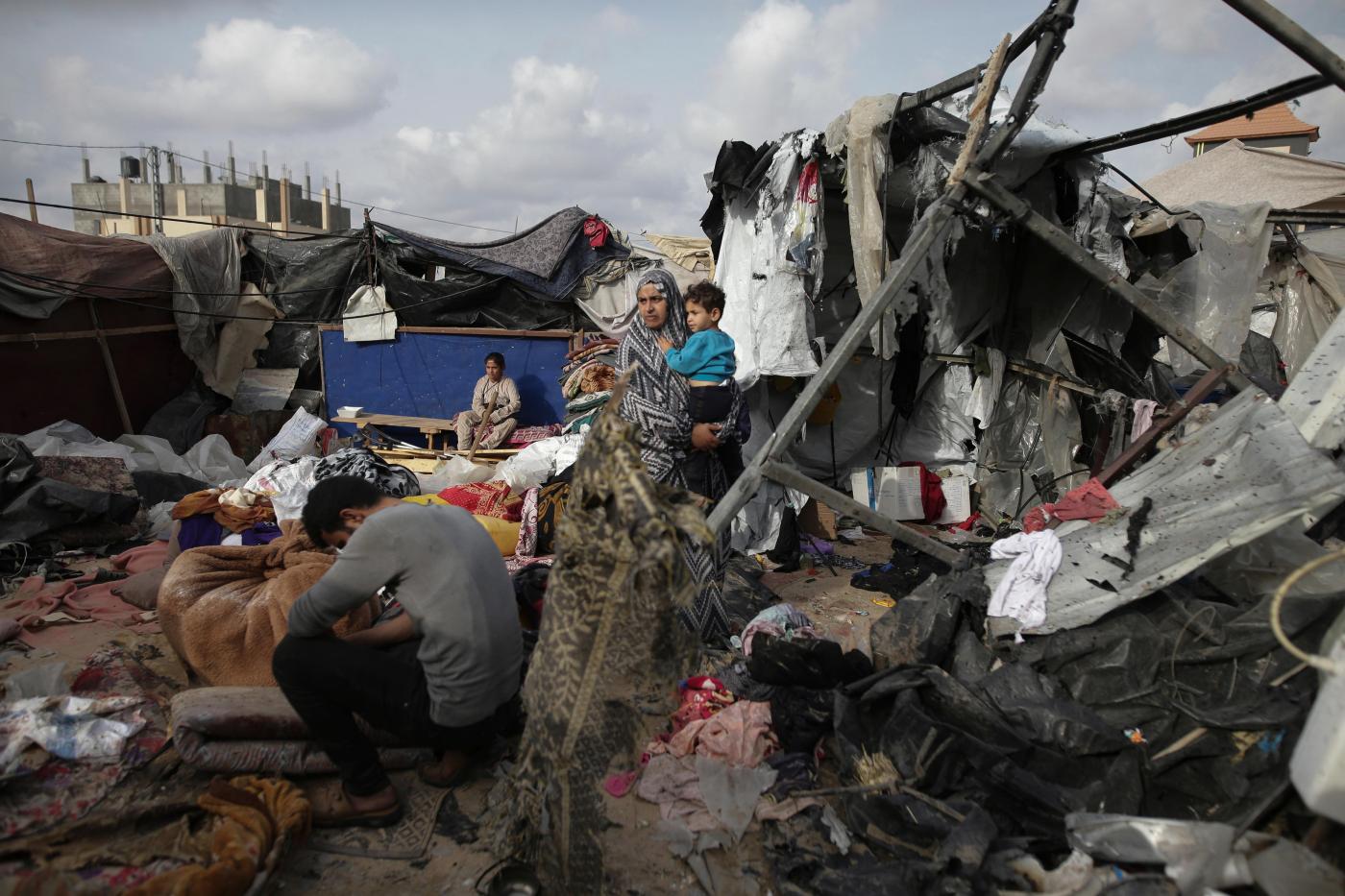
In just the past week, Israeli strikes that hit displaced families sheltering in tents drew international condemnation and Israel confirmed that its forces were operating in the city’s center. Still, Biden administration officials say Israel has avoided massive attacks on what had been thickly crowded neighborhoods of Rafah and kept strikes more limited and targeted than earlier in its nearly 8-month-old war with Hamas.

That refrain underscores an increasingly isolated U.S. position.

Critics charge that Biden, who declared early last month that he would not supply offensive weapons if Israel launched an all-out assault on Rafah, has come up against a domestic red line of his own and decided not to cross it: challenging ally Israel, which has support from Republicans and many American voters, in an election year.

Administration officials “keep moving the goalposts when it comes to the Rafah operation, saying, ‘You know, we won’t let the Israelis do X, Y or Z,’” said Colin Clarke, an international security expert and research director at the Soufan Center, a research center. “And then somebody says, ‘Well, aren’t they doing that?’”

“So they’ve been playing semantics around what the Rafah operation constitutes,” he said. “I think if it weren’t an election year, you would see the president being a lot more forceful.”

Administration officials insist Israel has changed its tactics in an effort to reduce civilian deaths as the military sweeps through the city and targets Hamas operatives — even as humanitarian conditions worsen. Some 1 million Palestinians have fled the Rafah offensive and are sheltering in squalid tent camps, and aid is only trickling into the territory. The United Nations estimates as few as 200,000 to 300,000 people still remain.

“We have been clear about what this isn’t, which is not a major military operation,” State Department spokesman Vedant Patel said Thursday. He referred to Israeli strikes on the outskirts of the city and seizure of an adjoining border region with Egypt as an “uptick.”

Pressed on the question, national security adviser Jake Sullivan told reporters that there’s “no mathematical formula” to determining when and if the Rafah assault has gone beyond the conditions set by the Democratic president.

The U.S. would be looking at whether the operation was causing “a lot of death and destruction” or was “more precise and proportional,” Sullivan said.

Unlike earlier in the Israeli drive to cripple Hamas militants in Gaza, Israelis have conveyed their specific battlefield goals and plans for getting there in the Rafah offensive, a senior administration official said Friday. The official, who spoke on condition of anonymity to brief reporters under ground rules set by the White House, said if those plans change and Israel goes back to earlier tactics, “that might be a different story.”

Israel launched its war in Gaza after attacks by Hamas killed about 1,200 Israelis on Oct. 7. More than 36,000 Palestinians have been killed since then, many of them women and children. Fighting and Israeli restrictions on aid shipments through border crossings mean nearly all 2.3 million people in Gaza are facing severe hunger. U.N. officials say famine has already started in the north.

It was the Israeli operation against Hamas in Rafah that brought on the strongest warnings from Biden last month about how Israel was conducting the war and that the U.S. could cut its supply of offensive weapons. The population of Rafah had swelled to some 1.3 million as Israeli offensives to the north pushed Palestinian civilians south.

“If they go into Rafah, I’m not supplying the weapons,” Biden told CNN on May 9. He indicated the red line as being an attack on “population centers” in the city.

At about the same time, U.S. officials confirmed that the administration had suspended a shipment of heavy bombs to Israel to ensure they were not dropped on Rafah.

Republicans’ condemnation of Biden’s move was fast and fierce. Soon after, the chief prosecutor for the world’s top war crimes court sought an arrest warrant for Israeli Prime Minister Benjamin Netanyahu and the top U.N. court ordered Israel to cease its operations in Rafah, increasing the political pressure on the U.S. and Israel.

Brian Finucane, a former State Department official who is now a senior adviser for the International Crisis Group, notes “changes in tone and tenor” in the administration’s public comments toward Israel from around that time. Biden said the effort for a Netanyahu arrest warrant was “outrageous.”

Administration warnings and threats to Israel over the Rafah campaign ebbed. Biden, un a White House address Friday to urge Hamas to accept an Israeli proposal for a cease-fire and hostage release, made only a passing mention of the operation there, noting widely circulated images of children killed in an Israeli strike last Sunday that burned some of 45 victims alive.

Far more important than whether the U.S. scolds or only echoes Israeli talking points, Finucane said, is “what the administration actually does in terms of policy … to bring about a shift in what’s actually happening on the ground in Gaza.”

___

Associated Press writers Julia Frankel in Jerusalem and Aamer Madhani contributed to this report.

Related Articles

World News |


Biden details a 3-phase hostage deal aimed at winding down the Israel-Hamas war

World News |


Israel confirms its forces are in central Rafah in expanding offensive in the southern Gaza city

World News |


Pamela Paul: What flies on campus won’t necessarily fly in the bigger world off campus

World News |


Marc Champion: Yes, Israel is being held to a different standard. But …

World News |


The US-built pier in Gaza broke apart. Here’s how we got here and what might be next

MN Legislature: Classroom cellphone restrictions, a ban on book bans passed this session

posted in: Adventure | 0

A plan to curb student cellphone use in classrooms, a “ban” on book bans, and protections for student journalists are just a few of the new education policies the Minnesota Legislature passed this year.

Those policies will affect Minnesota schools soon, but past that, this year’s education bill won’t have a big impact on school funding, as lawmakers already passed the state budget last year, which boosted spending by $2.3 billion — an 11% increase.

However, tens of millions in additional state dollars will go toward Minnesota schools, mostly to help fund new training mandates created by bills passed last year. Much of the boost will help to fund a new literacy initiative.

Here are some of the changes lawmakers approved that have already been signed into law by the governor:

Cellphone use

School administrators this year asked the Legislature to help address the issue of cellphones distracting students from class.

A provision in the education bill requires Minnesota schools to adopt a policy on student cellphone use by next spring. It had backing from both Democrats and Republicans as a stand-alone proposal but didn’t get bipartisan backing when passed as part of the education package.

The Minnesota Elementary School Principals’ Association and the Minnesota Association of Secondary School Principals will have to develop a “model policy” on cellphone use in schools which school districts and charter schools will have to adopt in May 2025.

Book-ban ban

Under a provision billed by backers as a “ban on book bans,” public libraries aren’t allowed to remove materials based on the viewpoints or ideas they convey.

Democratic-Farmer-Labor lawmakers and DFL Gov. Tim Walz supported the measure in response to school districts elsewhere in the U.S. banning materials touching on topics related to LGBTQ+ topics.

No school district or library in Minnesota has pursued similar bans, though a conservative group has pushed for bans on books in Bloomington.

Libraries and school libraries will still be able to ban books when there is a concern about materials when they have “legitimate” concerns about “potentially sensitive topics” for the library’s intended audience or the work causing substantial “disruption of the work and discipline of the school.”

Public libraries and school libraries also have to adopt policies around selections, challenges and reconsideration of library materials. They’ll also have to produce reports on the challenges and send them to the Minnesota Department of Education that include their decision.

Student press freedom

Student journalists working for school-sponsored media like newspapers and broadcast programs will now have their press freedom specifically protected in state law. Discipline or retaliation for content by school officials against students will be prohibited.

The law will shield student journalists from school interference in determining the news, opinion or feature content and advertising of school-sponsored media or disciplining students for exercising press freedom. It also offers protection for the expression of political viewpoints.

There are limits to student press freedom in the new law. Content that causes a “material and substantial disruption of school activities” or “is directed to inciting or producing imminent lawless action on school premises or the violation of lawful school policies or rules” is not covered. Nor is defamatory content, unwarranted invasions of privacy, or content violating state or federal law

Literacy funding

Much of the money in the education bill will go toward funding new mandates for teacher training. This year’s bill puts about $37 million more toward the Read Act, which requires new training for teachers on literacy instruction. It also gives more flexibility for how districts use the money put toward the program last session.

Backers say the Read Act, which originally passed in 2023, mandates an evidence-based approach that will improve reading outcomes among students. Training in that approach requires additional prep time for teachers.

While the state approved more funding for school districts last year, some of that came with mandates, including the additional training for teachers who have to take extra courses outside of instruction time. The additional funding will in part help pay for substitute teachers while full-time teachers get training, backers say.

Chronic absenteeism

A pilot program aimed at addressing chronic absenteeism in schools is on its way to being established under this year’s education bill. Rates of chronic absenteeism have risen in the years since the pandemic, according to the Minnesota Alliance With Youth.

School districts including Minneapolis and Burnsville are part of the program to combat the trend.

The state is requiring districts to figure out new practices to prevent chronic student absenteeism that could include personalized outreach such as home visits and connecting with students in public areas.

Schools are also expected to figure out strategies to keep students in school, like boosting their sense of belonging in the school community.

Pre-K

Funding for voluntary pre-kindergarten programs will be expanded to accommodate more than 5,000 new seats next year, bringing the total to more than 12,000.

Related Articles

Education |


Sen. Nicole Mitchell says she won’t step down after DFL call for resignation

Education |


Here’s what outdoors bills passed in Minnesota this session

Education |


Nearly 400 independent pharmacies have closed in Minnesota since 1996. Why?

Education |


Small rideshare companies said they’d fill void if Uber and Lyft left. What happens now that they’re staying?

Education |


What Minnesota lawmakers got done, didn’t get done — and how they’ll campaign on it

Call it ‘McStreamy’: After 20 seasons, ‘Grey’s Anatomy’ is a hit on Netflix and Hulu

posted in: News | 0

Stephen Battaglio | Los Angeles Times (TNS)

When ABC’s enduring medical drama “Grey’s Anatomy” made its debut in March 2005, Netflix was still a DVD-by-mail company. There were plenty of pagers but not an iPhone in sight when viewers met Meredith Grey and the show’s first set of surgical interns.

This week, “Grey’s” finishes its 20th season with apparently no end in sight for the crew at Grey Sloan Memorial Hospital. Star Ellen Pompeo announced at Walt Disney Co.’s recent advertiser presentation that “Grey’s Anatomy” is the Burbank, California-based entertainment giant’s most streamed program globally.

To date, the signature series from producer Shonda Rhimes has garnered 3.2 billion hours streamed on Disney services Disney+, Hulu and Star+ around the world.

“Grey’s Anatomy” is also a powerful draw on Netflix, which has been its streaming home in the U.S. since 2009. In March, the streamer started sharing the series with Hulu, which now offers the entire library and carries the newest episodes. The recently completed Season 20 arrives on Netflix in the fall.

“Grey’s” is a prime example of what has long been the not-so-secret sauce that helped propel Netflix’s success. Although new original series and movies are often what lure viewers to the service, audiences end up immersed in the libraries of established programs that got their first exposure on traditional cable and broadcast TV.

“Grey’s Anatomy,” renewed for a 21st season on ABC, has 430 episodes, making it a binge-viewing mother lode.

Nielsen’s ranking of last year’s most streamed programs showed eight of the top 10 series were long-running hits from broadcast and cable networks. “Suits,” which originally aired on USA Network from 2011-19, was No.1, while the CBS stalwart “NCIS” ranked third. “Grey’s Anatomy” was fourth with 38.6 billion minutes viewed.

Nielsen in a January report suggested library shows may have benefited from a shortage of new content to binge throughout much of 2023 due to the strikes by writers and actors that halted production for months.

Although companies such as Disney are stingy with detailed information on their streaming audiences, Nielsen data indicates that Hulu has recently given “Grey’s” a boost. During the last three weeks of April, “Grey’s” was the third most streamed program, just behind the new original series “Fallout” on Amazon’s Prime Video and the animated phenomenon “Bluey” on Disney+.

Veteran network executive Mark Pedowitz, who ran Disney’s TV studio when “Grey’s” launched, said the series was made for binge watching, the viewing method of choice for younger audiences. Streaming has provided a way for generations to bond over the series.

“The women who first discovered the show are now watching with their daughters,” said Pedowitz.

Related Articles


What to watch: ‘Violent Nature’ more than lives up to its name


‘Couples Therapy’ review: The least cynical reality show on TV. This time there’s a throuple.


What to stream: Embark on guided tour of world cinema with Mubi


What to stream: Catch up with Zendaya’s big 2-movie start for 2024


National Memorial Day Concert to mark 35 years of honoring those who died in service to country

When “Grey’s Anatomy” first emerged, it attracted massive audiences on ABC, including 38 million viewers for a post-Super Bowl airing in 2006. But highly serialized dramas of that era that required habitual viewing tended not to perform well in repeats, limiting their value in the syndication market.

That changed as technology gave viewers more ways to watch on demand. Once the digital video recorder gained wide consumer acceptance, “Grey’s” often ranked among the most played-back shows. Remember TiVo? “Grey’s Anatomy” was the most watched show on the device in 2010.

Nonetheless, “Grey’s” nearly got caught in the financial squeeze that can end long-lasting hits. Salaries for its stars had risen while ratings were taking a dip, as tends to happen with aging shows. There was talk inside ABC during the 2013-14 season about wrapping up the series.

But executives ultimately realized the show was a victim of the systemic decline in linear TV audiences, as younger viewers started cutting the cord and migrating to streaming video. Today, they are the audience discovering “Grey’s Anatomy” on Netflix and Hulu.

Younger viewers sometimes respond to past seasons of the show on social media as if it were brand-new. A quick search on TikTok turns up reactions to plot points that occurred years ago, such as the death of T.R. Knight’s character, George O’Malley, in Season 5.

Disney Television Group President Craig Erwich isn’t surprised.

“New fans continue to be drawn to timeless stories of high-stakes medical cases, original and relatable characters and deeply romantic stories,” he told The Times. “And the world they see in ‘Grey’s’ is the world they are growing up in.”

©2024 Los Angeles Times. Visit latimes.com. Distributed by Tribune Content Agency, LLC.