A Casino is Coming to Queens. Critics Say It’s Wrong for the Flood-prone Site.

posted in: All news | 0

Advocates opposed to the casino say the 50-acre parking lot should be a climate-resilient park instead. “Floodplains could serve as green buffers that absorb stormwater, not as sites for massive new structures,” said Rebecca Pryor, executive director of Guardians of Flushing Bay.

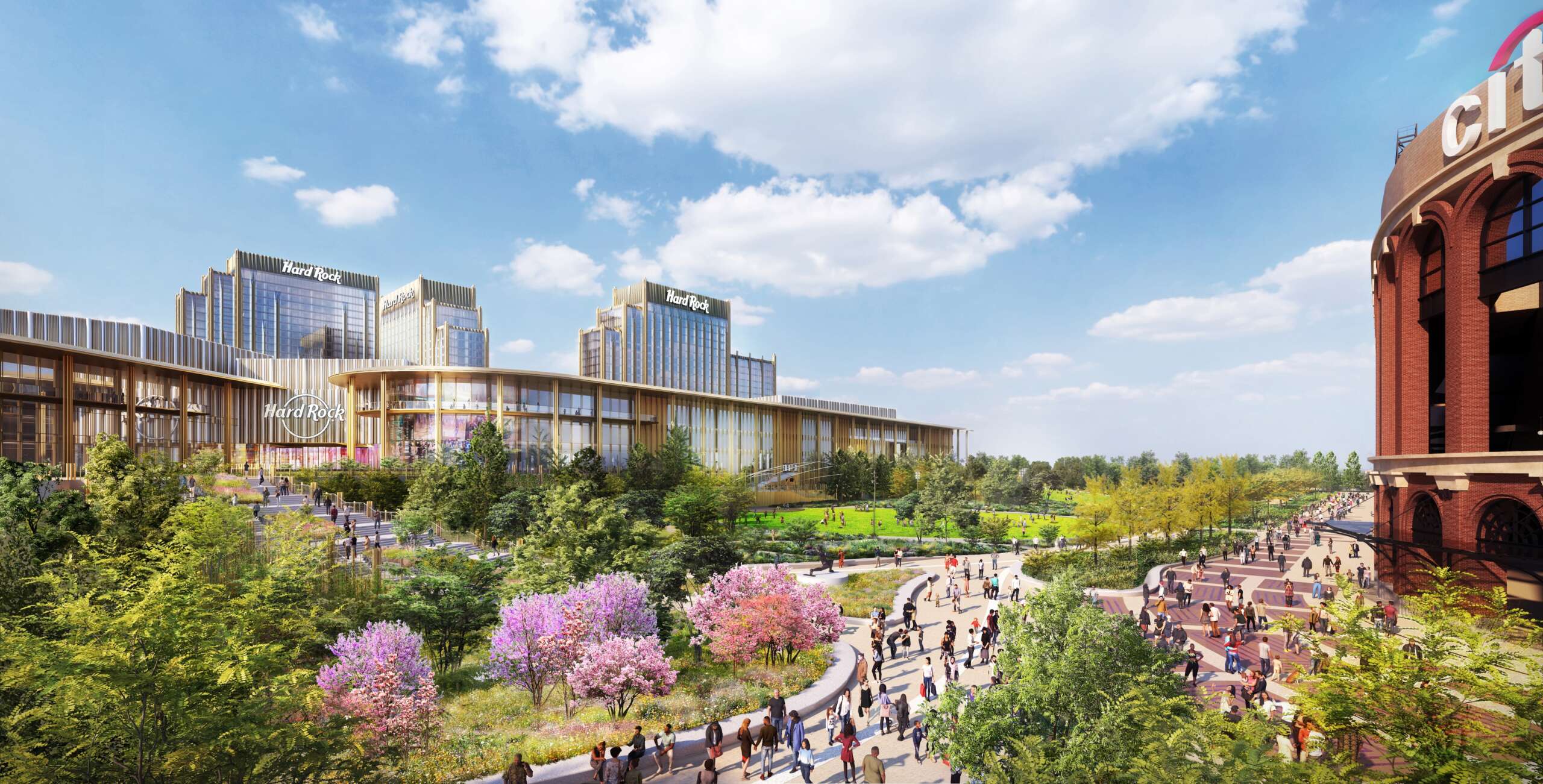
A rendering of the Metropolitan Park casino. The developers say it will transform what’s now a parking lot next to CitiField, bringing jobs and green space. Critics want the 50-acre site used as a flood-absorbing park. (Rendering via NYCEDC / SHoP Architects LLP + Field Operations)

“Shame on you John Liu! Shame on you John Liu!” was the spontaneous chant from a crowd of about 200 protesters who showed up Oct. 19 at the Muslim Center of New York in Flushing to protest the plan to build a large casino complex next to Citi Field, home of the Mets. 

The protesters were directing their ire at State Sen. Liu because of an about-face he made that opened this land—a parking lot which for decades had been zoned as parkland—to development. It was one of many rallies held by climate activists and residents of Flushing-Corona, Queens, over the $8 billion project known as Metropolitan Park.

One of three downstate casino proposals approved by the New York Gaming Facility Location Board last month, it would transform what is now an empty 50-acre asphalt parking lot in Willets Point into a casino, hotel, food hall and entertainment venue that supporters say will bring tens of thousands of jobs.

But many have raised concerns because the low-lying area, hemmed in by Flushing Bay and Flushing Creek, is flood-prone. As climate change intensifies, bringing sea level rise and extreme weather, it will only become more so in the coming years, critics say. 

Neighbors and advocates warn that placing a large-scale commercial complex here—instead of dedicating this area to water absorption and drainage—could increase flooding risks for surrounding communities as well. They point to the city’s own comprehensive waterfront plan,  which aims to reduce development in the floodplain and help people relocate from high-risk areas.

“The city keeps approving new buildings in those same flood zones,” said Rebecca Pryor, the executive director of Guardians of Flushing Bay, a local advocacy group opposed to the casino. “It feels like we’re stuck in a game of ping-pong between conflicting policies.” 

A youth group held up signs at rally against the casino on Oct. 19, 2025 in Flushing, Queens. (Photo by Ilvea Lezama)

Parkland in a floodplain

The empty parking lot where Metropolitan Park is planned has been designated as public parkland since the World’s Fair in 1939, and not zoned for development.

After initially opposing the casino project, Liu, who represents Flushing, changed his position, introducing a bill to rezone the area from parkland to commercial. Liu’s bill passed in May 2025 and was signed into law in June by Gov. Kathy Hochul, making approval for the development nearly assured.

In exchange, the casino’s developers, Hard Rock Casino Development—backed by Mets owner Steve Cohen—agreed to create at least 25 acres of new parkland within the 50-acre project area, as well as a proposed public walkway and park, named Flushing Skypark. This elevated path for walking and biking would be like a High Line-kind of project that would help connect downtown Flushing to Willets Point with greenery and places to sit.   

“For over 80 years, this area has been nothing but parking lots. Metropolitan Park will finally transform this asphalt into 25 acres of actual public park space and help to address the climate issues facing the area,” said Karl Rickett, a spokesperson for  the Metropolitan Park project. “Environmental advocates, unions, elected officials, and the local community all overwhelmingly support Metropolitan Park.”

City Limits reached out multiple times to Sen. Liu for comment, but did not receive a response. In an interview with the news site Hell Gate in March, he pointed to the benefits pledged by the developers, and said the majority of constituents in his Flushing district favor the project. 

For city officials, the justification to turn this parkland to commercial use is for economic growth. The gaming and entertainment complex is supposed to generate significant economic activity, create about 23,000 union jobs, and enhance recreational opportunities in the borough. 

A map of the site, hemmed in by Flushing Bay and Flushing Creek. (NYCEDC / SHoP Architects LLP + Field Operations)

But opponents say the site should instead be turned into water-absorbing parkland. The area is at high risk for flooding, according to the official FEMA flood map and the casino developer’s own design materials. The area is designated Flood Zone AE, which currently has a 1 percent annual chance of flooding. 

But as climate change intensifies and the melting of distant glaciers and ice sheets cause sea levels to rise, this area is expected to experience a significantly increased amount of flooding over the next 30 years. The First Street Flood Model, which predicts current and future flooding risk across the U.S., designates 151 properties in the Flushing Meadows-Corona area, approximately 96 percent, as already vulnerable. 

During intense rainstorms, which are becoming more frequent, the Whitestone Expressway and Grand Central Parkway, two major roadways that border the site, become waterlogged and nearly impassable. In 2012 the New York Times reported on the closing of both highways after two inches of rain fell in central Queens. 

Corona and Flushing already suffer from severe sewage overflow and flooding during heavy storms, as seen in events like Hurricane Ida and most recently with the October 2025 Nor’easter that brought significant rain to New York City, causing a state of emergency. 

“These are not turn of the century storms anymore,” said State Sen. Jessica Ramos, who represents district 13, in which a majority of the Metropolitan Park project would sit. She opposes the plan, as does fellow former Queens State Sen. Tony Avella.  

Experts say siting the casino in a floodplain is not a viable long-term strategy. “You don’t build for today’s weather, you build assuming climate change continues,” said civil engineer Dr. Reza Khanbilvardi, a professor at the Grove School of Engineering at CUNY. “Parts of the site could eventually be underwater, especially the parking lots in low-lying areas.” 

Citi Field was originally natural marshland before it was filled in and used as a garbage dump in the 1910s. Marshlands sit at a low point where the ground is already saturated, which means they naturally collect water, Dr. Khanbilvardi said. “This makes drainage poor and flooding common. The land’s topography must also be carefully studied to understand how water naturally flows and pools in the area.” 

Building at elevation 

Despite those criticisms, state and city officials say the project completed all required siting, environmental and resiliency assessments before the final vote last month.

According to findings from the Office of the Deputy Mayor for Housing, Economic Development and Workforce, the project would not cause major negative effects in most areas, including land use, zoning, community facilities, open spaces, air quality, noise, and public health. The only potential significant impacts relate to transportation and construction, officials found. 

The developers’ own planning materials acknowledge the site’s climate vulnerability, saying it  “currently sits within the floodplain so the program needs to be elevated.”

Planning materials for the project note its vulnerability to floods. (NYCEDC / SHoP Architects LLP + Field Operations)

They’ve promised to address flooding concerns by situating all indoor facilities intended for the public—including restaurants, the casino and stores—at a height of at least 12 feet above ground level. To meet state environmental rules, the developers promise to create garden-like areas that will soak up and filter excess water in a process called biofiltration. 

Flooding at the site comes from two sources: intense rainfall, often from weather events known as cloudbursts, and “sunny day flooding,” which is when sea level rise causes saltwater to pool on land at high tide. Biofiltration is a natural way to reduce and clean rainwater, but it can’t prevent flooding from tidal water or coastal inundation. 

Guardians of Flushing Bay supports added density and affordable housing in appropriate locations, but opposes building large structures like Metropolitan Park in floodplains. 

“It’s not about building higher, it’s about building smarter,” Pryor said. “Floodplains could serve as green buffers that absorb stormwater, not as sites for massive new structures; these spaces must be designed to absorb water during intense rainfall.”

Other major Queens assets located in the floodplain, such as LaGuardia Airport, experience problematic flooding. In 2022, an $8 billion redevelopment was approved for the airport that includes strategies to prevent floods caused by rising sea levels.

In 2024, a neighborhood group, Flushing for Equitable Development and Urban Planning (FED-UP), proposed an alternative for the area where the casino is to be built. Their Phoenix Meadows Vision Plan would transform the site into a large public park with space for small businesses, as well as pedestrian and bike connections. 

The proposal calls for green infrastructure capable of absorbing all on-site stormwater, such as  the rain garden parking lot at Queens Botanical Garden. This unique project is laid out with finger-like parking bays of permeable pavers, which allow rainwater to soak into the ground through three layers of bluestone gravel beneath. This design captures stormwater by acting as a sponge, filtering runoff from hard, impervious surfaces like roads and rooftops that would otherwise enter the sewer system, reducing pollution and flood risk. 

“You can pave over wetlands, but nature always finds a way to come back to what’s rightfully its own,” said Alexis Kaloyanides, a resident and community activist in Jackson Heights, Queens. 

Construction of the casino is slated to break ground soon, with a targeted completion by 2030.

To reach the editor, contact Jeanmarie@citylimits.org

Want to republish this story? Find City Limits’ reprint policy here.

The post A Casino is Coming to Queens. Critics Say It’s Wrong for the Flood-prone Site. appeared first on City Limits.
Trump visits Iowa trying to focus on affordability during fallout over nurse’s Minneapolis shooting

posted in: All news | 0

By SEUNG MIN KIM and HANNAH FINGERHUT, Associated Press

DES MOINES, Iowa (AP) — President Donald Trump is headed to Iowa on Tuesday as part of the White House’s midterm year pivot toward affordability, even as his administration remains mired in the fallout in Minneapolis over a second fatal shooting by federal immigration officers this month.

While in Iowa, the Republican president will make a stop at a local business and then deliver a speech on affordability, White House press secretary Karoline Leavitt said. The remarks will be at the Horizon Events Center in Clive, a suburb of Des Moines.

The trip will also highlight energy policy, White House chief of staff Susie Wiles said last week. It’s part of the White House’s strategy to have Trump travel out of Washington once a week ahead of the midterm elections to focus on affordability issues facing everyday Americans — an effort that keeps getting diverted by crisis.

Related Articles


Trump visits Iowa trying to focus on affordability during fallout over nurse’s Minneapolis shooting


Feds seek action against Minnesota Department of Education, Minnesota State High School League over Title IX


The shootings in Minneapolis are upending the politics of immigration in Congress


Death toll from US strikes on alleged drug boats reaches 126 people


Trump threatens to hike tariffs on South Korean goods over inaction on trade deal

The latest comes as the Trump administration is grappling with the weekend shooting death of Alex Pretti, an ICU nurse killed by federal agents in the neighboring state of Minnesota. Pretti had participated in protests following the Jan. 7 killing of Renee Good by an Immigration and Customs Enforcement officer. Even as some top administration officials moved quickly to malign Pretti, the White House said Monday that Trump was waiting until an investigation into the shooting was complete.

Trump was last in Iowa ahead of the July 4 holiday to kick off the United States’ upcoming 250th anniversary, which morphed largely into a celebration of his major spending and tax cut package hours after Congress had approved it.

Republicans are hoping that Trump’s visit to the state on Tuesday draws focus back to that tax bill, which will be a key part of their pitch as they ask voters to keep them in power in November.

“I invited President Trump back to Iowa to highlight the real progress we’ve made: delivering tax relief for working families, securing the border, and growing our economy,” Rep. Zach Nunn, R-Iowa, said in a statement in advance of his trip. “Now we’ve got to keep that momentum going and pass my affordable housing bill, deliver for Iowa’s energy producers, and bring down costs for working families.”

Trump’s affordability tour has taken him to Michigan, Pennsylvania and North Carolina as the White House tries to marshal the president’s political power to appeal to voters in key swing states.

But Trump’s penchant for going off-script has sometimes taken the focus off cost-of-living issues and his administration’s plans for how to combat it. In Mount Pocono, Pennsylvania, Trump insisted that inflation was no longer a problem and that Democrats were using the term affordability as a “hoax” to hurt him. At that event, Trump also griped that immigrants arriving to the U.S. from “filthy” countries got more attention than his pledges to fight inflation.

Although it was a swing state just a little more than a decade ago, Iowa in recent years has been reliably Republican in national and statewide elections. Trump won Iowa by 13 percentage points in 2024 against Democrat Kamala Harris.

Still, two of Iowa’s four congressional districts have been among the most competitive in the country and are expected to be again in this year’s midterm elections. Trump already has endorsed Republican Reps. Nunn and Mariannette Miller-Meeks. Democrats, who landed three of Iowa’s four House seats in the 2018 midterm elections during Trump’s first term, see a prime opportunity to unseat Iowa incumbents.

This election will be the first since 1968 with open seats for both governor and U.S. senator at the top of the ticket after Republican Gov. Kim Reynolds and Republican U.S. Sen. Joni Ernst opted out of reelection bids. The political shake-ups have rippled throughout the state, with Republican Reps. Randy Feenstra and Ashley Hinson seeking new offices for governor and for U.S. senator, respectively.

Democrats hope Rob Sand, the lone Democrat in statewide office who is running for governor, will make the entire state more competitive with his appeal to moderate and conservative voters and his $13 million in cash on hand.

Kim reported from Washington.

Trump’s immigration crackdown led to drop in US growth rate last year as population hit 342 million

posted in: All news | 0

By MIKE SCHNEIDER, Associated Press

ORLANDO, Fla. (AP) — President Donald Trump’s crackdown on immigration contributed to a year-to-year drop in the nation’s growth rate as the U.S. population reached nearly 342 million people in 2025, according to population estimates released Tuesday by the U.S. Census Bureau.

Related Articles


Trump visits Iowa trying to focus on affordability during fallout over nurse’s Minneapolis shooting


Today in History: January 27, Michael Jackson burned in filming accident


Officer fatally shoots an aggressive raccoon on a New York boardwalk


Los Angeles homeless services CEO charged with defrauding taxpayers to pay for luxury lifestyle


Shoveling snow? Over-exertion and cold temps can raise your heart risks

The 0.5% growth rate for 2025 was a sharp drop from 2024’s almost 1% growth rate, which was the highest since 2001 and was fueled by immigration. The 2024 estimates put the U.S. population at 340 million people.

Immigration increased by 1.3 million people last year, compared with 2024’s increase of 2.8 million people. The Census Bureau report did not distinguish between legal and illegal immigration.

In the past 125 years, the lowest growth rate was in 2021, during the height of the coronavirus pandemic, when the U.S. population grew by just 0.16%, or 522,000 people and immigration increased by just 376,000 people because of travel restrictions into the U.S. Before that, the lowest growth rate was just under 0.5% in 1919 at the height of the Spanish flu.

Births outnumbered deaths last year by 519,000 people.

The immigration drop dented growth in several states that traditionally have been immigrant magnets.

California had a net population loss of 9,500 people in 2025, a stark change from the previous year, when it gained 232,000 residents, even though roughly the same number of Californians already living in the state moved out in both years. The difference was immigration since the number of net immigrants who moved into the state dropped from 361,000 people in 2024 to 109,000 in 2025.

Florida had year-to-year drops in both immigrants and people moving in from other states. The Sunshine State, which has become more expensive in recent years from surging property values and higher home insurance costs, had only 22,000 domestic migrants in 2025, compared with 64,000 people in 2024, and the net number of immigrants dropped from more than 411,000 people to 178,000 people.

New York added only 1,008 people in 2025, mostly because the state’s net migration from immigrants dropped from 207,000 people to 95,600 people.

Tuesday’s data release comes as researchers have been trying to determine the effects of the second Trump administration’s immigration crackdown after the Republican president returned to the White House in January 2025. Trump made a surge of migrants at the southern border a central issue in his winning 2024 presidential campaign.

The numbers made public Tuesday reflect change from July 2024 to July 2025, covering the end of President Joe Biden’s Democratic administration and the first half of Trump’s first year back in office.

The figures capture a period that reflects the beginning of enforcement surges in Los Angeles and Portland, Oregon, but do not capture the impact on immigration after the Trump administration’s crackdowns began in Chicago; New Orleans; Memphis, Tennessee; and Minneapolis, Minnesota.

The 2025 numbers were a jarring divergence from 2024, when net international migration accounted for 84% of the nation’s 3.3 million-person increase from the year before. The jump in immigration two years ago was partly because of a new method of counting that added people who were admitted for humanitarian reasons.

“They do reflect recent trends we have seen in out-migration, where the numbers of people coming in is down and the numbers going out is up,” Eric Jensen, a senior research scientist at the Census Bureau, said last week.

Unlike the once-a-decade census, which determines how many congressional seats and Electoral College votes each state gets, as well as the distribution of $2.8 trillion in annual government funding, the population estimates are calculated from government records and internal Census Bureau data.

The release of the 2025 population estimates was delayed by the federal government shutdown last fall and comes at a challenging time for the Census Bureau and other U.S. statistical agencies. The bureau, which is the largest statistical agency in the U.S., lost about 15% of its workforce last year due to buyouts and layoffs that were part of cost-cutting efforts by the White House and its Department of Government Efficiency.

Other recent actions by the Trump administration, such as the firing of Erika McEntarfer as Bureau of Labor Statistics commissioner, have raised concerns about political meddling at U.S. statistical agencies. But Brookings demographer William Frey said the bureau’s staffers appear to have been “doing this work as usual without interference.”

“So I have no reason to doubt the numbers that come out,” Frey said.

Follow Mike Schneider on the social platform Bluesky: @mikeysid.bsky.social.

Follow the AP’s coverage of the U.S. Census Bureau at https://apnews.com/hub/us-census-bureau.

ICE agents to have security role at Milan Cortina Olympics

posted in: All news | 0

By TRISHA THOMAS and DAVID BILLER, The Associated Press

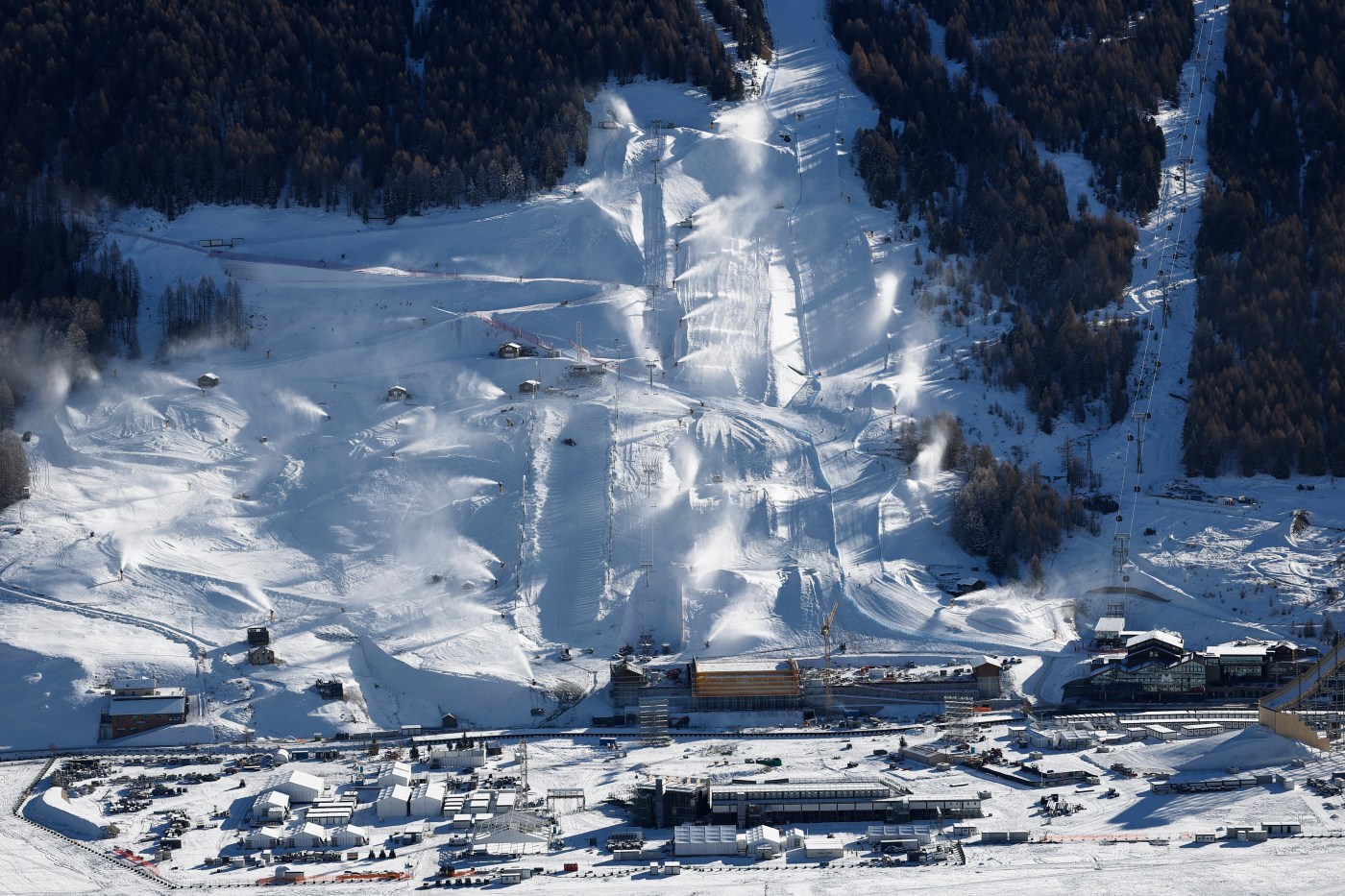
MILAN (AP) — U.S. Immigration and Customs Enforcement agents will have a security role during the upcoming Milan Cortina Winter Games, according to information shared with local media by sources at the U.S. Embassy in Rome. The Associated Press independently confirmed the information with two officials at the embassy.

The officials who confirmed ICE participation on Tuesday said that federal ICE agents would support diplomatic security details and would not run any immigration enforcement operations.

During previous Olympics, several federal agencies have supported security for U.S. diplomats, including the investigative component of ICE called Homeland Security Investigations (HSI), the officials said. They could not be named because they are not authorized to speak publicly.

HSI has a global footprint, and it’s common for the Department of Homeland Security (DHS) to provide security support at major international events.

The State Department’s Diplomatic Security Service does this as well, routinely supporting events like the Olympics. The use of U.S. law enforcement agencies in these contexts isn’t unusual. During the 2016 Rio Olympics, the Transportation Security Administration deployed officers to assist with airport screening due to the surge in visitors and the potential threat of attacks.

Citing images of masked ICE agents that have dominated coverage of unrest in Minneapolis, Milan Mayor Giuseppe Sala said that ICE would not be welcome in his city, which is hosting most ice sports during the Feb. 6-22 Winter Games.

“This is a militia that kills, a militia that enters into the homes of people, signing their own permission slips. It is clear they are not welcome in Milan, without a doubt,” Sala told RTL Radio 102 before ICE’s deployment to the Games was confirmed.

ICE’s role had been reported over the weekend by the Italian daily il Fatto Quotidiano, prompting conflicting statements from Italian authorities who did not want to appear to confirm the agency’s role.

Italian Interior Minister Matteo Piantedosi said Saturday he had not received confirmation of ICE’s deployment, but added that “I don’t see what the problem would be,” the news agency ANSA reported.

Related Articles


Trump visits Iowa trying to focus on affordability during fallout over nurse’s Minneapolis shooting


Today in History: January 27, Michael Jackson burned in filming accident


Officer fatally shoots an aggressive raccoon on a New York boardwalk


Los Angeles homeless services CEO charged with defrauding taxpayers to pay for luxury lifestyle


Shoveling snow? Over-exertion and cold temps can raise your heart risks

The Interior Ministry on Tuesday repeated that the U.S. has not confirmed the makeup of its security detail but insisted that “at the moment there are no indications that ICE USA will act as an escort to the American delegation.”

U.S. Vice President JD Vance will lead a delegation attending the Feb. 6 opening ceremony. The delegation will also include second lady Usha Vance and Secretary of State Marco Rubio, the White House announced earlier this month.

The confirmation of ICE’s role in Olympic security comes after RAI state TV aired video Sunday of ICE agents threatening to break the glass on the vehicle of a RAI crew reporting in Minneapolis, where ICE operations have sparked mass demonstrations. In the past three weeks, federal officers in Minneapolis have shot and killed two protesters against deportations and immigration enforcement.

AP writer Colleen Barry in Milan contributed.