
Father’s lawsuit against Dakota County jail alleges ‘shocking lack of care’ for son with diabetes, mental illness

posted in: News | 0

A federal lawsuit filed Thursday alleges Dakota County jail employees left a 22-year-old Farmington man in a padded cell naked and covered in his own feces, blood, urine and vomit for nearly 20 hours while his mental and physical health deteriorated to the point he was hospitalized in critical condition.

Caleb Duffy was arrested by Hastings police on suspicion of domestic assault shortly after 6:30 p.m. July 4, 2022. Duffy, who has mental illness and diabetes, was removed from the cell two days later and taken to Region’s Hospital.

Duffy was diagnosed with diabetic ketoacidosis and kept intubated and sedated for five days. He spent nearly two weeks in intensive care before being transferred to the hospital’s psychiatry unit. His hospital bills totaled more than $220,000.

Brian Duffy, Caleb’s father and limited legal guardian, filed the lawsuit in U.S. District Court that names as defendants Dakota County and 10 of its corrections staff, as well as the jail’s medical provider, Advanced Correctional Healthcare Inc., and three of its employees. It alleges two counts of negligence and violations of the Eighth and 14th Amendments to the U.S. Constitution “either maliciously or with reckless disregard.”

“This case involves a shocking lack of care by the defendant corrections and jail medical staff,” Ryan Vettleson, an attorney at Storms Dworak, which is representing Duffy’s family, said in a statement. “No person should be subjected to such willful indifference.”

The lawsuit alleges Duffy’s “obvious and severe symptoms he displayed of a medical emergency were repeatedly ignored.”

Jail video surveillance shows Duffy in a psychotic state in a padded cell, naked and rolling around in his own feces, blood, urine and vomit, the lawsuit says. Duffy injured himself severely by repeatedly hitting his head against an unpadded area of the cell.

“Mr. Duffy’s plight was so severe that it is extremely difficult to watch any of it on video, but the video goes on for hours on end — and the individuals present at the time did nothing,” Vettleson said.

Dakota County Sheriff Joe Leko and a Dakota County spokeswoman both said they cannot comment on pending litigation.

“Know that the safety and care of our detainees have always been and continue to be top priorities in our jail,” Leko said in a statement, adding that the Dakota County Attorney’s Office is representing the county and employees named in the claim.

Father informed jail

Prior to the incident, Duffy was diagnosed with bipolar disorder, autism anxiety, major depressive disorder, ADHD and Type I diabetes, the lawsuit says. He previously had been hospitalized several times for diabetic ketoacidosis and mental health crisis intervention. He was civilly committed for mental illness in January 2021, a commitment that was continued six months later and remains in effect, court records show.

The lawsuit claims that Duffy’s father called the jail repeatedly starting around 9 p.m. July 4 to inform staff that his son was a vulnerable adult with mental illness and diabetes and in need of his medication and hospitalization. However, jail staff “took no action” to get Duffy his insulin until around 5:35 a.m. July 5, when a deputy saw him pacing in the holding cell and yelling that he was dying.

After Duffy told the deputy that he had diabetes and needed his blood sugar checked, it was found to be “dangerously high,” the lawsuit continues.

About a half-hour later, Duffy was seen by a nurse from Advanced Correctional Healthcare, a Tennessee-based private corporation licensed to do business in Minnesota. The nurse administered Duffy 14 units of fast-acting insulin.

Duffy’s father met with a different nurse around 8:10 a.m. July 5, giving her his son’s medical history information. He returned around 10:45 a.m. with Duffy’s prescribed medication: insulin and Gabapentin, an anticonvulsant medication that is used off-label to treat anxiety.

Gabapentin withdrawal symptoms can appear in 12 hours and can include anxiety, pain, agitation, disorientation, confusion, combativeness, hallucinations and paranoid delusions, the lawsuit says.

However, jail medical staff never administered Gabapentin to or initiated a withdrawal protocol for Duffy, “demonstrating deliberate indifference to Duffy’s serious medical needs and medical negligence,” the lawsuit alleges.

‘I’ll just hit my head’

Duffy refused the fast-acting insulin around noon on July 5. A nurse reported that Duffy acknowledged understanding the ramifications of refusing his insulin, and then he “sat down and started slamming the back of his head against the cement and said, ‘I’ll just hit my head until I die,’” the lawsuit says.

Duffy was put on suicide watch, meaning corrections staff were required to perform well-being checks on him at least every 15 minutes.

About three hours later, Duffy stripped off his gown and began vomiting and ramming his head into the walls of his padded cell. A deputy noted that Duffy was screaming that he “needs a doctor.”

Surveillance video shows that although Duffy had urinated and defecated in his cell and repeatedly vomited, a nurse who administered insulin noted no distress or other concerns with him, the lawsuit claims.

Duffy remained in his cell for the next 19½ hours as his psychosis and physical health worsened, according to the lawsuit. Between 6 a.m. and around 8:30 a.m. the next day, Duffy hit his head on the cell’s walls or floor 22 times. At one point, he hit his head against a metal grate so hard it caused a bleeding wound.

A nurse arrived at Duffy’s cell at about 8:45 a.m. and noted “some blood on walls, floor and drain,” the lawsuit says. She entered the cell with two deputies and took his blood sugar, which was so high the machine could not register it.

The nurse left the cell to call an ambulance, “but watched him on video surveillance and saw him repeatedly sit up and fall backwards, hitting his head on the ground, leaving a bloody mark each time,” the lawsuit continues.

At approximately 9 a.m., Duffy was carried out of the cell and loaded into an ambulance.

Related Articles

Crime & Public Safety |


St. Paul Fire Department hosting emergency preparedness exercise

Crime & Public Safety |


Lakeville drowning victim identified

Crime & Public Safety |


Pedestrian killed in Blaine crash

Crime & Public Safety |


Minnesota police watchdog group raises concerns after second deadly police shooting in Crookston in 6 weeks

Crime & Public Safety |


Deputies search ex-boyfriend’s residence in case of missing Dakota County woman
Minnesota down 3,200 net jobs in June, unemployment ticks up to 2.9%

posted in: News | 0

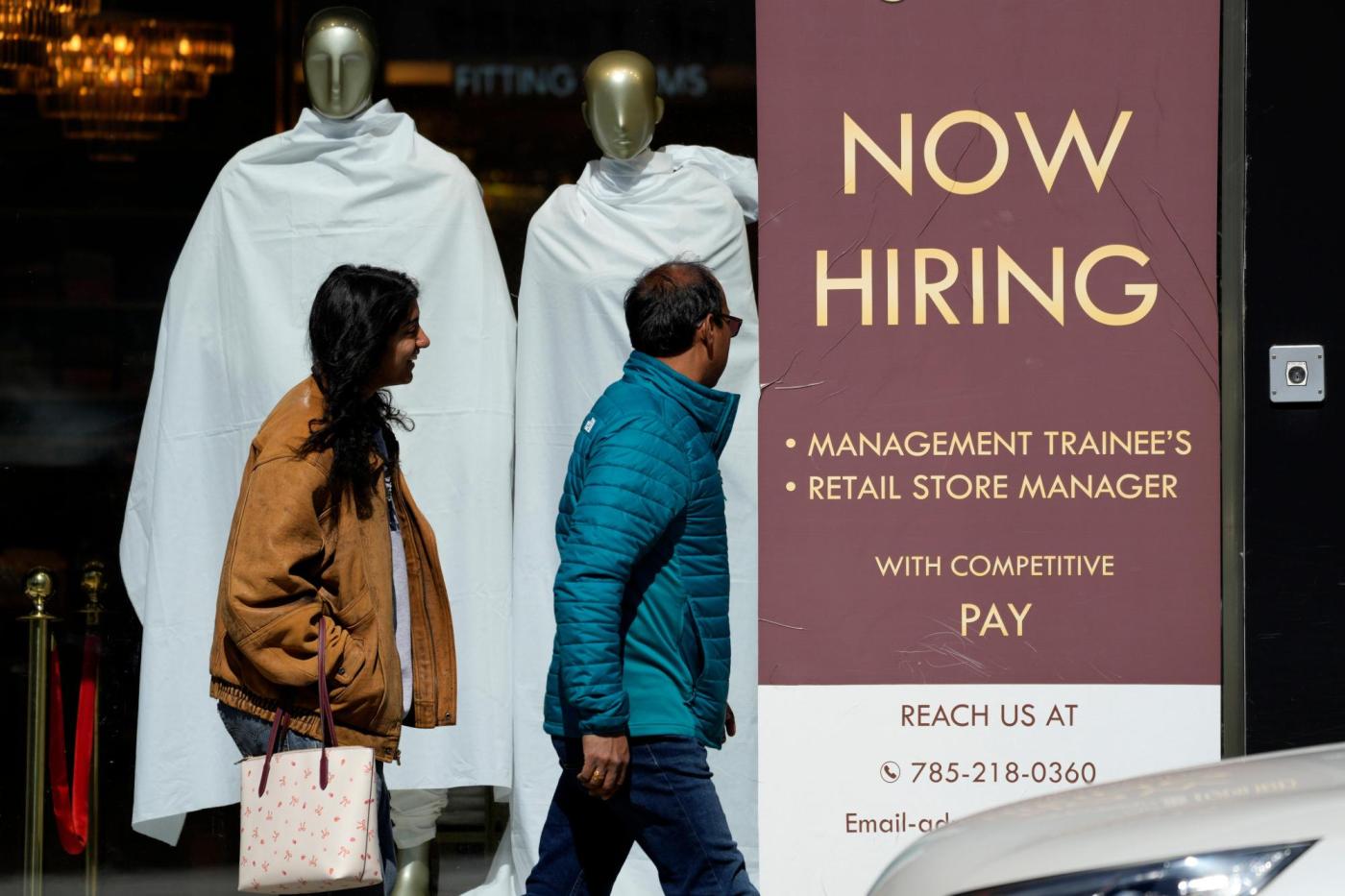
Minnesota lost 3,200 jobs from in June on a seasonally adjusted basis, and the state’s unemployment rate ticked up one-tenth of a percentage point to 2.9%, the Minnesota Department of Employment and Economic Development said in news release Thursday. The state’s private sector lost 3,300 jobs.

It’s the second month in a row the state has seen a net job loss. In May, the state lost 8,600 jobs, but gained 3,900 jobs in April. Minnesota has added jobs eight of the last 12 months.

The state’s labor force declined by more than 3,100 people, bringing the labor force participation rate down two-tenths of a percentage point to 67.8%. This measures the number of people either working or actively seeking work, and is used to calculate the headline unemployment rate.

“We closely monitor job and labor force growth and we continue to believe that job growth, particularly in certain sectors, is constrained by a lack of available workers with necessary skills,” DEED Commissioner Matt Varilek said in the news release. “That’s why DEED and our agency partners are focused on innovative initiatives to help connect Minnesotans looking for work with in-demand employment.”

The state’s data compare with a national unemployment rate of 4.1% in June, up one-tenth of a percentage point, and a labor force participation rate of 62.6%.

Over the month, areas that gained jobs on a seasonally adjusted basis included Education & Health Services, up 4,500 jobs, and Construction, up 300 jobs.

Losing jobs were Professional & Business Services, down 3,000 jobs, Leisure & Hospitality, down 2,100 jobs, and Manufacturing, down 1,600 jobs.

Wages in Minnesota again outpaced inflation, with average hourly wages for all private sector workers increasing $2.02, or 5.7%, over the year. The Consumer Price Index, a common measure of inflation, rose 3% over the year, meaning wages increased almost twice as fast as inflation.

Among broader measures of unemployment, the broadest, called the U-6, was at 5.7%, up from 5.4% in May, according to DEED. This takes into account those who have voluntarily dropped out of the labor force and are no longer looking for work, along with those marginally employed and those working part-time but seeking full-time work.

Related Articles

Business |


ICU Medical plans to close Oakdale facility, lay off 83 employees

Business |


Business People: Fairview fills chief people officer role

Business |


Working Strategies: Interviewing for your career-change job

Business |


Business People: St. Paul Realtors Association names new CEO

Business |


Working Strategies: Checking in on your summer job or internship

Theater review: Henry the VIII’s wives find their voice as pop singers in ‘Six’

posted in: News | 0

If you want to produce something that appeals to young theatergoers, ask a young theater artist to create it.

That seems a key ingredient in the recipe for the success of “Six.” A hit on Broadway and in London’s West End — and currently being presented by a touring company ensconced at St. Paul’s Ordway Music Theater through July 28 — it started life as a school project for the Cambridge University duo of Toby Marlow and Lucy Moss. They decided to take a well-documented chapter of English history, the multiple 16th-century marriages of King Henry VIII, and retell it in 21st-century pop song styles.

The result is a kind of “American Idol”-esque sing-off that rocks and funks up the tales of trauma and tragedy endured by Henry’s six wives. But “Six” also holds some good advice about the path to unhappiness that is paved with comparing oneself to others. That could be a life-saving lesson for some teenagers. And, indeed, teen girls seem to make up a very large percentage of the show’s fan base, judging from Wednesday night’s Ordway crowd.

They likely found “Six” to be pretty darn fun, and that has a lot to do with the girl group energy that bursts the fourth wall as soon as the six wives and their four-piece, all-woman band take the stage. Each wife gets the opportunity to lay out her story in song, with Marlow and Moss adopting a different pop sub-genre for each of her majesties.

Hence, Catherine of Aragon uses a salsa-fied Caribbean jam to chronicle the divorce that led to the founding of the Church of England (after “the Pope said nope”), Anne Boleyn rocks up her road to execution, and Jane Seymour belts out a ballad of doomed love with all the passion and power that pop has gleaned from gospel.

But Seymour was only the third of the six wives, and after Kelly Denice Taylor skillfully scales the emotional peaks of the latter tune, “Heart of Stone,” Marlow and Moss’ score begins a descent onto far less imaginative terrain. Oh sure, there’s the enjoyable spoof of German electronic dance music that is “Haus of Holbein,” but the songs decline in quality in the show’s second half.

Perhaps that’s because Anna of Cleves doesn’t really have much of a story to tell — the marriage lasted months and she lived out her life in luxurious exile — and Katherine Howard’s dance-pop detailing of being an adolescent sex object suffers from Alize Cruz’s unclear diction and an overloud band, key flaws in a musical that does all of its storytelling via songs.

Yet Adriana Scalice is quite good as the most fleshed-out and natural of the wives, Catherine Parr. She’s entrusted with putting an end to the posturing and calling into question the show’s entire patriarchal premise, and her version of “I Don’t Need Your Love” would prove a nice landing place — except that Broadway requires high-energy finales and curtain calls, and this 80-minute, intermission-less show obliges.

“Six” benefits from Gabriella Slade’s Beyonce-meets-the-Tudors costuming and the energetic and, ahem, well-executed pop-concert choreography of Carrie-Anne Ingrouille. With a set made of risers and chaser lights, it’s a very simple staging. And that keeps things from becoming overstimulating and distracting from its valuable message.

‘Six’

When: Through July 28

Where: Ordway Music Theater, 345 Washington St., St. Paul

Tickets: $191.50-$41.50, available at 651-224-4222 or ordway.org

Capsule: British history gets popped up in fun fashion.

Rob Hubbard can be reached at wordhub@yahoo.com.

Related Articles

Things to Do |


Theater review: Gremlin Theatre spins a tense, crafty tale of murder with ‘Rope’

Things to Do |


Theater review: Guthrie’s ‘Little Shop of Horrors’ is campy, infectious fun

Things to Do |


Josephine Baker’s complex life revealed in Yellow Tree Theatre’s staging

Things to Do |


Theater review: Ordway’s ‘Come From Away’ an uplifting elixir rooted in a tragic time

Things to Do |


Review: Theater Latté Da puts a sweeter spin on Puccini with ‘Johnny Skeeky’

Opinion: State Government Must Protect New Yorkers’ Rights Under the Green Amendment

posted in: Politics | 0

“The state is twisting itself into legal pretzels to deny the Green Amendment’s ability to check government action that may be legally responsible for the violations of the environmental rights of New Yorkers.”

Mike Groll/Office of Governor Kathy Hochul

Gov. Kathy Hochul at a press conference in 2023.

CityViews are readers’ opinions, not those of City Limits. Add your voice today!

On Jan. 1, 2022, more than 70 prcent of New York voters cast their ballot in support of adding Article 1 Section 19—known as the New York Green Amendment—to the state constitution’s Bill of Rights.

The historic amendment recognizes and protects the rights of all New Yorkers to clean water and air and a healthful environment and places these rights on the same constitutional level as our other most cherished freedoms, such as the right to freely speak and to be free from unreasonable searches and seizures. With its passage, New York became the third state in the nation to give environmental rights this highest constitutional standing, joining Pennsylvania and Montana.

The reaction of Gov. Kathy Hochul, Attorney General Letitia James and the New York Department of Environmental Conservation (NYDEC) has been disappointing. Since the amendment took effect, it has been cited in just about a dozen cases in New York, including three challenges to government actions that have resulted in serious air pollution from industry and landfills.

In each of these three cases—involving the Norlite industrial operation in Cohoes, NY, the High Acres Landfill in Monroe County, and the Seneca Meadows landfill in Seneca County—the government is arguing against the Green Amendment’s power, claiming that it does not compel the government to affirmatively act to protect our environmental rights, despite the fact that these facilities could not operate but for government approval.

This view is mistaken. As these cases have advanced, we have seen the state’s position on the amendment emerge, take shape and evolve. While it has been good to see the state recognize that the NY Green Amendment “is an important addition to the Bill of Rights that protects individual rights against government intrusion,” it is unfortunate and disheartening that the state seems to deny its own ability and obligation to uphold and protect these rights.

In all three of these cases, the state is twisting itself into legal pretzels to deny the Green Amendment’s ability to check government action that may be legally responsible for the violations of the environmental rights of New Yorkers impacted by the permitted release of crystalline silica, greenhouse gases, hazardous air pollutants, and overwhelming noxious odors from industry and landfills. This pollution is harming the health of nearby communities, the success of local businesses, the property values of families and the ability of children to learn in school.

It worries me that the state is trying to turn the NY Green Amendment into a marketing ploy by asserting its strength and value on the one hand, while at the same time trying to undercut its legal viability by arguing that New Yorkers cannot use it to protect and enforce their environmental rights against government infringement.

Whether the NYDEC, attorney general or governor wish to recognize it or not, when it comes to the Norlite industrial operation, the High Acres Landfill, or the Seneca Meadows landfill, the State of New York’s permitting and ineffectual regulatory enforcement may be empowering air pollution and environmental desecration so extreme that it violates the rights of nearby communities to clean air and a healthful environment. Rather than allow impacted communities to make this claim in a court of law and back it up with facts and legal precedent, the state is seeking to have the cases dismissed.

Efforts to suggest that communities enforcing their environmental rights violates the separation of powers between our three branches of government misrepresents our system of checks and balances. It is the role of the courts to interpret the constitution and to take appropriate judicial measures to prevent unconstitutional government overreach that infringes on our constitutional rights.

In the New York cases advancing now, the plaintiffs are not seeking to displace the authority of any branch of government or agency. To the contrary, the impacted communities are simply exercising their legal right to engage the courts to ensure that the constitution is complied with and that the constitutional rights of the people are properly protected.

The people of New York—like those in states across the nation who are joining the Green Amendment movement to take back their ability to protect environmental rights, environmental justice, and climate protection—recognized that their government needed additional strength, guidance and oversight on environmental issues.

While new laws and regulations have improved the quality of our air, water and environment overall, for many communities—particularly people of color, lower income communities and indigenous communities—the promise of healthy water, air, soils, biodiversity, climate and environment remains elusive. This is what our Green Amendment was passed to protect.

New York’s passage of its Green Amendment was inspired by neighboring Pennsylvania, where communities used their Green Amendment rights to hold the state accountable to protect them from the invasion of fracking into residential communities. Montana’s Green Amendment was the powerhouse that allowed youth litigants to overturn a state law prohibiting government from considering the climate changing ramifications of their actions. Other cases have helped to address toxic soil contamination, water pollution, devastation of critical natural ecosystems, and both the human health and economic harms of environmental degradation.

As only the third state to pass a Green Amendment and give environmental rights the same standing as other fundamental freedoms such as speech, religion and property, the nation is closely watching New York to see what these Amendments can do. 

All government authority is derived from the people, and it is the right of the people to amend their constitution to ensure that the government is properly exercising this grant of authority and does not infringe on their fundamental human rights—including the right to clean water and air, a safe climate and healthful environment.

In the final analysis, while a Green Amendment does create an obligation to protect the environmental rights of the people, it also provides a powerful tool for government officials to lift up and better protect our environment, to advance true environmental justice, and to stave off the climate crisis for the benefit of all people and all generations.

Over 20 other states are working towards this goal. Let’s be sure our New York government sends a message we can be proud of.

Maya K. van Rossum is founder of the national Green Amendments For The Generations movement and organization, author of “The Green Amendment, The People’s Fight For a Clean, Safe & Healthy Environment,” the Delaware Riverkeeper and a 30-year leader of the regional Delaware Riverkeeper Network.