Uno de cada cuatro neoyorquinos agobiado por deudas de préstamos estudiantiles: encuesta

posted in: News | 0

El informe revela disparidades por sexo y raza: las mujeres y las personas de color tienen mayores niveles de deuda y más dificultades para pagarla.

Gerardo Romo / NYC Council Media Unit

Este artículo se publicó originalmente en inglés el 24 de julio. Traducido por Daniel Parra. Read the English version here.

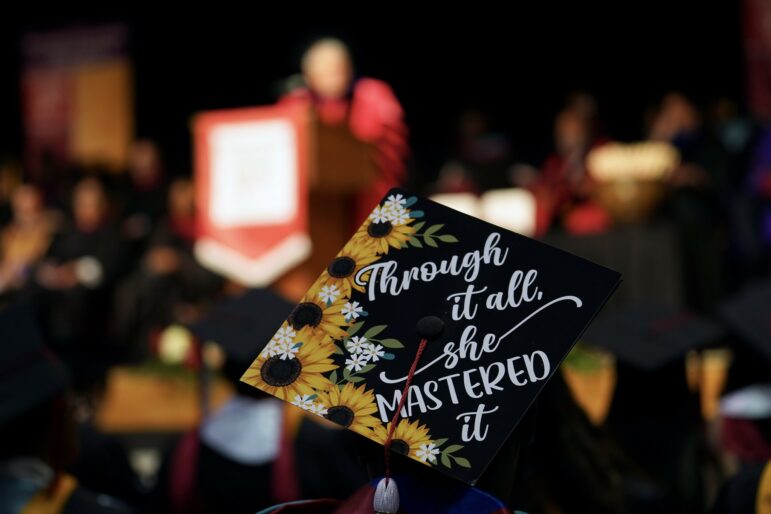
Uno de cada cuatro neoyorquinos está agobiado por la deuda de los préstamos estudiantiles, según los resultados de una encuesta reciente.

La encuesta, realizada por la Community Service Society of New York*, se llevó a cabo por teléfono del 6 de julio al 7 de agosto de 2023 y llegó a 1.758 neoyorquinos.

Reveló disparidades por género y raza, con las mujeres y las personas de color teniendo mayores niveles de deuda y enfrentándose a más dificultades para pagarla.

En todos los rangos de ingresos, los hogares con deuda de préstamos estudiantiles tenían más probabilidades de experimentar graves dificultades económicas en comparación con hogares similares sin dicha deuda, lo que plantea dudas sobre si la educación superior sigue siendo una vía segura para la movilidad ascendente. 

City Limits habló con Carolina Rodríguez, coautora del informe “The True Cost of a College Degree” (El verdadero coste de un título universitario) basado en la encuesta. Como directora del  Education Debt Consumer Assistance Program (Programa de asistencia al consumidor de deuda Educativa), Rodríguez ayuda a los clientes a crear y aplicar un plan estratégico para hacer frente a su deuda.

La deuda de los préstamos estudiantiles se ve agravada por el elevado coste de la vida en Nueva York, explicó, donde gastos como el alquiler y el seguro médico pueden ser considerables, mientras que los salarios permanecen estancados.

“Si se tiene en cuenta lo que cuesta, digamos, una educación de cuatro años, y los salarios y la capacidad de obtener ingresos, no se obtiene la cantidad necesaria para poder hacer frente al costo de la vida y pagar la deuda en un plazo razonable”, dijo Rodríguez.

Uno de los clientes de Rodríguez obtuvo préstamos estudiantiles hace casi dos décadas. Dejó de pagar la deuda y se declaró en quiebra, pensando que era la mejor solución, pero sólo consiguió una reducción del total de su deuda de préstamos estudiantiles y siguió teniendo que hacer pagos.

El proceso para ayudar a su clienta a obtener algún alivio de esa deuda fue largo y complicado, dijo Rodríguez. Aunque la prestataria había sido empleada del servicio público durante muchos años, no pudo beneficiarse de ningún programa de condonación de préstamos estudiantiles.

“Realmente habla de la complejidad de nuestro sistema que incluso aquellas personas que intentan obtener algún alivio a través de la quiebra, por ejemplo, pueden no darse cuenta de que pueden no obtener un alivio completo y podrían luchar durante años y años”, dijo Rodríguez.

Otro caso sorprendente le ocurrió a un padre que había pedido un préstamo de $100.000 dólares para que su hijo fuera a la universidad. Al no poder permitirse un plan de amortización, era sólo cuestión de tiempo que dejara de pagar el préstamo.

El impago puede tener consecuencias nefastas, como la retención del salario por parte del gobierno, o una reducción de hasta el 15 por ciento de los fondos de la Seguridad Social, incapacidad o jubilación. Las deudas de préstamos estudiantiles no prescriben, por lo que las repercusiones legales pueden producirse indefinidamente.

“Cada vez son más los padres que piden mucho dinero prestado, y el problema es que no tienen las mismas opciones de reembolso que la gente cuando pide préstamos para su propia educación”, dijo Rodríguez. “Así que se encuentran en este limbo en el que no pueden permitirse ningún plan de amortización”.

Una laguna jurídica del Parent Plus Loan —un tipo de préstamo que se cerrará en julio de 2025— permite a los padres que consolidan varios préstamos acceder a un plan de amortización más flexible. El cliente ya había consolidado varios préstamos, pero necesitaba uno más para poder acogerse al programa. Esto le llevó a la irónica posibilidad de tener que volver a la escuela para obtener otro préstamo, con el fin de calificar para el plan de pago más asequible.

Rodríguez y su equipo descubrieron que los prestatarios con bajos ingresos son los más afectados, pero no son los únicos que tienen que hacer frente a la deuda de los préstamos estudiantiles. Más de la mitad de los hogares neoyorquinos de ingresos moderados a altos que tienen este tipo de deuda afirman sufrir tres o más dificultades económicas, como gastos de transporte, elevados costes de guardería y ahorros reducidos.

El estudio propone una serie de soluciones, entre ellas la reforma de la declaración de bancarrota y programas de enseñanza superior pública más asequibles. Rodríguez afirma que quienes ya tienen deudas por préstamos estudiantiles no deberían retrasar el momento de afrontarlas, buscando asesoramiento financiero cuando sea necesario. Los estudiantes que estén pensando en obtener un título deberían solicitarlo en varias instituciones, sopesando cuidadosamente la ayuda financiera ofrecida por cada una de ellas en función de su potencial de ingresos tras la graduación.

“Si tardas dos décadas en ver el retorno de la inversión, ya has perdido mucho tiempo para poder ahorrar para la jubilación, comprar una casa y dedicarte a todas las demás actividades que pensabas que te permitiría obtener un título”, aconseja ella.

*Community Service Society es uno de los financiadores de City Limits.

Para ponerse en contacto con la reportera de esta noticia, escriba a Anastasia@citylimits.org. Para ponerse en contacto con la editora, escriba a Jeanmarie@citylimits.org
Thomas Freidman: Democrats could regret calling Trump and his supporters ‘weird’

posted in: Politics | 0

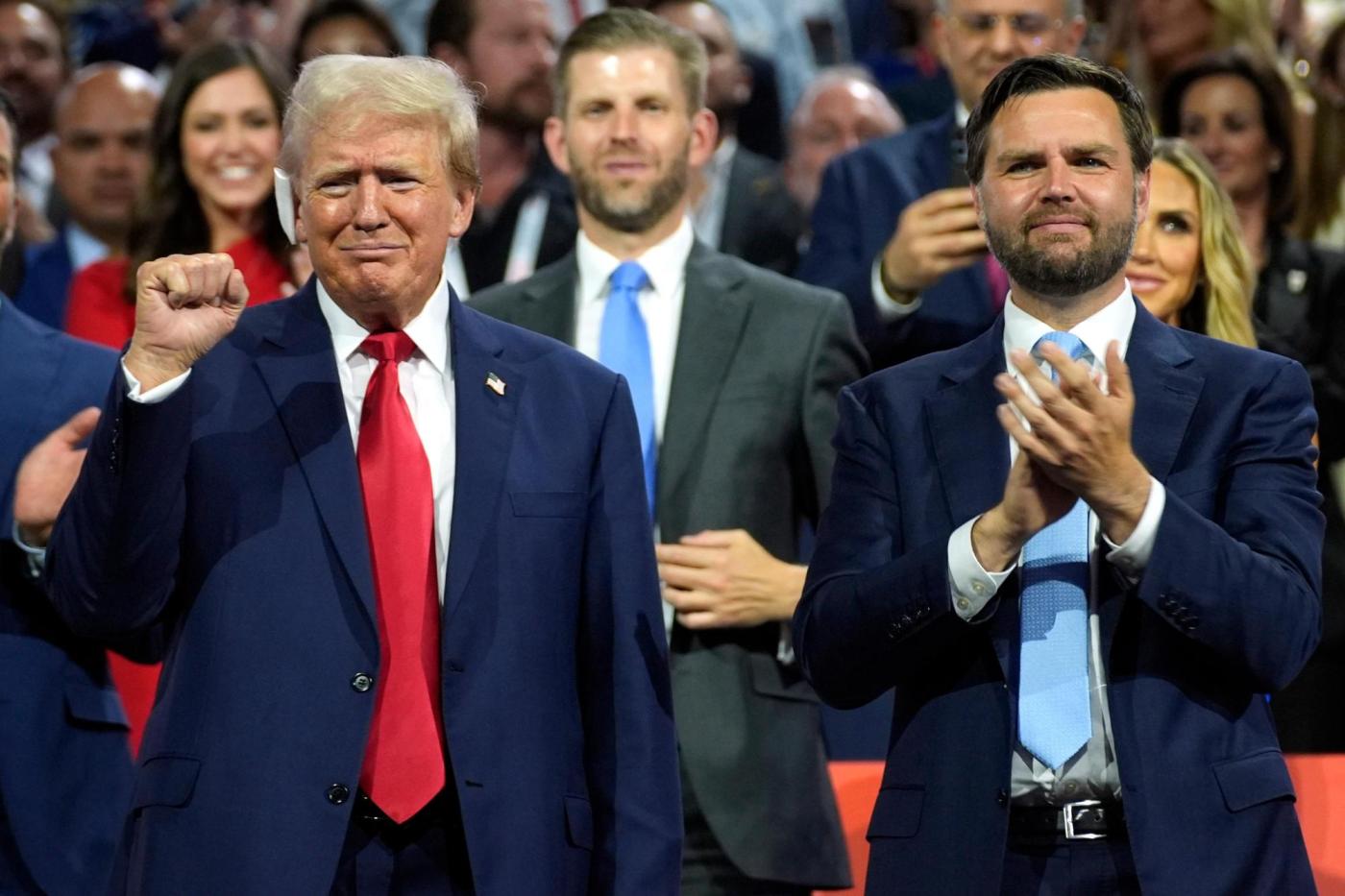
For a few days this last week I started to believe that Kamala Harris and the Democrats could come from behind and beat Donald Trump. But then I started to hear Democrats patting themselves on the back for coming up with a great new label for Trump Republicans. They are “weird.”

I cannot think of a sillier, more playground, more foolish and more counterproductive political taunt for Democrats to seize on than calling Trump and his supporters “weird.”

But weird seems to be the word of the week. As The New York Times reported, in a potential audition to be Harris’ running mate, Gov. Tim Walz of Minnesota said over the weekend of Trump and his vice-presidential pick, Sen. JD Vance of Ohio: “The fascists depend on us going back, but we’re not afraid of weird people. We’re a little bit creeped out, but we’re not afraid.” Just to make sure he got the point across, Walz added: “The nation found out what we’ve all known in Minnesota: These guys are just weird.”

As the Times reported, Harris, speaking at a weekend campaign event at a theater in the Berkshires “leaned into a new Democratic attack on the former president and his running mate, Sen. JD Vance of Ohio, saying that some of the swipes the men had taken against her were ‘just plain weird.’” The Times added: “Pete Buttigieg, the secretary of transportation, said Trump was getting ‘older and stranger’ while Sen. Chuck Schumer, the majority leader, called Vance ‘weird’ and ‘erratic.’”

It is now a truism that if Democrats have any hope of carrying key swing states and overcoming Trump’s advantages in the Electoral College, they have to break through to white, working-class, non-college-educated men and women, who, if they have one thing in common, feel denigrated and humiliated by Democratic, liberal, college-educated elites. They hate the people who hate Trump more than they care about any Trump policies. Therefore, the dumbest message Democrats could seize on right now is to further humiliate them as “weird.”

“It is not only a flight from substance,” noted Prof. Michael J. Sandel of Harvard University, author of “The Tyranny of Merit: Can We Find the Common Good?” “It allows Trump to tell his supporters that establishment elites look down on them, marginalize them and view them as ‘outsiders’ — people who are ‘weird.’ It plays right into Trump’s appeal to his followers that he is taking the slings and arrows of elites for them. It is a distraction from the big argument that Democrats should be running on: How we can renew the dignity of work and the dignity of working men and women.”

I don’t know what is sufficient for Harris to win, but I sure know what is necessary: a message that is dignity-affirming for working-class Americans, not dignity-destroying. If this campaign is descending into name-calling, no one beats Trump in that arena.

Thomas Friedman writes a column for the New York Times.

Related Articles

Opinion |


Kathryn Anne Edwards: Women are America’s working class now

Opinion |


Juan Pablo Spinetto: Venezuela needs its neighbors’ help more than ever

Opinion |


David French: There’s more, and better, to masculinity than Hulk Hogan, Kid Rock and Dana White

Opinion |


Michelle Goldberg: The unnerving changeability of JD Vance

Opinion |


Noah Feldman: Why Yale Law is so good at producing anti-elite elites

Kathryn Anne Edwards: Women are America’s working class now

posted in: Politics | 0

It’s an election year, which means we’ll be hearing a lot from both Democrats and Republicans claiming that their party is the one true champion of working-class Americans. Sure, but what does it mean to be part of the working class in America these days? It means being female.

If there’s one statistic that describes the “working class” it is this: Of the 869,000 workers that are paid the federal minimum wage of $7.25 an hour or less, 69% are women, according to the Bureau of Labor Statistics. Their ideal champion is one who fights for universal paid family leave, universal childcare, a higher minimum wage, improved regulations that guarantee paid sick days, and better enforcement of labor laws that protect them from wage theft and sexual harassment.

The polling firm Gallup has routinely asked Americans to self-identify into a class: upper, upper-middle, middle, working and lower. By their categorization, the working class is somewhere between poor and comfortable, avoiding poverty but missing the hallmarks of middle-class life, such as retirement security or owning a home. The working class have jobs, but they’re surviving, not thriving.

And as vague as the notion of “surviving, not thriving” is among workers, women are much more likely to fit the bill. Just under half, around 47%, of employed workers in the US are women but they are the majority of low-paid workers. There are a few ways to think about this. One is to look at the lowest-paying occupations and determine what share of the workers are women. Sure enough, among the bottom 20 lowest-paying occupations, in which a worker can expect to earn $30,000 to $35,000 a year, women are the majority in 15 of them, according to the Bureau of Labor Statistics — a clear overrepresentation.

An alternative to looking within low-paying occupations is to sum them up. Using this method, we find about 8 million workers are employed in the 20 lowest paid occupations and 4.9 million, or about 62%, are women. Clear overrepresentation again. Summing the data across the bottom 50 and 75 occupations would tell the same story. In other words, if it’s lower paid, women will be overrepresented.

With that in mind, the policies that they need championing are ones that improve working conditions for women because low-wage jobs are less likely to have paid time off, retirement benefits or health insurance. Also, such jobs are more likely to be in high-violation industries, or those identified by the Department of Labor as having the highest incidence of wage theft.

For women workers, there’s the added issue of harassment. Data from the Equal Employment Opportunity Commission are hard to come by, but historically pregnancy discrimination and sexual harassment is much more common in low-wage industries, such as retail, accommodation and food services, than it is in higher-paying industries. Plus, there’s the burden of caregiving. Women are more likely to be caring for children as well as sick or elderly family members than men. Hence, a true working-class champion would also be fighting for labor law enforcement and paid family leave.

The politics of the working class has largely ignored women because they have proven less interesting as a voting bloc. Over the last 40 years, white men without a college degree switched political parties. They were dubbed the white working-class male. It’s a political moniker, not borne from the actual working-class demographic, but a convenient shorthand to describe people who have not gone to college. That’s not the same thing as actually being working class. For example, defined that way, 62% of Americans would be working class, which is far too broad. That’s more than double what those in the Gallup polls self-identify as, which has held at around 30% since 2000.

Sure, plenty of men are part of the working class, but they aren’t representative of the group overall because they generally earn too much. Consider that men with no more than a high school diploma out-earn their female counterparts by around $6 an hour. Viewed another way, men who didn’t finish high school can expect to earn about the same as women who did — $19 an hour. The low wages for women are one reason they are more likely than men to be working at least two jobs.

None of this is meant to minimize white, male, non-college degree holders as a group. They have a unique economic history that is deeply intertwined with the decline of blue collar work. Economists estimate that the wages of 25- to 54-year-old men without a college degree tumbled 18% in real terms between 1973 and 2015. But keep in mind that even after that decline they are still far out-earning similarly educated working women. Plus, the Inflation Reduction Act, the Chips and Science Act, and the Infrastructure Investment and Jobs Act will create more non-college jobs at higher pay in typically male occupations.

The true working class — the surviving not thriving low-paid women in jobs without fringe, without leave, without care — deserve a champion, or at least a politician to recognize them for what they are.

Bloomberg columnist Kathryn Anne Edwards is a labor economist and independent policy consultant.

Related Articles

Opinion |


Juan Pablo Spinetto: Venezuela needs its neighbors’ help more than ever

Opinion |


David French: There’s more, and better, to masculinity than Hulk Hogan, Kid Rock and Dana White

Opinion |


Michelle Goldberg: The unnerving changeability of JD Vance

Opinion |


Noah Feldman: Why Yale Law is so good at producing anti-elite elites

Opinion |


Heidi Boghosian: The CrowdStrike outage shows the danger of depending on Big Tech overlords

Juan Pablo Spinetto: Venezuela needs its neighbors’ help more than ever

posted in: Society | 0

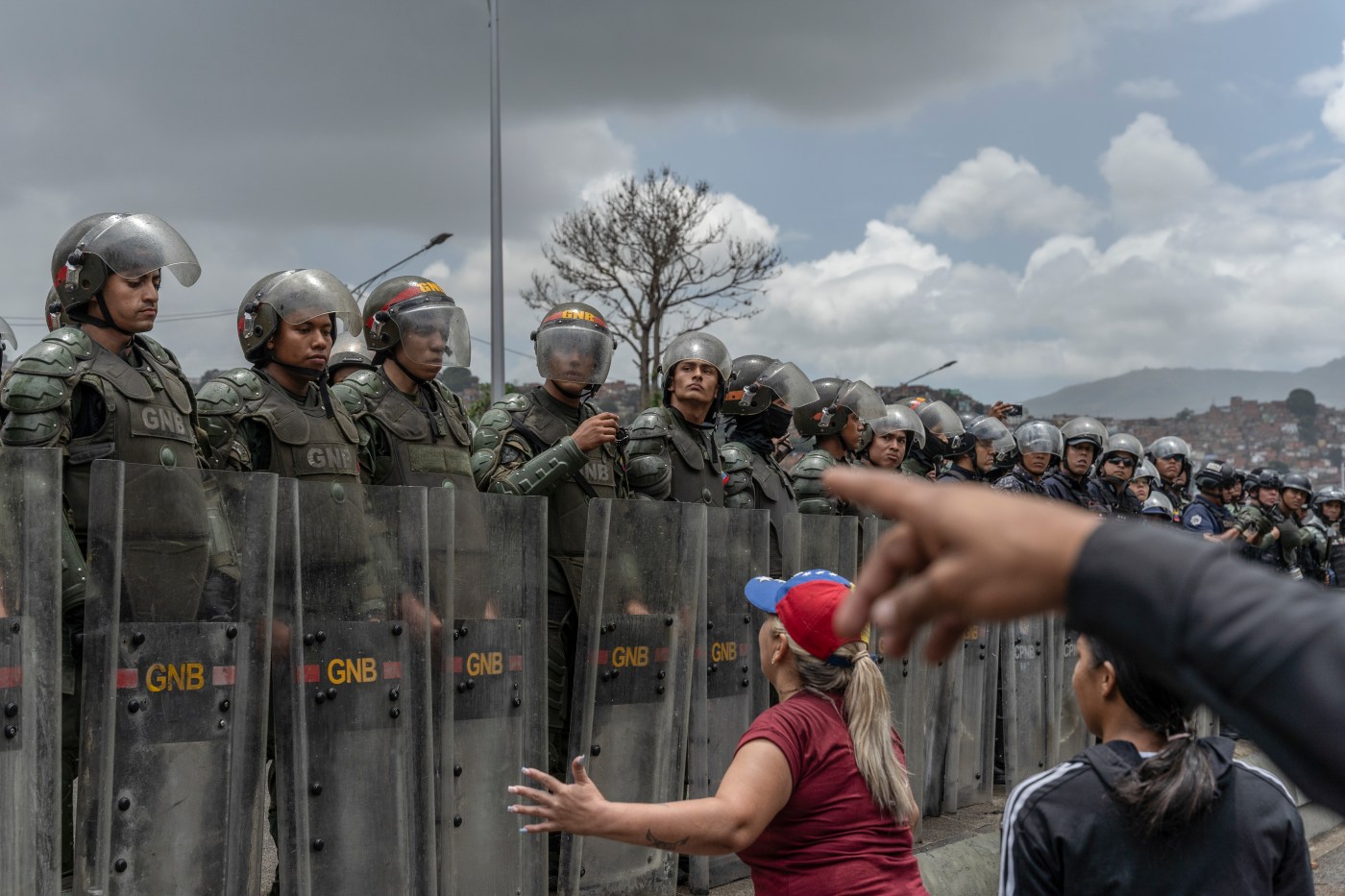
Of all the different scenarios in Venezuela’s election on Sunday, we witnessed the most likely one: Nicolás Maduro was announced as the winner of the vote by the country’s electoral authority controlled by the authoritarian president’s close allies.

Shortly past midnight in Caracas, the National Electoral Council said that Maduro got 51% of the vote compared with 44% for rival Edmundo González, despite polls showing the opposition candidate clearly ahead by double-digit margins.

The electoral body didn’t produce the individual tallies from each voting station to support such a result after saying it received a “terrorist” attack on its transmission systems. How inconvenient! It also called the result “irreversible” even if 20% of the votes were still uncounted and the difference between both candidates was just seven percentage points. Equally suspicious, it took them more than six hours to release the count; you would think that a result so unexpectedly favorable to the government would have been published very quickly to squash any malign speculation.

The opposition denounced the result for what it is: a farce that only crowns a process tainted from the beginning, with its main leader María Corina Machado saying that based on the 40% of the tabulated ballots they had managed to secure, Gonzalez was winning 70% of the vote.

With both sides claiming victory, the short-term outlook is increased political instability and uncertainty. Latin America and the countries that want to see a democratic and prosperous Venezuela should get involved fast to help find a path that respects the will of the millions of citizens who braved obstruction and violence to cast their vote.

Maduro was never going to accept defeat, and the idea he would quietly exit the presidential palace was always wishful thinking. At the same time, his strategy can’t be confused with strength or invincibility: It’s a bet consistent with the hegemonic behavior of Chavismo, the socialist movement that has governed Venezuela for more than 25 years, and one that nonetheless contains several risks for the regime.

For a start, the electoral body has to show the tallies proving the result (the CNE pledged to do it the “coming hours”). This is key because at this moment only Venezuela’s most staunch allies (i.e., Cuba, Nicaragua, Bolivia, Iran, Russia and China) have congratulated Maduro for his “victory.”

And if it’s true that the opposition certified 40% of the votes, that should be enough to prove the numbers don’t add up. As Chilean President Gabriel Boric rightly said, the results are “difficult to believe,” adding that his country wouldn’t recognize unverifiable outcomes. The U.S. and the European Union expressed similar concerns.

While the silence of Brazilian President Luiz Inácio Lula da Silva and his Colombia counterpart Gustavo Petro on Sunday night can be interpreted as a tactical concession, it could also be a sign of backdoor diplomatic negotiations. (Colombia’s foreign minister, Luis Gilberto Murillo, subsequently called for a speedy independent verification and audit.) Petro (and Mexico’s Andrés Manuel López Obrador, the region’s other big leftist leader) are unlikely to come out harshly against Maduro, but Lula vented his frustration with the Venezuelan leader days before the vote. And his foreign affairs adviser Celso Amorim was in Caracas for the vote. Brazil’s position will carry significant weight in this drama, where the already-damaged legitimacy of the regime is shrinking even further.

And then we have Venezuela’s armed forces, which should be now making their own calculations. Machado appealed to the military once again on Sunday night, saying she expected them to enforce the popular vote. Although she said her movement is peaceful, the opposition’s capacity to mobilize protestors if needed shouldn’t be dismissed.

All in all, these are treacherous waters for Chavismo that could lead to renewed sanctions — both personally and on a government level — more isolation and internal disagreement that could upend Maduro’s artificial economic stability. Not for nothing did the bling-encrusted leader call for a “new consensus” within the country in his post-election remarks. And if the 11 years in power of this bus-driver-turned-dictator have taught us anything, it is not to underestimate his survival capacity. The next step in this story will depend on how the government and the opposition play their new hands.

For those still doubting last night’s results, let’s not forget this wasn’t your typical election even before Sunday’s blunders. The regime went to extreme lengths to tilt the balance of the vote in its favor, banning candidates (Machado, most notably,) allowing only a tiny margin of the Venezuelan diaspora to vote abroad, suppressing the presence of observers and even barring the entrance of regional leaders seeking to assess the vote in the country. That’s enough to be considered an unfair election in any democracy.

The spectacle of millions of courageous and hopeful Venezuelans at home and abroad trying to change their country’s fate peacefully should be a source of global inspiration. In this year of elections, it should mobilize democracies to summon the collective ingenuity and resolve needed to defend the primacy of ballots over truncheons and bullets. Venezuela’s democratic neighbors must stand up, and the rest of the free world must support them.

JP Spinetto is a Bloomberg Opinion columnist covering Latin American business, economic affairs and politics. He was previously Bloomberg News’ managing editor for economics and government in the region.

Related Articles

Opinion Columnists |


Kathryn Anne Edwards: Women are America’s working class now

Opinion Columnists |


David French: There’s more, and better, to masculinity than Hulk Hogan, Kid Rock and Dana White

Opinion Columnists |


Michelle Goldberg: The unnerving changeability of JD Vance

Opinion Columnists |


Noah Feldman: Why Yale Law is so good at producing anti-elite elites

Opinion Columnists |


Heidi Boghosian: The CrowdStrike outage shows the danger of depending on Big Tech overlords