Plain ol’ water is out. Hydration supplements are in. But do these top 8 brands really work?

posted in: News | 0

Deborah Vankin | (TNS) Los Angeles Times

You see them crowding checkout counters at grocery stores — a rainbow of bubble-gum pink, lime green and blueberry packets, slender and upright, like a multicolored chorus line of dancers tempting an impulse purchase. At the gym, they’re dissolved into enormous jugs of cherry-tinted water.

They’re especially prevalent on TikTok. Just search #watertok for a flood of #watergirlies, clutching Stanley tumblers at their #waterstations, which are crammed with neon-bright hydration powders and flavored syrups. #Wateroftheday? How about Strawberry Birthday Cake Water. Or Caramel Apple Sucker Water.

“If your water isn’t turning your mouth blue, you’re apparently hydrating wrong,” one skeptical dietitian observed on TikTok last year.

Hydration supplements in the form of powders, tablets and liquid additives have become a norm among consumers over the last decade, and are more popular than ever. The global electrolyte hydration drinks market was valued at $1.72 billion in 2023, according to Data Bridge Market Research. And it’s growing. The business of boosting one’s H2O is projected to reach $3.26 billion by 2031.

Why hydration is important

This bonanza of new hydration products plays to a basic but critical need: More than 50% of people around the globe, including in the U.S., are chronically underhydrated, according to the National Institutes of Health, which cites worldwide surveys. (“Underhydration” refers to people who don’t meet the recommended daily fluid intake, whereas “dehydration” refers to a more severe fluid deficit.)

Those statistics are concerning, considering hydration is the oil to our body’s engine. It aids in muscle repair, digestion, energy and focus. It’s necessary for lubricating joints, regulating body temperature and removing toxins from the body. It carries nutrients to cells and is crucial for hormonal balance, which can affect blood pressure and the menstrual cycle. Our level of hydration also contributes to our hair and skin health.

“Proper hydration keeps every system of the body running smoothly,” says dietitian-nutritionist Vanessa King, a spokesperson for the Academy of Nutrition and Dietetics.

After years of striving to adhere to a 1945 U.S. Food and Nutrition Board recommendation of eight glasses of water a day, it tracks that we’d want to zhuzh up the ritual. (Some studies, however, suggest we need less water daily and that water requirements vary for individuals.) But is there any actual health value to these water additives? Do they aid with hangovers, enhance our workouts or energize us? Or are they simply there to make plain old water taste like a piña colada?

It depends on what product you’re peppering into your Hydro Flask.

“Hydration supplements can replenish you when your fluid status is down — so after workouts, for hangovers or when you’ve been sick,” says Dr. Vijaya Surampudi, an endocrinologist, nutrition specialist and professor at UCLA. “Depending on their composition, some get better absorbed and improve your hydration. Some are just for flavoring and they can have a lot of sugar or artificial coloring — it can be like drinking a soda.”

She notes that because these powders and tablets are categorized as supplements, they aren’t regulated by the U.S. Food and Drug Administration. “So you just have to trust what’s on the label.” (To fill this gap in regulation, some sleuthing social media users have even carved out a niche content genre in which they analyze the ingredients listed on the labels of celebrity-backed supplements.)

What’s in hydration supplements?

More often than not, a hydration powder or tablet includes a mix of four main ingredients: electrolytes (such as sodium, potassium, magnesium and chloride), a carbohydrate (such as glucose), vitamins (typically B vitamins, sometimes C) and amino acids. Depending on their quantity, and how they interact with one another, those ingredients may help hydrate your body more efficiently.

How these ingredients chemically interact with one another directly affects hydration. Water follows sodium for absorption, for example, and sodium molecules travel best with glucose molecules across the lining of the gastrointestinal tract, Surampudi says, so carbohydrates like sugar are not a bad thing in your supplements — they’re actually preferred.

Even so, it’s a delicate balance. A supplement with too much sugar may work against your aim to be healthier.

“The body stores excess sugar for energy later, and that’s stored as fat,” Surampudi says. “And if you drink too much [sugary fluids], that can lead to health complications.”

While sugar and sodium help fuel hydration, those with diabetes or high blood pressure should be careful with hydration supplements, paying attention to their sugar or salt intake.

“Use it with caution and discuss with your healthcare provider,” Surampudi says.

Do we need them?

Hydration supplements aren’t unsafe for most people to take daily if the sugar content is moderate — but they’re often not necessary, says Dr. Christopher Duggan, editor of the American Journal of Clinical Nutrition and a Harvard Medical School professor.

Most adults and children don’t meet daily hydration recommendations, he says, which is currently 13 eight-ounce cups of fluid for healthy men and nine for healthy women, according to the National Academy of Medicine. (Note this recommendation includes all fluids, not just water. And we tend to get 20% of our water intake from food.)

“So if adding a light flavoring gets them to drink more water, that’s probably not a terrible thing,” Duggan said. “But if the expense is high, it’s ultimately not worthwhile. Because unless you’re participating in vigorous exercise or your GI tract doesn’t work normally, water alone is probably an adequate hydration.”

Some hydration supplements even contain ingredients that are not hydrating when consumed in large quantities, such as caffeine. Though caffeine is a diuretic, consuming up to 400 mg of it daily can actually help with hydration, according to the Academy of Nutrition and Dietetics’ King. Other flavored powders contain various B vitamins, which may cause problems in excess.

“B6, if you consume too much of it because you’re getting it elsewhere, there’s a risk for some people of neuropathy, which means damage to the peripheral nerves (which are outside of the brain and spinal cord), and which can cause numbness and tingling, among other things,” Surampudi said.

Surampudi recommends consuming hydration supplements only in moments when your body is especially challenged.

“If there’s a situation where you’re fluid down, or in a high altitude or in an extremely hot climate, that’s where these things can be helpful,” she said.

How 8 top hydration supplement brands perform

Water is the essence of hydration, but consumers are now looking for a little something extra. (Dreamstime/TNS)

So take your hydration boosters with a healthy dose of skepticism. Here’s an analysis of eight hydration supplements — the good, the bad and the meh — according to L.A.-based dietitian Katie Chapmon.

Liquid I.V.’s Hydration Multiplier. “I would not have someone choose this to use every day because the added sugar is really too much — it’s the first and second listed ingredients. The other thing is: They boast, on their website, that the hydration multiplier has ‘3x the electrolytes of the leading sports drink.’ And that may be wonderful for someone who is doing very high-impact sports or who would require serious electrolytes replacement, but it’s not for the average person. Electrolytes balance out our cells, but if we have too much it throws off that balance and our cells can actually become oversaturated; it can make it harder for that cell to work and to get hydrated. This is why a more moderate amount of electrolytes may be a better option for athletes and heavy sweaters.”

Nuun Sport Hydration. “This one has a lower amount of added sugar. It might be for someone who wants to flavor their water — which, alone, would help increase fluid intake and therefore their hydration. It has electrolytes — your sodium, magnesium, potassium, chloride — but I would not have someone use this from a serious athletic standpoint because athletes need to not only replenish electrolytes lost but also sugars lost through expelling energy through exercise. Would it help hydrate cells? Sure, a little bit. But most people will end up drinking this because they like the flavors — and a lot of people like Nuun’s flavors.”

Cure Hydrating Electrolyte Drink Mix. “I like this one as a water flavoring — out of all of them, it was one of my favorites for that. But it’s not a true electrolyte blend. It includes sodium and Himalayan salt. But there’s no chloride and magnesium. This would not be a recommendation for gym-goers or athletes as it doesn’t contain any sugars, which are needed for adequate electrolyte and energy replenishment. It’s just a water flavoring because it contains lower amounts of sodium and potassium than other hydration alternatives. The ingredients are straightforward and clean — it has no added sugar, which is great — but it’s not in the same boat as an electrolyte product, even though it’s advertised as that.”

MIO Strawberry Watermelon Liquid Water Enhancer and MIO Sport Electrolytes + B Vitamins. “Out of all of these, MIO is probably one of my least favorites. The first is just a water flavoring, but all these additives — like sucrose acetate and Red 40 — they’re not good for you. Red 40 is a synthetic food dye. It’s considered safe, but a lot of people can have allergies causing headaches. It’s safe but not as good as Cure, which uses a natural additive like beet powder for color. Mio Sport uses Blue 1 for coloring, also a synthetic dye. It does contain B vitamins — B3, B6 and B12 — but not the complete B complex of eight B vitamins. It’s also not as strong of an electrolyte blend. Like Cure, it is missing your chloride and magnesium.”

Ultima Replenisher, Broad Spectrum Electrolyte Mix. “This one is OK from a standpoint that it’s going to flavor water and has the electrolytes that we’re looking for, like potassium, sodium, magnesium and chloride. But they’re relatively low amounts, containing one-sixth the amount of sodium in Nuun and Orgain; therefore, it is not for serious athletes.”

LMNT Zero-Sugar Electrolytes, Raw Unflavored. “This is a clean, straightforward brand and zero calories — just your electrolytes. It isn’t flavored, though, so would not be an adequate water flavoring product. It would be good for a smoothie boost or if someone is on an elimination diet. But you’d need to add in a carbohydrate source, like fruit, for this to be more hydrating. It would have to be a whole lemon squeezed in. Or, if doing a smoothie, add a quarter cup of frozen berries to help absorb the electrolytes and help hydration.”

Water Boy Hydration Electrolyte Drink Mix for Weekend Recovery. “I was nervous about the high sodium content here. Sodium is the first ingredient and it’s almost 50% of your daily value. Compared to the other electrolytes — potassium, magnesium and chloride — the sodium is very high and the others are low. It’s a really odd balance. But it has zero sugar and it has only 1 gram of carbohydrates, which, from the ingredient list, I’m assuming is coming from a natural flavor or potentially the vegetable juice. But it’s not enough carbohydrates to balance out the high sodium content. This product is marketed as a ‘hangover’ cure because alcohol dehydrates the body; dehydration is a major contributor to hangover symptoms. Rehydrating the body using alkaline salt neutralizes the acid from alcohol and dehydration; however, this product would benefit from a better balance of all electrolytes, not just high amounts of sodium.”

Orgain Hydro Boost, Rapid Hydration Drink Mix. “I like this one for athletes. Sugar is the first ingredient, but for athletes that would help absorb the electrolytes. And it would also replenish glucose storage in the muscles. And I like the balance of sodium and chloride here too. There’s also potassium. It’s missing magnesium, but because the sodium and chloride are so well balanced it outweighs that. There’s also no synthetic flavoring. It’s all things like organic lemon juice and organic monk fruit. It’s not for everyday use because of the high sugar content, but great for athletes for specific use like a long-intense bike training, high energy, intermittent workouts or an event, like a sports game.”

_______

©2024 Los Angeles Times. Visit latimes.com. Distributed by Tribune Content Agency, LLC.
How Republicans helped shape gay activism in America

posted in: Society | 0

Mary C. Curtis | (TNS) CQ-Roll Call

WASHINGTON — When it comes to the political history of gay rights in the United States, a lot of people think they have it figured out.

They assume “one party is wholly committed to LGBTQ rights, and the other is completely opposed. And it’s understandable why a lot of Americans think that way,” says historian Neil J. Young.

But it’s not that simple, Young says. In his recent book, “Coming Out Republican: A History of the Gay Right,” he traces a more complex path from the 1950s to the present day.

Young joined “Equal Time” this month to discuss some of the conservatives who stayed true to their values while working toward same-sex marriage and the end of policies like “don’t ask, don’t tell.” The excerpt below has been condensed and edited. For more, listen to the full podcast.

Q: What did early gay rights activism look like before the Stonewall demonstrations in 1969?

A: I begin my book in the Cold War era, the Lavender Scare, which was when both political parties were really committed to rooting out homosexuals from the federal government and making life difficult for gay persons in this country.

I was surprised to discover that there was an activism among a handful of gay conservatives that’s really important to the advancement of a gay rights movement — or at the time, it was known as the homophile movement.

This story has been told mostly from the left, focusing on folks like Harry Hay, who was the leader of the Mattachine Society. But Dorr Legg and other right-of-center gay men, they were making arguments about limiting federal power, constraining the government, as the pathway to freedom for homosexuals.

Q: Who were some other key gay conservatives?

A: Someone I didn’t know that much about, but is a very important character in the book, is Leonard Matlovich. He was an Air Force sergeant, served three tours of duty in Vietnam, was awarded the Bronze Star and the Purple Heart and was seriously injured in combat. He came out of the closet in 1975, and he did this in order to challenge the military’s ban against gay servicepersons.

He teamed up with Frank Kameny, who was a very prominent gay rights activist who was challenging the ban. And Leonard Matlovich was in a lot of ways the perfect poster boy, because he was good-looking, he was really masculine, he was from the South and he had all those military honors.

Kameny thought it was important to show that this isn’t some hippie radical who’s trying to revolutionize American society and destroy the American military. This is a conservative Republican, and he is just fighting for the right to die for his country.

And of course, he doesn’t win his legal battle against the military. But he sets in motion a history that takes several decades to resolve and ultimately leads to the end of “don’t ask, don’t tell.”

Q: What were some of the conflicts over tactics and priorities back then?

A: The gay Republican organizations I was looking at, they were all absolutely committed to defeating the Briggs Initiative, or Proposition 6, that’s put on the ballot in 1978 and would have made it illegal for any gay person in the state of California to work in the public school system.

But then after that, what’s next? What are we existing for? One of the ongoing debates was this question of, “Am I a gay Republican, or a Republican gay?”

The group that said they were Republican gays, or Republicans who happened to be gay, were much more conservative in their politics, and they didn’t believe in the notion of gay rights. They said, “That’s not something the federal government can grant me. I just want to be left alone.”

And that’s a conservative principle, right? Stay out of my bedroom, stay out of my wallet, stay out of my business. So they opposed any laws on the books that actively discriminated and they wanted to work to eliminate those laws, but they didn’t want any sort of granting of rights, and they didn’t want any sort of identity-based politics tied to their sexual identity.

Q: Many look at the Ronald Reagan years, and the reaction to HIV/AIDS, as an inflection point.

A: A more tolerant attitude was actually beginning to develop in the nation around homosexuality in the early ’80s. That was almost completely wiped away because of the HIV/AIDS crisis and the way that folks like Pat Buchanan and Gary Bauer, these hard-right conservatives within the Reagan administration, really pumped up a homophobic politics based on fears about the disease, to push back against the gay rights movement more broadly.

And so gay Republicans were caught in the crosshairs of that. They had been huge defenders of Reagan, they were big admirers of him both in ’80 and ’84, but by the late ’80s and into the 1990s, a lot of them who were still living were incredibly disillusioned with the Republican Party.

Q: In the 2000s, the marriage equality movement went from divisive to generally accepted.

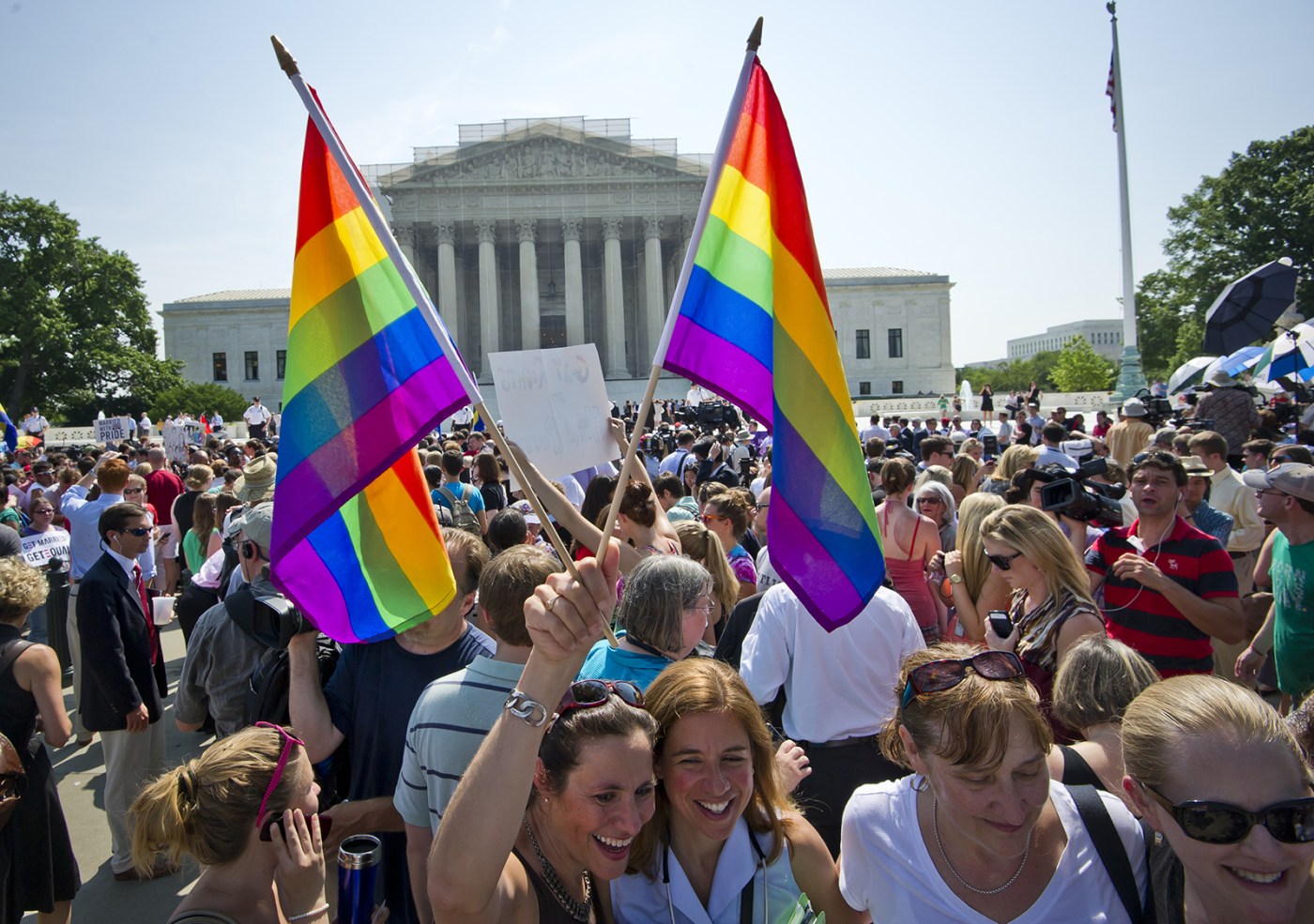
A: We saw public attitudes changing so quickly, in such a short period of time. One of the things I found fascinating was that gay conservatives, or the larger terrain of gay men on the right — [including] libertarians and classical liberals and other folks who don’t necessarily even identify with a conservative label — were really fundamental in developing the intellectual argument for same-sex marriage. I’m thinking about people like Andrew Sullivan and Bruce Bawer and Jonathan Rauch.

They were talking about the right to same-sex marriage far before any gay Democrat was. They helped move the needle among enough independents and enough Republicans to make this a consensus position in the nation, and this was their strategy all along.

Q: How is the gay conservative movement evolving now, when we see most Republicans adjusting in the image of Donald Trump?

A: When I was finishing the book to go to press, this was when the “Don’t Say Gay” stuff was happening in my home state of Florida and was spreading across the nation. And gay Republicans have been in a lot of ways big supporters of Ron DeSantis on this, because they believe that it’s very specific, targeted legislation that only has to do with underage children. So I [asked people], “OK, maybe that’s the case for this particular legislation, but are you at all worried about where this is headed? Do you think this is the opening wedge of a broader assault on LGBTQ rights, including same-sex marriage?”

And all of them said, “No, no, no. Marriage is completely safe and protected. It’s written in stone.”

We have to secure progress through ongoing action, not taking it for granted and assuming that it’s just written in stone and can never be overturned. I mean, the Dobbs [decision overturning abortion rights] is a great example of this, and hopefully there won’t be more to come.

___

©2024 CQ-Roll Call, Inc., All Rights Reserved. Visit cqrollcall.com. Distributed by Tribune Content Agency, LLC.
Stephen Nedoroscik waited his whole life for one routine. The US pommel horse specialist nailed it

posted in: News | 0

By WILL GRAVES AP National Writer

PARIS (AP) — Sam Mikulak pulled Stephen Nedoroscik close and tasked the American pommel horse specialist with the impossible.

The U.S. men’s gymnastics team’s first Olympic medal in 16 years a solitary routine away, Mikulak told the pommel horse specialist that he didn’t need to go all out. That 80% would be good enough, even though Mikulak knew full well that Nedoroscik never does anything — from his sport to solving a Rubik’s Cube — at 80%.

“You have to trick yourself,” said Mikulak, a three-time Olympian turned coach. “You’ve got to make sure you don’t let all the noise get into your head.”

That usually isn’t a problem for the 25-year-old from Worcester, Massachusetts. It takes a certain type of single-mindedness to make the choices Nedoroscik has made for the last decade, when he essentially decided to dedicate himself to a single pursuit, focusing on an event that has long been a weakness for the U.S. men’s national team program.

Yes, there is monotony involved. How could there not be?

“I don’t know how I don’t lose my mind,” Nedoroscik said before the Games. “But every day I go into the gym and there’s still something to do. There’s still something to improve.”

Not anymore.

Stephen Nedoroscik, of United States, gets a hug from Paul Juda after last rotation during the men’s artistic gymnastics team finals round at Bercy Arena at the 2024 Summer Olympics, Monday, July 29, 2024, in Paris, France. (AP Photo/Abbie Parr)

Proving a point

He drilled his set during qualifying on Saturday to earn a spot on the event finals later in the Games. But Monday night, things were different. Teammates Frederick Richard, Brody Malone, Paul Juda and Asher Hong had put together 17 straight routines without a miss, putting the Americans in position to reach the medal stand for the first time since 2008 in Beijing.

While Nedoroscik had some wiggle room — the U.S. had a fairly healthy lead after Juda and Malone hit their sets before Nedoroscik saluted the judges — he also didn’t want to merely hold on. He wanted to prove a point.

Not just to himself, but to those who wondered if he deserved to be there in the first place.

What followed were 45 seconds of sublime brilliance, with Nedoroscik’s hands traveling from one end of the horse to the other, his legs swooping this way, then that.

A few feet away, his four teammates — and the sizable contingent of US fans inside Bercy Arena — roared as a medal that seemed distant for a program that had finished a distant fifth in each of its last three trips under the rings — drew closer.

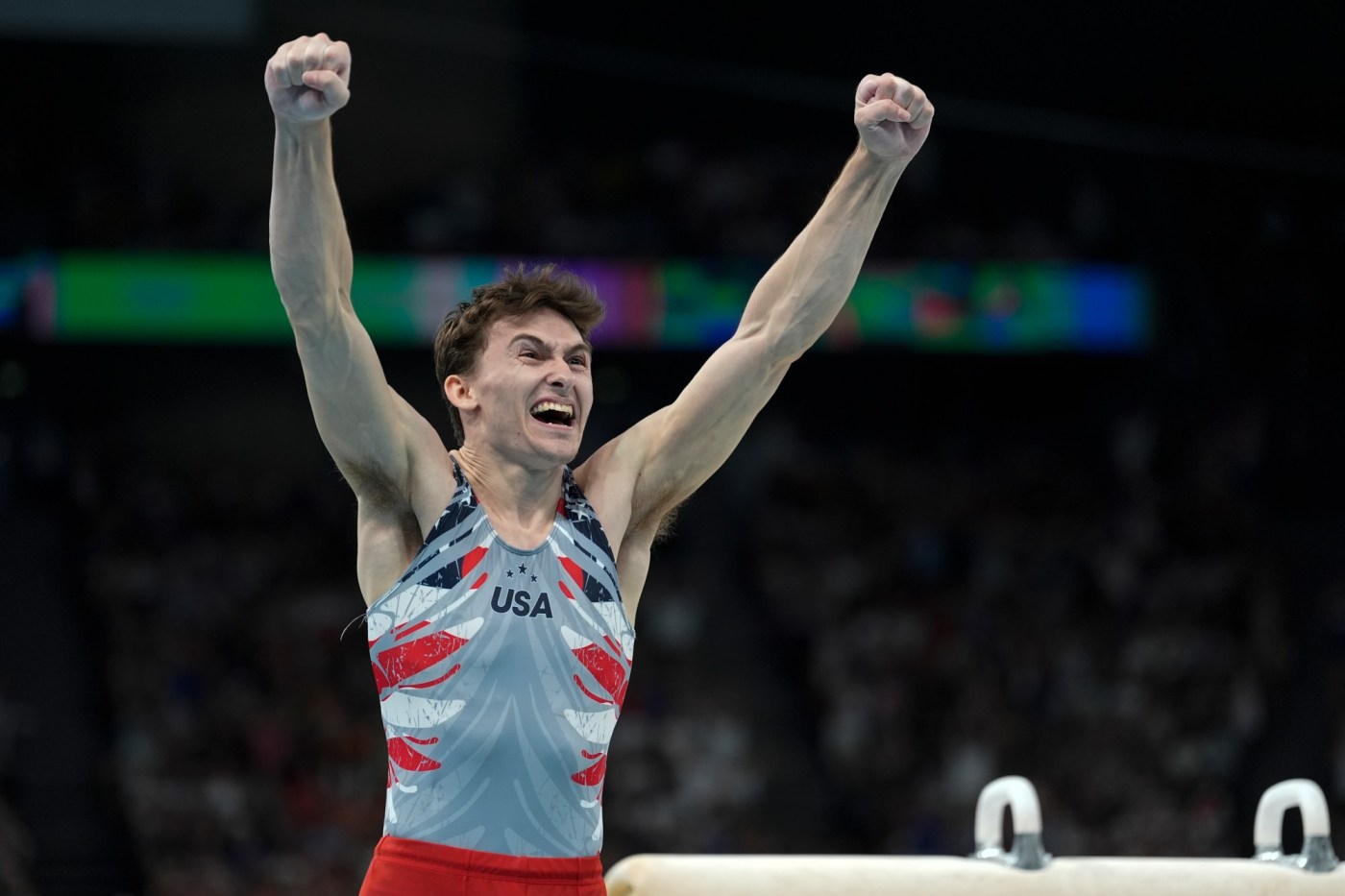
By the time Nedoroscik neared his dismount, he knew his job was complete. The celebration began before his feet even hit the mat.

All those years, all those reps, both physical and mental, all the difficult times when he wondered whether to keep going, all the quirks he’s developed along the way — from the non-prescription goggles he sometimes rocks to the chef’s kiss to the camera he occasionally makes — led up to that moment.

And he did not miss, delivering “the exclamation point” with a 14.866 to finish off a performance the U.S. men’s program hopes provides serious momentum heading into the 2028 Games in Los Angeles.

“I kind of in that moment was like, ‘All right, let’s run it back and let’s go out there and do our thing,’” Nedoroscik said.

Filling a critical gap

A “thing” that has long been a sore spot for the U.S. in major international competition. The 2012 Olympic team topped qualifying. Then they led off on pommel horse in the finals and saw their medal hopes vanish one mistake at a time.

Related Articles

Olympics |


Simone Biles, Team USA take aim at gold in women’s gymnastics team final

Olympics |


Here’s what to know about Seine River water quality during the Paris Olympics

Olympics |


French police investigating abuse targeting Olympic opening ceremony DJ over ‘Last Supper’ scene

Olympics |


Paris Olympics brings out hoses and misters to cool down fans during heat wave

Olympics |


Simone Biles has redefined her sport — and its vocabulary. A look at the skills bearing her name

Nedoroscik understood the history. It’s one of the reasons he gravitated toward pommels. Another is the fact that it requires many things — stamina, strength and creativity chief among them — that he has in spades, particularly that last one.

He describes himself as a “late bloomer” on the event. Those early struggles only helped him press forward.

“Running into trouble on the apparatus early on taught me how to fight, how to stay on, how to really go for that routine,” he said. “And I think that that has stuck with me throughout.”

Unlike other events, which are painstakingly laid out and practiced on end for months if not years, pommel horse allows gymnasts to color outside the lines and make things up as they go on. Miss an element here? Well, maybe you can make it up trying something else later in the routine.

He says the end result is the feeling of “flying through the air,” though it’s more akin to levitation.

More work to be done

Nedoroscik will soar into the event finals Saturday with a chance to put another medal in his carry-on before he heads home. His 15.200 qualifying score tied Ireland’s Rhys McClenaghan for the tops among the eight finalists.

He is ready to ride the wave as far as it will take him. Yet whatever happens on Saturday or for the rest of his life for that matter, it will be difficult to top Monday night, when the guy with the curly hair and the glasses that made him the kind of social media sensation only the Olympics provides struck a blow for his sport, his teammates and himself.

“I’m really proud of these guys,” he said while sitting alongside the group that became U.S. men’s gymnastics royalty. “I love you boys.”

Wanted: Poll workers. Must love democracy

posted in: News | 0

Matt Vasilogambros | (TNS) Stateline.org

This week, a coalition of election officials, businesses, and civic engagement, religious and veterans groups will make a national push to encourage hundreds of thousands of Americans to serve as poll workers in November’s presidential election.

Poll worker demand is high. With concerns over the harassment and threats election officials face, and with the traditional bench of poll workers growing older, hundreds of counties around the country are in desperate need of people who are willing to serve their communities.

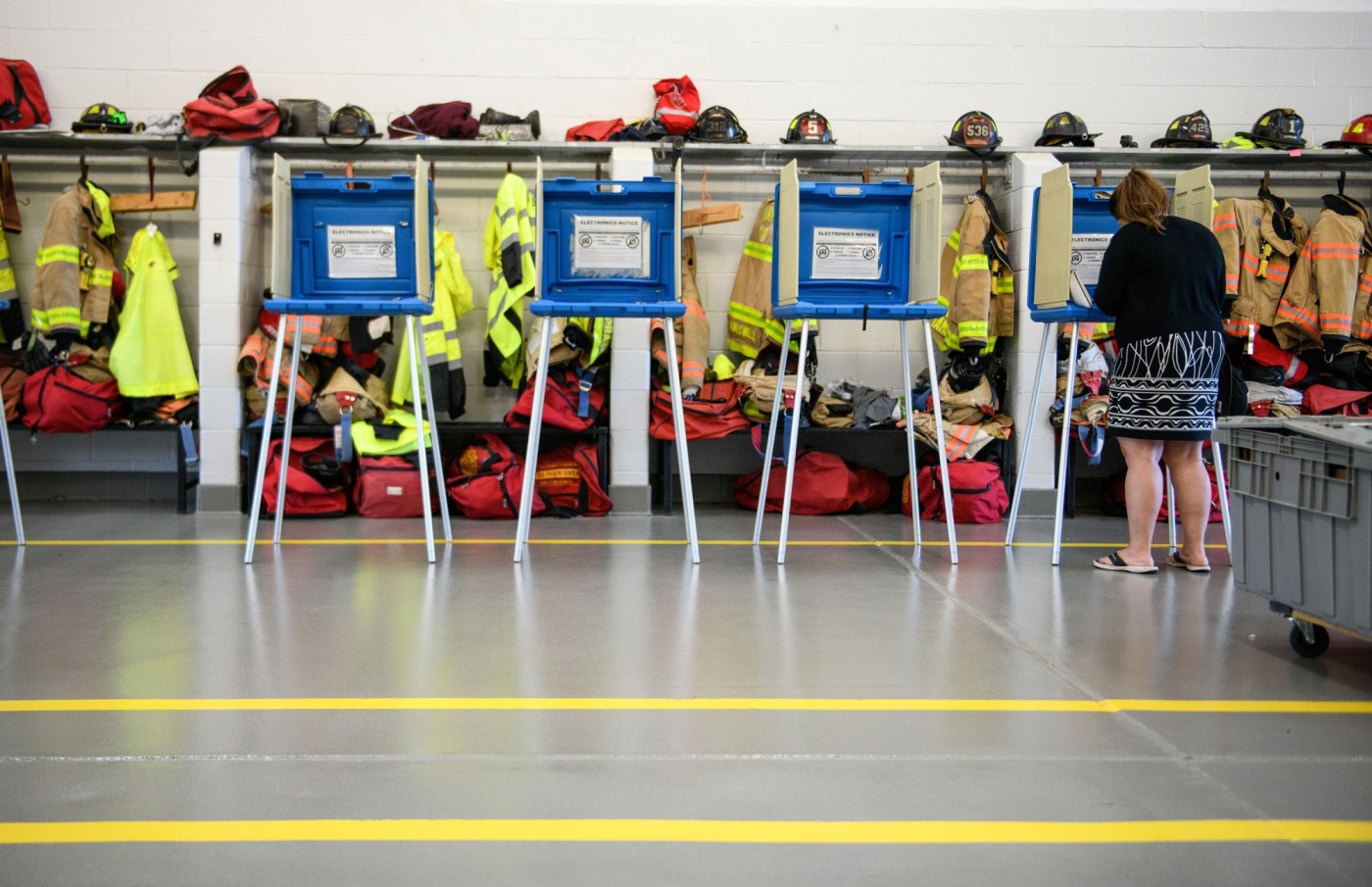
On Aug. 1, there will be a social media blitz across Facebook, TikTok, X and other platforms that will encourage Americans to spend a few hours helping democracy. They’re being asked to wake up before sunrise, welcome voters to polling places, hand them a ballot, and make sure the voting process goes smoothly.

Many sites will see long lines and frustrated voters; they may face unexpected problems such as a power outage or a cantankerous voting machine. Nearly all will hand out scores of tiny “I Voted” stickers.

The U.S. Election Assistance Commission, a federal agency that works with election officials to improve the voting process, established the recruitment day in 2020. The commission offers a social media toolkit, full of suggested hashtags and cartoon video snippets, to help local election officials reach potential new workers. There are 100,000 or so polling places across the country, and the agency’s website shows potential workers how to sign up.

“Serving as a poll worker is the single most impactful, nonpartisan way that any individual person can engage in the elections this year,” said Marta Hanson, the national program manager for Power the Polls, one of the leading nonpartisan groups in the recruitment effort.

“Poll workers are the face of our democracy and the face of our elections,” she told Stateline.

Launched in the spring of 2020 during the throes of the COVID-19 pandemic, Power the Polls gathered nonprofits and businesses together to help election workers close the gap left after many poll workers, who tend to be older, decided to no longer serve due to health concerns. Nearly half of the poll workers who served in 2020 were older than 60.

The group’s effort recruited 700,000 prospective poll workers nationwide.

“It is our vision that every voter has someone who looks like them and speaks their language when they show up at the polling place, and that election administrators have the people that they need,” Hanson said.

Polling places still need poll workers. This year Power the Polls is tracking more than 1,835 jurisdictions, spanning all 50 states and the District of Columbia, that the group identified through outreach to election administrators, monitoring local news and working with on-the-ground partners.

Of those jurisdictions, Hanson said, 700 towns and counties have “really, really high needs.”

For example, Boston needs 500 new poll workers by its Sept. 3 primary, while Detroit needs 1,000 more people to sign up before November. In small towns in Connecticut and rural California, officials are desperate to find 20 people to help. Los Angeles County is looking for people who speak one of a dozen languages that are prevalent in the area.

In suburban Cobb County just outside of Atlanta, Director of Elections Tate Fall said recruiting poll workers has been difficult, but not at the level she’s heard about in other communities nationally. Her team has found success at farmers markets, Juneteenth festivals and senior services events.

Among her challenges, she said, is that many of the poll workers who have signed up this year are new and need more training and practice before November. She also worries about reliability.

“It’s just we have a lot of people sign up and then they never mark their availability, or they only want to work in their precinct,” Fall said. “We need people that are a bit more flexible. But overall, we’re doing good.”

Over the past four years, local election officials have been bombarded by misinformation, harassment and threats fueled by the lie that the 2020 presidential election was stolen.

To ease voters’ skepticism about ballot security, officials will often welcome them into the elections office and give them a tour.

In Nevada, Carson City Clerk-Recorder Scott Hoen goes a step further by inviting skeptical residents to see the election process firsthand as a poll worker.

“Lo and behold, once they go through the cycle, they understand and they can touch, feel it, see it, know it, understand it, that we run a really good, tight election here in Carson City,” Hoen said. “I think they have a better comfort with me now doing that, teaching them what’s going on.”

In Marion County, Florida, Supervisor of Elections Wesley Wilcox has been worried about people who believe the 2020 election was stolen working as poll workers and potentially disrupting the voting process. But the required training to become a poll worker has alleviated some of that concern.

“We’ve had them, and they actually become some of our advocates in this process,” he said.

Joseph Kirk, the election supervisor for Bartow County, Georgia, said that, beyond learning about the voting system, being a poll worker is just fun.

Kirk tells voters that it’s an opportunity to take a day off work, get paid, meet new people, see the characters of the community and enjoy a good meal, since some poll workers bring in homemade food to share.

And for the high school government students he recruits in their classes, it’s a way to participate in elections as early as 16.

“It’s a community,” he said. “And being part of it is really special.”

Stateline is part of States Newsroom, a national nonprofit news organization focused on state policy.

©2024 States Newsroom. Visit at stateline.org. Distributed by Tribune Content Agency, LLC.