Former ICE spokesman: Agency encouraged Trump propaganda more than facts

posted in: All news | 0

Richard Beam said he always knew working at ICE would be a contentious and, at times, controversial position. But he believed in the mission, and in his job to inform the public about the agency – by telling the truth, he said.

He remembered that all changed one day in 2025.

Beam was working in a cubicle at ICE’s Santa Ana field office when he hopped on a routine weekly call with colleagues and supervisors, he said. The group would go over best practices in their public affairs work, and Beam and his coworkers would be given updates, directives and guidance from immigration and Department of Homeland Security leadership in Washington, D.C, he recalled.

But this call was different, he said.

For the first time in his 20-year career as a federal spokesperson, he was told to respond to inquiries not with the facts of a case, but with spin, Beam said. Criticize the Biden administration. Praise Trump. Omit information that doesn’t fit the political narrative. Whether or not he answered any questions about a case was an afterthought, he said.

“We were providing responses that spoke to the criminal history, but it didn’t always distinguish the difference between being charged and being convicted of,” he said. “And at some point we would also see language in the responses that [was] political, specifically saying ‘thanks to the Trump administration, we’re doing X. Because of the Biden administration, we have this consequence.’ And that’s not what career public affairs officers traditionally do.”

From then on, it was made clear the Department of Homeland Security wanted a bigger role in overseeing how ICE responded to questions about operations and arrests, according to Beam. This was a departure from how they previously operated, he said.

“None of us have ever had these crazy experiences where the political appointees were so involved in what we did,” he said.

Months later, Beam would eventually come to an agreement to leave ICE after personal objections and a threatened transfer, he said. His last day as a federal employee was Dec. 31, 2025.

In response to Beam’s claims that he received instructions to engage in political messaging, DHS provided a written statement on Jan. 17.

“This is nothing more than complaining by a former disgruntled employee. President Biden let in millions of criminal illegal aliens and unvetted individuals into the U.S. Now, under President Trump and Secretary Kristi Noem we are delivering on the President’s mandate to arrest the worst of the worst criminal illegal aliens including murderers, rapists, pedophiles, terrorists, and gang members.”

Pride in joining ICE

When Beam became an ICE officer five years ago, he could hold his head high. The job was important, he felt, and rewarding.

“I felt very proud of what ICE’s mission was when I got there, because it was literally removing people that had terrible criminal convictions – not just charges, but convictions,” he said.

From October 2021 to September 2022, 78.2% of the average population in ICE’s custody who were arrested by ICE had criminal convictions. That is a sharp contrast to the 45.4% of the average population with criminal convictions arrested by ICE during the same period in 2024 and 2025, according to ICE data archived by the Deportation Data Project.

Beam’s career as a federal spokesperson began in 2005 when he became a public affairs officer for the Veterans Affairs office in Long Beach. Helping veterans was personal to Beam. One of his older brothers, a Navy veteran, took his own life in the late 90s after struggling with his mental health.

“I get to do things for veterans … I couldn’t save my brother, but what could I do for somebody else?” Beam said.

In 2021, he began working for ICE.

For years, he took great pride in providing the media and members of the public with information about ICE’s operations. He said he believed in the mission.

But the directive he received to engage in political messaging in 2025 angered him.

“Having taken an oath to [serve] the public, having felt very proud about what this agency did based on the truth, I now felt like the truth was not the lead,” he said.

New marching orders 

That pride he felt in explaining the facts about ICE’s work to the news media and public began to erode after Trump stepped back into the Oval Office, he said.

Beam, personally, found it difficult to stomach some policy shifts that came under Trump 2.0 like when Immigration and Customs Enforcement agents began arresting people outside of immigration court.

“I just felt less and less proud of removing people that were contributing (to society) in many ways that sometimes we don’t want to address or admit or accept,” he said.  “I think that’s when I became the most concerned because I couldn’t understand a justification for arresting people as they’re seeing judges.”

But, he added, “I hadn’t yet gotten to the point where I really considered leaving because I felt like… I was still involved in very meaningful work.”

Despite the directive to engage in political messaging, Beam said he stuck to the facts.

“Our foundation wasn’t political speak, it was facts. … Regardless of whatever my political beliefs are and whatever party was in office, I would have found that to be contrary to what the public expects out of me, contrary to the job I took,” Beam said.

Beam started changing the way he delivered information to the media, he said. If a response was something he had confirmed himself and based in fact, he told those seeking comment from the agency it was coming from him. If it was spin coming from political appointees, he noted the distinction by attributing the comment to Washington D.C. officials. But that meant some comments he shared with the public side-stepped the facts, he said.

“Did I push out information that I knew was not 100% accurate? … Or the full full truth? I would say that yes, I did,” Beam said.

Months later, he abruptly received an email stating he was being relocated to Washington, D.C. to work for the Federal Emergency Management Agency as a Congressional Affairs Specialist, and if he refused or ignored the reassignment, his job with the federal government could be terminated.

“Your assignment is a new opportunity to continue to support the DHS mission to secure the nation from the many threats we face,” states the reassignment memo obtained and reviewed by a reporter.

Beam had seven days to decide, according to the document.

Questioning the mission

Beam is partly of Mexican ancestry, and having worked for ICE during a time when federal agents are violently rounding up people who look like him and some of his family members became personally “painful,” he said.

“I’m a brown guy… what happens if [federal agents] see me mowing a lawn? It’s a joke, but is it? Is it?” he asked himself.

Related Articles


Crowds gather in downtown Minneapolis for First Ave concert, anti-ICE rally


Fearing ICE, Native Americans rush to prove their right to belong in the US


US producer prices rose 0.5% in December, more than expected, on uptick in services inflation


Justice Department says it’s releasing 3 million pages from its Jeffrey Epstein files


New US sanctions against Iran target interior minister over crackdown on protesters

Beam recalls voicing concerns to his boss that the directive to engage in political messaging when responding to journalists could corrode trust with the media and public.

“I just thought it was a short-sighted mistake because, I mean, any administration lasts at most eight years, but that damage can be so much more long-lasting than the administration that puts something in place,” he said.

“Once you start to tell things other than the facts, I just wondered, how does this impact my integrity?” Beam said. He made it a point to disclose whenever a response to the media had been crafted by DHS officials or by him, he recalled.

Under the second Trump administration, DHS has faced widespread scrutiny on the accuracy of its public statements. Local law enforcement, news organizations, and judges have identified several instances where DHS accounts of incidents involving ICE or Border Patrol agents were contradicted by video evidence, legal documents, or police reports.

Since widespread immigration raids began last June, DHS and ICE officials have repeatedly claimed, without evidence, that ICE officers have experienced a 1,000% increase in assaults. However, a National Public Radio analysis found a 25% increase in assault charges against federal officers from June through mid-September of 2025 when compared with the same period a year prior. Trump’s intensified immigration crackdown has led to more confrontations between ICE officers and civilians across the country, but not to the extent claimed by the White House.

In June, federal officials accused 20-year-old Adrian Martinez of punching a federal officer during an immigration operation at a Pico Rivera Walmart. The criminal complaint charging Martinez with conspiracy to impede or injure a federal officer included sworn testimony from a Homeland Security Investigations agent that did not include claims that Martinez had assaulted an agent. Security footage from a nearby juice bar didn’t show the alleged assault, though Martinez was off camera at several points.

Beam worried instructions to disseminate propaganda violated the Hatch Act, which was created in 1939 to prevent federal employees working under the executive branch of the government from engaging in politics.

Political activity is defined as any activity directed toward the success or failure of a political party, candidate for partisan political office, or partisan political group, according to the Department of Justice.

“We have not violated the Hatch Act,” a DHS spokesperson said on Jan. 17 when asked if the political messaging directive Beam claimed happened would be in violation of the 1939 law.

Beam continued on with his job at ICE despite feeling conflicted, until he received the memo notifying him that he would no longer work for the agency.

A blessing in disguise

On Aug. 5, 2025, he learned he was being reassigned to FEMA. And if he declined or refused the reassignment, he “may be subject to removal from Federal service,” the memo stated.

“I just can’t help but to think that it was intentional,” he said.

His son was preparing to begin high school and his son’s mother was receiving cancer treatments. Both are rooted in Southern California and he would not leave them, he said.

Less than a week after getting that email, Beam received a certificate in the mail signed by DHS Secretary Troy Edgar commending him for his “unwavering support and professionalism” in a recent immigration related operation, states the certificate obtained and reviewed by a reporter.

A week or two later, he said he was told by a former mentee at the VA that ICE posted a job listing for his role in the LA area.

“That just tells me that the move to FEMA was a façade. I mean, if they’re recruiting for the job that I held only to move me at the taxpayers’ expense to Washington, D.C.,” he said.

In early 2025, President Trump stated his intentions to shutter FEMA and said states should take on the responsibility to prepare for and respond to major disasters.

Since then, the Trump administration has slashed FEMA’s workforce by thousands.

Since Beam has left his position, ICE has been embroiled in controversy following two fatal shootings in Minnesota.

In early January, the killing of 37-year-old Renee Nicole Good by ICE officer Jonathan Ross in Minneapolis sparked national outrage and protests across the country. Within hours of the shooting, Trump administration officials claimed there were violent rioters at the scene and attempted to paint Good as a domestic terrorist who tried to use her vehicle to run over and kill federal agents. Video that emerged from the shooting as well as Good’s own history have contradicted those claims and ignited a fierce debate about the legitimacy of the shooting.

Weeks later, unidentified Border Patrol agents shot and killed 37-year-old ICU nurse Alex Pretti while he was documenting federal immigration activity in Minneapolis. Trump administration officials quickly labeled Pretti as a “domestic terrorist who approached agents with a gun.” Videos from the scene contradicted those claims, which show Pretti holding a cell phone while he stood between a woman who was shoved to the ground by an immigration officer. Pretti was shot while being restrained by several federal officers. He had a legal firearm but an officer appeared to remove it immediately prior to the shooting. It never appeared Pretti tried to use the weapon, according to witness videos from the scene.

Federal officers killing civilians, Beam said, was his “greatest fear come true.”

“Every engaged American will have to reconcile for themselves whether what we are being told by administration officials is consistent with what we are seeing. All Americans, regardless of political ideology, deserve nothing less than the truth to allow informed decision-making,” he said.  “At this point in time, two inarguable truths are that two Americans are now dead. Based on the limited facts made public, it appears that what we are being told is not only unsupported by those facts but also directly conflicts with the rights afforded to all Americans under the First and Second Amendments.”

Beam said he was placed on administrative leave from ICE in mid-August after formally declining his FEMA reassignment.

He sees it as a blessing and a curse. He no longer has to work for an agency whose actions he now finds questionable, but he’s out of a job.

“I’m in the curse phase, but …I was the luckiest person in the world because … I got to experience the best of (working at ICE). I don’t know. Would I have had the courage to leave if I hadn’t been forced to leave, you know?” he asks himself. “And I don’t know. We’ll never know.”

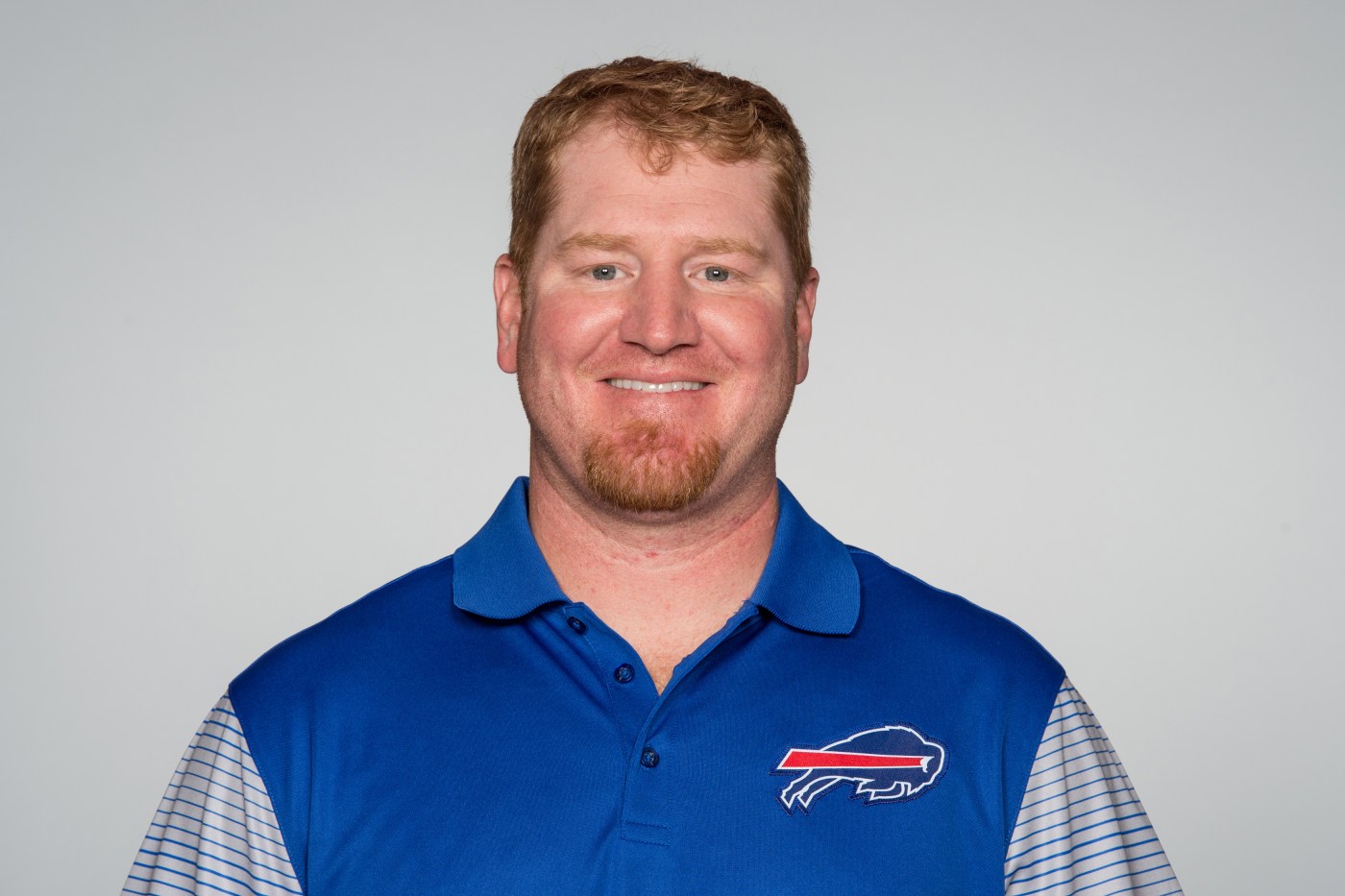
Richard Beam, former spokesperson for the Immigration and Customs Enforcement, on Wednesday, January 14, 2026. After immigration policy shifts under Trump, followed by new ICE directives to engage in political messaging when responding to journalists’ inquiries, Beam said he “stuck to the truth.” Afterwards, he received an email stating he was being reassigned to work for FEMA in Washington, DC. If he declined or refused, he would lose his job. Beam declined the offer and is now out of a job. (Photo by Leonard Ortiz, Orange County Register/SCNG)


Mary Ellen Klas: Republican governors are starting to understand the assignment

posted in: All news | 0

Republican elected officials are choosing their words carefully, but many are starting to realize the federal government’s paramilitary crackdown on Minnesota has put them in political peril. Even President Donald Trump himself is showing belated signs of pulling back.

But Republicans will need to go much further if they’re going to stop the administration’s unraveling of American democracy and a less-noticed feature of the immigration raids — the assault on state sovereignty. Because of that threat, Republican governors are not only uniquely positioned to push back, they have an obligation to their states to do it.

After federal immigration agents killed Minneapolis ICU nurse Alex Pretti on Saturday, the images of a rogue government pepper spraying, assaulting and killing civilians exercising their constitutional rights were juxtaposed with packed streets of Minnesotans withstanding subzero temperatures to chant, sing and march in protest.

By late Monday, when Trump reassigned Greg Bovino from his role as Border Patrol “commander at large” and promised to reduce the number of immigration officials in the city, it was clear he knew he had lost control of the narrative.

Boots on the street and elections

It is also clear that governors across the country are right to fear that the immigration crackdown is part of a larger effort to put boots on the streets as the federal government threatens to overhaul the election system before the 2026 midterm elections. Because the White House doesn’t respect that the Constitution gives the power to run elections to the states, the administration is attempting to assemble a national voter database in a backdoor attempt to take that power away. By controlling voter rolls, the executive branch can discredit the state results it doesn’t like. By normalizing the presence of armed troops on the ground, it can suppress turnout and create the conditions to influence the outcome of the election.

How else to explain Attorney General Pam Bondi’s shocking demand that Minnesota hand over voter roll data, issued the same day as Pretti’s killing? How else to explain the $75 billion Immigration and Customs Enforcement budget or the decision to deploy 3,000 immigration agents to a city of 500,000 that is 1,300 miles from the Southern border?

“The administration has really shown its hand,” said Joanna Lydgate, CEO of the nonpartisan States United Democracy Center, which advocates for free and fair elections. “They’re using these violent ICE operations as a weapon to try to get states to change immigration policies, (and hand over) voter data — to shrink their power. The states are standing up and they’re pushing back.”

‘What is the end game?’

Oklahoma Gov. Kevin Stitt, the chair of the bipartisan National Governors Association, has offered the most forceful Republican pushback yet. In an appearance on CNN Sunday, the conservative Stitt suggested the president was more focused on intimidation tactics than immigration enforcement.

“Americans are asking themselves, what is the end game? What is the solution?” he said. “…Nobody likes the feds coming to their states. And so what is the goal right now? Is it to deport every single non-U.S. citizen? I don’t think that’s what Americans want.”

Stitt has figured out something that other Republican governors should recognize: He answers to the voters in his state, not to the White House. If Trump wants to control what Oklahoma does, regardless of what voters elected the governor to do, then his agenda isn’t the same as Trump’s.

Twenty-three states and the District of Columbia — including the Republican-controlled state of Georgia — have sued the DOJ over its demand that they turn over private voter data. Oklahoma is among the Republican-controlled states that have not agreed to the request, but also have not sued. Bondi’s letter was seen as another attempt at forcing Minnesota to relent.

There are signs that some of Stitt’s peers are starting to see risk in remaining silent. Texas Gov. Greg Abbott, a longtime MAGA stalwart, called on the president to “recalibrate” his immigration operation. Vermont’s Republican Gov. Phil Scott said that Trump “should pause these operations, de-escalate the situation, and reset the federal government’s focus on truly criminal illegal immigrants.” If the president resists, he added, “Congress and the courts must step up to restore constitutionality.”

Congress is also beginning to get the message. Republican members of Congress who have already distinguished themselves as critics of the president — Sens. Thom Tillis of North Carolina, Susan Collins of Maine, Pete Ricketts of Nebraska, Lisa Murkowski of Alaska and Rand Paul of Kentucky — have been joined by a new crop of Republicans who say they want investigations into the ICE operations: Reps. James Comer of Kentucky, Michael McCaul of Texas, Sens. Bill Cassidy of Louisiana and John Curtis of Utah. And House Homeland Security Committee Chairman Andrew Garbarino, a Republican from New York, renewed calls for hearings focused on oversight of DHS.

Still, flip-floppers

The irony is that many other conservatives, including those who used to loudly proclaim the importance of “states’ rights” when Republican states limited abortion and expanded gun rights, have stayed silent as the federal government seeks to dictate how they enforce their laws and administer their elections. Others, such as Florida Republican Randy Fine, have cheered the federal incursions into local affairs.

The hypocrisy and cruelty have become such liabilities for Republicans that on Monday, lawyer Chris Madel, a GOP candidate for governor of Minnesota, ended his campaign saying he “cannot support the national Republicans’ stated retribution on the citizens of our state.” He blamed the party for making it “nearly impossible for a Republican to win a statewide election in Minnesota.”

Not about immigration, but federal control

Efforts to hold DHS accountable are a start, but to maintain the system of federalism the Constitution’s authors intended, Republicans must do more: Denounce ICE’s tactics, call for ICE and Border Patrol to leave Minnesota and other states, demand unbiased and independent investigations into the deaths caused by federal immigration agents, and demonstrate that they trust the states to administer free and fair elections in the midterms.

Republican governors are best situated to call for these reforms. It’s time for them to admit that the siege of Minneapolis and other blue cities was never about immigration. It is about power, intimidation — and federal control.

Mary Ellen Klas is a politics and policy columnist for Bloomberg Opinion. A former capital bureau chief for the Miami Herald, she has covered politics and government for more than three decades.

Related Articles


Sheldon Jacobson: Free speech needs a reset in America


Robert Pearl: Political and economic pressures set up a health care shift in 2026


Lisa Jarvis: The problem with that ‘Great Healthcare Plan’


Abby McCloskey: Republicans have ideas on affordability — just not conservative ones


Thomas Friedman: Minneapolis and Gaza now share some of the same violent language

Expanded work requirements for the biggest US food aid program are kicking in for more states

posted in: All news | 0

By GEOFF MULVIHILL

Work requirements are kicking in for more older adults and parents of teenagers across the U.S. who get help with groceries through the Supplemental Nutrition Assistance Program.

The implementation dates vary by state: In some, people could lose benefits as soon as Sunday if they can’t show they’re working but many people have a month or more before their benefits are at risk.

Here’s what to know about the changes.

The law takes away exemptions for work requirements

A massive tax and spending bill signed into law in July by President Donald Trump expanded requirements for many adult SNAP recipients to work, volunteer or participate in job training for at least 80 hours a month. Those who don’t are limited to three months of benefits in a three-year period.

The work requirements previously applied to adults ages 18 through 54 who are physically and mentally able to work and don’t have dependents under age 18. The new law applies those requirements to those ages 55 through 64 and to parents without children younger than 14. It repeals work exemptions for homeless individuals, veterans and young adults aging out of foster care. And it limits the ability of states to waive work requirements in areas lacking jobs.

The new requirements are expected to reduce the average monthly number of SNAP recipients by about 2.4 million people over the next 10 years, according to the Congressional Budget Office.

The three-month clock is starting in some states and ending in others

When the requirements kick in depends on the state.

Texas started its requirement in October, so people there could have exhausted their three months of benefits by Jan. 1 and already been removed from the rolls.

Several states started the three-month clock in November, opening the possibility of people losing benefits in coming days. Among them are Alaska, Colorado, Georgia and Hawaii.

The requirements take effect Sunday in other states, including Illinois and Ohio. In those places, people could lose benefits in May. Ohio says people will have to show documentation of work starting in March.

Some states have exemptions because of relatively high unemployment rates, either statewide or in certain regions, that let them delay implementation. California’s waiver is scheduled to be in place until January 2027.

But most of those have ended or will soon. For most of New York, the work requirement is to start in March. But it began in October in Saratoga County.

Many SNAP beneficiaries already work

About 42 million people — or 1 in 8 Americans — receive the benefits. The majority are in households that have incomes below the poverty line, which is about $33,000 for a family of four.

Related Articles


‘Dances With Wolves’ actor Nathan Chasing Horse convicted on sexual assault charges


NASA delays the first Artemis moonshot with astronauts because of extreme cold at the launch site


NASCAR’s Greg Biffle wasn’t flying his plane before crash that killed him and 6 others


Coast Guard launches search and rescue operation for fishing boat off Massachusetts


Judge hears testimony from DNA expert as man convicted of killing Laken Riley seeks new trial

An analysis from the left-leaning Center on Budget and Policy Priorities found that about 3 in 5 people who benefit from SNAP are in families with children and more than 1 in 3 are in households with older adults or people with disabilities. Nearly 2 in 5 people are in households that include someone with a job.

The average benefit per person is about $190 per month.

The work requirement isn’t the only change to coming to SNAP.

Starting in October, states will be required to cover three-fourths of the administrative costs. Currently, state and federal governments divide the states’ cost of running the program roughly equally. In late 2027, states with higher error rates in payments will be required to cover some of the benefit costs.

Shipley: Timing was a surprise, but Twins and Vikings moves not a shock

posted in: All news | 0

A large swath of what’s left of the Twin Cities sports media was on a Zoom call with outgoing Twins president Derek Falvey on Friday when the Vikings announced that Kwesi Adofo-Mensah was suddenly their outgoing general manager.

It was a surprise to most of the teleconference participants, who had their noses buried in Twins news, but no one was more surprised than Falvey, a friend of Adofo-Mensah who was just hearing the news from a newspaper columnist.

“Really unfortunate news,” Falvey said after gathering his bearings. “I didn’t know that. I love Kwesi.”

It’s not often that one of Minnesota’s four major pro sports teams parts with its personnel chief, and the Twins and Vikings did it within two hours of one another Friday. It was a surprise. Adofo-Mensah got a contract extension last May; Falvey had recently been named the Twins’ president of baseball and business operations and hired a new manager in November — not to mention that spring training starts in two weeks.

So, yeah, the timing was odd. But neither separation was totally unexpected.

Adofo-Mensah’s exit is the simpler to explain. In the parlance of “GoodFellas,” it was for Billy Batts, or more specifically, Sam Darnold.

A lot of people with a lot less personnel experience suspected it was a bad idea to ask J.J. McCarthy, in his first NFL season, to lead a team to the postseason, let alone an NFC title. When the Vikings finished the regular season strong despite poor quarterback play, and Darnold led Seattle to the Super Bowl, it didn’t look good for the guys who made that call.

Presumably, Kevin O’Connell was a big part of that decision, but he’s a) not the general manager and b) was notably able to keep a deflated team playing together and hard down the stretch.

Firing both would have been a complete re-start, and Adofo-Mensah was the easy choice. He has added some good free agents in his four seasons, but spent a lot of money to do it and has whiffed on some high draft picks. As a result, the Vikings are up against the salary cap and don’t know who their starting quarterback will be in 2026.

FILE – Minnesota Vikings general manager Kwesi Adofo-Mensah answers questions during an NFL football press conference Thursday, April 17, 2025, in Eagan, Minn. (AP Photo/Abbie Parr, File)

According to overthecap.com, only one team has a larger cap deficit than Minnesota, and it’s the Kansas City Chiefs — who have played in five of the past six Super Bowls and won three. The Vikings haven’t been there since 1977. It’s not surprising ownership wanted to move on.

Falvey is a little more of a head-scratcher if you just look at the resume. In nine years as the team’s president of baseball operations, he built three American League Central Division winners and four playoff teams. Many of the draft choices he made with then-GM Thad Levine. And while only the 2023 team won a playoff series, that team snapped what was a major league record 18-game postseason losing skid.

But Falvey was noticeably uncomfortable with ownership’s decision to slash payroll by $30 million after that season, and had a difficult time explaining why the team traded away 10 of its best players at the deadline last July.

“It’s been a challenge at times,” he acknowledged Friday. “I’d be lying to say anything else.”

The last two months of the 2025 season were hard on anyone watching the Twins. Left with a team full of young position players still finding their way in the majors, the Twins couldn’t hit and didn’t have a bullpen because they traded away their best five relievers. The results were predictable.

The three free agents the Twins have signed this winter are reasonable additions, but none of them are likely to move the needle. Fans see a long road back to competitiveness ahead; after a third straight season of belt-tightening, it’s impossible to imagine Falvey didn’t feel the same way.

Both Falvey and new executive chair Tom Pohlad described Friday’s move as mutual. That’s often a transparent euphemism for someone getting fired, but in this case, it seems accurate.

“I think what we shared is a sense of urgency to be decisive about doing what’s in the best interest of the Twins, and this was what we were decisive about,” Pohlad said.

Falvey might not have been expecting to leave right before spring training starts, but if the past two seasons weren’t a sign of things to come, he certainly got a good look while discussing the landscape over the past few weeks with his new boss.

In the end, not so surprising.

Related Articles


In surprising move, Derek Falvey out as Twins president


Taylor Rogers wasn’t Twins’ last addition to bullpen


Recapping the Minnesota Twins’ chaotic 2025


The Twins need to rebuild their bullpen. How will they do it?


Three things Twins fans can watch for during MLB’s Winter Meetings