
Thomas Friedman: What should Israel do?

posted in: News | 0

What would you do?

There is no other question that Israel’s government has posed to the world more often since Hamas invaded Israel on Oct. 7 and Hezbollah attacked Israel on Oct. 8.

What would your country do if terrorists crossed your western border and killed, maimed, kidnapped or sexually abused hundreds of Israelis they encountered and the next day their Hezbollah allies sent rockets over your northern border, driving away thousands of civilians — all cheered on by Iran?

What would you do?

It is a powerful and relevant question and one that Israel’s critics often dodge.

But they aren’t the only ones dodging it.

It was a trap. Netanyahu fell for it

This Israeli government, led by Benjamin Netanyahu, wants you and me and every Israeli and all of Israel’s friends — and even enemies — to believe that there was always only one right answer to that question: Invade the Gaza Strip, hunt down every Hamas leader and fighter, kill every last one and not be deterred by the civilian casualties, then pummel Hezbollah in Lebanon — and do both without spending time planning an exit strategy for either.

I’ve argued from Day 1 that it was a trap, a trap I’m sorry to say the Biden administration was not firm enough in stopping Israel from falling into and not firm enough in insisting on a better road, a road not taken.

This is no time to be pulling punches. The Jewish state of Israel is in grave, grave danger today. And the danger comes from both Iran and the current Israeli ruling coalition.

You see, I have never had any illusions about the macro reasons this war happened. It is the unfolding of an Iranian grand strategy to slowly destroy the Jewish state, weaken America’s Arab allies and undermine U.S. influence in the region — while deterring Israel from ever attacking Iran’s nuclear facilities — by using Iranian proxies to bleed Israel to death. That is the macro story.

Ring of fire

The immediate trigger and goal of the war was a Hamas-Iranian interest to scuttle the Biden team’s diplomatic initiative to forge Israel, the Palestinian Authority and Saudi Arabia into a ring of peace.

The Iranian-Hamas counterstrategy was to ignite a ring of fire around Israel, using Hamas, Hezbollah, the Houthis, pro-Iranian Shiite militias in Iraq and West Bank militants armed by Iran with weapons smuggled through Jordan. The Iranian strategy is exquisite from Tehran’s point of view: Destroy Israel by sacrificing as many Palestinians and Lebanese as necessary but never risk a single Iranian life. The Iranians are ready to die to the last Lebanese, the last Palestinian, the last Syrian and the last Yemeni to eliminate Israel (and distract the world from the Iranian regime’s abuses of its own people and imperialist control over Lebanon, Yemen, Iraq and Syria).

Related Articles

Opinion |


David J. Bobb: Do they even teach civics anymore?

Opinion |


Trudy Rubin: Joe Biden’s foreign policy legacy will go through Ukraine

Opinion |


Paul Krugman: Trump and Vance learned nothing from Obamacare

Opinion |


David French: MAGA wants transgression, and this is what comes with it

Opinion |


F.D. Flam: The first lyme disease vaccine failed. It’s time to try again.

The problem for Israelis and the Jewish people is that while the Netanyahu government was right in its diagnosis that this was a war of annihilation, it refused to conduct it in the only way that could hope to bring success — because that strategy ran counter to the political interests of the prime minister and the messianic ideological interests of his coalition.

Israel faces an existential threat from the outside, and its prime minister and his allies have been prioritizing their own political and ideological interests ahead of that. They have even lately resurrected their judicial coup attempt to crush the Israeli Supreme Court — in the middle of a war of national survival while hostages rot in Gaza. It is one of the most shameful episodes in Jewish history, and shame on the AIPAC pro-Israel lobby in Washington for not speaking out against it.

Israel needed four things

To counter this Iranian threat network, Israel needed four things: a lot of time, because this ring of fire could not be extinguished overnight; a lot of resources, particularly from the United States and other Western allies; a lot of Arab and European allies, because Israel cannot fight a war of attrition alone; and, perhaps most crucial of all, a lot of legitimacy.

President Joe Biden and his team offered Israel a road map for that counterstrategy but, sadly, they just never had the steel to impose it on Netanyahu with a combination of leverage, diplomacy and ultimatums. Such a road map would have involved persuading America’s Arab allies to fundamentally reform the Palestinian Authority in the West Bank with new, credible leadership and then getting Israel to agree to open negotiations with that Palestinian Authority leadership on a long-term pathway to a two-state solution.

That would have done the following: 1) Opened the way to isolating and pressuring Hamas to agree to a cease-fire in which Israel gets out of Gaza in return for all the hostages — ending the war there and eliminating Hezbollah’s excuse for attacking Israel from the north. 2) Opened the way for Saudi Arabia to normalize relations with Israel — a devastating blow to Hamas and Iran. 3) Opened the way for the United Arab Emirates to partner with a reformed Palestinian Authority to put troops on the ground in Gaza and do the thing Hamas would hate most — replace it as the governing authority there, backed by hundreds of millions of dollars for rebuilding Gaza, which would probably make it the most popular Palestinian force in Gaza overnight.

Up to now, though, Netanyahu has turned Biden down (while openly playing footsie with Donald Trump) because the prime minister would have had to break with the right-wing crazies who brought him to power and form a different governing coalition with more moderate parties. Netanyahu has prioritized his personal political security over Israel’s national security. And for months, he’s been spinning the world and his own people to disguise it.

Bibi, you don’t have a clean story

Netanyahu thought he could just tell the world that Israel was defending the frontier of freedom against Hamas, Hezbollah, the Houthis and Iran and everyone would fall in line behind Israel. What would you do? But the only place in the world that that gets you a standing ovation is in the U.S. Congress.

The rest of the world, particularly the moderate Arab states and the Europeans, told Netanyahu: Bibi, you don’t have a clean story. You cannot tell the world you are defending the frontier of freedom against Hamas and Hezbollah while expanding — increasingly violently — Israel’s settler occupation over Palestinians in the West Bank. You don’t have a clean story.

So the Israeli prime minister opted instead for the Netanyahu doctrine: Fight alone on three fronts — Gaza, Lebanon and the West Bank — with no plan for the morning after anywhere. In doing so, he rejected the Biden strategy: Embed Israel in a U.S.-Israeli-moderate-Arab coalition that would isolate Iran and its proxies, provide some hope that maybe one day we’d see two states for two indigenous peoples between the Jordan River and the Mediterranean and make clear to the world that the source of trouble in the region is not the Party of God in Israel but the Parties of God in Lebanon, Yemen and Iran.

Over and over and over

Netanyahu’s strategy is a disaster. As a veteran U.S. military commander who has observed close up Israel’s war strategy in Gaza told me privately, anyone with two eyes in his head knows that the only way to way to defeat Hamas is a strategy of “clear, hold and build”: Destroy the enemy, hold the territory and then build an alternative local, legitimate Palestinian governing authority. Israel’s strategy in Gaza, he said, has been: “Clear, leave, come back, clear again the same place, leave again, come back and clear again.”

It is a textbook example of how to transform Hamas, he added, “from a quasi-military to a classic insurgency.” Did you read the lead article on Haaretz online the day of the remarkable Israeli pager attack on Hezbollah? If you did, you’d have found four young Israeli soldiers killed that day battling Hamas in Gaza staring back at you — almost a year after the war there started. Almost daily now you also read of large numbers of Palestinian civilians killed in an Israeli operation against a few Hamas fighters living among them. Meanwhile, no one is governing Gaza.

Yes, yes, I know the criticism: You are delusional. What Israeli or Palestinian leader would come together on such a plan? Well, two friends of mine have done just that: former Israeli prime minister Ehud Olmert and former Palestinian Authority foreign minister Nasser al-Qudwa. Biden should invite them both to the Oval Office as soon as possible to embrace their plan for a two-state solution, which is totally in line with U.S. interests.

‘Israel is in terrible danger’

I repeat: Israel is in terrible danger. It is fighting the most just war in its history — responding to the brutal, unprovoked murder and abduction of women and children and grandparents by Hamas — and yet today Israel is more of a pariah state than ever.

Why? Because when you fight a war like this with no political horizon for this long — one that denies any possibility for more-moderate Palestinians to govern Gaza — the Israeli military operation there just starts to look like endless killing for killing’s sake. That is just what Hamas, Hezbollah and Iran want.

There was always a road not taken. Do I know for sure it would work? Of course not. The only thing I know for sure is that the road that Netanyahu has Israel locked on now is a road to ruin, encircled by a ring of fire. Stay that course, and Israel’s most talented people will start to leave, and the Israel you knew will be gone forever.

Thomas Friedman writes for the New York Times.
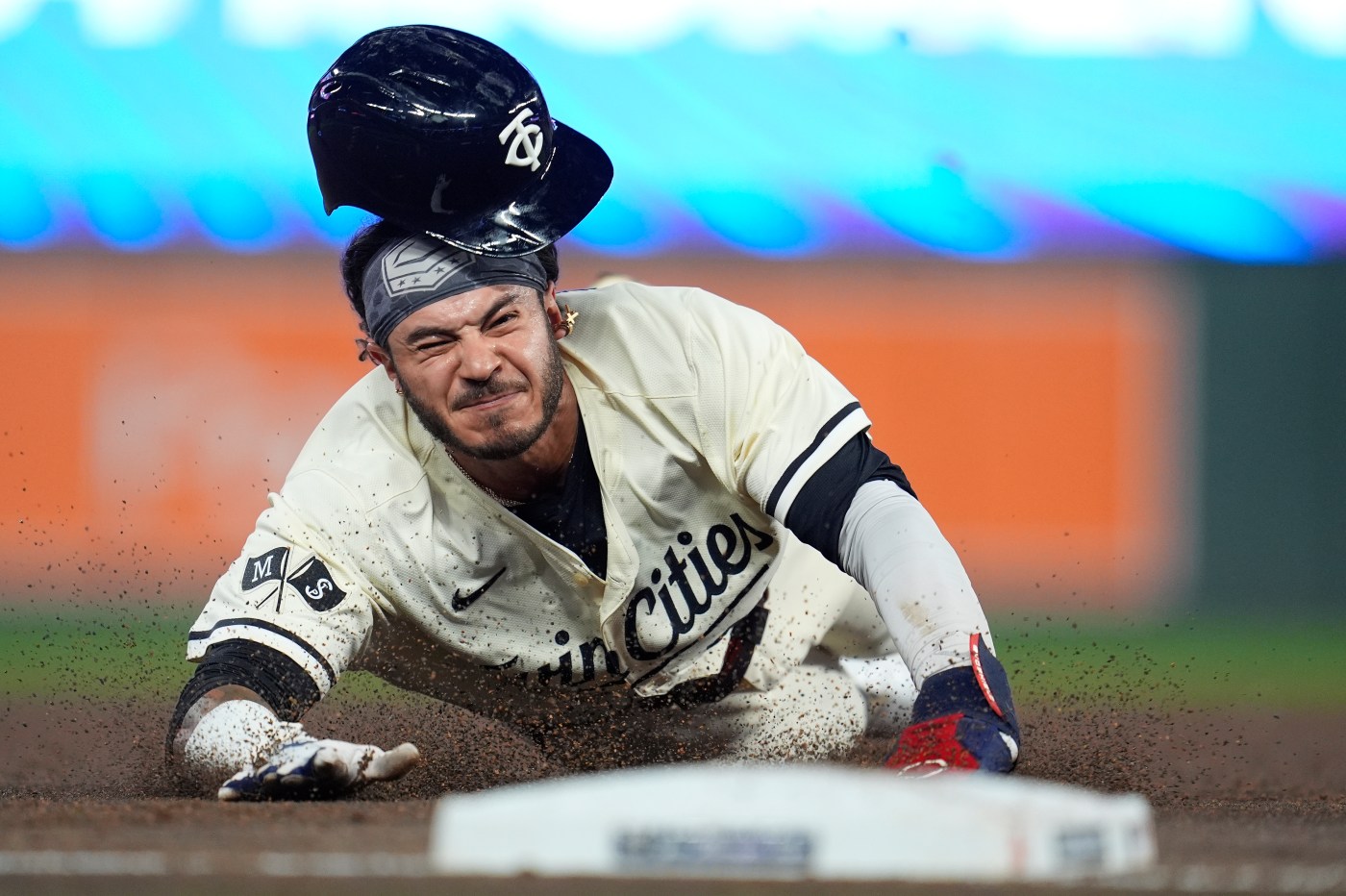
Twins’ playoff chances on life support after 13-inning loss to Marlins

posted in: News | 0

The Twins’ playoff chances are on life support and attempts to resuscitate them were unsuccessful on Thursday.

To realistically keep their playoff chances alive this week, the Twins were going to need to sweep the Miami Marlins, the National League’s worst team — or at least win two out of three — and get some outside help, as well.

They got no outside help — the Tigers and Royals, whom they are chasing in the wild card race, both completed sweeps — and though they did battle back twice late in Thursday’s game, they ended up falling 8-6 to the Marlins in a 13-inning crushing defeat, missing chances all night to grab a win.

Otto Lopez’s double off Scott Blewett put Miami up for good and Griffin Conine then added a two-run single off Justin Topa, helping the Marlins (59-100) pull away after a dramatic few innings before that in which the Twins could not capitalize on their many chances.

“It sucks,” catcher Ryan Jeffers said. “We had every opportunity put in front of us to win that baseball game. Our season is on the line and we weren’t able to execute to get that run across. It’s a really, really shitty feeling.”

The Twins (82-77) finished the day 2 for 19 with runners in scoring position, leaving 15 runners on base, many in the later innings of the contest as their bullpen did what it could to keep them alive on the other side.

“To have that many baserunners, we  did something right, but clearly there’s something missing when we get guys on base,” manager Rocco Baldelli said. “We’re really struggling. … We had baserunners galore. They were everywhere, all night. But to win, you have to bring them in.”

In the ninth, the Twins stranded Byron Buxton, whose speed after an 11-pitch at-bat, helped place him on second with just one out. An inning later, the teams traded sacrifice flies, scoring their automatic runners. The Twins could have had more, but center fielder Derek Hill made a great falling catch on the warning track to prevent Willi Castro’s sacrifice fly from becoming a game-winning hit.

“He made the catch and it was like, ‘What else do we need to do?’” Buxton said. “That kind of was a sucker punch because we thought we had it.”

Neither team scored in the 11th with the Marlins using a five-man infield to cut down a Twins runner trying to score at home. In the next inning, Jeffers, who made a critical error in the fifth inning missing a catch at the plate and allowing a runner to score, bunted into a double play with Carlos Santana getting caught off second, helping squash the Twins’ opportunity to walk it off.

“Personally I feel like I let a lot of guys down,” Jeffers said. “Personally just didn’t do what I needed to do to help the team win a baseball game.”

The chaotic late innings were set up by an eighth-inning rally that kept the Twins alive, started by Royce Lewis, who drew a one-out walk. Santana followed, just missing a two-run, game-tying home run, instead settling for a long single off the limestone overhang in right field.

Rookie Brooks Lee then came through with the biggest of his career, hitting a double off the wall in right field to bring them both home and tie up the game.

But though the Twins forced their way back into Thursday night’s game, overcoming a four-run deficit, they never could get themselves a lead, with the offense that has led to this dramatic slide out of the playoff picture unable to convert.

So, the Twins will enter the final weekend of the season with a chance at postseason play — albeit a tiny, highly unlikely one.

Both the Tigers and Royals have a magic number of one, meaning the Twins would need to win out and have one of those two teams lose their remaining three games.

The Twins will host the playoff-bound Baltimore Orioles, the Tigers get the historically-bad White Sox and the Royals will play the Braves, who themselves are fighting for a playoff spot.

Minnesota, which trails both teams by three games with three games to go, holds the tiebreaker over both so, which is why it has yet to be mathematically eliminated.

“It’s one of those that hurts,” Buxton said. “We know what’s at stake and we’ve got to keep pushing.”

Related Articles

Minnesota Twins |


Wild card race shows off much improved American League Central

Minnesota Twins |


Twins keep slim playoff hopes alive with win over Marlins

Minnesota Twins |


With 100th game, Twins’ Byron Buxton reaches goal milestone

Minnesota Twins |


Twins slip even further from playoff spot with loss to Marlins

Minnesota Twins |


Max Kepler unlikely to return in regular season, could have played last game with Twins

Melania Trump calls her husband’s survival of assassination attempts ‘miracles’

posted in: Politics | 0

By ADRIANA GOMEZ LICON

In her first interview in more than two years, former First Lady Melania Trump said she saw her husband’s survival in two attempts on his life as “miracles” and offered new details about the former president, including his desire to have more children.

The Slovenian-born former fashion model has remained somewhat of an enigma in the 2024 election cycle, staying largely absent from the campaign trail, breaking norms in not speaking at the Republican National Convention and skipping key moments for her husband, Donald Trump, including his primary-night victory parties and court appearances in New York and Florida.

In a pre-taped interview aired on Fox News Thursday morning, Melania Trump called for Democrats and members of the media to stop branding her husband as a threat to democracy. She blamed the media for “fueling a toxic atmosphere” and empowering those who “want to do harm to him.” Democrats previously blamed Trump for violent rhetoric, including helping to incite an attack on the U.S. Capitol on Jan. 6, 2021.

“This is not normal,” she told Ainsley Earhardt, a “Fox & Friends” co-host.

FILE – Melania Trump, wife of Republican Presidential nominee Donald Trump speaks during the opening day of the Republican National Convention in Cleveland, July 18, 2016. (AP Photo/J. Scott Applewhite)

Melania Trump added: “Is it really shocking that all this egregious violence goes against my husband? Especially that we hear the leaders from the opposition party and mainstream media branding him as a threat to democracy, calling him vile names?”

The former first lady added: “This needs to stop.”

Melania Trump said that a staffer alerted her to the shooting at a July rally in Butler, Pennsylvania. Earlier this month, Melania said she was in New York when she saw television reports of the second assassination attempt at his golf course in Florida.

“I think something was watching over him,” she said of her husband surviving both assassination attempts. “It’s almost like” the “country really needs him.”

FILE – Republican presidential candidate former President Donald Trump stands on stage with former first lady Melania Trump during the final day of the Republican National Convention at the Fiserv Forum, July 18, 2024, in Milwaukee. (AP Photo/Evan Vucci)

Melania Trump is promoting her new memoir, which is set to release on Oct. 8.

When asked if she and her husband ever discussed growing their family, she revealed that the Republican presidential nominee tried to persuade her to have more children. “I was always perfectly fine with one,” she said. “And Donald was encouraging to have more. And I said like I’m completely fine with one because it’s” a “very busy life, and I know how busy he is. And I am in charge of everything. So that’s why it’s just perfect.”

Related Articles

National Politics |


US lawmakers’ concerns about mail ballots are fueled by other issues with mail service

National Politics |


The vice presidential debate is coming up. Here’s how to watch, what to know

National Politics |


Zelenskyy visits Washington as election year divide grows over Ukraine war

National Politics |


On campaign trail, Vance lays out ‘concept of a plan’ for health care

National Politics |


Trump’s rhetorical walkabouts: A sign of ‘genius’ or cognitive decline?

The Slovenia native said the fashion industry gave her the “thick skin” required to withstand attacks as the wife of a president, who is one of the most polarizing political figures in recent memory.

“The fashion industry, it’s glamorous, but it’s, at the same time, very tough,” she said. “Everybody judges you, look at you” a “certain way, so it can be a mean world as well. So nothing prepared me more for this world than fashion. It gives you a thick skin.” Melania also revealed that her son, Barron Trump, decided to continue living in their New York residence while attending New York University.

“I could not say I’m an empty nester. I don’t feel that way,” she said. “It was his decision to come here, that he wants to be in New York and study in New York and live in his home. And I respect that.”

Wild get to work on fixing beleaguered penalty kill

posted in: News | 0

There were plenty of reasons the Wild didn’t make the playoffs last season, an anomaly for a team that had been there in 10 of the previous 11 seasons. Injuries played a role, and underwhelming performances by a few veteran forwards, too. And don’t forget a 5-10-2 start that left them chasing from the get-go.

All important issues, to be sure. But for real clarity, the statistic that sticks out is the Wild’s season-long struggle on the penalty kill, 67 goals against shorthanded — second-worst in the NHL — for a 74.5 percent rate, third-worst among all 32 teams.

For context, the Wild ranked 13th in 5-on-5 goals against, 163. Nearly 26 percent of all the goals Minnesota gave up last season came short-handed.

“It’s a hard league to score goals in, so if you let in some easier, or not good, ones it’s gonna hurt you.” special-teams stalwart Joel Eriksson Ek said. “We know that’s something we need to do better, and we get to work with it right away.”

The PK was so down, even the return of captain Jared Spurgeon — a fixture on both special-teams units limited by injuries to 16 games last season — isn’t a guarantee it will be better this season. Keep in mind that in a first-round playoff series loss to Dallas the previous spring, the Wild’s penalty kill success rate was 62.5 percent.

So, the team is revamping its schemes, and trying to inculcate a new attitude on the penalty kill during training camp. That started Monday and Tuesday with four intensive practices, two for each group still in camp. The first focused on entries, the second on the back end.

Of the eight teams that made the NHL conference semifinals last season, five (Carolina, New York Rangers, Florida, Boston and Dallas) had a PK ranked among the best eight in the league, and Colorado (12) and Edmonton (15) were in the top half.

As Wild associate coach Jack Capuano said, “Your power play can go stale, but you’re not going to win with a bad penalty kill. You have to keep the puck out of your net, and that’s just a fact.”

Capuano, the New York Islanders head coach for parts of seven seasons before working as an associate coach in Florida and Ottawa, was added to John Hynes’ staff this summer. He and assistant Patrick Dwyer have taken the lead on the penalty kill project. Outside of a two-week period after Hynes became the head coach on Nov. 28, the Wild’s kill was consistently among the NHL’s bottom three.

“You’re in season and you’re trying to fix it, and you can’t,” Hynes said. “You have to do it through video. You try to do it through practice, but again, you’re limited in the amount of times that you can do things. So, when you have the opportunity here … now you build that foundation.”

The Wild rallied last season to stay in playoff contention until the second week in April, when they were eliminated by a 5-2 loss at Colorado on April 9, despite a kill that never found its footing.

Jake Middleton, one of Minnesota’s most effective penalty killers last season, said it became disheartening.

“We had no jam, no confidence in it,” the veteran defenseman said. “I think we had that swagger for a little bit when the new staff came in … and then we kind of were a shell of ourselves again after that. But that’s old news.”

In some ways, the team is starting from scratch, and that includes personnel.

“Nobody plays for free; you have to earn it,” said Capuano, who noted that some of the best overall players in the NHL — such as Florida’s Aleksander Barkov and Vincent Trocheck, and Boston’s Brad Marchand and Patrice Bergeron — play on the league’s best PK units.

The Wild are hoping to add wing Matt Boldy — who has scored a combined 60 goals over the past two seasons — to the PK for the first time this season, but that has been put on hold by his lower-body injury. That would make him one of a small handful of players on both special-teams units.

The Wild already have a strong power play, with all key players back from a unit that finished 10th in the NHL last season. Of the nine teams with better units, only Detroit failed to make the playoffs — and none of them had a worse PK than Minnesota’s.

Of the four teams that made the conference finals last season, three had a PK ranked among the best eight, and Colorado’s was ranked 12th.

“You hope when the power play is struggling, the penalty kill is going to pick us up, and vice versa,” Capuano said. “But in the big realm of things, the penalty kill has to be in the Top 10 or 15 in the league.”

Not so special

The Wild’s penalty kill was one of the worst special-teams units in the NHL last season. Here are some indicative numbers, with where that ranked in the 32-team league in parentheses:

Wild PK                 SHGA     SHGF     PPGA
74.5 percent (29)   67 (31)    3 (T-31)  9 (T-29)