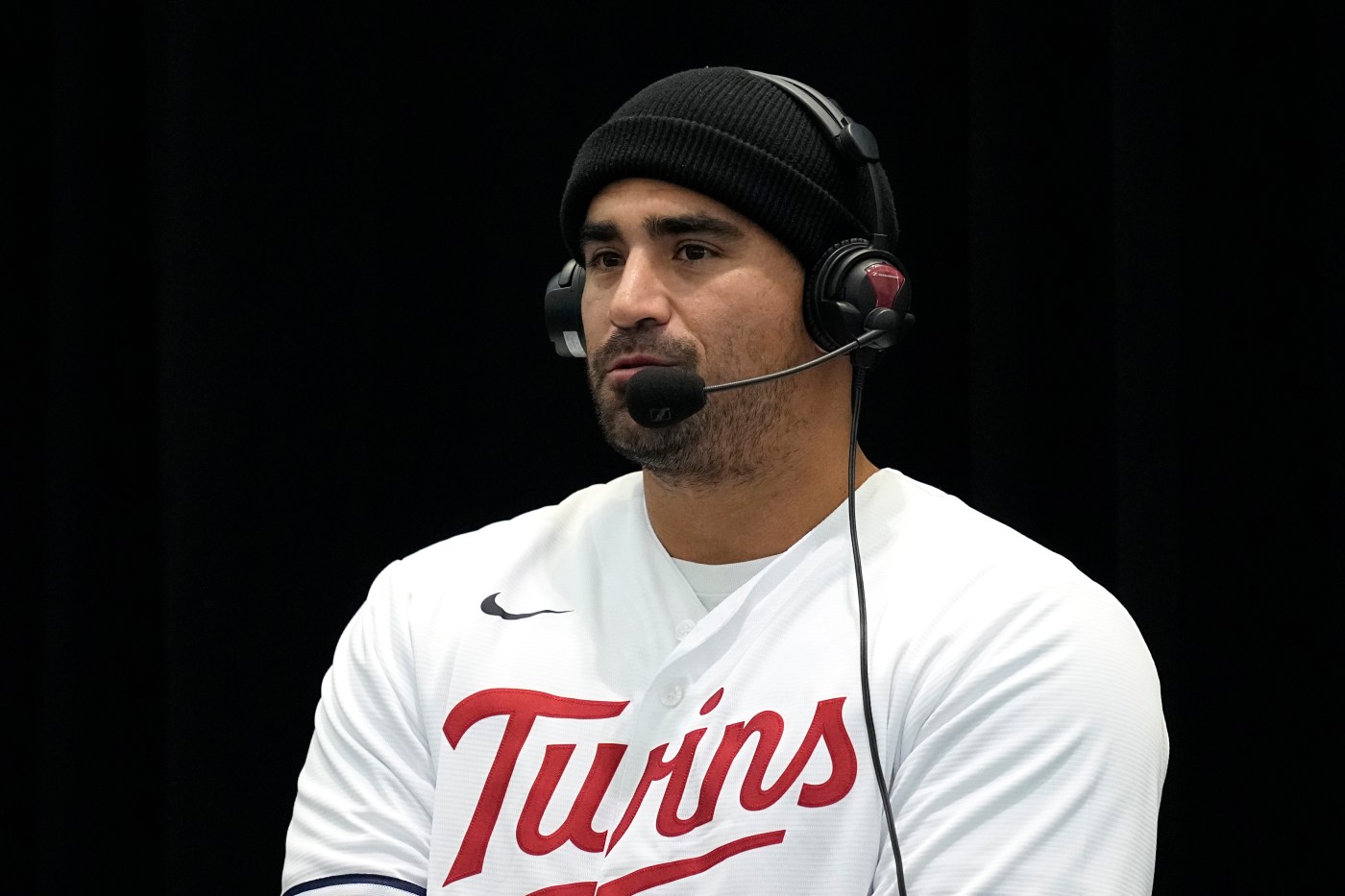
Wild’s Matt Boldy on track to play regular-season opener

posted in: News | 0

Matt Boldy, sidelined on Sept. 22 by a lower body injury, went through his first full practice on Wednesday and is expected to be ready for the season opener Oct. 10 against Columbus at Xcel Energy Center.

“We expected him to be back. He’s on track,” coach John Hynes said. “To do it now, have a full skate — yesterday was kind of a morning skate type of thing — Today was a regular practice and went through all that, so that looks good.”

Boldy, 23, was part of the Wild’s best line last season — one of the best in the NHL — and has scored a combined 60 goals over the past two seasons. He practiced Wednesday with Marcus Johansson and center Joel Eriksson Ek.

With four five days before the Wild must pare down to 23 players, Marco Rossi has moved between Kirill Kaprizov and Mats Zuccarello on the top line, and Ryan Hartman centered Marcus Foligno and Yakov Trenin on the third.

Although Boldy is on track to play the season opener against the Blue Jackets, he might not play in the final exhibition game Friday night in Chicago.

Jake Middleton, who missed Tuesday’s skate because of what Hynes called a bruise, practiced Wednesday. “For him to be able to come out and practice full today was positive,” the coach said.

Grosenick has surgery

Veteran goaltender Troy Grosenick, who signed a one-year, two-way contract with the Wild in July, had surgery Tuesday to repair a torn anterior cruciate ligament in his right knee and will miss the 2024-25 season.

According to the Wild, Grosenick is expected to make a full recovery and be ready for the start of the 2025-26 season.

Grosenick, 34, spent last season with the Milwaukee Admirals of the AHL and was expected to play for the Wild’s top affiliate in Iowa. He has played in four NHL games in his career, with San Jose in 2014-15 and Los Angeles in 2020-21.

‘The Wild Robot’ review: How to train your robot, your gosling and your neighbors in DreamWorks-style teamwork

posted in: News | 0

With two published sequels ready and waiting, DreamWorks Animation has a franchise in the works with “The Wild Robot,” a big success in its first weekend. It’s good, too. Based on the first of three books by writer-illustrator Peter Brown, the feature runs on the same spirit of well-paced adventure and strategic shifts in mood found in the first “How to Train Your Dragon,” or in a more openly comic vein, the first “Kung Fu Panda.” DreamWorks also made the “Ice Age” movies, but those made their money with blander computer animation and a surfeit of noisy crisis. “The Wild Robot” is at least two steps up from there.

At the story’s center, there’s a sweetly determined “helper robot” designated Rozzum Unit 7134, washed ashore on what appears to be an island off the coast of the Pacific Northwest. The time is the near future but things on the island remain as they ever were: predators vs. prey, some living, some dying, cyclical weather extremes and migrations overhead. Roz has been programmed to complete tasks determined by its owner, only there is no owner here, only survival and wisecracking cliques among the various species. Meanwhile Roz, whose features include “instant physical mimicry,” gives machine learning and generative AI a good name, though later developments in “The Wild Robot” suggest an inevitable rise of the machines, potentially soul-killing and humanity-optional.

A tragic accident, glancingly and deftly depicted, sets the narrative course. With its living relatives gone, a newly hatched gosling, later named Brightbill, becomes the charge of Roz. The coolly perplexed but resourceful robot gets some help from Fink the fox, described at one point as “a local goose expert,” though it’s primarily in a gustatory way. Roz’s hard-wired need to succeed focuses on feeding and caring for this orphaned bird, teaching Brightbill to swim and, when the weather turns chilly, to join the great migration.

“I do not have the programming to be a mother,” she says at one point. This is “The Wild Robot’s” sweet spot.  Every current, former or potential parent in the audience can recognize what this fledgling parental unit is going through.

Many aspects of director and co-writer Chris Sanders’ adaptation hold different keys to the relative success of the whole. There’s enough motivated story, helped by that story’s shift from island to utopian urban setting, to sustain 100 minutes easily, even through the final third. The voice work’s unassumingly choice, led by Lupita Nyong’o as Roz. She finds carefully delineated gradations between factory-fresh, insistently upbeat impersonality and the wiser being we see learning to feel before our eyes. Pedro Pascal (as the fox) make a fine, artful dodger of a tough guy who’s hurting inside. And the supporting ranks include Catherine O’Hara (Pinktail, overworked motherhood incarnate, in possum form) and Bill Nighy, in retrospect the optimal choice to voice a long-necked goose named, of course, Longneck.

Recently making its world premiere at the Toronto International Film Festival, “The Wild Robot” already has been pumped up into the contradictory “instant classic” stratosphere. I understand the enthusiasm, or most of it, I guess, especially given the mellow, less photorealistic, more painterly visual landscapes, and Sanders’ assured tear-duct massage technique. If it’s unfortunate the animation doesn’t retaining more than a trace of the woodcut simplicity and charm of Peter Brown’s book drawings, well, that was unlikely to get by at this particular studio. The Roz robot design itself, simple and effective enough, lacks a special element of surprise, instead recalling elements of “Wall-E” (more in the character situation than the visualization) to “Big Hero 6” to the swift-moving BB-8 introduced in “Star Wars: The Force Awakens.” Also, the first 20 or 30 minutes of “The Wild Robot” threatens to settle for a lesser DreamWorks sprint through calamities. But just in time, it calms down and finds the rhythmic change-ups crucial to this tale.

Kindness, as Fink notes early on, is not a survival skill. He’s basing his worldview on the only, lonely life he has known. Roz learns and teaches otherwise, and that sounds pretty good right about now.

“The Wild Robot” — 3 stars (out of 4)

MPA rating: PG (for action/peril and thematic elements)

Running time: 1:41

How to watch: Now in theaters

Michael Phillips is a Tribune critic.

Four Twins coaches — including three hitting coaches — out in staff shakeup

posted in: News | 0

The Twins will have new voices leading their hitters next season after a late-season collapse cost hitting coaches David Popkins and Rudy Hernandez and assistant hitting coach Derek Shomon their jobs.

Those three, along with assistant bench coach/infield coach Tony Diaz, will not return to the major league staff as the Twins shake things up following their disappointing end to the 2024 season. The Twins expect the rest of their coaches to return to manager Rocco Baldelli’s staff in 2025.

The three hitting coaches’ dismissals from the major league staff came after the Twins slumped down the stretch from mid-August on.

In the final month of the season, when the Twins were fighting to make the playoffs, which they ultimately missed by four games, Twins hit .218 with a .285 on-base percentage and .338 team slugging percentage. They averaged just 3.48 runs per game.

The Twins were without two of their top hitters — Carlos Correa and Byron Buxton — for some of that stretch but also saw late-season dramatic drop offs from some of those whom they were relying upon, including Royce Lewis.

Popkins had been in his job for the last three seasons and Shomon the last two. Hernandez, meanwhile, was the longest tenured member of the major league staff, hired as part of Paul Molitor’s coaching staff ahead of the 2015 season. He had served in a number of roles within the Twins organization over the past 29 years.

Diaz, who joined the Twins alongside Baldelli for the 2019 season, served as the team’s third base coach for three years before moving into his assistant bench coach role three seasons ago.

Their dismissals will mark the most turnover the coaching staff has seen in one offseason since 2018, when the Twins replaced Molitor with Baldelli as manager and flipped over nearly the entire staff.

Lynx plan for Sun sharpshooter Marina Mabrey was effective in Game 2, showing the value of defensive talent

posted in: News | 0

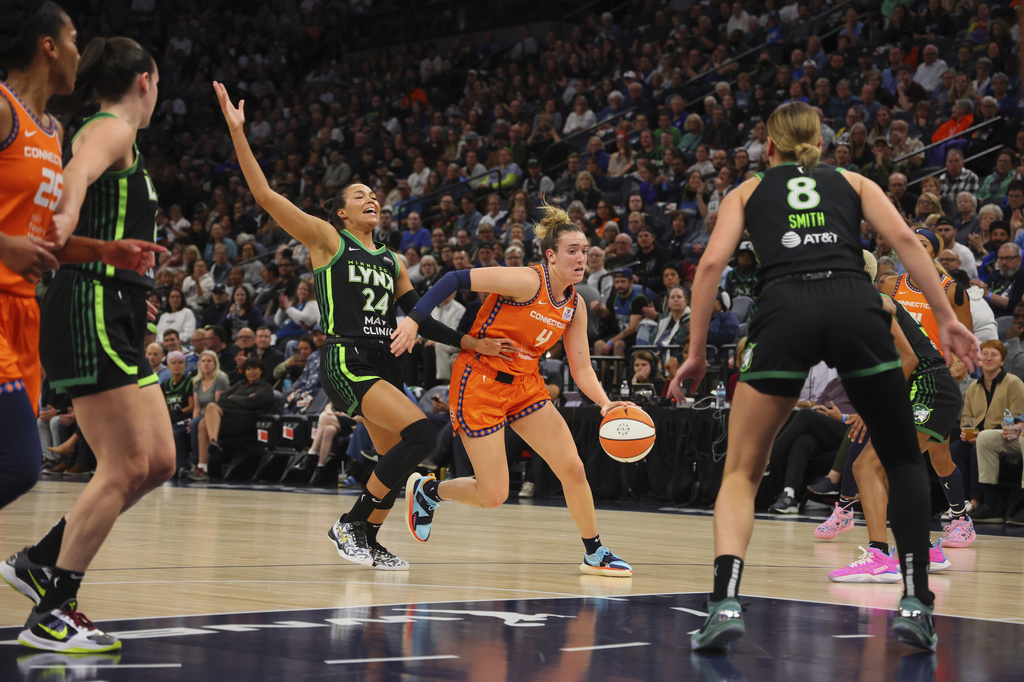
Connecticut Sun forward Alyssa Thomas waltzed into the lane for a largely uncontested layup in the second quarter of Game 2 of the WNBA semifinal series against the Lynx on Tuesday at Target Center.

Suns guard Marina Mabrey wasn’t even visible on the broadcast during the play until after the layup went down, as she was camped in the near-side corner for spacing purposes. Neither was her defender. Lynx wing Bridget Carleton was effectively glued to Mabrey. Carleton didn’t move a muscle to help as Thomas went in for the layup.

It was not a lack of effort on Carleton’s part, nor was it a mental breakdown. It was a decision Minnesota seemingly made ahead of Game 2, that Mabrey was not going to beat the Lynx.

The 27-year-old sharpshooter was one of the key mid-season acquisitions in 2024. Since arriving in August from Chicago, Mabrey has added a critical component to Connecticut’s offense, averaging 15 points over her final 16 regular-season games while shooting 42 percent from deep. That production carried into the postseason, as Mabrey lit up Indiana for 27 points in the Suns’ playoff opener. In Game 1 of the semifinal series, she was 6 for 10 on three-point shots to help the Sun down the Lynx.

A few of those triples in Game 1 were open looks stemming from overhelp or miscommunications on switches. No such opportunities were going to be provided in Game 2. Whether it was Carleton or Kayla McBride, the Lynx refused to give Mabrey even an ounce of oxygen on the perimeter.

The end result was a 15-point showing for Mabrey on 4-for-14 shooting. More important, Mabrey had just two points in the second half — off a back cut to counter the heavy pressure — before hitting a pair of meaningless free throws in the closing seconds of the Lynx victory. Mabrey finished with twice as many turnovers (4) as assists (2). Minnesota’s defensive approach didn’t quite rise to the level of “face guarding” Mabrey, but her defender was never more than a step away from the sniper, regardless of where the ball was on the floor.

McBride and Carleton certainly deserve credit for their doggedness in denying Mabrey any type of opportunity. But just as much praise belongs with Napheesa Collier, Alanna Smith and the Lynx’s other defenders. Allocating a full resource to stopping one player and not helping anywhere else puts pressure on the four other defenders on the court to win their matchups.

Lynx coach Cheryl Reeve has the luxury of employing such a strategy — even against a team that has perennial all-stars such as Alyssa Thomas and DeWanna Bonner — because she can trust Collier, the newly-crowned WNBA Defensive Player of the Year, and Smith, another WNBA All-Defense selection, to not get exposed in 1-on-1 matchups against elite players.

Bonner was 5 for 15 shooting from the field Tuesday. Thomas was effective, but her impact didn’t cripple Minnesota’s chances.

On the flip side, by largely eliminating Mabrey’s impact, the Lynx seemed to stymy any type of offensive flow for the Sun, who often resorted to trying to score 1 on 1 off the bounce. The end result was a night in which the Sun shot 36 percent, the team’s fourth-lowest shooting percentage of the season. Take away Connecticut’s fast-break and second-chance opportunities, and that shooting percentage dips to 31 percent on first-chance looks in the half court.

Scoring against the Sun will remain a chore throughout the best-of-5 series, which continues with Game 3 on Friday in Connecticut,  but if the Lynx can maintain anything close to that level of defensive efficiency for the balance of the series, theyx will be in an excellent position to advance.

The ability to mix and match and adjust all season is what allows any team to be as dominant as the Lynx were defensively throughout the season. The chess pieces on the court are versatile and punishing, and Reeve has found the proper ways to employ them. Tuesday was no different.