Four Twins coaches — including three hitting coaches — out in staff shakeup

posted in: News | 0

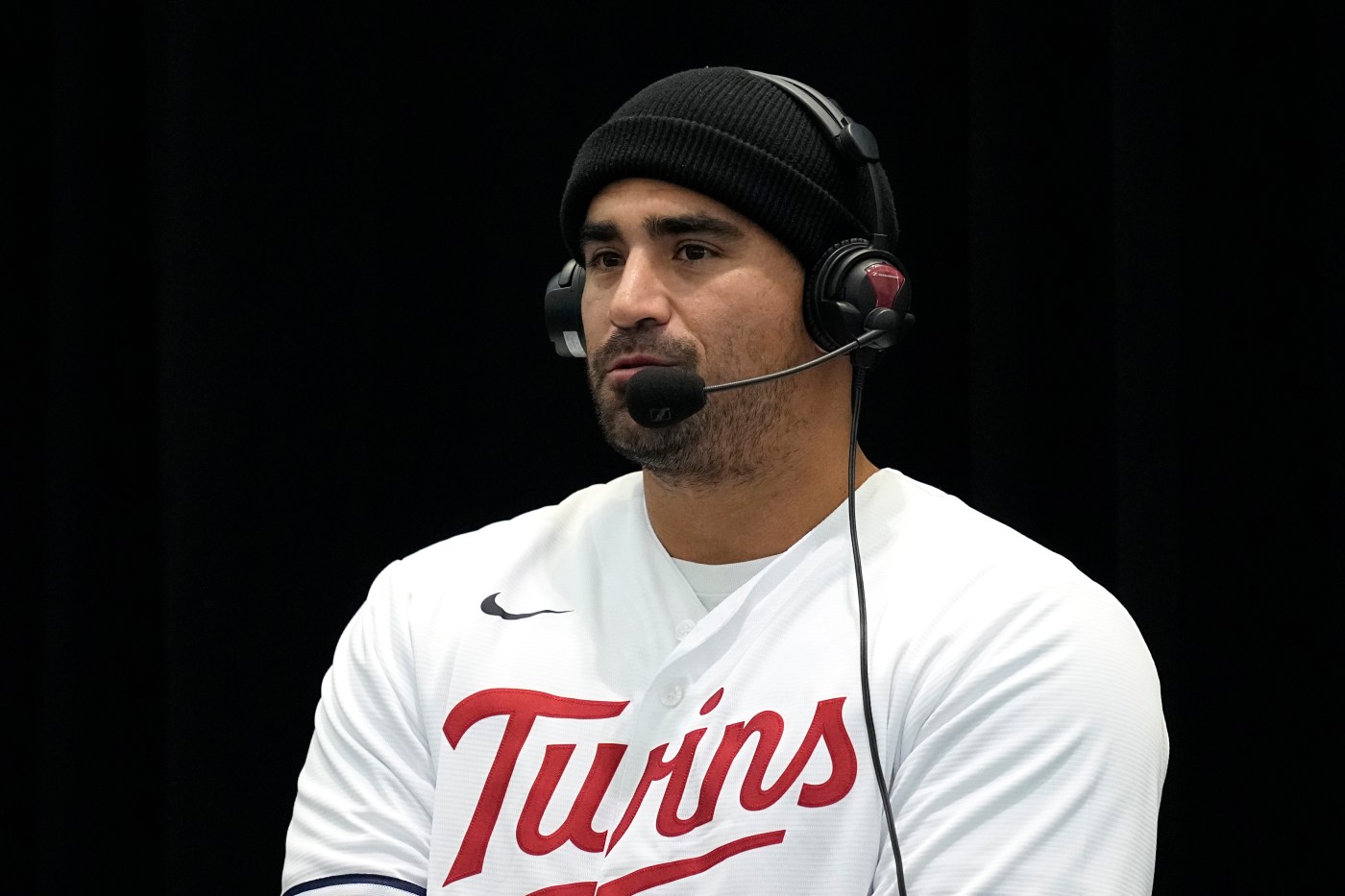
The Twins will have new voices leading their hitters next season after a late-season collapse cost hitting coaches David Popkins and Rudy Hernandez and assistant hitting coach Derek Shomon their jobs.

Those three, along with assistant bench coach/infield coach Tony Diaz, will not return to the major league staff as the Twins shake things up following their disappointing end to the 2024 season. The Twins expect the rest of their coaches to return to manager Rocco Baldelli’s staff in 2025.

The three hitting coaches’ dismissals from the major league staff came after the Twins slumped down the stretch from mid-August on.

In the final month of the season, when the Twins were fighting to make the playoffs, which they ultimately missed by four games, Twins hit .218 with a .285 on-base percentage and .338 team slugging percentage. They averaged just 3.48 runs per game.

The Twins were without two of their top hitters — Carlos Correa and Byron Buxton — for some of that stretch but also saw late-season dramatic drop offs from some of those whom they were relying upon, including Royce Lewis.

Popkins had been in his job for the last three seasons and Shomon the last two. Hernandez, meanwhile, was the longest tenured member of the major league staff, hired as part of Paul Molitor’s coaching staff ahead of the 2015 season. He had served in a number of roles within the Twins organization over the past 29 years.

Diaz, who joined the Twins alongside Baldelli for the 2019 season, served as the team’s third base coach for three years before moving into his assistant bench coach role three seasons ago.

Their dismissals will mark the most turnover the coaching staff has seen in one offseason since 2018, when the Twins replaced Molitor with Baldelli as manager and flipped over nearly the entire staff.

Lynx plan for Sun sharpshooter Marina Mabrey was effective in Game 2, showing the value of defensive talent

posted in: News | 0

Connecticut Sun forward Alyssa Thomas waltzed into the lane for a largely uncontested layup in the second quarter of Game 2 of the WNBA semifinal series against the Lynx on Tuesday at Target Center.

Suns guard Marina Mabrey wasn’t even visible on the broadcast during the play until after the layup went down, as she was camped in the near-side corner for spacing purposes. Neither was her defender. Lynx wing Bridget Carleton was effectively glued to Mabrey. Carleton didn’t move a muscle to help as Thomas went in for the layup.

It was not a lack of effort on Carleton’s part, nor was it a mental breakdown. It was a decision Minnesota seemingly made ahead of Game 2, that Mabrey was not going to beat the Lynx.

The 27-year-old sharpshooter was one of the key mid-season acquisitions in 2024. Since arriving in August from Chicago, Mabrey has added a critical component to Connecticut’s offense, averaging 15 points over her final 16 regular-season games while shooting 42 percent from deep. That production carried into the postseason, as Mabrey lit up Indiana for 27 points in the Suns’ playoff opener. In Game 1 of the semifinal series, she was 6 for 10 on three-point shots to help the Sun down the Lynx.

A few of those triples in Game 1 were open looks stemming from overhelp or miscommunications on switches. No such opportunities were going to be provided in Game 2. Whether it was Carleton or Kayla McBride, the Lynx refused to give Mabrey even an ounce of oxygen on the perimeter.

The end result was a 15-point showing for Mabrey on 4-for-14 shooting. More important, Mabrey had just two points in the second half — off a back cut to counter the heavy pressure — before hitting a pair of meaningless free throws in the closing seconds of the Lynx victory. Mabrey finished with twice as many turnovers (4) as assists (2). Minnesota’s defensive approach didn’t quite rise to the level of “face guarding” Mabrey, but her defender was never more than a step away from the sniper, regardless of where the ball was on the floor.

McBride and Carleton certainly deserve credit for their doggedness in denying Mabrey any type of opportunity. But just as much praise belongs with Napheesa Collier, Alanna Smith and the Lynx’s other defenders. Allocating a full resource to stopping one player and not helping anywhere else puts pressure on the four other defenders on the court to win their matchups.

Lynx coach Cheryl Reeve has the luxury of employing such a strategy — even against a team that has perennial all-stars such as Alyssa Thomas and DeWanna Bonner — because she can trust Collier, the newly-crowned WNBA Defensive Player of the Year, and Smith, another WNBA All-Defense selection, to not get exposed in 1-on-1 matchups against elite players.

Bonner was 5 for 15 shooting from the field Tuesday. Thomas was effective, but her impact didn’t cripple Minnesota’s chances.

On the flip side, by largely eliminating Mabrey’s impact, the Lynx seemed to stymy any type of offensive flow for the Sun, who often resorted to trying to score 1 on 1 off the bounce. The end result was a night in which the Sun shot 36 percent, the team’s fourth-lowest shooting percentage of the season. Take away Connecticut’s fast-break and second-chance opportunities, and that shooting percentage dips to 31 percent on first-chance looks in the half court.

Scoring against the Sun will remain a chore throughout the best-of-5 series, which continues with Game 3 on Friday in Connecticut,  but if the Lynx can maintain anything close to that level of defensive efficiency for the balance of the series, theyx will be in an excellent position to advance.

The ability to mix and match and adjust all season is what allows any team to be as dominant as the Lynx were defensively throughout the season. The chess pieces on the court are versatile and punishing, and Reeve has found the proper ways to employ them. Tuesday was no different.

Hurricanes like Helene are deadly when they strike and keep killing for years to come

posted in: Adventure | 0

By SETH BORENSTEIN, AP Science Writer

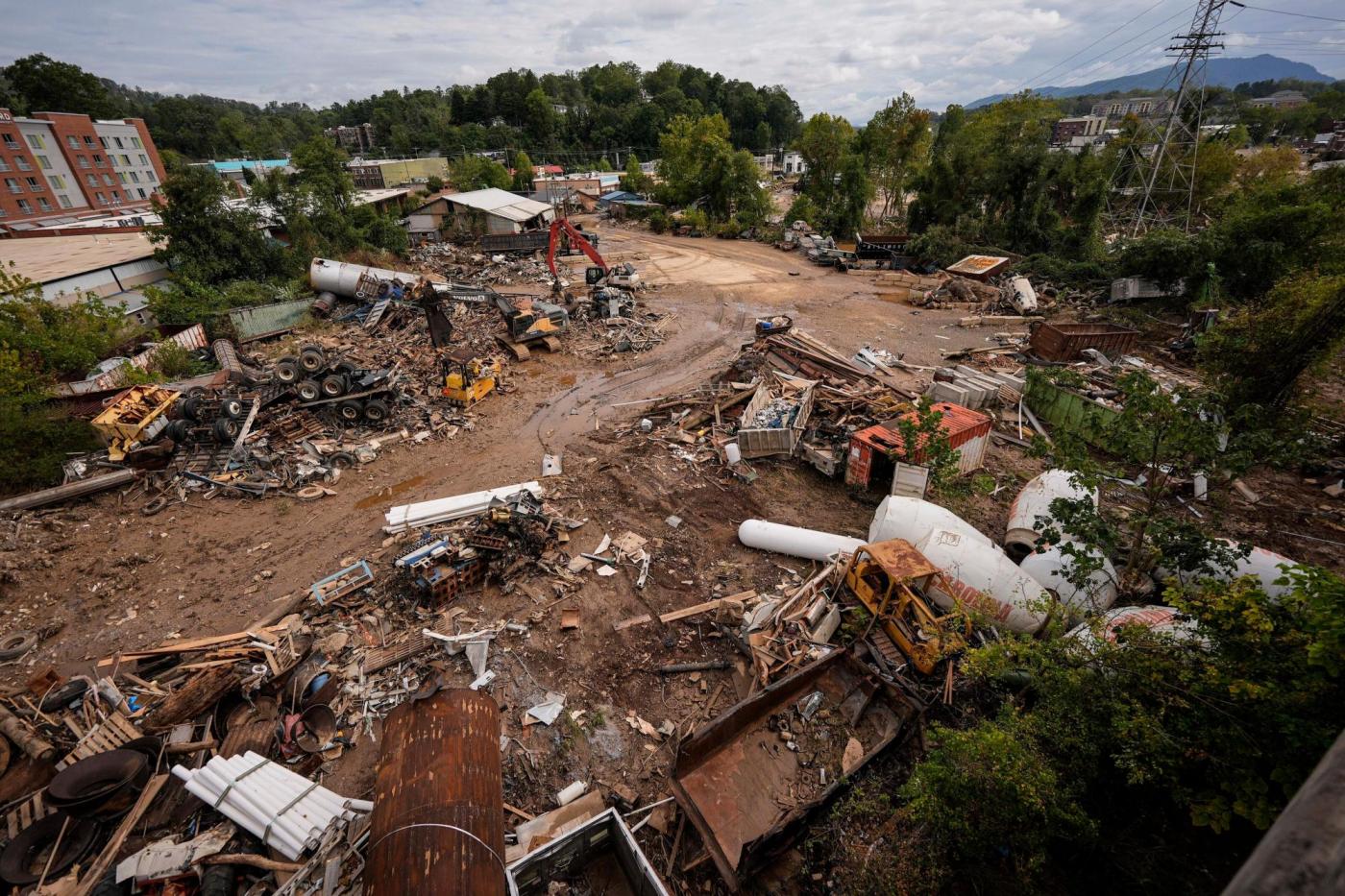
Hurricanes in the United States end up hundreds of times deadlier than the government calculates, contributing to more American deaths than car accidents or all the nation’s wars, a new study said.

The average storm hitting the U.S. contributes to the early deaths of 7,000 to 11,000 people over a 15-year period, which dwarfs the average of 24 immediate and direct deaths that the government counts in a hurricane’s aftermath, the study in Wednesday’s journal Nature concluded. Study authors said even with Hurricane Helene’s growing triple digit direct death count, many more people will die partly because of that storm in future years.

“Watching what’s happened here makes you think that this is going to be a decade of hardship on tap, not just what’s happening over the next couple of weeks,” said Stanford University climate economist Solomon Hsiang, a study co-author and a former White House science and technology official.

“After each storm there is sort of this surge of additional mortality in a state that’s been impacted that has not been previously documented or associated with hurricanes in any way,” Hsiang said.

Hsiang and University of California Berkeley researcher Rachel Young looked at hurricane deaths in a different way than previous studies, opting for a more long-term public health and economics-oriented analysis of what’s called excess mortality. They looked at states’ death rates after 501 different storms hitting the United States between 1930 and 2015. And what they found is that after each storm there’s a “bump” in death rates.

It’s a statistical signature that they see over and over, Hsiang said. Similar analyses are done for heat waves and other health threats like pollution and disease, he said. They compare to pre-storm times and adjust for other factors that could be causing changes in death rates, he said. Complicating everything is that the same places keep getting hit by multiple storms so there are death bumps upon death bumps.

Just how storms contribute to people’s deaths after the immediate impact is something that needs further study, Hsiang said. But he theorized it includes the health effects of stress, changes in the environment including toxins, people not being able to afford health care and other necessities because of storm costs, infrastructure damage and government changes in spending.

“When someone dies a few years after a hurricane hit them, the cause will be recorded as a heart attack, stroke or respiratory failure,” said Texas A&M University climate scientist Andrew Dessler, who wasn’t part of the study but has done similar studies on heat and cold deaths. “The doctor can’t possibly know that a hurricane contributed/triggered the illness. You can only see it in a statistical analysis like this.”

Initially Hsiang and Young figured the storm death bump would go away in a matter of months, but they were surprised when they examined hundreds of bumps and found they stretch out, slowly, over 15 years, Hsiang said.

It’s “almost like a trickle of mortality, like each month we’re talking about five to 10 individuals who are dying earlier than they would have otherwise,” Hsiang said.

These people don’t realize that 10 or 15 years later their health issues are associated with a storm in some way, but Hsiang said it shows up in the data: “They would not have died at those times had the storm not arrived. And so essentially, these storms are accelerating people’s deaths.”

The numbers proved so high that the researchers kept looking for mistakes or complicating factors they had missed. “It took years for us to really fully accept that this was happening,” Hsiang said.

How big are the numbers?

Storms are a factor in between 55,000 to 88,000 excess deaths a year, the study concluded. So for the 85 years studied, the team calculated between 3.6 and 5.2 million people died with storms being a factor. That’s more than the 2 million car accident deaths over that period, the study said.

Before now the public looked at storms “as an inconvenience that is tragic for a small number of community members,” Hsiang said. But they really are “a major threat to public health,” he said.

Hsiang said he and Young saw a trend of increasing hurricane-connected deaths, predominantly because of population growth. Starting in 2000, there’s been a big jump in the total volume of storms hitting large population, he said.

Three outside scientists said the study made sense.

“It seems like what they’re doing is reasonable,” said University of Albany hurricane expert Kristen Corbosiero, who wasn’t part of the research. “The numbers are really staggering.”

Texas A&M’s Dessler said this is an important study because it brings home the deadly nature of climate change and extreme weather. He said he and his fellow climate scientists have been accurate in their warnings of the physics of what climate change would mean, but failed to emphasize enough how it would hurt people.

“Reading this, it’s clear that humanity is very vulnerable to weather shocks, even in an incredibly rich country like ours,” Dessler said in an email.

Alaska resource projects and landscapes are again in the crosshairs of a presidential election

posted in: News | 0

Alex DeMarban | (TNS) Anchorage Daily News, Alaska

Major Alaska resource projects, and the land they could be built on, may be at stake in the presidential election.

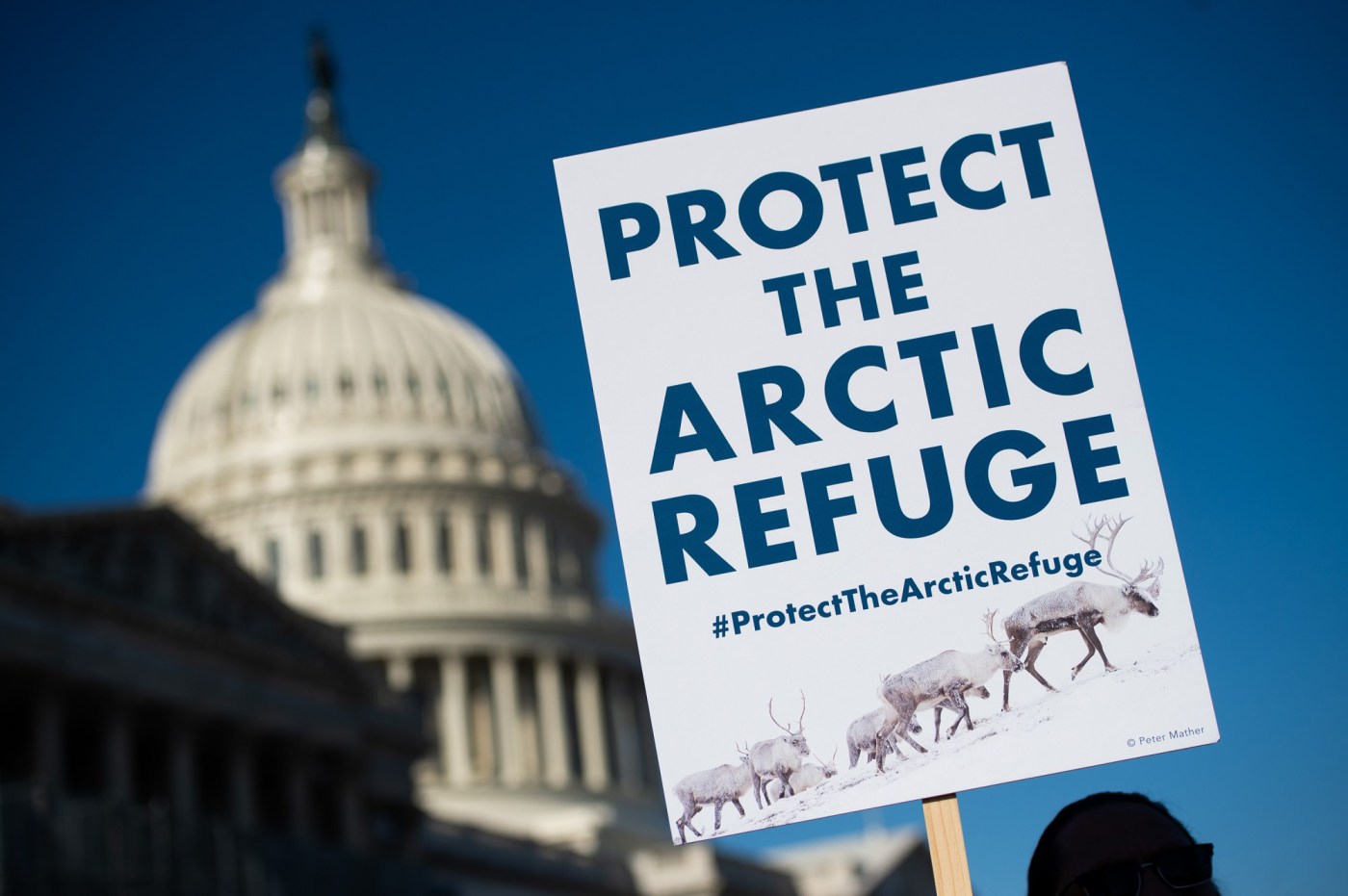
They include drilling in the Arctic National Wildlife Refuge and elsewhere in Alaska, logging in the Tongass National Forest, and cutting a 200-mile road through Alaska wilderness to access the Ambler mining district.

President Joe Biden’s administration has put the brakes on those and other major Alaska resource development projects, reversing efforts by former President Donald Trump to advance those initiatives.

Trump, with his aggressive focus on resource extraction, can be expected to renew his efforts in Alaska if he wins office, former officials say. But they add that it won’t be easy to reverse many of Biden’s actions, especially if Trump overhauls the federal workforce needed to properly make changes, they say.

If Vice President Kamala Harris wins, she’ll likely retain many of Biden’s actions in Alaska, they say. But her administration could still be dealing with major Alaska issues, such as a second oil and gas lease sale in the 19.6-million-acre Arctic refuge, they say.

The election also raises questions about the fate of other perennial Alaska projects, such as the Pebble mineral prospect that was stopped by the Environmental Protection Agency last year, or the giant Willow oil field that was approved by the Biden administration.

For years, Alaska’s big projects and land battles have been subject to shifting politics, depending on which party’s candidate occupies the White House. The back-and-forth has a chilling effect on investment in the state, making it difficult for companies to know whether a prospect has any chance of winning federal approval, resource advocates say.

Andrew Mergen, a visiting professor at Harvard Law School and retired Justice Department attorney who has handled litigation on major Alaska land issues, said the state plays an important political role in presidential elections because it captures the American imagination.

“For people who are Democrats, it’s the incredible natural value and parks and animals, and people love that,” he said. “And for people on the Republican bench, it looks like there’s a lot of resources and a lot of ways to make money.”

“But I do think that a lot of these disputes are maybe targeted about getting the base up, and whether that base is motivating environmental groups or motivating red-state voters, that’s part of what’s going on,” he said.

More Arctic drilling under Trump?

Trump has promised to “drill, baby, drill” on Day One of a second term.

He likes to tout the oil and gas potential in the Arctic National Wildlife Refuge, though with extreme exaggeration. He has said he would restart drilling there.

The former Trump administration in its closing days issued the first-ever oil and gas leases in the refuge, after a lease sale there generated little interest.

Biden, on his first day as president, began taking steps that later led to the cancellation of the leases in 2023.

William Perry Pendley, former acting director of the Bureau of Land Management under Trump, said he thinks Trump should lift the suspension of those leases and also renew his previous efforts to develop Alaska’s resources.

“He’s promised the American people that he’d cut the cost of living and transportation,” Pendley said. “One of the ways to decrease those costs is develop American energy. There’s a tremendous amount of not just energy, but minerals available in Alaska.”‘

Pendley helped write a special section calling for “immediate action” on Alaska issues in Project 2025, a transition document designed to aid Trump if he returns to the White House.

Pendley said in a recent phone interview that Trump had “nothing do with Project 2025,” which was written by the Heritage Foundation, a conservative think tank. Trump has disavowed the document.

Pendley’s section on Alaska calls on Trump to reinstate his plan for the National Petroleum Reserve-Alaska, which opened millions of acres to potential oil leasing. Biden reversed that effort and has implemented strict limits in the reserve.

“What that chapter lays out regarding Alaska is to continue doing what we tried to do with Alaska in the Trump administration, which will make it possible for Alaska to benefit from the natural resources that are available there, and for Alaska to finally get what was promised to it when it came into the Union,” Pendley said.

What about Ambler Road and Pebble?

Pendley in Project 2025 also calls on Trump to again permit construction of the 200-mile Ambler Road to a mineral district in Northwest Alaska. The Biden administration rejected a permit, reversing a decision under Trump approving the permit.

Brett Hartl, with the Center for Biological Diversity Action Fund, said Trump could attempt to reissue the Ambler Road permit.

But it wouldn’t be easy.

“It would take several years,” he said. “And they would be vulnerable to court challenge if they attempted to rush it.”

Mergen, the visiting professor with Harvard Law, said any major reversals Trump might pursue in Alaska could take so long they may not be completed in a single term.

It’s “infinitely harder” to achieve permitting for ground-disturbing activities like drilling or mining than to stop those activities, he said.

“The rulemaking and administrative processes that govern extractive use, whether it’s drilling or mining, they take a lot of time,” he said. “So I think it’s going to be a bit difficult to unwind these things in a meaningful way in four years.”

As for the Pebble copper and gold project in Southwest Alaska, it likely will not be developed, said Matthew Berman, a professor of economics at the Institute of Social and Economic Research at the University of Alaska.

“It just has too many strikes against it,” Berman said.

The Environmental Protection Agency halted Pebble last year. Project developer Pebble Partnership and the state of Alaska are suing to overturn the decision.

Pebble’s chief executive said that if a court ruling is in Pebble’s favor, the company is more likely to find an opening to advance the mine under Trump than Harris.

“I have a positive feeling about the court cases and if we get a positive decision, I think it’s more likely we could sit down with the Trump administration and say, ‘OK, the government exceeded its authority, what can we do to make this project work?’ ” said John Shively, chief executive of Pebble Partnership.

Logging in the Tongass?

Berman also said Trump will face challenges pushing Alaska projects forward because of regulatory and legal hurdles.

Southeast Alaska’s Tongass National Forest, one of the last intact temperate rainforests in the world. (Justin Graff/Dreamstime/TNS)

Trump could attempt to again repeal the Roadless Rule in Southeast Alaska’s Tongass National Forest to open up logging potential, undoing Biden’s reversal.

But procedures and timelines may not leave much time for timber sales, Berman said.

“The ship of state is a big ship and it takes a while to turn it around,” he said. “There’s only so much that can be accomplished with a leadership change, and they take a lot more time in Alaska and especially in the Arctic.”

Trump has promised to gut the federal workforce, which has a large presence in Alaska.

Trump will likely need many federal workers to remain in place if he wants to quickly pursue changes, Berman said.

“If inexperienced people are trying to write permits, it will take longer,” Berman said.

Renewables at risk?

More consequential for Alaska will be the next president’s position on climate change, Berman said.

Trump has vowed to repeal key parts of the Inflation Reduction Act, Biden’s 2022 climate law. Harris provided the tie-breaking vote for the law.

If Trump wins, “I see absolutely nothing happening on climate policy for another four years, and that has worldwide consequences,” Berman said.

If Harris wins, she’s expected to build on Biden policies that in Alaska support renewable energy and related efforts such as transmission improvements, said Isaac Vanderburg, chief executive of Launch Alaska, a nonprofit focused on accelerating Alaska’s energy transition.

The climate law has brought large sums of money into the state, he said.

Agencies have committed to spending much of the money in the law, he said, but Trump could attempt to delay or halt future spending commitments.

“It’s concerning to me from a renewable energy perspective,” he said of Trump’s plans.

Sustained policies under Harris?

If Harris wins, there may be holdover items for her administration to work on in Alaska.

Related Articles

National Politics |


Pennsylvania Republican in key swing-state Senate race backs using military to fight fentanyl

National Politics |


Get ready to wait: Swing state officials say final results could take weeks to tally

National Politics |


Vance-Walz debate highlighted clear health policy differences

National Politics |


A look at false and misleading claims during the vice presidential debate

National Politics |


Some of the most notable quotes from the JD Vance-Tim Walz vice presidential debate

It’s possible a Harris administration will get the chance to weigh a lease sale in the refuge, said Hartl with the Center for Biological Diversity Action Fund.

Congress has set a deadline for a lease sale before the end of this year.

But that could be delayed, Hartl said. Agencies frequently miss congressional deadlines, he said.

“I think if anything, it would probably get punted into next year,” Hartl said. “It just seems like there’s a ton of work that they still have to do because they were in a pretty significant legal deficiency from the first sale.”

ConocoPhillips’ controversial Alaska oil field, Willow, likely won’t be affected if Harris wins, Hartl said.

It’s been approved under Biden, he said. ConocoPhillips has started construction at the field. Oil is expected to begin flowing in four years.

Conservation groups like his had a chance to stop Willow, he said. The Biden administration chose not to, he said.

“So I would suspect that Willow will continue,” he said.

_____

(c)2024 the Alaska Dispatch News (Anchorage, Alaska). Visit the Alaska Dispatch News (Anchorage, Alaska) at www.adn.com. Distributed by Tribune Content Agency, LLC.