By TravelPulse (TNS)
While 2024 was a year that brought about significant, continued post-pandemic recovery for the travel industry, it was also a period of time marked by instability in some locations around the world.
From attacks on the rail lines during the Paris Olympics to the ongoing conflicts in the Middle East, not to mention the war in Ukraine, the global travel realm in 2024 was fraught with challenges.
It is against this backdrop that the international security and medical services provider Global Guardian recently released its 2025 Global Risk Map.
Published annually, the map is meant to help travelers better understand the current global risk landscape. In order to develop its guidance, experts at Global Guardian assess a long list of country-specific security risk factors and indicators, including crime, health, natural disasters, infrastructure, political stability, civil unrest and terrorism.
For 2025, Global Guardian’s assessment results underscore the reality that disruption globally and domestically continues to increase, and now more than ever travelers need to be prepared when exploring the world.
As part of the latest assessment, Global Guardian highlighted a handful of specific global regions that are at particular risk of destabilization over the next year and beyond.
Here’s a closer look at those regions, along with insights from Global Guardian CEO Dale Buckner, who recently spoke with TravelPulse at length about the risks travelers may face in 2025.
Here are the regions at risk of destabilization in 2025:
Middle East/North Africa
Israel’s existential battle against Iran is set to continue into 2025, says the Global Guardian report.
“In July 2024, Israel assassinated Hamas’ political leader, Ismail Haniyeh, in an Iranian Revolutionary Guard Corps (IRGC) safehouse in Tehran, and Iran has pledged revenge,” the report explains.
“This comes as Iran and its web of regional proxies took their war on Israel out of the shadows and into the open following October 7, 2023, with seven live fronts.”
Global Guardian also predicts that Israel’s regional war will shift from Gaza to the West Bank and Lebanon in the year ahead, heightening tensions with Hezbollah, while Houthi attacks on commercial shipping in the Red Sea and Indian Ocean will persist.
The report adds that as “we enter 2025, Israel may assess that its strategic window to prevent a nuclear Iran is rapidly closing and choose to act.”
The ongoing civil war in Sudan between the Sudanese Armed Forces (SAF) and the Rapid Support Forces (RSF), is also of concern, according to Global Guardian’s risk analysis. The conflict “has created a dire humanitarian situation with ethnically motivated violence on the rise,” says the report.
Latin America
Some of the areas of concern in the Latin American region include Venezuela and Mexico, according to Global Guardian.
The risk in Venezuela is tied to the country’s long-standing territorial dispute with neighboring Guyana, says the report.
“Since 2019, the U.S. Department of State withdrew all diplomatic personnel from U.S. Embassy Caracas and suspended all operations,” explains Buckner. “Violent crimes, such as homicide, armed robbery, kidnapping, and carjacking, are common in Venezuela. Shortages of gasoline, electricity, water, medicine, and medical supplies continue throughout much of Venezuela. Simply put, Venezuela is one of the most dangerous countries in the world for Western travelers and should be avoided.”
Thanksgiving travel live updates: Airport strikes, winter storms expected to cause delays
Gophers women’s soccer bows to North Carolina in NCAA Sweet 16
Gable Steveson’s technical fall leads Gophers wrestling to another shutout victory
What is trip cancellation and interruption insurance?
First dog-friendly cruise scheduled for 2025. Organizers hope it turns into a recurring event.
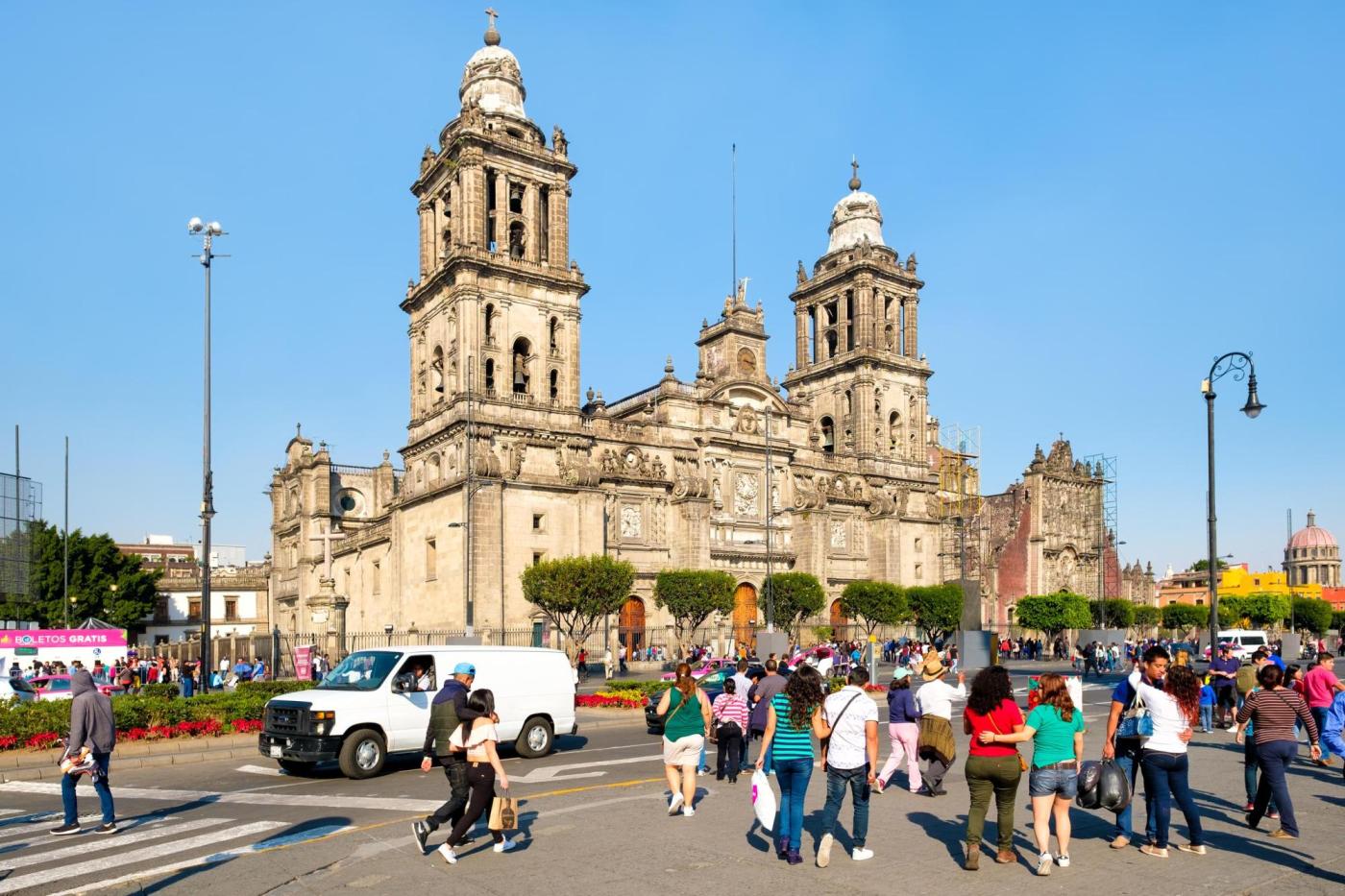
In Mexico, meanwhile, the problems include drug cartel-related violence and theft, among other issues, says the report.
Mexico recently inaugurated its first female president, Claudia Sheinbaum, and like her predecessors she will face challenges “reining in cartel violence, corruption, extortion, theft and kidnapping,” says the report.
“As such, security continues to be a top concern in Mexico’ ” says the report, which categorizes Mexico as “high risk” when it comes to travel for 2025.
Countries classified as high risk experience regular conflict, criminal activity or civil unrest — and have not effectively managed those risks.
The Global Guardian report also suggests there may be heightened risks in Mexico now that Donald Trump has been reelected U.S. president.
“Bilateral relations between the U.S. and Mexico could dramatically deteriorate. Trump has promised a mass deportation operation, which could sour relations between the U.S. and Mexico, increasing risks to businesses operating in Mexico,” the report adds.
Asked to comment on Mexico’s high-risk designation, Buckner stressed that the situation in the country is extremely nuanced, adding that it’s a vast oversimplification to call the entire country high risk.
“There are pockets of Mexico that are wildly safe and wonderful to visit and people shouldn’t hesitate to go,” Buckner told TravelPulse. “And there are also pockets that are unsafe and dangerous.”
The good news, added Buckner, is that Mexico’s new president is focusing a great deal of effort and energy on addressing the problems surrounding drug cartels, which are the source of a great deal of the risk.
Buckner was quick to add however, that as long as there’s demand for drugs, the drug cartel situation is likely to remain problematic.
“The U.S. is driving the drug demand — we consume more drugs then the rest of the world,” explained Buckner. “It’s really overly simplified to paint Mexico as the bad guy, because if there wasn’t demand, we wouldn’t need the supply. But the demand is real and violence comes with that.”
Representatives for Global Nexus, a government and public affairs consultancy that advises travel and tourism companies and interests in Southern Mexico, told TravelPulse that while drug-related violence has been known to occur, it involves members of the drug cartel targeting each other, they’re not targeting tourists.
“There is an ongoing battle between small drug vendors who use the beach to sell product to tourists hanging out on the beach,” explained Ruben Olmos, Global Nexus president and CEO, in reference to the Quintana Roo region, which is popular with tourists. “There have been cases where gunfire has been exchanged between these groups. They are targeting themselves. They are fighting over ‘This is my beach’ and they initiate a shootout.”
However, added Olmos, that the U.S. State Department’s risk categorization for Quintana Roo (which is separate from the Global Guardian risk assessment) has not changed.
Located on the State Department’s Mexico page, the risk assessment for Quintana Roo remains in the “Exercise Increased Caution” category, which is below the top risk categories of “Do Not Travel” and “Reconsider Travel.”
The Exercise Increased Caution designation means “Be aware of heightened risks to safety and security,” explains the State Department’s website.
Olmos also pointed out that Mexico is the only country that has a map on the U.S. State Department website that covers every single state in the country, providing details for travelers about which states are safest.
Sub-Saharan Africa
In June 2024, thousands of young people took to the streets in Kenya to protest a controversial tax bill. The protesters were met with heavy-handed policing, including the use of live fire and mass arrests, says the Global Guardian risk report.
Despite the local security response, protests continued. The success and tenacity of the Kenyan movement has triggered similar protests or dissent in other countries including Uganda, Tanzania, South Africa, and Nigeria, says Global Guardian.
That is just a portion of the risk Global Guardian sees for Sub-Saharan Africa over the course of 2025.
“With multiple conflicts escalating across the continent, aging leaders leaving behind unclear successions, and entrenched regimes with dissipating legitimacy, Sub-Saharan Africa now looks much like the North African and Arab world in the early 2010s,” says the report. “While the dynamic unfolding in Africa might not yet merit the label of “African Spring,” a significant change to the continent’s political status quo is coming.”
A complete list of extreme and high-risk designations
Several countries received an extreme or high-risk designation on the new Global Guardian risk map for 2025, including more than a few that are popular with leisure travelers or tourists.
Extreme risk countries are those that Global Guardian says are “actively engaged in conflict, while also experiencing severe criminal activity and civil unrest.These countries are insecure; state institutions are too weak to manage militant groups or large-scale disasters.” They include Afghanistan, Burkina Faso, Central African Republic, Lebanon, Mali, Niger, Somalia, Ukraine, West Bank, Gaza and Yemen.
The current list of high-risk countries, which are countries that experience regular conflict, criminal activity or civil unrest and have not effectively managed those risks, includes Bangladesh, Cameroon, Democratic Republic of Congo, Ecuador, Ethiopia, Guatemala, Honduras, Iraq, Israel, Jamaica, Kenya, Libya, Mexico, Mozambique, Myanmar, Nigeria, Pakistan, Papua New Guinea, South Sudan, Uganda, Venezuela
Officials from the Jamaica Tourist Board provided a statement to TravelPulse in response to Global Guardian’s designation of the country.
“Last month, Global Guardian, a private security provider, released its 2025 Global Risk Map, which included Jamaica, amongst other destinations,” said the Tourist Board. “It is important to note that the crime rate against visitors is notably low at 0.01% and the majority of Jamaica’s tourism product remains unaffected.”
The country’s tourism officials added that Jamaica has welcomed 3 million visitors this year and boasts a high repeat visitor rate of 42%.
“The island is consistently ranked among the top destinations for international travel and visitors continue to come with confidence to enjoy all that Jamaica has to offer,” the statement adds.
When it comes to Jamaica, Buckner offered similar comments to those of Mexico, noting that the situation is impacted by drug-related violence and the experience on the ground is nuanced and cannot be painted with a broad brush.
“In the same vein as Mexico — Jamaica can be a wonderful place to visit,” says Buckner. “There are pockets of beauty and low crime and as long as you are careful, it’s a very low threat.”
Bottom line on travel risks for 2025
Buckner, a retired Army colonel, maintains that the world is indeed a more risky place heading into 2025. The challenges in the Middle East and Ukraine are at the forefront of the instability, but are hardly the only cause for concern.
“Israel has now gone to Gaza and cleaned out Hamas, they’re now moving north into Lebanon, and we are convinced Israel will strike Iran,” Buckner said during an interview that took place prior to Israel’s strike on Iran. “If that occurs you are going to see violence across the Middle East.”
“But there are over 100 conflicts across the globe,” continues Buckner. When you combine that reality with other challenges the world is currently grappling with, including the destabilizing influences of climate change, there are plenty of risks for travelers to bear in mind when planning a journey for the coming year.
He wraps up by offering a few tips for travelers, a check-list of sorts, to work through when planning or considering travel to a specific country in 2025:
— If you don’t know who to call or how you are going to negotiate if someone is kidnapped, you shouldn’t go there.
— Consumers need to read the fine print on travel insurance because it does not cover war zones, terrorism or natural disasters, says Buckner. And travelers are often surprised and find out too late that these types of events are not covered.
— If you get stuck or stranded, if you don’t know who you are going to call to get you out of that situation, know what organizations locally or internationally are available to help you.
©2024 Northstar Travel Media, LLC. Visit at travelpulse.com. Distributed by Tribune Content Agency, LLC.