Senate ready to stay up all night to pass GOP budget over objections from Democrats

posted in: Politics | 0

By LISA MASCARO and KEVIN FREKING

WASHINGTON (AP) — Senators are ready to stay up all night, launching a budget “vote-a-rama” late Thursday in a crucial, if dreaded, step toward unleashing a $340 billion package President Donald Trump’s team says it needs for mass deportations and security measures that top the Republican agenda.

Related Articles

National Politics |


Kids’ disability rights cases stalled as Trump began to overhaul Education Department

National Politics |


Judge won’t immediately block Trump administration’s abrupt halt to Catholic refugee funding

National Politics |


Dr. Mehmet Oz holds millions from companies that he’d wield power over if confirmed, report shows

National Politics |


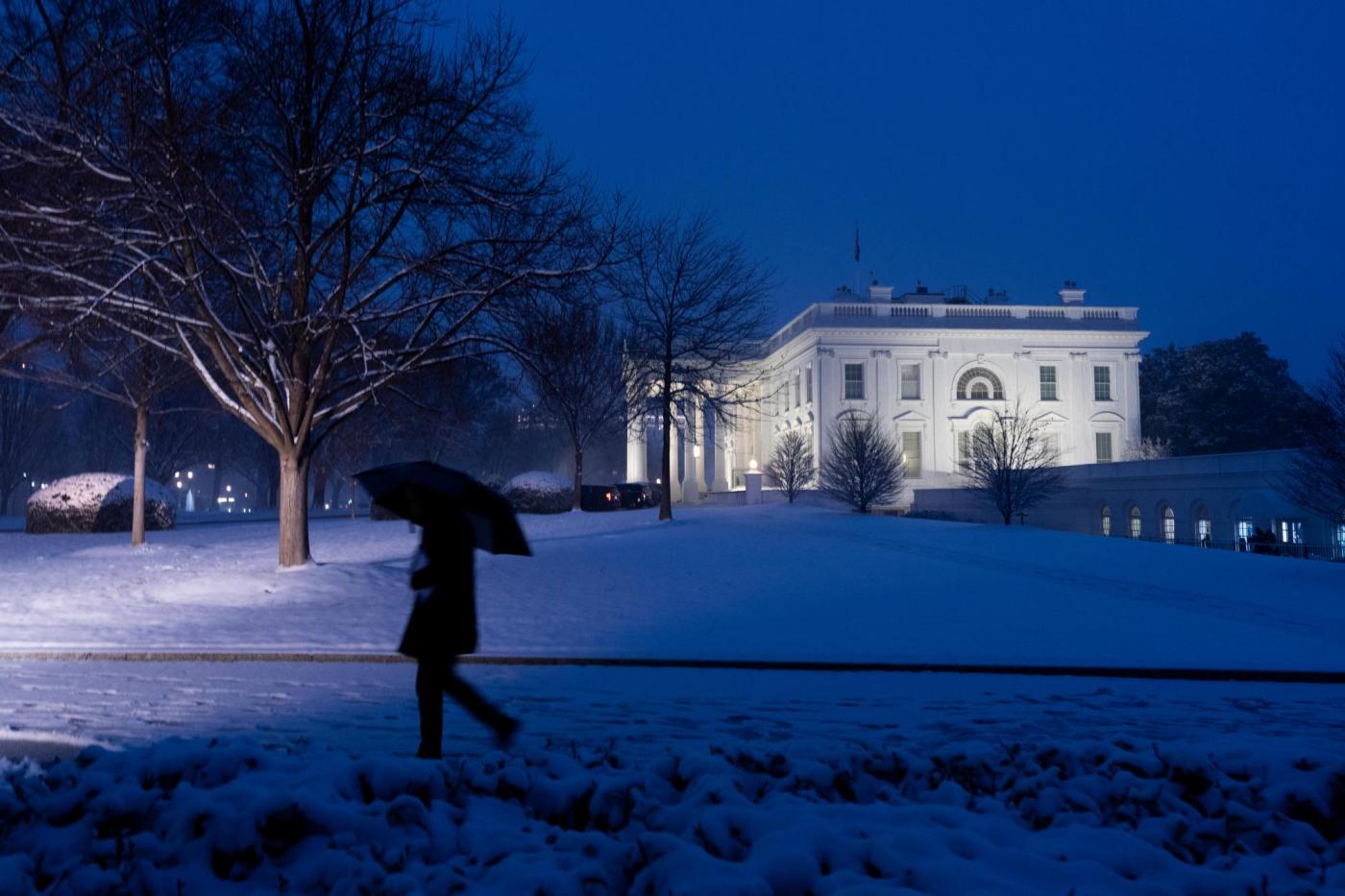
Why a full federal takeover of DC would require an act of Congress

National Politics |


New arrivals at Guantanamo Bay are Venezuelan immigrants with final deportation orders

If ever there was a time to watch Congress in action this might be it. Or not. Senators will be voting in rapid-fashion for hours on one amendment after another diving into intricate policy details, largely from Democrats trying to halt the package. The end result will be a final push by the Republicans, expected in the early hours of the morning, to use their majority power to pass it on a party-line vote.

“What we’re doing today is jumpstarting a process that will allow the Republican Party to meet President Trump’s immigration agenda,” Senate Budget Committee chair Lindsey Graham, R-S.C., said while opening the debate.

Graham said Trump’s top immigration czar told senators that the administration’s deportation operations are “out of money” and need more funding from Congress to detain and deport immigrants.

With little power in the minority to stop the onslaught, Democrats will instead use the all-night debate to force GOP senators into potentially embarrassing votes — including the first one, on blocking tax breaks to billionaires.

“This is going to be a long, drawn out fight,” warned Senate Democratic Leader Chuck Schumer.

“Days like today, where we vote on amendments late into the night, go a long way in revealing where each party stands and who each party is fighting for,” the New York senator said. “Democrats are glad to have this debate.”

The package that senators are pushing forward is what Republicans view as a down-payment on Trump’s agenda, part of a broader effort that will eventually include legislation to extend some $4.5 trillion in tax breaks and other priorities. That’s being assembled by House Speaker Mike Johnson in a separate budget package that also seeks up to $2 trillion in reductions to health care and other programs.

Trump has preferred what he calls one “big, beautiful bill,” but the White House is open to the Senate’s strategy of working on the border package first, then turning to tax cuts later this year.

What’s in the Senate GOP package

The Republican Senate package would allow up to $175 billion to be spent on border security, including money for mass deportation operations and building the U.S.-Mexico border wall, in addition to a $150 billion boost to the Pentagon and about $20 billion for the Coast Guard.

But even if the Senate pushed the package to approval in the all-night session, there won’t be any money flowing just yet.

The budget resolution is simply a framework that sends instructions to the various Senate committees — Homeland Security, Armed Services, Judiciary — to hammer out the details. Everything will eventually be assembled in another package, with another vote-a-rama, down the road.

Sen. John Barrasso, R-Wyo., the No. 2-ranking Senate Republican, said GOP lawmakers are acting quickly to get the administration the resources they have requested and need to curb illegal border crossings.

“The budget will allow us to finish the wall. It also takes the steps we need toward more border agents,” Barrasso said. “It means more detention beds… It means more deportation flights.”

Republicans insist the whole thing will be paid for, rather than piled onto debt, and they are considering various options with both spending cuts and new revenues.

The committees may decide to rollback the Biden administration’s methane emissions fee, which was approved by Democrats as part of climate change strategies in the Inflation Reduction Act, and hoping to draw new revenue from energy leases as they aim to spur domestic energy production.

Democrats are ready for battle

First up from Democrats will be a vote to prevent tax breaks for billionaires, according to a person familiar with the planning and granted anonymity to discuss it.

Democrats argue that the GOP tax cuts approved in 2017 flowed to the the wealthiest Americans, and extending them as Trump wants Congress to do later this year would extend the giveaway.

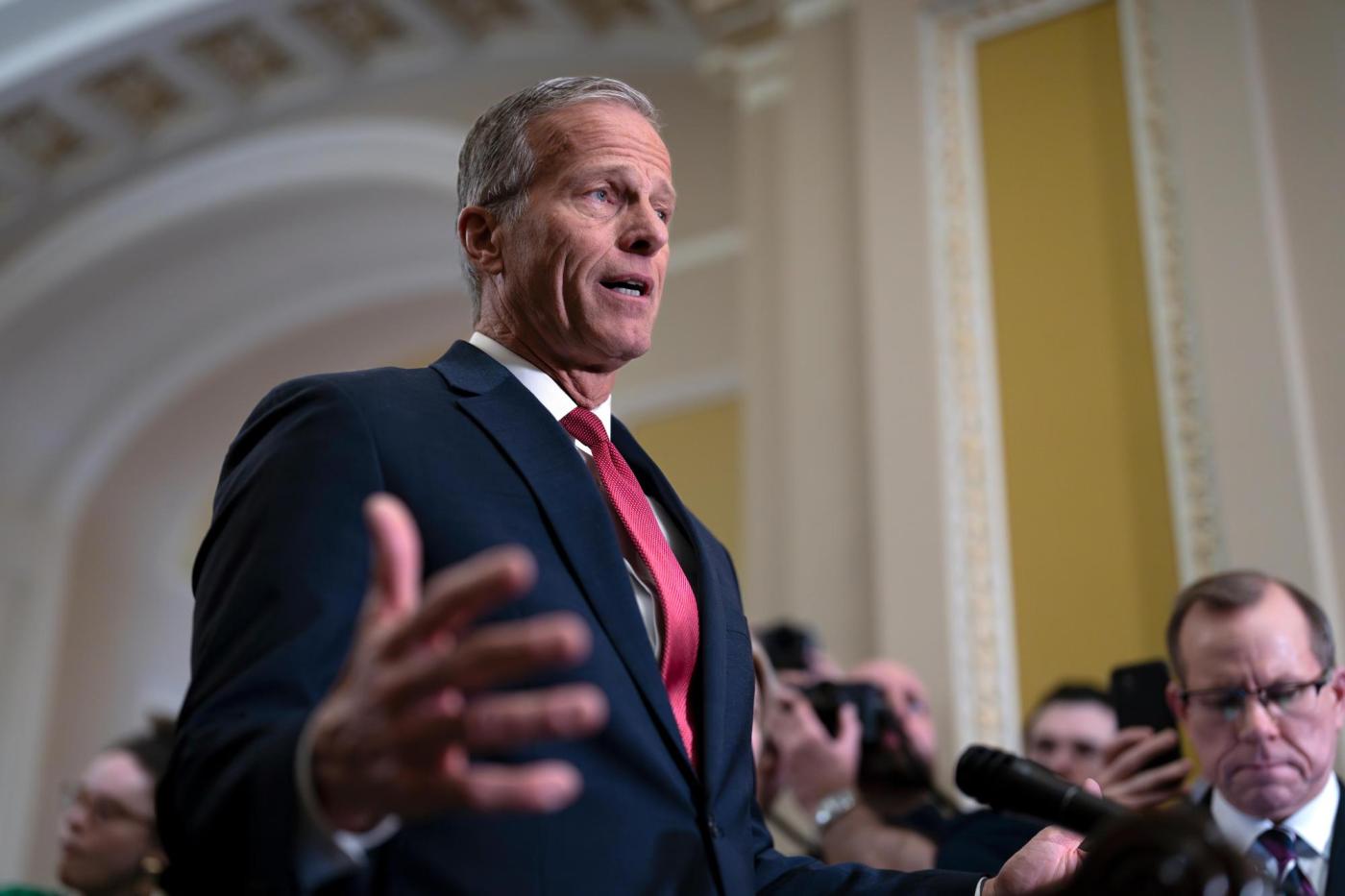
Senate Minority Leader Chuck Schumer, D-N.Y., speaks to reporters after a closed-door strategy meeting at the Capitol in Washington, Wednesday, Feb. 19, 2025. (AP Photo/J. Scott Applewhite)

Schumer launched a strategy earlier this week to use this first budget debate to focus on both the implications of the tax policy and also the Trump administration’s Department of Government Efficiency, which is slashing across the federal government.

It’s a better strategy for Democrats than arguing against tougher border security and deportations, which divides the party.

Sen. Patty Murray, the top Democrat on the Senate Appropriations Committee, said the single biggest driver of the national debt since 2001 has been a series of Republican-led tax cuts.

“And you’ll never guess what our Republican colleagues on the other side of the aisle are focused on right now, nothing to lower the cost of eggs, it’s actually more Republican tax cuts,” Murray said.

She called the budget plan a “roadmap for painful cuts to programs families count on each and every day, all so they can give billionaires more tax cuts.”

Congress is racing itself

The budget resolution is setting up what’s called the reconciliation process, which used to be rare, but is now the tool often used to pass big bills on party-line votes when one party has control of the White House and Congress, as Republicans do now.

But Republicans are arguing with themselves over how to proceed. The House is marching ahead on its “big, beautiful bill,” believing they have one chance to get it right. The Senate views its two-bill strategy as more practical, delivering on border security first then turning to taxes later.

Budget rules allow for passage by a simple majority vote which is key in the Senate where it typically takes 60 votes to break a filibuster on big items. During Trump’s first term, Republicans used the reconciliation process to pass GOP tax cuts in 2017. Democrats used reconciliation during the Biden presidency era to approve COVID-19 relief and the Inflation Reduction Act.

Trump appears to be stirring the fight, pitting Republicans in the House and Senate against each other to see which one delivers fastest.
Texas AG asks court to require NCAA to begin gender testing as part of new transgender policy

posted in: News | 0

LUBBOCK, Texas (AP) — The Republican attorney general in Texas wants the NCAA to take its transgender policy a step further and require gender testing for athletes who compete in women’s sports.

Related Articles

Sports |


Twins Rule 5 Draft pick Eiberson Castellano has unique opportunity in front of him

Sports |


State Class AA girls hockey: Hill-Murray 5, Andover 3

Sports |


Timberwolves well positioned for a post-break run up West standings

Sports |


Twins infielder Edouard Julien out to ‘prove everybody wrong’

Sports |


State Class AA girls hockey: Rosemount 3, Centennial/Spring Lake Park 2

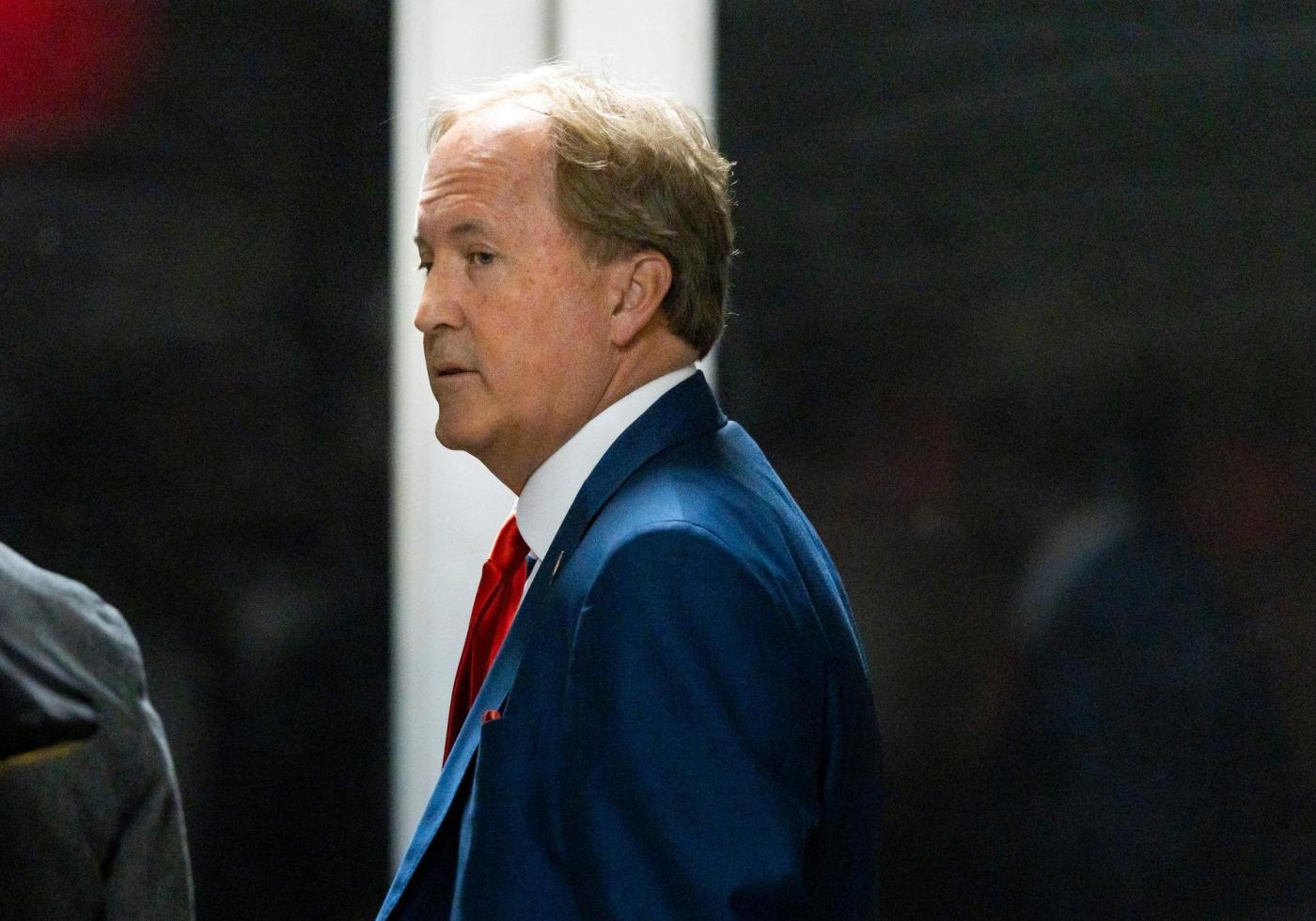
AG Ken Paxton filed a lawsuit in December in state district court and on Thursday added a filing that seeks a court order requiring gender screening for athletes and an injunction intended to prevent the NCAA from “falsely and deceptively claiming that only biological women may participate in female-specific competitions.”

Earlier this month, the NCAA changed its participation policy for transgender athletes, limiting competition in women’s sports to athletes who were assigned female at birth. The move came a day after President Donald Trump signed an executive order intended to ban transgender athletes from women’s and girls’ sports.

Paxton doesn’t think the NCAA move goes far enough because, saying the NCAA has no mechanism for screening the sex of athletes.

“In practice, the NCAA’s lack of sex-screening has allowed (and will continue to allow) biological men to surreptitiously participate in ‘women’s’ sports categories,” the lawsuit claims.

Over the past year, transgender athletes have become a target of critics who say their participation in women’s sports is unfair and a potential safety risk. The topic became a major talking point in Trump’s re-election campaign even though there is believed to be a very small number of transgender athletes; NCAA President Charlie Baker in December said he knew of only 10 transgender athletes out of more than 500,000 across the NCAA.

The NCAA’s revised policy permits athletes assigned male at birth to practice with women’s teams and receive benefits such as medical care. An athlete assigned female at birth who has begun hormone therapy can practice with a women’s team but cannot compete on a women’s team without risking the team’s eligibility for championships.

Paxton also said the NCAA has left “ample opportunity for biological men to alter their birth records and participate in women’s sports,” a claim the organization said is not true.

“The policy is clear that there are no waivers available, and student-athlete assigned male at birth may not compete on a women’s team with amended birth certificates or other forms of ID,” the NCAA said in an emailed response to The Associated Press.

Member schools — there are 1,100 in the NCAA — are responsible for certifying athlete eligibility for practice and competition. Local, state and federal legislation can supersede NCAA rules.

Paxton’s filing refers to last week’s announcement by World Athletics that part of its new recommended guidelines would bring back gender testing, a practice that hasn’t been part of track and field since the 1990s. Most of the screenings can be done by swabbing the inside of an athlete’s cheek.

AP sports: https://apnews.com/sports

Feds get eighth guilty plea in smuggling ring that mailed fentanyl in stuffed animals

posted in: News | 0

Eight of nine co-defendants have now admitted to being a part of a drug smuggling ring that mailed a record number of fentanyl pills from Arizona to the Twin Cities hidden in stuffed animals.

On Thursday, Amaya Tiffany-Nicole Mims, 24, became the latest to plead guilty in U.S. District Court in St. Paul to conspiracy to distribute the drug from August 2022 to February 2023.

Mims, of St. Paul, entered a straight plea to the charge, meaning there is no agreement between the defense and the prosecution on the terms of her sentence. A sentencing date has not been scheduled.

The others, all from either St. Paul or Minneapolis, also were indicted on the same count following the seizure of 280,000 fentanyl pills that were sent in packages through the U.S. Postal Service from Phoenix to the Twin Cities metro area.

Authorities called the fentanyl seizure, which amounted to 66 pounds with an estimated value of more than $2.2 million, the largest ever in Minnesota. Just 2 milligrams of fentanyl can kill a person, according to the U.S. Drug Enforcement Administration.

Court documents say several of the co-defendants traveled to Phoenix to obtain fentanyl from suppliers, hid the pills inside stuffed animals and mailed them to addresses in and around the Twin Cities. The drug ring disguised the stuffed animals as birthday presents and lined them with dog treats in an attempt to prevent drug-sniffing dogs from alerting them.

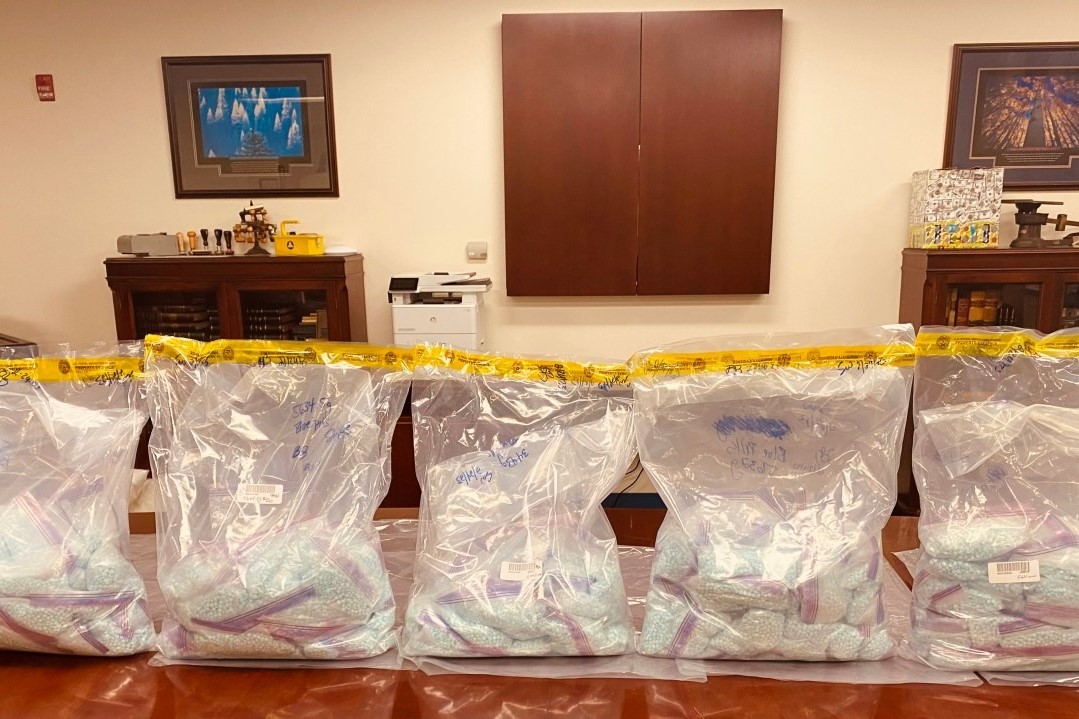
Authorities seized 280,000 fentanyl pills that were hidden in stuffed animals and mailed through the U.S. Postal Service from Phoenix to the Twin Cities metro area in 2023. (Courtesy of U.S. District Court of Minnesota)

The investigation involved law enforcement from Washington, Dakota and Ramsey counties, along with the U.S. Postal Inspection Service and Homeland Security Investigations.

Cornell Montez Chandler Jr., of St. Paul, who authorities say was the ringleader of the group, was the first to admit to the charge and remains the lone co-defendant to be sentenced. In November, Chandler, 25, was given a term of just more than 13 years in prison and five years of post-incarceration supervised release.

Cornell Montez Chandler Jr. (Courtesy of the Sherburne County Sheriff’s Office)

Three others then pleaded guilty — Stardasha Christina Davenport-Mounger, 25, and Da’Shawn Natori Domena, 25, both of Minneapolis, and Robiel Lee Williams, 24, of St. Paul.

Earlier this month, prosecutors secured guilty pleas from Shardai Rayshell Allen, 25, of Minneapolis, and Quijuan Hosea Bankhead, 31, and Fo’Tre Devine White, 31, both of St. Paul.

Sentencing dates have not been scheduled for those six co-defendants.

Phyu Win Jame, 28, of Minneapolis, remains the lone co-defendant who hasn’t pleaded guilty in the case, although a change of plea hearing is scheduled for March 12.

Related Articles

Crime & Public Safety |


The man accused of stabbing Salman Rushdie declines to take the stand as the defense rests

Crime & Public Safety |


Charges: DNA ties three St. Paul sexual assaults to 18-year-old man

Crime & Public Safety |


Washington County man found dead in Hastings identified as missing person William ‘Ike’ Eickholt

Crime & Public Safety |


Seven Chilean men are charged with burglarizing the homes of Mahomes, Burrow and other star athletes

Crime & Public Safety |


Karen Read murder case: Feds involved as judge shares ‘grave’ concerns

Why a full federal takeover of DC would require an act of Congress

posted in: News | 0

By ASHRAF KHALIL

WASHINGTON, D.C. (AP) — The moment that local officials in Washington have been dreading for months is finally here. President Donald Trump, one month into his second term, has publicly returned to one of his longtime talking points: a federal takeover of the District of Columbia.

Related Articles

National Politics |


New arrivals at Guantanamo Bay are Venezuelan immigrants with final deportation orders

National Politics |


Once off the table, bills to charge women who get abortions with murder get votes before failing

National Politics |


In the Trump administration, nearly every major department is an immigration agency

National Politics |


The 45 companies on the MAGA anti-DEI hit list

National Politics |


As Melania Trump returns to the White House, she’s winning Chinese fans

It would take some doing, though — including, literally, an act of Congress. But the issue bubbled up again this week, the latest in the blizzard of initiatives that have surfaced since Trump took the oath of office Jan. 20.

Whether it was just a reminder that the president possesses the power to set off alarms with an off-the-cuff remark or by directing his administration to take concrete steps to make it happen remains to be seen. As with efforts to rename the Gulf of Mexico, make Canada the 51st state or make Greenland a U.S. territory, a lot depends on what happens next.

Here’s a look at some of the questions surrounding the issue:

Could this really happen?

Yes, but Trump can’t do it alone. Congress, with both houses controlled by Republicans, could absolutely vote to repeal the 1973 Home Rule Act. That would be a deeply controversial vote which would likely test the strength of the three-seat GOP majority in the House of Representatives.

Why now?

That’s a bit of a mystery. Mayor Muriel Bowser has set a conciliatory tone ever since Trump was elected again. She traveled to Mar-a-Lago to meet with Trump, and said she looked forward to working with the new administration and emphasized the common-ground issues — such as their mutual desire to get federal workers back to their offices.

Trump, in his brief comments on Air Force One, said he and Bowser “get along great.”

Bowser responded with a posting on X, declaring D.C. “a world-class city” and listing the District’s virtues.

Trump was also responding to a specific question from a reporter, so it’s possible this was an off-the-cuff comment and not indicative of an immediate priority issue for him.

What can Trump do unilaterally?

Local government officials have been quietly predicting some sort of executive order imposing stiffer criminal penalties or a crackdown on homeless encampments, but a full “ takeover” would still require an act of Congress.

He could theoretically take over the Metropolitan Police Department — something that was considered during the 2020 mass protests over the murder of George Floyd by Minneapolis police. Justin Hansford, a professor at D.C.’s Howard University School of Law, said such a step would need some sort of “justifying emergency.” Trump’s perspective on what constitutes such an emergency, Hansford said, “would absolutely be challenged in court.”

The Capitol is seen framed through a window in the Cannon House Office Building on Capitol Hill in Washington, Thursday, Feb. 13, 2025. (AP Photo/J. Scott Applewhite)

How bad are the problems he mentioned?

Violent crime rates, particularly homicide and car jacking, legitimately spiked in 2023, leaving officials publicly scrambling for answers. Those numbers came down significantly in 2024, in the face of a new public safety bill and a concerted MPD crackdown. They’re up a bit so far in 2025 but still down from their recent peak but also well below the late 1990s when D.C. regularly led the nation in per-capita homicides.

Graffiti in D.C. is common but not exactly a civic crisis. The city has worked to both clean up graffiti hotspots and transform young taggers into publicly sponsored muralists.

Multiple homeless encampments are a fact of life in Washington, but the District government is partially handcuffed by the fact that large swaths of the public greenspace, including many parks and traffic circles, are under the jurisdiction of the National Park Service. The last few years have settled into a cyclical dynamic, with homeless encampments slowly growing into mini tent cities on NPS land, followed by a mass clearing with bulldozers once or twice a year.

What’s the history between Trump and DC?

It’s not positive.

During Trump’s turbulent first term, he and the local government publicly sparred multiple times — in tones ranging from playful to deeply personal. When Trump floated the idea of a massive July 4 military parade complete with tanks rolling through the streets, the D.C. Council publicly mocked him.

Trump accused Bowser of losing control of her city during protests over the murder of George Floyd. He backed down from a threat to take over the MPD, and eventually declared his own multi-agency lockdown that included low-flying helicopters buzzing protesters. Bowser responded by having “Black Lives Matter” painted on the street in giant yellow letters one block from the White House.

Trump’s feelings remained intense during the four years after leaving office. He repeatedly promised a federal takeover while on the campaign trail as part of an effort to stoke fears about violence in U.S. cities generally. In August 2023, when he briefly came to town to plead not guilty on charges of trying to overturn his 2020 electoral loss to former President Joe Biden, Trump blasted the capital city on social media, calling it a “filthy and crime ridden embarrassment to our nation.”

What about Congress?

Activist Republicans in Congress have long used the House Oversight Committee as a forum to employ their power over the local government. During the crime spike in 2023, Bowser and members of the D.C. Council were regularly summoned for inquiries before the committee. That year, Congress also, for the first time in decades, fully overturned a D.C. law when it repealed a rewrite of the D.C. criminal code. But that required Congressional Democrats to join in, and then-President Biden to sign off on it.

Members of Congress have also repeatedly used budget riders to alter D.C. laws in minor ways, targeting everything from marijuana legalization to the city’s use of traffic cameras.

As an indication of just how personal and petty this dynamic has become, the bill previously introduced in Congress proposing to repeal D.C. home rule was titled to produce an antagonistic acronym. It’s called the Bringing Oversight to Washington and Safety to Every Resident Act or the BOWSER Act.

Is there any silver lining for D.C.?

Perhaps the most optimistic interpretation among D.C. officials is a quiet belief that Trump and Congress have no actual interest in the hassle that comes with managing a city of 700,000 residents — more populous that two U.S. states.

They expect a wave of budget riders from GOP members of Congress emboldened by Trump’s statements. But some observers believe Congress will stop short of assuming the responsibility and liability that would come with a full federal takeover.

“As a lawyer, I’m thinking about who I would sue if there’s a police brutality case,” said Hansford, the Howard law professor. “I don’t think Congress wants to deal with all that.”