Egg prices are taking the fun (and profit) out of brunch

posted in: News | 0

With egg prices at a record high, shoppers know the pain of trying to buy eggs and finding only empty shelves or horrifying prices. But do you know how it’s hitting your favorite weekend breakfast spot?

Related Articles

Business |


Apple announces $500 billion investment in US amid tariff threats that could affect the iPhone

Business |


Robinhood says SEC has closed its investigation into the company

Business |


Fired federal workers hunt for new jobs but struggle to replace their old ones

Business |


Starbucks lays off 1,100 corporate employees as coffee chain streamlines

Business |


Business People: 3M CEO Bill Brown named chairman, amid other board moves

In a move demonstrating just how impactful the ups-and-downs of egg prices have become, Waffle House recently announced it added a 50-cents-per-egg surcharge to customers’ bills. The Georgia-based chain told CNN that it is watching egg prices and will “adjust or remove” the extra charge based on market conditions.

“The continuing egg shortage caused by HPAI (bird flu) has caused a dramatic increase in egg prices,” Waffle House told the news network. “Customers and restaurants are being forced to make difficult decisions.”

And it really is a hard decision for restaurant owners to make, says Bo Davis, CEO and co-founder of MarginEdge, a restaurant management platform that helps clients track expenses and adjust to price changes.

On the one hand, egg-centric restaurants already operating on thin margins are dealing with an unworkable math problem, Davis says. During the week of Feb. 3, the median price for a dozen eggs was $7.55 nationally (that’s wholesale), according to MarginEdge data collected from its 10,000-plus restaurant clients.

But on the other hand, customers are tired of high prices after years of inflation and will go somewhere else if their favorite diner becomes too pricey.

“At the end of the day, it’s just hard,” Davis says. “Your profitability is going to get wiped out until this gets fixed. You can’t charge enough money to make a healthy profit on eggs at that price if you are an egg concept or a breakfast concept.”

NerdWallet spoke with Davis about what customers might like to know about how restaurants adjust to price spikes. The interview has been edited for length and clarity.

NerdWallet: For restaurants, how big a deal is it when the price of a single ingredient becomes this volatile?

Davis: We have a fair number of clients that are breakfast places. And for them it’s really, really challenging and borderline devastating.

In the traditional sort of menu planning, a restaurant expects 25 to 30% of the costs that they’re charging a client to be their food costs. And there’s another 30% that’s basically labor. And then there’s about 20 to 30% that are other costs. And typically, you’ve got about a 10% margin at the end of it. So if you think about that math: $0.30 on the dollar going to food, with a 10% profit margin, means that if that food item goes up 33%, you’re broke.

If you take something like an omelet where the cost is almost entirely eggs, and the price triples — it doesn’t go up 33%, it triples — then you go from a 30% plate cost to a 90% plate cost. You have the same labor, you have the same rent, you have the same, you know, cleaning supplies and packaged goods and all the other things the restaurant needs. But now you’re minus 50 or 60% on that omelet. You can see how even a 50-cent up-charge would struggle to cover that cost.

NerdWallet: How do restaurants cope with high egg prices?

Davis: The first thing you do is you try to drive customers to a different menu item. The next thing you can do is adjust operations to just make sure that you’re running it as efficiently as possible — that no eggs are getting lost.

The next thing you can do is raise prices. That’s really hard when you see a price like this spike as high as it is. The Waffle House example of 50 cents on an egg — that’s tough to do and it’s tough to fully recapture the cost.

The other thing you can do is lower the quantity you put on a plate, which is also hard, right? How small of an omelet will a customer accept before it just doesn’t work any more?

I guess the last one I would also say is you can trade down quality. So if you’re using cage-free eggs, you can trade to the less expensive non-organic eggs. If you’re using those, you can trade to liquid eggs, where you’re getting them at a lower cost.

NerdWallet: Using Waffle House as an example, why apply a surcharge instead of raising your menu price?

Davis: They believe it’s temporary. With menu prices, you do your very best to adjust them as slowly as possible because it’s the easiest way to push customers away.

I would imagine they also train their servers to tell people, “Look, you know how you’re having a hard time getting eggs? So are we. We have to do this for a minute. We’re hoping it’ll go away soon.” And that would, I think, dramatically minimize the impact of it on a customer or at least not make a customer change their permanent buying decisions.

The surcharge is unusual. And I think it is because this is such an anomaly. What’s interesting with eggs is that because the price move is so intense, if you’re an egg concept, that change is so dramatic that even if other food prices were bouncing down, they’re just not going to offset it.

NerdWallet: Are restaurant-goers going to see more surcharges like the one at Waffle House, do you think?

Davis: Yes. When we saw supply-chain issues and spiked prices around the COVID-19 stuff, it was very clear what had happened, and they were temporary, and the supply chain existed, it just was frozen for a minute.

This isn’t that. This isn’t some boats got stuck or whatever. The chickens are gone. You have to grow new chickens, and the bird flu’s not gone. So it does feel like this is not going away in the near term. I would expect that the surcharges would continue, but you’d also just see more and more restaurants trying to find ways to get customers to eat substitute products. Because it’s hard to just charge more and more and more.

And honestly consumers are getting hammered with it, right? You are. I am. And then going out to eat, and that being more expensive at the same time. I think there’s going to be a continued push on substitute products to the extent you can.

Taryn Phaneuf writes for NerdWallet. Email: tphaneuf@nerdwallet.com.

Shariah court in Indonesia sentences 2 men to up to 85 lashes for having gay sex

posted in: News | 0

By YAYAN ZAMZAMI

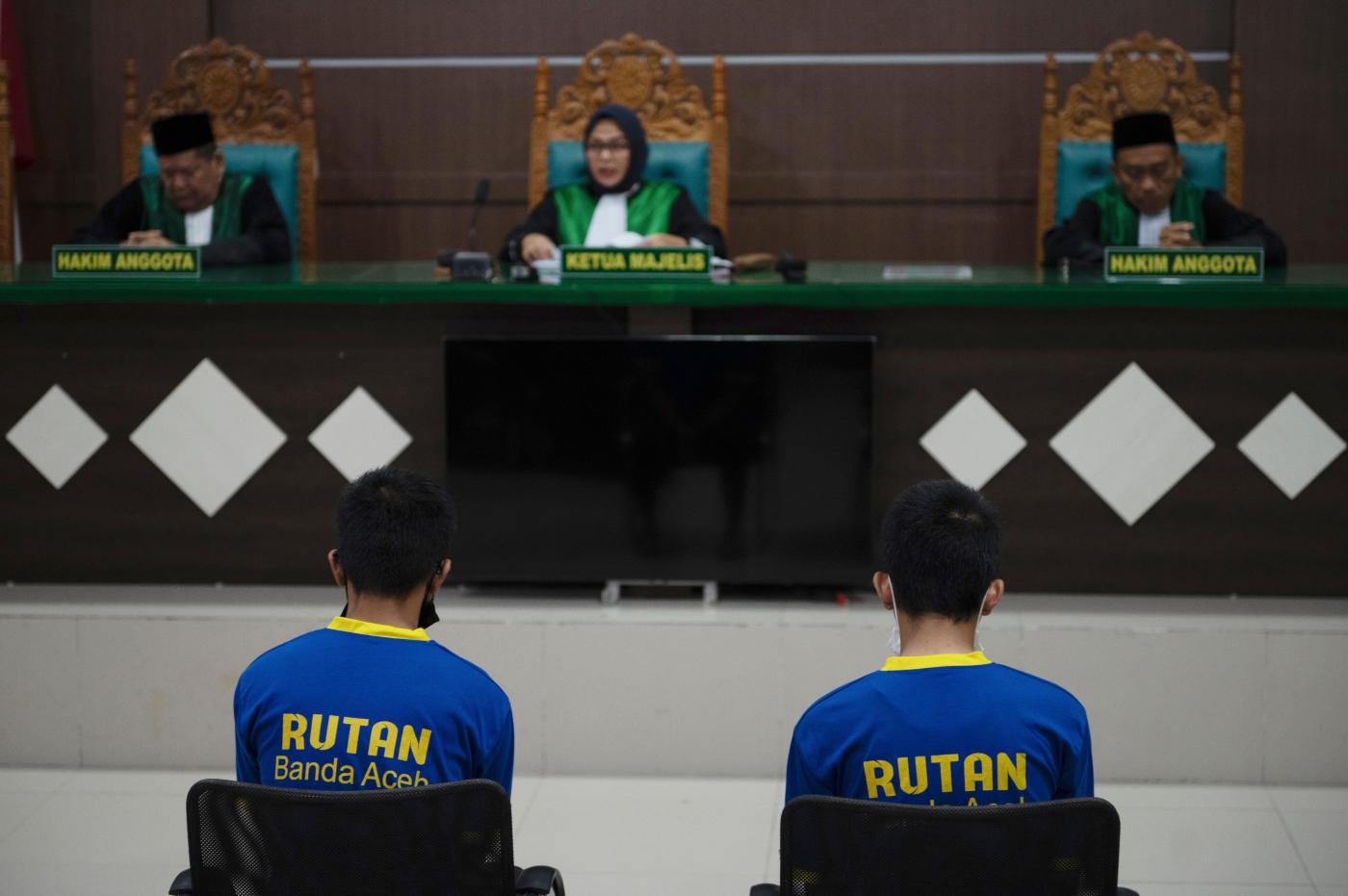
BANDA ACEH, Indonesia (AP) — An Islamic Shariah court in Indonesia’s conservative Aceh province on Monday sentenced two men to public caning for having gay sex.

Related Articles

World News |


Trump’s abrupt change of US policy on Ukraine raises questions about Taiwan support

World News |


UN rejects US resolution urging an end to the war in Ukraine without noting Russian aggression

World News |


The biggest takeaways from Germany’s election, which will bring change to the EU’s leading power

World News |


Trump meets with French President Macron as uncertainty grows about US ties to Europe and Ukraine

World News |


Western leaders visit Kyiv and pledge military support against Russia on the war’s 3rd anniversary

The couple, aged 24 and 18, were arrested on Nov. 7, after neighborhood vigilantes in the provincial capital, Banda Aceh, suspected them of being gay and broke into their rented room to catch them naked and hugging each other.

The lead judge said that the two college students were “legally and convincingly” proven to have had gay sex and would receive 85 and 80 strokes respectively.

“During the trial it was proven that the defendants committed illicit acts, including kissing and having sex.“ said the judge, Sakwanah, who goes by a single name like many Indonesians. ”As Muslims, the defendants should uphold the Shariah law that prevails in Aceh,” she added.

She said the three-judge panel decided against imposing the maximum sentence of 100 lashes because the men were outstanding students who were polite in court, cooperated with authorities and had no previous convictions.

Prosecutors previously demanded each get 80 strokes, but the judges decided on a harsher punishment for the older man because they believed that he was the one who had encouraged and provided a place for sexual relations.

Both prosecutors and the lawyers for the two men said they accepted the sentence and will not appeal.

Aceh is considered more devout than other areas of Muslim-majority Indonesia and is the only province allowed to observe a version of Islamic Shariah law.

Indonesia’s secular central government granted Aceh the right to implement Islamic Shariah law in 2006 as part of a peace deal to end a separatist war. A religious police and court system have been established, and the new law is a significant strengthening of Shariah in the region. Each year since then, more than 100 people have been publicly caned.

Aceh implemented an expansion of Islamic bylaws and criminal code in 2015 that extended Shariah law to the province’s non-Muslims, who account for about 1% of the population, and allows up to 100 lashes for morality offenses including gay sex and sex between unmarried people. This will be the third time that Aceh has caned people for homosexuality.

Caning is also a punishment in Aceh for gambling, drinking alcohol, women who wear tight clothes and men who skip Friday prayers.

Human rights groups have criticized the law, saying it violates international treaties signed by Indonesia protecting the rights of minorities.

Indonesia’s national criminal code doesn’t regulate homosexuality, and the central government doesn’t have the power to strike down Shariah law in Aceh. However, an earlier version of the law that called for people to be stoned to death for adultery was dropped because of pressure from the central government.

Associated Press writer Niniek Karmini in Jakarta, Indonesia, contributed to this report.

Apple announces $500 billion investment in US amid tariff threats that could affect the iPhone

posted in: News | 0

Associated Press

NEW YORK (AP) — Apple announced Monday that it plans to invest more than $500 billion in the United States over the next four years, including plans to hire 20,000 people and build a new server factory in Texas.

Related Articles

Business |


Fired federal workers hunt for new jobs but struggle to replace their old ones

Business |


Starbucks lays off 1,100 corporate employees as coffee chain streamlines

Business |


Business People: 3M CEO Bill Brown named chairman, amid other board moves

Business |


Musk’s cost-cutting team is laying off workers at the auto safety agency overseeing his car company

Business |


Working Strategies: Weighing the buyout offer Part 2, personal considerations

The move comes just days after President Donald Trump said Apple CEO Tim Cook promised him that the tech giant’s manufacturing would shift from Mexico to the U.S. Trump noted the company was doing so to avoid paying tariffs. That pledge, coupled with Monday’s investment commitment, came as Trump continues to threaten to impose tariffs that could drive up the cost of iPhones made in China.

“We are bullish on the future of American innovation, and we’re proud to build on our long-standing U.S. investments with this $500 billion commitment to our country’s future,” Cook said in a company blog post.

Apple outlined several concrete moves in its announcement, the most significant of which is the construction of a new factory in Houston — slated to open in 2026 — that will produce servers to power Apple Intelligence, its suite of AI features. The company claims this factory will create “thousands of jobs.”

The announcement is similar to one Apple made in early 2018 — during the first Trump administration — that promised to create 20,000 new jobs as part of a $350 billion spend in the U.S. Trump was also mulling a tariff then that could have affected iPhones at the time, but he didn’t end up targeting those devices during his first administration.

Trump’s Justice Department enforcer is no stranger to complaints about his conduct

posted in: News | 0

By JOSHUA GOODMAN, JIM MUSTIAN and ERIC TUCKER

WASHINGTON (AP) — A group of Manhattan criminal defense attorneys was so concerned about prosecutor Emil Bove’s professionalism that they banded together to send an email to his bosses.

One lawyer complained in the 2018 email that Bove was “completely reckless and out of control” in how he handled his cases. Another, upset about Bove’s rudeness and power plays, said he needed “adult supervision.” A third, a top federal public defender in the city, said “he cannot be bothered to treat lesser mortals with respect or empathy.”

Bove, then a hard-charging prosecutor in the U.S. Attorney’s Office for the Southern District of New York, was hardly chastened by the complaints.

Instead, he printed the email and pinned it on a cork board in his office for others to see, according to a person who worked with Bove. The person, who spoke on condition of anonymity to candidly discuss a former colleague, said Bove considered the email to be a badge of honor.

Bove’s near decade as a prosecutor — a time in which he tackled high-profile cases amid complaints about his polarizing behavior — provides clues as to how he views his current role as President Donald Trump’s chief enforcer at the Justice Department. In just a month as the department’s acting No. 2 official, the little-known Bove has plowed through norms and niceties, whether scolding FBI leadership for “insubordination” in refusing his request to hand over the names of agents who investigated the January 2021 assault on the U.S. Capitol or forcing out attorneys who worked those cases.

Earlier this month, he pressured former colleagues to drop charges against New York City’s mayor for reasons unrelated to the strength of the case, upending decades of Justice Department norms.

The moves have spurred intense criticism from legal scholars and former prosecutors. They worry that Bove, who represented Trump in federal and state criminal prosecutions, is settling scores for the president, not impartially running the Justice Department. Brushing aside such concerns, Bove has sought to aggressively implement Trump’s agenda in a way that is not at all surprising to many who knew him when he was litigating drug and terrorism cases.

“In my experience litigating against him, what he enjoyed most as a prosecutor was wielding power — the single worst possible trait for a public servant,” said Christine Chung, a former federal prosecutor who as a defense attorney has squared off against Bove. “But people won’t speak against him publicly because he’s also vindictive, as he is now making abundantly clear.”

The Justice Department declined to comment in response to an AP request to interview Bove along with a detailed list of questions about his past conduct.

“He’s doing the job that Trump got elected to do,” said Christopher Kise, who got to know Bove when they worked together on Trump’s legal defense team. “You have to let folks know you’re serious about taking control. The process can sometimes get messy but if you’re going to bake a cake, you’ve got to break some eggs.”

Kise added he was surprised by the portrayal of Bove by former colleagues as a villain bent on enforcing Trump’s agenda at any cost.

“He’s exceptionally intelligent,” Kise said, “and respectful of differing viewpoints.”

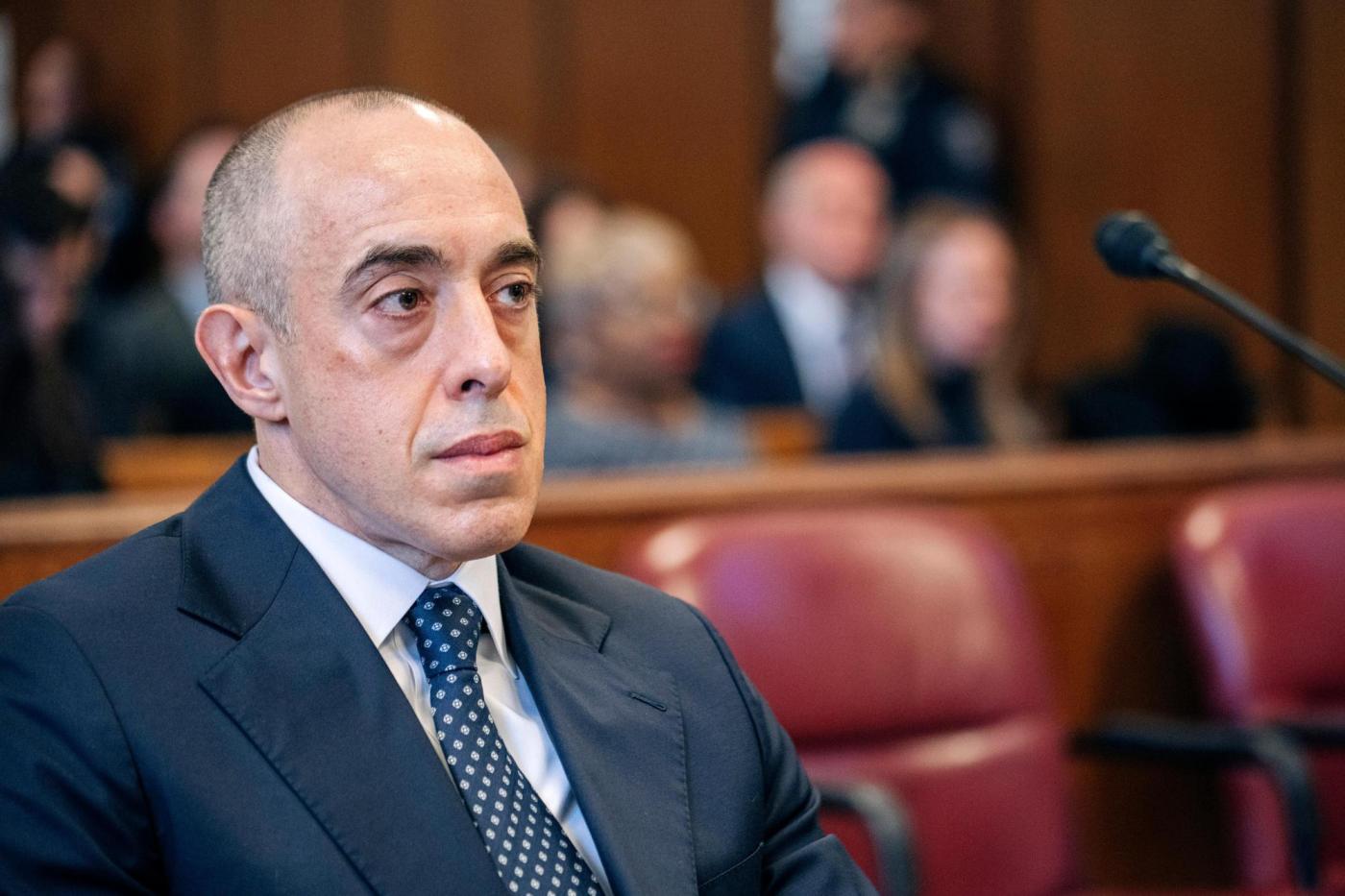
FILE – Attorney Emil Bove sits on the day of a sentencing hearing in the criminal case in which President-elect Donald Trump was convicted in 2024 on charges involving hush money paid to a porn star, outside of New York Criminal Court in Manhattan in New York City, Jan. 10, 2025. (Brendan McDermid, Pool Photo via AP, File)

Turmoil at the Justice Department

As acting deputy attorney general, Bove has been instrumental in leading the effort to reshape the FBI and Justice Department, moving to identify agents involved in investigations of the Capitol riot and making clear to prosecutors his expectation that they follow his orders.

On Feb. 14, for instance, he convened a call with prosecutors in the Justice Department’s public integrity section and gave them an hour to pick two people to file the motion to dismiss charges against New York City Mayor Eric Adams, even though other prosecutors had already resigned over the directive to toss the case.

Particularly startling was his order for the FBI to turn over a list of thousands of agents who participated in Jan. 6 investigations, a request seen by some in the bureau as a precursor to a purge.

The scrutiny of career FBI agents is highly unusual given that rank-and-file agents do not select their cases.

Related Articles

National Politics |


Trump’s abrupt change of US policy on Ukraine raises questions about Taiwan support

National Politics |


The young techies behind DOGE are a lightning rod for criticism but also a youth magnet for the GOP

National Politics |


FDA moves to rehire medical device staffers fired only days earlier

National Politics |


Judge blocks 2 federal agencies from disclosing personal records to Trump adviser Musk’s DOGE

National Politics |


Federal workers sue over Elon Musk’s threat to fire them if they don’t explain their accomplishments

The attack on the Capitol left more than 100 police officers injured as the angry mob of Trump supporters — some armed with poles, bats and bear spray — overwhelmed law enforcement, shattered windows and sent lawmakers and aides running into hiding. Trump has spent the better part of four years downplaying the seriousness of the attack and blaming federal authorities for cracking down too harshly on his supporters.

Bove has embraced that view. In a letter ousting more than a half-dozen top FBI executives on Jan. 31, Bove wrote that officials needed to clean house because the FBI had “actively participated in what the president appropriately described as a ‘grave national injustice’ that has been perpetrated upon the American people.”

His actions, particularly his aggressive attacks on the FBI, have left former colleagues befuddled.

“It’s so not like the Emil that I knew,” said Chris O’Leary, a retired FBI agent who served as a counterterrorism supervisor in New York City and knew Bove as an effective prosecutor and “a good partner.” O’Leary noted that Bove was actively involved in Jan. 6-related investigations in the New York area and never indicated any concerns about the way the inquiries were handled.

O’Leary added: “It’s almost like Dr. Jekyll and Mr. Hyde.”

It is not clear how much longer Bove will serve in the role of acting deputy attorney general. Trump has nominated Todd Blanche, another one of his attorneys and a former federal prosecutor, for that post. If Blanche is confirmed by the Senate – as is expected – Bove will become Blanche’s top adviser, serving as the principal associate deputy attorney general. It is among the most powerful jobs in the Justice Department.

Star Prosecutor

From his college days as captain of the lacrosse team at the University at Albany, Bove stood out for his sharp intellect and grueling work ethic, according to interviews with those who know him.

The law runs in Bove’s family. His father was a prosecutor in New York state. After graduating from Georgetown University law school, Bove clerked for two federal judges appointed by President George W. Bush, a Republican. He then spent nine years at the U.S. Attorney’s Office in Manhattan where he specialized in prosecuting drug kingpins and alleged terrorists.

He spearheaded the indictment of Venezuela’s president, Nicolás Maduro, on drug trafficking charges as well as the brother of Honduras’ president. And he successfully prosecuted a Hezbollah operative who plotted attacks in New York.

In bringing such cases, however, Bove irked fellow prosecutors and defense attorneys.

The AP spoke with 11 defense attorneys who raised questions about Bove’s aggressive tactics and behavior. A former Justice Department colleague recalled Bove trying to bigfoot other districts to take over high-profile cases. And a defense attorney said he watched in shock as Bove yelled at his client, a drug trafficker from Latin America, who didn’t give him the answers he wanted even though he was cooperating with the U.S. government in a major narcotics investigation.

Most of the attorneys spoke on the condition of anonymity because they feared retaliation for speaking out.

The complaints culminated in March 2018. That’s when the head of the federal public defender’s office in Manhattan collected criticism about Bove from eight defense attorneys. He compiled the critiques and forwarded the insights in an email to two top officials in the U.S. Attorney’s Office, according to people familiar with the missive who weren’t authorized to discuss the matter and spoke on the condition of anonymity.

“He’s a real, recurrent problem, and he’s not representing the office in the way that I think you would want it represented,” David Patton, the public defender at the time, wrote in the email, which was reviewed by The Associated Press. Patton did not respond to a request for an interview.

About 18 months after the email was sent, Bove was promoted to be co-chief of the office’s national security and international narcotics unit. In that role, he oversaw the indictment of Maduro, who was accused of heading a cartel of high-ranking security officials that were trying to flood the U.S. with cocaine. Maduro – who in January was sworn in for a third term – remains the target of a $15 million U.S. bounty. He has dismissed the criminal case as part of an ongoing attempt by Washington to remove him from office.

Prosecutorial misconduct

By 2020, a team of prosecutors Bove led was fending off allegations of having engaged in what a judge described as prosecutorial misconduct. The actions came in the prosecution of an Iranian banker accused of violating U.S. sanctions. At trial, attorneys for Ali Sadr Hashemi Nejad alleged prosecutors had failed to hand over evidence they considered beneficial to their client.

U.S. District Court Judge Alison Nathan pushed prosecutors for answers. Bove, as a supervisor of the unit, was involved in trying to blunt the fallout, according to hundreds of pages of emails and text messages between prosecutors Nathan ordered released in 2021 at the request of the AP over Bove’s objections.

In a Sunday night text exchange with his co-chief after being admonished by Nathan in court, Bove acknowledged his prosecutors had told a “flat lie” to the judge. He also vowed to “smash” the Iranian defendant, made a lewd comment about one of his attorneys and jokingly told a colleague that “we will get cocaine for you” so she could pull an all-nighter to repair some of the damage.

While Nathan did not find Bove’s team had intentionally withheld documents, the judge nevertheless determined there had been “prosecutorial misconduct.” She found that prosecutors had engaged in a “deliberate attempt to obscure” the truth and sought to “bury” a potentially exculpatory document. “The disclosure failures and misrepresentations in this case,” she wrote in a 2021 opinion, “represent grave derelictions of prosecutorial responsibility.”

The judge tossed the conviction and dismissed the charges. She asked the Justice Department to launch an investigation of the prosecutors. That probe echoed Nathan’s conclusion, finding that prosecutors’ actions were “flawed” but not intentional or reckless, according to an anonymized summary of the investigation published on the Justice Department’s website. A person familiar with the probe confirmed the summary referred to the Sadr case.

Bove left the government in late 2021 and became a defense attorney. By 2023, he had joined Trump’s legal team.

Contact AP’s global investigative team at Investigative@ap.org or https://www.ap.org/tips/