With the Gaza ceasefire in limbo, Israel tries to impose an alternative plan on Hamas

posted in: All news | 0

By JOSEPH KRAUSS, Associated Press

Israel this week introduced what it said was a new U.S. ceasefire plan — different from the one it agreed to in January — and is trying to force Hamas to accept it by imposing a siege on the Gaza Strip.

Prime Minister Benjamin Netanyahu referred to it as the “Witkoff proposal,” saying it came from U.S. President Donald Trump’s Mideast envoy, Steve Witkoff. But the White House has yet to confirm that, saying only that it supports whatever action Israel takes.

Netanyahu’s remarks came a day after the first phase of the negotiated ceasefire ended, with no clarity on what would come next since the agreement’s second phase has not yet been hammered out.

The new plan would require Hamas to release half its remaining hostages — the group’s main bargaining chip — in exchange for a ceasefire extension and a promise to negotiate a lasting truce. Israel made no mention of releasing more Palestinian prisoners — a key component of the first phase.

Hamas has accused Israel of trying to sabotage the existing agreement, which called for the two sides to negotiate the return of the remaining hostages in exchange for more Palestinian prisoners, a full Israeli withdrawal from Gaza and a lasting ceasefire. But no substantive negotiations have been held.

On Sunday, Israel halted all food, fuel, medicine and other supplies to Gaza’s population of some 2 million people and vowed “additional consequences” if Hamas did not embrace the new proposal.

Arab leaders are meanwhile finalizing a separate plan for postwar Gaza to counter Trump’s suggestion that its population be relocated so it can be transformed into a tourist destination.

But all bets are off if the war resumes.

The existing agreement is in limbo

The ceasefire reached in January, after more than a year of negotiations mediated by the United States, Egypt and Qatar, laid out a three-phase plan to return all the hostages taken by Hamas on Oct. 7, 2023, and ending the war triggered by the terrorist attack.

Hamas killed some 1,200 people that day, mostly civilians, and took 251 hostage. More than 100 were released in an earlier ceasefire. Israeli forces rescued eight and recovered dozens of bodies before the current ceasefire took hold.

Palestinians sit at a large table surrounded by the rubble of destroyed homes and buildings as they gather for iftar, the fast-breaking meal, on the first day of Ramadan in Rafah, southern Gaza Strip, Saturday, March 1, 2025 (AP Photo/Abdel Kareem Hana)

During the first, six-week phase, Hamas released 25 living Israeli hostages and the bodies of eight more in exchange for nearly 2,000 Palestinian prisoners. Israeli forces withdrew from most of Gaza and allowed an influx of desperately needed humanitarian aid. Each side accused the other of violations, but the deal held.

Phase 2 was always going to be far more difficult because it would force Israel to choose between securing the return the hostages and annihilating Hamas — two of Netanyahu’s main war goals.

Hamas, which remains in control of Gaza, has said it will only release the remaining hostages if Israel ends the war. But that would leave the group intact and with major influence over the territory, even if it hands over formal power to other Palestinians, as it says it is willing to do.

The new plan favors Israel

Hamas still has 59 hostages, 35 of whom are believed to be dead. Under the so-called Witkoff plan, it would release half the hostages on the first day — apparently without getting anything new in return.

The sides would then have around six weeks — through the Muslim holy month of Ramadan and the Jewish Passover holiday ending April 20 — to negotiate a permanent ceasefire and the return of the remaining hostages.

But with fewer hostages, Hamas’ hand would be weakened, and Israel and the United States are already speaking about new conditions — like the disarmament of Hamas or the exile of its leadership — that were not part of the original agreement.

A political lifeline for Netanyahu

Netanyahu’s narrow coalition is beholden to far-right allies who want to eliminate Hamas, depopulate Gaza through what they refer to as “voluntary emigration” and rebuild Jewish settlements in the territory. Finance Minister Bezalel Smotrich has threatened to bring down the government if Netanyahu enters Phase 2 of the existing agreement and does not resume the war.

Israelis take part in a protest against Israeli Prime Minister Benjamin Netanyahu’s government, and the release of the hostages held in the Gaza Strip by the Hamas group, in Jerusalem,Sunday, March 2, 2025. (AP Photo/Ohad Zwigenberg)

The new plan would buy Netanyahu six weeks of breathing room and enough time to pass a budget by the end of the month — something he must do to keep his government from automatically falling. If it falls, elections would be held roughly a year and a half ahead of schedule and could see him removed from power.

Opposition parties say they would ensure Netanyahu’s government is not brought down over a deal that returns the rest of the hostages. But that would still weaken him politically.

The American position is unclear

Netanyahu says his government has “fully coordinated” its approach with the Trump administration, which has publicly endorsed Israel’s war goals, including the eradication of Hamas. But Witkoff has not said a word in public about the plan that supposedly bears his name, and U.S. officials did not immediately respond to requests for comment on Monday.

Trump himself has sent mixed signals about Gaza.

As a candidate, he pledged to end wars in the Middle East, and he took credit for pushing the ceasefire agreement past the finish line just before his inauguration.

But he has also expressed revulsion at Hamas’ treatment of the captives and suggested that “all hell” should break loose if they are not immediately returned, while leaving that decision to Israel.

An Arab counterproposal to Trump’s Gaza plan

Trump has also floated the idea of relocating Gaza’s roughly 2 million Palestinians to other countries so the U.S. can rebuild it as a tourist destination. Netanyahu welcomed that proposal, which was universally rejected by Palestinians, Arab countries and human rights experts, who warn it could violate international law.

It’s hard to see how Trump’s Gaza plan would be carried out without Israel resuming the war and launching an even bloodier offensive than the last one, which left much of Gaza in ruins and killed over 48,000 Palestinians, according to local health authorities. They say more than half of those killed were women and children but do not specify how many of the dead were combatants.

Egypt has developed a counterproposal expected to be endorsed at an Arab summit in Cairo on Tuesday. Under its plan, Palestinians would remain in Gaza and relocate to “safe zones” while cities are rebuilt. Hamas would hand over power to a transitional authority of political independents while the international community works to empower the Western-backed Palestinian Authority.

But Israel, which has ruled out any role for the Palestinian Authority in postwar Gaza, is unlikely to accept such a plan. And while Trump has called on Arab countries to come up with their own proposal, it’s unclear whether he would go for it either.

Associated Press writers Tia Goldenberg in Tel Aviv, Israel, and Samy Magdy in Cairo contributed. Follow AP’s war coverage at https://apnews.com/hub/israel-hamas-war
Supreme Court won’t hear a challenge to college programs for reporting bias allegations

posted in: All news | 0

By LINDSAY WHITEHURST, Associated Press

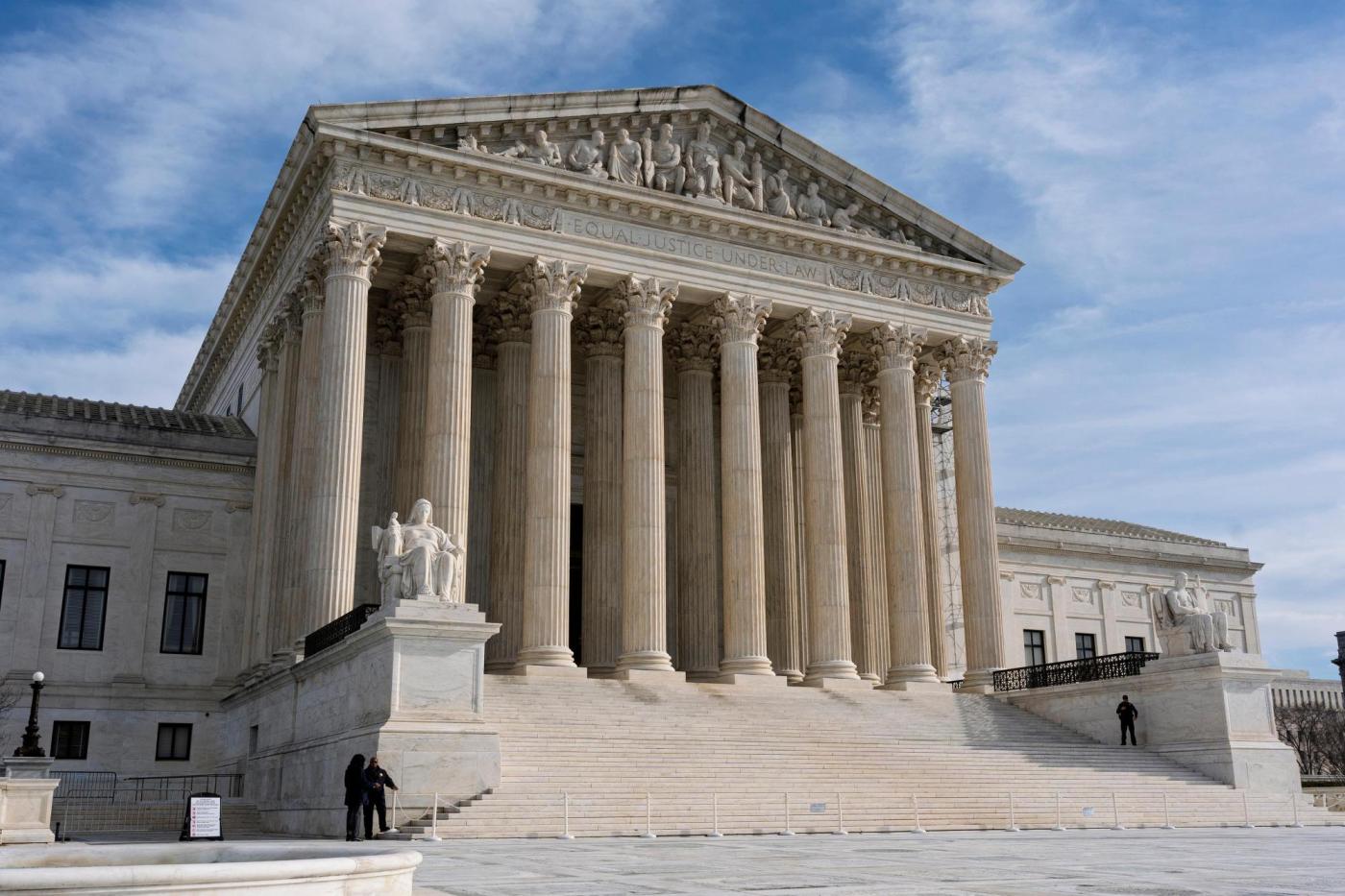
WASHINGTON (AP) — The Supreme Court said Monday it won’t hear a challenge from conservative college students who say their freedom of speech is violated by a university program for reporting allegations of bias.

Two of the nine justices, Samuel Alito and Clarence Thomas, publicly said they would have heard the case.

The students say Indiana University’s bias-response team stifles speech on campus by allowing anonymous reports about things that appear prejudiced or demeaning.

The university says the program is aimed at education and support, and the two-person team doesn’t dole out punishment.

The unnamed students are represented by the group Speech First, which says 450 universities have similar programs. The group has filed multiple similar lawsuits and come to settlements ending programs in Michigan, Texas and Florida.

The high court majority didn’t detail their reasons for declining the case in their brief order handed down Monday, as is typical. Alito noted briefly that he would have heard the case.

Thomas wrote in a dissent that the bias response teams can refer students for possible discipline, and he identified indications they could chill students’ free speech.

“Given the number of schools with bias response teams, this Court eventually will need to resolve the split over a student’s right to challenge such programs,” Thomas wrote.

Ukraine’s Zelenskyy says end of war with Russia is ‘very, very far away’

posted in: All news | 0

By ILLIA NOVIKOV, Associated Press

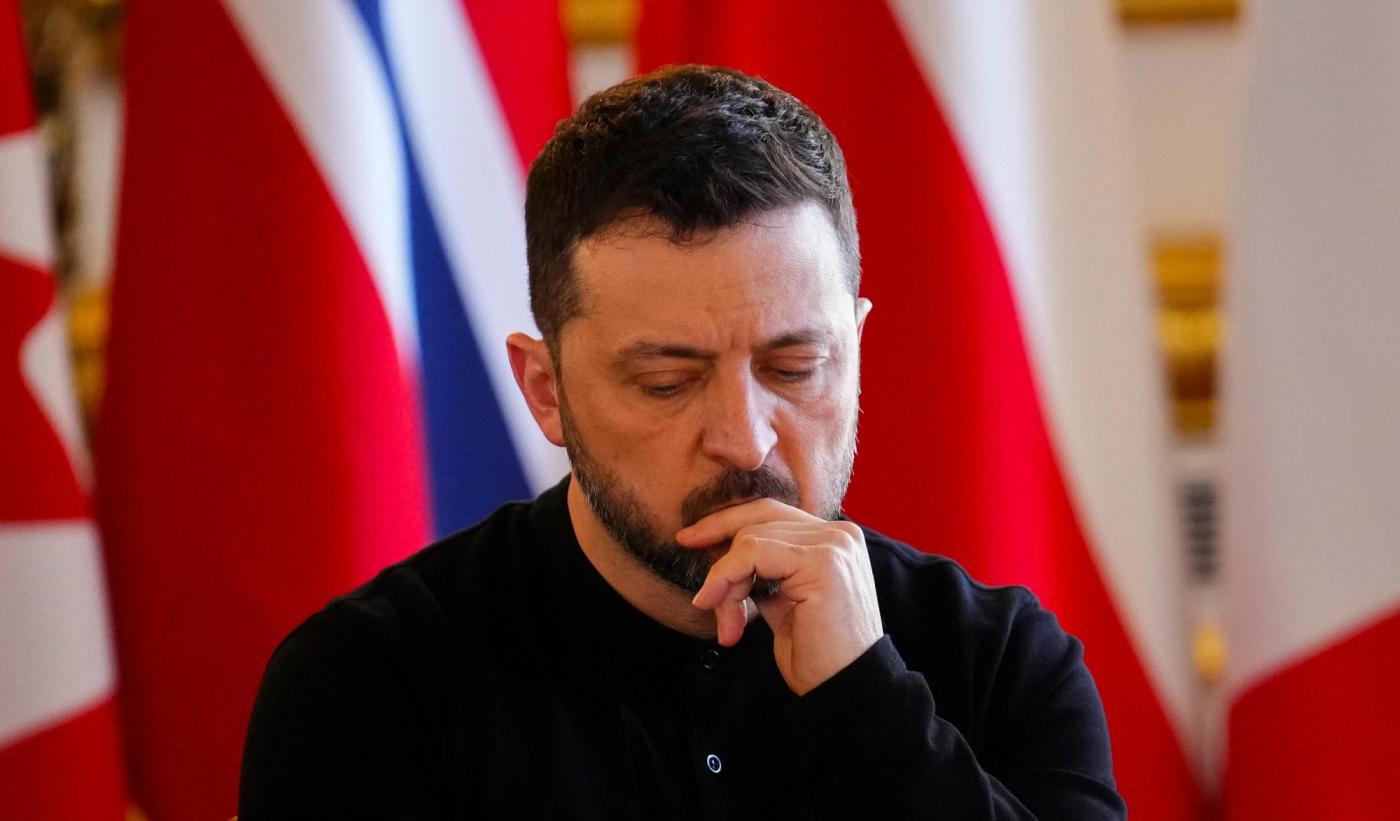
KYIV, Ukraine (AP) — A deal to end the war between Ukraine and Russia “is still very, very far away,” Ukrainian President Volodymyr Zelenskyy said, adding that he expects to keep receiving American support despite his recent fraught relations with U.S. President Donald Trump.

“I think our relationship (with the U.S.) will continue, because it’s more than an occasional relationship,” Zelenskyy said late Sunday, referring to Washington’s support for the past three years of war.

“I believe that Ukraine has a strong enough partnership with the United States of America” to keep aid flowing, he said at a briefing in Ukrainian before leaving London.

Zelenskyy publicly was upbeat despite recent diplomatic upheaval between Western countries that have been helping Ukraine with military hardware and financial aid. The turn of events is unwelcome for Ukraine, whose understrength army is having a hard time keep bigger Russian forces at bay.

The Ukrainian leader was in London to attend U.K. Prime Minister Keir Starmer’s effort to rally his European counterparts around continuing — and likely much increased — support for Ukraine from the continent amid political uncertainty in the U.S., and Trump’s overtures toward Russian President Vladimir Putin.

Europe is suspicious of Trump’s motives and strategy. Friedrich Merz, Germany’s likely next leader after the recent election, said Monday that he didn’t think last Friday’s Oval Office blow-up was spontaneous.

He said that he had watched the scene repeatedly. “My assessment is that it wasn’t a spontaneous reaction to interventions by Zelenskyy, but apparently an induced escalation in this meeting in the Oval Office,” Merz said.

He said that he was “somewhat astonished by the mutual tone,” but there has been “a certain continuity to what we are seeing from Washington at the moment” in recent weeks.

“I would advocate for us preparing to have to do a great, great deal more for our own security in the coming years and decades,” he said.

Even so, Merz said that he wanted to keep the trans-Atlantic relationship alive.

“I would also advocate doing everything to keep the Americans in Europe,” he said.

Geir Moulson contributed to this report from Berlin. Follow AP’s coverage of the war in Ukraine at https://apnews.com/hub/russia-ukraine

Senate will vote on confirming Linda McMahon to lead an education agency Trump has vowed to close

posted in: All news | 0

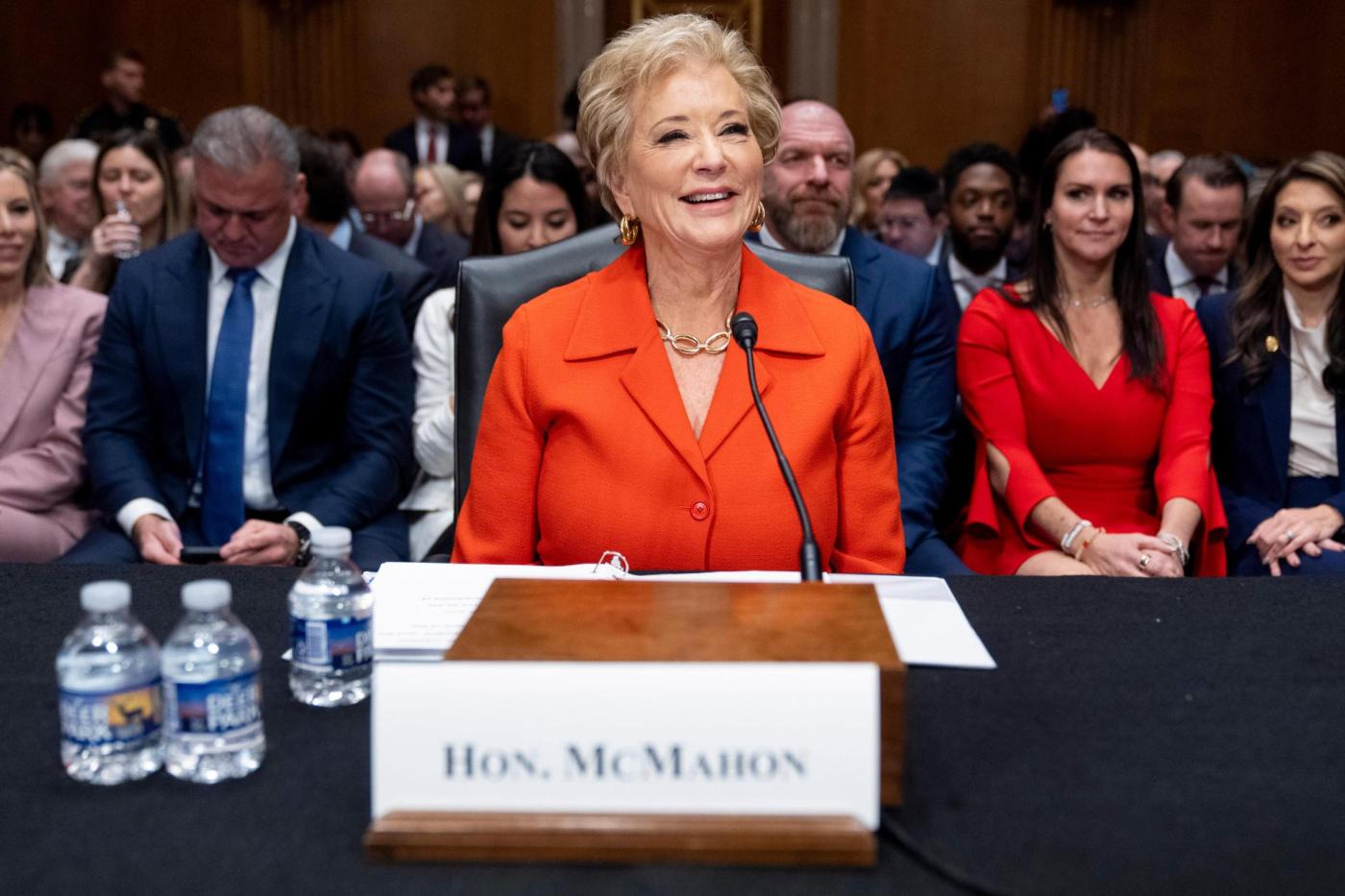
WASHINGTON (AP) — The Senate is voting Monday on whether to confirm former wrestling executive Linda McMahon as the nation’s education chief, a role that would place her atop a department that President Donald Trump has vilified and vowed to dismantle.

McMahon would face the competing tasks of winding down the Education Department while also escalating efforts to achieve Trump’s agenda. Already the Republican president has signed sweeping orders to rid America’s schools of diversity programs and accommodations for transgender students while also calling for expanded school choice programs.

At the same time, Trump has promised to shut down the department and said he wants McMahon “to put herself out of a job.”

Related Articles

National Politics |


How to watch the first joint address to Congress of Trump’s second term

National Politics |


Trump’s next first speech to Congress is bound to have little resemblance to his last first one

National Politics |


Lewis M. Rambo: A personal reflection on the dismantling of DEI initiatives

National Politics |


James Stavridis: Lacking coherent rationale, sudden firings of senior officers will reduce security

National Politics |


Other voices: The certainty of arrest and return is a huge changing point

A billionaire and former CEO of World Wrestling Entertainment, McMahon, 76, is an unconventional pick for the role. She spent a year on Connecticut’s state board of education and is a longtime trustee at Sacred Heart University but otherwise has little traditional education leadership.

McMahon’s supporters see her as a skilled executive who will reform a department that Republicans say has failed to improve American education. Opponents say she’s unqualified and fear her budget cuts will be felt by students nationwide.

At her confirmation hearing, McMahon distanced herself from Trump’s blistering rhetoric. She said the goal is to make the Education Department “operate more efficiently,” not to defund programs.

She acknowledged that only Congress has the power to close the department, and she pledged to preserve Title I money for low-income schools, Pell grants for low-income college students, and the Public Service Loan Forgiveness program. Yet she suggested some operations could move to other departments, saying Health and Human Services might be better suited to enforce disability rights laws.

Weeks before McMahon’s confirmation hearing, the White House was considering an executive order that would direct the education secretary to cut the agency as much as legally possible while asking Congress to shut it down completely. Some of McMahon’s allies pressed the White House to hold the order until after her confirmation to avoid potential backlash.

Created by Congress in 1979, the Education Department’s primary role is to disburse money to the nation’s schools and colleges. It sends billions of dollars a year to K-12 school and oversees a $1.6 trillion federal student loan portfolio.

Trump argues the department has been overtaken by liberals who press their ideology on America’s schools. During his campaign, he vowed to close it and grant its authority to states.

Schools and states already wield significantly greater authority over education than the federal government, which is barred from influencing curriculum. Federal money makes up roughly 14% of public school budgets.

Already, the Trump administration has started overhauling much of the department’s work.

Trump adviser Elon Musk’s Department of Government Efficiency has cut dozens of contracts it dismissed as “woke” and wasteful. It gutted the Institute of Education Sciences, which gathers data on the nation’s academic progress, and the administration has fired or suspended scores of employees.

Some of the cuts have halted work that’s ordered under federal law. At her hearing, McMahon said the agency will spend money that’s directed by Congress, and she played down DOGE’s cuts as merely an audit.

McMahon is a longtime Trump ally who left WWE in 2009 to launch a political career, running unsuccessfully twice for the U.S. Senate. She has given millions of dollars to Trump’s campaigns and served as leader of the Small Business Administration during his first term.

The Associated Press’ education coverage receives financial support from multiple private foundations. The AP is solely responsible for all content. Find the AP’s standards for working with philanthropies, a list of supporters and funded coverage areas at AP.org.