Julian Ocampo’s family opened their first Mexican-American restaurant in Minneapolis in 2003, following it up over the years with a chain of Los Ocampo restaurants and bars, or sister eateries, including Mr. Taco in Maplewood and Machete Cocina Mexicana in Woodbury.
With customers and workers alike fearful of being detained by federal Immigration and Customs Enforcement agents, all eight sites went on hiatus on Jan. 7, closing their doors due to plummeting sales and a lack of staffing.
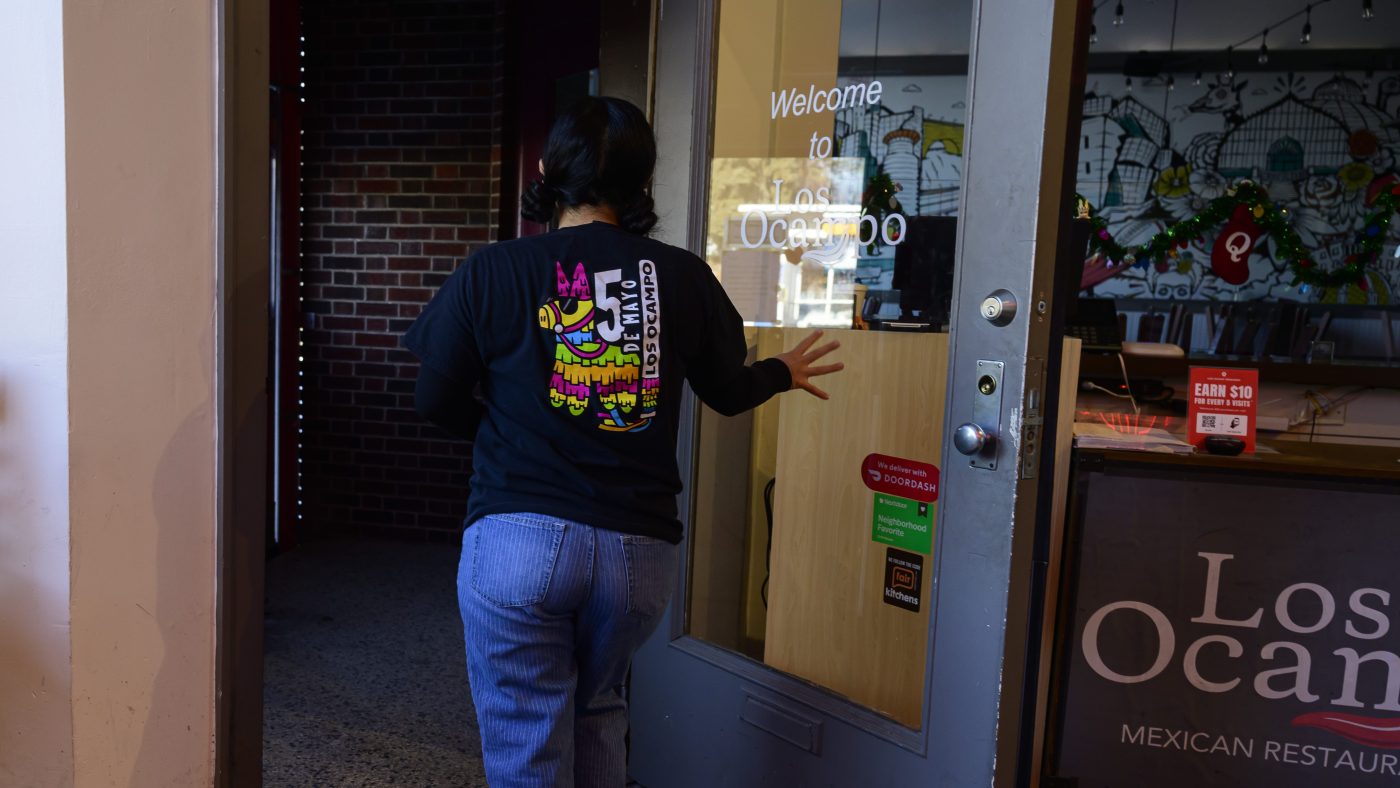
A worker sets up the kitchen at the Los Ocampo restaurant in St. Paul on Tuesday, Feb. 3, 2026. (John Autey / Pioneer Press)
Five of the family’s eateries will serve food again by the end of the week, though some will still offer take-out only and keep their doors locked to screen customers. The Los Ocampo on Arcade Street on St. Paul’s East Side, which is situated in an area heavily monitored by ICE, will remain shuttered.
“Right now we’re in survival mode,” said Ocampo on Monday, predicting smaller mom-and-pop Latin businesses will go bankrupt. “They’re hurting bad.”
As she visits with shop keepers at Hmong shopping centers, restaurant owners in the Latin and ethnic Karen communities, and immigrant grocers, St. Paul Mayor Kaohly Her hears the same story again and again. Even naturalized U.S. citizens are afraid to leave their homes, fearful that they won’t have the language skills to avoid detainment by federal agents.
As a result, many immigrant businesses have reported losing 60% or more of their sales. Some have already closed their doors, scared of being raided by federal agents, or keep their shops locked so they can screen every visitor at the door.
“Closing a business happens very quickly, but starting one up can take years, which means this is going to impact us,” Her said. “Even if (ICE) were out of here in another couple of months, this is going to have a lasting economic impact.”
Notes of support from community members decorate the windows of the Los Ocampo restaurant in St. Paul on Tuesday, Feb. 3, 2026. (John Autey / Pioneer Press)
Shop Local, Stand Together campaign
With rents and utilities coming due but little income in sight, some restaurants, grocers, hair salons and other immigrant-owned businesses have turned to the online fundraising platform GoFundMe.com to appeal to the public for help.
Taqueria El Charrito, which closed its doors in early January, is “a beloved, family-owned restaurant on the West Side of St. Paul that has served as a gathering place for the local Latino community,” reads a GoFundMe solicitation created by a longtime customer. “It has provided not only food, but jobs, stability, and cultural connection.”
“For many of the workers at El Charrito, missing even one paycheck can mean falling behind on rent, losing access to food, or facing housing insecurity,” reads the posting, which is being shared on Facebook. “The financial strain is becoming overwhelming.”
With their workers and personal livelihoods in mind, more than 1,000 chefs and restaurant owners have signed an open letter to Congress pleading for an end to Operation Metro Surge and a reform of ICE operations. That letter was delivered to the Senate last Thursday by U.S. Sen. Tina Smith.
‘Shop Local’
Alarmed by plummeting sales at neighborhood shops and immigrant-owned businesses during Operation Metro Surge, the St. Paul mayor recently joined leaders of the Minnesota Department of Employment and Economic and Development and the Minneapolis Foundation to promote the governor’s “Shop Local, Stand Together” campaign.
Gov. Tim Walz has declared February “Shop Local” month in hopes of spurring customers who feel safe doing so to spend their dollars at locally-owned businesses, including ethnic grocers and restaurants that have lost customers nervous about leaving home.
“Supporting local, small, and immigrant-owned businesses is an act of community support and an investment in the dignity, stability, and vitality of our neighborhoods and local economies,” reads the gubernatorial proclamation, issued toward the end of January.
“Support doesn’t have to be complicated; it can start with where you shop and eat,” it goes on to say. “Simply showing up and making a purchase is significant, and people in Minnesota who feel safe doing so can play a meaningful role in strengthening their communities by prioritizing local businesses … and encouraging others to do the same.”
Economic Response Fund
Along a similar vein, the Minneapolis Foundation has launched an Economic Response Fund, readying an initial $4 million for grants to support impacted small businesses in St. Paul and Minneapolis with payroll, rent, staffing and inventory needs.
The fund, which may grow in time, is backed by 28 Minnesota companies, including Allianz, Allina Health, CHS, Ecolab, General Mills, Land O’ Lakes, Securian Financial, Target and Xcel Energy.
Grants will be distributed through community organizations, with further details soon to be announced. Business owners interested in learning more can visit the foundation website at minneapolisfoundation.org.
The foundation is asking companies and individuals to contribute to the fund at mplsfdn.org/erf.
Ethnic restaurants, markets
To promote both efforts, Her, DEED Commissioner Matt Varilek and Minneapolis Foundation President and Chief Executive Officer R.T. Rybak met with representatives of the Neighborhood Development Center and a series of ethnic restaurants and markets on Jan. 29 at the Los Ocampo site on Dale Street and University avenue.
Officials were joined by the founders of the Afro Deli restaurants, CentroMex grocery on St. Paul’s East Side, the Mexican restaurant Oro by Nixta in Minneapolis, World Street Kitchen in Minneapolis, La Michoacana desserts and The Perfect Coffee on St. Paul’s Rice Street.
The business owners noted that immigrants are, often by necessity, heavily driven entrepreneurs, leaning on family and ethnic networks to launch small businesses that become the lifeblood of neighborhood business corridors. Without them, entire neighborhoods may suffer.
It wasn’t lost on them that the economic crisis unfolding for ethnic entrepreneurs during Operation Metro Surge is like a localized earthquake that tears some businesses apart while leaving others standing, seemingly oblivious.
The pandemic, and to a lesser extent the racially-tinged riots of 2020, “affected the whole world,” Ocampo said. “It didn’t matter your skin color or your accent. Now, it’s based on skin color and accent.”
For some business owners, there are hints of normalcy on the horizon, at least here and there. On Tuesday, after being out of service for a month, the Los Ocampo near the University of St. Thomas on Marshall Avenue in St. Paul was scheduled to flip its lights back on, the latest in a series of gradual re-openings for the family-run chain.
Still, a hair salon in a property the Ocampo family owns on Lake Street in Minneapolis has yet to welcome back customers, or pay its January rent.
“Every small business on Lake Street that’s a mom-and-pop, those are the ones I think are going to hurt really bad,” Ocampo said.
Related Articles
Fare For All, an affordable pop-up grocery store, ending service to metro
Driver arrested after police say he fatally struck pedestrian in St. Paul
Former leader of St. Paul faith-based nonprofit sentenced to probation for possessing child pornography
St. Paul man gets 7-year prison term for daytime carjacking and armed robbery
Children’s Minnesota to pause some gender health care for minors