
Smart ingredient swaps for healthy fall baking

posted in: News | 0

Trina Krug, MS, CDSP | Associated Press

As fall approaches and the air becomes crisp, it’s the perfect time to indulge in baking. The comforting aroma of freshly baked goods is a seasonal delight but many traditional recipes are laden with sugar, refined flour and unhealthy fats. Health-conscious bakers can enjoy their favorite fall treats without compromising on nutrition by making a few smart ingredient swaps.

Baking with healthier ingredients doesn’t just mean you’re cutting calories or reducing sugar. Swapping out traditional ingredients for healthier alternatives can also cater to various dietary needs. Whether you’re gluten free, lactose intolerant or simply looking to reduce your sugar intake, there are plenty of options that allow you to enjoy baking. Healthy baking can still be delicious and satisfying and it often brings out new and exciting flavors in your favorite recipes.

Nut flour instead of white flour

White flour, a staple in many baking recipes, is highly processed and stripped of most nutrients. Swapping it out for nut flours can significantly boost the nutritional profile and even the taste of your baked goods. Using nut flour not only makes your treats gluten-free but also adds a delightful nutty flavor. Most nut flours are best used with other flours to avoid the wrong texture.

Natural sweeteners over refined sugar

Refined sugar is a common ingredient in baking but offers no nutritional benefits. Natural sweeteners like honey, maple syrup and even coconut sugar are excellent substitutes. Honey and maple syrup not only sweeten your baked goods but also add unique flavors.

When using honey or maple syrup, remember that they are liquid sweeteners. To maintain the right consistency, you may need to slightly reduce the amount of other liquids in your recipe. Generally, you can replace 1 cup of white sugar with 3/4 cup of honey or maple syrup. Coconut sugar, on the other hand, can be used in a 1:1 ratio with white sugar.

Fat alternatives

Butter and oil are essential for adding moisture and richness to baked goods, but sometimes it is fun to experiment with other fats. Healthy alternatives like avocado, Greek yogurt and applesauce can work like a charm.

Greek yogurt adds a tangy flavor, making it a great substitute for butter in cakes and muffins. Applesauce is another fantastic option, keeping baked goods moist and adding a hint of natural sweetness. When substituting fats, use a 1:1 ratio for avocado and Greek yogurt. For applesauce, you can replace half the amount of butter or oil stated in the recipe.

Flours

Instead of using all-purpose or whole wheat flour, consider incorporating gluten-free all-purpose flour or even homemade gluten-free flour made of almond flour, coconut flour, oat fiber and xanthan gum. Oat flour is another great choice, made by grinding oats into a fine powder, which adds a mild flavor and is excellent for cookies and quick bread. It’s best used with other flours to avoid a crumbly texture.

Egg substitutes

Eggs are crucial in baking for binding and leavening, but they can be replaced for those following a vegan diet or with egg allergies or sensitivities. Flaxseeds and chia seeds make excellent egg substitutes. To make a flax egg, mix 1 tablespoon of ground flaxseed with 3 tablespoons of water and let it sit for a few minutes to thicken. Chia eggs are made the same way, using chia seeds instead.

Mashed bananas and applesauce are also effective egg substitutes, adding moisture and sweetness to baked goods. Use 1/4 cup of either mashed bananas or applesauce to replace one egg. Keep in mind that these substitutes work best in recipes where a little extra moisture is beneficial, such as in muffins and cakes.

Spices and flavorings

Enhancing the flavor of your fall baking can be as simple as adding the right spices and extracts. Cinnamon, nutmeg, cloves and ginger are quintessential fall spices that can elevate your baked goods. These spices add warmth and depth to all your treats.

Vanilla and almond extracts can also enhance the flavor of your treats. Opt for pure extracts rather than imitation for the best taste. Vanilla extract adds a sweet, floral note, while almond extract provides a distinct, nutty flavor. Using these flavorings can reduce the need for additional sugar.

Incorporating fruits and vegetables

Fruits and vegetables can add natural sweetness, moisture and nutrients to your baked goods. Pumpkins, sweet potatoes and zucchini are fall favorites that work well in a variety of recipes. Pumpkin puree can replace some of the fat and sugar in recipes and sweet potato puree is similarly versatile and rich in nutrients.

Grated zucchini adds moisture without altering the flavor much, making it perfect for quick breads and muffins. Apples are another excellent choice, whether used as applesauce, chunks or slices. They add natural sweetness and fiber, making your treats healthier and more filling.

Healthy baking tips

In addition to swapping ingredients, adopting healthy baking practices can further enhance the nutritional value of your treats. Reducing sugar gradually can help your taste buds adjust without compromising too much on flavor. Start by cutting back 10-20% of the sugar stated in the recipe.

Portion control is another key aspect of healthy baking. Consider making smaller portions or mini versions of your favorite treats. This way, you can enjoy your baked goods without overindulging. Using smaller baking pans or muffin tins can help with this.

Finally, experiment with new recipes and ingredients. Baking is as much about creativity as it is about precision. Don’t be afraid to try new flour blends, sweeteners or flavor combinations. You might discover a new favorite recipe that’s both delicious and healthy.

Final thoughts

Healthy fall baking doesn’t mean you have to sacrifice flavor or tradition. By making smart ingredient swaps, you can enjoy all the seasonal favorites while boosting the nutritional value of your treats. From nut flours and natural sweeteners to healthy fats and whole grains, these alternatives make it easy to bake healthier without compromising on taste. So, embrace the season and get baking with these nutritious ingredient swaps. Your body and taste buds will thank you.

Trina Krug, MS, CDSP, is a holistic nutritionist, recipe creator and advocate for human health. Her passion for low-carb lifestyles, gluten-free eating and real nutrition education has led to the creation of Trina Krug. She spends her time creating recipes, hanging out with her family on her farm and actively working on her Doctor of Science in Integrative Health specializing in Functional Nutrition.

Landlords cry foul as more states seal eviction records

posted in: News | 0

Bu Robbie Sequeira, Stateline.org

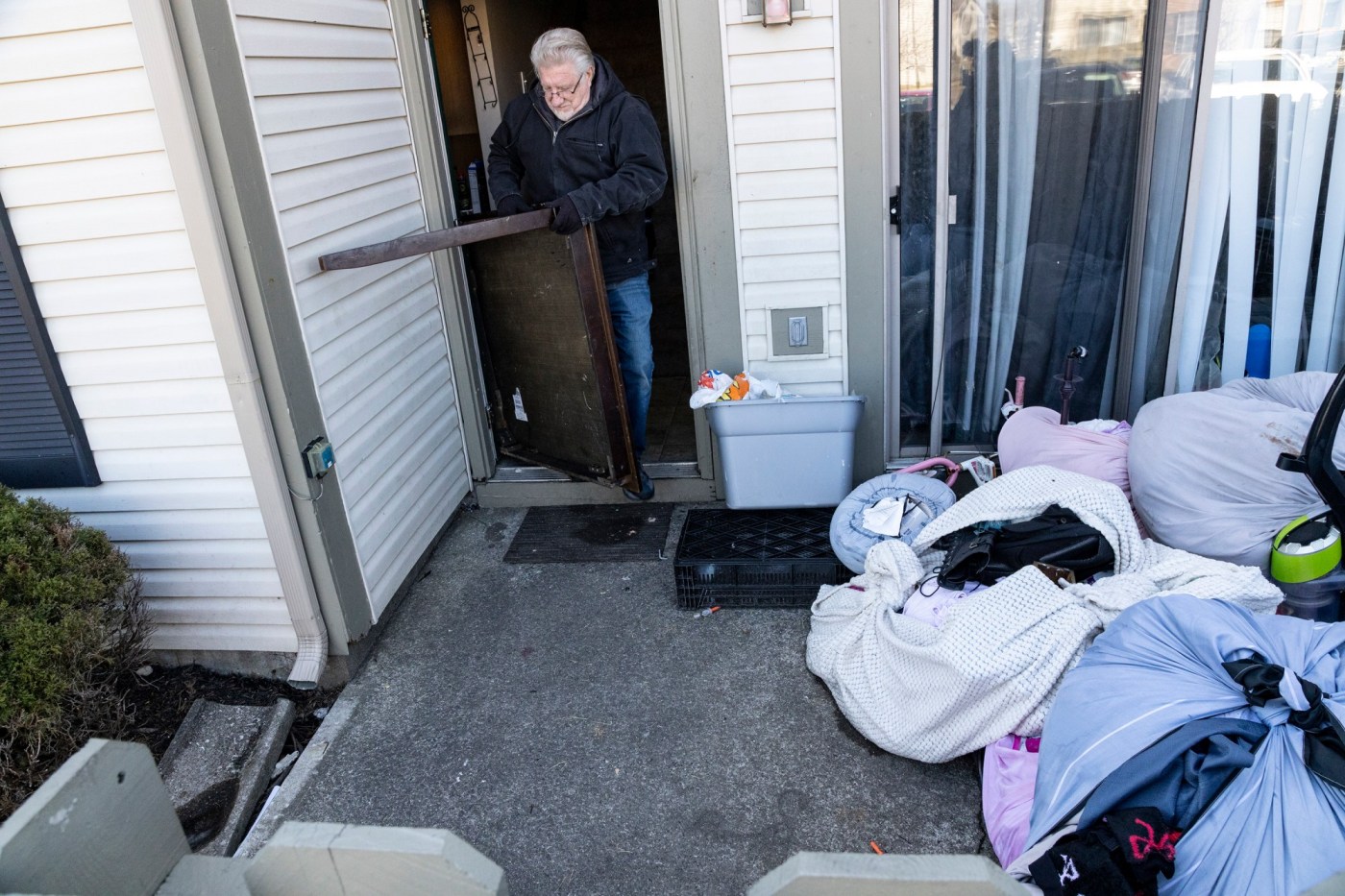
When pandemic-era tenant protections expired, rents immediately soared, and eviction filings surged last year more than 50% over pre-pandemic levels in some U.S. cities.

These filings can cast long shadows. Simply being named in an eviction complaint, regardless of the outcome, can severely limit future housing options and prolong housing insecurity, according to a recent University of Michigan study.

The situation underscores a growing debate across the country: Should eviction records be shielded from public access to offer tenants a cleaner shot at finding another home?

In recent years, more states are saying, “yes — at least in some cases.”

Eviction filings are public court records. Landlords and property owners can buy databases of the records to screen potential tenants.

Property owners argue that sealing data on eviction filings — most of which are for nonpayment of rent — eliminates crucial insights into rental history. Housing advocates, however, warn that any filing can unfairly block renters from future housing because the outcome may not be an eviction.

An eviction filing doesn’t provide enough information to determine a tenant’s ability to honor their next lease, said Katie Fallon, a principal policy associate with the Urban Institute, a research and advocacy think tank focusing on urban policies.

“Given the low quality of this eviction filing data and the lack of outcomes in the filings themselves, it is a very open question of how accurate these filings are and what information they really provide to landlords,” she said.

This year, IdahoMaryland and Massachusetts enacted laws to seal certain eviction records from public scrutiny and from tenant screening companies.

Last year, Connecticut and Rhode Island also enacted laws that allow for the sealing of certain eviction cases. Arizona, meanwhile, enacted a law in 2022 requiring courts to seal eviction records if cases are dismissed, dropped or adjudicated in the tenant’s favor.

Related Articles

National Politics |


Ready or not, election season in the US starts soon. The first ballots will go out in just two weeks

National Politics |


At least 5 Secret Service agents have been placed on modified duty after Trump assassination attempt

National Politics |


With conventions over, a 10-week sprint to the White House begins

National Politics |


Anti-Trump Republicans at DNC offer tips on approaching swing voters

National Politics |


Young Black and Indian women share an identity with Kamala Harris — some are beaming, while others sit at a crossroads with her stance on Gaza

In total, 17 states and Washington, D.C., have measures sealing at least some eviction records, according to PolicyLink, a national research and advocacy group with a focus on housing.

Zafar Shah, assistant director of advocacy for Maryland Legal Aid, said lawmakers are starting to understand how eviction records can prevent tenants from finding another home.

“We have clients that know they will lose their eviction case, but they want us to shield the information so that the next potential housing provider is not going to use it against them,” said Shah.

“That has really been the impetus for shielding and sealing across the country. These filings don’t tell us a lot, but they carry so much weight in the search for housing.”

An eviction filing could be resolved in a number of ways: A case might be dismissed if the landlord and tenant reach an agreement. The judge might rule in favor of the tenant, allowing them to stay in their home. Or the judge could side with the landlord, evicting the tenant.

Regardless of the outcome, the records live on in online court databases.

Third-party tenant screening companies scan court records for eviction cases, then sell the data to landlords to use in their leasing decisions.

Housing advocates say the data is often inaccurate and misleading. In one state — Illinois — less than half of eviction filings led to actual evictions, according to a 2019 review by Housing Action Illinois, an advocacy group.

Alexandra Alvarado, director of education and marketing at the American Apartment Owners Association, a tenant screening provider, told Stateline that the group’s database only displays eviction records with a completed judgment that were filed within the past seven years, which is the time limit set by the federal Fair Credit Reporting Act.

“It can be a monetary or non-monetary judgment, but there must be a judgment. So, if an eviction case is filed, but the parties settled outside of court or the tenant won, then it wouldn’t show up in our reports, even though technically it is public record,” Alvarado said. “Our members are getting evictions that have merit and weren’t erroneously filed.”

A scarlet ‘E’

According to researchers at the Eviction Lab at Princeton University, of the 3.6 million eviction court records in the 12 states they tracked from 2011 to 2015, more than 1 in 5 eviction cases contained little information on the resolution of a case. Ambiguous data can also falsely represent a tenant’s eviction history, affecting both renters and scholarly researchers, according to a 2020 study by the group.

“While many people think an eviction filing is evidence of late rent payment, nonpayment of rent or a violation of the lease terms, this is not necessarily true,” said Fallon, of the Urban Institute. “Filings can include inaccurate data, such as the parties named in the eviction filing and inaccurate name spellings.”

Alvarado, of the American Apartment Owners Association, said landlords have mixed views about laws that allow courts to seal cases that have been dismissed or ruled in a tenant’s favor. What’s more important to landlords, she said, is that their screening process can look back the full seven years for problem evictions.

Laws that limit the lookback period — such as in Oregon, where tenants can request an expungement after five years — affect the tenant screening process more, she said.

The system is problematic, Eviction Lab found in a 2020 study of eviction cases filed between 2012 and 2016 in 39 states. In addition to inaccurate information, Black households are overrepresented in eviction filings, Eviction Lab found, as are women — especially Black and Latina women.

“When landlords say they need to use eviction filings, which we know aren’t the most reliable information, to make housing decisions, we need to push back on that,” said Jasmine Rangel, senior housing associate for PolicyLink.

She and other advocates want eviction court records to be sealed as soon as a landlord files an eviction notice. Otherwise, she said, “third-party services can still scrape that eviction record from online databases and into their tenant screening algorithms.”

Advocates point out that eviction records could be made public later if a judge rules in the landlord’s favor.

But Shuntera Brown, who lost her home in Phoenix in 2021, said in an interview that any eviction record hurts single moms like herself.

Brown, who has three children, has struggled to pay rent even with a full-time job. In December 2020, a bout of COVID-19 caused her to miss work shifts, a paycheck disruption that eventually put her over the edge months later.

“It’s a Scarlet ‘E.’ You have this record, you have this thing on your file of an eviction, but there’s no understanding of the context or circumstances behind it,” Brown said. “I remember pleading with the judge that I’ve usually paid on time and that my kids need a home, but he sided with the landlord in, like, seven minutes, and the eviction immediately was on my credit.”

Sealing the records

State by state, the laws differ on the details: Many states allow for eviction records to be sealed almost immediately if the case was dismissed or dropped, or if the tenant won the case. Other states have a waiting period, often several years, during which the tenant must demonstrate good behavior before a record is sealed.

Under Maryland’s new law, which takes effect in October, courts must shield records within 60 days of a resolution that doesn’t end in a tenant losing possession of their home. The state also will increase the eviction filing fee from $8 to $43.

Maryland landlords filed roughly 400,000 “failure to pay rent” cases in the state’s 2023 fiscal year, according to housing advocates who testified in favor of the new law. In some cases, landlords would file monthly failure to pay rent cases against tenants prematurely and tack on illegal fees on top of the back rent, according to a report from the Maryland-based advocacy group Public Justice Center.

“The low cost and low barrier to entry have driven the massive quantity of filings, with many cases simply being leveraged to get rent money out of tenants quickly,” said Shah, of Maryland Legal Aid. “I think that the court overall has become more receptive to shielding these cases, recognizing that if a case was dismissed or settled, there’s no reason to hold it against the renter.

“This attitude has shifted significantly over the past decade,” he said.

In California and Colorado, as in Maryland, an eviction lawsuit can be automatically sealed as soon as it’s been filed unless the landlord wins the case within 60 days. Indiana and Minnesota require a tenant to formally petition for sealing once a court reaches judgment.

Idaho’s new law shields dismissed eviction cases after three years. And in Massachusetts, tenants can request their case be sealed for a variety of reasons, no matter the outcome, after a period of time ranging from a few months to several years.

In Rhode Island, a tenant can only make a request once every five years.

Researchers at Eviction Lab told Stateline that state laws should still allow data access for scientists. The 2022 eviction-sealing law in Washington, D.C., for example, specifies that records can be unsealed for scholarly, educational, journalistic or governmental purposes.

“There is an important public right to know what is going on in the housing market, and this is one of our data points into the eviction crisis,” said Carl Gershenson, lab director at Eviction Lab. “There is a balance that can be achieved that is in the best interest of tenants and how these filings can be used as datapoints to understand the housing crisis.”

©2024 States Newsroom. Visit at stateline.org. Distributed by Tribune Content Agency, LLC.

Peggy Lynch, called the ‘conscience’ of St. Paul’s parks, dies at 90

posted in: News | 0

Once described as the “conscience” of St. Paul’s parks, Peggy Lynch spent nearly 30 years leading Friends of the Parks and Trails of St. Paul and Ramsey County to push for protection of green space in the city.

Founded by Lynch and others in 1985, Friends of the Parks and Trails pushed for a conservation of and access to parks at a time when “…developers had no obligation to contribute to the park system. Cities such as Saint Paul sold parkland for a dollar per parcel,” according to a 2013 congressional record brought forward by U.S. Rep. Betty McCollum in recognition of Lynch.

The year of its founding, the group initiated a study of parks in St. Paul and Ramsey County, “during a period of intense developer interest in prime park land,” according to the record. As a result of the study, park commissions were established in St. Paul and Ramsey County and an amendment of their charters was eventually approved, creating a “no net loss” of park land.

“The city cannot, by law, sell any part of any park property without replacing,” said her son Dan Lynch.

Lynch died Tuesday at the age of 90.

‘What government should be doing for you’

Born in Chicago on Dec. 30, 1933, Lynch moved to St. Paul as a young child, growing up in the Midway area. From the time she was a child, she knew all the parks in St. Paul, Dan Lynch said, where she and her two sisters grew up biking.

She attended Wilson High School and St. Catherine University, studying occupational therapy, but it was a high school class on civics that most moved her, her son Tim Lynch said. It was there she learned about how the government operates and “how it’s supposed to operate,” he said.

“And she always credited that teacher with teaching her how to get involved, how to do things and what government should be doing for you,” Tim Lynch said.

After graduating, Lynch worked as an occupational therapist, before she stopped to raise her four children full time. She eventually joined the St. Paul League of Women Voters which she credited with helping her learn about politics and the political process, said daughter Teri Miska, a process which Lynch would later navigate as an advocate.

Weekends with her children were spent outside and being active, from skiing and sledding to golfing and cycling and she played almost every sport, her children said. Despite her short stature, there are photos of her playing basketball.

A parks advocate

It would be as part of the Pig’s Eye Coalition in the early 1980s that Lynch first ventured into the protection of parks, and fought the St. Paul Port Authority’s attempt to disturb Pig’s Eye Island where native birds nested.

RELATED: For 25 years, the gentle conscience of St. Paul’s parks

Friends of the Parks and Trails was eventually established in 1985 with a $25,000 startup grant from the St. Paul Foundation. Lynch would serve as the executive director for 28 years.

Park systems are dependent on elected officials who care, but the Friends made parks part of the discussion at the political level, said Jeanne Weigum, one of the founders of the group.

Once a park is established, the assumption might be that it’s protected from development, but a constant vigilance is needed, said former St. Paul city council member Kiki Sonnen.

“Peggy knew the importance to our mental health, to our environmental health, of having trees and parkland and quiet spaces. Places to play, places to bike, places to sit and contemplate,” said Amy Gage, former Friends of the Parks and Trails of St. Paul and Ramsey County executive director.

In May 2013, the St. Paul Parks and Recreation Commission passed a resolution honoring Lynch, acknowledging her work with Friends of the Parks and Trails of St. Paul and Ramsey County and role in the planting of over 6,000 trees in St. Paul and Ramsey County parks through the group’s annual tree sale.

Staying active and involved

In addition to her work advocating for park preservation, Lynch was an avid reader and cribbage player who loved to travel and take regular visits to Como Zoo with her children and grandchildren.

Lynch also stayed active and involved in the Friends of Parks and Trails following her retirement in 2013, attending a dedication in May to Peggy’s Grove — a planting of 14 trees in Frogtown Park and Farm. Though a resident of Highland Park, it was important to Lynch to have the trees in Frogtown which has a low tree canopy, Gage said.

In May, the St. Paul park system celebrated its 175th anniversary. With 184 parks and 5,000 acres of parkland it is one of the most celebrated municipal park systems in the nation.

“So it’s an important thing that Peggy started with the parks and trails. We hope we can keep following in her footsteps,” Sonnen said.

Lynch is survived by her four children, nine grandchildren and three great-grandchildren.

A funeral will be held at 11 a.m., Tuesday, on Sept. 3, at Lumen Christi Catholic Community church in Highland Park. Visitation will be at 10 a.m.

Related Articles

Featured Obituaries |


Lake Nokomis beaches remain closed after sanitary sewer spill; here are other swimming options

Featured Obituaries |


St. Paul gunman pleads guilty to fatally shooting teen during North End drug deal

Featured Obituaries |


Estranged wife of DOC commissioner charged with attempted murder of their adult son

Featured Obituaries |


Charges against St. Paul woman stemming from girl’s shooting dismissed

Featured Obituaries |


St. Paul woman charged in fatal Maplewood hit-and-run

Jackie Payne: Undecided moderate women could be the tipping point this November

posted in: Society | 0

After a wild few weeks, the top of the ticket is once again set for Democrats and Republicans. Polls show Vice President Kamala Harris and former President Donald Trump are neck and neck. Over the last several years, we’ve seen presidential elections decided by slimmer and slimmer margins, and 2024 will likely be no different. In fact, it might be even more of a nail-biter.

There’s one thing that links these historically close election results in recent years — and that’s the voting behavior of America’s moderate women and particularly moderate white women.

There are 49 million moderate white women nationwide, and they make up a large percentage of the undecided bloc in key states such as Pennsylvania, Michigan and Wisconsin. They are movable, they are without a political home, they are looking for a candidate who speaks to them and their concerns, and they are going to show up at the polls in November.

Understanding this key voting bloc is one of the reasons I founded Galvanize Action — an organization committed to listening to and learning who these women are and why they vote the way they do. We use neuroscience and human behavior studies to understand them on a deeper level, figure out the issues they care about and determine the messages they most want to hear from candidates for elected office.

Democracy relies on conversation, and we need everyone — including those in the middle — to stay engaged. Ultimately, our work supports civic engagement, even when it can be tempting to avoid the conflict of our increasingly polarized political environment.

To that end, Galvanize Action just released new research and data on what is top of mind for moderate women this election cycle and what they think about their options.

In a late July survey, 31% of moderate white women said they had not yet committed to a decision about who to vote for in the presidential election. Before President Joe Biden stepped aside, Galvanize Action took a look at how other candidates would compare to Trump. When it came to the top potential Democratic candidates, Harris performed the best — with 39% choosing Harris versus 42% choosing Trump. This result is within the margin of error, and it shows Harris is very much within striking distance of Trump among moderate white women. The research also showed they are very close in terms of candidate favorability as well, with 44% of moderate white women in Galvanize Action polling viewing Harris favorably, compared with 45% for Trump.

When asked to identify the top issue this election, an overwhelming plurality said the economy. In fact, 42% of moderate women marked the economy as their No. 1 concern. In our research over the last year, this audience has specifically expressed increased anxiety around the economy as a result of the stress of putting food on the table, managing child care, running a household and generally serving as primary caregivers for their families. In those survey results, Galvanize Action found that large majorities of women said they believe the government has a role in ensuring access to the resources and support they need to provide the best care for their children and families.

Moderate white women want to not just make ends meet, but also to thrive, so any candidate looking to win this critical voting bloc over before November would be wise to speak to these issues.

A second key issue that moderate white women are basing their voting decisions on this election will be reproductive freedom. In the wake of the Dobbs decision, which reversed decades of Supreme Court precedent for women nationwide, reproductive rights are at the forefront of women’s minds — with 75% saying this issue is important to them when casting their vote.

Moderate women want to see who will tangibly make their lives and their families’ lives better, and they want to understand who will provide certainty and stability by protecting the freedoms that many assumed were settled law until now.

Finally, what I’ve learned in my work over the years with moderate women is that they’re sick of the division. Winning candidates will be able to make arguments around the issues, of course, but they’ll also be effective in showing this group their desire for unity and steadiness in this country. Grievance-based rhetoric that pits us against each other and activates feelings of fear cannot be countered by doubling down with more hate, more fear and darker warnings of threat. They can and must be countered with hope to build that future.

Unsurprisingly, these are the key issues that a broad swath of voters care about — not just moderate women and moderate white women. Women of all races, ethnicities and backgrounds want economic stability, the freedom to make their own reproductive health care choices and the end of the harmful divisions that are tearing our country apart.

When it comes to moderate white women, though, they are still looking for their political home. The candidate who can speak to these issues they care about the most will come out victorious.

Jackie Payne is founder and executive director of Galvanize Action. She is a trustee of the Patsy Takemoto Mink Foundation and is on the board of the Women and Justice Project. She wrote this for the Chicago Tribune.

Related Articles

Opinion |


Nir Kaissar: Harris’ price controls are a solution in search of a problem

Opinion |


Maureen Dowd: Nancy Pelosi, mother of dragons

Opinion |


Other voices: Harris needs to fill in the blanks for undecided voters

Opinion |


Mary Ellen Klas: Trump’s allies create potential for more election chaos in Georgia

Opinion |


Robert Burgess: The Harris economic agenda has two gems worth mining