Readers and writers: Three Minnesota writers provide indelible characters

posted in: News | 0

A Finnish Blood Witch. A Hmong-American boy searching for his identity. An angry farmer contributing to generations of abuse. These three novels by Minnesotans offer a wide variety of emotions for readers.

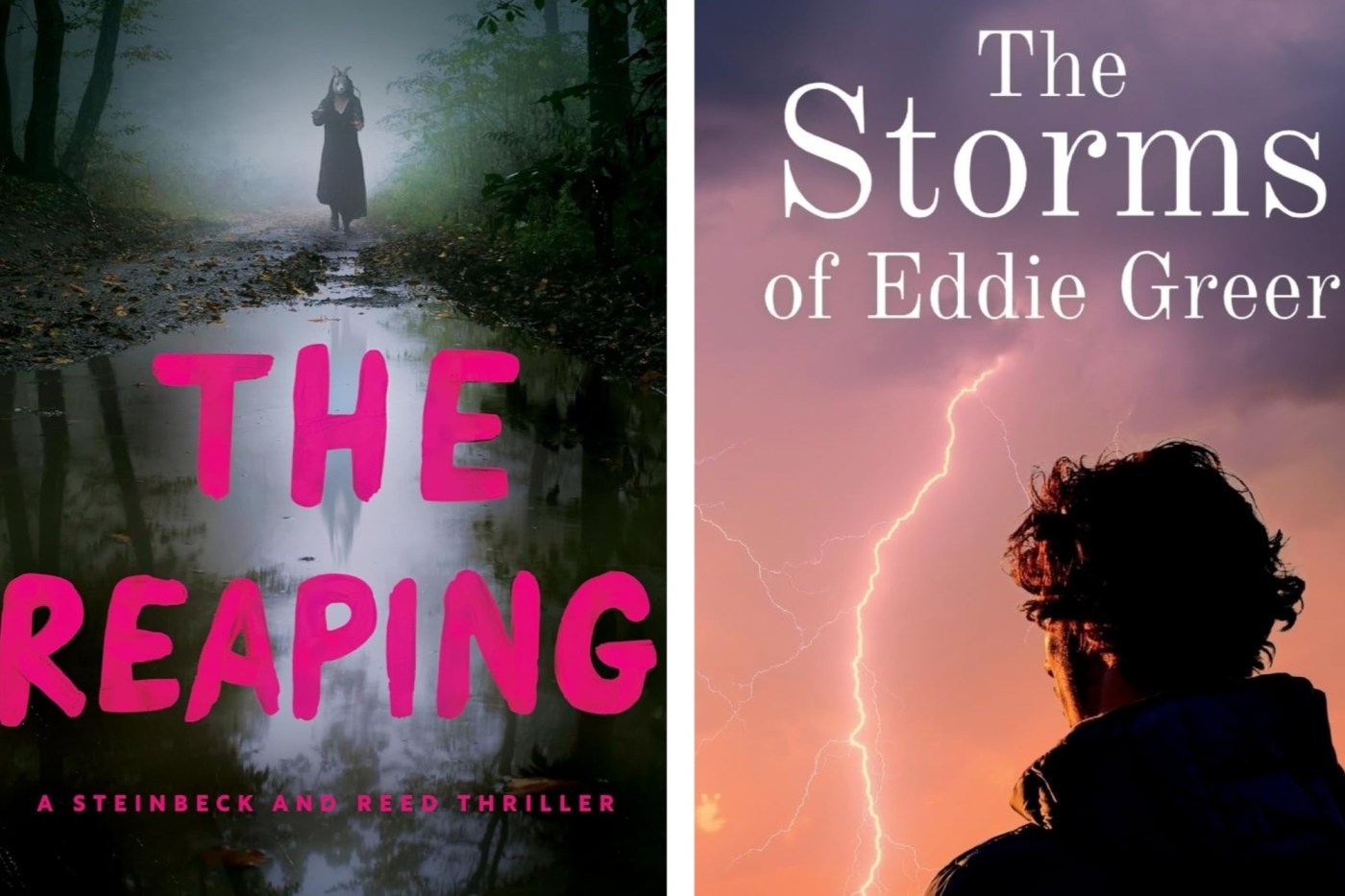
“The Reaping”: by Jess Lourey (Thomas & Mercer, $16.99)

‘Because the veri noita was so powerful, they had to bind her hands and feet in her grave and balance a scythe over her neck so she’d be killed over again if she came back to life.’ His voice dropped. ‘With the veri noita defeated, the disloyal villagers next turned to the original seven families, the veri noita’s truest followers.’ He began breathing heavily. ‘They murdered all their children, every last one of them, in an event that came to be known as the reaping.’ — from “The Reaping”

(Courtesy of the author)

When we interviewed Jess Lourey last fall about “The Taken Ones,” first in her series featuring Harry Steinbeck and Evangeline Reed, she teased that she would write “a creepy new villain, a Finnish Blood Witch,” in her next novel.

She kept her promise. The Witch is in “The Reaping” and she kills children, or so the kids in the Minnesota town of Alku are told by their pastor. The youngsters know that Alku is family, and you always protect family, no matter what happens.

Harry Steinbeck, a forensic scientist who’s careful and methodical, and rogue Bureau of Criminal Apprehension agent Evangeline Reed, messy, intuitive and willing to skirt the law to get information, are opposites in every way. As Steinbeck muses, they are like “orange juice and toothpaste.” But they have growing respect for one another as they investigate the cold case of a family of five brutally murdered in their home in Alku in 1998. Not only were the mother, father and three children killed, their heads were crushed after death.

The story is told from the viewpoints of Reed, Steinbeck and Rannie, a mentally challenged young man whose mother is one of the town leaders. Rannie will do anything to protect his siblings.

Reed and Steinbeck learn the town was founded by seven families from Finland, some of them doctors, who fled their native country to escape tuberculosis. Because of the way TB acts on the body, their neighbors in the old country thought they were vampires. Alku is now an insular town, not even shown on Minnesota maps, run by descendants of the original Seven. No one else can live in the town near Duluth.

Jess Lourey (Courtesy of the author)

Reed and Steinbeck think the place is weird and creepy as soon as they arrive. The residents have very high foreheads and long necks, and they walk oddly. It’s a town that gives off bad vibes, especially on the outskirts where there is a prison for aged serial killers who need nursing care. An older building, with turrets and old-fashioned architecture, is now a school.

As the partners dig deeper into the town’s history, a prison guard is killed in exactly the same way the family was murdered 25 years earlier. Is this a copycat? Why is there a straw image of the Blood Witch at the door of the church? Why do adults sometimes gather in a forest clearing wearing animal masks?

Throughout the story, Steinbeck is afraid of returning to Duluth, believing he was responsible for the disappearance of his sister years earlier. He’s stunned to learn that his controlling mother, who seemed to hate his missing sister, is now taking foster kids into her lakeside mansion.

What Lourey does so well is blend police procedural with horror vibes that hark back to long-ago beliefs in blood sacrifice.

It’s not a spoiler to reveal that the end assures us there will be a third book in this series. For now you will want to learn more about the Finnish Blood Witch.

Lourey will host a launch party at 4 p.m. Saturday, Sept. 7, at Once Upon a Crime, 604 W. 26th St., Mpls., joined by fellow mystery writers Kristi Belcamino, Wendy Webb and Joshua Moehling. She will sign books at 7 p.m. Wednesday, Sept. 4, at Magers & Quinn, 3038 Hennepin Ave. S., Mpls.; 11 a.m. Thursday, Sept. 5, Comma, a bookstore, 4250 Upton Ave. S., Mpls., with Sarah Stonich, Catriona McPherson, Belcamino and Moehling; 1-4 p.m. Sept. 5, Open Book, Minneapolis-St. Paul Airport, Terminal 1, with Webb, Stonich, McPherson, Moehling and Belcamino, and 2-3:30 p.m. Sept. 21, Hudson Public Library, Hudson, Wis.

Kao Kalia Yang (Courtesy of the author)

“The Diamond Explorer”: by Kao Kalia Yang (Dutton, $17.99)

They had questions. They wanted to know if Hmong is the same as Black. Phong didn’t think so because he, at six, was already beginning to learn about racism and whiteness. Lee was five and less certain. He thought that Hmong was Black because Hmong was not white. I tried to explain that we were Asian and that their father was white. But then they both ended on a singe question: “Can the police kill us or not?’” — from “The Diamond Explorer”

Kao Kalia Yang, one of Minnesota’s most versatile and award-winning authors, has written adult fiction (“The Late Homecomer,” “The Song Poet”) and children’s picture books (“From the Tops of the Trees,” “The Most Beautiful Thing” and others). She’s making her middle-grade debut with “The Diamond Explorer,” abut a boy making his way in the evolving Hmong-American culture.

qIn the first part of the novel Malcolm is seen through the eyes of racist teachers (“You have a very slow kid…”), his parents and siblings. As a little boy he loves living in a house on the prairie cared for by his father, who carefully mows paths in the grass so Malcolm can always find his way back to the house. The book’s title comes from a time he dug among little stones to bring up a piece of red plastic, saying it was a jewel. These scenes are filled with the love Malcolm’s father has for his son.

(Courtesy of Dutton Books for Young Readers)

When Malcolm feels out of place at his school, his parents regretfully agree he should live with his older sister and her husband so he can attend a private school. But then he’s accused of being “too white.” At home he witnesses a shaman’s ceremony to call back the spirit of another sister who returned from college in New York with something missing in her. And Malcolm is worried about his adored older brother, who dropped out of school and is getting into trouble

Malcolm and his cousins have their first experience contemplating death and racism when they learn of the (real-life) death of Philando Castile, an African-American man fatally shot by a police officer in Falcon Heights in 2016.

The book’s second half is a dream journey where Malcolm meets his deceased grandmother and other relatives living in their ancestral homes. They urge him to “go back” but he refuses until he wakes to a shaman’s healing. He returns from his mystical experience with a new love for his people’s stories.

Yang, who was born in a refugee camp in Thailand, grounds every word of this story in her culture, from funeral feasts to times when her people lived in the mountains of Laos.

No matter what character is speaking, the author’s prose shines in the lyrical style we expect from her. The novel, due out Sept. 17, earned early praise from Kirkus Reviews and Publishers Weekly. Kirkus: “Yang has crafted a layered, profoundly moving musing on grief, connection (and lack thereof), and identity..” PW: “(A) richly wrought tale…”

(Courtesy of the author)

“The Storms of Eddie Greer”: by Mary Perrine (Water’s Edge Publishing, $19.99)

So Eddie gave it all up: the likelihood of a full scholarship and the dream of playing in the majors. In his heart he ended up exactly as the community saw all Greer men: losers, misogynistic, disgruntled farmers, and carbon copies of the head of each generation. And while most of that rang true, Eddie knew the one thing he was not was misogynistic. He hated everyone equally. That was another thing he had learned from the old bastard. — from “The Storms of Eddie Greer”

Eddie Greer inherited his cruelty and alcoholism from males in the family going back generations.

Mary Perrine, former schoolteacher who lives in Cologne, Minn., published this novel last year and is doing appearances this summer. She tells the story of Eddie, an alcoholic and abuser. He knows folks in his town of Holland Crossing expected him to make something of himself. But Eddie had to give up his dreams and take over the farm after his father died. Eddie was a victim of his father’s wrath, physical and verbal abuse that included assault with a baseball bat and shooting the boy’s dog. Some of these passages are difficult to read but they show the results of inherited trauma.

Mary Perrine (Courtesy of the author)

As Eddie stepped into his role as a farmer, he also became a father at age 18. In his immediate family he hates his grandson, his daughter and his wife, Jules, who cannot give him the son he badly wants.

When Eddie’s grandson dies after being struck by lightning in the hayfield because Eddie wouldn’t let the young man stop working, Eddie finally confronts his emotions. Jules, his wife of more than 40 years, is the first Greer woman to stand up to her husband and leave. After that, Eddie takes to sitting in a lawn chair at the edge of the field where his grandson died, contemplating his life. He’s accompanied by his dog, the only creature who seems to love him.

Perrine balances alcoholic rages with the barely-alive love of Eddie for his wife as he struggles to become a new man and break the chain of violence he inherited.

Related Articles

Books |


Literary pick for Aug. 18

Books |


Kids at the Fair can take a break at the Alphabet Forest

Books |


Readers and writers: Plenty of thrills and danger in these Minnesota author’s mysteries

Books |


Literary calendar for week of Aug. 18

Books |


This Silicon Valley tech worker uses her impostor syndrome as novel inspiration

Chad Kulas: The potential of St. Paul’s Midway soars

posted in: News | 0

The Midway Chamber of Commerce aims to “build a stronger Midway” in the work we do and support. And from our offices at the corner of Snelling and University in St. Paul, in the famous green-tiled Spruce Tree Centre, we have a birds-eye view of our community.

Across the street, work is underway to install a 33-foot-tall, 88-foot-wide loon sculpture — “The Calling,” created by renowned international artist Andy Scott. The piece is impressive in every way, in stature, in materials, in significance, and yes, in location — the corner of University and Snelling anchoring the corner of the United Village Development and in many ways the gateway to the Midway. In June, PK’s place, a state-of-the-art universally accessible play area, was opened to the public. Also in June, music lovers enjoyed the two-day Breakaway Festival. All of this is happening just outside the acclaimed Allianz Field, which routinely hosts sellouts for the Minnesota United FC and in May welcomed the U.S. Women’s National Soccer Team to its pitch.

On a daily basis when I leave my office, I can see signs of progress that are palpable and tangible. There are trucks, fences, equipment and workers. Looking past the construction activity, you can see people enjoying the stadium and new playground.

While all this is happening now, there is even more expected next year. The plans for a hotel parking ramp, office building, restaurant pavilion and the public infrastructure to support it have all been approved.

There is no adequate way to convey the excitement, hope and opportunity this all represents. Facilities and features that will transform this prominent intersection, attract and welcome visitors to the Midway. Commerce and hospitality will help connect the development to the surrounding neighborhoods, elevating the Midway as a great place to live, work and play. Business and employment opportunities will soon become available as these plans move from the drawing board to reality.

Oftentimes, we have heard people groan about the slow pace in which this work occurred. Do we all wish the site had been developed sooner? Of course. But a pandemic and other factors delayed progress (anyone who follows developments or even store openings knows of the number of delays a project can incur). Will the final project have exactly what every member of the community wants? We know that’s impossible, but the development team has listened to the concerns of the neighborhood and in my opinion found uses that can be enjoyed by neighbors and visitors alike.

As someone who has been around this neighborhood since the 1990s, I can say large portions of this property sat under-utilized as we all wondered what would happen with the “bus barn site.” Now that construction is underway, I’m calling for an end to that tired backward storyline. The construction for the United Village site is happening. Public spaces are opening this year. The first vertical construction is set to follow next year.

This is not a vision or proposal. This is happening. It is happening now.

Another important story is that of investment. Led by Dr. Bill McGuire, a group of largely local investors is infusing over $200 million of private capital to bring these projects to reality. This infusion, combined with the construction of Allianz, represents over a half a billion dollars of state-of-the-art facilities for the Midway. The scale of these investments is beyond the level that communities position themselves against other markets to attract and support. This investment is coming to the Midway.

Another important story is that of location. The United Village site has been historically blighted. It also was the center of civil unrest and major damage in 2020 following the murder of George Floyd. It is industrially polluted and requires remediation. It sits prominently on a primary gateway to the Minnesota State Fair and on the Green Line LRT “mid-way” between the two downtowns. The location for this development is one that communities prioritize for revitalization, believing that success will have a catalytic impact beyond its immediate boundaries. The location for this development is the Midway.

Another important story is that of community. The United Village site sits on the border of the Hamline/Midway and Union Park neighborhoods. It is in the heart of the Midway commercial corridor, and many of the businesses are members of the organization that I have the privilege of leading. The community has high ambition and expectation for what this means to them. Although the overwhelming majority of investment has come from Dr. McGuire and the private sector, the community is committed as a stakeholder.

There is excitement about how the vitality generated will cascade down Snelling and University.

Occasionally, I get asked about what the future of the Midway will look like. Our neighborhood is always changing. In the nine years I have been at the Midway Chamber, we went from the new Green Line to the A-Line Bus Rapid Transit, Allianz Field, as well as several developments along and near University Avenue.

The future of the Midway is taking shape right before our eyes, and what we are seeing is so encouraging. The projects to date have been of the highest quality and represent great urban design. As a stakeholder and steward of the Midway, I have every reason to believe this progress will continue, and that what follows will be equally great. Join me in embracing both what is possible and what is actually happening right now. It is truly outstanding. The Midway deserves and will embrace this generational opportunity as we all make our community stronger.

Chad Kulas is executive director of the Midway Chamber of Commerce.

Related Articles

Opinion |


Skywatch: Celestial eagle soars high in the sky

Opinion |


Working Strategies: Revisiting working from home 4 years later

Opinion |


Real World Economics: The Fed can only do so much

Opinion |


Skywatch: Get a stellar start to your day

Opinion |


Your Money: Plan now for tax-law changes in 2026

Literary calendar for Aug. 25

posted in: News | 0

FREEMAN NG: Introduces “Bridge Across the Sky,” his historical novel in verse about a Chinese teen who immigrates to the United States with his family and endures mistreatment at the Angel Island Immigration Station (in San Francisco Bay) while trying to navigate his own course in the new world. The author is a former Google software engineer who writes full time. Although he lived most of his life a 20-minute ferry ride from Angel Island, he never thought about the station and its history until he heard abut the poems written on its walls. (Read more at AuthorFreeman.com). He will also sign copies of “The Haunted States of America,” a middle-grade anthology of ghost stories. In conversation with Minnesota writer Sun Yung Shin. 6 p.m. Tuesday, Aug. 27, Red Balloon Bookshop, 891 Grand Ave., St. Paul. Free; registration required: redballoonbookshop.com/event.

DEBBIE RUSSELL: Signs copies of “Crossing Fifty-One.” 10-11a.m. Friday, Aug. 30, Lake Country Booksellers, 4766 Washington Square, White Bear Lake.

TOPAZ WINTERS: Celebrates the five-year anniversary and special-edition relaunch of her collection “Portrait of My Body as a Crime I’m Still Committing.” The author is a Singaporean-American poet and editor-in-chief of Half Mystic Press. Her work has been published in literary magazines and performed at the Metropolitan Museum of Art, the Centre for Fiction, and the Singapore Writers Festival. She lives in Singapore and New York. 7 p.m. Friday, Aug. 30, SubText Bookstore, 6 W. Fifth St., St. Paul.

Related Articles

Books |


Literary pick for Aug. 18

Books |


Kids at the Fair can take a break at the Alphabet Forest

Books |


Readers and writers: Plenty of thrills and danger in these Minnesota author’s mysteries

Books |


Literary calendar for week of Aug. 18

Books |


This Silicon Valley tech worker uses her impostor syndrome as novel inspiration

Galvao, Klutsey: Teaching civil discourse — a classroom blueprint for America

posted in: News | 0

First-time teachers and first-time voters gearing up for the 2024 election may have only ever been exposed to toxic polarization — it’s their norm.

But for those of us who’ve been in the classroom for decades, the landscape of teaching civics has changed dramatically. In the early 2000s, America was polarized, but teaching during a presidential campaign was thrilling.

Yet, with the rise of social media, misinformation, and disinformation, we fear that students this year will be denied the same opportunities to learn about democracy and acquire skills to constructively engage one another.

A typical classroom back then analyzed political cartoons and discussed candidates’ major policy stances. They listened to sound bytes, compared speech rhetoric and reviewed the election process, from super-delegates to the Electoral College.

In most classrooms, no one told these students what to think or who to vote for; helping prepare such a thoughtful, curious, and motivated generation of citizens to engage in the process was enough. It was nobody’s job to make them liberal or conservative.

By 2020, the classroom pulse could not have been more different. Teachers shared that they did not want to touch elections and electoral politics for fear of accusations of indoctrination, bias, or unsafe learning environments. Each day felt like navigating invisible landmines. Many avoided the election completely. Ignoring the topic was not only easier than dealing with an irate parent, hostile administration or divisive school board — it was a means of survival.

This was not a unique experience. A recent RAND study found that two-thirds of teachers are limiting instructional time on political and social issues, even in states that have not required it. That makes sense, given the increase in teacher firings over political concerns in the past four years.

If, in the words of Eric Liu, co-founder and CEO of Citizen University, “the road to democracy runs through the classroom,” it’s critical to at least discuss the political process. It’s more important than ever to prepare students for the public sphere, and in a non-politicized way.

What’s more, if we cannot practice the real skills of debate, discussion, analysis and critical thinking, will students learn to practice them in real life?

Political polarization is not new; toxic polarization is. Eighty-four percent of Americans say political debate has become less respectful lately. Growing numbers have negative or hostile attitudes toward the opposing political party, believing it “more closed-minded, dishonest, immoral and unintelligent than other Americans.”

The remedy — civil discourse — can be applied in the classroom and among the general public.

To begin, let’s stop defining civil discourse by where we see it lacking. Instead, we need a common language around what it means and its purpose. “Civil,” from the Latin civilis, means “relating to a society, pertaining to public life, relating to the civic order, befitting a citizen.” With such a definition, we’re reminded that it’s vital to a functioning democratic society, meant to benefit each citizen.

Second, we must come to terms with the fact that in a country of over 330 million people, we’re not all going to agree on even trivial things (say, ice cream flavors), let alone public policy or America’s future. And that’s normal.

Remember: civility is not about being passive or even polite. It’s not about agreeing for the sake of agreement. It’s merely the avenue to navigate daunting topics that might otherwise feel hopeless, curating citizenship in deeper, more tangible ways and reminding us that we have more in common than we realize.

Hence, to appreciate what we share, we must interact and practice civil conversations. What’s often lacking are the right skills.

Good conversations don’t result from countering every statement your counterpart makes. They occur when all participants feel heard. You can practice this with “reflective listening” — repeating what you think you heard. When your partner begins to appreciate that you’re trying to understand them (with or without agreement), you build trust.

Finally, be curious and authentic. When you’ve built respect and trust, you can truly be honest about your perspective. The process is simple, but not always easy. It requires practice and can be messy, but sometimes it needs to be messy to be authentic.

The more you listen, the more you’ll realize that contrary to the caricature of your fellow citizen presented on TV or social media, this person likely means well and is not an extremist.

In the classroom, civil discourse is simple: It looks like listening. Let’s start there and remember that it’s about our humanity, which is bigger than politics. Civil discourse is a mirror, reflecting our values back on ourselves. Little doses of courage make it possible.

And when we all feel like we’re walking on eggshells, a bit of courage will go a long way.

Former teacher Lindsey Galvao is the social studies curriculum specialist at GBH, a multiplatform creator for public media, and curriculum writer for the Civics Collection on PBS LearningMedia. Benjamin Klutsey is the executive director of the Mercatus Center at George Mason University and has facilitated civil discourse-themed workshops around the country, as shown in the new documentary “Undivide US.” They wrote this column for Tribune News Service.

Related Articles

Opinion |


Jackie Payne: Undecided moderate women could be the tipping point this November

Opinion |


Nir Kaissar: Harris’ price controls are a solution in search of a problem

Opinion |


Maureen Dowd: Nancy Pelosi, mother of dragons

Opinion |


Other voices: Harris needs to fill in the blanks for undecided voters

Opinion |


Mary Ellen Klas: Trump’s allies create potential for more election chaos in Georgia