Business People: Vikings name Morgan Kennedy vice president of events and special projects

posted in: News | 0

OF NOTE

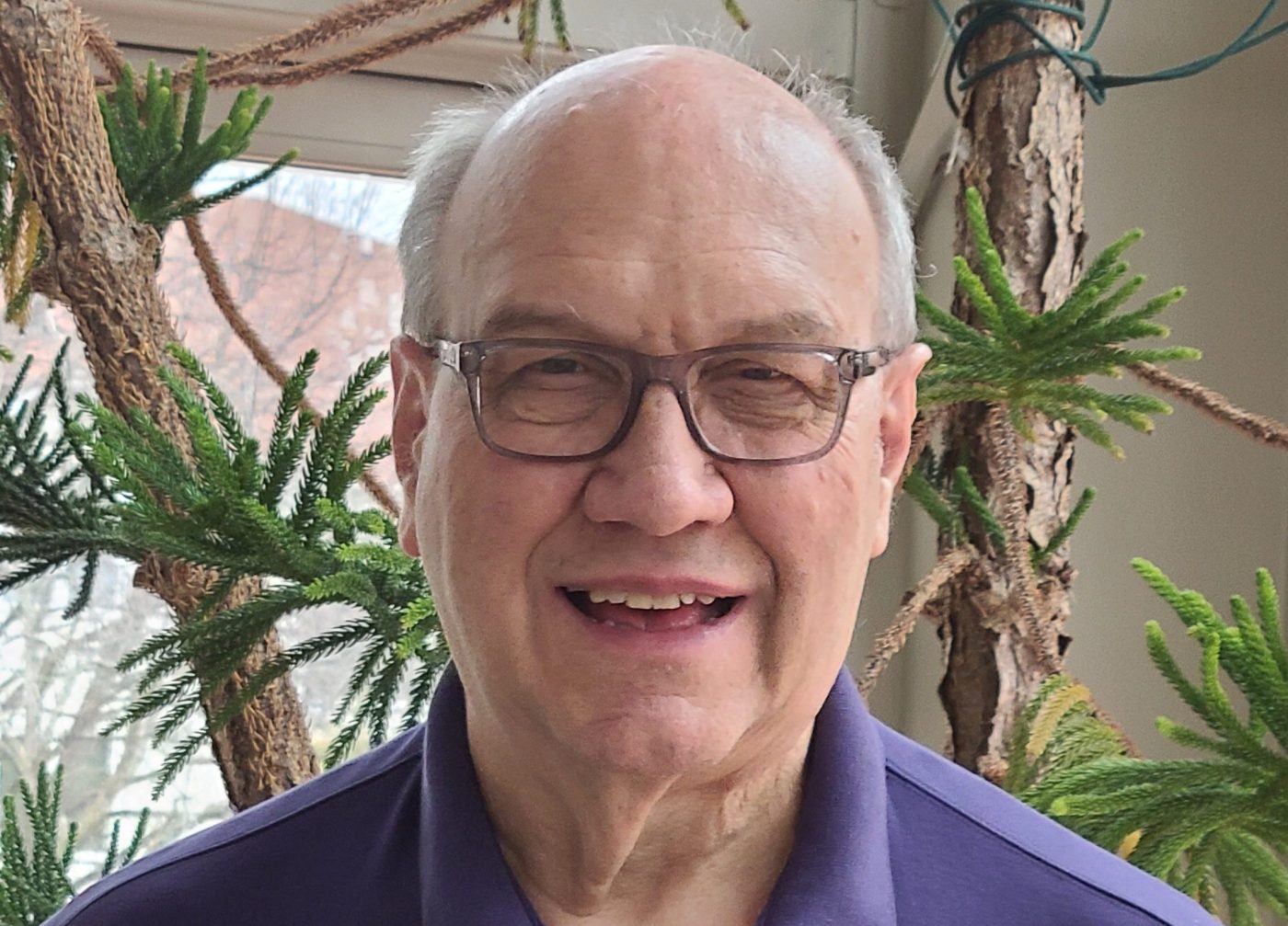
Morgan Kennedy

The Minnesota Vikings NFL franchise announced the hire of Morgan Kennedy as vice president of partnership activation, events & special projects. Kennedy most recently served as the chief marketing and growth officer for Minneapolis-based Atomic Data, an IT-as-a-service company with a focus on sports and large public venues.

ADVERTISING/PUBLIC RELATIONS

Haberman, a Minneapolis-based marketing communications agency, announced it has been selected as the agency of record for MNsure, Minnesota’s health insurance marketplace.

ARCHITECTURE/ENGINEERING

Wold Architects & Engineers, St. Paul, announced the promotion of Jacob Marshall to the Associates Leadership Team. Marshall is an electrical engineer and has six years with Wold.

ENTERTAINMENT

Children’s Theatre Company, a Minneapolis-based live performance venue focused on young audiences, announced Antonio De La Vega, Elijah Virgil Hughes and Yuheng (Kitty) Jiang as CTC Fellows for the 2024-25 Season.

FINANCIAL SERVICES

Piper Sandler Cos., a Minneapolis-based investment bank, announced the addition of Matt Monaco as a managing director to its fixed income trading team, leading to a strategic buildout of the U.S. Small Business Administration 7(a) loan platform. Monaco joins the firm from Memphis Capital where he was responsible for building and managing SBA related businesses. … Ameriprise Financial, Minneapolis, announced financial adviser Michael Walstien has joined the branch channel in Wayzata with $150 million in assets. He previously was with UBS Financial Services.

HONORS

The Hennepin County District Court announced it has presented Beth Holger with the Steven A. Pihlaja Justice Partner Award. Holger is chief executive officer and executive director of The Link, a metrowide North Minneapolis nonprofit providing housing and supportive services for youth and young families experiencing homelessness, positive alternative programs for youth in the juvenile justice system, and emergency shelter, housing, and supportive services for youth who have been sexually exploited.

LAW

Maliya G. Rattliffe has been appointed to the Minnesota Women Lawyers board of directors. Rattliffe is an attorney at Fredrikson, which announced the appointment. … Nilan Johnson Lewis, Minneapolis, announced that Kathleen Curtis has been promoted to shareholder. Curtis joined the firm in 2021, focusing on on product liability, personal injury, business litigation, construction litigation, professional malpractice and insurance. … National business law firm Barnes & Thornburg announced the hire of attorney Erin Killeen as an associate in its Minneapolis office, focusing on bond financing for corporate, nonprofit and governmental organizations.

MILESTONES

Rihm Family Cos., a South St. Paul Kenworth truck dealership, announced it is celebrating its 75th year as a dealership and 92 years in business.

NONPROFITS

Hold Your Horses, a Greenfield, Minn.-based organization promoting healing and well-being through animal and nature-based therapy and programs, announced that Founding Director Janet Weisberg will be stepping aside and that Kenz Becco has been named executive director. Becco joined three years ago as operations director.

RETAIL

Play It Again Sports, a retail reseller of used sporting goods and apperal, has announced the opening of a location at 13625 Grove Drive North, Maple Grove. Play It Again Sports is a portfolio company of Winmark Corp., a Plymouth-based franchisor of retail resale chains.

SPONSORSHIPS

Twin Cities In Motion announced that Post Consumer Brands, Lakeville, will be the new title partner of the Family Activity Area for the 2024 Medtronic Twin Cities Marathon. Post Consumer Brands is a business unit of Post Holdings, whose product brands include Honey Bunches of Oats, Grape-Nuts, Malt-O-Meal, and others.

TECHNOLOGY

Clearfield, a Plymouth-based communication fiber management company, announced the Fiber Broadband Association awarded company President and Chief Executive Officer Cheri Beranek its Women Changing Fiber for Good AMPLIFY Award. The Fiber Broadband Association is a trade organization. … Spave, a Red Wing, Minn.-based financial technology company focused on charitable giving, announced the formation of a Advisory Council aimed at driving growth. It includes Ajay Nair, Spave’s former co-founder. Other members: Jodie Thellin Skyberg, Margaret Bransford and Sudeep Nadkarni.

Related Articles

Business |


Business People: TKDA announces new leadership roles

Business |


Business People: Investigative podcaster and attorney Joshua Newville joins Halunen Law

Business |


Business People: State Bar Association names Samuel Edmunds president

Business |


3M names Otis executive to be new CFO

Business |


Ramsey County chooses Ling Becker as next county manager

EMAIL ITEMS to businessnews@pioneerpress.com.

Ivan Eland: Solutions to the Supreme Court’s presidential immunity disaster

posted in: Adventure | 0

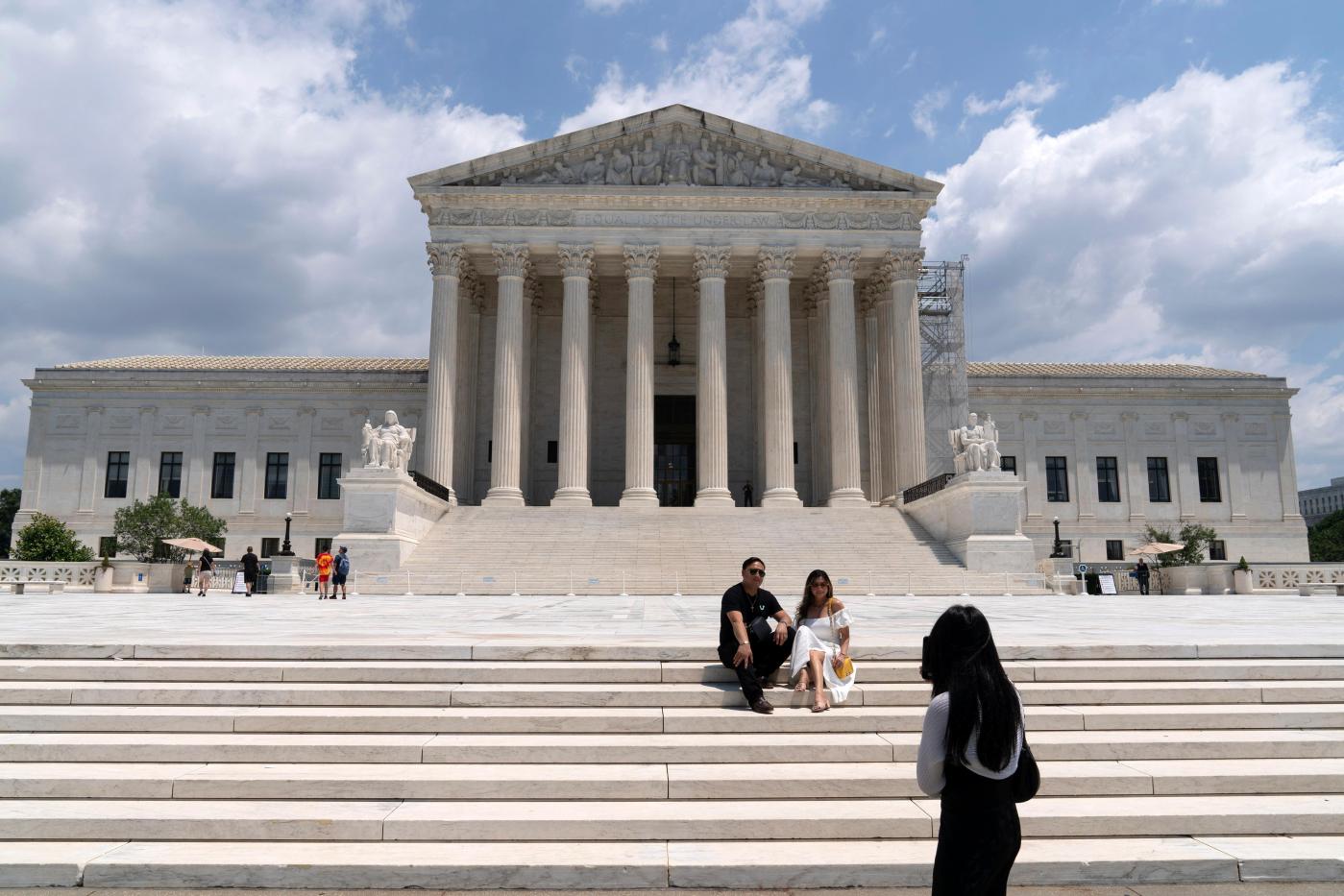
The Supreme Court recently made the worst ruling in its history when it gave presidents and former presidents absolute immunity from prosecution for “official acts,” throwing it back to lower courts to distinguish such acts from unofficial ones.

Proponents of the unitary theory of the executive, who relish the creation of a turbocharged extra-constitutional imperial presidency, popped champagne corks. Many others in the legal community were shell-shocked, including friends of the republic and true advocates of small government.

Yet, some are injecting hope into the bleak situation by proposing congressional actions to nullify the court’s potential creation of a rogue tyrannical presidency.

In oral arguments during Donald Trump’s quest for immunity from prosecution for the attempted self-coup and insurrection culminating on January 6, 2021, many of the justices curiously didn’t want to talk about this monumental event. They seemed more concerned that if presidents were not given immunity from prosecution, future chief executives would be afraid to do their jobs properly.

Of course, presidential timidity induced by fear of prosecution has never been a problem in the 235 years of the presidency. In fact, the opposite has been the case, with presidents operating outside the Constitution by aggrandizing too much power, especially during wars and crises.

For example, Abraham Lincoln took advantage of Congress being out of session to take the country into the Civil War without any approval in advance by the legislative body; shut down dissident newspapers and jailed their editors; incarcerated opposition politicians; suspended habeas corpus (the ability to challenge detention by the government) in areas unaffected by combat; and tried civilians in unconstitutional military tribunals instead of giving them a civilian jury trial required by the Constitution.

Related Articles

Opinion |


Sunday Bulletin Board: A box in the closet reveals a world gone, but not forgotten

Opinion |


Chad Kulas: The potential of St. Paul’s Midway soars

Opinion |


Galvao, Klutsey: Teaching civil discourse — a classroom blueprint for America

Opinion |


Jackie Payne: Undecided moderate women could be the tipping point this November

Opinion |


Other voices: Criminal meddling in U.S. elections and protests

Beginning in early 1941, before the Japanese attack on Pearl Harbor, Franklin D. Roosevelt attempted, without congressional approval, to get Adolf Hitler to fire the first shot by helping the British to sink German U-boats in the Atlantic; Hitler refused to take the bait. FDR also used military tribunals to try to execute German saboteurs and illegally, under political pressure, incarcerated innocent people with Japanese ancestry.

During the Harry Truman administration, the presidency had aggrandized so much power from Congress, which the Founders clearly had expected to be the dominant branch under the Constitution, that the presidency had become imperial. Truman jettisoned the constitutional requirement for Congress to initiate war by declaring it; he unilaterally took the United States into the Korean War.

Yet, it wasn’t called the imperial presidency until James Schlesinger Jr. gave it that moniker during Richard Nixon’s illegal abuse of national security agencies to cover up the Watergate burglary and illegally wiretapped war protesters and political opponents (which John F. Kennedy and Lyndon B. Johnson also did before him).

Ronald Reagan broke a criminal law by trading weapons to Iran for hostages and used the proceeds to fund, secretly, the Nicaraguan Contra rebels, which Congress had prohibited him from doing.

George W. Bush, taking advantage of the 9/11 attacks, expanded a congressional authorization to go after al-Qaeda and the Taliban into an unconstitutional global war on terrorism, which included illegal surveillance on Americans, the suspension of habeas corpus against terrorism suspects, illegal torture of those suspects, and their trial before kangaroo military commissions.

Under the Supreme Court’s ruling, all these presidential actions would automatically be entitled to immunity because they were done as official acts by the president, but it gets worse.

The court also ruled that if a chief executive was prosecuted for “unofficial acts,” evidence emanating from his official duties could not be introduced to prove guilt — for example, if an official adviser could testify about those illegal unofficial acts, they might very well be prevented from doing so.

The term “rule of law” has always meant that no one was above the law, including influential people like the president.

Furthermore, the Constitution never mentions presidential immunity and instead requires the president to take an oath stating: “I do solemnly swear (or affirm) that I will faithfully execute the Office of the President of the United States, and will to the best of my Ability, preserve, protect and defend the Constitution of the United States.”

The document also lists as one of the primary duties of the president: “he shall take Care that the Laws be faithfully executed.”

How can he faithfully execute the laws when he is violating them because he knows he won’t be prosecuted?

The Supreme Court was doubly irresponsible to make this ruling at a time when Trump — a president impeached twice for questionable conduct while in office, is a convicted felon, has said he wants to terminate the Constitution and then tried to overthrow the results of a fair election and conduct a self-coup by not leaving office — could very well be elected president again.

How can we reverse this horrible ruling that has the potential to make the president a rogue tyrant?

The obvious way is to get Congress to pass via supermajorities, and an even greater supermajority of states to ratify, a constitutional amendment categorically stating that the president has no immunity from prosecution for either official or unofficial acts. Getting this consensus is hard when politics is so polarized.

Why is a constitutional amendment necessary? Some in Congress think a statute denying presidential immunity for violating criminal laws would be enough to do the trick to countermand the Supreme Court. And to prevent the Supreme Court from overruling the new law, the proposed statute says the court will have no appellate jurisdiction over the act. Instead, challenges to the new law instead would be filed with the D.C. Court of Appeals.

The Constitution says that Congress can change the jurisdiction of the Supreme Court, so the legislative body could remove the ability of the Supreme Court to rule on presidential immunity cases. Hurdles remain to enact such legislation, but the slim ray of hope is that they are much lower than those to pass a constitutional amendment. Congress needs to muster the courage to act.

Ivan Eland is a senior fellow with the Independent Institute and author of “War and the Rogue Presidency.” He wrote this for InsideSources.com.

Real World Economics: The give and take of city tax plans

posted in: News | 0

Edward Lotterman

It’s budget time in the Twin Cities.

Mayors of both St. Paul and Minneapolis have released their plans for the coming year. Both contain substantial increases in both spending and the amounts levied in property taxes. These increases were not unexpected in either city.

St. Paul Mayor Melvin Carter continues to emphasize housing affordability and wants to correct past mistakes in that area.

Minneapolis, under Mayor Jacob Frey, faces a barrage of upcoming spending increases. These include a 30% increase for public employees over three years, and a 21.7% increase for police. Next are costs of complying with two settlement agreements. The first with the Minnesota Department of Human Rights over past discriminatory practices. The second, still pending, will address U.S. Justice Department’s mandates from its investigation of policing that grew out of the 2020 police murder of George Floyd. Also, 2024 was the last with federal Covid-relief funds.

There isn’t much economic theory in all this, but there are a lot of important institutional details of government finance. Both cities have websites with much information. This often requires heavy plowing, but residents can learn a lot.

Start with one interesting difference: Proposed spending for Minneapolis, population 425,000, is $1.8 billion. That for St. Paul, population 304,000, is $885 million. That mean per capita outlays for Minneapolis of about $4,400 while that in St. Paul is roughly $2,800. This is not an apples-to-apples comparison since the cities differ in what is and isn’t included in different funds. It does not mean that one is wasteful nor the second prudent. Rather, it shows how two apparently similar cities may have quite different economies, populations, institutions and infrastructures. City-to-city or city-to-national average comparisons can be useful, but can also be misleading if taken out of context.

Secondly, contrary to the assumptions of most homeowners, property taxes fund less than half of a city’s budget. News stories for St. Paul noted a 7.9% increase in the tax levy right after the $885 million total spending level. But these are two different things. Yet total spending is only up 1.8% from $840 million in 2024. How can this be? Well, property taxes only provide $225 million, or 30%, of St. Paul’s total. That is across all real property classes, including commercial and industrial property, downtown office and residential towers, retail storefronts and so forth.

Housing includes rental as well as owner-occupied properties. So homeowners don’t bear the entire budgetary world on their shoulders. The added St. Paul tax on a median $290,000 home will be $132 for a year.

Where does the rest of the money come from if not the taxes most of us know? St. Paul gets $273 million in “sales, fees and services,” but only $52 million of that goes into the $394 million general fund. There are $29 million in “franchise fees” paid by utilities, electricity, gas and telecommunications, serving the city. Go to the budget website for more detail.

Also understand that a city gets only part of the total property tax bill sent to owners. The county and school district also have large shares. For a typical St. Paul property, about a third goes to the city, another third to St. Paul Public Schools and 28% to Ramsey County. The rest is to special taxing districts for wastewater, transit, mosquito control, watersheds, “lake improvement” and so on. A fraction of 1% goes to a regional rail transit authority.

If only a quarter of outlays come from real estate taxes, does that mean residents are not affected by other revenue sources? And who bears the burden of taxes on rental housing, shops and offices for corporations down to sole-proprietor dentists, lawyers and accountants?

This raises the issue of “tax incidence” — the question of who actually bears the burden of a tax versus who writes out the check to pay them.

Well, start with the franchise fees paid by utilities. Nearly all get passed to consumers — but in proportion to usage of these services rather values of the property where used.

Then take rental housing. Most of the property tax falls on tenants, although not all. The old saw that “Democrats love affordable housing but hate landlords,” has validity. When rental housing is taxed heavily, the burden of the tax as a proportion of household income can be higher for renters than for owners even though renters write no check for these taxes.

Also note that property taxes are tied to the value of a property and not equity in it. A young family just into a starter home probably will pay a higher proportion of income for taxes than an established household with two mid-career earners.

That reverses for many retirees. Elderly people may have bought a house 50 years ago at a sharply lower price than now, even adjusted for general inflation. The house may be long paid off. Thus Social Security and modest savings may cover their food, clothing, utilities and transportation. But if a $30,000 house in 1970 is a $500,000 house now, their tax bill will be enormous relative to income.

However, rental markets don’t stop at city limits. If taxes on apartment buildings in St. Paul are at a higher rate than in suburban Vadnais Heights, for example, the effect may be to lower the values of the property in the center city since rents cannot be relatively higher in that in the suburb.

The reverse can be true for subsidies to housing in a city, whether through direct aid to renters or exemptions from taxes through tax increment financing. Instead of subsidies fostering a net increase in housing built, the effect simply may boost prices for developable land.

St. Paul already tried shotgun-approach rent controls that capped annual rent increases at 3%. Leaders are now backpedaling furiously from that. But it is not clear that the city council or the mayor fully understand the dilemmas they face. The housing stock in a built-up central city like St. Paul is not set in stone, but nearly so. If you want to help poor renters by capping rent increases, then new construction or rehabilitation slows. If you give financial aid to poor renters, but fund that with increased property taxes, rents either increase to bear the extra taxes or profitability to landlords fall. That too inhibits new development. The net improvement in overall rental availability and affordability is less than hoped for.

Another issue not fully appreciated either by  residents, homeowners or voters, is the basic structure of city outlays. About 30% of St. Paul’s general fund spending goes for the police alone. The forces for both cities are short of officers. In St. Paul, about 20% funds the fire department which includes EMT services. Then you have parks and recreation at about 12% and public works at 11%. So everything else must share 25% of the budget.

With concern about crime, people don’t want reduced policing. They don’t want poorer parks or reduced recreation nor poorer streets. So an “anyone could cut 10% across the board” view is out of touch with reality.

Inadequate public works cause outrage. Yet there is not great waste. One cannot reduce spending without cutting services like snow plowing or spring pothole filling. Also note that these two items can vary greatly with weather. Obviously, plowing varies with snowfalls, but the same annual total in severe, city-paralyzing mega-storms that force huge overtime bills can cost more than the same amount in a series of normal ones. Even differences in temperature varying the number of freeze-thaw cycles can have large effects on street repairs.

Much more could be said. Much information can be obtained by delving into budget documents themselves, from an eight-page summary to the 376-page budget itself. Households and businesses still may be outraged when they get property tax statements, but better understanding of the budget helps public discussion of issues.

Related Articles

Business |


Real World Economics: The Fed can only do so much

Business |


Real World Economics: Central banks’ practices are on a perilous path

Business |


Real World Economics: Prosperity has a price, and a cost

Business |


Real World Economics: Depend on the security of the bond market

Business |


Real World Economics: Data is vital; two new reports tell us why

St. Paul economist and writer Edward Lotterman can be reached at stpaul@edlotterman.com.

Sunday Bulletin Board: A box in the closet reveals a world gone, but not forgotten

posted in: News | 0

Then & Now

GRANDMA PAT, “formerly of rural Roberts, Wisconsin, now of St. Paul”: “I recently opened a box from my closet labeled ‘WWII Washington, D.C.’ My father had been transferred to D.C. by this newspaper to take charge of the Washington Bureau. The younger men who had been there previously had been drafted.

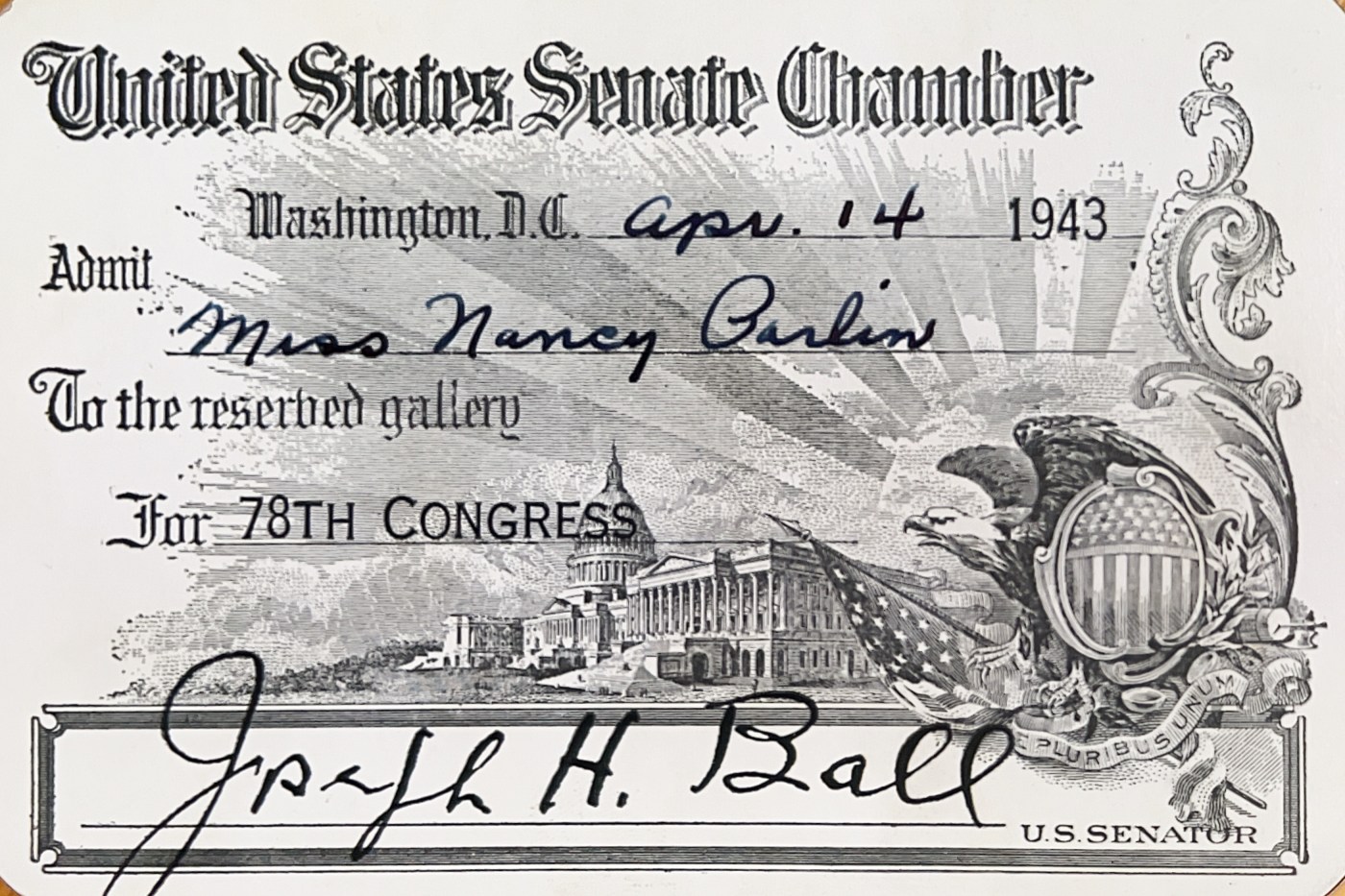
“In the box were ration books for all four of our family members, as well as I.D. cards for admission to the House and Senate. One of these was signed by U.S. Senator (from Minnesota) Joseph Ball. (Bulletin Board interjects: And not just a senator, but also a columnist for your beloved St. Paul Pioneer Press!)

“There were Civil Defense volunteers in our Maryland neighborhood, who patrolled the area during air-raid drills whenever the sirens sounded. If they detected even a bit of light showing at a window, or saw a person out walking with a burning cigarette, they would reprimand them.

“Meat, sugar, gasoline — so many things were rationed; other items were just in short supply. Coffee was supplanted by chicory; rice was used when potatoes were scarce; simple things like safety pins, needles and elastic were hard to find.

“One summer we went to Bethany Beach, Delaware, for vacation. We could walk on the sand, but not on the boardwalks. The boardwalks were patrolled by Navy and Coast Guard men and their German shepherds. It was feared that Nazi ‘frogmen’ would come via submarines and engage in spying or sabotage. Quite often we had young men from Minnesota at our home for a nice meal before they shipped out for Europe.

“There were war-effort posters everywhere: on street corners, in store windows, on buses. They showed Uncle Sam, Rosie the Riveter and slogans like ‘Loose Lips Sink Ships.’

“We heard the voices of Hitler and Mussolini on the radio, and saw them in newsreels at the movie theater. Time, Look and Life magazines provided dramatic photos. During those years, Russia and China were our friends, and Germany, Italy and Japan our enemies. So much change.”

The Baader-Meinhof Phenomenon

From BOB WOOLLEY: “Yesterday my girlfriend and I were doing a crossword puzzle. One of the clues we had trouble with was ‘They may be lifesavers.’ We finally deduced that the answer had to be ‘Mae Wests,’ though why was a bit of a mystery. We guessed that older life vests gave the wearer a buxom appearance, and so acquired that nickname. A Google search confirmed that theory.

“After she went home, I looked through my Amazon Video queue to find something to watch. I settled on a weird 1980 movie called ‘The Final Countdown,’ with Martin Sheen and Kirk Douglas. The improbable plot has a modern aircraft carrier encounter a mysterious anomaly west of Hawaii, which sweeps it back in time to mere hours before the Pearl Harbor attack of 1941.

“In one scene, one of the carrier-based pilots is surveying the wreckage of a blown-up yacht. The carrier’s commander asks the pilot whether he sees any survivors. He replies: ‘Affirmative. One, two, three Mae Wests!’

“(Photo of my TV included for proof.)

“This is one of the purest Baader-Meinhofs I’ve ever experienced. It was obscure in its content, completely random, and occurred within the span of less than two hours.”

In memoriam

ZOO LOU of St. Paul: “Subject: The Baritone Mayor.

“Here is a mid-’70s picture I took of the late former Mayor George Latimer while I was working as an information specialist for the City of St. Paul. The photo was taken at the home of the late Max Metzger, who conducted many band concerts at the Como Lakeside Pavilion. I couldn’t find the name of the young singer, but I believe he was going to be featured in a local opera production. As I recall, the Mayor had a pretty decent baritone voice and really enjoyed his duet with this budding Pavarotti.”

Come again? Or: Life in the Service Economy

THE DORYMAN of Prescott, Wis.: “Subject: ‘WHAT?’ could be easier?

“I suffer from advanced hearing loss, due to tinnitus. Readers, nothing helps; please do not respond with solutions; I have heard them all. (Notice what I did there?)

“Because I hate to ask clerks and wait staff to repeat themselves, I try to avoid any questions they may have by providing all the necessary extraneous information.

“I won’t name my favorite bagel supplier, which I visit bimonthly. However, hearing-impaired people with tinnitus might easily mistake it as ‘Boogers.’ I have an ongoing, fairly civil, yet rather dysfunctional, relationship with one of the order takers there. Let me explain in excruciating detail a recent exchange:

“Me: ‘As you know, I have difficulty hearing, and the loud exhaust fan doesn’t help, so I’d like to describe my order without interruption — to avoid you having to repeat questions I might not be able to understand. I’d like . . .’

“Cashier: ‘Well, I’ll have to ask you SOME questions.’

“Me: ‘What?’

“Cashier: ‘I will have to ask you SOME questions.’

“Me: ‘OK, but let’s just try to avoid most of them, to make it easier. I would like to order a baker’s dozen, plain, without cream cheese, sliced . . . and then six raisin cinnamon, sliced as well.’

“Cashier: ‘Do you want all of them plain?’

“Me: ‘What?’

“Cashier: ‘Do you want all of the baker’s dozen plain?’

“Me, unable to resist saying: ‘Yes, that’s what I said.’

“(Things began to get a little icier.)

“Cashier: ‘Do you want all of them sliced?’

“Me: ‘What?’

“Cashier: ‘Do you want all of the dozen sliced?’

“Me, able to resist saying ‘No, only slice every third one’): ‘Yes, please.’

“Cashier: ‘Do you want cream cheese?’

“Me: ‘What?’

“Cashier: ‘Do you want cream cheese?’

“Me: ‘I said no cream cheese.’

“Cashier: ‘I mean on the cinnamon raisin.’

“Me: ‘What?’

“Aren’t you glad you weren’t behind me in line? Booger’s is still my favorite bagel place.”

Modern romance (with bikes) (encore)

BICYCLE BABE of the Midway reports: “September 18, 2024, will mark 25 years to the day since Bikeman Mike and I tied the knot. A lot has happened in those 25 years, but one thing remains the same: We are every bit as in love now as then maybe even more now because of our shared history. We have both retired from our engineering careers, launched two businesses, and have pedaled many miles together. My sainted spouse still brings me breakfast in bed every morning! We still love bicycles as much as ever. As for our wedding gift to each other, the tandem, which was hand-built by a local frame builder, we have likely put at least 10,000miles on it, it still runs as well as ever, and we still keep it parked in our living room. Some things never change.

“In case you don’t have it available, here’s the text of the original Bulletin Board submission for September 18, 1999:

Modern romance (with bikes): Writes BICYCLE BABE of the Midway: “Four years ago I in late spring, a lonely single dad arrived home from work and was met by his teen-age daughter, who handed him a newspaper and said: ‘Dad, it’s time.’ The man looked down at the personal-ads page from the SPPP and saw several items circled under the ‘Women Seeking Men’ category. The ad that caught his eye read: ‘TRAM in training. . .’ It took him a week to get up courage to call. When he heard the voice introduction, he discovered that he had much in common with the lady, so he left a voice-mail message and crossed his fingers. The lady called, and they made a date. He knew it was true love when he saw a bicycle parked in her living room instead of a couch! [Bulletin Board notes: All of his previous lady friends, apparently, had parked their bicycles in their couches.] They became the best of friends and today will be married.

“That lady is me! I won the heart of the most wonderful man on Earth! Mike the bike man and I have shared many smiles over the many miles (including five TRAMs) we have traveled on our bicycles — several thousand miles, at least. We bought a tandem as our wedding gift and will take it on our honeymoon to Vermont. This bicycle trip has been my dream vacation for almost 20 years!

“It just goes to show that dreams do come true, and that it pays to advertise in the SPPP!”

Till death us do part

An item in the Permanent Spousal Record of RUSTY of St. Paul: “Subject: True Love and Clean Plastic.

“This afternoon I repotted a plant on our deck table. I put a sheet of plastic on the table top to catch the wet potting mix. Once done, I hung this sheet up below the deck to hose the dirt off so I could recycle it.

“I did not notice that my wife had hung her newly washed clothes over the deck railing above my plastic to dry on this beautiful summer day.

“I started spraying and heard a ‘HALT!’ order from above.

“This was she telling me I was spraying dirty water up on her newly washed blouse.

“She is Irish American, and just a handful of times in our long years of marriage have I experienced the brunt of her ‘getting her Irish up.’

“Bracing for this possibility, I gave her my best smiley face and said: ‘Well, the good news is the plastic sheet is nice and clean.’

“She screwed up her pretty Irish American face and laughed.

“All was good! And I felt so keen on being married to her.

“This upcoming September 8th, we will have been married 40 years. Add to this the four years of dating prior, and we’re up to 44.

“I am one lucky man.

“Love you, Sweetie!”

The highfalutin pleasures

ELVIS: “Subject: Zoom mess-ups.

“ELVIS was on a large national Zoom call of 20,000 people or so. He enjoys causing trouble with a group of older citizen activists called Third Act (thirdact.org).

“One of the guests on the Zoom was former Secretary of State John Kerry. As he started to talk, like someone on almost every Zoom does, he forgot to take himself off of mute. Elvis could see him talking, but could not hear him. And just like most Zoom calls, someone had to start saying ‘John, you are still on mute! We can’t hear you! You’re on mute, John!’ Finally he figured it out, and had to start over.

“It was a nice humbling moment, to see a famous person screw up just like ELVIS does!”

BULLETIN BOARD SAYS: As with most allegedly “humbling” moments (e.g., celebrities being “humbled” as they are honored), we are baffled here. How is it “humbling” to see a famous person screw up?

Humbling for Kerry, maybe (though that is hard to imagine).

BAND NAME OF THE DAY: Clean Plastic

Your stories are welcome. The address is BB.onward@gmail.com.

Related Articles

Opinion |


Sunday Bulletin Board: Ten seasons under the sun: A boy grows up!

Opinion |


Sunday Bulletin Board: How do you explain The Case of the Flyaway Umbrella?

Opinion |


Sunday Bulletin Board: There’s nothing like hitting that first home run!