International student detained by U.S. immigration agents, University of Minnesota says

posted in: All news | 0

A University of Minnesota international graduate student was detained by U.S. Immigration and Customs Enforcement agents on Thursday night, the school said in a letter to students, faculty and staff on Friday.

The letter from U President Rebecca Cunningham called it a “deeply concerning situation involving one of our international graduate students” and said that the school had no prior knowledge of the detainment and did not share any information with federal authorities before it occurred.

The graduate student, who is enrolled on the U’s Twin Cities campus, was detained at an off-campus residence Thursday, according to the letter, which did not identify the student or the student’s nationality or field of study.

It was unclear if federal immigration authorities had announced the student’s detention.

The arrest came as people with ties to American universities, most of whom have shown support for pro-Palestinian causes, have been detained in the Trump administration’s crackdown on immigrants.

President Donald Trump and other officials have accused protesters and others of being “pro-Hamas,” referring to the Palestinian militant group that attacked Israel on Oct. 7, 2023. Many protesters have said they were speaking out against Israel’s actions in the war against Hamas in Gaza.

Trump’s administration has cited a seldom-invoked statute authorizing the secretary of state to revoke visas of noncitizens who could be considered a threat to foreign policy interests. More than half a dozen people are known to have been taken into custody or deported by U.S. Immigration and Customs Enforcement officials in recent weeks.

Last month, the University of Minnesota was one of five U.S. universities singled out by the Trump investigation over allegations of antisemitism. Since the outcry over campus protests, universities, including Minnesota, say they have taken steps to address antisemitism.

Meanwhile, the U is working to find out more details about what happened, Cunningham’s letter said.

“In cases like this, the University takes steps to ensure students are connected to internal resources and support, such as Student Legal Service and International Student and Scholar Services,” the letter said, noting that the school’s public safety and police staff don’t enforce federal immigration laws or ask about anyone’s immigration status.

“Their focus remains on public safety, fostering trust and maintaining strong relationships across the University community.”

The letter said that as school officials work to find out more, the school has  information, resources and FAQs about federal immigration policies available on the Rapid Response website.

“We understand how distressing this news may be for members of our University community. If you or someone you know needs mental health support during this time, please visit mentalhealth.umn.edu, which connects you to resources across all five campuses.”

Related Articles


University of Minnesota resident physicians announce intent to unionize


Trump administration cuts funding for Minnesota research on vaccines, health care access


U of M, Essentia, Fairview to continue talks with facilitator


University of Minnesota, under federal scrutiny, limits its political speech


U of M says it’s committed to combating antisemitism amid federal probes

St. Paul man sentenced for killing girlfriend’s dog after it took 4-year-old son’s hot dog

posted in: All news | 0

A St. Paul man was sentenced to probation and community service Friday for killing his girlfriend’s dog after he got angry that the German shepherd took their child’s hot dog and then bit him when he hit it with a baseball bat.

Rondie Antwon King (Courtesy of the Ramsey County Sheriff’s Office)

In October, Ramsey County District Judge Joy Bartscher convicted 51-year-old Rondie Antwon King of felony mistreating an animal for shooting the dog in the head in a Dayton’s Bluff alley on June 13, 2021. King had opted for a trial based on stipulated facts and evidence.

King’s attorney, assistant public defender Stephen Grigsby, had conceded that King killed the dog, which was named Rocco, but argued the state did not prove it was unjustified.

Officers that responded to a report of shots fired in the 1000 block of Wakefield Avenue found the dog dead in the alley with a single gunshot wound to the head. A 9-mm spent shell casing was next to him.

Video surveillance showed a white Buick SUV speeding down the alley right after the gunshot. The SUV belonged to King’s girlfriend.

She told police that King had been drinking alcohol and became enraged with Rocco after it took a hot dog from their 4-year-old son. She said King attacked Rocco with a baseball bat, causing the dog to bite him in the arm.

She said she intervened to protect Rocco and drove around all night to keep King from further injuring or killing the dog.

About a week before Rocco’s killing, King was released from supervised release in connection with a 2010 first-degree assault conviction that landed him a 12-year prison term. Most people sent to prison in Minnesota serve two-thirds of their sentence in custody and the remaining on supervised release in the community.

‘Hunted down’ the dog

After a presentence investigation, the county’s probation department recommended that King receive a stayed 1½-year prison sentence.

Assistant Ramsey County Attorney Kathryn Long said Friday in court that she supports that sentence, but added the state’s position is that he should serve some time in the county workhouse.

“Your Honor, this was really an act of cruelty,” Long said. “Mr. King hunted down his girlfriend’s dog. This was a loved pet that did not belong to him. His girlfriend stayed up all night trying to keep the dog away from him.”

Long noted how text messages between King and his girlfriend, which were submitted as evidence in the trial, showed that she had pleaded with him not to kill the dog.

“But he took the dog from her, and he shot the dog in an alley behind an occupied home, causing the resident to call 911,” Long said.

When Judge Bartscher gave King his chance to speak before he heard his sentence, King said he “jumped in front of the kids before that dog could kill them.” He showed the judge scars on his arm.

Grigsby, his attorney, then interjected, telling Bartscher that King had been bitten “very badly” by the dog multiple times before.

“But we did not have a jury trial … the court never got that,” Grigsby said. “I relied exclusively on my notion that under that statute, in my experience, there is no possibility of a conviction.”

Bartscher told Grigsby that she understood his argument, but said King’s decisions, under the “circumstances and the facts of this case, were wrong.”

If King believed the dog was going to harm the children, Bartscher said, he could have called child protection or even police.

“You could have done anything other than several hours later grabbing that dog, bringing the dog into an alley and shooting the dog in the head,” she said.

Bartscher then put King on supervised probation for two years and ordered him to complete 50 hours of community work service within six months. Conditions of probation include that he does not own or be in control of any animals, and that he cooperates with visits from Animal Control.

Bartscher noted how the dog’s owner had filed a letter to the court indicating that she wanted King to receive mental health programming, which the judge also ordered.

“I don’t think that she wanted him to go to jail,” Bartscher said. “I think she wants him to get the help that he needs so that he can address whatever was going on when this incident occurred.”

Related Articles


Final gunman sentenced in 2022 gang slaying of man on St. Paul’s West Side


Charges: Drunken driver fatally struck woman, 72, in White Bear Township


School bus driver fatally hits man on bike in St. Francis


Woman, 72, fatally struck by drunken driver while crossing White Bear Township road, sheriff’s office says


Turkish student at Tufts University is latest Palestinian supporter swept up in US crackdown

US Naval Academy ends affirmative action in admissions

posted in: All news | 0

By BRIAN WITTE, Associated Press

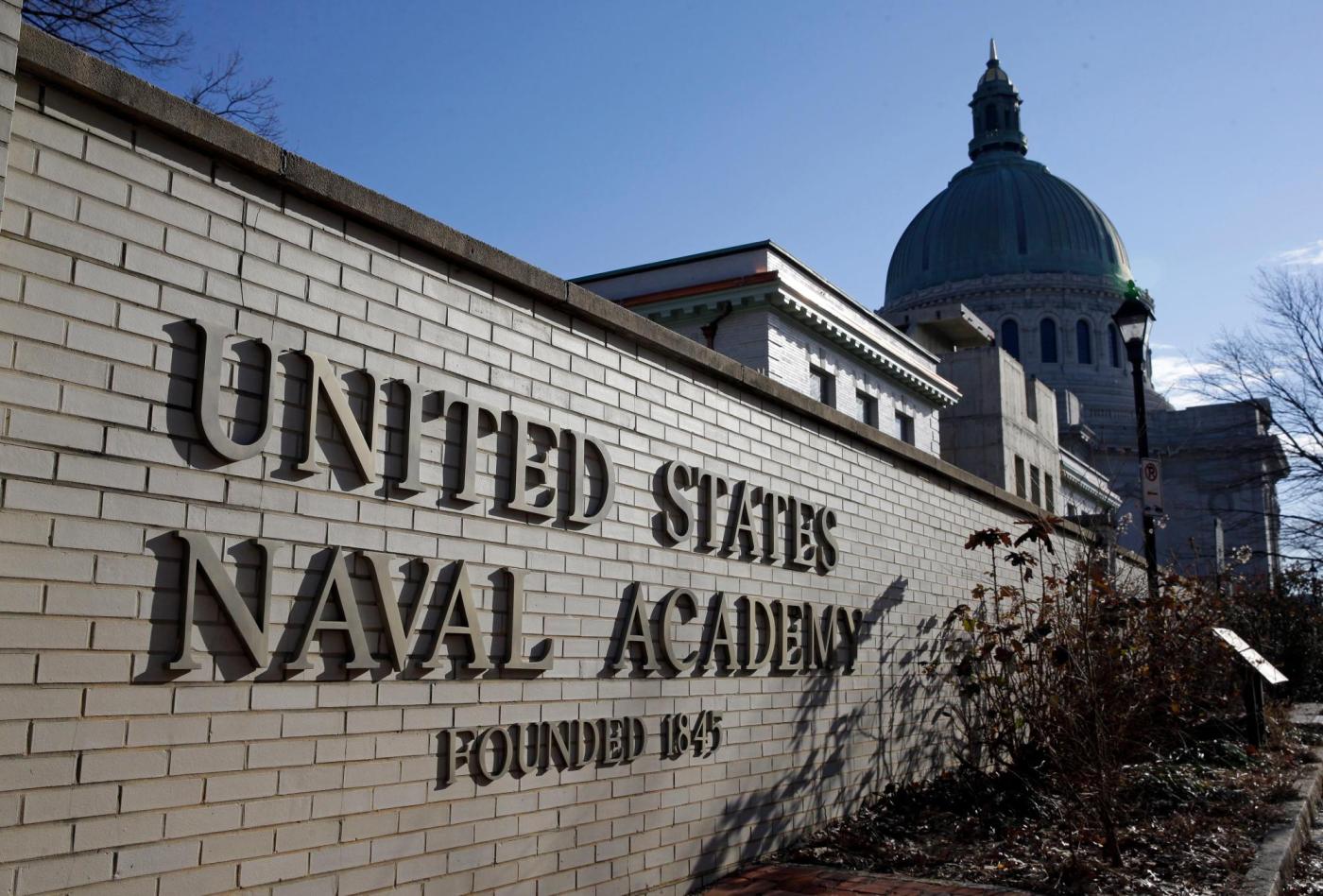
ANNAPOLIS, Md. (AP) — The U.S. Naval Academy will no longer consider race, ethnicity or sex as a factor for admission to the service institution, a response to an executive order by President Donald Trump, according to federal court documents made public Friday.

The change in policy was made in February by Vice Adm. Yvette Davids, the academy’s superintendent, in response to an executive order issued by President Donald Trump in January, according to a court filing by the U.S. Justice Department in the 4th U.S. Circuit Court of Appeals.

The president’s order on Jan. 27 said that “every element of the Armed Forces should operate free from any preference based on race or sex.” It also directed the secretary of defense to conduct an internal review with respect to all “activities designed to promote a race- or sex-based preferences system,” including reviews at the service academies.

“Under revised internal guidance issued by the Superintendent on Feb. 14, 2025, neither race, ethnicity, nor sex can be considered as a factor for admission at any point during the admissions process, including qualification and acceptance,” according to the court filing made public Friday.

Related Articles


Appeals court clears way for DOGE to keep operating at USAID


Hegseth’s younger brother is serving in a key role as liaison and senior adviser inside the Pentagon


What is the Smithsonian, and why is President Trump unhappy with it?


Wisconsin attorney general sues Elon Musk to block $1 million payment offers


Trump endorses budget fix that would restore Washington, DC, shortfall and urges House to pass it

The decision comes after a federal judge ruled in December that the academy could continue considering race in its admissions process. In that case, the judge found that military cohesion and other national security factors mean the school should not be subjected to the same standards as civilian universities.

During a two-week bench trial in September, attorneys for the academy argued that prioritizing diversity in the military makes it stronger, more effective and more widely respected.

The case against the policy was brought by the group Students for Fair Admissions, which was appealing the judge’s decision.

The Justice Department asked in the filing on Friday to suspend the current briefing schedule in the case while the parties consider the change in the academy’s policy.

‘The parties require a reasonable amount of time to discuss the details of the Academy’s new policy and to consider the appropriate next steps for this litigation, including whether this litigation is now moot and, if so, whether the district court judgment should be vacated,” the Justice Department wrote.

Students for Fair Admissions also brought the lawsuit challenging affirmative action that resulted in a landmark U.S. Supreme Court ruling in 2023.

The high court’s conservative majority broadly prohibited the consideration of race and ethnicity in college admissions, ending a long-standing practice meant to boost opportunities for historically marginalized groups and sending shock waves through higher education. But it carved out a potential exemption for military academies, suggesting that national security interests could affect the legal analysis.

Students for Fair Admissions later sued the Annapolis-based Naval Academy, challenging the exemption. But Judge Richard Bennett rejected their arguments, saying that the school had “established a compelling national security interest in a diverse officer corps.”

Attorneys for the group argued during trial that prioritizing minority candidates is unfair to qualified white applicants and that cohesion should arise from other sources such as training and command structure.

The academy argued in that case that its admissions process considers many factors, including grades, extracurricular activities, life experience and socioeconomic status, according to court testimony. Race often played no role in the process, but sometimes it came under consideration in a “limited fashion,” attorneys for the academy wrote in court papers.

Trump commutes the sentence of Ozy Media co-founder Carlos Watson

posted in: All news | 0

By CHRIS MEGERIAN, Associated Press

WEST PALM BEACH, Fla. (AP) — President Donald Trump commuted the sentence of Ozy Media co-founder Carlos Watson on Friday, just before he was due to report to prison for a nearly 10-year sentence in a financial conspiracy case.

Watson was convicted last year in a closely watched case that showcased the implosion of an ambitious startup company.

Related Articles


Appeals court clears way for DOGE to keep operating at USAID


Hegseth’s younger brother is serving in a key role as liaison and senior adviser inside the Pentagon


What is the Smithsonian, and why is President Trump unhappy with it?


Wisconsin attorney general sues Elon Musk to block $1 million payment offers


Trump endorses budget fix that would restore Washington, DC, shortfall and urges House to pass it

The commutation was confirmed by a senior White House official who was not authorized to speak publicly about the decision and spoke on condition of anonymity.

Breon Peace, who was serving as the Brooklyn-based U.S. attorney at the time, said after the trial that the jury determined that “Watson was a con man who told lie upon lie upon lie to deceive investors into buying stock in his company.”

Ozy Media “collapsed under the weight of Watson’s dishonest schemes,” Peace said.

Trump has been aggressively using his presidential powers to commute sentences and pardon people who he believes were treated unfairly by the justice system.