Who is Susan Crawford? Wisconsin Supreme Court winner has fought for union and abortion rights

posted in: All news | 0

By SCOTT BAUER

MADISON, Wis. (AP) — Susan Crawford, winner of Tuesday’s race to fill a key seat on the Wisconsin Supreme Court, was backed by national Democrats and made opposition to Elon Musk a centerpiece of her campaign.

Here’s what to know about her:

A longtime judge in Wisconsin’s capital city

Crawford, 60, has served as a Dane County Circuit Court judge since 2018.

She won election to the seat that year and again in 2022 in the county, which is home to the liberal state capital, Madison.

Crawford previously worked as an assistant attorney general for both the Iowa and Wisconsin departments of justice and as an attorney in the Wisconsin Department of Natural Resources.

In 2009, she joined Democratic Wisconsin Gov. Jim Doyle’s staff as his legal counsel. After Doyle left office in 2011, Crawford joined a liberal Madison law firm that filed numerous lawsuits challenging Republican-enacted laws.

In that role she represented Planned Parenthood in a pair of cases challenging limitations to abortion. She also spoke against the U.S. Supreme Court ruling that overturned Roe v. Wade. Two cases challenging an 1849 Wisconsin abortion ban law are pending before the state Supreme Court.

She represented unions in a landmark case

Crawford represented public teacher unions in a case challenging a GOP law that effectively ended collective bargaining for teachers and most other public workers.

That law, known as Act 10, was the centerpiece of Republican former Gov. Scott Walker’s tenure and made Wisconsin the center of the national debate over union rights.

Last year a Dane County judge struck down most of the statute as unconstitutional, and an appeal is expected to reach the Wisconsin Supreme Court.

Crawford also fought a Republican-written law requiring voters to show photo ID at the polls.

She grew up in Chippewa Falls and graduated from Lawrence University in Appleton in 1987 and the University of Iowa College of Law in 1994.

Crawford lives in Madison and is married with two children.

Twins get in the win column with five-run sixth inning

posted in: All news | 0

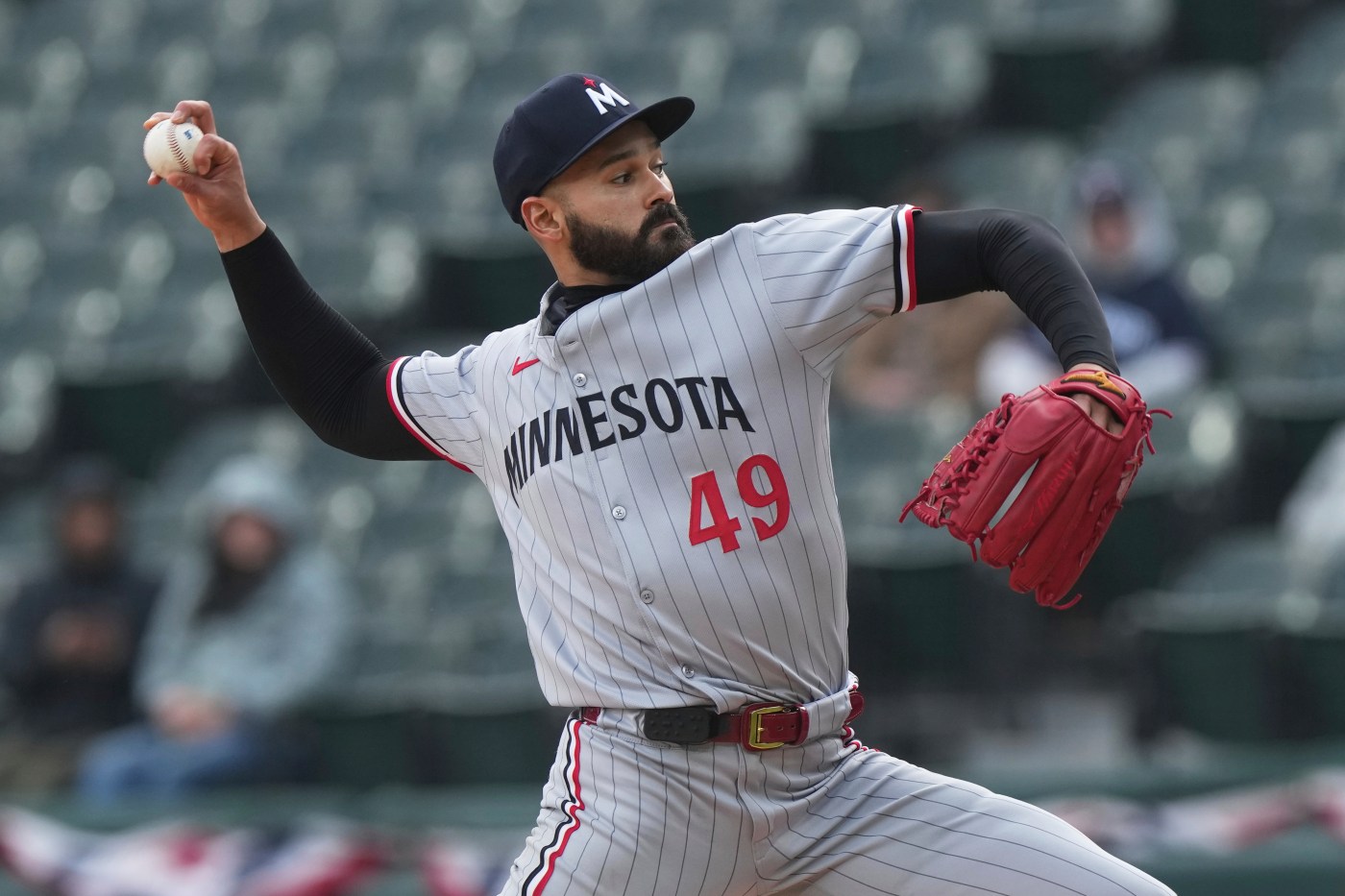
CHICAGO — Byron Buxton looked at four pitches from rookie Shane Smith and then took his base. Trevor Larnach watched five more go by, four of them balls, before taking his base, as well.

Those two walks spelled the end of Smith’s night and set the stage for the Twins to finally break out. With two outs in the sixth inning, facing reliever Penn Murfee, the Twins’ offense came to life, erupting for five runs — all with two outs — to lift them to their first victory of the season, a 8-3 win over the Chicago White Sox at Rate Field.

The Twins, prior to that point, had managed just two hits off of Smith, a Rule 5 draft pick making his major league debut. But after his departure, the Twins’ offense took out its frustration on Murfee.

Ryan Jeffers drove in the Twins’ first run since the fourth inning on Sunday to get the scoring going. Ty France followed, sending an RBI single into center. After Willi Castro was hit by a pitch to load the bases, Edouard Julien, making his first start of the season, took advantage of his opportunity, singling to left to tie up the game.

Jose Miranda then dropped a softly-hit ball — it was struck at 65.1 miles per hour off the bat — in between first baseman Andrew Vaughn and right fielder Austin Slater, giving the Twins a two-run lead.

And in the ninth, Harrison Bader crushed a breaking ball left over the heart of the plate, sending it out of the park to left to give the Twins a cushion. The eight-run output more than doubled the Twins’ offensive production to date after a slow collective start at the plate.

It came in support of Simeon Woods Richardson who, in his first start of the season, went four innings and allowed a pair of runs. One scored in the second on a Brooks Baldwin RBI single and the other in the fourth on a Baldwin sacrifice fly.

Woods Richardson made way for Louie Varland, who gave up a solo home run to designated hitter Nick Maton but still earned the victory.

But after that, a quartet of Twins relievers — Cole Sands, Jorge Alcala, Griffin Jax and Danny Coulombe — each turned in a scoreless inning to secure the Twins’ first win of the season.

Democratic-backed Susan Crawford wins Wisconsin Supreme Court seat, cementing liberal majority

posted in: All news | 0

MADISON, Wis. — The Democratic-backed candidate for Wisconsin Supreme Court defeated a challenger endorsed by President Donald Trump and billionaire Elon Musk on Tuesday, cementing a liberal majority for at least three more years.

Susan Crawford, a Dane County judge who led legal fights to protect union power and abortion rights and to oppose voter ID, defeated Republican-backed Brad Schimel in a race that broke records for spending, was on pace to be the highest-turnout Wisconsin Supreme Court election ever and became a proxy fight for the nation’s political battles.

“Growing up in Chippewa Falls, I never could have imagined that I would be taking on the richest man in the world for justice in Wisconsin,” Crawford said, referring to Musk. “And we won.”

Trump, Musk and other Republicans lined up behind Schimel, a former state attorney general. Democrats including former President Barack Obama and billionaire megadonor George Soros backed Crawford.

The first major election in the country since November was seen as a litmus test of how voters feel about Trump’s first months back in office and the role played by Musk, whose Department of Government Efficiency has torn through federal agencies and laid off thousands of workers. Musk traveled to Wisconsin on Sunday to make a pitch for Schimel and personally hand out to $1 million checks to voters.

Early voting was more than 50% ahead of levels seen in the state’s Supreme Court race two years ago, when majority control was also at stake.

Seven polling sites in Milwaukee ran out of ballots, or were nearly out, due to “historic turnout,” and more ballots were on their way before polls closed, said Paulina Gutierrez, the executive director of the Milwaukee Elections Commission.

Clerks all across the state, including in the city’s deep-red suburbs, reported turnout far exceeding 2023 levels.

Schimel told his supporters he had conceded to Crawford, leading to yells of anger. One woman began to chant, “Cheater, cheater!”

“No,” Schimel said. “You’ve got to accept the results.”

A state race with nationwide significance

The court can decide election-related laws and settle disputes over future election outcomes.

“Wisconsin’s a big state politically, and the Supreme Court has a lot to do with elections in Wisconsin,” Trump said Monday. “Winning Wisconsin’s a big deal, so therefore the Supreme Court choice … it’s a big race.”

Crawford embraced the backing of Planned Parenthood and other abortion rights advocates, running ads that highlighted Schimel’s opposition to the procedure. She also attacked Schimel for his ties to Musk and Republicans, referring to Musk as “Elon Schimel” during a debate.

Schimel’s campaign tried to portray Crawford as weak on crime and a puppet of Democrats who, if elected, would push to redraw congressional district boundary lines to hurt Republicans and repeal a GOP-backed state law that took collective bargaining rights away from most public workers.

Voters in Eau Claire seemed to be responding to both messages. Jim Seeger, a 68-year-old retiree, said he voted for Schimel because he’s concerned about redistricting.

Jim Hazelton, a 68-year-old disabled veteran, said he had planned to abstain but voted for Crawford after Musk — whom he described as a “pushy billionaire” — and Trump got involved.

“He’s cutting everything,” Hazelton said of Musk. “People need these things he’s cutting.”

What’s on the court’s agenda?

Crawford’s win keeps the court under a 4-3 liberal majority, as it has been since 2023. A liberal justice is not up for election again until April 2028, ensuring liberals will either maintain or increase their hold on the court until then.

Crawford took the stage Tuesday evening surrounded by the four current liberal justices, thanked each of them and hugged them.

The court likely will be deciding cases on abortion, public sector unions, voting rules and congressional district boundaries. Who controls the court also could factor into how it might rule on any future voting challenge in the perennial presidential battleground state, which raised the stakes of the race for national Republicans and Democrats.

Musk and groups he funded poured more than $21 million into the contest. Donald Trump Jr., the president’s eldest son, campaigned for Schimel in the closing weeks and said electing him was essential to protecting the Republican agenda. Trump endorsed Schimel just 11 days before the election.

Last year the court declined to take up a Democratic-backed challenge to congressional lines, but Schimel and Musk have said that if Crawford won, the court would redraw congressional districts to make them more favorable to Democrats.

Musk was pushing that message on election day, both on TV and the social media platform he owns, X, urging people to cast ballots in the final hours of voting.

Schimel, who leaned into his Trump endorsement in the closing days of the race, said he would not be beholden to the president or Musk despite the massive spending on the race by groups that Musk supports.

Crawford benefitted from campaign stops by Minnesota Gov. Tim Walz, the vice presidential nominee last year, and money from billionaire megadonors including Soros and Illinois Gov. JB Pritzker.

Record-breaking donations

The contest was the most expensive court race on record in the U.S., with spending nearing $99 million, according to a tally by the Brennan Center for Justice. That broke the previous record of $51 million record, for the state’s Supreme Court race in 2023.

Musk contributed $3 million to the campaign, while groups he funded poured in another $18 million. Musk also gave $1 million each to three voters who signed a petition he circulated against “activist” judges.

“Today, Wisconsinites fended off an unprecedented attack on our democracy, our fair elections and our Supreme Court,” Crawford said in her victory speech. “And Wisconsin stood up and said loudly that justice does not have a price, our courts are not for sale.”

Musk was silent on his X platform in the wake of Crawford’s victory, reposting a message about Vietnam and tariffs but nothing on the Supreme Court contest.

Related Articles


Democratic-backed Susan Crawford wins Wisconsin Supreme Court seat, cementing liberal majority


Wisconsin appeals court won’t stop Musk’s $1 million payments to voters after attorney general sues


Wisconsin attorney general sues Elon Musk to block $1 million payment offers


Lisa Jarvis: What we’re getting right fighting the overdose epidemic


What to know about Wisconsin’s Supreme Court race

Schimel leaned into his support from Trump while saying he would not be beholden to the president or Musk. Democrats have centered their messaging on the spending by Musk-funded groups.

“Ultimately I think it’s going to help Susan Crawford, because people do not want to see Elon Musk buying election after election after election,” Wisconsin Democratic Party Chair Ben Wikler said Monday. “If it works here, he’s going to do it all over the country.”

Voters weigh in on Musk and reasons for whom they backed
At a polling place in Waunakee near Madison, 39-year-old Iraq War veteran Taylor Sullivan said he voted for Schimel for no reasons connected to Trump or Musk, but rather “because I support the police as much as Schimel does.”

In Milwaukee, 22-year-old college student Kenneth Gifford said he feels that Trump has done damage to American institutions and that Musk is trying to buy votes.

“I want an actual, respectable democracy,” he said.

Wisconsin votes to enshrine voter ID requirement in state constitution

posted in: All news | 0

By SCOTT BAUER, Associated Press

MADISON, Wis. (AP) — Wisconsin voters decided Tuesday to enshrine the state’s voter ID law in the state constitution.

The state was also electing its top education official, who will guide policies affecting K-12 schools during President Donald Trump’s second term, will be elected Tuesday in a race between the teachers union-backed incumbent and a Republican-supported critic.

Both contests had sharp partisan divisions, though they have drawn far less spending and national attention than the race for control of the Wisconsin Supreme Court. Polls closed at 8 p.m. CDT.

Here’s a look at the two contests:

Longtime voter ID law enshrined in the state constitution

Wisconsin’s photo ID requirement for voting will be elevated from state law to constitutional amendment under a proposal approved by voters.

Related Articles


Naval Academy removes nearly 400 books from library in new DEI purge ordered by Hegseth’s office


Anger against Trump is likely to cost the US international visitors, forecaster says


Trump administration pauses some family planning grants as it investigates compliance with laws


Most immigrants at risk of deportation from US are Christian, report finds


Melania Trump says courage is ‘based in love’ as she honors women from around the world for bravery

The Republican-controlled Legislature placed the measure on the ballot and pitched it as a way to bolster election security and protect the law from being overturned in court.

Democratic opponents argued that photo ID requirements are often enforced unfairly, making voting more difficult for people of color, disabled people and poor people.

Wisconsin voters won’t notice any changes when they go to the polls. They will still have to present a valid photo ID just as they have under the state law, which was passed in 2011 and went into effect permanently in 2016 after a series of unsuccessful lawsuits.

Placing the photo ID requirement in the constitution makes it more difficult for a future Legislature controlled by Democrats to change the law. Any constitutional amendment must be approved in two consecutive legislative sessions and by a statewide popular vote.

Republican legislators celebrated the measure’s passage.

“This will help maintain integrity in the electoral process, no matter who controls the Legislature,” Sen. Van Wanggaard, who co-authored the amendment, said in a statement.

Elon Musk, the world’s richest man, who is leading Trump’s efforts to shrink the federal government, also noted the outcome on his social media platform, X, saying: “Yeah!”

Wisconsin is one of nine states where people must present photo ID to vote, and its requirement is the nation’s strictest, according to the National Conference of State Legislatures. Thirty-six states have laws requiring or requesting that voters show some sort of identification, according to the NCSL.

Union-backed incumbent faces GOP-backed voucher advocate

The race to lead the state Department of Public Instruction pits incumbent Jill Underly, who is backed by Democrats and the teachers union, against consultant Brittany Kinser, a supporter of the private school voucher program who is endorsed by Republicans but calls herself a moderate.

FILE – This photo released by the Jill Underly campaign shows Wisconsin Department of Public Instruction Superintendent Jill Underly in Hollandale, Wis. in 2024. (Jill Underly campaign via AP, File)

Wisconsin is the only state where voters elect the top education official but there is no state board of education. That gives the superintendent broad authority to oversee education policy, from dispersing school funding to managing teacher licensing.

The winner will take office at a time when test scores are still recovering from the pandemic, the achievement gap between white and Black students remains the worst in the country and more schools are asking voters to raise property taxes to pay for operations.

Underly’s education career began in 1999 as a high school social studies teacher in Indiana. She moved to Wisconsin in 2005 and worked for five years at the state education department. She also was principal of Pecatonica Elementary School for a year before becoming district administrator.

Underly, 47, was elected state superintendent in 2021 and was endorsed by the union, the Wisconsin Education Association Council, as well as the Wisconsin Democratic Party and numerous Democratic officeholders.

Kinser, whose backers include the Wisconsin Republican Party and former Republican Govs. Tommy Thompson and Scott Walker, is vying to become the first GOP-affiliated person to hold the superintendent position in more than 30 years.

FILE – This photo released by the Brittany Kinser campaign shows education consultant and candidate for Wisconsin Department of Instruction secretary Brittany Kinser. (Brittany Kinser campaign via AP, File)

She worked for almost 10 years as a special education teacher and instructional coach in Chicago Public Schools. After that she spent 15 years at public charter schools in Chicago, California and Milwaukee.

In the Milwaukee area, Kinser worked for Rocketship schools, part of a national network of public charter institutions, and became its executive director for the region.

In 2022 she left Rocketship for City Forward Collective, a Milwaukee nonprofit that advocates for charter and voucher schools. She also founded a consulting firm where she currently works.

Kinser, 47, tried to brand Underly as being a poor manager of the Department of Public Instruction and keyed in on her overhaul of state achievement standards last year.

Underly said that was done to better reflect what students are learning now, but the change was met with bipartisan opposition including from Democratic Gov. Tony Evers, who was previously state superintendent himself. Evers has not made an endorsement in the race.

Kinser said the new standards lowered the bar for students and made it more difficult to evaluate how schools and districts are performing over time.

Underly portrayed Kinser as nothing more than a lobbyist who doesn’t care about public education. Kinser supports the state’s private school voucher and charter school program, which Democrats and Underly oppose on the grounds that such programs siphon needed money away from public schools.