US bans government personnel in China from romantic or sexual relations with Chinese citizens

posted in: All news | 0

By DAKE KANG, MATTHEW LEE and DIDI TANG, Associated Press

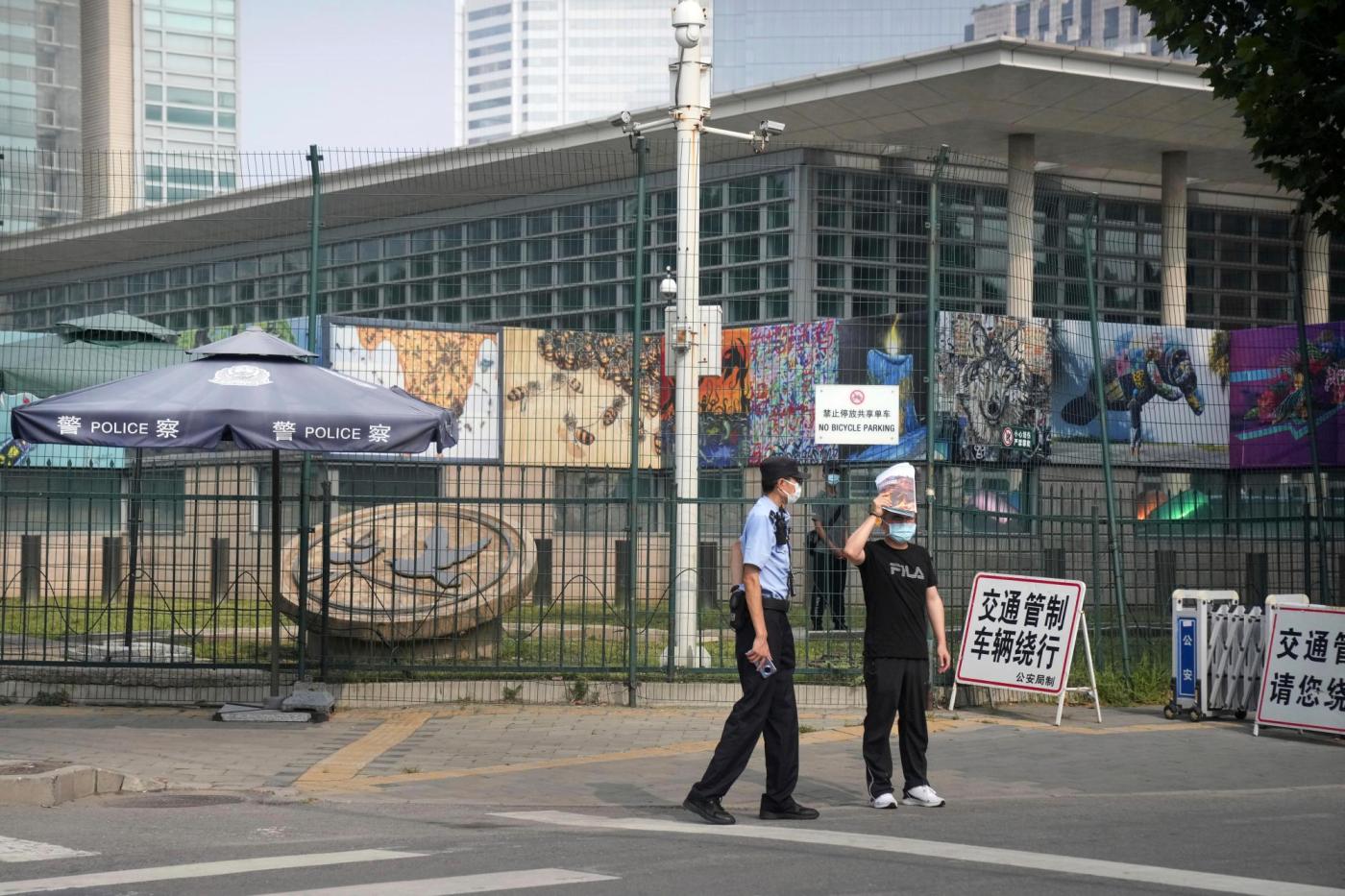
WASHINGTON (AP) — The U.S. government has banned American government personnel in China, as well as family members and contractors with security clearances, from any romantic or sexual relationships with Chinese citizens, The Associated Press has learned.

Four people with direct knowledge of the matter told the AP about the policy, which was put into effect by departing U.S. Ambassador Nicholas Burns in January shortly before he left China. The people would speak only on condition of anonymity to discuss details of a confidential new directive.

Though some U.S. agencies already had strict rules on such relationships, a blanket “non-fraternization” policy, as it is known, has been unheard of publicly since the Cold War. It’s not uncommon for American diplomats in other countries to date locals and even marry them.

A more limited version of the policy was enacted last summer prohibiting U.S. personnel from “romantic and sexual relations” with Chinese citizens working as guards and other support staff at the U.S. Embassy and five consulates in China. But Burns, the departing ambassador, broadened it to a blanket ban on such relations with any Chinese citizen in China in January, days before President Donald Trump took office. The AP was unable to determine exactly how the policy defined the phrase “romantic or sexual relationship.”

Two of the people with knowledge of the ban told the AP the new policy was first discussed last summer after members of Congress contacted Burns to express concern that restrictions on such relationships were not stringent enough. The House Select Committee on the Chinese Communist Party did not respond to a request for comment.

The new policy covers U.S. missions in mainland China, including the embassy in Beijing and consulates in Guangzhou, Shanghai, Shenyang and Wuhan, as well as the American consulate in the semi-autonomous territory of Hong Kong. It does not apply to U.S. personnel stationed outside China.

The only exception to the policy is U.S. personnel with pre-existing relations with Chinese citizens; they can apply for exemptions. If the exemption is denied, they must end the relationship or leave their position, the people said. Anyone who violates the policy will be ordered to leave China immediately.

The policy was communicated verbally and electronically to American personnel in China in January, but has not been publicly announced.

The State Department said it does not comment on internal matters. The National Security Council referred questions to the State Department. Burns, the former ambassador, did not reply to an AP request sent to his email address at The Cohen Group, a consultancy that he rejoined as vice chair in February.

A Cold War throwback

Intelligence services across the world have long used attractive men and women to obtain sensitive information, famously during the Cold War. The State Department and other agencies with offices in China have long had stringent reporting requirements on personal relationships for American personnel stationed there, as well as rivals considered high intelligence threats such as Russia or Cuba.

Declassified State Department documents show that in 1987, the U.S. government barred personnel stationed in the Soviet bloc and China from befriending, dating or having sex with locals after a U.S. Marine in Moscow was seduced by a Soviet spy. Such restrictions were relaxed after the collapse of the Soviet Union in 1991, according to news reports at the time.

In China, a blanket ban on such relations has not been in effect for many years. Until the new ban in January, U.S. personnel in China were required to report any intimate contact with Chinese citizens to their supervisors, but were not explicitly forbidden from sexual or romantic relationships.

U.S. diplomats and intelligence experts say that Beijing continues to aggressively use so-called honeypots to access American secrets. In presentations before being stationed in China, U.S. personnel are briefed on case studies where Chinese intelligence services sent attractive women to seduce American diplomats, and warned that dozens of Chinese state security agents can be assigned to monitor any individual diplomat of interest.

Little is known about the U.S. government’s non-fraternization policies elsewhere, as they are considered classified. It is unknown how restrictive such policies are in other countries.

Rising tensions, tighter controls

In recent years, tensions between Washington and Beijing have escalated over trade, technology and geopolitical competition.

Peter Mattis, a former CIA analyst and president of The Jamestown Foundation, a Washington-based think tank, said there were at least two publicized cases in which Chinese agents seduced American diplomats stationed in China, though he hasn’t heard of such a case in recent years.

Mattis added that another issue is that Chinese state security doesn’t gather intelligence just through spies, but also by pressing ordinary Chinese people for information, often through threats or intimidation. That, Mattis said, means any Chinese citizen who dates an American diplomat could be vulnerable to coercion.

“The MSS is willing to leverage any human connection that a target has to collect intelligence,” Mattis said, using an acronym referring to China’s Ministry of State Security. “This rule change suggests the MSS has gotten a lot more aggressive at trying to access the embassy and U.S. government.”

The Chinese foreign ministry did not comment on the ban, saying in a faxed statement that it was “more appropriate to ask the U.S. about this question.”

China also has been tightening already strict controls on its personnel overseas, according to Chinese regulations, news reports and four people familiar with China’s bureaucracy who spoke on condition of anonymity so they could discuss a sensitive topic. In recent years, Beijing began strictly enforcing regulations that bar promotions for Chinese civil servants with spouses who acquired foreign citizenship and restrict diplomats from spending an extended period of time in one country, forcing some to return to China.

China’s foreign ministry and many other government bodies bar their officials and staff from sexual or romantic relations with foreign citizens, while members of the Chinese military or police are generally barred from leaving China altogether without express approval from their supervisors.

Kang reported from Beijing.
Rubio tries to reassure wary allies of US commitment to NATO as Trump sends mixed signals

posted in: All news | 0

By MATTHEW LEE and LORNE COOK, Associated Press

BRUSSELS (AP) — U.S. Secretary of State Marco Rubio and the Trump administration’s new envoy to NATO are seeking to reassure wary NATO allies of the U.S. commitment to the alliance.

Rubio on Thursday decried “hysteria and hyperbole” in the media about President Donald Trump’s intentions despite persistent signals from Washington that NATO as it has existed for 75 years may no longer be relevant.

Rubio and newly confirmed U.S. ambassador to NATO Matt Whitaker are in Brussels for a meeting of alliance foreign ministers at which many are hoping Rubio will shed light on U.S. security plans in Europe.

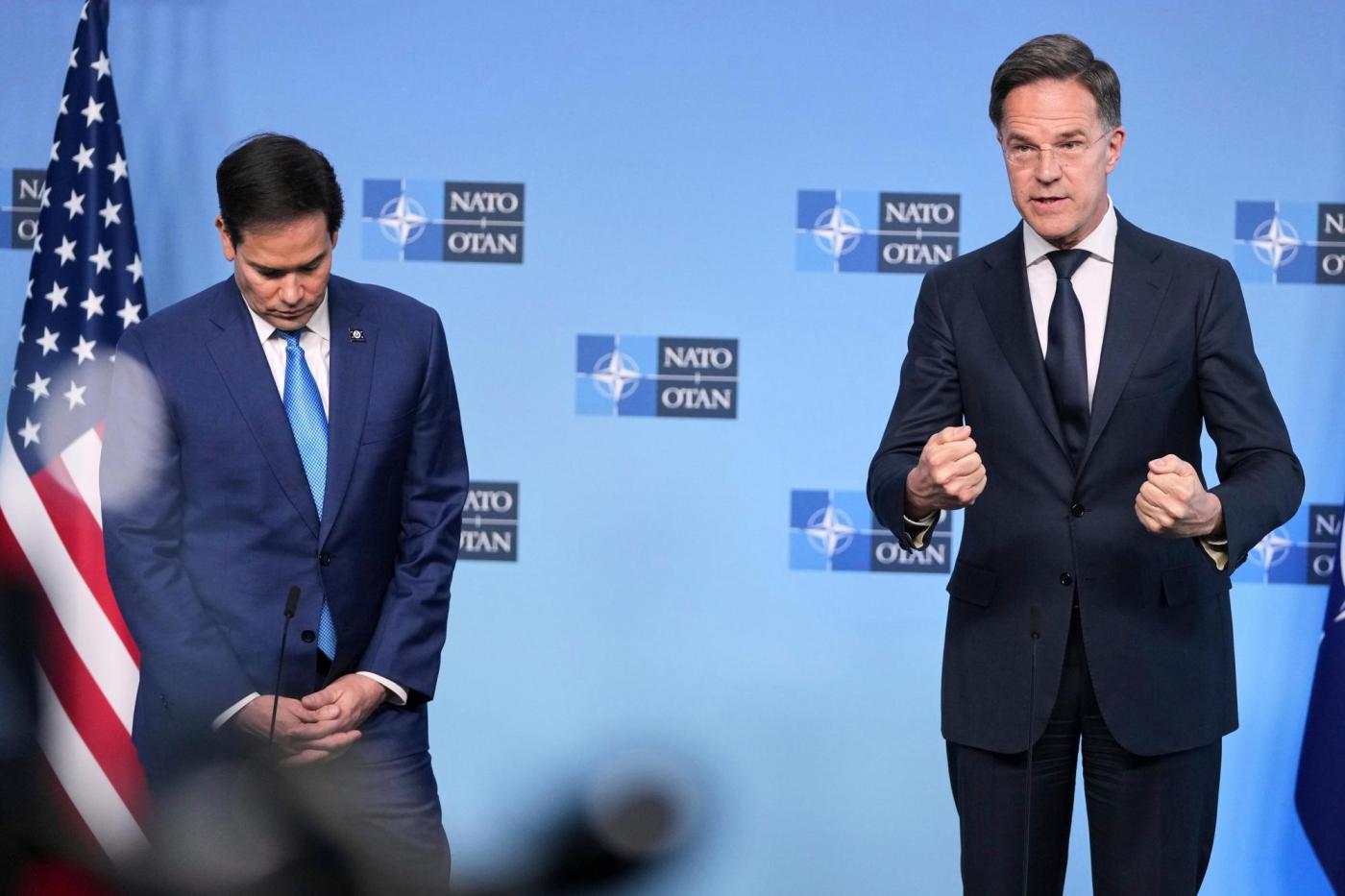
U.S. Secretary of State Marco Rubio makes statements during his meeting with NATO Secretary General Mark Rutte on the sidelines of a NATO foreign ministers meeting at NATO headquarters in Brussels, Thursday, April 3, 2025. (AP Photo/Jacquelyn Martin, Pool)

“The United States is as active in NATO as it has ever been,” Rubio told reporters as he greeted NATO chief Mark Rutte before the meeting began. “And some of this hysteria and hyperbole that I see in the global media and some domestic media in the United States about NATO is unwarranted.”

“President Trump’s made clear he supports NATO,” Rubio said. “We’re going to remain in NATO.”

“We want NATO to be stronger, we want NATO to be more visible and the only way NATO can get stronger, more visible is if our partners, the nation states that comprise this important alliance, have more capability,” he said.

In a statement, Whitaker said that “under President Trump’s leadership, NATO will be stronger and more effective than ever before, and I believe that a robust NATO can continue to serve as a bedrock of peace and prosperity.” But he added: “NATO’s vitality rests on every ally doing their fair share.”

Concerns about US commitment to allies

Despite those words, European allies and Canada are deeply concerned by Trump’s readiness to draw closer to Russian leader Vladimir Putin, who sees NATO as a threat as the U.S. tries to broker a ceasefire in Ukraine, his rhetorical attacks and insults against on allies like Canada and Denmark.

Related Articles


Sweeping Trump tariffs draw dismay, calls for talks from countries around the globe


Answering your questions about President Trump’s vast new tariffs


Democrats demoralized by Trump get a boost from Wisconsin voters and Cory Booker’s speech


Kennedy remains quiet on 10,000 jobs lost at the nation’s top health department


Law firms fear Trump orders could affect security clearances of lawyers who are military reservists

And Trump’s Wednesday imposition of new global tariffs, which will affect allies, have added to the uncertainty and unease.

Asked about concerns among European allies about a possible U.S. troop drawdown and the importance of getting clear messages from the Trump administration, Rutte said: “These issues are not new. There are no plans for them to all of a sudden draw down their presence here in Europe.”

Indeed, the Trump administration has not made its NATO allies aware any plans it might have. But several European countries are convinced that U.S. troops and equipment will be withdrawn, and they want to find out from Rubio how many and when so they can fill any security gaps.

“We need to preempt a rapid retreat, but we’ve had nothing precise from the U.S. yet,” a senior NATO diplomat said ahead of the meeting, briefing reporters on his country’s expectations on condition that he not be named.

Rutte’s dilemma

Rutte is in a bind. European allies and Canada have tasked him with keeping the United States firmly in NATO. Around 100,000 U.S. troops are stationed in Europe along with the Navy’s 6th Fleet and nuclear warheads. U.S. firepower ensures that NATO’s ability to deter Russia is credible.

NATO Secretary General Mark Rutte, right, walks with United States Secretary of State Marco Rubio after addressing the media during a meeting of NATO foreign ministers at NATO headquarters in Brussels, Thursday, April 3, 2025. (AP Photo/Virginia Mayo)

This means he cannot openly criticize Trump, who is commander in chief of NATO’s biggest and best-equipped armed forces.

What is clear, is that U.S. allies must ramp up defense spending even more than they already have since Russia launched its full-scale invasion of Ukraine 3 years ago, so that they can defend Europe with less American help and keep Ukraine’s armed forces in the fight.

“The U.S expects European allies to take more responsibility for their own security,” Dutch Foreign Minister Caspar Veldkamp said, which means that “European NATO countries rapidly have to strengthen the European pillar of NATO and have to increase their defense spending.”

Since Defense Secretary Pete Hegseth warned last month that U.S. security priorities lie elsewhere — in Asia and on the U.S.’s own borders — the Europeans have waited to learn how big a military drawdown in Europe could be and how fast it may happen.

In Europe and Canada, governments are working on “burden shifting” plans to take over more of the load, while trying to ensure that no security vacuum is created if U.S. troops and equipment are withdrawn from the continent.

Today in History: April 3, Unabomber arrested in Montana

posted in: All news | 0

Today is Thursday, April 3, the 93rd day of 2025. There are 272 days left in the year.

Today in history:

On April 3, 1996, Theodore Kaczynski (kah-ZIHN’-skee), also known as the Unabomber, was arrested at his remote Montana cabin by FBI agents.

Also on this date:

In 1860, the first Pony Express mail delivery rides began; one heading west from St. Joseph, Missouri, and one heading east from Sacramento, California.

Related Articles


Today in History: April 2, Pope John Paul II dies at 84


Today in History: April 1, US forces invade Okinawa during World War II


Today in History: March 31, Bruce Lee’s son accidentally shot to death on movie set


Today in History: March 30, Reagan shot in assassination attempt


Today in History: March 29, ‘Terra-cotta Army’ discovered in China

In 1882, outlaw Jesse James was shot and killed in St. Joseph, Missouri, by Robert Ford, a member of James’ gang.

In 1936, Bruno Richard Hauptmann was electrocuted in Trenton, New Jersey, for the kidnap-murder of 20-month-old Charles Lindbergh Jr.

In 1944, the U.S. Supreme Court, in Smith v. Allwright, struck down a Democratic Party of Texas rule that allowed only white voters to participate in Democratic primaries.

In 1948, President Harry S. Truman signed into law the Marshall Plan, designed to help European allies rebuild after World War II and resist communism.

In 1968, civil rights leader Martin Luther King Jr. delivered what was to be his final speech, telling a rally of striking sanitation workers in Memphis, Tennessee, “I’ve been to the mountaintop. … I’ve seen the Promised Land. I may not get there with you. But I want you to know tonight that we, as a people, will get to the Promised Land!” (The following day, King was killed by an assassin’s bullet at the Lorraine Motel in Memphis.)

In 1973, the first handheld portable telephone was demonstrated for reporters on a New York City street corner as Motorola executive Martin Cooper called Joel S. Engel of Bell Labs.

In 1974, an outbreak of tornadoes began hitting wide parts of the South and Midwest before jumping across the border into Canada; 148 tornadoes caused more than 300 fatalities in what became known as the 1974 Super Outbreak.

In 1996, a U.S. Air Force jet crashed as it approached Dubrovnik, Croatia; all 35 people on board were killed, including U.S. Secretary of Commerce Ron Brown.

Today’s birthdays:

Conservationist Jane Goodall is 91.
Actor Marsha Mason is 83.
Singer Wayne Newton is 83.
Singer Tony Orlando is 81.
Singer-songwriter Richard Thompson is 76.
Actor Alec Baldwin is 67.
Actor David Hyde Pierce is 66.
Actor-comedian Eddie Murphy is 64.
Celebrity chef Cat Cora is 58.
Olympic skiing gold medalist Picabo Street is 54.
Actor Jennie Garth is 53.
Actor Adam Scott is 52.
Football Hall of Famer Jared Allen is 43.
Actor Cobie Smulders is 43.
Singer Leona Lewis is 40.
Actor-comedian Rachel Bloom is 38.

Dining Diary: Breakfast at Razava, dinner at The High Hat, dessert and drinks at Estelle

posted in: All news | 0

What would the ultimate St. Paul dining day look like?

I think a few places I visited this week would certainly make that list. (I’d love to hear your ideas, too: Send them my way at eat@pioneerpress.com.)

Next week’s Dining Diary column will focus on lunches — but this week, we’re visiting some new spots and classic favorites for breakfast, dinner and, perhaps the most important meal of the day, dessert.

Breakfast: Bagel and lox at Razava

I celebrated my birthday last week, which of course called for a day of good food — and where else to start but Razava Bread Co.? The 4-month-old Grand Avenue sourdough bakery has quickly become one of my favorite spots in the city.

The interior design gives off the vibe of a European sidewalk cafe, and the savory, Caesar-inspired house schmear elevates the bagels and lox to new heights. (When Razava opened, I wrote that the herbaceousness of the cream cheese “rocks with the lox,” which might be the best thing I’ve ever come up with. Not to brag. But hey, it’s my birthday — I can do whatever I want.)

Razava Bread Co: 685 Grand Ave.; 763-338-0853; razavabread.co

Dinner: Pot roast tacos at The High Hat

The chipotle pot roast tacos are a standout item on the new dinner menu at The High Hat, a Southwestern-inspired Cathedral Hill cafe that opened for breakfast and lunch in 2023. The tacos, as served March 23, 2025, contain roasted sweet potatoes, peppers and onions. (Jared Kaufman / Pioneer Press)

The High Hat, the delightful Southwestern-inspired Cathedral Hill cafe that opened almost two years ago for breakfast and lunch, has at long last added dinner service. And as the sun goes down outside, it’s fun to watch a space that’s bright and cheery in the mornings (formerly home to Bon Vie Bistro/A Piece of Cake) become an evening lounge that’s moodier and swankier but still approachable as ever.

The standout for me were the chipotle pot roast tacos, with tender slow-cooked beef, onions, peppers and roasted sweet potato on really good corn tortillas. The beef was juicy as all get-out, and although the sweet potatoes got a bit lost, the grilled pepper and onion blend gave the dish a nice savory kick without making it too spicy. My dining partner and I also enjoyed the flavors going on in the Peruvian chicken sandwich, with smoked gouda cheese balancing out the zippy, garlicky ají amarillo sauce. (The dinner menu is a bit light on plated entrees, and I think this dish could also work well — or perhaps better? — in that format.)

As for sides, most — like plantain mashed potatoes and pureed black beans — are served a la carte, and some listings on the main menu could work as either appetizers or shared sides. We went that route and split the perfectly cooked and well-seasoned street carrots, topped with plenty of crumbly cheese.

On the breakfast menu, one perennial favorite beverage is the Muse latte, with orange, caramel and cinnamon. For dinner, they’ve adapted it into a fun dessert: an almond-cinnamon sponge cake soaked in orange and honey, with a great salted caramel sauce and a coffee whip. Don’t skip!

Open for dinner from 5 p.m. to 11 p.m. Thursdays–Mondays (till midnight Friday/Saturday). As always, open daily for breakfast/lunch 8 a.m. to 2 p.m.

The High Hat: 485 Selby Ave.; 651-528-7941; thehighhatmn.com

Dessert: Pasteis de nata and ginjinha at Estelle

The Portuguese dessert pasteis de nata, an egg custard tart shown March 30, 2025, is a mainstay on the dessert menu at Estelle in St. Paul. (Jared Kaufman / Pioneer Press)

Last week and this week, Pioneer Press food editor Jess Fleming (aka my boss) has been leading readers on an amazing trip to Spain and Portugal. If you didn’t snag a spot on the trip this time, not to worry: We have Portugal right here in St. Paul, too, at Estelle.

The Pica Pau appetizer at Estelle, served March 30, 2025, contains tender chunks of beef with pickled vegetables and a delightfully savory broth. (Courtesy of Alyssa Kaufman)

I love Estelle for dinner — their new Portuguese pica pau appetizer is amazing; a beef-and-veg situation served with a little bit of savory broth that makes me want to lick the bowl — but they also have one of my favorite simple desserts in town, egg tarts called pasteis de nata.

The bar team at Estelle also makes a classic Portuguese sour cherry liqueur called ginjinha in-house, and I think the tartness of the drink pairs beautifully with the molten richness of the egg custard. It’s just bliss. Head to the bar, even solo, and treat yourself this week. You deserve it.

Estelle: 1806 St Clair Ave; 651-330-9648; estellestp.com

P.S. If you want to travel with Jess in the future, she’s leading a 13-day trip to Ireland next spring! More info online.