Letters: Yet again, the same old DFL argument for higher taxes

posted in: All news | 0

The old argument for higher taxes

Once again we get the same old “if only the wealthy would pay their fair share” argument from DFLers who are always eager to raise taxes. They never define what “fair share” means (or what “wealthy” means for that matter.) But we all know that it is always much more than whatever they pay now.

In Tuesday’s Pioneer Press, House DFL Leader Melissa Hortman was quoted saying, “If Democrats were setting (budget) targets on our own, these targets would, of course, look very different. We would have asked the wealthy and large corporations to pay their fair share in order to make additional needed investments” — the word “investments” always a euphemism for more spending — “in public education and affordable healthcare.”

Perhaps Leader Hortman needs reminding that, with the sixth-highest top tax bracket rate, we already have one of the most progressive of state income tax regimes in the nation. Or maybe she needs reminding about income tax rates in our neighboring states, with whom we compete to attract business and investment: North Dakota’s top rate is 2.5%, Iowa’s at 3.8%, Wisconsin at 7.7%, and of course South Dakota with no state income tax.

Don Jacobson, Shoreview


We can see the results coming

I have a message for the recent letter writer, and everyone else who urges people to “give Trump a chance” and let his policies play out before passing judgment. Although you may need to see the results of his actions in the real world in order to understand them, people in the know do not. Economists know how to predict the effect that tariffs on foreign imports will have on the price of goods sold in the U.S.  They also know how to predict the economic effects of lowering taxes on the wealthy and increasing unemployment by firing many thousands of government workers.  Medical researchers know how to predict the resulting rates of illness and death if funding is cut for preventive measures like vaccines and for research.  Environmental scientists know how to predict the degree to which air and water pollution will increase if environmental protections are lifted. And the list goes on and on.

We can’t possibly understand all of the details that make up the complex world we live in.  All we can do is rely on the knowledge of the people who’ve dedicated their careers to an area of study, and now is the time for us to listen to those people.  We don’t need to actually destroy our economy, or democracy itself, to know that’s where this administration is leading us.

Lori Wohlrabe, St. Louis Park


Fears

If I were a parent in Sweden or Japan, I would be afraid to send my child to an American university, where they can be disappeared for expressing an opinion.

John Evans, St. Paul


Making America Corrupt Again?

In the first 70 days of his second term, President Trump is rapidly trying to implement his vision of Making America Corrupt Again.  His actions have attempted to undo a century’s-worth of laws and institutions put in place to prevent conflicts of interest and abuse of power. Trump is rapidly breaking down the rule of law for his personal gain.

One example is the elimination of “watchdogs” — people and organizations set up to hold our leaders accountable to the laws of our nation. Trump fired inspectors general and prosecutors, eliminating independent checks on his actions. He removed the leader of the Office of Special Counsel. He fired the head of the government’s ethics office without cause. He fired top military leaders so that he cannot be challenged in his unconstitutional plans.

Trump has taken actions to protect himself by using the Justice Department as his personal law firm to defend him and attack his opponents. He also pardoned the violent Jan. 6 criminals, showing them that they can commit violence in support of him without legal consequences.

Trump and Elon Musk have tried to control the media and free press so that he doesn’t face scrutiny for his actions: lawsuits against public media companies, “CBS should lose their license”, controlling social media X and Trump Social, and trying to “rescue” Tik-Tok so that it will serve their purposes.

Trump ignores conflicts of interest. He brazenly aligns policies with his and his favorites’ business interests with schemes of personal enrichment. Examples: Gaz-a-Lago, and Donald and Melania’s novelty crypto currencies which allow people seeking influence or favors to give them unlimited amounts of money without any public record — the ultimate in corruption. Also, Trump’s and his Commerce Secretary’s open promotion of Musk’s Tesla cars and stock. Trump has put a stop to enforcing anti-money laundering laws to protect his shell companies.

Trump has opened the doors for international actors to influence him by gutting enforcement of statutes against foreign influence and suspending enforcement of the Foreign Corrupt Practices Act. He is strengthening his alignment with notorious corrupt leaders such as Russia’s Putin.

Many of these actions appear to be illegal and are being challenged in court.

While Trump claimed President Biden was corrupt, he produced no convincing evidence. But we all can see Trump’s actions toward a completely corrupt presidency. We The People must not allow this.

Chris Lyons, St. Paul


How do teachers pensions compare?

What did I find missing in the  March 30 article, “Bills would change teachers pension rules“? Any discussion of how teachers pensions compared to others in the public or private sectors. Rather, just a listing of statements that the current system was not sufficient.

How can one know that unless one compares it to pensions in other job categories? A quick internet search leads to AI generated statements like the following:

The percentage of workers covered by a traditional defined benefit (DB) pension plan that pays a lifetime annuity, often based on years of service and final salary, has been steadily declining over the past 25 years and while most private sector pensions do not provide any inflation adjustments to benefit payments, a majority of state and local government pensions provide adjustments; for the majority of retirees the lack of indexing of defined benefit pensions is obvious; millions of households have seen the purchasing power of their benefits decline by more than 20 percent.

So I would appeal to our state legislators, before you agree to spend more money, please convince me that the current teachers pension program is not competitive with other retirement programs.

Ed Erickson, Woodbury


Since state workers don’t want to come back to work …

Since State Workers would rather remain in their pods than come to work, I propose we compromise on the issue. Let the State of Minnesota repurpose its unused office buildings on the state Capitol grounds in St. Paul instead as homeless shelters, mental health resources, drug treatment centers, and needle exchanges.

Even better, let them give the drug dealers who currently inhabit the downtown area immunity from prosecution as long as they limit their selling activities to the state capitol grounds. Let the state senators and house representatives run the gauntlet when they come to work to vote against anti-poverty or drug treatment programs. Remind them that they, unlike the rest of the state government workers, cannot flee so easily back to their pastoral homes in order to escape the uncomfortable economic realities of their state.

Maybe a few years ago such a bold directive would have been impossible. It would have been more safely framed in the manner of Jonathan Swift’s essay “A Modest Proposal.” However, things have changed in the last few months. Now we just have to say that “no immigrants are involved” and the federal government will look the other way.

Such a move would make policy-sense as well, regardless of what side of the issue one stands. It provides additional shelter for the unhoused and consolidates treatment centers and clients into one defined area. It gives downtown St. Paul some much needed breathing space to proceed with its conversion to a mixed-use neighborhood. And most importantly, it gives state workers an opportunity to feel good about themselves — at least until AI replaces them.

Alex Jeffries, St. Paul


Loyalty over competence

The Peter Principle is only applied to those that get promoted. Now it seems to also apply to those that get appointed or elected. One would think if you were looking for a person or persons to fill a position your search would require someone that is completely capable of the task.

When filling the US Cabinet positions the requirements focused more on loyalty than competence. I would also apply it to those who voted to support their appointment. The ones who I call the enablers.

I know some, but not all, of elected senators knew better. I would have a different name for them. The ones who didn’t know better I believe could be included in “The Peter Principle of Maximum Incompetence“ along with some of the peoplethey confirmed.

Tom Kapsner, White Bear Lake

Related Articles


St. Paul resident federally indicted in MS-13 gang-related murder in Florida


Como Park Zoo visitors witness birth of baby sloth


Inver Grove Heights man cited for damaging Easter display outside Capitol


Como Planetarium to celebrate 50 years at April 17 ‘star party’


St. Paul City Council fails — again — to fill Ward 4 seat
New elements in focus as UMN Board of Regents approve Niko Medved’s contract

posted in: All news | 0

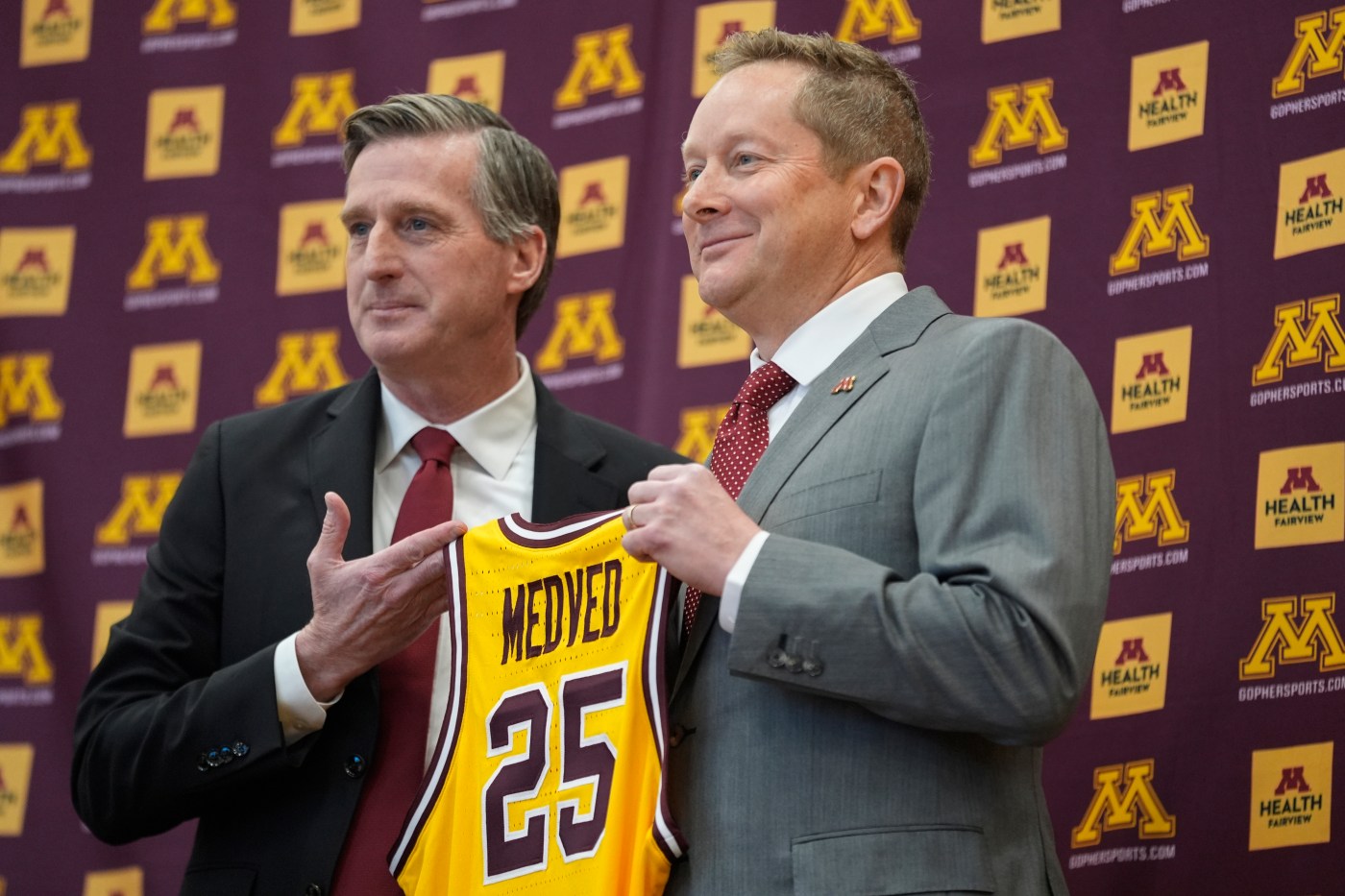
The University of Minnesota’s Board of Regents approved new men’s basketball coach Niko Medved’s contract in a special meeting Friday.

The Regents reviewed and approved Medved’s deal by a 9-0 vote, with three members absent. In a video call to the governing body, Gophers athletics director Mark Coyle presented Medved’s six-year, $18.5 million contract through 2031.

The biggest addition from the memo of understanding signed by Medved on March 24 is the buyout terms to be paid to Medved’s previous school, Colorado State. The contract says the U will cover the cost of $2.55 million. The memo said it would pay “up to and not exceed” $3.1 million.

Another additional element is a built-in contract extension stating Medved will receive a one-time, one-year extension if the university receives an NCAA Tournament invitation, wins the Big Ten regular-season or conference tournament title, or finishes in the Top 4 in the Big Ten regular season in any contract year.

A carry-over clause from the memo to the contract says after the second year, a 60-day window will allow for a “good faith review” of the agreement to “determine whether enhancements should be made.” This is when a more lucrative or lengthy extension might come.

Salary and buyout terms with the U were unchanged from the memo to the contract.

Medved’s $3 million total annual compensation ranks near the bottom when compared to other Big Ten men’s basketball coaches. His salary will include $100,000 annual increases to max out at $3.5 million on 2030-31 season.

If Medved leaves the U to accept any coaching position, he owes the U $10 million in Year 1; $7 million in Year 2; $5 million in Year 3; $3 million in Year 4; $500,000 in Year 5; $0 in Year 6.

If the U terminates Medved’s contract without cause in the first three contract years, the fee is equal to the full amount of remaining total compensation if he remained employed for the full term of the deal. If notice is given after Year 3, the U will pay a fee of 75% of the remaining total compensation on the contract.

Related Articles


Gophers seek naming-rights deal for Williams Arena as financial needs grow


Gophers men’s basketball welcomes two new players Wednesday


How Gophers coach Niko Medved will go into the NCAA transfer portal


Two Gophers recruits back out of men’s basketball program


Niko Medved’s path to Gophers included steering him off hockey rinks

US electric vehicle industry is collateral damage in Trump’s escalating trade war

posted in: All news | 0

By ALEXA ST. JOHN

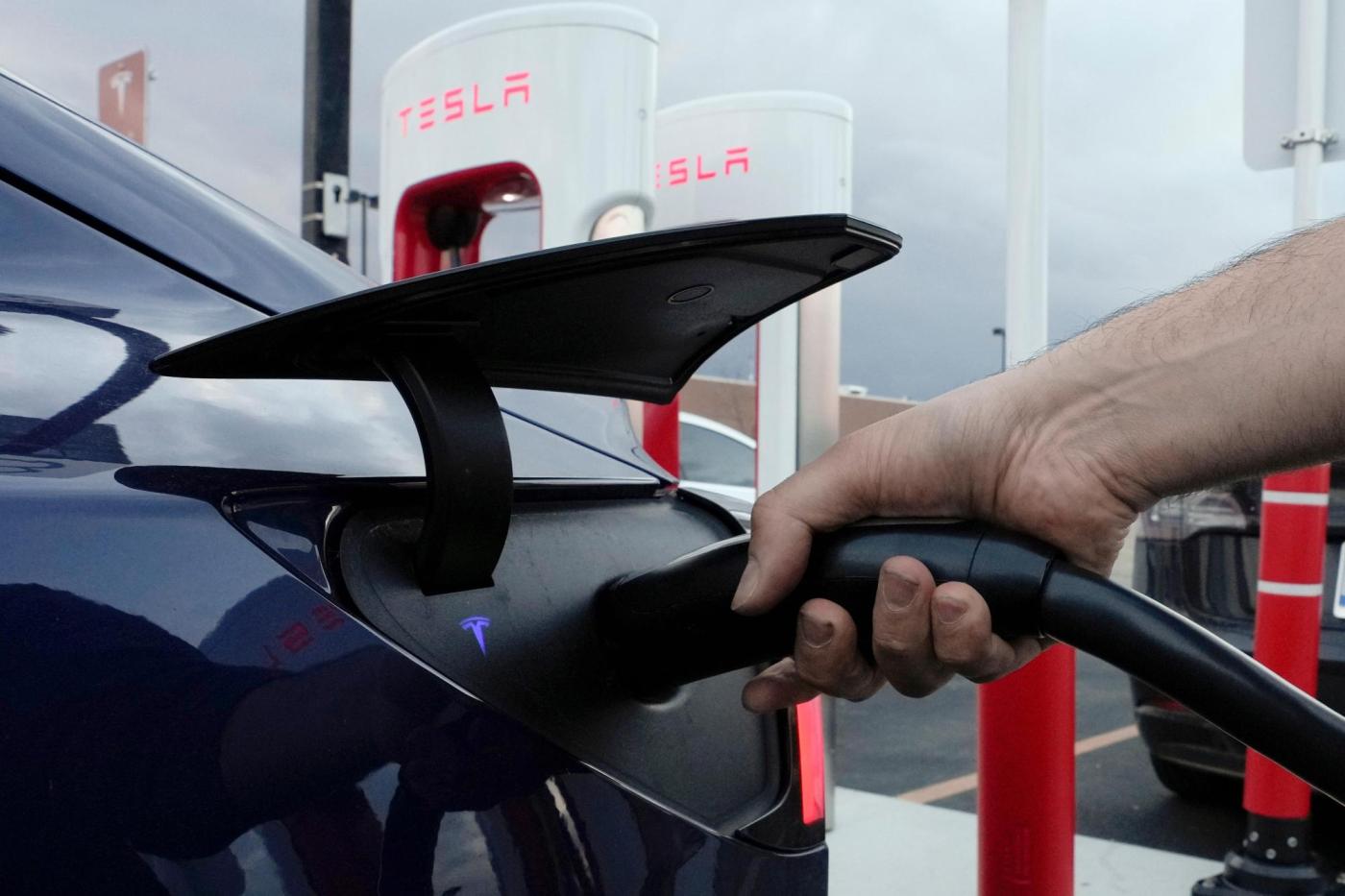
DETROIT (AP) — President Donald Trump’s tariff blitz has sent shock waves throughout every aspect of the global economy, including the auto sector, where multi-billion-dollar plans to electrify in the United States are especially at risk.

Related Articles


Woodbury launches a new visitors bureau and website


Federal Reserve chief says Trump tariffs likely to raise inflation and slow US economic growth


How Trump’s latest tariffs could affect your wallet


Sell-off worsens worldwide and Dow drops 1,300 after China retaliates against Trump tariffs


US added 228,000 jobs in March as economy showed strength in buildup to Trump trade wars

Here’s what consumers should know about the impact of tariffs on electric vehicles.

Where does EV adoption stand in the U.S.?

EVs accounted for about 8% of new car sales in the U.S. in 2024, according to Motorintelligence.com.

Some of those sales can be attributed to expanded tax credits for EV purchases, a Biden-era policy that spurred car buyer interest.

Tesla held a majority of U.S. EV market share in 2024, at 48%. But that share has declined in recent years, as brands including Ford (7.5%), Chevrolet (5.2%) and Hyundai (4.7%) began to offer a wider variety of electric models at better price points, according to Kelley Blue Book.

Electric vehicles remain more expensive than their gasoline-powered equivalents. New gas vehicles sold for $48,039 on average last month, Kelly Blue Book data says, while EVs sold for $55,273 on average.

Tariffs add on to the costs of an EV transition that was already volatile and uncertain, said Vanessa Miller, a litigation partner focused on automotive manufacturing at law firm Foley & Lardner.

What makes U.S. EV manufacturing so challenging?

Biden’s tax credits essentially required automakers to get more and more of their EV content from the U.S. or trade allies over the coming years in order for their vehicles to qualify. Automakers have worked to build an EV supply chain across the country and significant investment has gone toward these efforts.

File – Vehicles move along the 2023 Chevrolet Bolt EV and EUV assembly line at the General Motors Orion Assembly on June 15, 2023, in Lake Orion, Mich. (AP Photo/Carlos Osorio, File)

EVs assembled here include Tesla models, the Ford F-150 Lightning and more. Tesla actually might be least vulnerable given how much of its vehicles come from the U.S.

Though the industry is growing, tariffs mean costs for automakers and their buyers will stay high and might go higher, as well as hike up the prices of the many parts of EVs still coming from China and elsewhere. From the critical minerals used in battery production to the vehicles themselves, China laps the U.S. industry.

Automakers were already pulling back on ambitious electrification plans amid shrinking federal support and are strapped for cash on what is the less lucrative side of their businesses.

What do the tariffs mean for EV pricing and inventory?

Higher prices might push car buyers to the used car market, but they aren’t likely to find much respite there.

If consumers don’t buy as many vehicles, automakers will have to prioritize their investments and manufacturing. That means the cars that buyers want and that are most profitable. Automakers still lose thousands of dollars on each EV they make and sell, but they make money from big, popular gas-guzzling pickup trucks and SUVs.

These manufacturers “have put a certain amount of investment into EVs, and it would probably be even more wasteful to completely walk away from them than it is to find the new level at which it makes sense to maintain production of them,” said Karl Brauer, executive analyst at auto research site iSeeCars.com. That level “will assuredly be lower than what it was,” he added.

Making fewer EVs won’t help bring their cost down further anytime soon.

Albert Gore, executive director of the Zero Emission Transportation Association, said in a statement the EV and battery sector is working to ensure that the American auto industry grows and that his group will work with the administration on productive trade policy.

“Tariffs on our longstanding trade partners, many of whom have committed billions in direct investment into U.S. factories, introduces uncertainty and risk into an industry that is creating jobs and bringing new economic opportunities to communities across the country,” Gore said.

How else have Trump’s policies stifled U.S. EV growth?

Trump has already taken a hatchet to federal EV policy. He campaigned on a vow to end what he called former President Joe Biden’s “EV mandate.”

Biden’s EV policies did not require automakers to sell EVs or consumers to buy them, but they did incentivize manufacturers to increase their electric offerings in the coming years. Trump put an end to Biden’s target for 50% of all new vehicles sold in the U.S. to be electric by 2035 in his first days in office.

Also under Biden, Environmental Protection Agency and National Highway Traffic Safety Administration rules on vehicle greenhouse gas emissions and fuel economy were to get increasingly tougher, but could be met by automakers selling a growing number of EVs alongside more fuel-efficient gasoline-powered vehicles. Trump’s administrators are already reevaluating emissions standards.

He’s also likely to seek to repeal the tax credits.

Alexa St. John is an Associated Press climate reporter. Follow her on X: @alexa_stjohn. Reach her at ast.john@ap.org.

The Associated Press’ climate and environmental coverage receives financial support from multiple private foundations. AP is solely responsible for all content. Find AP’s standards for working with philanthropies, a list of supporters and funded coverage areas at AP.org.

When heavy rainfall threatens flooding, you can protect yourself. Here’s how

posted in: All news | 0

By ALEXA ST. JOHN

Extreme weather is dangerous weather, and that’s particularly true for the heavy rainfall events that experts say are becoming more frequent with climate change. The powerful storms can pose threats ranging from falling limbs to downed power lines to drowning.

Experts say disaster preparation and good planning can help protect lives and property.

What should you do if you face record rainfall?

Long before extreme weather happens, it’s important to consider whether your home meets building codes, and to know what your insurance covers, experts say. This is the time to address any shortcomings.

Once storms draw near, stay informed by signing up for real-time city, county and federal weather alerts, and listen to the news and whatever your local officials are saying. You can take simple steps to help protect your property, such as ensuring that gutters, storm drains and stormwater systems are clear and ready to do their part in carrying off heavy rain.

If using sandbags to protect property, make sure they’re properly made and stacked to keep water out.

Should you try to evacuate or stay put?

If there are local orders to evacuate, you need to heed them. Gather important documents, get enough gas to drive out and prepare to be away for an extended period of time, said Jeannette Sutton, associate professor at the University at Albany. People need to err on the side of caution, she said.

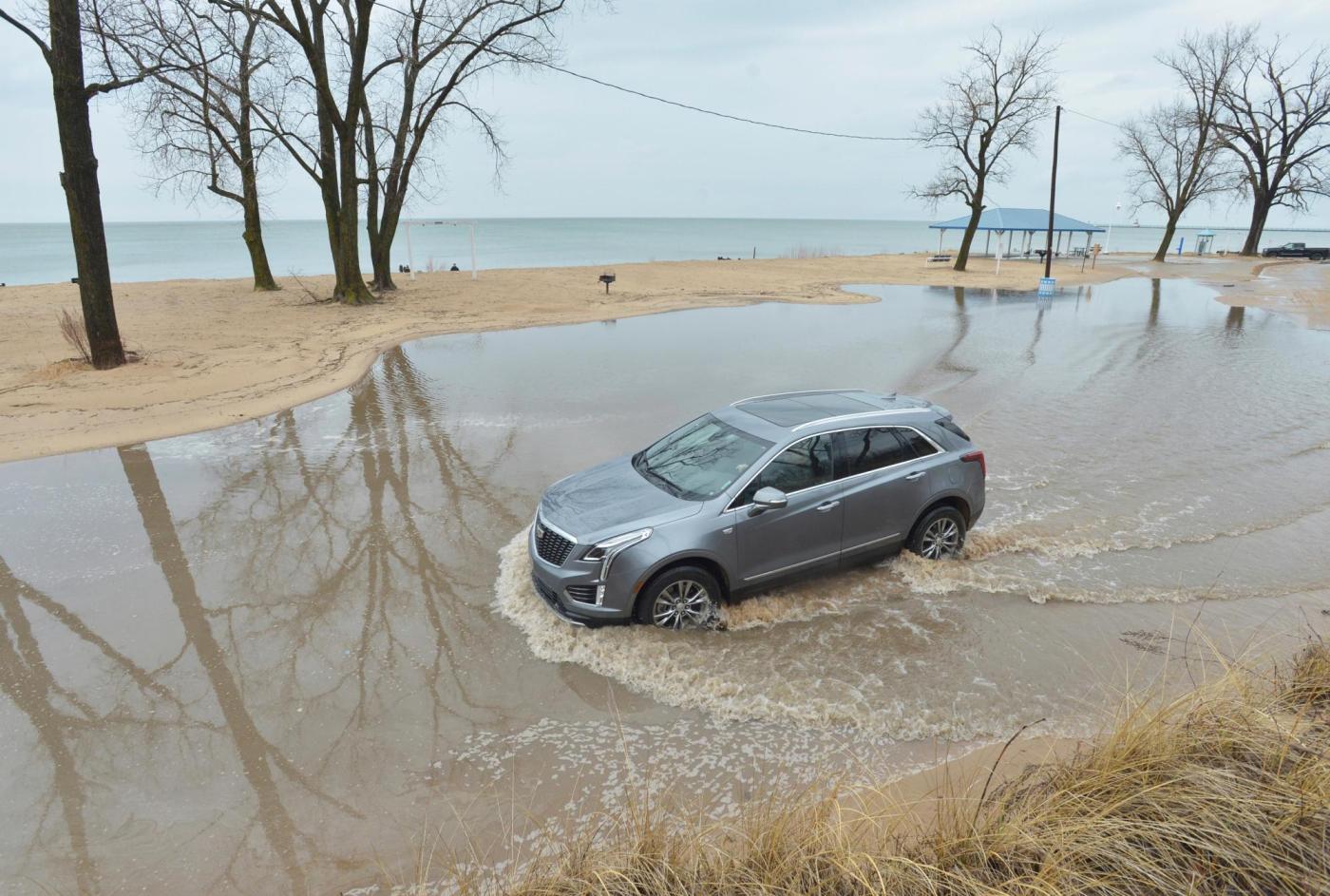
As major storms move in, there often comes a point when leaving is more hazardous than staying put. One major danger involves flooded roadways. Drivers who attempt to push through them can be swept away by water that is deeper than it appeared and stronger than thought.

How can you prepare your home and belongings?

Moving keepsakes, furniture and valuables to upper levels and making sure sump pump batteries are fully charged are shorter-term ways to prepare, along with ensuring there’s enough food, water and medical supplies.

Cars can be protected by getting them into a parking structure with upper levels.

Experts also say use common sense in planning: Don’t keep your backup generators in a basement where they can be ruined by flooding, for instance.

What can you do once a disaster has started?

If you aren’t able to prepare for floods in time, you should move to the highest level of your home, experts say, or seek out a safe shelter.

If high winds and tornadoes are a threat, however, it could be dangerous to be too high up. That’s why checking forecasts is critical.

Alexa St. John is an Associated Press climate reporter. Follow her on X: @alexa_stjohn. Reach her at ast.john@ap.org.