
Passover begins soon. For many Jews, the celebrations will occur amid anxieties and divisions

posted in: All news | 0

By DAVID CRARY, Associated Press National Writer

Passover is a major Jewish holiday, celebrated over seven or eight days each year, commemorating the exodus of ancient Israelites from slavery in Egypt, as recounted in the Bible. It is considered the most widely observed of any Jewish holiday, symbolizing freedom and the birth of a Jewish nation.

This year, the celebrations again occur amid anxieties and divisions among many Jews related to the unresolved Israel-Hamas conflict in Gaza and the specter of widespread antisemitism.

When is Passover this year?

Passover — known as Pesach in Hebrew — begins at sunset on Saturday, April 12, and ends after nightfall on Sunday, April 20. By tradition, it will be celebrated for seven days in Israel and for eight days by some Jews in the rest of the world.

What are key Passover rituals and traditions?

For many Jews, Passover is a time to reunite with family and recount the exodus from Egypt at a meal called the Seder. Observant Jews avoid various grains known as chametz, a reminder of the unleavened bread the Israelites ate when they fled Egypt quickly with no time for dough to rise. Cracker-like matzo is OK to eat; most breads, pastas, cereals, cakes and cookies are off-limits.

What’s different this year?

A year ago, for many Jews, any celebratory mood was muted by the scores of hostages captured by Hamas in Israel and held in Gaza. Many Seder tables, in Israel and elsewhere, had empty seats, representing those killed or taken hostage on Oct. 7, 2023.

Even after the recent release of some hostages, others remain held. Hopes for a formal end to conflict have been dampened by the collapse of a ceasefire and resumption of fighting.

As was the case last year, there also is intense concern in some countries about a high level of antisemitic incidents.

More than 10,000 antisemitic incidents in the United States were reported between Oct. 7, 2023, and Sept. 24, 2024 — the most ever recorded by the Anti-Defamation League.

The Secure Community Network, which provides security and safety resources to hundreds of Jewish organizations and institutions across North America, has been issuing frequent advisories ahead of Passover.

Specifically, the group has warned of possible threats from white extremist groups, including some organizing along the U.S.-Canada border. SCN said key extremist anniversaries, including Hitler’s birthday on April 20, coincide with the holiday, raising concerns about the risk of violence targeting Jewish communities.

One notable change this year: Pro-Palestinian protests that roiled many college campuses in spring 2024 have been fewer and less disruptive, in part because of Trump administration pressure.

“Since January there has been a marked change in the seriousness with which hate on campus is being dealt by the federal government as they set out clear consequences to the previous inaction of university leaders,” said Rabbi Moshe Hauer, executive vice president of the Orthodox Union.

However, some Jewish leaders have been dismayed by the Trump administration’s threats and funding curbs directed at universities it considered too tolerant of antisemitism.

“None of this is about fighting antisemitism,” Amy Spitalnick, CEO of the Jewish Council for Public Affairs, said in a social media post. “It’s about gutting our education institutions and democracy under the guise of fighting antisemitism. And it ultimately makes Jews less safe.”

What special events are taking place?

The Jewish Federation of Greater Los Angeles and the city’s Museum of Tolerance are hosting a special Seder for interfaith leaders and community members directly affected by recent wildfires. Organizers invited various first responders, civic leaders and elected officials, seeking to honor “the spirit of community resilience and the enduring strength of togetherness.”

The fires destroyed or damaged dozens of houses of worship and other faith-based facilities.

Interfaith Seders have been organized in many other cities, including Houston, Dallas, New York, Phoenix, and Milwaukee.

“We understand that now more than ever, Jewish communities across North America must open their doors to forge stronger friendships,” said Rabbi Joshua Stanton, Jewish Federations associate vice president of interfaith and intergroup initiatives.

The New York-based Met Council, a Jewish nonprofit operating various anti-poverty programs, says it has delivered free kosher-for-Passover food to more than 250,000 Jewish Americans burdened by skyrocketing grocery costs. The packages, distributed at 185 sites in New York, New Jersey, Connecticut and Florida, included traditional Passover essentials such as matzo, kosher chicken, gefilte fish, tuna, and grape juice.

Chabad-Lubavitch, a global Hassidic Jewish organization, plans a parade of more than 100 converted RVs known as “Mitzvah Tanks” through New York City’s streets. The aim, says Chabad, is “to spread kindness and celebrate Jewish heritage,” as well as distributing traditional matzo.

Associated Press religion coverage receives support through the AP’s collaboration with The Conversation US, with funding from Lilly Endowment Inc. The AP is solely responsible for this content.
Delta drops outlook for 2025 and says growth has stalled in trade war

posted in: All news | 0

By MICHELLE CHAPMAN, Associated Press Business Writer

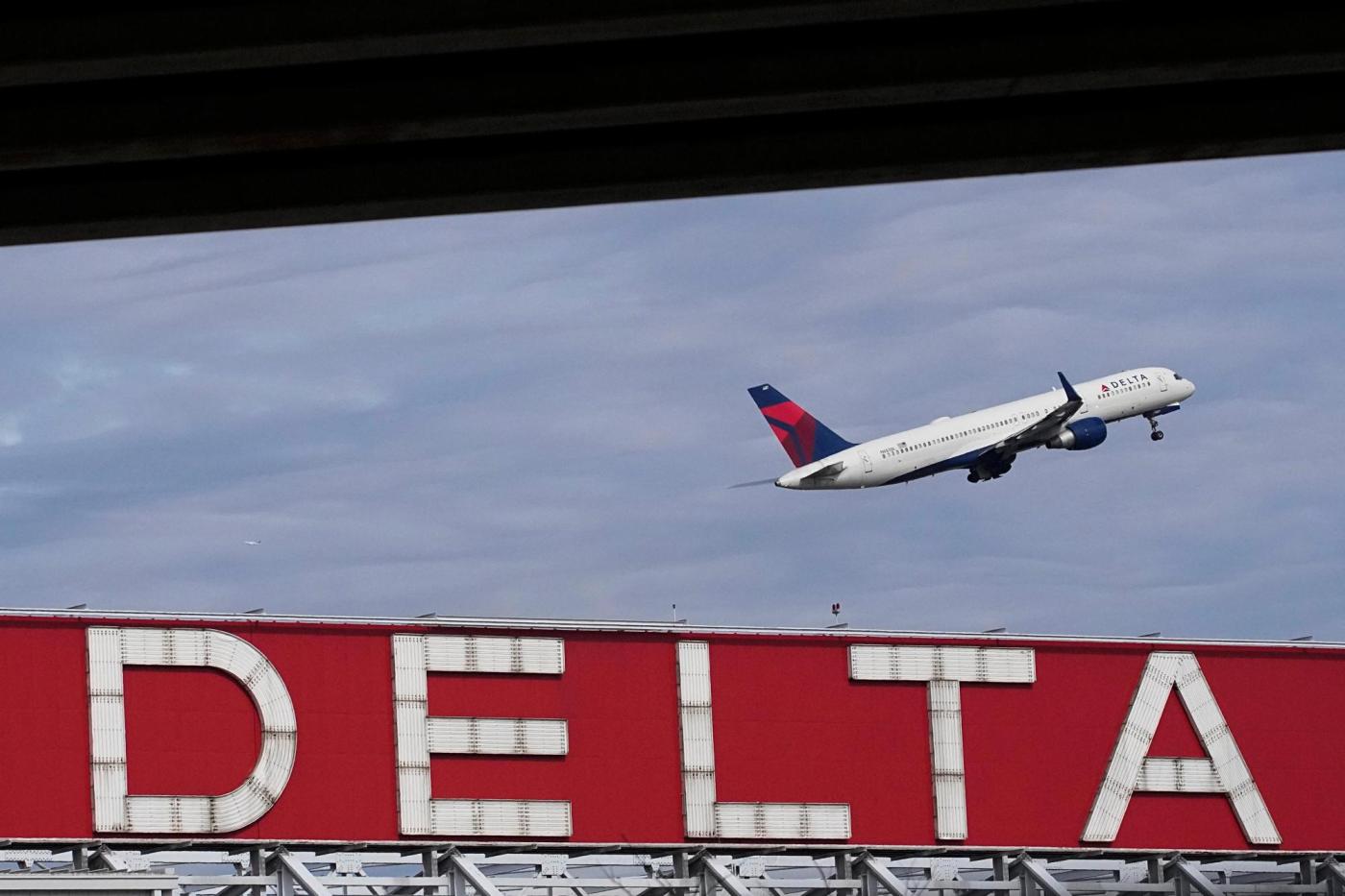
Delta Air Lines pulled its guidance for 2025 Wednesday as the trade war scrambles expectations for business and household spending and depresses bookings across the travel sector.

“With broad economic uncertainty around global trade, growth has largely stalled,” CEO Ed Bastian said in a statement on Wednesday. “In this slower-growth environment, we are protecting margins and cash flow by focusing on what we can control. This includes reducing planned capacity growth in the second half of the year to flat over last year while actively managing costs and capital expenditures.”

In the first quarter, Delta earned $240 million, or 37 cents per share. A year earlier it earned $37 million, or 6 cents per share.

Stripping out one time costs and benefits, earnings were 46 cents per share. That’s better than the 40 cents per share analysts polled by Zacks Investment Research predicted.

Yet shares of Delta Air Lines Inc. declined before the opening bell and the sector has been battered this year as investors, anticipating trouble from rising tariffs, put their money elsewhere. Shares are down 41% this year for the nation’s most profitable airline, which is better than rivals American and United.

Quarterly operating revenue climbed to $14.04 billion from $13.75 billion, beating Wall Street’s estimate of $13.81 billion.

The average fuel price per gallon declined to $2.47 from $2.79.

Delta cut its first-quarter earnings and revenue outlook last month, saying at the time that a recent decline in consumer and corporate confidence amid growing uncertainty over the economy was weakening domestic demand.

Delta said in March that it expected first-quarter revenue to rise between 3% and 4% compared with a year earlier, down from projections of 7% and 9%.

In January, Delta released fourth-quarter results that topped Wall Street’s profit and revenue estimates, as the company benefited from strong demand during the crucial holiday period.

Yet conditions have deteriorated since then with a burgeoning trade war leaving consumers and businesses unsure about what comes next. Both have begun to pull back on spending, and that includes travel.

Bastian said Delta foresees June quarter profitability of $1.5 to $2 billion but will not update its full-year outlook “given the lack of economic clarity.”

The airline previously said that it expected 2025 earnings of more than $7.35 per share and free cash flow of more than $4 billion. At the time the company was expecting strong travel demand to continue, and that has clearly changed.

A month ago Bastian was confident enough to stick by Delta’s guidance for the year. Speaking at the JPMorgan Industrial Conference, the executive said at the time that Delta was feeling good about where it was at.

“There’s nothing that we’ve been through these last couple of months to indicate there’s any cracks in any of this,” he said. “We anticipate margins continuing to expand and we think margins will expand this year, even with the slower start to the year.”

Yet uncertainty over U.S. trade policy has rattled companies in every economic sector since then.

For the second quarter, the airline is looking for earnings between $1.70 and $2.30 per share, with total revenue down 2% to up 2%. Analysts surveyed by FactSet predict earnings of $2.21 per share.

“2025 is playing out differently than we expected at the start of the year,” Delta President Glen Hauenstein said. “As a result, we are adapting to current conditions while staying true to our long-term strategy.”

 Texas House Weighs How to Get Harsh on Hemp

posted in: All news | 0

A police chief compared the shops across Texas that sell hemp-derived products to “candy stores or fireworks stands,” targeting children with bright-colored gummies and chips. At the same House Committee on State Affairs hearing on Monday, a Kentucky-based hemp seller said many of their Texas customers are women over 55 living in the suburbs. 

Meanwhile, the committee members there to discuss House Bill 28, which would restrict nearly all consumable hemp products in Texas, seemed unsure of the realities of the state’s hemp industry as they stumbled through questioning about testing procedures, the difference between synthetic and natural hemp, and the properties of hemp-based products. 

“We’re trying to straddle a recreational use versus a medicinal use,” said Representative Dade Phelan, the recently departed Republican House speaker. “Drawing the lines will be difficult, because we’ve been doing this for almost three hours, and I’m still not sure what we’re talking about.” 

For over 16 hours, legislators heard invited expert testimony and over 150 members of the public spoke on that bill and Senate Bill 3, one of Lieutenant Governor Dan Patrick’s top priorities. SB 3 seeks to ban all hemp products with any tetrahydrocannabinol (THC), a psychoactive component of the hemp plant. Currently, hemp products with less than 0.3 percent of THC are legal in Texas, thanks to a law passed by the Legislature back in 2019. 

State Affairs Chairman Ken King’s version, HB 28, is slightly more lenient than SB 3. While the bill also bans synthetic THC and most consumable or smokable hemp products, it would still allow drinkable hemp products with THC. The Texas Alcoholic Beverage Commission, which regulates the sale of beer and liquor in Texas, would be put in charge of hemp beverages as well. “House Bill 28 seeks to create a regulated hemp industry in Texas,” King said at the hearing. The unregulated market is “a public health hazard, and it is our duty to protect Texas against harmful products.” 

HB 28, like SB 3, seeks to increase regulations on consumable hemp products that aren’t otherwise made illegal—including 21+ age restrictions for purchases, required in-state product testing, and registration with the Department of Public Safety. Both bills have exceptions for the Compassionate Use Program, enacted in 2015, which provides access to low-THC cannabis for medical purposes for some Texans. Products containing cannabidiol (CBD) or cannabigerol (CBG), two non-psychoactive components of hemp, would still be legal under both bills. 

Members of the hemp industry, like Katie Frazier, who grows her own plants, agreed with portions of HB 28 that would add needed oversight, but urged committee members not to prohibit most legal THC products, a move that would effectively shut down businesses like hers. “House Bill 28 may appear more reasonable [than SB 3], but it remains deeply harmful,” Frazier said. “I want bad actors removed from this space, but you don’t clean up a room by setting it on fire.” 

Governor Greg Abbott signed a hemp legalization bill into law in 2019, signaling the start of a booming hemp industry in Texas. Robin Goldstein, a cannabis economist at the University of California-Davis, said he estimates the hemp industry in Texas to be worth about $3 to 4 billion. He said legalizing hemp products doesn’t make them more common, but makes products safer and better regulated. “That’s an insidious side effect of prohibitions,” Goldstein said in testimony. “With unregulated products, you don’t know what you’re getting.” 

Susan Hays, an attorney practicing cannabis law, said low doses of THC are non-intoxicating. Consuming the plant as-is with its naturally occurring levels of THC is healthier than isolating certain compounds like CBD: she said this is known as the “entourage effect” in which the whole is greater than the sum of its parts. She compared CBD products with low levels of THC to over-the-counter aspirin. “That’s not going to make anybody high,” Hays told the committee. “It doesn’t need to be over-regulated, because over regulation means excess cost, and that drives people back into the black and gray markets.” 

Some witnesses questioned why “drinkables” were the only form of consumable allowed. King, the HB 28 author, said that drinks as opposed to gummies, are harder to mistake for a “child’s favorite.” 

The Panhandle Republican added that to effectively regulate THC products the state shouldn’t take on more than it can handle.“We have an elephant here and trying to eat the elephant more than one bite at a time also causes some problems,” King said. 

King acknowledged his bill would harm businesses in Texas but said it’s worth the pain. “It’ll certainly be negative, because you’re shrinking what can legally be produced and manufactured for consumption,” King said. “But I do think at some point the regulatory environment is going to exist … we were looking for a way to start small with regulation and get it right.” 

Allen Police Chief Steve Dye spoke against the House bill as he said the state should ban all THC to address enforcement issues of what constitutes legal THC and difficulties with testing. He said in Allen, kids were “streaming” into dispensaries. “This plague is in every city and every town and state agencies will never have the resources to regulate,” said Dye, who is an outspoken supporter of the Senate’s proposed ban. 

Hays, the cannabis lawyer, brought a tincture, her self-professed favorite sleeping gummies, and a beverage with THC in it and, upon request, passed all three around to the state representatives like a class show-and-tell. King assured the room he wouldn’t “pop any tops” on the beverage. Legislators then asked the next several questions with the slim purple can in hand. 

The committee also spent several hours hearing from the public on (and mostly against) SB 3, which is authored by Lubbock Republican Senator Charles Perry, who also sponsored the hemp legalization bill several sessions ago. 

Lieutenant Governor Patrick has made the Senate’s THC ban bill one of his personal legislative crusades this session—which included an TV news-style video report featuring his personal visit to an Austin THC retail shop (where he was carded).   

It’s also proven divisive—not just with those in the hemp industry, but among fellow Republicans, including Agriculture Commissioner Sid Miller, whose agency regulates hemp production in Texas.  
Patrick, ever the buzzkill, recently threatened to force a special session if his THC ban doesn’t pass.

The post  Texas House Weighs How to Get Harsh on Hemp appeared first on The Texas Observer.

Asian supermarket customers brace for price hikes as Trump tariffs take effect

posted in: All news | 0

By TERRY TANG and KARENA PHAN, Associated Press

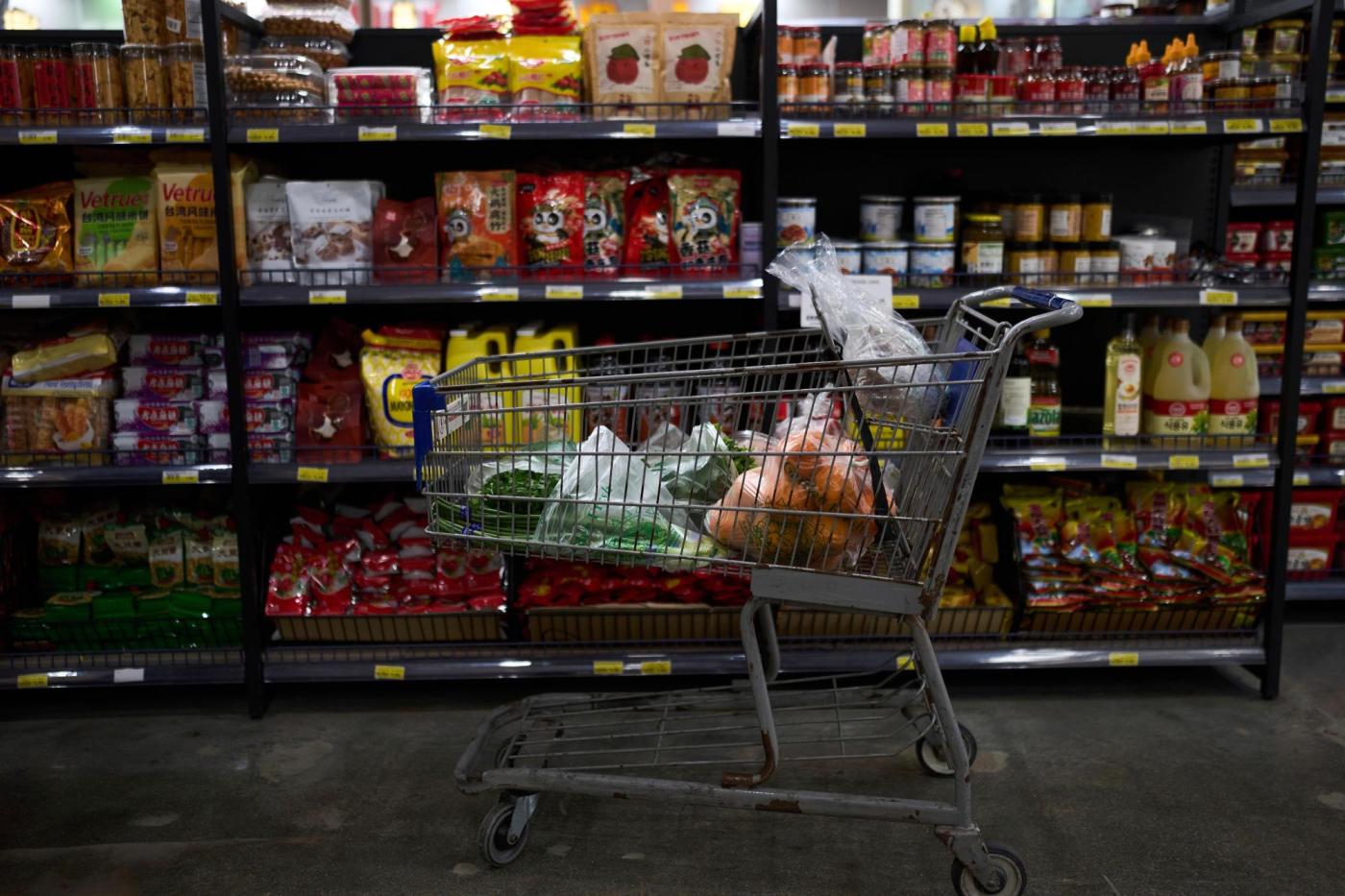
LOS ANGELES (AP) — Loyal customers of Asian supermarkets and other grocery stores that specialize in selling imported food heaved a collective sigh of dismay when President Donald Trump announced extra-high U.S. tariffs on goods from dozens of countries.

What would happen to prices at 99 Ranch Market and H Mart?, wondered Asian Americans and immigrants who shop at the two American chains for preferred brands like Japan’s Kewpie mayonnaise and China’s Pearl River light soy sauce.

“We’re all going to be crying in H Mart,” a TikTok user commiserated, referencing the title of a bestselling memoir by Korean American musician Michelle Zauner as other posters shared videos of their “pre-tariff hauls” from Asian supermarkets.

The steeper tariff rates Trump set for imports from nations he accused of unfair trade practices took effect first thing Wednesday along with a 10% baseline tax on products from the rest of the world.

Several countries in Asia have some of the largest levies, including South Korea (25%), Vietnam (47%) and Cambodia (49%). After China approved counter-tariffs and said it would fight a U.S. trade war “to the end,” the president on Tuesday raised the rate on Chinese goods to 104%.

At a 99 Ranch Market less than a mile from the UCLA campus, one of the California-based chain’s 58 stores, regular shopper Artis Chitchamnueng said he won’t be able to go anywhere else to find the foods he likes if prices skyrocket.

“I think (Trump’s) just like playing a lot of like mind games of just trying to like take control of the market and stuff like that,” Chitchamnueng, a part-time worker and entrepreneur, said. Many customers have said on social media they don’t know if they will be able to continue doing their routine grocery shopping at 99 Ranch Market.

Even if mainstream grocers stock some of the same items, a lot of imported items are less expensive at the specialty supermarkets. An 18-ounce bottle of Lee Kum Kee Panda oyster sauce, for example, retails for $3.99 at 99 Ranch. The websites for Safeway and Walmart list the same bottle for $4.79 and $10.45, respectively.

The stores stocking a wide range of noodles, dried vegetables, herbs and skin care products from China, Japan, South Korea, Thailand and Vietnam can be a source of comfort for immigrants and foreign students craving the tastes of home.

Tony He, an international student at UCLA, said Trump’s tariff policies confused him but he would continue shopping at 99 Ranch to get his groceries if prices increase. “As long as I need Asian food, I usually come here,” He said.

Shopping for culturally specific foods, drinks and condiments in the U.S. has come a long way from the once-meager offerings found in the “ethnic food” aisles of American supermarkets. International supermarkets and small grocery stores across the country generated $55.8 billion in revenue last year, according to market research firm IBISWorld.

The sector has recorded an annual growth rate of roughly 3% since 2019, and an IBISWorld forecast predicted revenue for grocery stores with international brands would go up to over $64 billion by 2029.

Analysts attribute the increase in demand to the growth of Asian and Hispanic immigrant populations, as well as to the tastes of younger consumers who enjoy experiencing new flavors. Mass market stores and brands increasingly have stocked or created Americanized versions of Asian products to ride the trend.

The specialty rice used for sushi that mainstream supermarkets sell also is usually imported from South Korea, China or Japan, noted Nancy Qian, a professor of economics at Northwestern University’s Kellogg School of Management. She thinks tariffs may lead consumers to find alternatives for their favorite brands.

“When my parents first came to America in the ’80s from China, they couldn’t really get the same type of rice as they did in China, So they switched to a different type of rice,” Qian said. “I think families and restaurants and people, they’ll do what it takes to make ends meet. And they’ll substitute foods. They’ll buy new foods.”

Independent shops that are integral to smaller Asian American communities are also bracing for a hit. The owner of Not Just Spices, a tiny South Asian grocery in Providence, Rhode Island, said he was concerned about costs rising costs for everyday products such as basmati rice sourced from India and Pakistan, or the smaller-grained Kalijira rice from his native Bangladesh.

“When things are cheaper, people usually buy extra. Now they buy exactly what they need,” said Mohammed Islam, who has run Not Just Spices since 1998. “People are scared of spending any money because they don’t know what’s going to be happening.”

Trump announced a tariff of 37% on goods from Bangladesh, 26% on neighboring India’s products, 29% on items from Pakistan and a whopping 44% on imports from the island country of Sri Lanka, known for its cinnamon and other spices.

If he does have to raise prices as the tariff’s impacts start to hit supplies, Islam trusts his customers won’t blame him.

“People don’t complain because it’s already in the news,” he said. “It’s not like I’m the one who is raising the price.”

Customers at Hispanic supermarkets also may be shopping more carefully. Trump has repeatedly threatened to impose a 25% tariff on most imports from Mexico.

In Phoenix, roommates Andrew Colvin and Mario Aviles typically patronize Los Altos Ranch Market, where they say the bulk of the produce and snacks they buy are from Mexico. The sprawling supermarket, which includes a deli and a bakery, is one of the 115 stores the Heritage Grocers Group operates in six states.

“We expect pretty much everything to go up,” said Colvin, who was stocking up on Parrot canned coconut water, his favorite drink, in case the price goes up. “I probably eat 14 avocados a week. There’ll be a lot less of that.”

Aviles doesn’t want to shop elsewhere. If tariffs result in serious sticker shock, he is prepared to restrict himself instead.

“No more avocados, no more mangoes, no more orange,” Aviles said.

Some experts say it wouldn’t hurt to stock up on non-perishables within limits and individual household budgets. But shoppers need to avoid the “panic buying” that accompanied the start of the COVID-19 pandemic, which could create shortages and cause additional price increases, Qian said.

While it’s not yet clear how much of the tariffs will get passed onto U.S. consumers, researchers say any price increases would disproportionately affect low-income households.

“These are regressive taxes. And for the elementary reason that affluent people do not spend 100% of their incomes and disadvantaged people do,” Steven Durlauf, director of the University of Chicago’s Stone Center for Research on Wealth Inequality and Mobility.

Northwestern University’s Qian said the cumulative economic impacts of Trump administration tariffs may hold one possible silver lining if they bring people back to the cultural enclaves of major cities.

“If you think about the old Chinatowns, or the old, like, Little Italys of America,” she said. “The reason that those places became really important for their communities was because that was the only place where you can get the thing you wanted.”

Tang reported from Phoenix. Associated Press video producer Akira Kumamoto in Los Angeles, California contributed to this report. Associated Press writer Matt O’Brien in Providence, Rhode Island, contributed to this report.