Trump targets ‘Anonymous’ author and former top cybersecurity official in escalation of retribution

posted in: All news | 0

By MICHELLE L. PRICE

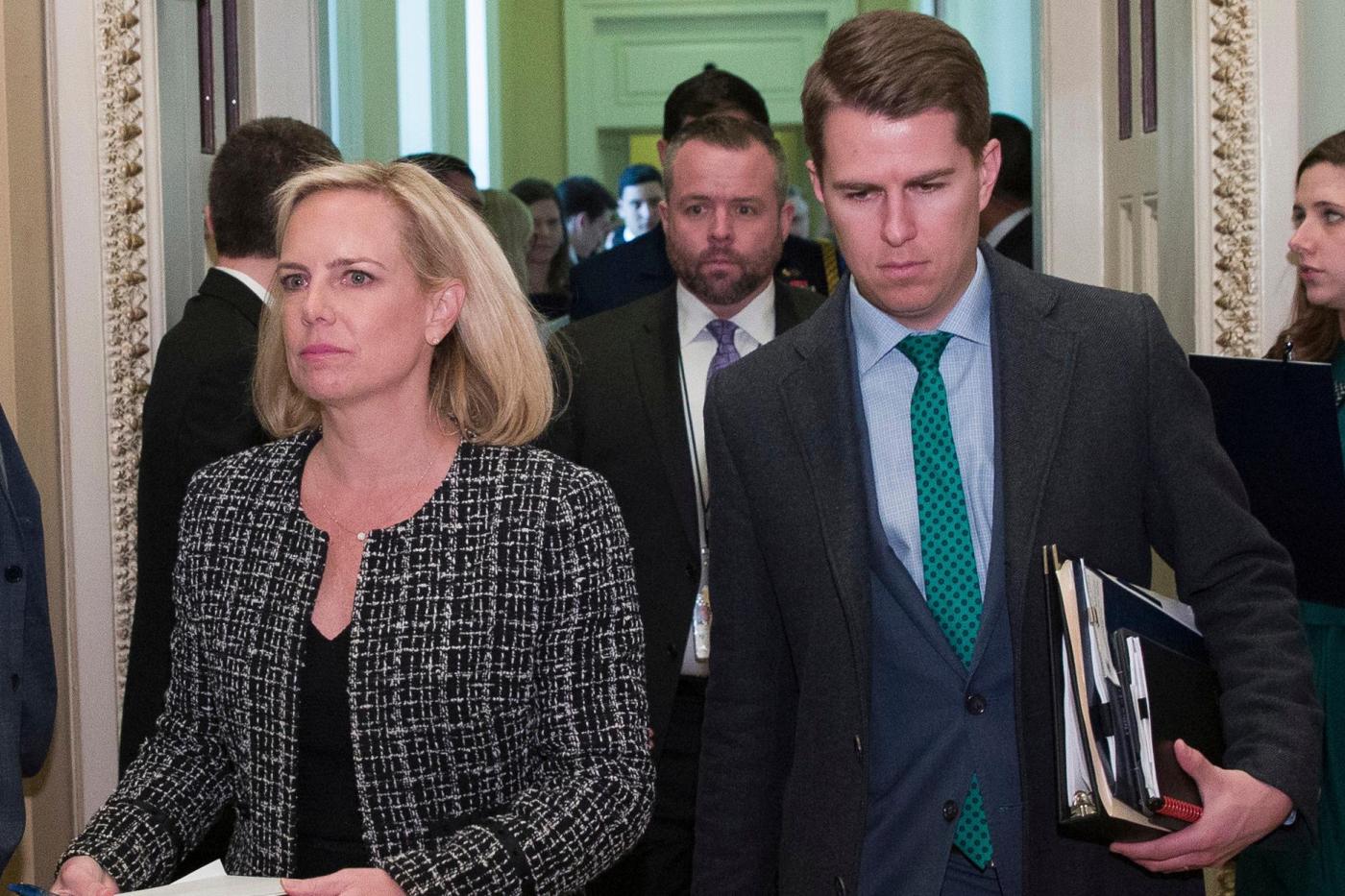
WASHINGTON (AP) — President Donald Trump intensified his efforts to punish his critics by signing a pair of memoranda directing the Justice Department to investigate two officials from his first administration and stripping them of any security clearances they may have.

Related Articles


Trump figuring out next steps in global tariff battle


House passes GOP bill requiring proof of US citizenship for voting, a Trump priority


House approves budget framework for Trump’s ‘big’ bill after intense wrangling sways GOP holdouts


Trump’s ‘buy’ tip on social media before his tariffs pause made money for investors who listened


Trump lets the water flow — again — as he reverses Biden rule restricting showerheads

Trump’s targeting of Miles Taylor, a former Department of Homeland Security official in Trump’s first term, and Chris Krebs, a former top cybersecurity official, came as the Republican president has sought to use the powers of the presidency to retaliate against his adversaries, including law firms.

Trump also on Wednesday retaliated against another law firm, Susman Godfrey, as he seeks to punish firms that have links to prosecutors who have investigated him or employed attorneys he sees as opponents.

Although Trump has ordered security clearances to be stripped from a number of his opponents, including former President Joe Biden and former Vice President Kamala Harris, the president’s order Wednesday directing the Justice Department to broadly investigate the actions of Taylor and Krebs marks an escalation of Trump’s campaign of retribution since he returned to power.

Taylor, who left the Trump administration in 2019, was later revealed to be the author of an anonymous New York Times op-ed in 2018 that was sharply critical of Trump. The person writing the essay described themselves as part of a secret “resistance” to counter Trump’s “misguided impulses,” and its publication touched off a leak investigation in Trump’s first White House.

Taylor later published a book under the pen name “Anonymous” and publicly revealed his identity days before the 2020 election.

Trump said Wednesday that Taylor was “like a traitor” and that his writings about “confidential” meetings were “like spying.”

“I think he’s guilty of treason,” he said.

Taylor responded by saying Trump had proved his point.

“Dissent isn’t unlawful. It certainly isn’t treasonous. America is headed down a dark path,” he wrote on X.

Trump named Krebs the director of the Cybersecurity and Infrastructure Security Agency but became angered with him after he declared the 2020 election that Trump lost to be secure and the ballot counts to be accurate.

Krebs did not respond to a message seeking comment, but late Wednesday he shared on X a message he originally posted when he left government in 2020: “Honored to serve. We did it right.”

Trump has falsely claimed he was cheated out of reelection in 2020 by widespread fraud, despite a mountain of evidence to the contrary. Recounts, reviews and audits in the battleground states where he disputed his loss all affirmed Biden’s victory. Judges, including some he appointed, rejected dozens of his legal challenges.

“It’s bizarre to see a president investigate his own administration and his own appointee,” said David Becker, a former Justice Department lawyer and coauthor of “The Big Truth,” a book about Trump’s 2020 election lies.

Becker noted that Krebs issued his reassurances about the security of the upcoming election for months during 2020 without pushback from the then-president, with Trump only souring on him after the votes were counted.

“The reason he can sit in the White House today and govern from that position is because our election system is secure and has accurately determined who has won the presidency,” Becker said.

Susman Godfrey, the firm Trump targeted in an order Wednesday, represented Dominion Voting Systems in a lawsuit that accused Fox News of falsely claiming that the voting company had rigged the 2020 presidential election. Fox News ultimately agreed to pay nearly $800 million to avert a trial.

The order bars the firm from using government resources or buildings, according to White House staff secretary Will Scharf.

In a statement, Susman Godfrey responded that people who know the firm know it takes seriously its duty to uphold the rule of law. “This principle guides us now,” the firm said. “There is no question that we will fight this unconstitutional order.”

Trump has issued a series of orders meant to punish firms, including by ordering the suspension of lawyers’ security clearances and revoking federal contracts. He’s succeeded in extracting concessions from some who have settled, but others have challenged the orders in court.

Associated Press writers Zeke Miller and Eric Tucker in Washington and Nicholas Riccardi in Denver contributed to this report.
Apple has few incentives to start making iPhones in US, despite Trump’s trade war with China

posted in: All news | 0

By MICHAEL LIEDTKE, AP Technology Writer

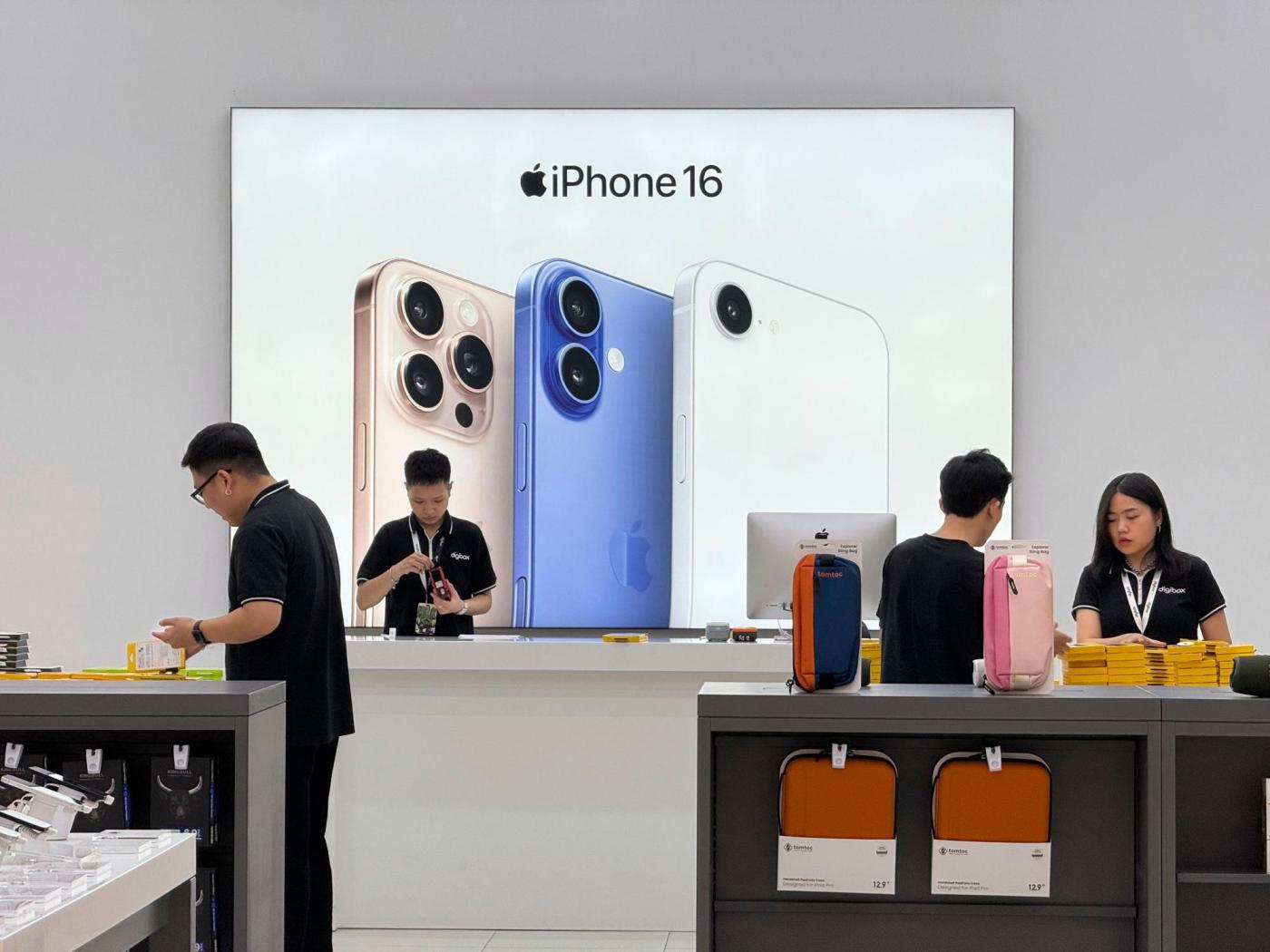
SAN FRANCISCO (AP) — President Donald Trump’s administration has been predicting its barrage of tariffs targeting China will push Apple into manufacturing the iPhone in the United States for the first time.

Related Articles


Trump’s new energy order puts states’ climate laws in the crosshairs of the Department of Justice


The week that Trump pushed the global economy to the brink with tariffs — and then pulled back


Average US rate on a 30-year mortgage falls to 6.62%, easing for the third week in a row


OpenAI countersues Elon Musk in legal dispute over ChatGPT maker’s business ambitions


Inflation fell last month as gas prices dropped sharply, a sign prices cooled before tariffs

But that’s an unlikely scenario even with U.S tariffs now standing at 145% on products made in China — the country where Apple has manufactured most of its iPhones since the first model hit the market 18 years ago.

The disincentives for Apple shifting its production domestically include a complex supply chain that it began building in China during the 1990s. It would take several years and cost billions of dollars to build new plants in the U.S., and then confront Apple with economic forces that could triple the price of an iPhone, threatening to torpedo sales of its marquee product.

“The concept of making iPhones in the U.S. is a non-starter,” asserted Wedbush Securities analyst Dan Ives, reflecting a widely held view in the investment community that tracks Apple’s every move. He estimated that the current $1,000 price tag for an iPhone made in China, or India, would soar to more than $3,000 if production shifted to the U.S. And he believes that moving production domestically likely couldn’t be done until, at the earliest, 2028. “Price points would move so dramatically, it’s hard to comprehend.”

Apple didn’t respond to a request for comment Wednesday. The Cupertino, California, company has yet to publicly discuss its response to Trump’s tariffs on China, but the topic may come up on May 1 when Apple CEO Tim Cook is scheduled to field questions from analysts during a quarterly conference call to discuss the company’s financial results and strategy.

And there is no doubt the China tariffs will be a hot-button issue given Apple’s stock price has dropped by nearly 20% and lowered the company’s market value by $600 billion since Trump began increasing them on April 2.

If the tariffs hold, Apple is widely expected to eventually raise the prices on iPhones and other popular products because the Silicon Valley’s supply chain is so heavily concentrated in China, India and other overseas markets caught in the crossfire of the escalating trade war.

The big question is how long Apple might be willing to hold the line on its current prices before the tariffs’ toll on the company’s profit margins become too much to bear and consumers are asked to shoulder some of the burden.

One of the main reasons that Apple has wiggle room to hold the line on its current iPhone pricing while the China tariffs remain in place is because the company continues to reap huge profit margins from the revenue generated by the subscriptions and other services tied to its product, said Forrester Research analyst Dipanjan Chatterjee. That division, which collected $96 billion in revenue during Apple’s last fiscal year, remains untouched by Trump’s tariffs.

“Apple can absorb some of the tariff-induced cost increases without significant financial impact, at least in the short term,” Chatterjee said.

Apple tried to appease Trump in February by announcing plans to spend $500 billion and hire 20,000 people in the U.S. through 2028, but none of it was tied to making an iPhone domestically. Instead, Apple pledged to fund a Houston data center for computer servers powering artificial intelligence — a technology the company is expanding into as part of an industrywide craze.

When asked this week about whether Trump believes Apple intends to build iPhones in the U.S., White House Press Secretary Karoline Levitt pointed to Apple’s investment promise as evidence that the company thinks it could be done. “If Apple didn’t think the United States could do it, they probably wouldn’t have put up that big chunk of change,” Leavitt said.

U.S. Commerce Secretary Howard Lutnick also predicted tariffs would force a manufacturing shift during an April 6 appearance on a CBS news program. “The army of millions and millions of human beings screwing in little screws to make iPhones, that kind of thing is going to come to America,” Lutnick said.

But during a 2017 appearance at a conference in China, Cook expressed doubt about whether the U.S. labor pool had enough workers with the vocational skills required to do the painstaking and tedious work that Lutnick was discussing.

“In the U.S. you could have a meeting of tooling engineers and I’m not sure we could fill the room,” Cook said. “In China, you could fill multiple football fields.”

Trump also tried to pressure Apple, to no avail, into shifting iPhone production to the U.S. during his first term as president. But the administration ultimately exempted the iPhone from the tariffs he imposed on China back then — a period when Apple had announced a commitment to invest $350 billion in the U.S. Trump’s first-term tariffs on China also prompted Apple to begin a process that led to some of its current iPhones being made in India and some of its other products being manufactured in Vietnam.

Cook also took the president on a 2019 tour of a Texas plant where Apple had been assembling some of its Mac computers since 2013. Shortly after finishing that our, Trump took credit for the plant that Apple had opened while Barack Obama was president. “Today I opened a major Apple Manufacturing plant in Texas that will bring high paying jobs back to America,” Trump posted on Nov. 19, 2019.

Trump’s new energy order puts states’ climate laws in the crosshairs of the Department of Justice

posted in: All news | 0

By MARC LEVY

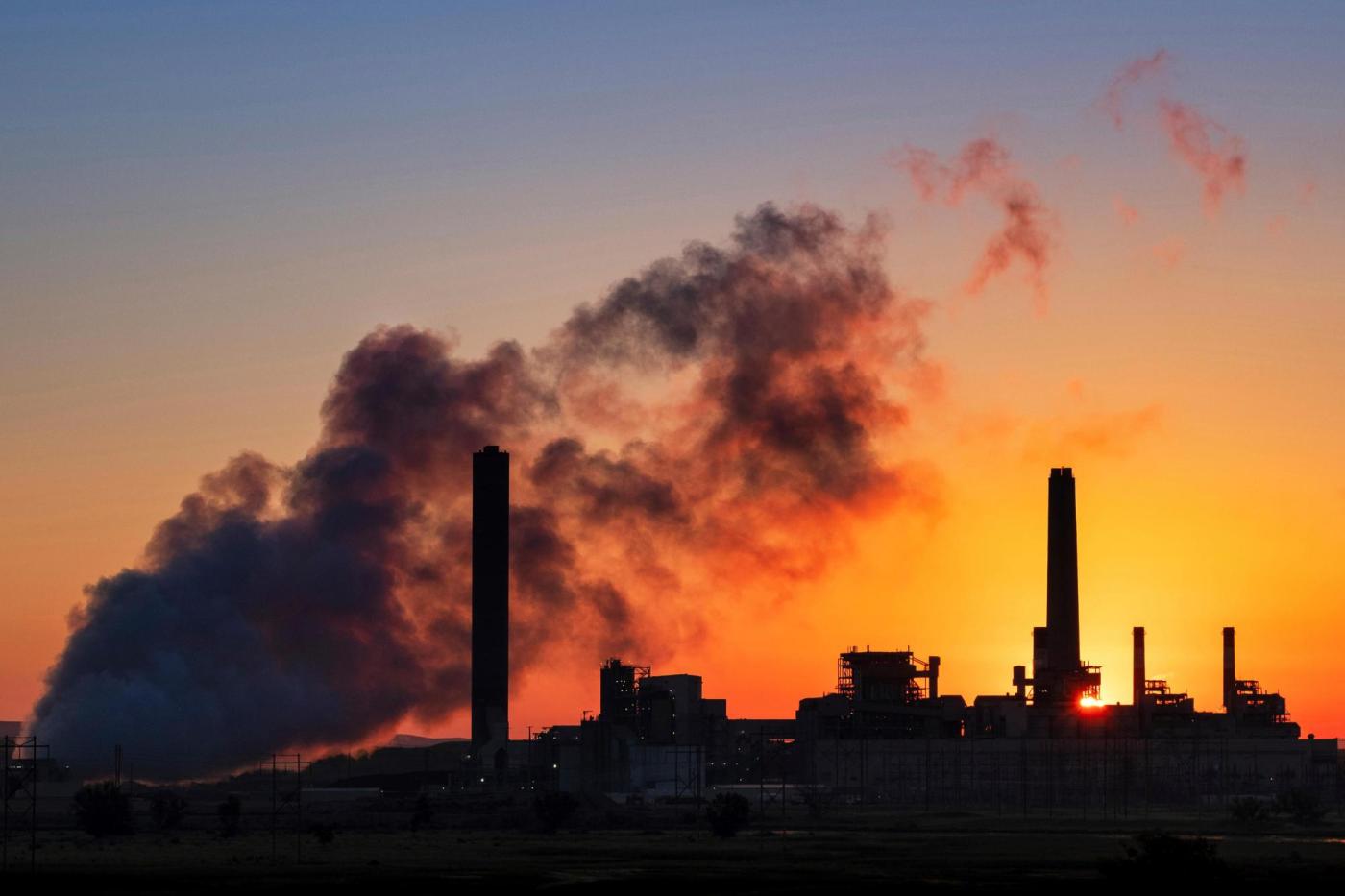
HARRISBURG, Pa. (AP) — A new executive order from President Donald Trump that’s part of his effort to invigorate energy production raises the possibility that his Department of Justice will go to court against state climate change laws aimed at slashing planet-warming greenhouse gas pollution from fossil fuels.

Related Articles


Trump figuring out next steps in global tariff battle


House passes GOP bill requiring proof of US citizenship for voting, a Trump priority


House approves budget framework for Trump’s ‘big’ bill after intense wrangling sways GOP holdouts


Trump’s ‘buy’ tip on social media before his tariffs pause made money for investors who listened


Trump lets the water flow — again — as he reverses Biden rule restricting showerheads

Trump’s order, signed Tuesday, comes as U.S. electricity demand ramps up to meet the growth of artificial intelligence and cloud computing applications, as well as federal efforts to expand high-tech manufacturing. It also coincides with “climate superfund” legislation gaining traction in various states.

Trump has declared a “ national energy emergency ” and ordered his attorney general to take action against states that may be illegally overreaching their authority in how they regulate energy development.

“American energy dominance is threatened when State and local governments seek to regulate energy beyond their constitutional or statutory authorities,” Trump said in the order.

He said the attorney general should focus on state laws targeting climate change, a broad order that unmistakably puts liberal states in the crosshairs of Trump’s Department of Justice.

Michael Gerrard, director of the Columbia University’s Sabin Center for Climate Change Law, said it would be an “extraordinarily bold move” for the federal government to go to court to try to overturn a state climate law.

Gerrard said the quickest path for Trump’s Department of Justice is to try to join ongoing lawsuits where courts are deciding whether states or cities are exceeding their authority by trying to force the fossil fuel industry to pay for the cost of damages from climate change.

Democrats say they won’t back down

Democratic governors vowed to keep fighting climate change.

California Gov. Gavin Newsom accused Trump of “turning back the clock” on the climate and said his state’s efforts to reduce pollution “won’t be derailed by a glorified press release masquerading as an executive order.”

The group Climate Mayors, which includes the mayors of America’s biggest cities, said in a statement from its chair, Phoenix Mayor Kate Gallego, that the federal government is overreaching its authority and ignoring the “enormous costs of continued environmental destruction and the political and social harm of retreating American leadership.”

New York Gov. Kathy Hochul and New Mexico Gov. Michelle Lujan Grisham, cochairs of the U.S. Climate Alliance, which includes 22 governors, said they “will keep advancing solutions to the climate crisis.”

Climate superfund laws are gaining traction

Vermont and New York are currently fighting challenges in federal courts to climate superfund laws passed last year. Trump suggested the laws “extort” payments from energy companies and “threaten American energy dominance and our economic and national security.”

Both are modeled on the 45-year-old federal superfund law, which taxed petroleum and chemical companies to pay to clean up of sites polluted by toxic waste. In similar fashion, the state climate laws are designed to force major fossil fuel companies to pay into state-based funds based on their past greenhouse gas emissions.

Several other Democratic-controlled states, including New Jersey, Massachusetts, Oregon and California, are considering similar measures.

The American Petroleum Institute, which represents the oil and natural gas industries, applauded Trump’s order that it said would “protect American energy from so-called ‘climate superfunds.’”

“Directing the Department of Justice to address this state overreach will help restore the rule of law and ensure activist-driven campaigns do not stand in the way of ensuring the nation has access to an affordable and reliable energy supply,” it said.

Court battles are already ongoing

The American Petroleum Institute, along with the U.S. Chamber of Commerce, filed the lawsuit against Vermont. The lawsuit against New York was filed by West Virginia, along with several coal, gas and oil interests and 21 other mostly Republican-led states, including Texas, Ohio and Georgia.

Make Polluters Pay, a coalition of consumer and anti-fossil fuel groups, vowed to fight Trump’s order and accused fossil fuel billionaires of convincing Trump to launch an assault on states.

The order, it said, demonstrates the “corporate capture of government” and “weaponizes the Justice Department against states that dare to make polluters pay for climate damage.”

Separately, the Department of Justice could join lawsuits in defense of fossil fuel industries being sued, Gerrard said.

Those lawsuits include ones filed by Honolulu, Hawaii, and dozens of cities and states seeking billions of dollars in damages from things like wildfires, rising sea levels and severe storms.

In the last three months, the U.S. Supreme Court has declined to get involved in a couple climate-themed lawsuits.

One was brought by oil and gas companies asking it to block Honolulu’s lawsuit. Another was brought by Alabama and Republican attorneys general in 18 other states aimed at blocking lawsuits against the oil and gas industry from Democratic-led states, including California, Connecticut, Minnesota, New Jersey and Rhode Island.

Trump’s order set off talk in state Capitols around the U.S.

That includes Pennsylvania, where Democratic Gov. Josh Shapiro is contesting a court challenge to a regulation that would make it the first major fossil fuel-producing state to force power plant owners pay for greenhouse gas emissions.

John Quigley, a former Pennsylvania environmental protection secretary and a senior fellow at the University of Pennsylvania’s Kleinman Center for Energy Policy, wondered if the Department of Justice would begin challenging all sorts of state water and air pollution laws.

“This kind of an order knows no bounds,” Quigley said. “It’s hard to say where this could end up.”

Associated Press reporter Sophie Austin in Sacramento, California, contributed to this report. Follow Marc Levy on X at: https://x.com/timelywriter

A micromoon will grace the night skies this weekend

posted in: All news | 0

By ADITHI RAMAKRISHNAN, AP Science Writer

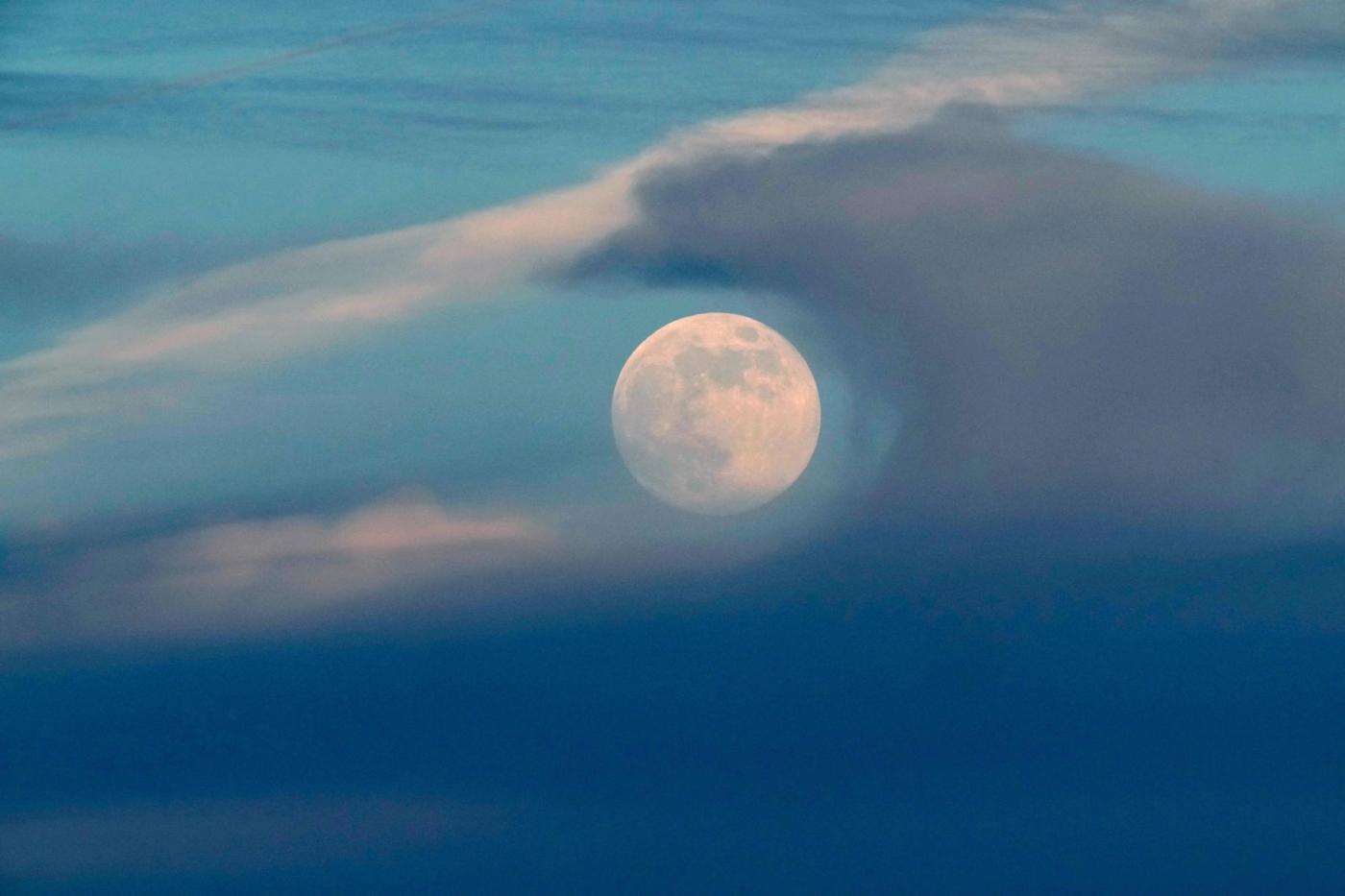
NEW YORK (AP) — There’s a micromoon coming up.

The full moon will look slightly smaller and dimmer on Saturday night. But the change may be tricky to spot with the naked eye.

“It’s a very subtle difference,” said astrophysicist Alain Brizard from Saint Michael’s College in Vermont.

The phenomenon happens when the moon is at a point farthest away from Earth. It’s opposite to a supermoon, where the moon swings closer to Earth and looks a bit larger.

To see the micromoon, go outside and look up in an area with a clear view of the moon.

Supermoons and micromoons happen a few times a year as the moon’s full phase syncs up with its orbit.

Another micromoon is on tap for May. Three supermoons will be visible this year in October, November and December.

A more colorful lunar event took place in March when a total eclipse turned the moon coppery red.

The Associated Press Health and Science Department receives support from the Howard Hughes Medical Institute’s Science and Educational Media Group and the Robert Wood Johnson Foundation. The AP is solely responsible for all content.

Related Articles


Without federal funding, Minnesota cancels treatments for invasive moths


Billionaire spacewalker highlights Mars trip for astronauts in his bid to become NASA’s next chief


Scientists genetically engineer wolves with white hair and muscular jaws like the extinct dire wolf


Four space tourists return to Earth after a private flight over the poles


Einstein called it his “biggest blunder.” Now a Berkeley Lab breakthrough is shedding light on the mysteries of dark energy and cosmic expansion