Proposed tax on social media platforms in Minnesota could raise over $300M

posted in: All news | 0

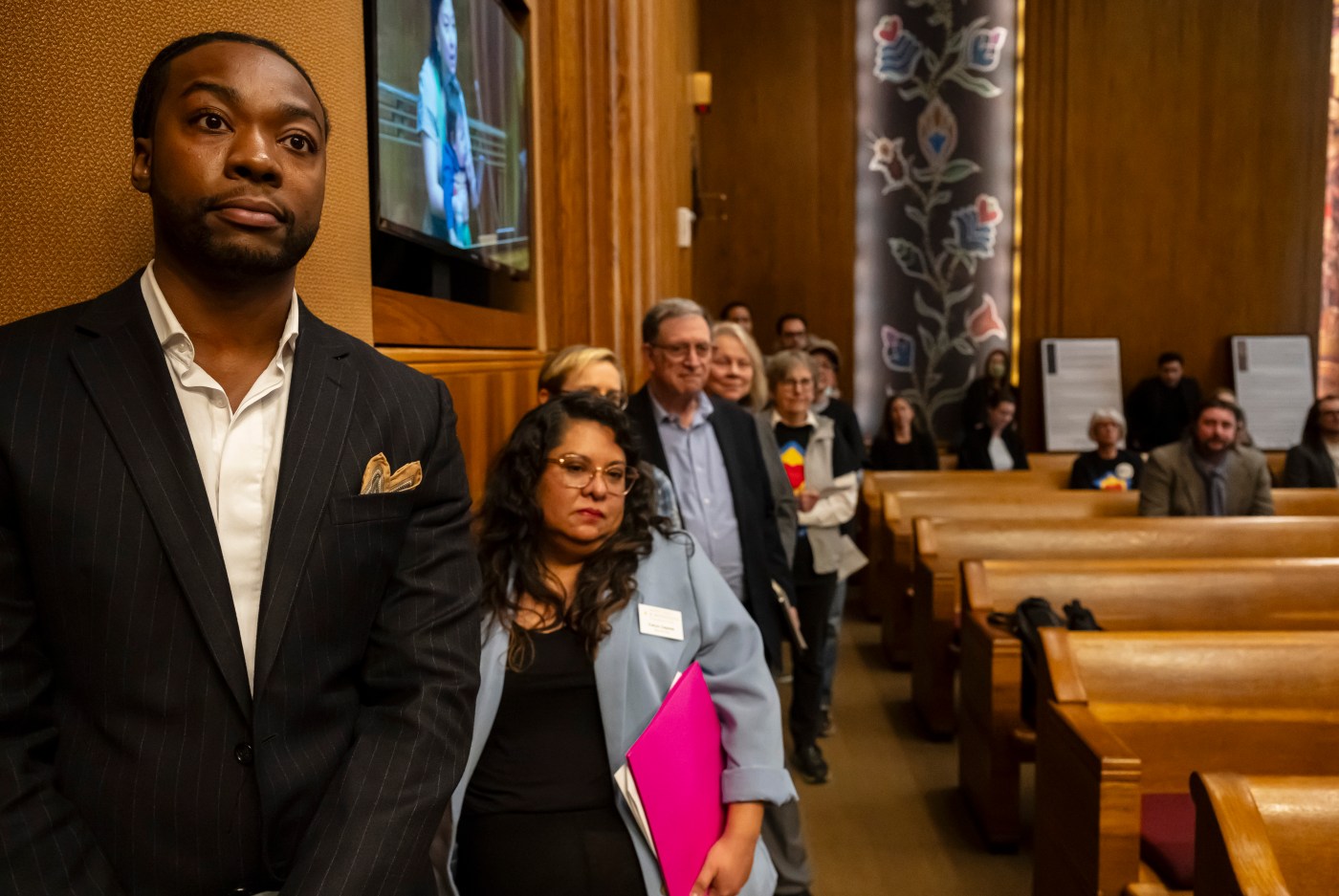
Minnesota legislators are weighing a new tax on social media platforms that could raise $334 million in the next four years as the state faces a multibillion-dollar deficit later this decade and uncertainty surrounding federal funding.

Under a proposal introduced by Senate Taxes Committee Chair Ann Rest, DFL-New Hope, large social media platforms like Facebook, Instagram, TikTok and X would pay a tax on the collection of user data, which they sell to advertisers.

What lawmakers said is a first-of-its-kind state tax would be based on usership for platforms with 100,000 or more monthly users in Minnesota. It would scale up depending on the number of users on the platform, with the top bracket applying to platforms with 1 million or more users.

“For many years now, social media platforms and businesses have taken our information, our identifying information, and used it to make millions and millions of dollars,” Rest told the Senate Taxes Committee as she presented her bill on Wednesday. “We hope we can modernize the way in which our tax systems work, recognizing the world has greatly changed.”

Revenue expected to grow

Undated courtesy photo of Minnesota Sen. Ann Rest, DFL-New Hope. Photo courtesy of the Minnesota Senate.

If the new social media tax were to take effect as a part of this year’s two-year state budget, it would raise about $46 million in its first year. That amount is expected to grow to more than $90 million annually in the following three years, according to an analysis by the Minnesota Department of Revenue.

The Senate and House tax committees heard versions of the bill Wednesday and held it over for possible inclusion in a larger tax package bill later in the session. It could face a tough path forward in the House, where Republicans and Democrats both have 67 seats. GOP lawmakers say the state shouldn’t pass any new taxes and should focus on rolling back the large expansion of spending that happened under Democratic-Farmer-Labor controlled government in 2023.

Rest and other supporters who testified in favor of the new tax said it would ensure that large companies profiting off user data — which they get by providing otherwise free services — are paying their fair share in Minnesota.

“This bill proceeds from the very reasonable premise that this extraction of value should be taxed the way the extraction of many other valuable natural resources are taxed,” said University of California — Davis law professor Darien Shanske, whose work focuses on state and local tax policy.

Economic disruptions and federal budget cuts caused by President Donald Trump also could mean more stress on state resources in the months and years ahead, supporters said.

“This bill is badly needed because it provides revenue that could be used to help those that will be hurt if the social safety net is shredded,” said Phillip Sandro, a retiree with health issues living on a fixed income who spoke for the progressive faith group Isaiah.

Supporters also argued that negative social consequences from social media platforms, such as potential harm to younger users’ mental health, warrant taxation because of the cost they pose to society. Politicians have targeted companies like Facebook parent Meta in recent years after studies showed that excessive teen social media use was tied to psychological distress.

GOP says state should curb spending

Minnesota is set to have a $456 million budget surplus in 2026-2027, but as lawmakers put together a two-year state budget this spring, a $6 billion deficit looms in the following 2028-2029 fiscal year. Early proposals from the Governor’s Office, House and Senate have largely centered around billions in cuts, but Democratic-Farmer-Labor senators and representatives have left new taxes on the table.

Republican Senators questioned the need for any new taxes when the state grew spending by 40% in the last budget passed in 2023, which saw state spending top $70 billion and used most of a record $18 billion budget surplus.

“The reason why the state of Minnesota is facing a $6 billion structural deficit is because of the overspending, the unsustainable spending over the last two years,”  said Sen. Jeremy Miller, R-Winona. “When you spend more than the revenue coming in, it’s unsustainable; it’s simple math.”

Sen. Jeremy Miller, R-Winona. (Dana Ferguson / Forum News Service)

Opponents also said a tax on social media platforms will hurt small businesses in the state who rely on targeted advertising to reach local and regional customers. New social media taxes would mean big companies would pass the cost along to smaller business customers, argued it would limit access to targeted ads.

“Minnesota’s consumers, small businesses, retailers, family farms and even newspapers that would feel this squeeze,” said Deb Peters, a lobbyist with Americans for Digital Opportunity and the Association of National Advertisers. “Taxing advertising, especially online, raises prices for everyone.”

Business interests also noted that passing a law targeting social media with a new tax could attract legal action. The Internet Tax Freedom Act, originally passed in 1998, protects online businesses from state and local government taxes that apply only to digital commerce, wrote the Midwest branch of TechNet, a group representing technology executives.

Related Articles


New MN office for missing, murdered Black women and girls aims to build awareness


MN House bill aims to assist families with child care costs


Push to release Sen. Nicole Mitchell arrest video gets new chance on appeal


St. Paul nonprofit pays $7.3M to turn Bandana Square hotel into emergency shelter


Minnesota health department cuts 170 jobs after federal COVID grant freeze

St. Paul City Council establishes new public safety committee

posted in: All news | 0

The St. Paul City Council approved the creation on Wednesday of a new committee, internal to the council, that will meet regularly to discuss financial matters related to police, fire, code enforcement and other public safety spending.

The effort to create a new regularly standing committee within the council was approved 5-2 and led by Council Member Anika Bowie, who said greater oversight will allow elected officials and the general public a forum to better understand how tax dollars are spent.

St. Paul City Council member Anika Bowie. (Courtesy of the City of St. Paul)

Bowie said council committees already meet monthly to discuss the city’s libraries, water department or general budget. Following the approval of the city charter in 1970, the city council maintained a public safety committee as part of its early subcommittee structure from 1972 to 1978, though it was later merged with a licensing committee and then repealed entirely.

“I think public safety deserves that same attention,” said Bowie, who was announced in January as the future committee chair. “Public safety is no less important. … This vote is about managing our council business better … (and) making sure we have adequate time to hear from our department heads. … It’s about giving our public a transparent space to understand and engage.”

Following extensive back-and-forth with the mayor’s office last year over heavy police overtime spending, Council Member Nelsie Yang was announced in January as the future vice-chair of the committee under Bowie. On Wednesday, Yang said she had withdrawn her support for the effort she once planned to help lead.

Council Member Matt Privratsky joined Yang in casting the sole “no” votes, with Yang expressing concern the committee would be duplicative to the work of the council’s existing budget committee, among other efforts. The city, for instance, already has a 15-member Neighborhood Safety Community Council, which works the city’s Office of Neighborhood Safety to evaluate public safety outreach grants and develop annual priorities for the department.

St. Paul City Council member Matt Privratsky. (John Autey / Pioneer Press)

“There’s already questions being referred over to me about whether something that is going to be referred over to the council is going to be in the budget and finance committee, or the public safety committee,” Yang said.

Bowie was supported in her vote by Council Member Cheniqua Johnson, who had voiced some skepticism last month based on a lack of outreach at the time to the Office of Neighborhood Safety, as well as police and fire officials. Johnson on Wednesday said Bowie took that feedback to heart and done her due diligence, and the latest version of the resolution was worded in a manner that had swayed her vote.

“I think it’s important that if we’re establishing any committee, that we’re doing so in partnership with the same departments,” Johnson said. “You did take a lot of the feedback into consideration. … The things that are listed here are within the scope of the council and what the council is (assigned) to do.”

Related Articles


St. Paul City Council gets an earful on rent control, tenant protections


St. Paul City Council to hear rent control, tenant protections


St. Paul Mayor Carter appoints Matt Privratsky as interim council member


St. Paul Ward 4 race: School Board member Chauntyll Allen declares; Hamline-Midway Coalition disavows Cole Hanson campaign


Cristen Incitti: We need more housing of all types, sizes and locations. Let’s make building easier

St. Paul City Council gets an earful on rent control, tenant protections

posted in: All news | 0

The chief executive officer of the Minnesota Wild weighed in on St. Paul’s rent control ordinance Wednesday, as did a community impact director with the St. Paul and Minnesota Foundation and a real estate broker with a background in affordable housing.

With St. Paul’s housing construction numbers dragging lower last year than at any time since 2013, the three letter writers joined a cadre of others who say it’s time to end rent control for new housing construction, as well as buildings that received their certificate of occupancy after 2004, as the mayor and three council members have proposed.

“Prominent buildings at the core of our city are being vacated, abandoned and boarded up,” said Matt Majka, CEO of the Minnesota Wild, in a letter to the St. Paul City Council bemoaning the state of downtown. “We must do everything we can to reinvest in these properties and reposition them as housing.”

But Deborah Schlick, a resident of the city’s West Side, took the opposite tack, arguing that the city already watered down the 2021 voter-approved rent stabilization ordinance with a number of amendments and was poised to shred it to “Swiss cheese” with yet another, an affront to renters that now comprise nearly half the city.

“In this economy, there is time to do this right,” wrote Schlick, in her own letter to the city council. “Put a hold on any decision. Between interest rates and tariffs, no one is rushing to build anywhere. Build a thoughtful, effective strategy to ensure low wage workers and people unable to work can afford to find a home in St. Paul.”

The city council held public hearings Wednesday on two hot-button questions likely up for votes in early May. At the urging of St. Paul Mayor Melvin Carter, housing developers and certain affordable housing advocates who have called rent control a well-intentioned but failed effort, the council is contemplating exempting any construction that received its certificate of occupancy after 2004.

North End homeowner Adam Dullinger, left, speaks against a proposed amendments to the St. Paul rent control ordnance during a public hearing before the St. Paul City Council in council chambers at St. Paul City Hall on Wednesday, April 9, 2025. (John Autey / Pioneer Press)

Scapegoating rent control for the housing slowdown?

Carter and several council members have said those changes should move forward hand-in-hand with a raft of proposed tenant protections also vetted through a public hearing on Wednesday.

City officials have expressed alarm that only 293 housing units were constructed in St. Paul last year, down from more than 1,400 in 2019, and only a few dozen of last year’s new units were non-subsidized, market-rate housing. They’ve pointed out that multiple rent-controlled cities offer exemptions for new construction, including Los Angeles, New York City, San Francisco and Washington, D.C.

Matthew McMillan, a renter, noted that while St. Paul has struggled to draw interest from the development community, housing construction also plunged in cities that do not have rent control. Given high interest rates and other economic challenges, an attorney with the Housing Justice Center, based in St. Paul, told the council the city is “scapegoating” rent control for construction slowdowns increasingly evident throughout the Twin Cities.

On the city’s East Side, “one in three Ward 7 renters pay over half their income to rent,” said another speaker, who identified himself as a graduate student who studies the housing industry. “This is absolutely a supply issue. … It’s a downtown issue. But rent control is not the cause of those problems.”

Some critics expressed fear that creating a two-tier system will offer extra incentive to developers to tear down older, naturally affordable properties and replace them with pricey new units exempt from rent control.

“Trickle-down affordability is both grossly insufficient and … unjust,” said another renter, pointing to limited recent construction and high rents in Minneapolis, Indianapolis, Denver and other cities without rent control.

Opponents say goals not met

Rent control’s opponents have argued that the blanket policy has done more to protect wealthy renters from large hikes than to protect the poor, given that many owners of older properties have been granted exemptions to the rent caps because of high maintenance costs, inflation and property tax increases.

In a letter to the council, real estate broker Renee Spillum, a former director of real estate with the University of Minnesota Foundation’s Real Estate Advisors, said she once spent seven years struggling to find financing to build new apartments in a low-income Minneapolis neighborhood. St. Paul’s rent control ordinance has made a difficult slog even harder, she said.

“I want more competition in St. Paul between landlords, not less,” Spillum wrote. “The only way that happens is adding more units. And the only way we add more units in our city is not to make it impossible for developers to raise equity capital to build here.”

Scott Cordes, chief operating officer of affordable housing developer Project for Pride in Living, told the council Wednesday that rent control has had too many “unintended consequences,” such as limiting affordable housing production at the Highland Bridge development, where affordable units have only moved forward at three of 10 parcels.

Related Articles


St. Paul City Council to hear rent control, tenant protections


St. Paul Mayor Carter appoints Matt Privratsky as interim council member


St. Paul Ward 4 race: School Board member Chauntyll Allen declares; Hamline-Midway Coalition disavows Cole Hanson campaign


Cristen Incitti: We need more housing of all types, sizes and locations. Let’s make building easier


Rent control, budget, acrimony, attendance issues dog St. Paul City Council

Trump lets the water flow — again — as he reverses Biden rule restricting showerheads

posted in: All news | 0

By MATTHEW DALY

WASHINGTON (AP) — President Donald Trump has long complained about modern rules that limit water flow for showerheads, making it harder for him to wash his “beautiful hair.”

In his first term, Trump directed that restrictions on showerheads be loosened, an action that former President Joe Biden reversed.

Now Trump is going to let the water flow — again.

An executive order he signed Wednesday calls for an immediate end to water conservation standards that restrict the number of gallons per minute that flow through showerheads and other appliances such as dishwashers, washing machines and toilets.

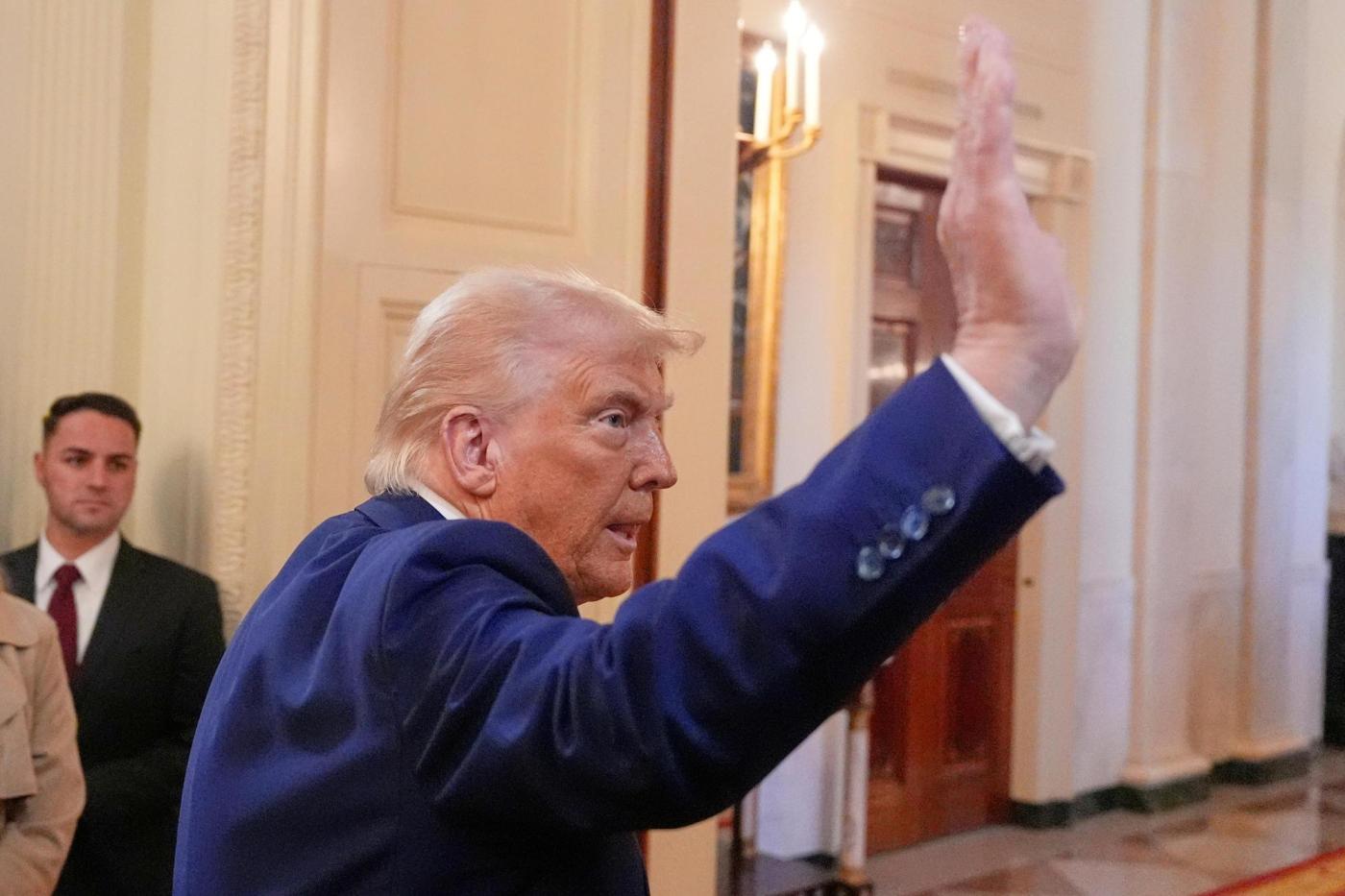
“I like to take a nice shower, take care of my beautiful hair,” Trump said Wednesday as he signed an executive order at the White House. “I have to stand in the shower for 15 minutes until it gets wet. Comes out drip, drip, drip. It’s ridiculous.”

“What you do is you end up washing your hands five times longer, so it’s the same water,” he added. “And we’re going to open it up so that people can live.”

The order directs Energy Secretary Chris Wright to immediately rescind what Trump called the “overly complicated federal rule” that redefined the word showerhead under the last two Democratic presidents.

Biden and former President Barack Obama both imposed restrictions on water flow from showerheads and other appliances. The standards were intended to make dishwashers, showerheads, refrigerators, laundry machines and toilets use less energy and water.

Related Articles


Fact Focus: Trump misrepresents facts about coal as he signs executive orders to boost its use


Some House Republicans threaten Trump’s ‘big, beautiful’ budget and tax cut bill ahead of floor vote


Kash Patel has been replaced by Army Secretary Driscoll as acting head of the ATF, AP sources say


Appeals court clears the way for the Trump administration to fire thousands of probationary workers


Senate confirms former Arkansas Gov. Mike Huckabee as Trump’s ambassador to Israel

But the regulations “turned a basic household item into a bureaucratic nightmare,” the White House said in a fact sheet. “No longer will showerheads be weak and worthless.”

The Appliance Standards Awareness Project, which advocates for energy efficiency, said the Biden-era standards cut utility bills and protect the environment.

Showers account for about 20% of the average American family’s daily indoor water use, according to the Environmental Protection Agency. Water-saving showerheads also save energy, since heating water accounts for about a fifth of the average home’s energy use.

Andrew deLaski, executive director of ASAP, said consumer reviews consistently show that most showerheads currently sold “provide a great drenching. So there isn’t a problem to be solved here with the showerheads available today.”

He called Trump’s order a gimmick designed to get around a 1992 energy efficiency law, and he predicted a similar result to Trump’s actions during his first term, when no major showerhead manufacturer made significant changes to their products.