In fight over insurance, neighbors crowdsource LA fire contamination data

posted in: All news | 0

By CLAUDIA LAUER and SALLY HO

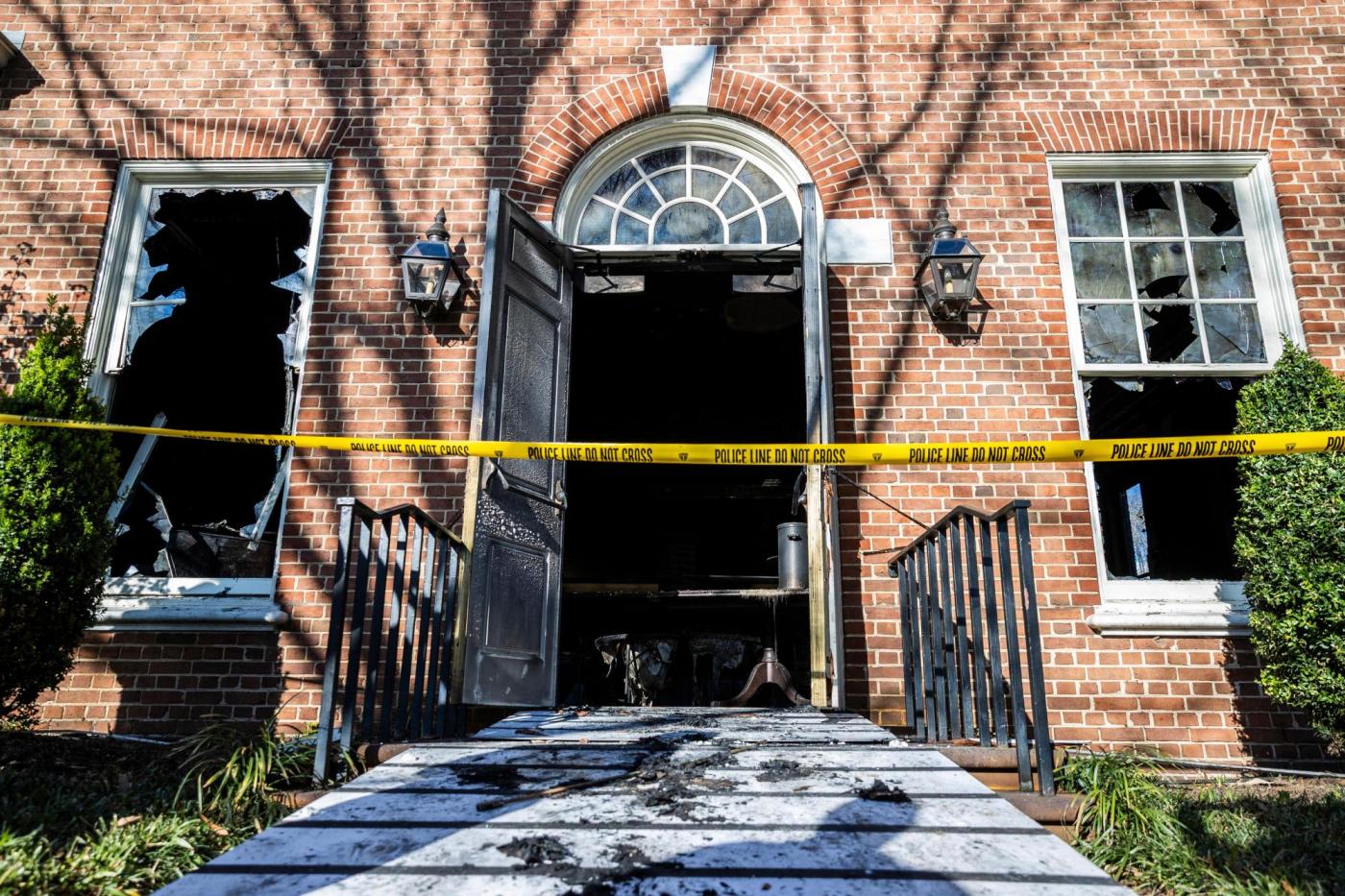
All sense of survivors’ guilt was fleeting for those residents whose homes remained standing after wildfires ripped through the Los Angeles area three months ago.

Many worried that smoke from the Eaton wildfire that destroyed more than 9,000 structures and killed 18 people may have carried toxins, including lead, asbestos and heavy metals, into their homes. But they struggled to convince their insurers to test their properties to ensure it was safe to return.

Nicole Maccalla, a data scientist, said embers burned more than half of her roof, several windows and eaves were damaged, and her house in Altadena was left filled with ash, debris, soot and damaged appliances. She said her insurance adjuster said USAA would pay for contamination testing, but after choosing a company and coming back with the results, her claim was rejected. The adjuster said the company only covered testing in homes with major damage.

“Every single item is a battle,” said Maccalla. “It’s denials and appeals and denials and appeals, and you wait weeks and weeks and weeks for responses.”

Crowdsourcing contamination data

Maccalla and others banded together as Eaton Fire Residents United, sharing indoor environmental testing data and compiling the results in an online map. Of 81 homes tested so far for lead, all show elevated levels, according to the group.

“I’ve already had multiple people reach out and say: ‘Thank you for publishing this map … because my insurance company has changed their mind and approved testing,’” said Maccalla, who helped design the data collection to verify results and maintain privacy.

Related Articles


Climate disasters are on the rise. These states want to make oil companies pay


States’ wildfire plans at risk amid budget woes and federal uncertainty


Wildfires in North and South Carolina fueled by drought, wind and fallen trees from Hurricane Helene


After Lahaina fire, Hawaii residents address their risk by becoming ‘Firewise’


What happens to your mortgage if your house is destroyed?

Many homeowners paid privately for the testing after their insurance companies refused, revealing gaps in coverage. The group hopes the data will help residents who can’t afford it to convince their insurers to cover testing and remediation.

“If I can prove my community is not fit for human habitation then maybe I can show my home won’t be,” said Jane Lawton Potelle, founder of Eaton Fire Residents United.

It’s not easy to understand how and when it is safe to return home, Potelle said. The fine print of insurance policies can be frustrating and confusing, and the government has not stepped in to help.

The Federal Emergency Management Agency said it has no plans to conduct widespread environmental testing. The Los Angeles County Department of Public Health is tracking environmental testing largely by academic researchers and a handful from government agencies, but most studies assess outdoor contamination.

Toxic air and limited coverage

Reports from other urban wildfires, in which building materials, appliances, cars and more burn at incredibly high temperatures, show increased levels of heavy metals including lead and polycyclic aromatic hydrocarbons (PAHs) such as benzene that are tied to negative health risks. But insurance companies haven’t standardized testing for those contaminants.

Home insurance broadly covers fire damage, but there is a growing dispute over what damage must be covered when flames don’t torch the property.

California Insurance Commissioner Ricardo Lara released a bulletin in March that put the onus on companies to properly investigate reported smoke damage, saying they cannot deny such claims without investigating thoroughly, including paying for professional testing as warranted. But many residents have been left to fight for coverage anyway.

Janet Ruiz, spokesperson for the Insurance Information Institute that represents many major insurance companies, said it’s hard to compare neighbors because every claim is unique due to each home’s physical structure, actual damage and defined insurance coverage limits.

“It can vary and insurance companies are sensitive to what the claim is,” Ruiz said. “You have to work with your insurance companies and be reasonable about what may have happened.”

Dave Jones, director of the Climate Risk Initiative at University of California, Berkeley, and former state insurance commissioner, said testing should be covered even though some insurance companies disagree.

“It’s perfectly reasonable for people to have some kind of environmental test done so that their home is safe and their property is safe,” Jones said. “We’re talking about very catastrophically high temperature fires where all sorts of materials are melted and some of them become toxic.”

State plan struggles

The state’s insurer of last resort, known as the California Fair Access to Insurance Requirements Plan, has been scrutinized for years over how it handles smoke damage claims. A 2017 change to the FAIR Plan limited coverage to “permanent physical changes,” meaning smoke damage must be visible or detectable without lab testing for claims to be approved. State officials said that threshold was too high and illegal, and ordered a change.

Dylan Schaffer, an attorney leading a class action lawsuit challenging FAIR Plan’s threshold, said he was surprised private carriers are disputing similar fire damage claims.

“The damage is not due to smoke, the damage is contamination from fire,” Schaffer said. “They make it complicated because it saves them money.”

Meanwhile, Altadena residents on the FAIR Plan say their claims are still being denied. Jones believes the debate will only end when lawmakers take action.

FAIR Plan spokeswoman Hilary McLean declined to comment on the ongoing litigation and individual cases, but said the FAIR Plan pays all covered claims based on the adjusters’ recommendations.

“Our policy, like many others, requires direct physical loss for there to be coverage,” McLean said.

Worries over kids’ safety

Potelle said the first inkling that her house might be toxic came after meeting with her AAA insurance adjuster in the days after the fire. Even though she had worn a mask, her chest still ached and her voice rasped, and she wondered whether her home was safe for her 11-year-old.

Stephanie Wilcox said her toddler’s pediatrician recommended testing their home. Her Farmers Insurance policy includes coverage for lead and asbestos in addition to her wildfire coverage, but after multiple denials, she paid out of pocket.

“After the initial inspection, (Farmers) had told us remediation would cost about $12,000 and that it would be habitable, like we could move back in tomorrow,” she said. “But now there’s no way.”

She plans to ask for a new estimate including lead abatement and other costs, citing the results.

Similarly, Zach Bailey asked in late January for contamination testing. The house he shares with his wife and toddler sits in an island of largely spared homes among blocks wiped out by the fire. After months of denials, State Farm agreed to pay for lead and asbestos testing because the remediation company cited federal worker safety regulations.

It shouldn’t have been that hard, he said.

“It feels like the insurance companies should have a playbook at this point,” he said. “They should have a process to keep people safe because this isn’t the first disaster like this.”

What we know about the Social Security Administration listing thousands of living immigrants as dead

posted in: All news | 0

By FATIMA HUSSEIN

WASHINGTON (AP) — The Trump administration’s move to classify thousands of living immigrants as dead and cancel their Social Security numbers is an escalation of the president’s crackdown on people who were legally allowed to live in the U.S. under programs instituted by his predecessor.

The move will make it much harder for affected immigrants to use banks or other basic services where Social Security numbers are required.

The White House says that “by removing the monetary incentive for illegal aliens to come and stay, we will encourage them to self-deport.”

However, the affected individuals newly added to the Social Security Administration’s “Death Master File” are in the country legally. Immigrant advocates say the administration is committing “digital murder.”

Here’s what we know about the administration’s plan to note some immigrants as dead in Social Security data:

Who is being affected?

A Trump administration official said the SSA moved roughly 6,300 immigrants’ names and Social Security numbers to a database that federal officials normally use to track the deceased after the Department of Homeland Security identified them as temporarily paroled aliens on the terrorist watch list or with FBI criminal records.

The administration has not provided evidence of this assertion.

The SSA maintains the most complete federal database of individuals who have died, known as the Death Master File. It contains more than 142 million records going back to 1899.

In its latest move, the White House has taken to referring to it as the “Ineligible Master File.”

Effective April 8, Customs and Border Patrol terminated parole for all these individuals with written notice to each of them, the Trump administration official said. The official was not authorized to speak publicly and discussed the development on condition of anonymity.

What happens when you lose access to a Social Security number?

Without a Social Security number, you cannot legally get a job, collect Social Security benefits or receive certain government benefits. Some school districts may prevent children from enrolling in school without a Social Security number.

And while some banks allow people to open an account without a Social Security number, stripping immigrants of their Social Security numbers will cut them off from many other financial services.

Devin O’Connor, a senior fellow at the Center on Budget and Policy Priorities, said that the move is unprecedented and that never before have people been deliberately added to death rolls when they are still alive.

“The administration is saying they have the right to declare someone as dead when they have not died — where is the oversight here?” O’Connor asked. “And what happens when they make a mistake?”

Former Social Security Administrator Martin O’Malley told The Associated Press, “The police state is here, now.” The administration’s latest move violates privacy rules meant to protect everyone’s personal data, he said.

How does this affect the broader public?

Experts warn that the targeting of immigrants could just be the beginning.

O’Connor said, “The idea that you can rename the Death Master File and decide you can put people on the list as persona non grata” is unheard of and should concern everyone.

“If they can do it to one group, they can do it to anyone — in error or in malice,” Kathleen Romig, the director of Social Security and disability policy at the Center on Budget and Policy Priorities, posted on the BlueSky social media app Thursday.

“A person must be (asterisk)lawfully admitted(asterisk) to the U.S. to be assigned a Social Security number,” she said in another post.

“Don’t let the Trump Administration gaslight you. Their ‘digital murder’ policy isn’t about undocumented immigrants. It’s about people who came here legally.”

How else is the administration tracking down immigrants?

Earlier this week, DHS revoked the legal status of hundreds of thousands of immigrants who used the CBP One app. They had generally been allowed to remain in the U.S. for two years with work authorization under presidential parole authority during the Biden era but are now expected to self-deport.

Additionally, DHS and the Treasury Department signed a deal this week that would allow the IRS to share immigrants’ tax data with Immigration and Customs Enforcement for the purpose of identifying and deporting people illegally in the U.S. The agreement will allow ICE to submit names and addresses of immigrants inside the U.S. illegally to the IRS for cross-verification against tax records.

The acting IRS commissioner, Melanie Krause, who had served in that capacity since February, stepped down over that deal.

Advocates say the Treasury-DHS information-sharing agreement violates privacy laws and diminishes the privacy of all Americans.

US measles cases surpass 700 with outbreaks in six states. Here’s what to know

posted in: All news | 0

By DEVI SHASTRI, AP Health Writer

U.S. measles cases topped 700 as of Friday, capping a week in which Indiana joined five others states with active outbreaks, Texas grew by another 60 cases and a third measles-related death was made public.

Related Articles


Doctors remove pig kidney from an Alabama woman after a record 130 days


The House speaker’s eyeing big cuts to Medicaid. In his Louisiana district, it’s a lifeline


Kennedy says Health and Human Services will determine the cause of autism by September


Hit hard by opioid crisis, Black patients further hurt by barriers to care


Cabot Creamery butter recalled over fecal bacteria contamination

Health Secretary Robert F. Kennedy Jr. claimed in a televised Cabinet meeting Thursday that measles cases were plateauing nationally, but the virus continues to spread mostly in people who are unvaccinated and the U.S. Centers for Disease Control and Prevention redeployed a team to West Texas.

The U.S. has more than double the number of measles cases it saw in all of 2024, and Texas is reporting the majority of them with 541.

Texas’ cases include two unvaccinated elementary school-aged children who died from measles-related illnesses near the epicenter of the outbreak in rural West Texas, which led Kennedy to visit the community Sunday. The third person who died was an adult in New Mexico who was not vaccinated.

Other states with active outbreaks — defined as three or more cases — include New Mexico, Indiana, Kansas, Ohio and Oklahoma.

The multistate outbreak confirms health experts’ fears that the virus will take hold in other U.S. communities with low vaccination rates and that the spread could stretch on for a year. The World Health Organization has said cases in Mexico are linked to the Texas outbreak.

Measles is caused by a highly contagious virus that’s airborne and spreads easily when an infected person breathes, sneezes or coughs. It is preventable through vaccines, and has been considered eliminated from the U.S. since 2000.

Health and Human Services Secretary Robert F. Kennedy Jr., left, arrives at Reinlander Mennonite Church after a second measles death, Sunday, April 6, 2025, in Seminole, Texas. (AP Photo/Annie Rice)

Here’s what else you need to know about measles in the U.S.

How many measles cases are there in Texas and New Mexico?

Texas’ outbreak began in late January. State health officials said Friday there were 36 new cases of measles since Tuesday, bringing the total to 541 across 22 counties — most of them in West Texas. A total of 56 Texans have been hospitalized throughout the outbreak.

Of the confirmed cases, state health officials estimated Friday that about 5% are actively infectious.

Sixty-five percent of Texas’ cases are in Gaines County, population 22,892, where the virus started spreading in a close-knit, undervaccinated Mennonite community. The county has logged 355 cases since late January — just over 1% of the county’s residents.

Last week’s death in Texas was an 8-year-old child, according to Kennedy. Health officials in Texas said the child did not have underlying health conditions and died of “what the child’s doctor described as measles pulmonary failure.” A child died of measles in Texas in late February — Kennedy said age 6.

New Mexico announced two new cases Friday, bringing the state’s total to 58. State health officials say the cases are linked to Texas’ outbreak based on genetic testing. Most are in Lea County, where two people have been hospitalized, two are in Eddy County and one is in Chaves County.

New Mexico reported its first measles-related death in an adult on March 6.

How many cases are there in Kansas?

Kansas has 32 cases in eight counties in the southwest part of the state, health officials announced Wednesday. Two of the counties, Finney and Ford, are new on the list and are major population centers in that part of the state. Haskell County has the most with eight cases, Stevens County has seven, Kiowa County has six, and the rest have five or fewer.

The state’s first reported case, identified in Stevens County on March 13, is linked to the Texas and New Mexico outbreaks based on genetic testing, a state health department spokesperson said. But health officials have not determined how the person was exposed.

How many cases are there in Oklahoma?

Cases in Oklahoma increased by two Friday to 12 total: nine confirmed and three probable cases. The first two probable cases were “associated” with the West Texas and New Mexico outbreaks, the state health department said.

A state health department spokesperson said measles exposures were confirmed in Tulsa and Rogers counties, but wouldn’t say which counties had cases.

How many cases are there in Ohio?

The Ohio Department of Health confirmed 20 measles cases in the state as of Thursday: 11 in Ashtabula County near Cleveland, seven in Knox County and one each in Allen and Holmes counties.

Ohio is not including nonresidents in its count, a state health department spokesperson told The Associated Press. The Knox County outbreak in east-central Ohio has infected a total 14 people, according to a news release from the county health department, but seven of them do not live in Ohio. In 2022, a measles outbreak in central Ohio sickened 85.

The outbreak in Ashtabula County started with an unvaccinated adult who had interacted with someone who had traveled internationally.

How many cases are there in Indiana?

Indiana confirmed six connected cases of measles in Allen County in the northeast part of the state — four are unvaccinated minors and two are adults whose vaccination status is unknown.

The cases have no known link to other outbreaks, the Allen County Department of Health said Wednesday. The first case was confirmed Monday.

Where else is measles showing up in the U.S.?

Measles cases also have been reported in Alaska, Arkansas, California, Colorado, Florida, Georgia, Hawaii, Kentucky, Maryland, Michigan, Minnesota, New Jersey, New York, Pennsylvania, Rhode Island, Tennessee, Vermont, and Washington.

The U.S. Centers for Disease Control and Prevention defines an outbreak as three or more related cases. The agency counted seven clusters that qualified as outbreaks in 2025 as of Friday.

In the U.S., cases and outbreaks are frequently traced to someone who caught the disease abroad. It can then spread, especially in communities with low vaccination rates. In 2019, the U.S. saw 1,274 cases and almost lost its status of having eliminated measles. So far in 2025, the CDC’s count is 712.

Do you need an MMR booster?

The best way to avoid measles is to get the measles, mumps and rubella (MMR) vaccine. The first shot is recommended for children between 12 and 15 months old and the second between 4 and 6 years old.

People at high risk for infection who got the shots many years ago may want to consider getting a booster if they live in an area with an outbreak, said Scott Weaver with the Global Virus Network, an international coalition. Those may include family members living with someone who has measles or those especially vulnerable to respiratory diseases because of underlying medical conditions.

Adults with “presumptive evidence of immunity” generally don’t need measles shots now, the CDC said. Criteria include written documentation of adequate vaccination earlier in life, lab confirmation of past infection or being born before 1957, when most people were likely to be infected naturally.

A doctor can order a lab test called an MMR titer to check your levels of measles antibodies, but experts don’t always recommend it and health insurance plans may not cover it.

Getting another MMR shot is harmless if there are concerns about waning immunity, the CDC says.

People who have documentation of receiving a live measles vaccine in the 1960s don’t need to be revaccinated, but people who were immunized before 1968 with an ineffective measles vaccine made from “killed” virus should be revaccinated with at least one dose, the agency said. That also includes people who don’t know which type they got.

What are the symptoms of measles?

Measles first infects the respiratory tract, then spreads throughout the body, causing a high fever, runny nose, cough, red, watery eyes and a rash.

The rash generally appears three to five days after the first symptoms, beginning as flat red spots on the face and then spreading downward to the neck, trunk, arms, legs and feet. When the rash appears, the fever may spike over 104 degrees Fahrenheit, according to the CDC.

Most kids will recover from measles, but infection can lead to dangerous complications such as pneumonia, blindness, brain swelling and death.

How can you treat measles?

There’s no specific treatment for measles, so doctors generally try to alleviate symptoms, prevent complications and keep patients comfortable.

Why do vaccination rates matter?

In communities with high vaccination rates — above 95% — diseases like measles have a harder time spreading through communities. This is called “herd immunity.”

But childhood vaccination rates have declined nationwide since the pandemic and more parents are claiming religious or personal conscience waivers to exempt their kids from required shots.

The U.S. saw a rise in measles cases in 2024, including an outbreak in Chicago that sickened more than 60.

AP Science Writer Laura Ungar contributed to this report.

The Associated Press Health and Science Department receives support from the Howard Hughes Medical Institute’s Science and Educational Media Group and the Robert Wood Johnson Foundation. The AP is solely responsible for all content.

Freak sell-off of ‘safe haven’ US bonds raises fear that confidence in America is fading

posted in: All news | 0

By BERNARD CONDON and STAN CHOE, AP Business Writers

NEW YORK (AP) — The upheaval in stocks has been grabbing all the headlines, but there is a bigger problem looming in another corner of the financial markets that rarely gets headlines: Investors are dumping U.S. government bonds.

Normally, investors rush into Treasurys at a whiff of economic chaos but now they are selling them as not even the lure of higher interest payments on the bonds is getting them to buy. The freak development has experts worried that big banks, funds and traders are losing faith in America as a good place to store their money.

“The fear is the U.S. is losing its standing as the safe haven,” said George Cipolloni, a fund manager at Penn Mutual Asset Management. “Our bond market is the biggest and most stable in the world, but when you add instability, bad things can happen.”

That could be bad news for consumers in need of a loan — and for President Donald Trump, who had hoped his tariff pause earlier this week would restore confidence in the markets.

What’s happening?

A week ago, the yield on the 10-year Treasury was 4.01%. On Friday, the yield shot as high as 4.58% before sliding back to around 4.50%. That’s a major swing for the bond market, which measures moves by the hundredths of a percentage point.

Among the possible knock-on effects is a big hit to ordinary Americans in the form of higher interest rates on mortgages and car financing and other loans.

“As yields move higher, you’ll see your borrowing rates move higher, too,” said Brian Rehling, head of fixed income strategy at Wells Fargo Investment Institute. “And every corporation uses these funding markets. If they get more expensive, they’re going to have to pass along those costs customers or cut costs by cutting jobs.”

Related Articles


Potential impact of Trump’s trade war on jobs and inflation sends US consumer sentiment plunging


US wholesale inflation fell last month as price pressures eased, but trade war clouds outlook


US stocks jump in another manic day as Wall Street closes a chaotic and historic week


Trump’s tariffs threaten to end quarter-century era of cheap goods for US consumers


The week that Trump pushed the global economy to the brink with tariffs — and then pulled back

Treasury bonds are essentially IOUs from the U.S. government, and they’re how Washington pays its bills despite collecting less in revenue than it spends.

To be sure, no one can say exactly what mix of factors is behind the developing bond bust or how long it will last, but it’s rattling Wall Street nonetheless.

Bonds are supposed to move in the opposite direction as stocks, rising when stocks are falling. In this way, they act like shock absorbers to 401(k)s and other portfolios in stock market meltdowns, compensating somewhat for the losses.

“This is Econ 101,” said Jack McIntyre, portfolio manager for Brandywine Global, adding about the bond sell-off now, “It’s left people scratching their heads.”

The latest trigger for bond yields to go up was Friday’s worse-than-expected reading on sentiment among U.S. consumers, including expectations for much higher inflation ahead. But the unusual bond yield spike this week also reflects deeper worries as Trump’s tariffs threats and erratic policy moves have made America seem hostile and unstable — fears that are not likely to go away even after the tariff turmoil ends.

“When the issue is a broader loss of confidence in the United States, even a much fuller retreat on trade might not work” to bring yields down, wrote Sarah Bianchi and other analysts at investment bank Evercore ISI. “We’re not sure any of the tools remaining in Trump’s toolkit will be sufficient to fully staunch the bleeding.”

The influence of the bond market

Trump acknowledged that the bond market played a role in his decision Wednesday to put a 90-day pause on many tariffs, saying investors “were getting a little queasy.”

If indeed it was the bond market, and not stocks, that made him change course, it wouldn’t come as a surprise.

The bond market’s reaction to her tax and budget policy was behind the ouster of United Kingdom’s Liz Truss in 2022, whose 49 days made her Britain’s shortest-serving prime minister. James Carville, adviser to former U.S. President Bill Clinton, also famously said he’d like to be reincarnated as the bond market because of how much power it wields.

The instinctual rush into U.S. debt is so ingrained in investors it even happens when you’d least expect.

People poured money into U.S. Treasury bonds during 2009 Financial Crisis, for instance, even though U.S. was the source of the problem, specifically its housing market.

But to Wall Street pros it made sense: U.S. Treasurys are liquid, stable in price and you can buy and sell them with ease even during a panic, so of course businesses and traders would rush into them to wait out the storm.

Yields on U.S bonds quickly fell during that crisis, which had a benefit beyond cushioning personal financial portfolios. It also lowered borrowing costs, which helped businesses and consumers recover.

This time that natural corrective isn’t kicking in.

What’s causing the sell-off?

Aside from sudden jitters about the U.S., several other things could be triggering the bond sell-off.

Some experts speculate that China, a vast holder of U.S. government bonds, is dumping them in retaliation. But that seems unlikely since that would hurt the country, too. Selling Treasurys, or essentially exchanging U.S. dollars for Chinese yuan, would make China’s currency strengthen and its exports more expensive.

Another explanation is that a favored strategy of some hedge funds involving U.S. debt and lots of borrowing — called the basis trade — is going against them. That means their lenders are asking to get repaid and they need to raise cash.

“They are selling Treasurys and that is pushing up yields — that’s part of it,” said Mike Arone, chief investment strategist at State Street Global Advisors. “But the other part is that U.S. has become a less reliable global partner.”

Wells Fargo’s Rehling said he’s worried about a hit to confidence in the U.S., too, but that it’s way too early to be sure and that the sell-off may stop soon, anyway.

“If Treasuries are no longer the place to park your cash, where do you go?” he said. “Is there another bond out there that is more liquid? I don’t think so.”