Afton native Jessie Diggins has left a lasting legacy in Minnesota

posted in: All news | 0

There’s a snapshot in time that will forever live in the mind of Afton native Jessie Diggins, and it’s not the epic finishing kick at the 2018 Winter Olympics in Pyeongchang that resulted in her bringing home a gold medal.

Instead, it’s the warmup lap before a World Cup race at Theodore Wirth Park in Minneapolis on Feb. 17, 2024, when a wall of noise followed her around the course.

That will stick with her for the rest of her life.

Second placed Jessie Diggins of United States celebrates on the podium after the women’s 20km mass start classic skiing race, at the FIS Cross-Country World Cup at the Nordic Center Goms, in Geschinen, Switzerland, Sunday, Jan. 25, 2026. (Salvatore Di Nolfi/Keystone via AP)

“I cried like 12 times,” Diggins said. “It was the coolest moment of my career.”

It was a similar refrain from her father Clay and mother Deb as they reflected on the incredible life their daughter has made for herself with cross country skiing at the forefront. They have traveled all over the world watching her compete, but the highlight for them will always be seeing fans from across Minnesota show up to watch a World Cup race in their own backyard.

“I’m getting chills thinking about it,” Clay Diggins said. “I’ll never forget that.”

The same goes for pretty much everybody that was in attendance.

“It was such an amazing event,” Deb Diggins said said. “I could’ve died right there.”

It was the culmination of a lifetime’s worth of hard work for Diggins, who long dreamed of bringing a World Cup race to Minnesota. She was relentless in her pursuit because she wanted to share the sport with as many people from her home state as possible. The fact that she made it happen will always top the list of her accomplishments.

“It’s not about the results for me,” Diggins said. “It’s about giving back.”

That mindset has long served as a compass for Diggins as she has emerged as the face of the cross country skiing. She was provided a platform after winning the gold medal. She used it to grow the sport as much as she could, while also becoming a vocal advocate for mental health and climate change.

That shouldn’t be taken for granted as Diggins prepares to represent her country for the final time at the 2026 Winter Olympics in Milano Cortina. She has been everything cross country skiing could ask for in an ambassador.

As she has navigated the ups and downs along the way, Diggins has left a legacy in Minnesota that will be felt for the foreseeable future. The aftermath of the World Cup race in Minnesota is a small part of that.

“We’ve heard from a lot of people who started cross country skiing because they were so excited about seeing a World Cup race,” Deb Diggins said. “They decided to go out and give it a try after seeing it for themselves.”

The numbers at the grassroots level speak for themselves. Minnesota Youth Ski League executive director Amy Cichanowski noted that their enrollment has more than doubled since Diggins started competing on the international stage. There were 1,707 kids enrolled in the program in 2015-16, according to data provided by the league. There are 3,502 kids enrolled in the program in 2025-26.

“That’s not a coincidence,” Cichanowski said. “It has a lot to do with (Diggins) and the way she carries herself. She’s always been about having fun out there. That’s the perfect way to attract kids to the sport.”

That has been a calling card for Diggins, who has become known for her joy at the starting line as much as her full body collapse at the finish line.

“It’s always been about having fun for her,” Clay Diggins said. “She’s kind of trademarked that with her glitter. She puts it on her face to remind herself that it’s supposed to be fun, even with all the pressure. I think that type of approach has really allowed her to have so much success.”

That has contributed to noticeable spikes for the the Minnesota Youth Ski League as Diggins has competed at the 2014 Winter Olympics in Sochi, the 2018 Winter Olympics in Pyeongchang, the 2022 Winter Olympics in Beijing, and now the 2026 Winter Olympics in Milano Cortina.

“We haven’t had very much snow the past couple of years, so us being able to still attract so many kids says a lot about the momentum,” Cichanowski said. “The role model that she has been for our sport is such an important part of that.”

That sentiment was echoed by the Loppet Foundation executive director Meghan Cosgrove as she emphasized how Diggins has been instrumental in getting people of all ages to try cross country skiing for the first time.

“She’s not just inspiring kids,” Cosgrove said. “She’s also inspiring adults.”

That’s an important part of the equation when it comes to how much Diggins has helped grow the sport. It’s not only about pulling in the 5-year-old that has never done it before. It’s also about pulling in the 55-year-old that has never done it before.

“She’s done so much good for our sport,” Cosgrove said. “You can discover it at any stage of life, and she’s helping people do that.”

In the same breath, Cosgrove praised Diggins for being vulnerable throughout her rise up the ranks, such as sharing her struggle with an eating disorder, which has played a role in inspiring the next generation to face their own struggles.

The impact that Diggins made in that respect goes even deeper than anything she has achieved on the course.

“She made the decision that she was going to share her life with the world,” Clay Diggins said. “We couldn’t be more proud of her for being willing to do that.”

That will forever mean more than any piece of hardware ever could.

“Her ultimate goal from the time she won the gold medal was to use it to get a World Cup race to Minnesota,” Deb Diggins said. “It was her love letter to the community that helped raise her.”

Related Articles


What to watch on Day 1 of the Milan Cortina Olympics: Men’s downhill medal race, Ilia Malinin skates


Photos from the Milan Cortina Olympics opening ceremony


Minions will get their Olympic moment as Spanish figure skater gets final approval for his music


Milan Cortina is going for Olympic fashion gold. Take a look at some eye-popping outfits


Olympics: Lindsay Vonn’s training run earns fist pumps
Review: ‘Black and Jewish America’ compiles an illuminating history of intersection

posted in: All news | 0

You may have read recently how minions of the Trump administration removed an exhibit about slavery from the President’s House in Philadelphia (where George Washington lived, with slaves) as part of its ongoing sop to MAGA sensitivities and campaign to erase history in favor of a fairy tale in which the worst thing Washington ever did was chop down a cherry tree.

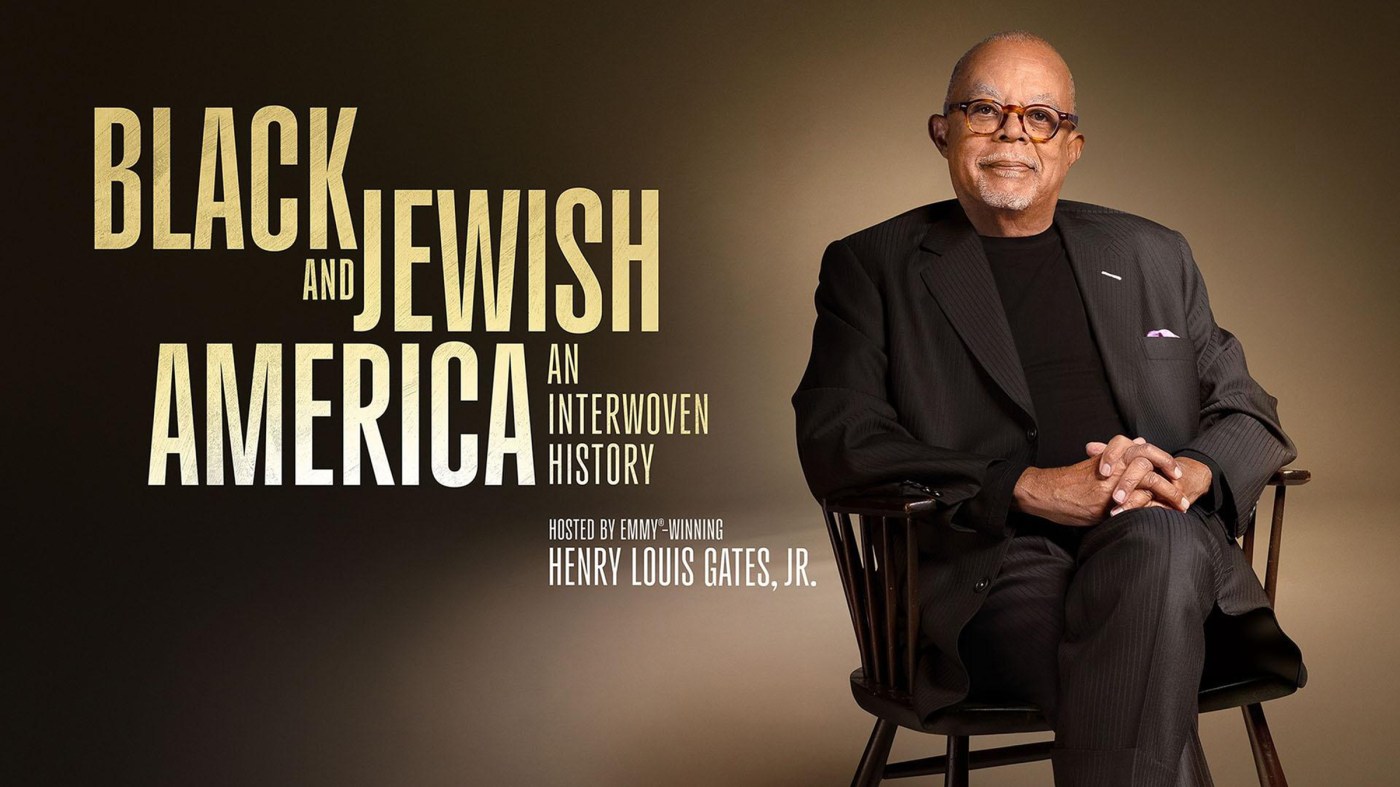
The study of history is by nature messy, replete with conflicting interpretations and incomplete puzzles, but it’s what you need to know in order not to repeat it. PBS, lately defunded by conservatives but not disassembled, is among the institutions working to bring it to the people — indeed, the only television outlet seriously devoted to it. (History Channel is just a name.) Premiering this week and continuing weekly is the four-part series “Black and Jewish America: An Interwoven History,” presented by Henry Louis Gates Jr., at the start of what happens to be Black History Month.

Gates, who also hosts the PBS genealogy series “Finding Your Roots,” has presented such documentaries as “Africa’s Great Civilizations” and “Great Migrations: A People on the Move,” has made cameo appearances in HBO’s “Watchmen” series and “The Simpsons.” He teaches at Harvard and is a well-known public figure — a history communicator, scholar and storyteller and a minor TV star the world also knows as “Skip.” Even-tempered and even-handed, he’s a good guide through the minefields of racial history — he keeps you from blowing up. You might find yourself angry at the material, but not with Gates.

“Under the floorboards of Western culture run two streams, continuously,” he says. “One is antisemitism, one is anti-Black racism,” whose purpose here is to explore “the areas of overlap.” They aren’t the only victims of bigotry in American history and modern America; Italians and Irish immigrants had their turn, too. White supremacy, which is very much alive in the land — turn on the news — disdains every people of color. But as people who shared the experience of being “mocked and feared, blamed and banished, envied and imitated,” often allied, sometimes antagonists, theirs is a special case.

Gates has assembled a stimulating, illuminating, maddening, saddening, but often inspiring, story of their relations with the world and one another. (Here and there he reaches a little outside his theme.) At 75, he’s lived through a good slice of the history illuminated here, including “our brief golden age” of the 1960s civil rights movement, and though he structures his series as a pendulum swinging between worse and better news, he scrupulously bookends it in a hopeful mood, with a Seder to start and a discussion with students to end. His insistence that no one is safe until everyone is safe, can seem to portend a future in which no one will ever be safe, though as a teacher I assume he’s more sanguine. His manner, at least, is encouraging.

The Seder, which begins with a singing of “Go Down Moses (Let My People Go),” gathers a tableful of Black, white and biracial Jews — each distinguished enough to have their own Wikipedia pages — in a roundtable discussion. Participants include New Yorker editor David Remnick, author Jamaica Kincaid, journalist Esther Fein, rabbi Shais Rishon, Angela Buchdahl (the first East Asian American to be ordained as a rabbi); and culinary historian Michael Twitty, who provides the doubly meal — kosher salt collard greens, West African brisket and potato kugel with sweet and white potatoes and Creole spice.

Though both Jews and Blacks faced (and face) discrimination, their American journeys were launched, says Gates, “on different trajectories,” one group chased from nominally Christian countries, the subject of durable medieval superstitions, the other dragged from their homes. Though the mass of Jewish migration, escaping Russian pogroms and Nazi Germany in succeeding waves, occurred in the late 19th and early 20th centuries, some arrived before the revolution; but the Constitution, which enshrined religious freedom, granted them legal rights. (This presumably did not help the Jews of African descent Gates says were present here early on.) Black people, kidnapped and enslaved, had none, and as freedom was gained, new laws were written to hold them in place.

Gates posits a sympathy between immigrant and first- and second-generation Jewish Americans in the 20th century and disadvantaged Blacks, based on a common experience of oppression; Jewish newspapers used the word “pogrom” to describe violence against Blacks in the South. And Jews, many raised with a sense of social justice, were disproportionately represented among white activists in the civil rights movement. This would change: Where Martin Luther King declared “I’m more convinced than ever before that our destiny is tied up with the destiny of our Jewish brothers and vice versa, and we must work together,” later Black activists, like Stokely Carmichael preferred to go it alone, promoting self-determination and even separation.

Still, many of the stories here are based on Black and Jewish friendships. We learn of W. E. B. Du Bois and Joel Spingarn, who sat together on the board of the NAACP and to whom Du Bois dedicated his 1940 autobiography “Dusk of Dawn.” Of Tuskegee Institute founder Booker T. Washington and philanthropist Julius Rosenwald, a president of Sears, Roebuck and Co., who built schools — more than 5,000 nationally, eventually — for systemically disadvantaged Black students. (Graduates included Maya Angelou and John Lewis.) Of Chicago rabbi Abraham Heschel, bringing 15 other white rabbis down to Selma, Alabama, in 1964 at the request of King, where their arrest made headlines — which translated to political pressure.

In music, we meet Louis Armstrong, who as a boy worked and stayed with a Jewish family, and wore a Star of David, and his manager Joe Glaser. We’re told the story of Billie Holiday’s lynching ballad “Strange Fruit,” written by Abel Meeropol (under his pseudonym Lewis Allan), recorded by Milt Gabler for his Commodore label and performed regularly by Holiday at Barney Josephson’s Cafe Society, New York’s first truly integrated nightclub. And we hear Paul Robeson, daring to sing in Yiddish in a concert in Moscow, in support of Itzik Feffer, a Jewish poet imprisoned (and later murdered) by the Soviets.

As a social and political history covering two intersecting storylines for more than the length of the nation, it’s packed with incident and facts — the Klan resurgent after World War I (6 million members, it says here); the 1936 Berlin Olympics, where Jesse Owens triumphed and the U.S. committee pulled two Jewish sprinters from competition; racist Nazi policies, borrowed from American Jim Crow, and the Holocaust. Also the domestic destabilizing effects of wars in the Middle East. Jews and Blacks will find themselves on the opposite sides of some questions.

Even at four hours, it’s a survey course, streamlined but not simplistic, and as such it will fly through some points and elide others; there are whole volumes dedicated elsewhere to what constitutes a single sentence here, and libraries dedicated to some of these figures. (Why not read some?) The view is not singular, and as such, there’ll be something for everyone to question, especially as Jews and Blacks are often described as a community, when neither is heterogeneous. (Jews don’t even agree on what makes a Jew.)

But whatever goes back and forth between then, the world has its own ideas. “People who hate Jews,” says Gates, “uncannily hate Black people too. Because when the stuff hits the fan, they’re coming after both of us.”

‘Black and Jewish America: An Interwoven History’

How to watch: PBS

Related Articles


Movie review: ‘Pillion’ an amusing, illuminating and daring kink-positive romance


Chappell Roan, FKA twigs and others embrace playful, daring fashion on Grammys red carpet


What to stream: ‘Nuremberg’ and more stories of justice


Movie review: Rachel McAdams, Dylan O’Brien shine in Sam Raimi’s gonzo blast ‘Send Help’


Moira Rose, Delia Deetz, Cookie Fleck and Kevin’s mom: Catherine O’Hara’s memorable roles

Renters use ‘rent now, pay later’ services to manage monthly payments, but fees raise concerns

posted in: All news | 0

By KEN SWEET and CORA LEWIS

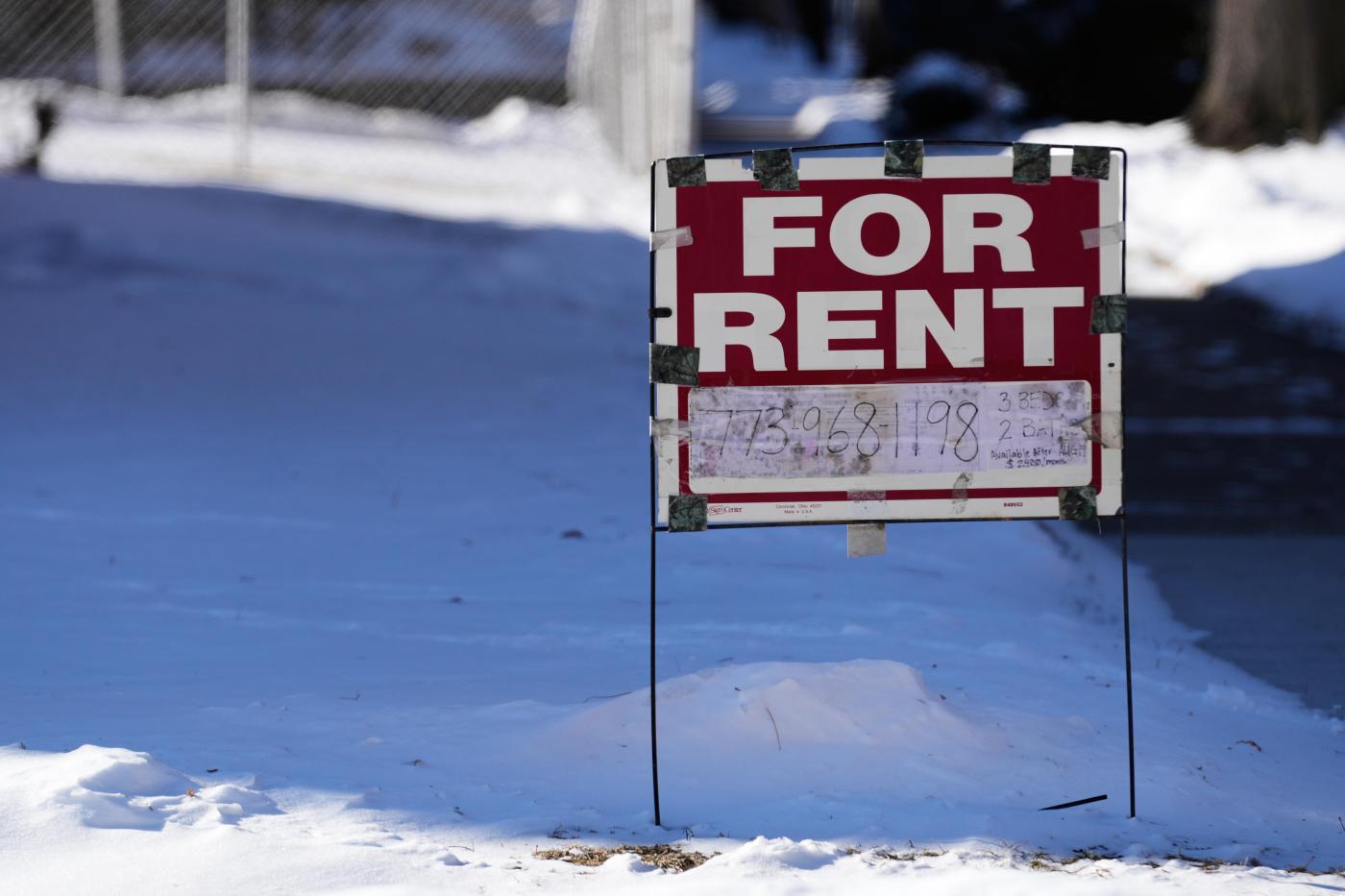
NEW YORK (AP) — Rent can eat up an entire paycheck at the start of the month, so a growing number of renters are turning to a financial product that promises relief by letting them split the bill — for a price.

Related Articles


Security concerns and skepticism are bursting the bubble of Moltbook, the viral AI social forum


Musk’s underground tunnels in Las Vegas face scrutiny over safety, environmental concerns


Uber found liable in sexual assault case and ordered to pay $8.5 million


FACT FOCUS: Trump says tariffs have created an economic miracle. The facts tell a different story


US stocks soar to their best day since May as the Dow tops 50,000 and bitcoin stops plunging

So-called “rent now, pay later” services have emerged over the past few years as housing costs climb and paychecks grow less predictable, particularly for lower-income and gig-economy workers. According to the Bureau of Labor Statistics, rents have jumped nearly 28% in past five years.

Companies such as Flex, Livble and, more recently, Affirm, say breaking rent into multiple payments can help renters manage cash flow. But consumer advocates warn the products typically function like short-term loans, layering fees onto already strained budgets and, in some cases, carrying triple-digit effective interest rates — raising questions about whether they ease financial pressure or deepen it.

Kellen Johnson, 44, started using Flex to split up his rent payments about two years ago. Instead of paying the whole $1,850 of his rent on the first of the month, Johnson would pay $1,350 on that date, and $500 on the 15th. For the service, Flex collected a $14.99 monthly subscription fee, as well as 1% of the total rent, which for Johnson was $18.50, bringing his monthly charges for the app to more than $33.

Johnson said he was willing to pay the extra costs in part because he worked as an independently contracted delivery person for Amazon at the time, and his paychecks could vary.

“It was an expense that I was incurring, but I went ahead as it was more convenient,” said Johnson, who now works as a driver for senior citizens in Sacramento, California.

Roughly 109 million Americans, or about 42.5 million households, are renters in the United States. The Census Bureau estimated in 2024 that a large share of those households pay 30% or more of their monthly income on rent. The bureau considers such households to be “cost burdened,” meaning rent consumes so much of their income that they have less ability to plan for future expenses or build wealth.

Rent now, pay later services generally operate the same way: The company pays the landlord the full rent when due, and the renter repays the company in two or more installments over the course of the month. Because rent can be such a large expense, the companies argue that spreading payments out can give renters more cash on hand.

Many of these services come with fees. The fees can be structured differently but should be generally thought of as cost of credit, consumer advocates warn. In Johnson’s case, he was paying $33.49 for a two-week loan of $500, for an effective annual percentage rate of 172%, when expressed using standard consumer-lending calculations.

“Renters should be skeptical of any financing providers that have partnered with a landlord and be skeptical of anything that sells itself as no fees or no interest,” said Mike Pierce, executive director of Protect Borrowers. Pierce previously worked at the Consumer Financial Protection Bureau and co-authored a report that was released this week on the industry.

Launched in 2019, Flex is one of the largest companies focused on splitting rent payments. The company says its 1.5 million customers now send about $2 billion a month in rent through its system, and several of the country’s largest landlords accept Flex as a payment option.

Flex says most of its customers are lower-income renters with weaker credit profiles. The company reports a median credit score of 604 among its users and says about one in three customers works more than one job to make ends meet. A Flex spokesman says the average customer uses the service three to four times a year. Johnson used it every month.

Livble does not charge a subscription, but charges renters a fee ranging from $30 to $40, according to the company’s help page. Depending on how long the renter defers part of the payment, Livble’s fees can translate into effective annual percentage rates of roughly 104% to 139%.

The buy now, pay later company Affirm said this month that it is piloting a program allowing some customers to split rent into two payments. The program is being tested in partnership with Esusu, a company that reports rent payments to credit bureaus to help consumers build credit. An Affirm spokesman said the company is not charging renters interest or fees to use the product, but may charge landlords fees.

As another financing option, landlords are increasingly accepting credit cards for rent payments. Bilt, a credit card startup, built its brand around targeting renters when it launched, and some tenants also use credit cards to accumulate rewards or points.

But paying rent by credit card can also be costly. Landlords typically pass the processing fees on to tenants. Depending on the card issuer and payment network, these fees can range from about 2.5% to 3.5% of the rent. For a renter paying $1,500 a month, that translates to roughly $37.50 to $52.50 in fees — a monthly cost comparable to what services like Livble and Flex charge.

Economists and renters’ advocates argue that none of these financing options address the fundamental issue of affordability in the rental market. If credit cards, or flexible rent payment options become more widely used, they worry rents could rise further as landlords start factoring in a potential renters’ weekly cash flow as opposed to the rental market in the area the building is located in.

Merchants already pass along credit card processing costs to customers in the form of higher prices, and advocates worry that the rental market could adopt similar patterns. For example, Livble is owned by RealPage, which last year settled allegations that its algorithm allowed landlords to collude and push rents higher.

Economics Writer Christopher Rugaber contributed from Washington.

Today in History: February 7, Haiti inaugurates its first democratically elected president

posted in: All news | 0

Today is Saturday, Feb. 7, the 38th day of 2026. There are 327 days left in the year.

Today in history:

On Feb. 7, 1991, Jean-Bertrand Aristide was inaugurated as the first democratically elected president of Haiti. (He was overthrown by the military the following September.)

Also on this date:

In 1904, the Great Baltimore Fire began; one of the worst city fires in American history, it destroyed over 1,500 buildings in central Baltimore.

Related Articles


Security concerns and skepticism are bursting the bubble of Moltbook, the viral AI social forum


Massive Washington sewage leak will take weeks longer to fix, water company says


New York City police officer convicted of manslaughter in cooler throwing death


Ex-MLB player Yasiel Puig found guilty of obstruction and lying to federal officials


Body believed to be Lil Jon’s son is found dead in pond near Atlanta

In 1943, the U.S. government announced that wartime rationing of shoes made of leather would soon take effect, limiting the number of pairs a person could buy each year. (Rationing was lifted in 1945 after World War II ended.)

In 1964, the Beatles were met by thousands of screaming fans at New York’s John F. Kennedy International Airport as they arrived to begin their first American tour.

In 1971, women in Switzerland gained the right to vote through a national referendum, 12 years after a previous attempt failed.

In 1984, space shuttle Challenger astronauts Bruce McCandless II and Robert L. Stewart went on the first untethered spacewalk.

In 1999, Jordan’s King Hussein died of cancer at age 63; he was succeeded by his eldest son, Abdullah.

In 2013, Mississippi certified its ratification of the 13th Amendment to the U.S. Constitution, making it the last state to officially abolish slavery.

In 2021, after moving south to a new team and conference, Tom Brady led the Tampa Bay Buccaneers to a 31-9 Super Bowl victory over the Kansas City Chiefs on the Buccaneers’ home field.

In 2023, LeBron James passed Kareem Abdul-Jabbar to become the NBA’s all-time career scoring leader.

Today’s birthdays:

Author Gay Talese is 94.
Sen. John Hickenlooper, D-Colo., is 74.
Actor James Spader is 66.
Country singer Garth Brooks is 64.
Actor-comedian Eddie Izzard is 64.
Actor-comedian Chris Rock is 61.
Actor Essence Atkins is 54.
Basketball Hall of Famer Steve Nash is 52.
Actor Ashton Kutcher is 48.
Actor Deborah Ann Woll is 41.
NFL quarterback Matthew Stafford is 38.
NHL forward Steven Stamkos is 36.
Race car driver Pierre Gasly is 30.
Singer Bea Miller is 27.