Hours after an immigration agent fatally shot Renee Good inside her SUV on a Minneapolis street last month, a senior federal prosecutor in Minnesota sought a warrant to search the vehicle for evidence in what he expected would be a standard civil rights investigation into the agent’s use of force.
The prosecutor, Joseph H. Thompson, wrote in an email to colleagues that the Minnesota Bureau of Criminal Apprehension, a state agency that specializes in investigating police shootings, would team up with the FBI to determine whether the shooting had been justified and lawful or had violated Good’s civil rights.
But later that week, as FBI agents equipped with a signed warrant prepared to document blood spatter and bullet holes in Good’s SUV, they received orders to stop, according to several people with knowledge of the events who spoke on the condition of anonymity because they were not authorized to speak publicly.
The orders, they said, came from senior officials, including FBI Director Kash Patel, several of whom worried that pursuing a civil rights investigation — by using a warrant obtained on that basis — would contradict President Donald Trump’s claim that Good “violently, willfully, and viciously ran over the ICE Officer” who fired at her as she drove her vehicle.
Over the next few days, top Department of Justice officials presented alternative approaches. First, they suggested prosecutors ask a judge to sign a new search warrant for the vehicle, predicated on a criminal investigation into whether the U.S. Immigration and Customs Enforcement agent who shot Good, Jonathan Ross, had been assaulted by her. Later, they urged the prosecutors to instead investigate Good’s partner, who had been with Good on the morning of the shooting, confronting immigration agents in their Minneapolis neighborhood.
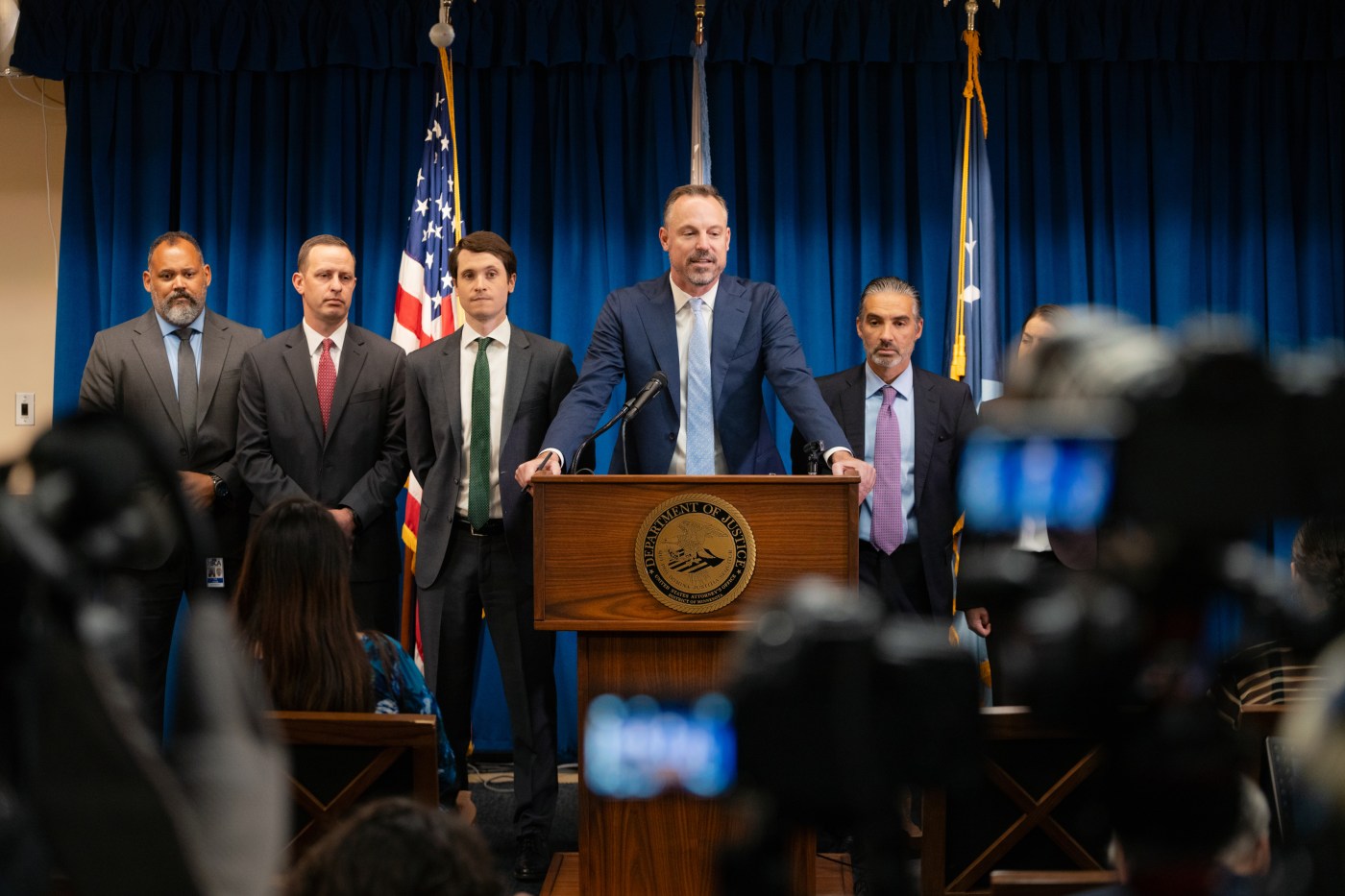
Several of the career federal prosecutors in Minnesota, including Thompson, balked at the new approach, which they viewed as legally dubious and incendiary in a state where anger over a federal immigration crackdown was already boiling over. Thompson and five others left the office in protest, setting off a broader wave of resignations that has left Minnesota’s U.S. attorney’s office severely understaffed and in crisis. Officials have not said whether they ultimately obtained a new warrant to search the vehicle.
From an office of about 25 criminal litigators, gone are the top prosecutors who had overseen a sprawling, yearslong investigation into fraud in Minnesota’s social services programs, which the White House months ago cited as a reason for the immigration crackdown in the state.
The departures also have drained the U.S. attorney’s office as it prepares complex cases, including trials in the fatal attack on a Minnesota state lawmaker and in a terrorism case, and investigations into fentanyl trafficking.
The prosecutors who remain have been flooded with new cases related to the immigration crackdown — allegations of assaults on federal officers and lawsuits challenging the legality of individual detentions of immigrants.
“This is potentially destroying all of the progress that we have made, working together between local and federal law enforcement officials in a very coordinated way, to actually go after the worst of the worst,” Brian O’Hara, the Minneapolis police chief, said in an interview.
This account of tumult at the U.S. attorney’s office in Minnesota is based on interviews with about a dozen people in Minnesota and Washington, D.C., familiar with the events. Some spoke on the condition of anonymity, saying they feared retaliation from the administration. Some read from notes they took during key moments.
Cindy Burnham, a spokesperson for the FBI in Minnesota, declined to comment for this article, as did Daniel N. Rosen, the U.S. attorney in Minnesota. Emily Covington, a Justice Department spokesperson, did not respond to a request for comment.
A Fraud Scandal
The crisis at the U.S. attorney’s office followed a turbulent year.
The Minnesota office was led temporarily by assistant U.S. attorneys for months as Trump’s nominee for U.S. attorney, Rosen, awaited confirmation.
Some career prosecutors in the office, which has a long reputation for winning complex and high-profile cases, were unsettled by a memo that Attorney General Pam Bondi issued in February 2025, signaling that the Department of Justice would “zealously advance” Trump’s policies.
For months, the prosecutors in Minnesota focused their attention on high-impact cases that were already underway, including the investigation into fraud in social services programs, largely insulating the office from some priorities in Washington. The office mantra became: “The best defense is a good offense.”
That approach unraveled late last year. News articles about the fraud cases — and later a video by a right-wing influencer — drew attention from Trump. Administration officials focused on the fact that most of the defendants charged in the sprawling fraud cases were of Somali descent. Although most Somalis in Minnesota are citizens or legal residents of the United States, White House officials cited them and the rash of fraud as a reason to send thousands of immigration agents to the state.
Tensions quickly rose on the streets between immigration agents and Minnesotans. And at the prosecutors’ office, the fraud investigations slowed as prosecutors said they were overwhelmed with requests for briefings from federal agencies on that issue.
Debating an Investigation
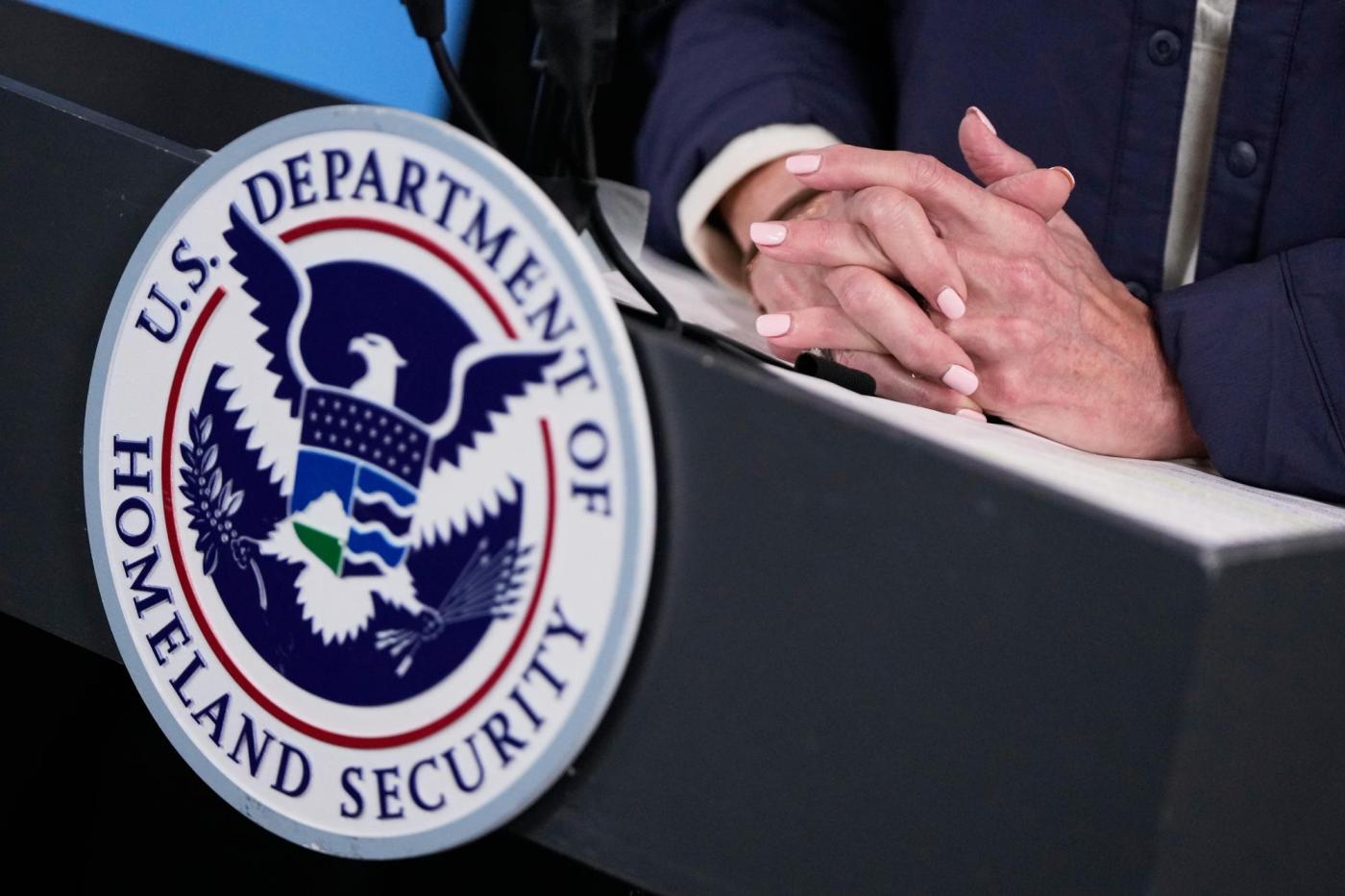
Not long after Good’s death, senior administration officials were quick to blame her for the shooting. Homeland Security Secretary Kristi Noem called Good a domestic terrorist, language that Vice President JD Vance echoed.
Even in a rules-shattering administration, the hasty conclusions about the shooting shocked federal prosecutors in Minnesota. Veteran lawyers in the office watched numerous videos of the shooting. Virtually all presumed there would be a civil rights investigation into the use of force, an approach often used in shootings involving law enforcement officers.
Some believed that a civil rights investigation could establish that the ICE agent had a reasonable fear for his life when he opened fire as Good’s car began lurching toward him — the sort of police shooting investigators consider “awful but lawful.” Others suggested that such an investigation might find otherwise, or even that the failure of agents to provide medical aid to Good after the shooting might be deemed a civil rights violation.
Even Chris Madel, a prominent Minnesota defense lawyer who provided legal advice to Ross, the agent, after the shooting, supported conducting a civil rights investigation. Madel worked at the Department of Justice years ago.
“In the absence of an independent use-of-force investigation, you lead the public to believe that there must be something to hide,” Madel said.
As Department of Justice officials pushed back against suggestions that a civil rights investigation was in order in the days after Good’s death, clashes between Minnesota residents and immigration agents escalated. Some prosecutors were met with resistance when they urged supervisors to open investigations into reports of assaults and abuses by federal agents. The Justice Department also blocked the Minnesota Bureau of Criminal Apprehension from taking part in investigating Good’s killing, adding to prosecutors’ frustrations.
At one point, Gregory Bovino, the Border Patrol leader who was the face of the administration’s immigration crackdown in Los Angeles, Chicago and Minneapolis, called federal prosecutors, pressing them to charge demonstrators with crimes. When a prosecutor asked what the operation’s end goal was, several people familiar with the call recalled Bovino saying that he did not intend to “calm it down,” but instead, he said, “We’re going to put it down.”
The Department of Homeland Security did not respond to a request for comment.
Rosen, who took office as U.S. attorney in October, urged his top deputies again to seek the alternative warrant that leaders in Washington had called for, focusing on a criminal investigation into Good’s partner and her behavior and ties to protest groups.
At that, Thompson submitted his resignation letter. Others soon followed.
Soon after, Bondi told Fox News that the lawyers who left “suddenly decided they didn’t want to support the men and women at ICE.” Referring to them as members of the “deep state,” Bondi said she had fired them, resulting in the loss of months of unused vacation they had banked.
Weeks after Good’s death, Todd Blanche, the deputy attorney general, brushed aside questions about the Justice Department’s refusal to open a civil rights investigation into the shooting, saying: “Cases are handled differently by this department depending on the circumstances.”
An Office on Edge
With roughly a dozen prosecutors gone, Rosen has worked to reassure those who remain in the office. As he sought to build a new leadership team, Rosen approached several prosecutors about possible promotions. At least three of them soon left the office: Allen Slaughter, the chief of narcotics investigations and cases from tribal territories; Dan Bobier, a fraud expert; and Lauren Roso, a national security specialist who was preparing to try a terrorism case.
None of the prosecutors who have left the office have discussed their reasons publicly.
Unease among prosecutors has continued to mount as the Justice Department announced a criminal investigation into leading Democrats in the state and charges against nine people, including two journalists, accused in connection to a protest at a church in St. Paul, Minnesota, where an ICE official serves as a pastor.
In recent days, as Rosen has sought to steady an office on edge, colleagues say he has made comments that unsettled them further. Several people said that Rosen vowed not to ask anyone to do anything illegal — an assurance that normally, the people said, would go without saying.
Rosen, a commercial litigator who had no prior criminal litigation experience, also has conveyed that the office, under his leadership, was committed to furthering the goals of Trump.
In a declaration submitted as part of an immigration lawsuit late last month, Rosen described an office under extraordinary strain as a severely understaffed team found itself contending with a “flood” of cases that have grown out of the federal immigration crackdown. He said detained immigrants had filed more than 420 lawsuits in January alone. The office, he wrote, “is operating in a reactive mode,” with lawyers and paralegals “continuously working overtime.”
O’Hara said he was disappointed that Rosen had been unable to keep veteran prosecutors from leaving the office. “I couldn’t imagine being the leader of a team where so many of the best players that are just so central to the mission decide they’ve got to walk away because they don’t want their integrity to be compromised,” he said.
Andrew Luger, who preceded Rosen as the U.S. attorney in Minnesota during the Obama and Biden administrations, said the exodus of prosecutors will have far-reaching implications, particularly for the stated purpose of the immigration crackdown: fighting fraud and crime.
The top fraud experts in the office left. So did Melinda Williams, a veteran in prosecuting sex crimes and child pornography cases. Thomas Calhoun-Lopez, who oversaw the major violent crimes unit, also departed.
“It will take years to build the contacts in state and local law enforcement that has been lost,” Luger said.
This article originally appeared in The New York Times.
Immigrant whose skull was broken in 8 places during ICE arrest in St. Paul says beating was unprovoked
Judge orders Trump administration to bring back 3 families deported to Honduras, other countries
Government must reach agreement on right to counsel for people at Minnesota ICE facility, judge says
Greater Minnesota cities ask lawmakers to invest in ‘the basics’ as hot-button issues loom
Ruling against the tide, a North Dakota judge denies emergency petitions for Minnesota ICE detainees