UN nuclear watchdog says US-Iran talks at a ‘very crucial’ stage

posted in: All news | 0

By JON GAMBRELL and AMIR VAHDAT, Associated Press

DUBAI, United Arab Emirates (AP) — Talks between Iran and the United States over Tehran’s rapidly advancing nuclear program are “in a very crucial” stage, the head of the United Nations’ nuclear watchdog said Thursday while on a visit to the Islamic Republic.

The comments by Rafael Mariano Grossi of the International Atomic Energy Agency in Tehran included an acknowledgment his agency likely would be key in verifying compliance by Iran should a deal be reached. Iran and the U.S. will meet again Saturday in Rome for a new round of talks after last weekend’s first meeting in Oman.

Grossi’s visit also coincided with Saudi Arabia’s defense minister, Prince Khalid bin Salman, visiting Tehran as the highest-ranking official from the kingdom to visit Iran since the two countries reached a Chinese-mediated détente in 2023. That’s as Saudi Arabia tries to end its decadelong war against the Iranian-backed Houthi rebels in Yemen — even as a new, intense campaign of U.S. airstrikes targets them.

In this photo released by the Atomic Energy Organisation of Iran, International Atomic Energy Agency (IAEA) Director General, Rafael Mariano Grossi, left, shakes hands with head of the Atomic Energy Organization of Iran Mohammad Eslami, at the Atomic Energy Organisation of Iran, in Tehran, Iran, Thursday, April 17, 2025. (Atomic Energy Organisation of Iran via AP)

The stakes of the negotiations Saturday and the wider geopolitical tensions in the Mideast couldn’t be higher, particularly as the Israel-Hamas war rages on in the Gaza Strip. U.S. President Donald Trump repeatedly has threatened to unleash airstrikes targeting Iran’s nuclear program if a deal isn’t reached. Iranian officials increasingly warn that they could pursue a nuclear weapon with their stockpile of uranium enriched to near weapons-grade levels.

Grossi visits during ‘crucial’ Iran-US talks

Grossi arrived in Iran on Wednesday night and met with Iranian Foreign Minister Abbas Araghchi, who now is in Moscow for separate talks likely over the negotiations. On Thursday, Grossi met with Mohammad Eslami, the head of the Atomic Energy Organization of Iran, then later toured a hall featuring some of Iran’s civilian nuclear projects.

“We know that we are in a very crucial, I would say, stage of this important negotiation, so I want to concentrate on the positive,” Grossi told Iranian media. “There is a possibility of a good outcome. Nothing is guaranteed. We need to make sure that we put all of the elements in place … in order to get to this agreement.”

He added: “We know we don’t have much time. So this is why I’m here. This is why I’m in contact with the United States as well.”

Asked about Trump’s threats to attack Iran, Grossi urged people to “concentrate on our objective.”

“Once we get to our objective, all of these things will evaporate because there will be no reason for concern,” he said.

For his part, Eslami said Iran expected the IAEA to “maintain impartiality and act professionally,” a report from the state-run IRNA news agency said.

Since the nuclear deal’s collapse in 2018 with Trump’s unilateral withdrawal of the U.S. from the accord, Iran has abandoned all limits on its program, and enriches uranium to up to 60% purity — near weapons-grade levels of 90%.

Surveillance cameras installed by the IAEA have been disrupted, while Iran has barred some of the Vienna-based agency’s most experienced inspectors. Iranian officials also have increasingly threatened that they could pursue atomic weapons, something the West and the IAEA have been worried about for years since Tehran abandoned an organized weapons program in 2003.

Despite tensions between Iran and the agency, its access has not been entirely revoked. But Grossi acknowledged in a French newspaper interview that “Iran has enough material to build not one but several bombs.”

“It’s like a jigsaw puzzle; they’ve got the pieces and one day they might be able to put them together,” he told Le Monde. “There’s still a long way to go before that happens. But they’re not far off, admittedly.”

Saudi prince becomes kingdom’s highest-level visitor to Tehran in decades

Prince Khalid bin Salman, the son of King Salman and the brother of Crown Prince Mohammed bin Salman, arrived in Tehran on Thursday. Iran’s joint chief of staff, Gen. Mohammad Bagheri, greeted the prince on his arrival and an honor guard played for the two men.

Prince Khalid, a fighter pilot, has become the first Saudi defense minister to visit Iran since the 1979 Islamic Revolution. He’s also the highest-ranking Saudi royal to visit in decades. The last was King Abdullah bin Abdulaziz, who did so as crown prince in 1997 for an Organization of Islamic Cooperation meeting held in Tehran.

The state-run Saudi Press Agency, announcing the prince’s arrival, said his trip would include “a number of meetings to discuss bilateral relations between the two countries and issues of common interest,” without elaborating.

The visit is significant, particularly given the decades of enmity between the two countries. Saudi Arabia has been for years trying to get a peace deal agreed to with the Houthis. A de facto ceasefire broadly has halted hostilities in the war, though the Houthis increasingly have threatened both Saudi Arabia and the United Arab Emirates amid the U.S. airstrikes.

Vahdat reported from Tehran, Iran. Associated Press writer Stephanie Liechtenstein in Vienna contributed to this report.

Trump administration takes aim at Harvard’s international students and tax-exempt status

posted in: All news | 0

By ANNIE MA, JOCELYN GECKER and COLLIN BINKLEY, Associated Press

WASHINGTON (AP) — President Donald Trump’s administration has escalated its ongoing battle with Harvard, threatening to revoke the university’s ability to host international students as the president called for withdrawing Harvard’s tax-exempt status.

The Department of Homeland Security ordered Harvard late Tuesday to turn over “detailed records” of its foreign student visa holders’ “illegal and violent activities” by April 30. International students make up 27% of the campus.

The department also said it was canceling two grants to the school totaling $2.7 million.

Visitors stop at the statue of John Harvard in Harvard Yard at Harvard University, Tuesday, April 15, 2025, in Cambridge, Mass. (AP Photo/Charles Krupa)

The moves deepen the crackdown on Harvard, which on Monday became the first university to openly defy the administration’s demands related to activism on campus, antisemitism and diversity. The federal government has already frozen more than $2 billion in grants and contracts to the Ivy League institution.

Trump suggested Tuesday on social media that Harvard should lose its tax-exempt status “if it keeps pushing political, ideological, and terrorist inspired/supporting ‘Sickness?’”

The hold on federal money for research at Harvard marked the seventh time the administration has taken such a step at one of the nation’s most elite colleges. The government is attempting to force compliance with Trump’s political agenda at schools he accuses of pushing “woke” policies and allowing antisemitism to fester.

In a letter to Harvard on Friday, Trump’s administration called for broad government and leadership reforms at the university, plus changes to its admissions policies. It also demanded that the university audit views of diversity on campus and stop recognizing some student clubs.

Harvard President Alan Garber said Monday that the university would not bend to the government’s demands. Later that day, the White House announced the freeze of more than $2.2 billion in multi-year grants and $60 million in contracts.

Conservative strategist Christopher Rufo said the government should respond to Harvard’s defiance by cutting all federal money and stripping nonprofit status at Harvard and other Ivies that defy federal orders. Rufo urged the government to use the same tools it used during the Civil Rights Movement to force desegregation.

Related Articles


Judge says labor unions’ lawsuit over DOGE access to Labor Department systems can move forward


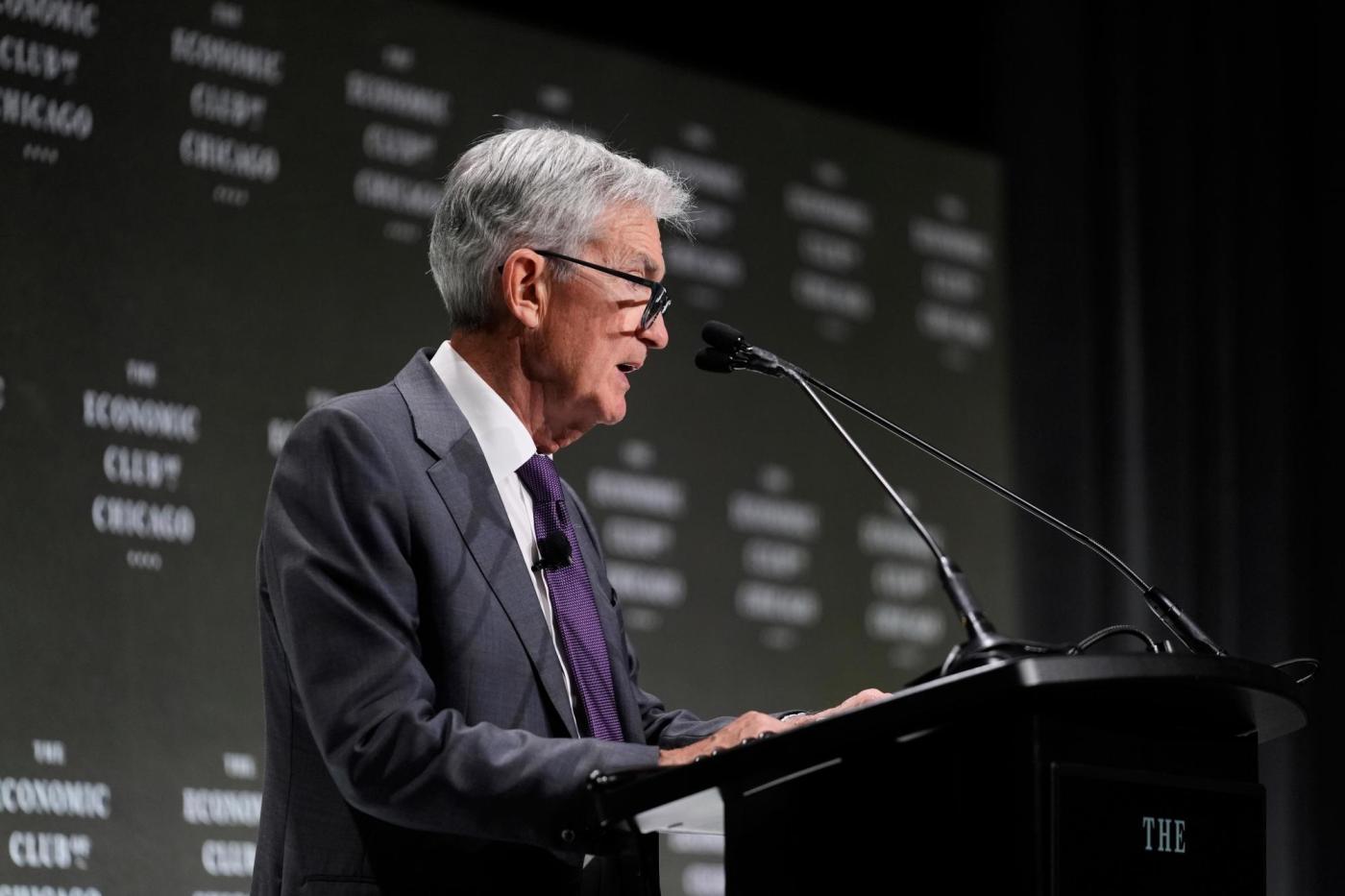
Trump says Federal Reserve Chair Powell’s ‘termination cannot come fast enough’


The Latest: Trump hints at firing Federal Reserve chair Powell after tariff comments


Tennessee’s GOP leads the fight to deny public education to children without documents


Stephen Mihm: The atomic bomb set the stage for the college funding fight

“Trump needs to follow through on his threat to defund one of the Ivy League universities,” Rufo said on social media Tuesday. “Cut the funding and watch the university implode.”

Rufo said Harvard has discriminated against white and Asian American students, citing events such as graduation celebrations specific to certain ethnic groups, along with a 2021 theater performance exclusively “for Black-identifying audience members.”

For the Trump administration, Harvard presents the first major hurdle in its attempt to force change at universities that Republicans say have become hotbeds of liberalism and antisemitism.

Trump’s campaign started at Columbia University, which initially agreed to several demands from the Trump administration but took a more emboldened tone after Harvard’s defiance. Columbia’s acting president, Claire Shipman, said in a campus message Monday that some of the demands “are not subject to negotiation” and that she read of Harvard’s rejection with “great interest.”

Trump has targeted schools accused of tolerating antisemitism amid a wave of pro-Palestinian protests on U.S. campuses. Some of the government’s demands touch directly on that activism, calling on Harvard to impose tougher discipline on protesters and to screen international students for those who are “hostile to the American values.”

The Associated Press’ education coverage receives financial support from multiple private foundations. AP is solely responsible for all content. Find AP’s standards for working with philanthropies, a list of supporters and funded coverage areas at AP.org.

Loons to play Louisville City in U.S. Open Cup

posted in: All news | 0

Minnesota United will go on the road to Louisville City FC for the U.S. Open Cup’s Round of 32 on May 6 or May 7, according to the national tournament’s draw Thursday. Match details to be announced.

MNUFC will have its first team in the tournament this year, after its second team was in the field a year ago. MNUFC2 beat Chicago House in Round 1 in Elmhurst, Ill., but then lost to Michigan Stars in Round 2 at Allianz Field.

In this iteration, the Loons, if they advance, have “first hosting priority” for the Round of 16 on May 20-21. Union Omaha and St. Louis City will play on the other side of the bracket.

Louisville City is coached by Danny Cruz, who played for MNUFC in its final North American Soccer League season in 2016. He won USL Championship Coach of the Year in 2024 as the LouCity reached the Eastern Conference semifinals.

Trump Cuts Put Free Air Conditioners At Risk as Summer Nears

posted in: All news | 0

Applications for LIHEAP, a federal program that helps low-income New Yorkers stay cool in the summer, just went live. But advocates say the initiative’s future is at risk after the Trump administration fired the entire staff that runs it.

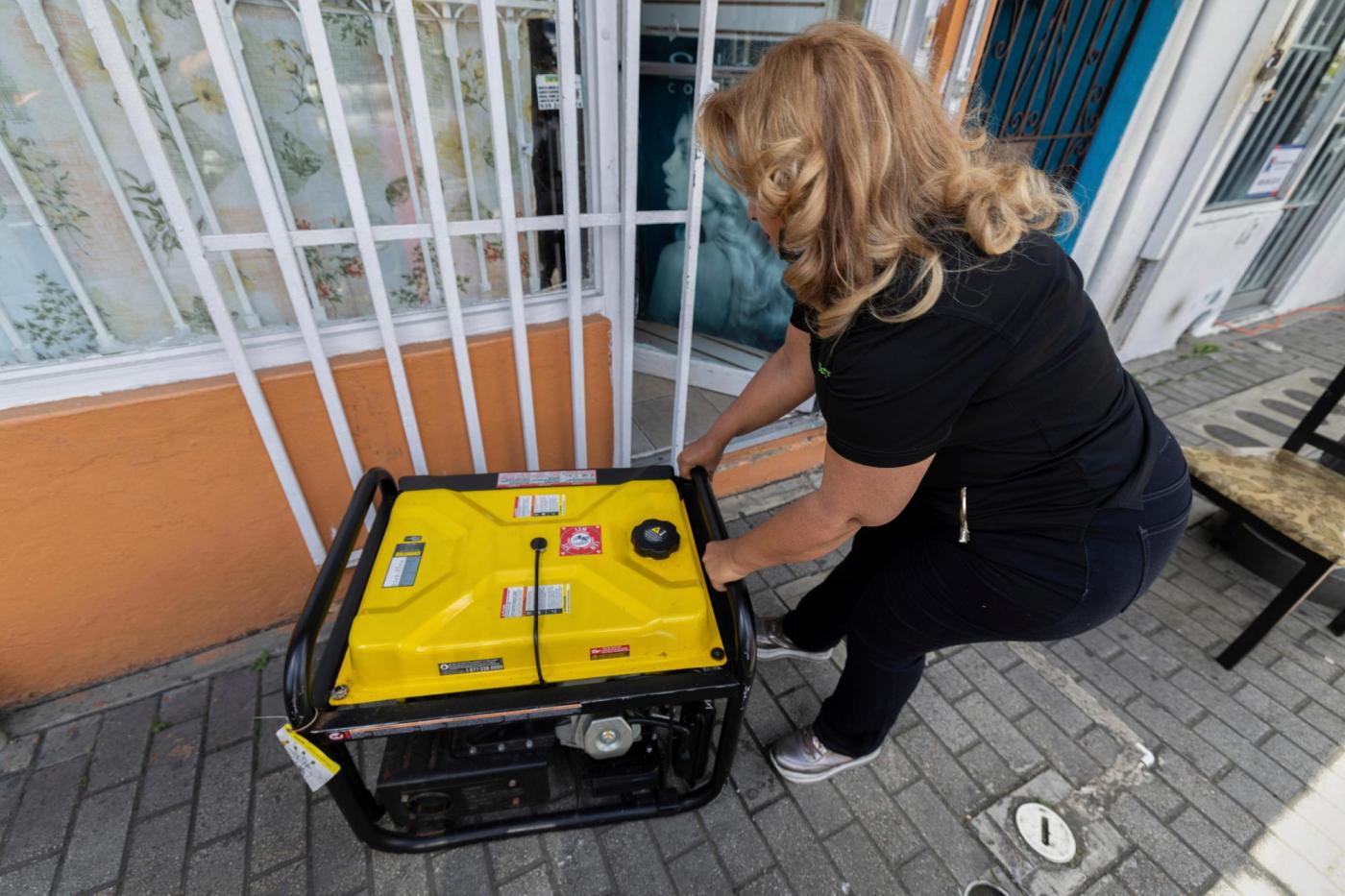
LIHEAP helps New Yorkers with health issues pay for air-conditioning during the summer months. (Adi Talwar/City Limits)

As New Yorkers embrace sunnier weather, those who rely on the federally funded Low Income Home Energy Assistance Program (LIHEAP) to buy air conditioners fear their days of receiving the benefit may be numbered. 

HEAP, as it is often known in New York, is the only program that provides free air conditioners to New Yorkers. Applications to receive cooling assistance went live Tuesday and can be filled out on the NYC.gov website

But earlier this month the Trump administration decided to terminate the entire staff of the Department of Health and Human Services office that runs the initiative, sparking fear about the program’s ability to function.

“The fact that they got rid of all the staff who are responsible for releasing the funds and working with the states makes everyone nervous about what that means for the future of the program,” said Laurie Wheelock, executive director at the nonprofit Public Utility Law Project, which helps people across the state access the program.

The more than two dozen LIHEAP employees who lost their jobs are part of a larger wave of approximately 10,000 workers who were laid off in what administration officials have called a bid to reorganize the agency and cut costs. 

The generalized chaos that comes with the layoffs could render initiatives like HEAP useless without the government actually having to terminate them, said Kevin Kiprovsk, director of policy at the nonprofit LiveOn NY, which helps elderly adults access benefits in the Empire State.

“The state might be less engaged in investing in it if the feds aren’t going to give them money. And the city might be less engaged in processing applications if they don’t know whether the state’s going to give them money either,” Kiprovski explained.

“It’s a trickle-down effect that breaks a program and breaks the back of public service,” he added.

(Hochul’s office declined to comment on how the state would respond to a cutoff of federal dollars.)

‘A critical lifeline’

Across the state, low-income families rely on HEAP to make it through the hottest and coldest months of the year. The program not only provides cooling assistance during the summer, it helps subsidize energy bills when cranking up the heat in winter becomes too costly.

Approximately 1 in 7 households in New York state were two months or more behind on their energy bills as of September of last year, according to an analysis by the Alliance for a Green Economy. More than 1.2 million New York families are collectively in debt more than $1.3 billion dollars to utilities.

“This is a critical lifeline for so many poor and working people across the country, and it’s a lifeline that is especially useful in moments of real crisis with life and death consequences,” said Tara Raghuveer, director of the Tenant Union Federation, a national federation of tenants’ unions.

The state’s HEAP program has its own emergency program that helps residents when they are at risk of getting their utilities shut off by providing a grant to keep their service going.

“People can die under extreme cold conditions, and having access to funds that secure heat in the coldest winter months is really critical,” Raghuveer added.

And keeping people cool in the summer could be just as critical.

Heat-related incidents cause the premature death of an estimated 580 New Yorkers each summer, according to an annual report by the city’s health department. And Black New Yorkers are twice as likely to die from heat stress — deaths caused directly by heat — as white New Yorkers.

Through the program, low-income residents can purchase and install a fan or air conditioner at a cost of up to $1,000 for a wall unit. To qualify, an applicant must meet the program’s income thresholds, which vary by household size. And at least one member of the household must suffer from a medical condition aggravated by extreme heat.

The benefit is especially important for the elderly, as nearly 1 in 8 older New Yorkers now lives in poverty, according to a recent report by the Center for an Urban Future. 

One 86-year-old client at LivOn NY had to move into a small attic in her daughter’s family’s home, because she couldn’t get by on her $1,500 in monthly Social Security payments. Not wanting to burden her daughter financially, she at first refused to get an air conditioner, but when she started having kidney problems, LIHEAP stepped in to cover the cost.

“She needed an air conditioner to basically stay alive,” said Kim Lerner, director of LivOn NY’s benefits outreach program.

But now that the program is on shaky ground, it’s unclear if there will be enough funding to keep Lerner’s elderly clients cool this summer. 

New York state has received 90 percent of the federal dollars it was allocated for 2025, according to the state agency that operates it, the Office of Temporary and Disability Assistance (OTDA). The other 10 percent has not yet been released to states by the federal Department of Health and Human Services (HHS).

OTDA did not provide details on what services New York’s remaining 10 percent is intended to cover. HHS did not immediately respond to a request for comment.

Still, free air conditioners for this season could run out sooner rather than later. Applications to receive assistance are handed out on a first-come-first-served basis and last until funds run out, which the governor’s office has said will likely be June. 

“This assistance is crucial for at-risk New Yorkers, and I encourage those who may be eligible to apply as soon as possible so they can stay cool in their home when the worst of the weather hits,” Gov. Kathy Hochul said in a press release this week.

Other New York officials agree that it’s imperative that the program stay afloat. OTDA called the program “vital” to “hundreds of thousands of low-and middle-income households, families with young children, and older adults.”

The agency added: “We are counting on our federal elected officials to ensure this successful program continues to be funded and that New Yorkers are able to access the help they need.”

The post Trump Cuts Put Free Air Conditioners At Risk as Summer Nears appeared first on City Limits.