What to know about Iran’s missile barrage and Israel’s ground operations in Lebanon

posted in: News | 0

By JULIA FRANKEL

JERUSALEM (AP) — Iran launched almost 200 missiles at Israel on Tuesday evening, causing scattered damage and fires from falling shrapnel, but Israeli authorities said there were no injuries. An Israeli security official said most of the missiles were intercepted, though some managed to land.

Israeli officials said Iran would pay a price for the strike.

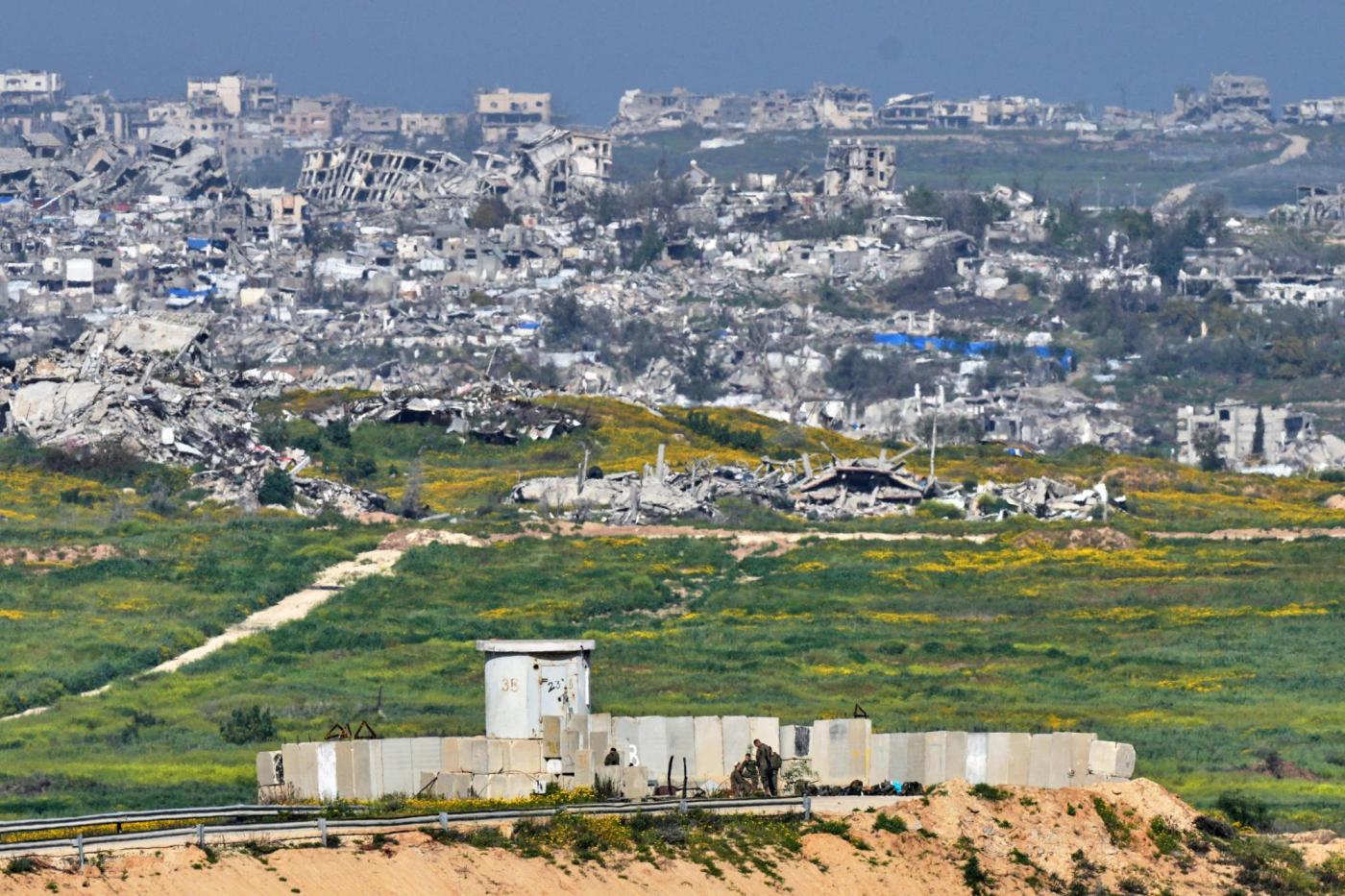
The missile attack came after Israel said ground troops crossed into Lebanon overnight, launching what the military described as a limited operation to root out Hezbollah fighters and infrastructure.

Hezbollah, meanwhile, said it saw no sign of Israeli forces and that its troops were ready to confront them.

Israel said the incursion would be focused on the narrow strip of land just across the border. But it also issued evacuation warnings covering a wider swath of Lebanon, raising fears that a large-scale ground invasion was soon to come.

In recent days, a wave of Israeli airstrikes has killed Hezbollah leader Hassan Nasrallah and several of his top commanders, while driving hundreds of thousands of Lebanese from their homes. Israel says a ground operation is now necessary to return tens of thousands of displaced Israelis to their homes in the north, pummeled by continuous rocket fire from Hezbollah since Oct. 8.

Here’s what we know:

Why did Iran launch missiles toward Israel?

Israel’s military said it identified 180 missiles launched from Iran shortly after 7:30 p.m. Sirens blared across the country, and Israelis were ordered to stay in protected areas. An Israeli security official said that in cooperation with the United States, the Israeli Air Force intercepted many of the missiles, though there some direct hits damaging buildings and igniting some fires.

Iran said the missiles were in response to the killing of Hezbollah leader Hassan Nasrallah and Revolutionary Guard Gen. Abbas Nilforushan, both killed in an Israeli airstrike last week in Beirut. It also mentioned Ismail Haniyeh, a top leader in Hamas who was assassinated in Tehran in a suspected Israeli attack in July. It warned this attack represented only a “first wave,” without elaborating. Hamas has been designated as a terrorist organization by the United States, Canada and the European Union.

In April, Iran launched more than 300 drones, ballistic missiles and cruise missiles at Israel. Most were intercepted outside of Israel. One girl was injured from falling shrapnel.

Israel vowed to respond, pushing the two archenemies closer toward direct confrontation and the region closer toward a broader war.

Did Israeli troops enter Lebanon?

The military says that Israeli troops entered Lebanon late Monday, though it was not clear whether they remained inside or were moving in and out of the country.

In a surprise announcement, Israel said Tuesday that its ground forces have been operating covertly in Lebanon for the last year, carrying out dozens of small ground operations. Rear Adm. Daniel Hagari, the army’s spokesman, said the current raid is an expansion of these activities.

The Lebanese army and UNIFIL, a U.N. peacekeeping force stationed in southern Lebanon, have not confirmed that Israeli troops crossed the border, although UNIFIL said it was notified that they were going to.

How far into Lebanon are Israeli ground troops?

A military official, speaking on condition of anonymity under briefing guidelines, said Israeli ground troops were “within walking distance” of the border, targeting the small Lebanese villages hundreds of meters (yards) from Israeli territory.

The military says Hezbollah militants remain in the area, despite heavy Israeli bombardment over the past few weeks. It says they are using the areas to launch attacks on Israel and to store weapons.

Have there been clashes between Hezbollah and Israeli troops?

There were no signs of ground combat in southern Lebanon, and the Israeli official said there had been no clashes with Hezbollah.

Meanwhile, cross-border fire continued. Hezbollah said it had targeted groups of soldiers in several Israeli border areas with artillery shelling and rockets. Israel said no soldiers were injured. At the same time, Israeli artillery units pummeled targets in southern Lebanon and the sounds of airstrikes were heard throughout Beirut.

Hezbollah fired a rare volley of rockets toward central Israel on Tuesday, injuring one man, Israeli paramedics said.

How extensive is the planned operation?

Israel has not given a timetable for how long the incursion will last and has declined to specify how far troops will go.

The military official said that marching to Beirut, as Israel did in its 1982 invasion of Lebanon, is “not on the table.” At the time, the Israeli invasion was also pitched as a limited incursion to push the Palestine Liberation Organization back.

He added that the operation in its current stages does not mirror Israel’s ground incursions in Gaza, where the military entered cities with heavy manpower, artillery and tanks.

That could change, depending on whether Israel’s government decides to launch a more extensive ground operation. Large numbers of forces, including scores of tanks, have massed along the border in recent days.

Troops that entered Lebanon are from the 98th division, the military said. The division is responsible for some of the heaviest fighting inside Gaza and includes elite units specializing in attacks behind enemy lines.

Meanwhile, Israel is expanding its evacuation warnings in southern Lebanon, sending hundreds of thousands of Lebanese fleeing from the south.

On Tuesday, the Israeli military’s Arabic-language spokesperson asked residents living in villages north of a U.N.-declared buffer zone to flee. Under a U.N. resolution that ended the 2006 war, the zone was supposed to be controlled by a U.N. peacekeeping force and the Lebanese military.

AP writer Melanie Lidman contributed from Jerusalem.

Report: Twins part ways with hitting coach David Popkins

posted in: News | 0

As their disappointing 2024 season came to a close, Twins leadership expressed its intentions to keep president of baseball operations Derek Falvey and manager Rocco Baldelli in their current roles.

But the expectation was that there was going to be some kind of shakeup within the coaching ranks after the Twins collapsed in the final six weeks of the season and missed the playoffs.

That first move has reportedly happened with hitting coach David Popkins being informed that the Twins will not renew his contract, per a report from The Athletic. The Twins have not said publicly yet whether they intend to keep assistant hitting coaches Derek Shomon and Rudy Hernandez on board.

The decision to part ways with Popkins, who was the Twins’ hitting coach for the past three seasons, came after a dramatic drop-off in offensive production late in the season. In the final month, the Twins hit .218 with a .285 on-base percentage and .338 team slugging percentage, averaging just 3.48 runs per game.

“Unfortunately it was our offensive production in aggregate and our overall defensive play that I think held us back more than the pitching,” Falvey said Sunday. “I think our offensive contributions are where we came up shorter than I would have been able to predict over the last six weeks.”

Players whom the Twins were relying on to be key contributors, Royce Lewis among them, dramatically tailed off as the Twins slumped to a 9-18 September record.

Despite the gut-wrenching finish, shortstop Carlos Correa, who has consistently sung Popkins’ praises, did so again on Sunday, unprompted.

“(Popkins) helped me understand myself a little better,” Correa said. “A .900 OPS for some people comes with homers and walks. For me, it comes with being a little more creative and he helped me understand that I don’t have to hit a home run e very at-bat. Pop has been a huge help for me and I’m grateful that I came to this organization and he was my hitting coach.”

Eagan woman latest to plead guilty in Feeding Our Future fraud scheme

posted in: News | 0

An Eagan woman has pleaded guilty for her involvement in an alleged $250 million fraud scheme that diverted federal aid money intended for children’s meal programs in Minnesota during the COVID-19 pandemic.

Kawsar Jama, 42, submitted at least $4.5 million in bogus claims in connection with one of the single largest instances of pandemic aid fraud in the country, U.S. Attorney Andrew Luger announced on Tuesday.

Jama pleaded guilty to one count of wire fraud in U.S. District Court in Minneapolis. She remains out of custody on supervised release ahead of sentencing, which has yet to be scheduled.

It’s the latest guilty plea tied to massive alleged fraud at the nonprofit Feeding Our Future between 2020 and 2022. A total of 70 individuals have been charged in connection to the case so far.

According to the indictment, Jama, who operated Gedo Community Services and Ahlan Childcare Center, obtained the funds in reimbursements for food sites she claimed to operate in Pelican Rapids, Burnsville and Minneapolis. She bought luxury vehicles and a home in Eagan.

One of the main food vendors for Jama’s sites was Haji Osman Salad, through his business, Haji’s Kitchen. Salad provided Jama with false food invoices, which she used as part of her fraudulent claims for reimbursement from the Federal Child Nutrition Program.

Jama’s site in Pelican Rapids, a small town in west-central Minnesota with a population of around 2,600 people, fraudulently claimed to have served more than 233,000 meals from September 2021 to December 2021, with Haji’s Kitchen as her supposed food supplier.

In total, Salad defrauded the government of nearly $11.5 million intended for the federal nutrition program, prosecutors said. Salad, 34, was one of three defendants who pleaded guilty to wire fraud last week.

The Feeding Our Future office was in this building at 3055 Old Highway 8 in St. Anthony, Sunday, Jan. 23, 2022. (Scott Takushi / Pioneer Press)

The nonprofit Feeding Our Future, which was based in St. Anthony, received federal dollars from the U.S. Department of Agriculture via the state education department. The money was intended to reimburse nonprofits for meals served at locations like day care centers, after-school programs and summer camps.

Related Articles

Crime & Public Safety |


St. Paul police release body cam footage of confrontation that led officers to shoot Lowertown homicide suspect

Crime & Public Safety |


40 domestic violence-related homicides in Minnesota last year are most on record, report shows

Crime & Public Safety |


How St. Paul police found the killer of Lowertown artist and grandmother

Crime & Public Safety |


Man sentenced to 7 years after standoff, police shooting in Woodbury Target parking lot

Crime & Public Safety |


St. Paul police: Man jumps into vehicle, steals it as driver performs sobriety tests

Opinion: NYC’s Car-Lite Future is an Economic Imperative, Not a Fantasy

posted in: Society | 0

“Congestion pricing is not just about alleviating traffic; it’s about recognizing that a future designed around the automobile is one of economic stagnation.”

Adi Talwar

Friday evening traffic heading West on 42nd Street between 5th and 6th Avenues in Manhattan.

CityViews are readers’ opinions, not those of City Limits. Add your voice today!

More than 100 days have passed since Gov. Kathy Hochul hit the brakes on New York City’s long-awaited congestion pricing plan, adding needless delays to a program poised to pull the city’s transportation infrastructure out of the dark ages and into a brighter, more economically vibrant and tech-forward future.

The months-long “pause” has already created a $840 million budget black hole for the MTA—a figure that represents not just lost operating funds, but a fundamental misunderstanding about how to fix the economic challenges facing New York City.

With buzz around the MTA’s board meeting last week (as well as the first trial date in a lawsuit challenging Hochul’s action on congestion pricing, ironically coinciding with ClimateWeek), it’s time for an honest discussion about the economic implications of delaying this critical initiative.

Hochul must reinstate congestion pricing to benefit the 5 million New Yorkers who rely on transit daily and the almost 1 million who use bikes and micromobility, and also because it is essential to the economic vitality of the entire city.

Congestion pricing is not just about alleviating traffic; it’s about recognizing that a future designed around the automobile is one of economic stagnation. One recent study found that traffic delays alone cost New York City $243 million every single year.

Now, factor in the lost productivity, the environmental damage of transportation emissions, the healthcare costs associated with poor air quality, and the opportunity cost of valuable urban space ceded to private storage (parking) instead of revenue-generating businesses. This is the cost of a car-dependent city, and it is simply not a future New York can afford.

The alternative—a car-lite city, enabled by robust public transit and a thriving micromobility sector—is not some utopian fantasy; it’s an economic imperative, as proven by cities like London, Singapore, and Stockholm.

These cities stand as testaments to the transformative power of congestion pricing; by making investments to modernize their transit systems and support non-car travel, they experienced a boom in economic activity. Further, Stockholm’s traffic reductions save the city the equivalent of $80 million per day through reductions in travel time, proving that a commitment to sustainable urban planning is a commitment to economic growth. 

Competing with these global powerhouses should be a top priority for officials in New York. The city has touted its stance as a “leader on climate action” and has become known as the Silicon Valley of climate technology. We’ve already invested heavily in infrastructure and incentives to entice climate tech companies to locate here, and recent predictions estimate the green economy will generate 400,000 jobs by 2040. But we’re selling snake oil if we choose to sideline the very policies that are essential to supporting a sustainable climate future and green economy. 

Hochul must embrace congestion pricing not as a tax, but as an investment in a future where New York City reclaims its streets, modernizes its infrastructure, and further secures its place as a global economic powerhouse. Where our aging population—the Baby Boomers—stay active and engaged in the economy thanks to transit accessibility improvements. Where businesses don’t just survive but thrive because their employees can easily access jobs, goods can move efficiently, and valuable real estate is dedicated to commerce, not car storage. This is the multi-faceted potential that congestion pricing unlocks.

And while our elected officials drag their feet, micromobility is already demonstrating the immense economic potential of a car-lite city. Micromobility has grown exponentially in both the consumer and commercial markets, becoming a default for personal trips and delivery operations. Despite limited infrastructure and a lack of supportive policies, this has made New York City a hotbed for micromobility startups, from vehicle manufacturers to charging infrastructure companies.

These companies see the writing on the wall—the future of global transportation is shared, electric, and efficient. Many of these businesses were drawn to New York City with the promise of congestion pricing, eager to be part of a city at the forefront of urban mobility. Stalling congestion pricing sends a chilling message to founders and investors, signaling a lack of commitment to building a 21st-century transportation network.

As we watch the time tick by and carbon emissions creep up, the choice before us is clear: We can continue to let traffic choke our streets and our economy, or we can choose a better path. By reinstating congestion pricing, Gov. Hochul has the opportunity to forge a legacy as the leader who actually steered New York City onto the path of sustainable growth and prosperity.

With the right action, we can create a city where the soundtrack is not the incessant honking of gridlock, but the gentle hum of micro-electric vehicles, the laughter of children playing in car-free streets, and the conversations of entrepreneurs building the businesses of the future in a place that embraces innovation.

Joseph and Eddie Cohen are the co-founders of Infinite Machine, a micromobility OEM developing the next generation of electric, non-car vehicles.