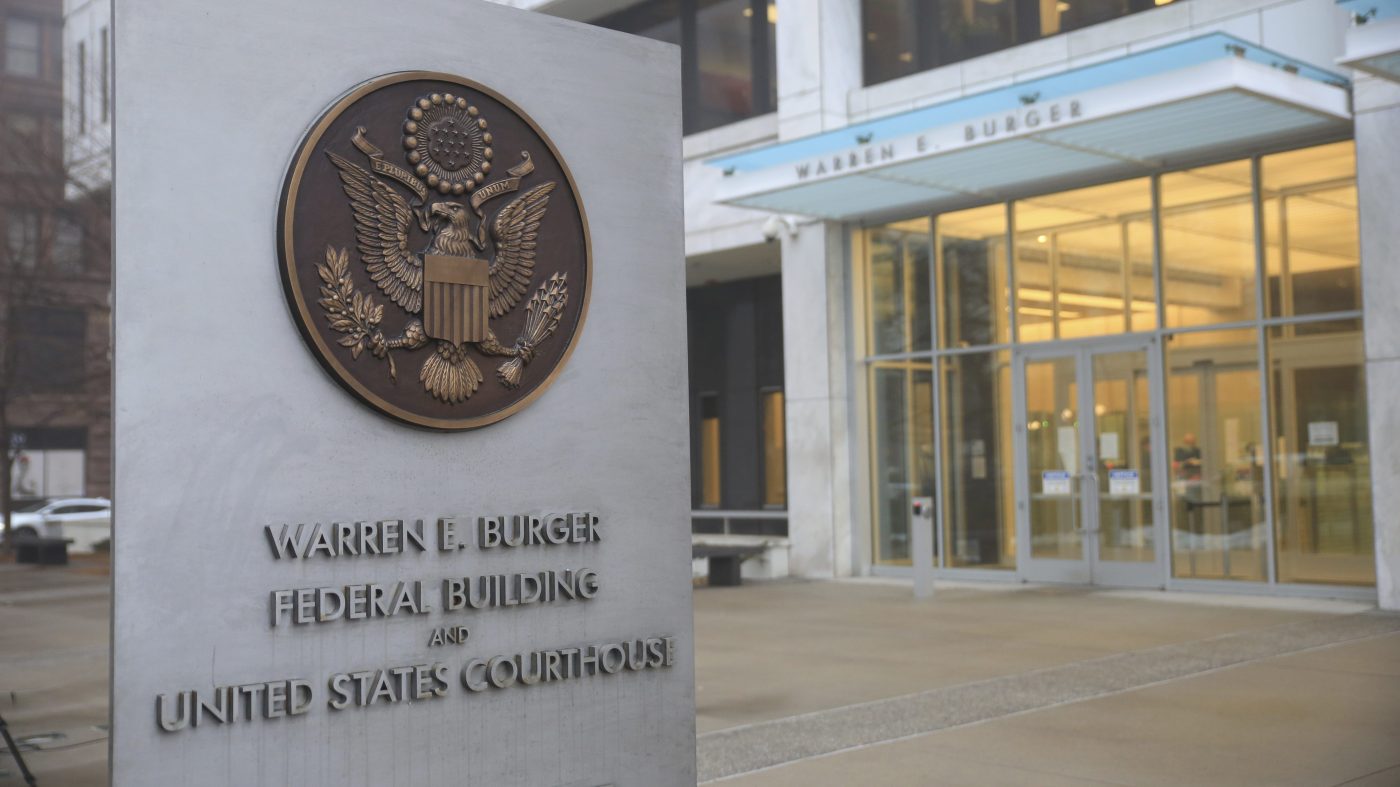
St. Paul man gets 24 years in federal prison for paying Philippines woman to produce child sexual abuse material

posted in: All news | 0

A St. Paul man has been sentenced to 24 years in federal prison for paying a woman in the Philippines to produce child sexual abuse material for him over the course of four years.

Jason Miller Speed (Courtesy of the Sherburne County Sheriff’s Office)

Jason Miller Speed, 42, carried out an online relationship with the woman, who in exchange for money from him produced child sexual abuse material of two girls from January 2020 through February 2024, court documents filed in U.S. District Court of Minnesota say.

Speed was aware the victims were minors, according to prosecutors.

Authorities in the Philippines, through cooperation with the FBI’s International Operations division, were able to rescue the two victims.

Speed pleaded guilty in October to one count of aiding and abetting production of child pornography. His sentence, handed down Monday by U.S. District Judge Jeffrey Bryan in St. Paul, includes 15 years of supervised release following incarceration.

“Child predators are conniving, creative and profoundly dangerous,” Acting U.S. Attorney Lisa Kirkpatrick said in a Wednesday statement. “Speed lived in our community and lurked in the dark corners of the internet. From his perch in St. Paul, Speed victimized little children halfway around the world.”

Related Articles


Family says ICE agents smashed car window in seizing Guatemalan man who’s seeking asylum


The Oklahoma City bombing was 30 years ago. Some survivors worry America didn’t learn the lesson


Charges: Hopkins man threatened to ‘shoot up’ UnitedHealthcare headquarters in Minnetonka


Millions in merchandise taken by burglars who tunneled through concrete into LA jewelry store


Marshall man claims that ICE detained him for protests over police killings

Carlos Correa plays, Willi Castro leaves early, Matt Wallner heads to IL

posted in: All news | 0

When Mickey Gasper pinch hit for Willi Castro in the eighth inning of Wednesday’s game against the New York Mets, it raised all kinds of questions.

Among them, why was manager Rocco Baldelli pinch-hitting the rookie, a switch hitter, for Castro, an all-star last year, also a switch hitter? And how would they manage defensively with Castro out of the game?

One answer quickly became apparent in the top of the ninth when shortstop Carlos Correa emerged from the dugout and trotted out to his usual position. It was a promising sign after Correa had left Tuesday’s game early with left wrist soreness after tweaking it during the game.

Correa, who said his wrist was feeling better, was available to play defense, though they didn’t necessarily want him to hit had the game been extended.

“We were going back and forth on what I was going to do if the at-bat came up,” Correa said. “I’m glad it never got there.”

But while the Twins got some positive news on their shortstop, the rest of the injury news wasn’t quite as good. Castro was removed with what Baldelli described as “mild right oblique tightness.” Taking him out of the game, Baldelli said, was precautionary.

The Twins have an off day on Thursday before beginning a three-game series in Atlanta, which will be an important day for a suddenly banged-up roster.

“We’re going to take the day, see how he’s doing (Thursday) before we make any sort of assessments,” Baldelli said of Castro. “I’m not sitting here really nervous right now.”

Castro said he felt a little pinch during an at-bat, and while he thought he could play through it, he didn’t want it to get any worse. As for avoiding the injured list, he’s hopeful, but not sure yet.

Losing Castro would be a blow for the Twins, who now know they will be without their right fielder, Matt Wallner, for the time being. Wallner will be placed on the 10-day injured list after straining his left hamstring running to first base in Tuesday’s game.

“I had a pretty good idea when I woke up that it wasn’t going to heal any time soon,” Wallner said.

Scary moment for Wendelstedt

Wednesday’s game had a short pause after first base umpire Hunter Wendelstedt was hit in the head by a hard-line drive in the seventh inning off the bat of Mets center fielder Tyrone Taylor and dropped to the ground immediately.

He was examined by two Twins trainers and a team doctor before getting up and walking off the field under his own power, holding a towel to his head. He was then taken to a local hospital for further care.

“Hopefully it’s just some stitches is what I’m thinking,” crew chief Todd Tichenor told a pool reporter. “He was coherent, speaking. He had everything, concussion protocol. It was great to hear him speaking. That’s really all I’ve got right now.”

López throws ‘pen

Pablo López had a suitcase packed sitting in his locker area on Wednesday morning. He was awaiting word from the team training staff on whether or not he would be traveling to Atlanta with them.

López, on the injured list with a hamstring strain, threw a bullpen on Wednesday. He estimated he threw around 33 pitches.

“I threw 19, then took a little breather, just simulating sitting down and picking back up to see how the hamstring reacted,” he said. “It was good.”

The next step, he said, would likely be getting in a rehab game, although it’s possible he travels with the team to Atlanta and throws another bullpen before that.

López, who was placed on the 15-day injured list retroactive to April 9, would be eligible to return next week.

Chinese e-commerce sites Temu and Shein say they’re raising prices due to tariffs

posted in: All news | 0

By MAE ANDERSON

NASHVILLE, Tenn. (AP) — China-founded e-commerce sites Temu and Shein say they plan to raise prices for U.S. customers starting next week, a ripple effect from President Donald Trump’s attempts to correct the trade imbalance between the world’s two largest economies by imposing a sky-high tariff on goods shipped from China.

Related Articles


Data: Retail therapy is common — how to curb it


OpenAI picks labor icon Dolores Huerta and other philanthropy advisers as it moves toward for-profit


Trump administration plans to end the IRS Direct File program for free tax filing, AP sources say


Powell says Federal Reserve can wait on any interest rate moves


Vermont maple syrup makers face uncertainty amid Canada and China tariff chaos

Temu, which is owned by the Chinese e-commerce company PDD Holdings, and Shein, which is now based in Singapore, said in separate but nearly identical notices that their operating expenses have gone up “due to recent changes in global trade rules and tariffs.”

Both companies said they would be making “price adjustments” starting April 25, although neither provided details about the size of the increases. It was unclear why the two rivals posted almostidentical statements on their shopping sites.

Since launching in the United States, Shein and Temu have given Western retailers a run for their money by offering products at ultra-low prices, coupled with avalanches of digital or influencer advertising.

The 145% tariff Trump slapped on most products made in China, coupled with his decision to end a customs exemption that allows goods worth less than $800 to come into the U.S. duty-free, has dented the business models of the two platforms.

E-commerce companies have been the biggest users of the widely used exemption. Trump signed an executive order this month to eliminate the “de minimis provision” for goods from China and Hong Kong starting May 2, when they will be subject to the 145% import tax.

As many as 4 million low-value parcels — most of them originating in China — arrive in the U.S. every day under the soon-to-be canceled provision.

U.S. politicians, law enforcement agencies and business groups lobbied to remove the long-standing exemption, describing it as a trade loophole that gave inexpensive Chinese goods an advantage and served as a portal for illicit drugs and counterfeits to enter the country.

Shein sells inexpensive clothes, cosmetics and accessories, primarily targeting young women through partnerships with social media influencers. Temu, which promoted its goods through online ads, sells a wider array of products, including household items, humorous gifts and small electronics.

In November, American e-commerce giant Amazon launched a low-cost online storefront featuring electronics, apparel and other products priced at under $20. Many of the electronics, apparel and other products on the storefront Wednesday resembled the types of items typically found on Shein and Temu.

In their customer notices about the pending price increases, the companies encouraged customers to keep shopping in the days ahead.

“We’ve stocked up and stand ready to make sure your orders arrive smoothly during this time,” Temu’s statement said. “Were doing everything we can to keep prices low and minimize the impact on you.”

DOGE wanted to assign staff to the nonprofit Vera Institute of Justice because it got federal funds

posted in: All news | 0

By THALIA BEATY

NEW YORK (AP) — The nonprofit Vera Institute of Justice says staff from Elon Musk’s Department of Government Efficiency contacted them to assign a team to the organization and told them they planned to similarly install teams with all nonprofits receiving funds appropriated by Congress.

Related Articles


Health secretary Robert F. Kennedy Jr. says US autism cases are climbing at an ‘alarming rate’


The White House is starting a new media policy that restricts wire services’ access to the president


Trump kept his promise to order a ban on transgender female athletes. Court fights have arrived


The State Department closes the office that flags disinformation from Russia, China and Iran


Trump administration plans to end the IRS Direct File program for free tax filing, AP sources say

Nick Turner, president of the New York-based criminal justice nonprofit, said Wednesday the nonprofit’s attorneys asked the DOGE staffers what legal basis they had to investigate a nonprofit and informed the staffers that the U.S. Department of Justice recently terminated grants to Vera. The DOGE staffers then withdrew their request to assign a team, according to a transcript of the call provided by Vera.

The White House and Justice Department did not immediately return requests for comment.

Vera, which has an annual budget of around $45 million that mostly comes from private funders, advocates for reducing the number of people imprisoned in the U.S. They consult with law enforcement and public agencies to design alternative programs to respond to mental health crises or traffic violations, and also support access to lawyers for all immigrants facing deportation.

Nonprofit advocates say DOGE’s request threatens the basic freedoms of civil society.

“It would clearly undermine a core tenet of civil society: its independence from the state,” said Benjamin Soskis, a senior research associate at the Urban Institute. “Regulatory oversight is one thing, but this would seem to go into much further, darker territory, where the government threatens the functioning of nonprofits that it does not agree with.”

Vera’s president said in an interview it is speaking publicly about DOGE’s request so other nonprofits can prepare.

“I think it is a terrifying harbinger of what might be a DOGE agenda to start infiltrating nonprofits that receive federal funding,” Turner said. “It could be a misunderstanding. It could be an aggressive overreach,” but it seemed clear that DOGE believed receiving any federal funding would be a reason to install a team at a nonprofit.

Not the first threat from the White House to nonprofits

Diane Yentel, the president and CEO the National Council of Nonprofits, called the request from DOGE to Vera a blatant abuse of power that should alarm all Americans.

“This action by DOGE sets a dangerous precedent, leaving any recipient of federal funding — nonprofit, for-profit, and individuals alike — vulnerable to the whims of this destructive group,” Yentel said in a statement. Her organization sued to prevent a freeze of all federal funding.

In February, the White House directed federal agencies to review all funding for nonprofits because many “actively undermine the security, prosperity, and safety of the American people.”

The Trump administration has also sought to cancel other funding previously allocated by Congress and awarded to nonprofits, though the courts have paused some of those actions.

DOGE has also taken control of the U.S. Institute of Peace, an independent nonprofit created and funded in part by Congress that worked to promote peace and security around the world. Employees and board members of USIP have sued the administration, arguing that the nonprofit is independent and not a part of the executive branch.

DOGE staffers referenced USIP as an example of DOGE assigning a team to a nonprofit that receives Congressional funds, according to the call transcript provided by Vera.

Many nonprofits receive federal funding

The federal government offers hundreds of billions of dollars in funding to nonprofit organizations in every state.

Researchers at the Urban Institute found that 103,475 nonprofits received $267 billion in government grants in 2021, according to an analysis of nonprofit tax forms. The analysis excludes the many small nonprofits with few assets that file less detailed tax forms.

Vera said the terminated grants from the Justice Department totaled around $5 million over three years. Those funds would have provided sign language interpretation for victims of crimes who are deaf, helped to develop responses to human trafficking and changed the way prosecutor offices work to reduce the number of people entering the legal system.

The Justice Department notified Vera it terminated the grants because it had change its priorities to “more directly supporting certain law enforcement operations, combatting violent crime, protecting American children, and supporting American victims of trafficking and sexual assault, and better coordinating law enforcement efforts at all levels of government.”

Turner said he believed the administration targeted Vera because it’s outspoken about its mission to pursue racial justice and support immigrants, policies the White House opposes.

“The Trump administration is obviously doing everything that it can to hobble and handicap civil society, whether it’s in academia or law firms or foundations and now has obviously opened this front on nonprofits,” Turner said.

Associated Press coverage of philanthropy and nonprofits receives support through the AP’s collaboration with The Conversation US, with funding from Lilly Endowment Inc. The AP is solely responsible for this content. For all of AP’s philanthropy coverage, visit https://apnews.com/hub/philanthropy.