By Kevin Hardy, Stateline.org
As every state surrounding Idaho legalized marijuana, state Rep. Bruce Skaug started to view it as inevitable that the Gem State would follow suit.
Not anymore.
‘Able to happen again’: Local Japanese American historians warn of Trump’s use of 1798 wartime law
Career diplomat becomes the face of Trump’s ‘America First’ agenda at the UN
Israeli strikes kill at least 25 in Gaza and Huckabee makes first appearance as US ambassador
US lawmakers’ bipartisan Taiwan visit signals support despite harsh words and tariffs from Trump
Judge pauses Trump administration’s plans for mass layoffs at Consumer Financial Protection Bureau
Skaug, a Republican, supported two bills this legislative session taking aim at marijuana use: one to impose a mandatory minimum $300 fine for possession and another that would take away the right of voters to legalize pot at the ballot box.
He believes other states are starting to regret liberalizing marijuana use, because of potential health concerns and lackluster revenues from marijuana sales.
“Looking around at other states that have legalized marijuana, it’s not improved their states as a place to raise a family, to do business,” he said. “It just hasn’t come through with the promises that we heard years ago for those states.”
Idaho’s not alone. After years of expanding legal access, lawmakers in several states this year have targeted marijuana in various ways.
To help close budget gaps, officials in Maryland, Michigan and New Jersey have proposed raising marijuana taxes. Health concerns have pushed lawmakers in states including Colorado and Montana to attempt to cap the level of tetrahydrocannabinol, or THC, the primary psychoactive component in cannabis, in marijuana products sold at dispensaries. And some lawmakers have even tried to roll back voter-approved medical marijuana programs.
“This year in particular, we’re playing defense a lot more than we have in the past,” said Morgan Fox, political director at the advocacy group National Organization for the Reform of Marijuana Laws, or NORML.
To some extent, he said, the pendulum on marijuana liberalization is swinging back. But Fox said recent legislative efforts are not indicative of waning public support for legalization. He said prohibitionist politicians have been emboldened to act against the will of voters.
Polling from the Pew Research Center has found little change in support for legalization in recent years: 57% of U.S. adults say that marijuana should be legal for medical and recreational purposes.
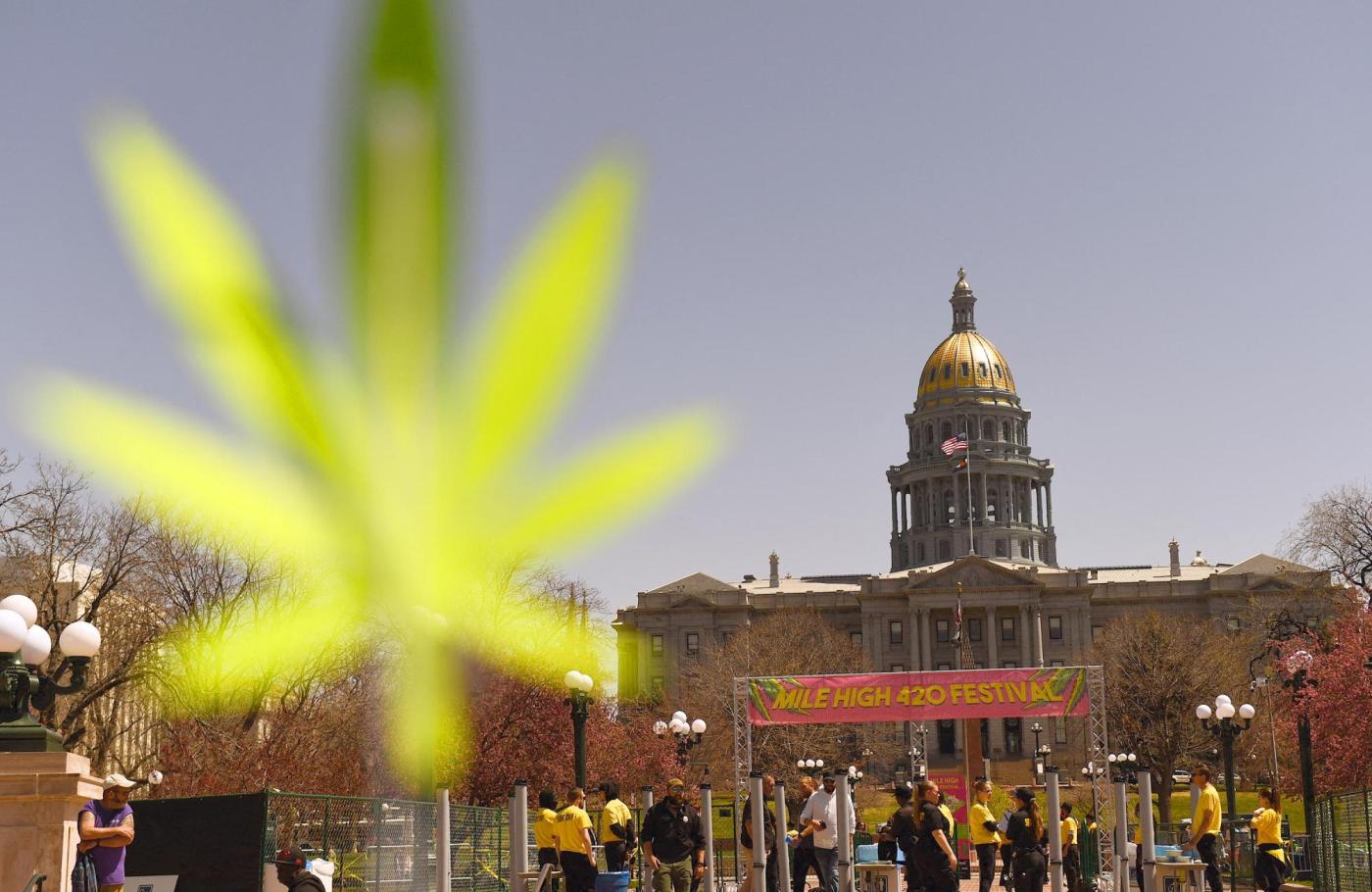
Colorado and Washington state began allowing recreational marijuana sales in 2014. Today, 24 states and the District of Columbia allow recreational sales, and 39 states and the district have sanctioned medical marijuana.
“There’s been this air of inevitability for a while,” said Daniel Mallinson, an associate professor of public policy at Penn State Harrisburg who researches marijuana legalization.
With medical marijuana programs operational in most states, Mallinson said there is pressure to expand recreational marijuana, especially given uncertainty over whether the federal government will act on the issue.
“Recreational is still in its takeoff period,” he said.
But he acknowledged that new medical research has raised concerns among some lawmakers. One study published in January found a link between heavy marijuana use and memory function. Other studies have found a higher risk of heart attacks among people who use cannabis.
Mallinson said the research on marijuana is “very young,” as many institutions are wary of conducting clinical trials because of federal drug laws. The federal government classifies marijuana as a Schedule I drug— the same classification as drugs such as heroin and ecstasy.
“There’s a mixture of science and politics in this area,” he said. “ … I could imagine seeing in these really conservative states like Idaho, you know, this kind of a backlash, like, we don’t want this here at all, so we’re going to try to put up barriers to even considering it.”
A debate headed for the ballot
In Idaho, Skaug said he pursued the state’s new mandatory$300 fine for marijuana possession to bring more consistency to how the state handles marijuana cases.
While Idaho law previously allowed fines of up to $1,000, he said judges had issued fines as low as $2.50.
“So that wasn’t the right message. That’s not even worth the time to write the ticket,” he said. “So it’s not that we’re going to arrest more people for misdemeanor possession of marijuana, but there will be more citations in the amount of $300.”
Skaug also backed a proposed constitutional amendment that would give only the legislature the power to legalize marijuana and other drugs. That question will go to voters next year.
Skaug said he’s worried outside groups would influence a public vote to legalize marijuana by pouring millions into a ballot initiative campaign. If the amendment he supports passes, it wouldn’t ban pot — it would leave legalization up to lawmakers.
“If the evidence comes back that says marijuana or some other drug is positive in the medical community and a good thing, then the legislature can legalize that,” he said. “But we’re going to leave it with the legislature.”
Advocates have been trying without success to get enough signatures to put a medical marijuana question on the ballot for more than a decade in Idaho, said Democratic state Rep. Ilana Rubel. The House minority leader, Rubel said she hit “a firm brick wall” in pitching medical marijuana legislation in Boise, where GOP lawmakers privately tell her they don’t want to look soft on crime.
She views the proposed amendment as another example of the GOP-controlled statehouse being out of touch with regular Idahoans. She said the state’s closed Republican primaries have led to more conservative stances from lawmakers.
“I think this is one of those issues where there is just a huge, huge gap between what the people of Idaho want and what they’re going to get from their legislature,” she said.
A 2022 poll commissioned by the Idaho Statesman found that nearly 70% of Idahoans supported legalizing medical marijuana.
But even discussions about medical marijuana are shut down in Idaho because of concerns about problems with drugs in liberal cities such as Portland, Oregon, and Seattle, Rubel said.
“A very large number of red states have legalized medical marijuana, and they haven’t seen any of the parade of horribles that has been presented whenever we introduce this idea,” she said. “There’s just a lot of hysteria and paranoia about where this is going to lead that is really not tied to reality.”
Targeting marijuana potency, revenues
In several states, lawmakers have aimed to restrict the potency of marijuana products.
Montana state Sen. Greg Hertz, a Republican, said he doesn’t want to end recreational marijuana sales, which voters approved in 2020. But he said today’s products are much stronger than people may realize.
“People were voting for Woodstock weed, not this new high-THC marijuana,” he said.
A bill he sponsored this year would have banned sales of recreational marijuana products, including flower and edibles, exceeding THC levels of 15%. Montana currently allows up to 35% THC in flower, with no limit on other products.
That legislation stalled, but Hertz said he plans to pitch a similar measure during Montana’s next legislative session in 2027.
A separate bill reducing the state’s dosage of THC for edibles just passed the legislature. The measure, which now heads to Republican Gov. Greg Gianforte, would change the individual dosage limit on edibles such as gummies from 10 milligrams to 5 milligrams.
Hertz said the state rushed into its liberalization of marijuana without fully understanding the consequences.
He pointed to state health department data showing rising emergency room visits related to marijuana and dozens of cannabis poisoning cases in recent years — including 36 involving children 10 years or younger.
“We probably opened up the barn door too wide,” he said. “I’m just trying to slow this down a little bit.”
With many states facing gaping budget holes this year, marijuana has proven a popular target from Democrats and Republicans looking to raise revenues without across-the-board tax increases.
Maryland Democratic Gov. Wes Moore in January proposed hiking the cannabis tax from 9% to 15% to help close the state’s $3 billion budget hole. In March, lawmakers agreed to a budget framework that would raise the state marijuana tax to 12%.
Ohio Republican Gov. Mike DeWine proposed doubling marijuana taxes from 10% to 20% — a notion that has so far faced opposition in the legislature.
In Michigan, Democratic Gov. Gretchen Whitmer proposed a new 32% wholesale tax on marijuana growers to help fund road improvements. That tax would be on top of the 10% excise tax on recreational marijuana and the state’s 6% sales tax.
Whitmer said it would close a loophole that has exempted the marijuana industry from wholesale tax, which is applied to cigarettes and other tobacco products. Michigan lawmakers, split sharply along partisan lines, have until Sept. 30 to approve a state budget.
Lawmakers in some states have even taken aim at voter-approved medical marijuana programs this year.
In South Dakota, a bill that failed in committee would have gutted the medical marijuana program overwhelmingly approved by voters in 2020.
In November, Nebraska voters widely supported ballot measures to roll out a medical marijuana program — winning majority support in each of the state’s 49 legislative districts.
But setting up the regulatory scheme has proven controversial, the Nebraska Examiner reported. Lawmakers are pursuing legislation that would define which medical conditions and forms of cannabis would qualify.
Medical marijuana advocates say overly strict rules would hamper the program and undermine the will of voters. But some legislators insist on limitations to prevent widespread access to marijuana.
“We make it legal for anything and everything, it’s essentially recreational marijuana at that point,” state Sen. Rick Holdcroft, a Republican, told the Nebraska Examiner this month.
Stateline reporter Kevin Hardy can be reached at khardy@stateline.org.
©2025 States Newsroom. Visit at stateline.org. Distributed by Tribune Content Agency, LLC.