TEL AVIV, Israel (AP) — Antisemitic attacks have increased dramatically since the war in Gaza began, though the numbers declined slightly last year from a peak reached immediately after the Oct. 7, 2023, Hamas attack against Israel, according to an annual report about global antisemitism from Tel Aviv University.
Related Articles
Israeli strike in Gaza kills 23 as Arab mediators seek long-term truce
EVs, tariffs in the spotlight as Chinese automakers take leading role at Shanghai auto show
Earthquake measuring 6.2 shakes Istanbul and injures more than 150 people
Trump says Zelenskyy is prolonging war in Ukraine by resisting calls to cede Crimea to Russia
The European Union hits Apple and Meta with 700 million euros in fines, first under digital rules
“Contrary to popular belief, the report’s findings indicate that the wave of antisemitism did not steadily intensify due to the war in Gaza and the humanitarian disaster there,” said Uriya Shavit, the chief editor of the report.
He said there was a sharp increase in attacks against Jews from October to December 2023, but that in 2024, the number of incidents declined in almost every country around the world.
“The sad truth is that antisemitism reared its head at the moment when the Jewish state appeared weaker than ever and under existential threat,” he said. The numbers of attacks in 2024 was still significantly higher than in 2022, before the war.
Two notable exceptions to this trend were Australia and Italy, where attacks rose sharply in 2024. Australia recorded 1,713 antisemitic incidents in 2024, compared to 1,200 in 2023. This included an arson attack that caused extensive damage at a synagogue in Melbourne in December, as well as other incidents of vandalism, including at a synagogue in Hobart, Tasmania. In Italy, there were 877 antisemitic incidents in 2024, compared with 454 in 2023, and 241 in 2022.
The number of attacks also rose slightly in the U.S. and Argentina, but not as significantly.
The report also condemned the lack of punishment for perpetrators of antisemitic attacks. Many incidents are not reported to the police, and of those, very few result in arrests. In major cities with large Jewish populations, including New York, Chicago, London and Toronto, less than 10% of antisemitic crimes resulted in arrests between 2021 and 2023, the report found.
“Education and legislation without enforcement are meaningless,” said Carl Yonker, a senior researcher at Tel Aviv University who contributed to the report.
Each year, Tel Aviv University’s Center for the Study of Contemporary European Jewry and the Irwin Cotler Institute for Democracy, Human Rights and Justice, releases a report about antisemitism ahead of Israel’s commemoration of Holocaust Remembrance Day. The day marks a national memorial for the 6 million Jews killed in the Holocaust, which the country observes starting on Wednesday evening.
The statistics are based on reports from police, national authorities and local Jewish communities.
Earlier this week, the Anti-Defamation League also released its major report about antisemitism in the United States. For the first time in nearly 50 years of compiling data, the organization said that Israel-related incidents, including chants, speeches and signs at rallies protesting Israeli policies, made up more than half of the reported incidents in 2024.
The ADL’s findings add to the intense, divisive debate among American Jews — and others — over the extent to which vehement criticism of Israeli policies and of Zionism, or the belief in Israel as the Jewish nation state, should be considered antisemitic.
NEW YORK (AP) — When Random House Publisher Andrew Ward met recently with staff editors to discuss potential book projects, conversation inevitably turned to current events and the Trump administration.
“It seemed obvious that we needed to look back to the country’s core documents,” Ward said. “And that we wanted to get them out quickly.”
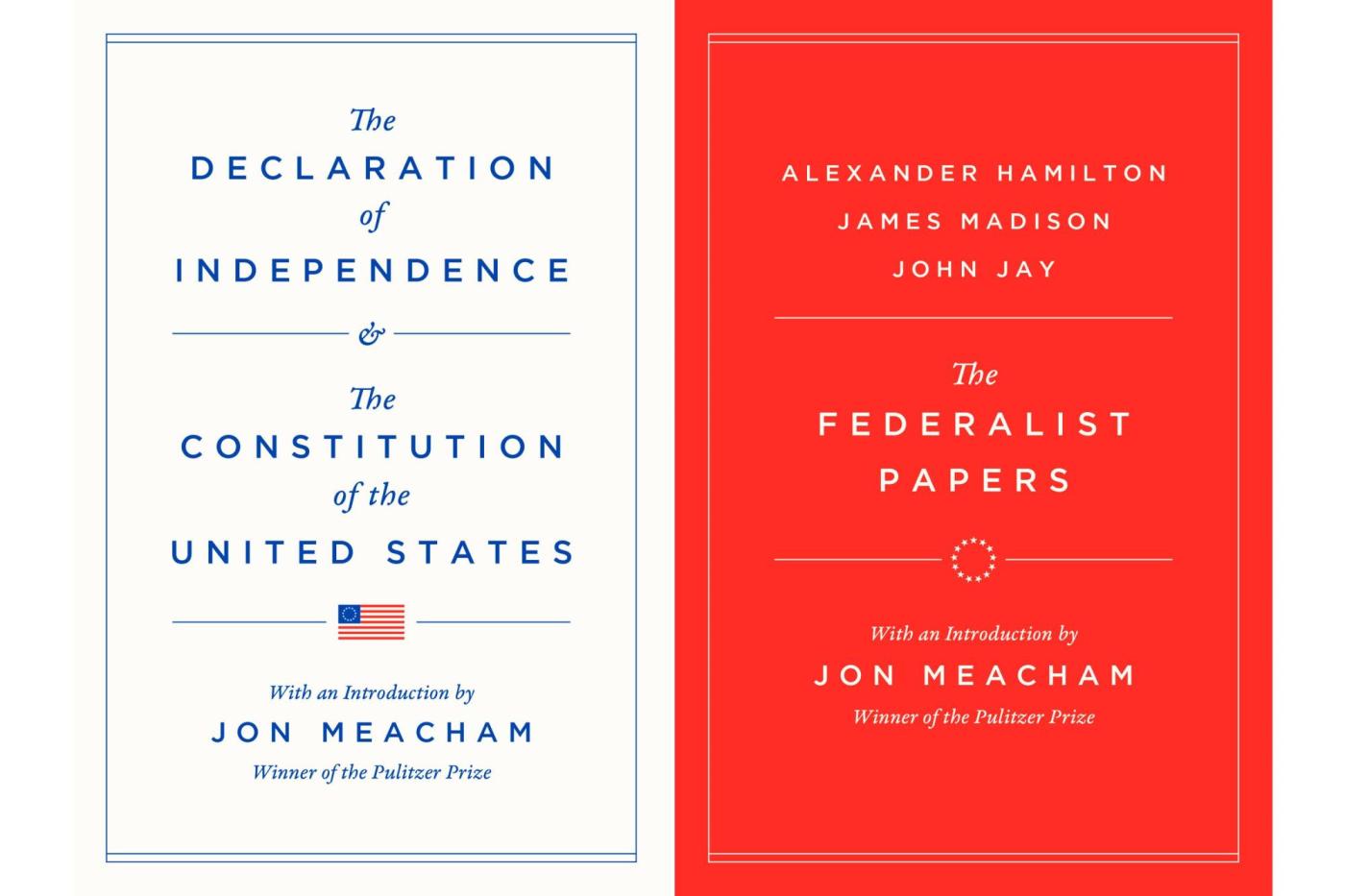
On Wednesday, Random House announced that it would publish a hardcover book in July combining the Declaration of Independence and the U.S. Constitution, followed in November by a hardcover edition of the Federalist Papers. Both books include introductions by Pulitzer Prize-winning historian Jon Meacham, who has written biographies of Thomas Jefferson and Andrew Jackson among others.
The Random House volumes, released through its Modern Library imprint, will join a prolific market that has surged in recent months. According to Circana, which tracks around 85% of the print retail market, editions of the Declaration of Independence, the Federalist Papers and the U.S. Constitution are selling at their fastest pace since Circana began compiling numbers in 2004.
Around 162,000 combined copies have sold through mid-April, compared to 58,000 during the same time period the year before and around 33,000 in 2023. Sales were around 92,000 in the early months of Trump’s first term, in 2017, more than double the pace of 2016.
Brenna Connor, a book industry analyst for Circana, said the jump “is likely in response to the recent change of administration” and cited increased interest in other books about democracy and government, among them Timothy Snyder’s “On Tyranny” and the Michael Lewis-edited “Who Is Government?” a collection of essays about civil servants by Dave Eggers, Geraldine Brooks, Sarah Vowell and others.
“This pursual of political understanding is playing out in a few different areas,” Connor added.
FILE – A 1776 broadside printing of the Declaration of Independence is displayed at the Museum of the American Revolution in Philadelphia on June 17, 2019. (AP Photo/Matt Rourke)
Meacham, during a recent phone interview with The Associated Press, said that the founders had sought to make sense of a revolutionary era — whether breaking with England or debating how to form a federal government with enough power to rule effectively, without giving it the kind of monarchical authority that enraged the colonies.
Reading the Declaration and other texts, he believes, can give today’s public a similar sense of mission and guiding principles.
“It is a tumultuous moment … to put it kindly,” Meacham said. “One way to address the chaos of the present time, what Saint Paul would call the ‘tribulations’ of the present time, is to re-engage with the essential texts that are about creating a system that is still worth defending.”
The Modern Library books will have many competitors. The 18th century documents all are in the public domain, can be read for free online and anyone can publish them. According to Circana, popular editions have been released by Skyhorse, Penguin, Barnes & Noble and others.
“We generally see increased sales of editions of the Declaration of Independence and the Constitution every election cycle, but particularly this year,” said Shannon DeVito, Barnes & Noble’s senior director of book strategy. “This could be because next year marks the 250th anniversary of the Declaration of Independence,” she said, “or the fast and furious current political conversations and policy changes.”
A 25-year-old motorcyclist died and a driver of an SUV and his passenger were injured Tuesday in a collision at an intersection in Farmington, police said.
Tyler Wrobel, of Farmington, was pronounced dead at the scene of the crash, which occurred about 4:15 p.m. at 212th Street West and Dushane Parkway, Farmington police said.
Police said Wednesday an initial investigation indicates 82-year-old Earl Schlotman of Farmington was driving a 2006 Ford Freestyle westbound on 212th Street West and began making the turn onto southbound Dushane Parkway, crossing into the path of Wrobel, who was headed eastbound on 212th Street. The motorcycle struck the passenger side of the SUV.
Schlotman’s wife, Janice Schlotman, also 82, was in the front seat and suffered serious injuries. She was airlifted to Hennepin County Medical Center in Minneapolis.
Earl Schlotman was transported by ambulance to Fairview Ridges Hospital in Burnsville with minor injuries.
Wrobel was wearing a helmet at the time of the crash, police said.
“This investigation is in the early stages, and we have made no determinations as to the cause of this tragic crash,” Deputy Police Chief Nate Siem said in a written statement. “Our heartfelt condolences go out to Mr. Wrobel’s family, and we wish the Schlotmans a speedy recovery.”
Related Articles
Hidden in Eagan office building, new Hagen Hus Gallery is a world art tour
Walz appoints Kelly Staples as new Dakota County judge
Farmington man repeatedly stabbed his wife amid cheating accusations, charges say
Eagan native Eva Erickson thanks her ‘hockey legs’ for ‘Survivor’ wins
Inver Grove Heights mom spared jail after 3-year-old son shot brother with her gun
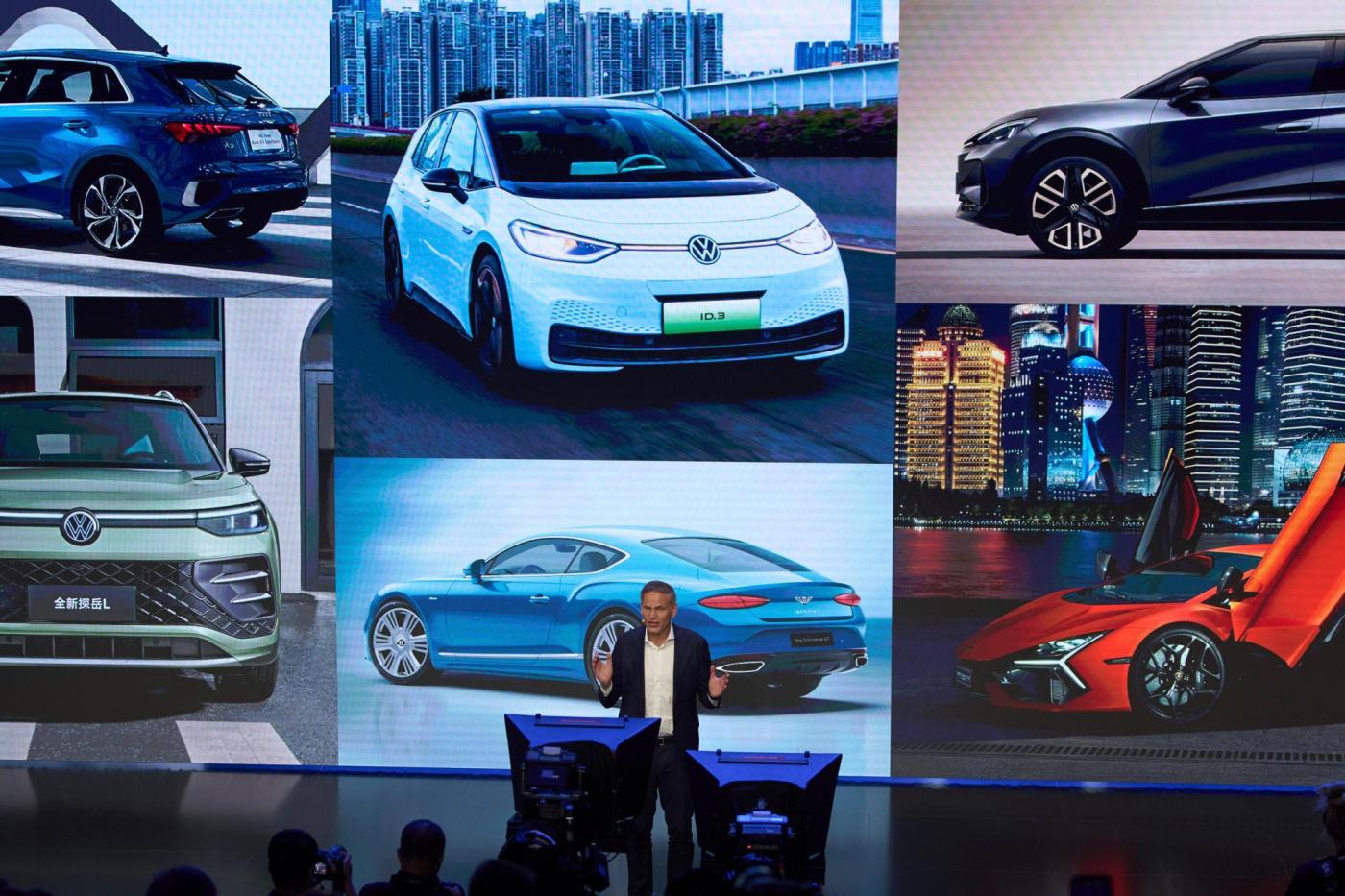
SHANGHAI (AP) — Leading automakers are showcasing their latest designed-for-China and the world models at the Shanghai auto show this week, fighting not to be edged aside in the world’s largest car market while watching for U.S. President Donald Trump’s next steps in his trade war.
Related Articles
Ex-OpenAI workers ask California and Delaware AGs to block for-profit conversion of ChatGPT maker
Wall Street leaps in a worldwide rally after Trump softens his tough talk on trade and the Fed
The European Union hits Apple and Meta with 700 million euros in fines, first under digital rules
3M rides market rally, affirms earnings guidance in face of tariffs
Tariffs could cost the average American household $3,800 per year. Here’s how to save for it
This year’s show in the sprawling industrial outskirts of Shanghai comes at a pivotal moment. Three decades after Beijing set out to build a world-class auto industry, local manufacturers account for about two-thirds of sales inside China, and a growing share of global exports.
But with U.S. President Donald Trump raising tariffs and the European Union slapping duties on Chinese electric vehicles, selling to some overseas markets is growing increasingly challenging.
“Geopolitics are very complex and the situation remains uncertain,” Wei Jianjun, chairman of Great Wall Motors, told reporters Wednesday. “But Great Wall is always exploring investments in overseas markets.”
The exhibition is holding two media days and two trade days before it opens to the public on Sunday. It runs until May 2.
Electrics gaining ground
Encouraged by government subsidies for scrapping older cars for the latest models, Chinese drivers have embraced the switch to electrics, with sales of battery powered and hybrid vehicles jumping 40% last year.
A total of 31.4 million vehicles including buses and trucks were sold last year in the world’s biggest market by sales, up 4.5% compared to a year earlier, the China Association of Automobile Manufacturers reported.
The A6L-etron is launched during the Volkswagen Group media night ahead of the Auto Show in Shanghai, Tuesday, April 22, 2025. (AP Photo/Ng Han Guan)
A concept car is shown during the Volkswagen Group media night ahead of the Auto Show in Shanghai, Tuesday, April 22, 2025. (AP Photo/Ng Han Guan)
Olive Blume, Chairman of the Board of Management of Volkswagen Group, speaks during a media night ahead of the Auto Show in Shanghai, Tuesday, April 22, 2025. (AP Photo/Ng Han Guan)
Ralf Brandstatter, Chairman and CEO of Volkswagen Group China, speaks during the media night ahead of the Auto Show in Shanghai, Tuesday, April 22, 2025. (AP Photo/Ng Han Guan)
The Audi E5 Sportback is launched during the Volkswagen Group media night ahead of the Auto Show in Shanghai, Tuesday, April 22, 2025. (AP Photo/Ng Han Guan)
Performers take part in the Volkswagen Group media night ahead of the Auto Show in Shanghai, Tuesday, April 22, 2025. (AP Photo/Ng Han Guan)
Performers take part in the Volkswagen Group media night ahead of the Auto Show in Shanghai, Tuesday, April 22, 2025. (AP Photo/Ng Han Guan)
Performers take part in the Volkswagen Group media night ahead of the Auto Show in Shanghai, Tuesday, April 22, 2025. (AP Photo/Ng Han Guan)
Volkswagen executives and guest pose for photos during the Volkswagen Group media night ahead of the Auto Show in Shanghai, Tuesday, April 22, 2025. (AP Photo/Ng Han Guan)
A concept car is shown during the Volkswagen Group media night ahead of the Auto Show in Shanghai, Tuesday, April 22, 2025. (AP Photo/Ng Han Guan)
Attendees look at the latest cars from Volkswagen Group during the media night ahead of the Auto Show in Shanghai, Tuesday, April 22, 2025. (AP Photo/Ng Han Guan)
Attendees look at the latest cars from Volkswagen Group during the media night ahead of the Auto Show in Shanghai, Tuesday, April 22, 2025. (AP Photo/Ng Han Guan)
The ID Aura concept car is shown during the Volkswagen Group media night ahead of the Auto Show in Shanghai, Tuesday, April 22, 2025. (AP Photo/Ng Han Guan)
A man talks near the Han L EV model from BYD during the Shanghai auto show on Wednesday, April 23, 2025. (AP Photo/Ng Han Guan)
An attendee arrives to the Auto Show in Shanghai, Wednesday, April 23, 2025. (AP Photo/Ng Han Guan)
An executive from Nissan unveiled the Frontier Pro, a plug-in hybrid, during the Shanghai auto show on Wednesday, April 23, 2025. (AP Photo/Ng Han Guan)
Visitors look at the Han L EV model from BYD during the Shanghai auto show on Wednesday, April 23, 2025. (AP Photo/Ng Han Guan)
A BYD Han L car model inspired by Black Myth: Wukong is displayed at the Auto Show in Shanghai, Wednesday, April 23, 2025. (AP Photo/Ng Han Guan)
Exhibitors prepare for an unveiling at the Auto Show in Shanghai, Wednesday, April 23, 2025. (AP Photo/Ng Han Guan)
Oliver Zipse, Chairman of the board of management of BMW AG, speaks during a press conference for BMW at the Shanghai auto show, Wednesday, April 23, 2025. (AP Photo/Ng Han Guan)
An executive from Chinese car manufacturer Geely talks the satellite communication capabilities of its Galaxy Cruiser during the Shanghai auto show on Wednesday, April 23, 2025. (AP Photo/Ng Han Guan)
Staff from Chinese automaker Nio waits for visitors at their booth during the Shanghai auto show on Wednesday, April 23, 2025. (AP Photo/Ng Han Guan)
Visitors look at the new Firefly model from Chinese automaker Nio during the Shanghai auto show on Wednesday, April 23, 2025. (AP Photo/Ng Han Guan)
A man dressed as the character from Black Myth:Wukong promotes a special edition Han L model from BYD during the Shanghai auto show on Wednesday, April 23, 2025. (AP Photo/Ng Han Guan)
A man films near a special Black Myth:Wukong edition of a Tang L model from BYD during the Shanghai auto show on Wednesday, April 23, 2025. (AP Photo/Ng Han Guan)
1 of 25
The A6L-etron is launched during the Volkswagen Group media night ahead of the Auto Show in Shanghai, Tuesday, April 22, 2025. (AP Photo/Ng Han Guan)
Growth in sales of EVs was offset by falling sales of traditional gasoline and diesel-powered vehicles, which still accounted for just over half of new car sales.
Chinese electric vehicle maker BYD nudged past Tesla as the world’s biggest maker of EVs by sales last year, reporting revenue of over $100 billion. It recently announced an ultra fast EV charging system that it says can provide a full charge for its latest EVs within five to eight minutes, about the time needed to fill up at the pump. It plans to build more than 4,000 of the new charging stations across China.
Survival of the fittest
To gain access to China’s potentially huge market, foreign automakers like Volkswagen, General Motors, BMW and Ford set up joint ventures with state-owned local companies beginning in the 1980s and ’90s, helping them build the capacity and technology to compete on a world scale.
They also created sprawling supply chains in Shanghai and other major manufacturing hubs, helping to nurture other big names in Chinese automaking, such as BYD, Geely and Great Wall Motors.
With growth at home limited by brutal competition, they’re expanding rapidly especially in Southeast Asia and other developing economies with relatively affordable sedans, SUVs and pickup trucks.
Shanghai’s auto show is a gathering for the “survival of the fittest,” said Zhou Lijun, director and chief researcher of the industry analysis group Yiche Research Institute.
That doesn’t mean all the EV makers go it alone. BYD teamed up with Daimler, now the Mercedes-Benz Group, to launch its Denza premium brand. It’s also challenging Toyota and other top tier brands with its luxury Yangwang brand, priced at up to 2 million yuan ($280,000)
Tariffs and other challenges
Opening markets wider to foreign competition has given car buyers a choice of more affordable, innovative vehicles. That’s a mixed blessing for older automakers like GM, Ford, Toyota and VW that are also fighting a battle of attrition in China.
“China is still a market worth fighting for,” said Oliver Zipse, chairman of the BMW Group, which like other automakers highlighted a “In China, for China,” approach, at “China speed.”
Overhanging the upbeat talk in Shanghai by both Chinese and foreign automakers of manufacturing in China for the world are Trump’s tariffs of up to 145% on Chinese goods, despite a 90-day pause that has spared many other countries, and 25% U.S. tax on imported cars and auto parts.
Japanese automaker Nissan Motor Co.’s head of China operations, Stephen Ma, said the company plans to make 10 new battery electric or hybrid models by 2027 in China, for China and for “export to the world, except one country — you can guess which one.”
Higher U.S. and European tariffs on foreign-made EVs are prompting Chinese newcomers to shift production closer to those markets as more Western consumers opt for the latest Chinese models.
Just a few decades ago, Nissan, Toyota and other Japanese automakers were fighting trade friction with the United States over their own exports. Now, they employ hundreds of thousands of U.S. workers at their U.S. factories.
“The trade war between China and the United States has blocked direct exports from China to the United States, but it hasn’t blocked local production there or the establishment of global production bases in Europe or elsewhere,” Zhou said.
A report by the Rhodium Group shows that nearly half the world’s markets are restricting imports from China, in part because of national security concerns linked to the advanced electronics in EVs and other high-tech vehicles. A minority of countries like Australia and South Africa remain relatively open, and Russia is a major market but is nearly saturated, it says.
The road ahead
Chinese automakers lag behind global leaders like Toyota in conventional gasoline and diesel fueled vehicles, but they can sell EVs at roughly the same price, while also solving the problems of range and fast charging.
China has become part of what geopolitical analyst Yanmei Xie described as a “technological paradigm shift” in a commentary in the Japanese financial publication Nikkei Asia. Automakers in China are going electric not just because of the green transition, but as a route to “technological and industrial dominance,” she wrote.
EV makers in China have benefited from not having huge legacy operations that have to make the transition, said Stefan Sielaff, vice president of global design for EV maker Zeekr Group, part of Geely’s stable of brands. Founded in 2021, it’s selling cars in more than 80 markets including in Europe.
“They can immediately react to market demand, to customer demand, and can deliver very, very fast,” he said. “We have done most of these cars in two years. From 0 to 100 in two years.”