More Democratic lawmakers are visiting El Salvador on Abrego Garcia’s behalf

posted in: All news | 0

By MATT BROWN, Associated Press

WASHINGTON (AP) — Four House Democratic lawmakers have traveled to El Salvador to call attention to the plight of a man the Trump administration deported to a Salvadoran prison and has refused to help return — even after the Supreme Court ruled that it was the government’s duty to do so.

Reps. Yassamin Ansari of Arizona, Maxine Dexter of Oregon, Maxwell Frost of Florida and Robert Garcia of California arrived in the Central American nation on Sunday to investigate the condition of Kilmar Abrego Garcia, who had lived in the United States for more than a decade. The Trump administration deported him, a move that administration officials have said in court filings was erroneous.

But despite a Supreme Court ordering the Trump administration to help facilitate Abrego Garcia’s return, the administration has said it has no power to bring him back, a choice being scrutinized by federal courts as potentially in violation of judicial rulings.

“To see the Trump administration so blatantly and egregiously defy the Supreme Court and have no regard for due process is extremely alarming to me,” Ansari said in an interview. “Even with all of the illegal actions we’ve seen over the last couple of months, I think this is the one that terrifies me the most when it comes to the future of our democracy.”

The trip comes after one last week

The quartet’s trip comes after Sen. Chris Van Hollen of Maryland traveled to El Salvador last week and met Abrego Garcia and Salvadoran officials. Abrego Garcia had lived in Maryland with his wife and three children, who are American citizens, before he was deported on March 15.

Sen. Chris Van Hollen, D-Md., is welcomed by supporters upon his arrival from meeting with Kilmar Abrego Garcia in El Salvador, at Washington Dulles International Airport, in Chantilly, Va., Friday, April 18, 2025. (AP Photo/Jose Luis Magana)

Abrego Garcia’s protected legal status prohibited him from being deported to El Salvador. He was deported on one of three planes filled with alleged migrant gang members.

Garcia said he and Frost sent a letter last week to House Oversight Committee Chair James Comer, R-Ky., requesting that an official delegation go to El Salvador to investigate Abrego Garcia’s condition and push for his return, but received no response. Ansari said more Democrats would be traveling to El Salvador in the coming days and weeks.

“Those of us in the House who are here greatly admire and support what Sen. Van Hollen did,” Garcia said. Of Abrego Garcia, he said, “His family knew that he was safe, but he’s not home, and so we’ve got to continue the pressure, and we’ve got to ensure that the rule of law in the United States is allowed.”

Justice Department lawyers said in court last week that they have no power to advance Abrego Garcia’s return because he is in a foreign country’s custody. Administration officials also claimed in public comments that Abrego Garcia was engaged in human trafficking and terrorism and therefore correctly deported. White House press secretary Karoline Leavitt said that if Abrego Garcia were to return to the U.S., “he would immediately be deported again.”

Van Hollen unsuccessfully lobbied the Salvadoran government for Abrego Garcia’s return. He told NBC’s “Meet the Press” on Sunday that the United States is facing a “constitutional crisis” if the Trump administration does not follow the Supreme Court’s order to push to bring Abrego Garcia back.

It’s a warning Democrats are increasingly amplifying. Rather than debate President Donald Trump’s hardline immigration policy or the merits of the administration’s invocation of national security to carry out deportations, Democratic lawmakers are zeroing in on the issue of due process, with some noting that the Supreme Court and lower court federal judges found Abrego Garcia was deported without a proper hearing.

“The government’s argument, moreover, implies that it could deport and incarcerate any person, including U. S. citizens, without legal consequence, so long as it does so before a court can intervene,” Justice Sonia Sotomayor wrote in the court’s ruling in Abrego Garcia’s case.

Said Garcia: “They’re trying to demonize him, and we’re not here to defend him. He deserves due process, and everyone deserves due process. … What he did or may have done, that has to be decided by a judge.”

Republicans have been going, too — for a different reason

Several House Republicans have visited El Salvador’s Terrorism Confinement Center, the prison where Abergo Garcia is being held, and lauded the facility for what they view as El Salvador’s tough-on-crime policies. Republican senators and governors have defended Abrego Garcia’s detention as part of a broader crackdown on illegal immigration. But at least one Republican senator called the administration’s deportation of Abrego Garcia a mistake.

Related Articles


The ‘return’ of an extinct wolf is not the answer to saving endangered species, experts warn


Andreas Kluth: The US has Greenland (and foreign policy) exactly upside down


Other voices: Judge Boasberg is right to seek contempt against Trump officials


David Brooks: Time for a civic uprising


EEOC instructs staff to sideline all new transgender discrimination cases, employees say

“The administration won’t admit it. But this was a screw-up,” said Sen. John Kennedy, a Louisiana Republican, on NBC’s “Meet the Press.”

During a meeting with Salvadoran President Nayib Bukele in the Oval Office, Trump remarked that “homegrown” lawbreakers should be deported to prisons in the Central American country and urged Bukele to “build about five more places” like the notorious penitentiary where Abrego Garcia is now held.

Congressional Republicans have so far shown little interest in negotiating the dispute between the president and the judiciary. Democrats, who are in the minority in both chambers of Congress, have little leverage to pressure the White House. But Abrego Garcia’s case has become both an alarming and galvanizing case inside the party.

Democrats “have the power to draw attention to this issue, to keep the pressure up,” Ansari said. “That’s why you know some of us are going, and so many members will be going. Because this is about the future of our democracy and the future of due process as American citizens.”
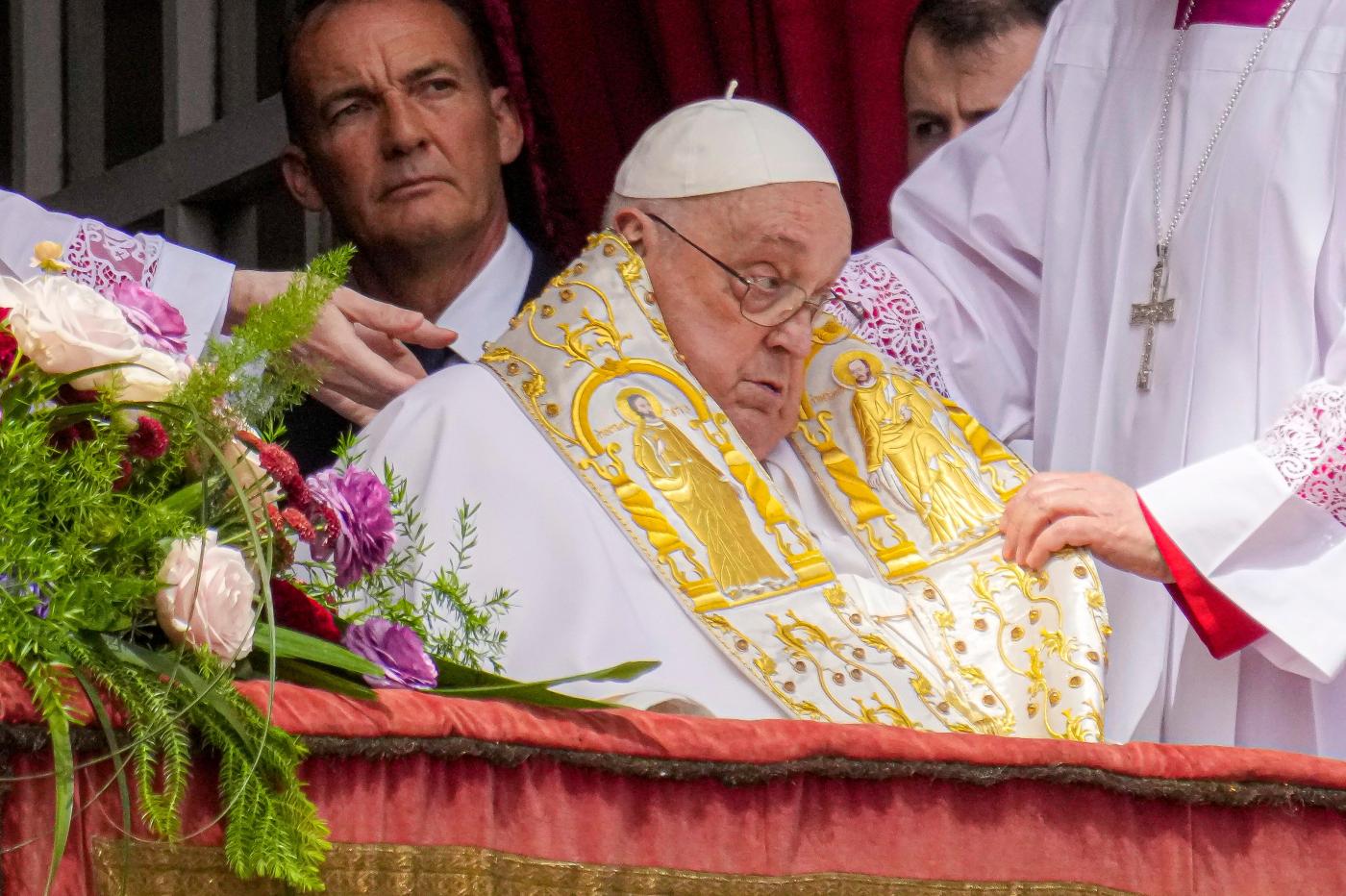
What are the church’s rites after the death of a pope and the election of a new one?

posted in: All news | 0

VATICAN CITY — The death of a pope starts a centuries-old ritual involving sacred oaths by the cardinals electing a successor, the piercing of ballots with a needle and thread after they’re counted, and then burning them to produce either the white or black smoke to signal if there’s a new leader for the world’s 1.3 billion Catholics.

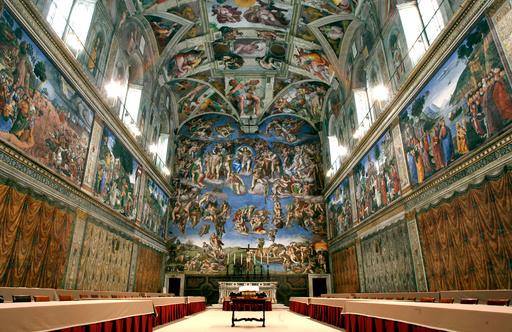
The election itself is shrouded in secrecy, with cardinals forbidden from communicating with the outside world what happened during the voting in the conclave behind the frescoed walls of the Sistine Chapel.

St. John Paul II rewrote the regulations on papal elections in a 1996 document that remains largely in force, though Pope Benedict XVI amended it twice before he resigned. Here is what happens when a pope dies, a period known as the “sede vacante,” or the “vacant See.”

Who’s in charge?

If the pope has died, the camerlengo, or chamberlain, must certify the death and seal the papal apartment. He runs administrative and financial duties of the Holy See until a new pope takes over.

The largely ceremonial job of camerlengo is currently held by Cardinal Kevin Farrell, the Irish-born American head of the Vatican’s laity office.

FILE – Cardinal Camerlengo Kevin Farrell talks during an interview with The Associated Press in his office in Rome, Tuesday, July 31, 2018. (AP Photo/Paolo Santalucia, File)

Nearly all prefects of Vatican offices lose their jobs when a pope dies, but a few stay on, including the foreign minister and the master of liturgical ceremonies, who plays a key role in assembling the conclave.

The dean of the College of Cardinals summons the cardinals for the funeral, presiding at the Mass before the conclave begins. That position is currently held by Cardinal Giovanni Battista Re, the retired head of the Vatican’s office for bishops.

In November 2024, Francis reformed the rites to be used for his funeral, simplifying them to emphasize his role as a mere bishop and allowing for burial outside the Vatican. Francis has chosen to be buried in St. Mary Major Basilica, where his favorite icon of the Virgin Mary, the Salus Populi Romani, is located.

What’s the timing?

The death of a pope begins a precise sequence of events that include the confirmation of death in the pontiff’s home, the transfer of the coffin to St. Peter’s Basilica for public viewing, a funeral Mass and burial. Interment must take place between the fourth and sixth day after his death.

FILE – A giant monitor in St. Peter’s Square at the Vatican, Tuesday, March 12, 2013 shows the heavy wooden door to the Sistine Chapel being closed and locked, signaling the start of the conclave to elect a new pope to succeed Benedict XVI following his stunning resignation. (AP Photo/Gregorio Borgia, File)

After the funeral, there are nine days of official mourning, known as the “novendiali.”

During this period, the cardinals arrive in Rome. To give everyone time to assemble, the conclave must begin 15-20 days after the “sede vacante” is declared, although it can start sooner if the cardinals agree.

Who can elect a pope?

Only cardinals under age 80 are eligible, and current regulations limit the number of electors to 120. According to the most recently updated Vatican statistics, there were 135 cardinals under age 80 and eligible to vote, though that number may change before the conclave begins.

FILE – A view of the Cardinals’ tables in the Sistine Chapel in Vatican City, Aug. 25, 1978. The conclave will celebrate Mass here for prayers for inspiration to elect the successor of the late Pope Paul VI. (AP Photo, File)

Those over 80 can’t vote but can participate in pre-conclave meetings, known as general congregations, in which church problems are discussed. It was in these meetings in 2013 that then-Cardinal Jorge Mario Bergoglio spoke about the need for the church to go to the “existential peripheries” to find those who suffer — an off-the-cuff speech that helped his election.

Who are possible candidates?

Any baptized Roman Catholic male is eligible to be pope, but since 1378, only cardinals have been selected. Some current leading candidates:

— Cardinal Pietro Parolin of Italy, 70, Francis’ secretary of state and a veteran Vatican diplomat.

— Cardinal Marc Ouellet of Canada, 80, head of the Vatican’s bishops office from 2010 to 2023.

— Cardinal Christoph Schoenborn of Austria, 80, a student of Pope Benedict XVI, and thus ostensibly having appeal for conservatives.

— Cardinal Luis Tagle of the Philippines, 67, brought by Francis to head the Vatican’s massive missionary office.

— Cardinal Matteo Zuppi of Italy, 69, a Francis protégé who headed the Italian bishops conference.

How are the votes taken?

A first ballot is held in the Sistine Chapel on the afternoon after the initial Mass. If no pope is elected, over the ensuing days two ballots are held each morning and two each afternoon.

Related Articles


Pope Francis dies at 88


A Scandia pastor overcame addiction. Now he confronts the stigma in a podcast aimed at faith communities.


After fire at St. Paul church, owner wants to secure steeple, return to ministering


Is he Christ? Is he Moses? Superman’s religious and ethical undertones add to his mystique


Thousands of pilgrims trek through New Mexico desert to historic adobe church for Good Friday

The ballots are rectangular pieces of paper with the words: “Eligo in Summum Pontificem” (“I elect as supreme pontiff”) written on top, with a space for a name. Each cardinal makes his choice, folds the paper in half, walks to the front of the chapel and declares: “I call as my witness Christ the Lord, who will be my judge, that my vote is given to the one who before God I think should be elected.”

He then puts the ballot on a tray and tips it into a receptacle.

Three designated cardinals, known as scrutineers, check each ballot to see if it is filled out correctly. Each name is read aloud and counted, with the results announced to the conclave after each round.

If no one gets the needed two-thirds of votes, the ballots are pierced with a needle and thread, which is then knotted and placed on a tray, and another round of voting is prepared.

Benedict modified some of John Paul’s 1996 conclave rules, most notably excluding his vision that a pope could be elected by a simple majority if voting was stalemated. Benedict decreed that a two-thirds majority is always needed, no matter how long it takes. He did so to prevent cardinals from holding out for the 12 days foreseen by John Paul and then pushing through a candidate with a slim majority.

What about secrecy?

Benedict also tightened the oath of secrecy in the conclave, making clear that anyone who reveals what went on inside faces automatic excommunication.

In John Paul’s rules, excommunication was always a possibility, but Benedict revised the oath that liturgical assistants and secretaries take to make it explicit, saying they must observe “absolute and perpetual secrecy” and explicitly refrain from using any audio or video recording devices.

They now declare: “I take this oath fully aware that an infraction thereof will incur the penalty of automatic excommunication reserved to the Apostolic See. So help me God and these Holy Gospels, which I touch with my hand.”

Cardinals also are bound by secrecy, although the threat of excommunication only hangs over them explicitly if they are found to have accepted payment for their vote, allowed secular powers to influence it, or entered into pacts with other cardinals to back a candidate.

Do we have a pope?

After the ballots are pierced, they are burned in a cylindrical stove at the end of the voting session. Black smoke from the Sistine Chapel chimney means no decision; white smoke signals the cardinals have chosen a pope and that he has accepted.

Chemical cartridges are added to ensure there is no confusion over the color. To produce black smoke, a cartridge containing potassium perchlorate, anthracene — the component of coal tar — and sulfur is burned with the ballots. For white smoke, a cartridge of potassium chlorate, lactose and chloroform resin is burned with the ballots.

FILE – Black smoke emerges from the chimney on the Sistine Chapel as cardinals voted on the second day of the conclave to elect a pope in St. Peter’s Square at the Vatican, Wednesday, March 13, 2013. (AP Photo/Michael Sohn, File)

Bells also are rung to signal the election of a pope for further clarity.

The new pope is introduced from the loggia overlooking St. Peter’s Square with the words, “Habemus Papam!” (“We have a pope!”) and his chosen papal name. The new pope then emerges and gives his first blessing.

‘The Bottle Bill Is Just the Beginning’: How Canners Can Make a Cleaner, Better City

posted in: All news | 0

Rixaru X, who has worked collecting cans and bottles off city streets for the last six years, spoke to City Limits about the challenges New York City canners face and how the Bigger Better Bottle bill would improve their lives—and the city’s livability. 

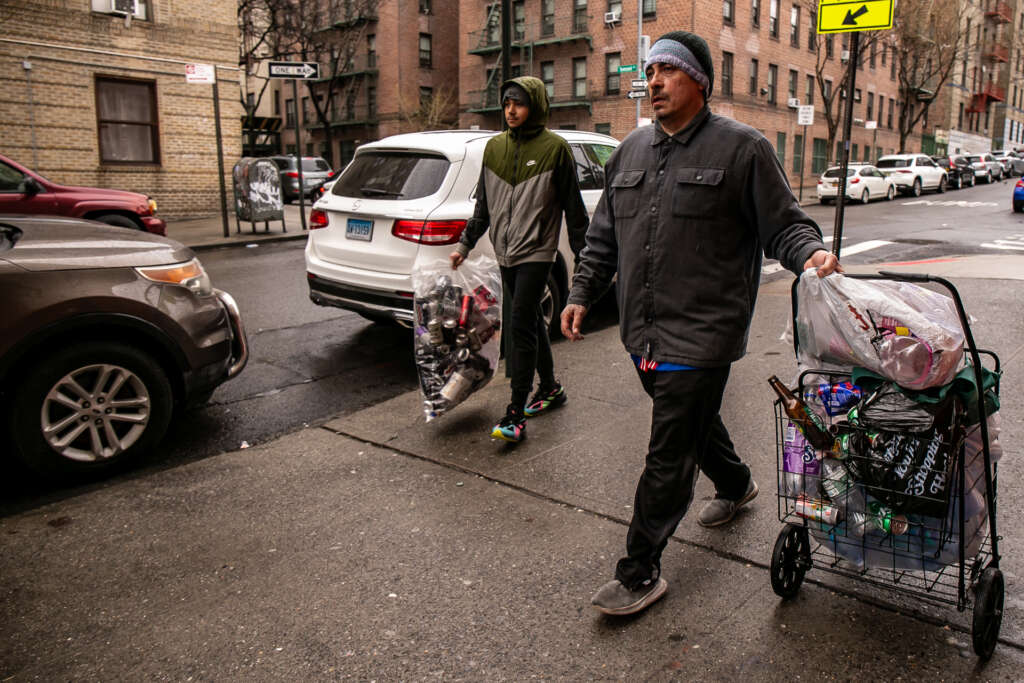
Rixaru X, 45, and his 14-year-old son bringing cans and bottles to a reverse vending machine in the Bronx. (Adi Talwar/City Limits)

When a New Yorker tosses a bottle or can onto the city’s streets, a hidden workforce of nearly 10,000 freelance recyclers, known as canners, is there to pick it up. 

Ever since New York state passed the Bottle Bill in 1982 to encourage recycling, empty beverage containers for soda, beer or sparkling water may be returned to retailers or redemption centers in exchange for a 5 cent deposit.

Making bottles and cans redeemable allows New Yorkers to make a living from recycling. And it’s good for the environment, as it keeps trash out of gutters, helping prevent sewage overflows that can lead to flooding, while also directing waste away from landfills.

“I hope and envision that our work can be viewed as part of the greater work done to address the environmental issues and the overall quality of life that we have in the city,” said Rixaru X, a canner and activist from the Bronx.

But Rixaru and his colleagues say the law is outdated: The amount of the refundable deposit needs to increase and the types of drinks covered by the bill need to be expanded. 

The Bigger Better Bottle Bill, currently up for discussion in Albany, would do all that and more. 

The bill, which is seeking a stamp of approval from both houses before the legislative session ends in June, would increase the 5-cent refundable deposit fee to 10 cents. It would also raise the 3.5-cent per container handling fee that beverage retailers pay to redemption centers to 6 cents.

And perhaps most important for canners like Rixaru, it would expand the types and number of beverage containers covered by the law to include all beverages except dairy and 100 percent fruit and vegetable juices. 

Beyond canners, the city as a whole would also reap the benefits, advocates say.

“It’s going to increase recycling rates,” said Sean Basinski, a board member at the non-profit Sure We Can, which fights for the rights of canners across the city.

The state’s environmental agency says the current law already leads to 65 percent of all beverage containers being redeemed and plays a big role in the “conservation of energy and valuable resources.” The new bill seeks to increase that redemption rate to 90 percent, potentially resulting in 5.4 billion more cans and bottles a year kept out of landfills and waterways, according to the environmental research group Reloop.

As the push to get Albany lawmakers to pass the bill by June heats up, City Limits spoke to Rixaru about the work he does, the challenges canners face and why their community is backing the Bigger Better Bottle Bill.

This conversation has been edited and condensed for clarity.

Describe an average day for you while you’re doing this work. 

In a place like New York City, there is so much littering. If I’m going to the doctor’s office, between here and there, I pick up 20 cans. So I didn’t make canning the main purpose of my life, but with all the cans and all the bottles all around the streets, everywhere you go, I started gathering them every time I went outside. Every time I walk to the store, every time I do something, you know, that’s more like how it works.

Rixaru and his son Micaollin in front of reverse vending machines located on 171 Street in the Bronx. (Adi Talwar/City Limits)

What issues do you face while getting cans off the street and recycling them?

Even though we are helping the community by getting trash off the streets, when they see people with shopping carts or picking up bottles, they look down on us. 

Another natural limitation of this process is that most dropoff points only take bottles of products that they sell at that store. So rather than just having a database of all the bottles and cans sold in the area, they limit it to that store. And sometimes the machine just acts up.

Then there’s some [bottles] that none of the machines will take. So we want to be able to add all these types of plastic and metals and glass products into the database of accepted cans that currently aren’t accepted.

We also need to increase the amount of money we get for these bottles, because 10 cents per bottle is low. If I spend 30 hours doing this, and I only make $50, you know, it’s not economical. 

What else would you change about this process?

I’ve always had ideas of how this could become a new type of workforce or job description for the city. That would allow us to take on more of a beautification role in neighborhoods and help address some of the environmental issues, like clearing out the clogged-up drains. 

I think the city should see us as a workforce. They could create a system where you could call a canner like you would call an Uber and say, “Hey, can you clean this gutter out? Here’s $3 every time you do this.” We are already out here walking in the neighborhoods. 

They could create an app where we could get called to the closest location where there is some kind of need like that. And it could be a way, at a very low cost, to make a big difference, because we’re kind of like a canvassing workforce out here, all over the place, always walking around. 

It would allow us to get more trash off the streets. [We hope] to get the actual administration to see the value that this would provide in improving the quality of life for the people that reside in the city. 

There’s a clear and present need for [a canner workforce], but nobody could figure out—down with all the bigwigs in City Hall—how to do it, because it’s not really like a capitalist agenda. It’s more of an environmental-social thing, in my opinion.

What about the bottle bill, could it solve some of these problems?

The bottle bill is just the beginning. It opens the door for a whole group of people that have not really had a voice and haven’t felt their voice will be heard. 

It doesn’t end with this bottle bill. We don’t go away and say, yay, we’ve won everything. 

This is the beginning of a conversation about how we could be a more active part about the discourse in our communities related to economics, employment, urban environment, the broader environment that we all live in. It’s about empowering people that are looking for a way to make money and help the community at the same time. 

It would be nice if people saw us as an asset in the community and they saw us as workers. Most people think we’re just bums and mentally disturbed people who can’t make it any other way. And the truth is, I do the community work. I think about these issues, but I’m also in a situation where I need to do this. You know what I mean? 

So if there’s one thing that I would want [it’s] to inspire people to see that it is possible to look at this working community of canners in a new way. I hope and envision that our work can be viewed as part of the greater work done to address the environmental issues and the overall quality of life that we have in the city. 

To reach the reporter behind this story, contact Mariana@citylimits.org. To reach the editor, contact Jeanmarie@citylimits.org

Want to republish this story? Find City Limits’ reprint policy here.

The post ‘The Bottle Bill Is Just the Beginning’: How Canners Can Make a Cleaner, Better City appeared first on City Limits.

Pope Francis has died, the Vatican camerlengo, announces

posted in: All news | 0

VATICAN CITY (AP) — Pope Francis died Monday morning, Cardinal Kevin Ferrell, the Vatican camerlengo, announced.

“At 7:35 this morning, the Bishop of Rome, Francis, returned to the home of the Father. His entire life was dedicated to the service of the Lord and of his Church,″ Farrell said in the announcement.

“He taught us to live the values of the Gospel with faithfulness, courage, and universal love, especially for the poorest and most marginalized.

“With immense gratitude for his example as a true disciple of the Lord Jesus, we commend the soul of Pope Francis to the infinite, merciful love of God, One and Tribune.″