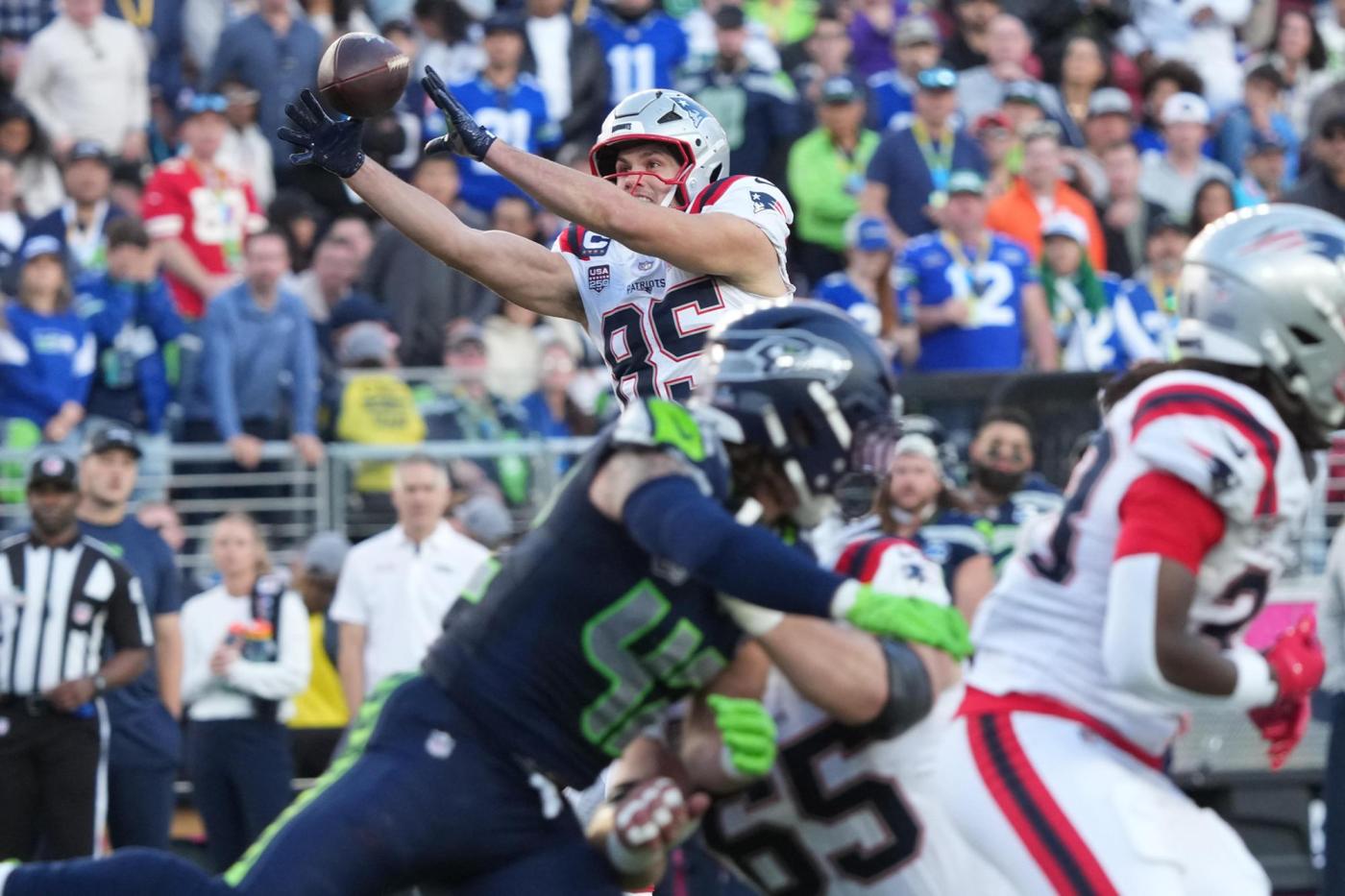
SANTA CLARA, Calif. (AP) — Seattle Seahawks win the second Super Bowl title in franchise history, beating the New England Patriots 29-13.

You can display the Full post on your Blog Page
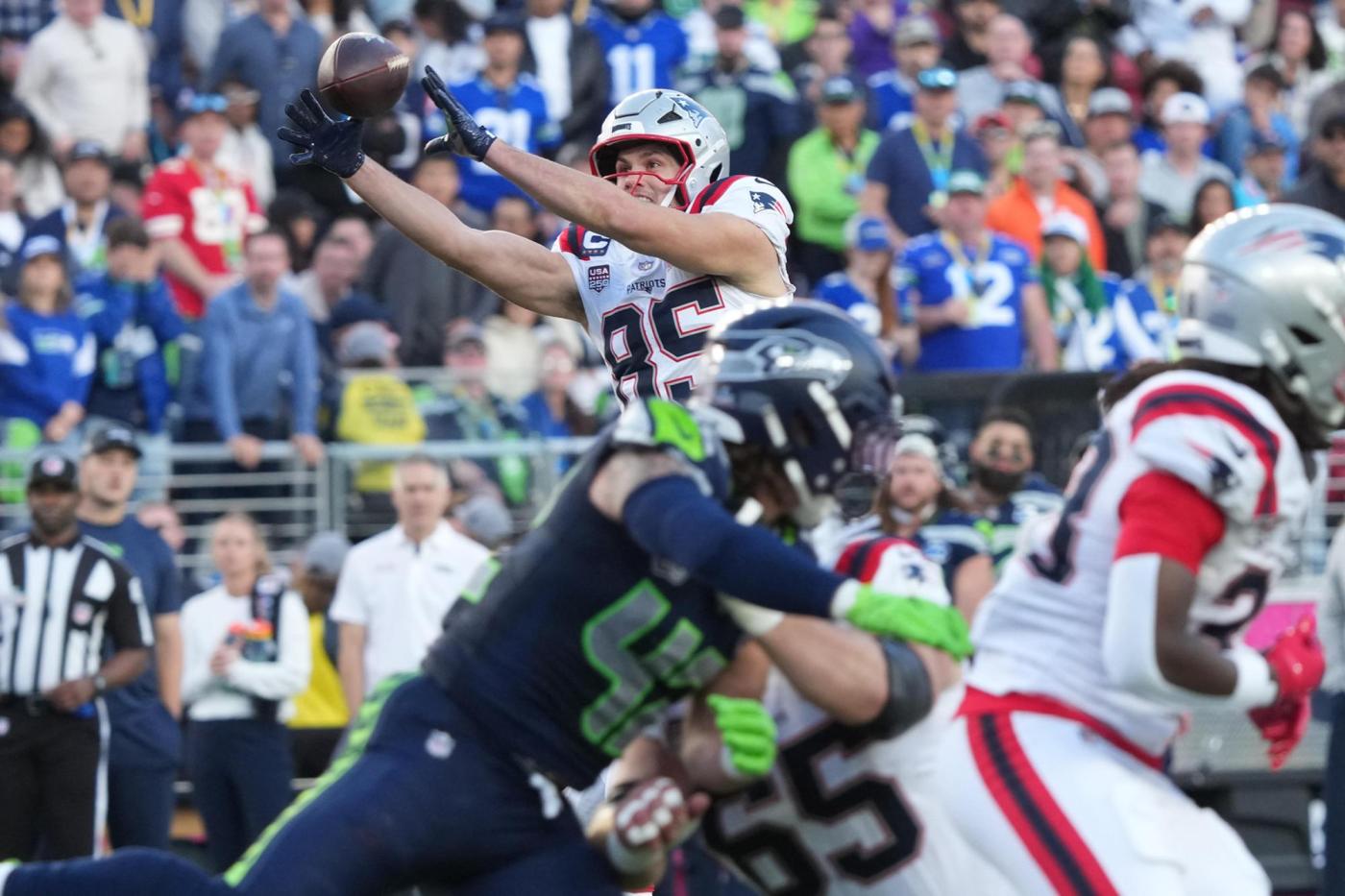
SANTA CLARA, Calif. (AP) — Seattle Seahawks win the second Super Bowl title in franchise history, beating the New England Patriots 29-13.
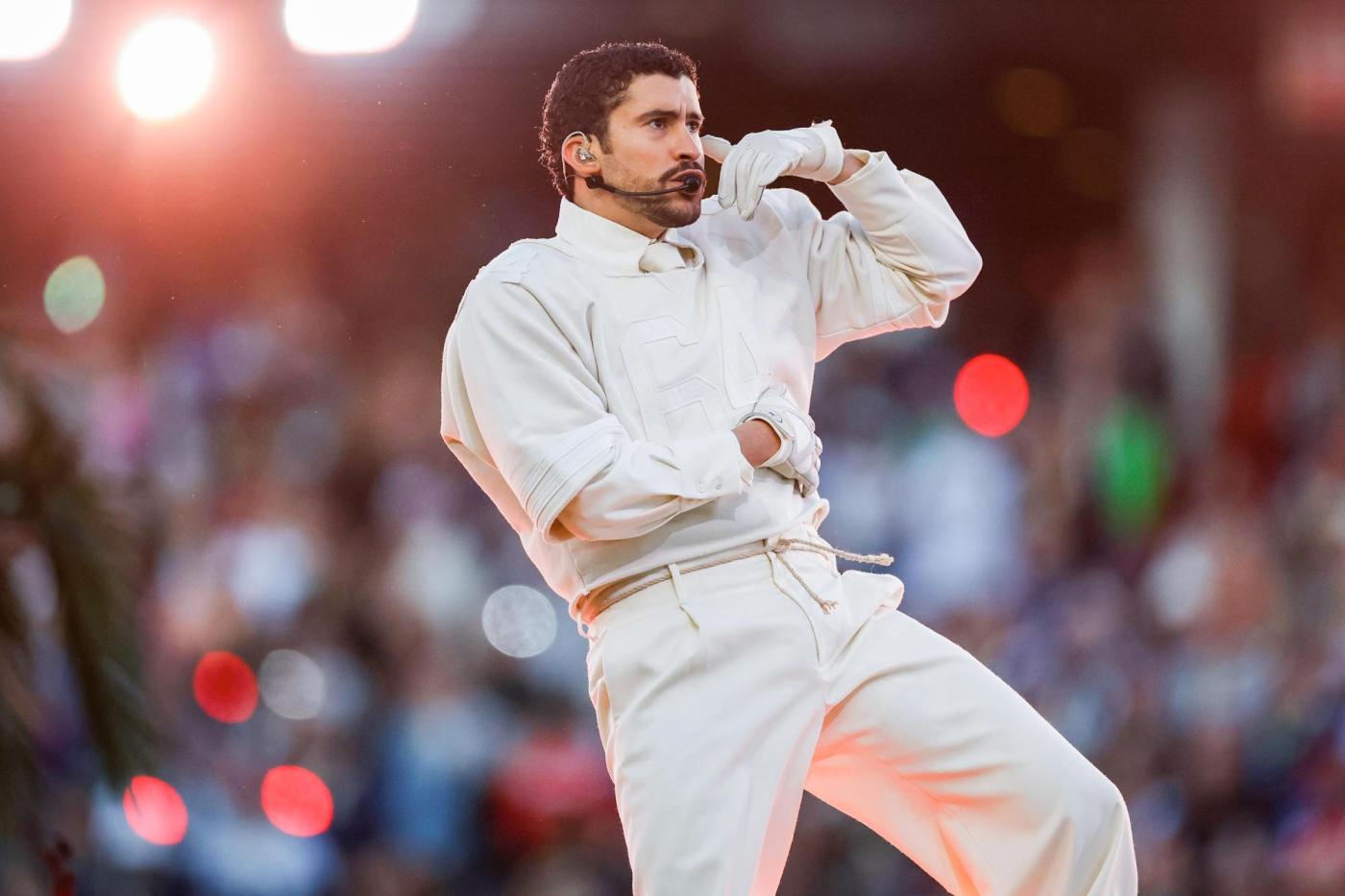
Bad Bunny, a Puerto Rican music star, led a celebratory performance of Latino heritage at the Super Bowl halftime show, the first time in the 60-year history of the NFL’s championship game that the flagship entertainment has been done largely in Spanish.
His 13-minute performance, which included hits including “Nuevayol” and “Baile Inolvidable,” included guest spots by Lady Gaga — who sang a salsa-style “Die With a Smile,” her hit with Bruno Mars, in English — and Ricky Martin. It also featured a set of a New York-style street scene, complete with a bodega bearing a “We accept EBT” lighted sign, referring to electronic benefits cards.
It has been a whirlwind year for Bad Bunny, with an acclaimed album, “Debí Tirar Más Fotos,” that explores Puerto Rican identity and mixes sounds old and new. Last week, it took album of the year at the Grammy Awards, another milestone for Latin music.
His appearance at the Super Bowl had become a political flash point amid the Trump administration’s immigration crackdown, and the NFL’s announcement of him as its halftime star last fall drew waves of condemnation on the right, including from President Donald Trump.
After Bad Bunny said “ICE out” at the Grammy Awards last week, referring to Immigration and Customs Enforcement, there had been speculation that he could make another political statement. There was nothing that explicit or provocative, but after saying “God bless America,” Bad Bunny read a list of countries throughout North and South America — Brazil, Colombia, Venezuela, United States — suggesting that Bad Bunny was offering a meaning of “America” that is wider than the U.S.
Here’s what to know:
— Global superstar: Born Benito Antonio Martínez Ocasio, Bad Bunny has become one of the music world’s biggest stars with booming reggaeton hits that also draw on the nostalgic sounds of salsa and traditional Puerto Rican rhythms. He has been Spotify’s top-streaming artist for four of the past six years.
— A political force: Since early in his career, Bad Bunny has used his platform to draw attention to problems in Puerto Rico including overdevelopment, misconduct by politicians and the government’s poor response to Hurricane Maria. He has also criticized the Trump administration’s immigration policies, saying at the Grammys last week, “ICE out,” referring to Immigration and Customs Enforcement.
—
Trump responds: Trump mocked the halftime show in a social media post, calling it “absolutely terrible, one of the worst, EVER!” He added, “Nobody understands a word this guy is saying.”
— Counterprogramming: Turning Point USA, the conservative organization founded by Charlie Kirk, put on its own streaming event Sunday, the All-American Halftime Show — with “no ‘woke’ garbage” — as counterprogramming. It featured Kid Rock and country singers Brantley Gilbert and Lee Brice.
— ICE presence: Kristi Noem, the homeland security secretary, said last fall that Immigration and Customs Enforcement agents would “be all over” the Super Bowl. Last week, the NFL’s security chief said that although agents from a number of federal agencies would be present, there would be no “immigration enforcement operations” at the game Sunday.
This article originally appeared in The New York Times.
Seahawks dominate Patriots to win Super Bowl
QB Sam Darnold wins Super Bowl championship right where he revived his career with San Francisco
Seattle Seahawks win the Super Bowl
Review: Bad Bunny brought Puerto Rico’s history and culture to a revolutionary Super Bowl show
What happens if Super Bowl LX goes into overtime? Here’s how the NFL’s rules work.
By August Brown, Los Angeles Times
One of the most coveted pieces of Super Bowl merch this year won’t be sold in stores, and the NFL probably doesn’t want to see it in the stands.
It’s a rally towel with a cute, punting bunny graphic from acclaimed L.A. illustrator Lalo Alcaraz on one side, honoring this year’s halftime show performer Bad Bunny. But there’s an unambiguous message on the other side — “ICE OUT.”
Before the game, activists clandestinely distributed 15,000 of them to fans entering Levi’s Stadium for the Super Bowl, seeding grassroots support toward a performer who spoke up for Latinos and immigrants at the Grammy Awards last week.
Though the NFL prefers the game — and its halftime show — not become a referendum on the ICE raids that have brutalized American cities over the last year, the group behind the effort hopes the signs are inescapable in the crowd.
“I’m a big ‘Joy is resistance’ person,” said Shasti Conrad, a leader of the group Contra-ICE and a vice chair of the Democratic National Committee. “Today is a celebration of American sports, and there are opportunities to really be heard here. It’s about drawing attention to show that there is massive support to challenge Trump and the Department of Homeland Security. Any opportunity to push back is important.”
Such pushback was enough to keep President Trump from attending the game in person — “I’m anti-them,” Trump said earlier, about performers Bad Bunny and Green Day. “I think it’s a terrible choice. All it does is sow hatred. Terrible.”
While a competing halftime show from Kid Rock for Turning Point USA attempted to rally the MAGA faithful, a pre-game set from Green Day needled ICE agents: “Wherever you are: quit that s— job you have,” Green Day’s Billie Joe Armstrong said. “Come on this side of the line.”
The NFL keeps tight reins on messaging from its halftime show performers, but this year’s selection of Bad Bunny (a choice announced late last year) carries unusual salience for the battle over raids by federal agents on immigrant communities, which have led to the deaths of two protesters and many more detainees in custody.
On his way to winning the Grammy for album last week, the Puerto Rican megastar was emphatic: “We’re not savage, we’re not animals, we’re not aliens. We are humans and we are Americans,” he said, castigating ICE. “The hate gets more powerful with more hate. The only thing that’s more powerful than hate is love. … So please we need to be different. If we fight, we have to do it with love. We don’t hate them. We love our people. We love our family and there’s a way to do it with love.”
This new bit of culture-jamming protest will continue that sentiment with art from Alcaraz, a famed SoCal cartoonist who worked on the animated series “Bordertown.” Bad Bunny fans will recognize the Puerto Rican pava straw hat in the graphic, along with some unsubtle anti-ICE imagery.
“Art has always been a way to confront hate wherever it appears. When injustice becomes part of everyday life, artists have a responsibility to make it visible,” Alcaraz said in a statement to The Los Angeles Times. “In a public space and cultural moment the whole country is watching, images, color, and movement become a way to express love and push back against hate in plain sight.”
Conrad says Bad Bunny’s been loud about how vital immigrants are to the country, that Latinos should be celebrated, that Puerto Rico is a part of our country that should be celebrated. “I think he’ll use this platform to make sure it’s clear he’s on the right side of history.”
Early in the day Sunday, around 50 activists with Contra-Ice set up along heavily-trafficked areas to pass the towels out to incoming Patriots and Seahawks fans in Santa Clara. It’s “not the same as the people putting their bodies on the line in Minneapolis,” Conrad said, but it’s likely to be extremely visible during the broadcast. “I hope it gives cover to people so they feel like they can participate in ways big and small.”
Several athletes like figure skater Alysa Liu and skier Jessie Diggins have expressed similar sentiments during the Winter Olympics, and the Grammys were rife with artists speaking out against ICE overreach onstage. While Bad Bunny’s performance is likely to be more subtle and celebratory, having the world’s biggest Latin artist play at the most quintessentially American cultural event is a statement in itself.
“With so many cameras and eyes on the stadium, it’s going be hard to miss,” Conrad said. “The vast majority of Americans see ICE’s actions as a massive overreach. They’re terrorizing communities, and even some Trump voters have buyer’s remorse seeing images of a 5-year-old kidnapped and detained. That doesn’t feel American, and folks are saying ‘enough.’ “
©2026 Los Angeles Times. Visit latimes.com. Distributed by Tribune Content Agency, LLC.
By MARIA SHERMAN
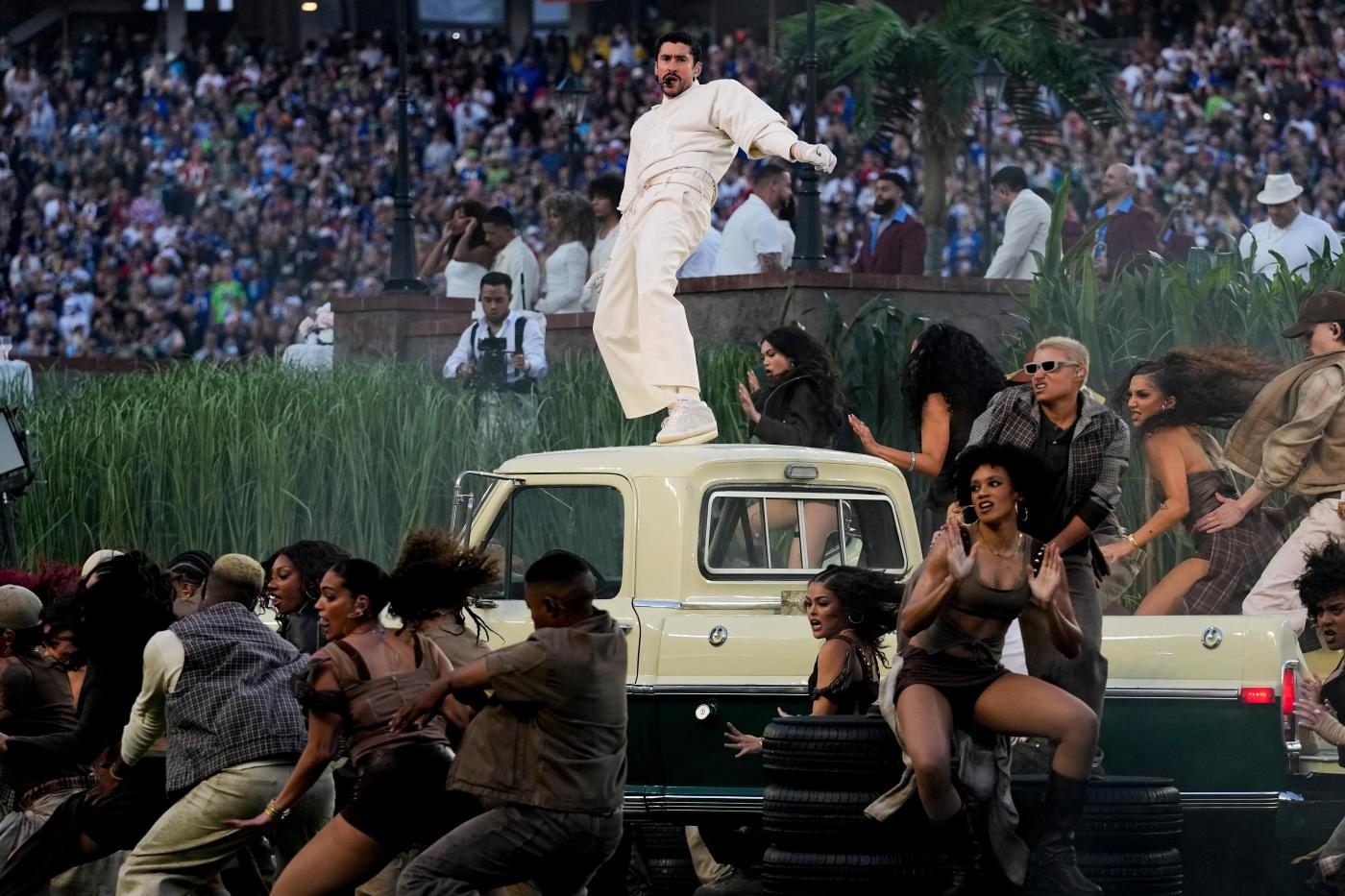
The sun hung low when Bad Bunny emerged in Puerto Rico’s sugar cane fields during his half time show, surrounded by jibaros in pavas (rural farmers in traditional straw hats), viejitos playing dominos (an affectionate term for older men) and a piragua stand (shaved ice) — undeniable symbols of Puerto Rico.
From a small Caribbean island with a complicated colonial history, to the world: The artist born Benito Antonio Martínez Ocasio brought Puerto Rican culture to the Levi’s Stadium in Santa Clara, California, for his 2026 Super Bowl halftime show in what was always going to be a landmark moment for Latinos.
He started with his huge reggaeton hits, “Tití Me Preguntó” moving into “Yo Perreo Sola,” as he remerged on top of the casita (“little house”) from his Puerto Rican residency — Cardi B was a guest at his pari de marquesina, a house party.
Then he crashed through the roof — Daddy Yankee’s “Gasolina” played for a moment, clearly a celebration of the Puerto Rican artists who laid the path for his Latin trap to go global.
“Mi nombre Antonio Martínez Ocasio,” he introduced himself to the crowd in Spanish. “Y si hoy estoy aquí en el Super Bowl 60, es porque nunca, nunca dejé de creer en mí y tú también deberías de creer en ti, vales más de lo que piensas.”
In English: “My name is Benito Antonio Martínez Ocasio, and if I’m here today at Super Bowl 60 it’s because I never, ever stopped believing in myself and you should also believe in yourself, you’re worth more than you think.”
The strings of his song “Monaco” played — then, a surprise Lady Gaga emerged at a wedding, singing her portion of “Die with a Smile,” her collaboration with Bruno Mars, joined by a salsa band.
It gave Benito time for a fashion change — rocking a white suit like a classic salsero — for “Baile Inolvidable” and “NuevaYol,” with a block party set where he took a shot with Tonita, owner of one of the last Puerto Rican social clubs in New York City, Brooklyn’s Caribbean Social Club.
Ricky Martin performed “Lo Que Pasó a Hawaii,” (“What Happened to Hawaii”), a rallying cry for Puerto Rico’s autonomy.
Behind him, jibaros in pavas climbed power poles that exploded, symbolic of Puerto Rico’s frequent blackouts and failing power grid. It queued up a moving performance of 2022’s “El Apagón” (“The Blackout”), in reference to Hurricane Maria, its aftermath and the continued anger and frustration over persistent, chronic power outages.
For around 13 minutes during the halftime show sponsored by Apple Music and Roc Nation, all eyes on the field — and around the world — were on Benito Antonio Martínez Ocasio.
Bad Bunny performed entirely in Spanish — as all of his music is recorded in the language, though he has collaborated with English-language artists. The only English singing came from Gaga. That changed at the end of the set, when he said, “God Bless America,” and then named countries in the Caribbean, Central and South America. “And my mother land, Puerto Rico.”
He ended with “DtMF” as he walked out of the stadium.
For years, Bad Bunny has been one of the most-streamed artists on the planet. And on Sunday, he made it clear that his global popularity translates seamlessly to the biggest stage in the U.S. (Though he is no stranger to it. He previously appeared during the halftime show at Super Bowl LIV in 2020 alongside Jennifer Lopez and Shakira. He sang in Spanish alongside two artists whose bilingual hits helped usher in a crossover era for Latin music in the ’00s.)
Consider Bad Bunny’s 2026 halftime performance the cherry on top of a huge moment for the 31-year-old global superstar, who just 10 years ago was working at an Econo supermarket in Puerto Rico.
Last week, he took home album of the year at the 2026 Grammys for his “Debí Tirar Más Fotos,” an album that marries folkloric tradition in local Borinquen genres like bomba, plena, salsa and música jíbara with contemporary styles like reggaeton, trap and pop. It marked the first time an all-Spanish language album won the top prize.
Like most headliners, Bad Bunny kept details of his halftime performance under wraps ahead of time, though many theorized there would be some kind of political performance. He’s been critical of President Donald Trump in the past and at the Grammys last Sunday, said “ICE out” while accepting a televised award. Bad Bunny’s latest tour skipped the continental U.S.; in an interview he said it was at least partially inspired by concerns that his fans could be targeted by immigration agents.
At a press conference on Thursday, Bad Bunny told Apple Music’s Zane Lowe and Ebro Darden viewers could expect a huge party — and joked that while viewers didn’t need to learn Spanish to enjoy his set; they should learn to dance.
“I want to bring to the stage, of course, a lot of my culture,” he said at the time. “I don’t want to give any spoilers. It’s going to be fun.”
Of course, he delivered on just that.
___
For more on the Super Bowl, visit https://apnews.com/hub/super-bowl