The startup behind Shark Tank’s seaweed-based bacon

posted in: All news | 0

Fans of “Shark Tank” probably recall the 2022 episode with Umaro Foods, a Berkeley company that makes vegan bacon out of seaweed. Investor Robert Herjavec put a slice of the product in his mouth and promptly spit it out – not into a napkin, just on his plate – with a loud “ugh.”

Beth Zotter, CEO of Umaro, recalls dying on the inside at that moment. “Oh yeah — but I don’t think it showed up in my expression,” she says.

Related Articles


Ex-OpenAI workers ask California and Delaware AGs to block for-profit conversion of ChatGPT maker


The European Union hits Apple and Meta with 700 million euros in fines, first under digital rules


Musk says he’ll dedicate more time to Tesla starting in May as company sees big drop in Q1 profit


Google faces off with US government in attempt to break up company in search monopoly case


Big Tech’s ‘Magnificent Seven’ heads into earnings season reeling from Trump turbulence

Zotter wound up having the last laugh on “Shark Tank.” Mark Cuban liked the plant-based bacon and plopped down a $1 million investment in Umaro, which Zotter co-founded with plant biologist Amanda Stiles in 2019. By 2024, the company was gross-margin positive with $1 million in annual-recurring revenue. Today, you can find its applewood bacon in Whole Foods stores across California. Even the NBA’s Chris Paul, a vegan, is now an investor.

Seaweed might not be the first thing you think about sidling up on a plate with fried eggs and hash browns. But it’s high in protein, one of fastest-growing plants on earth and requires no land, fresh water or fertilizer. As the world’s food-supply chain gets ever-more stressed – a result of climate change, population growth, unpopular tariffs and the like – it’s being seen as a viable future food, in the vein of cell-cultured meat and cricket flour.

Umaro still makes bacon, but its bigger business is refining seaweeds like kelp via a proprietary process into proteins and high-value ingredients. Soon, it might also move into biodegradable packaging. Zotter recently took a few minutes to chat about what’s on the horizon.

Q: What’s the best way to describe what Umaro does?

A: We’re not a plant-based meat company. We’re a seaweed-refining company. We figured out a way to unlock the individual molecules in seaweed for higher-value applications. Our process actually produces two products: One is protein and the other is alginate.

Q: What’s the protein used for?

A: What is really popular right now, and I just don’t see any signs of it abating, is protein enrichment. You see protein-enriched pastas and crackers, so I’m excited to work with partners who want to use this ingredient to make things like dumplings and noodles. A lot of people are trying to get more protein into their diets, sort of a result of the GLP-1 and keto diets. They’re like, “If you’re going to eat pasta, at least get some more protein in there and make it nutritionally balanced.”

And the global market of protein is about $25 billion for protein ingredients, isolates and concentrates.

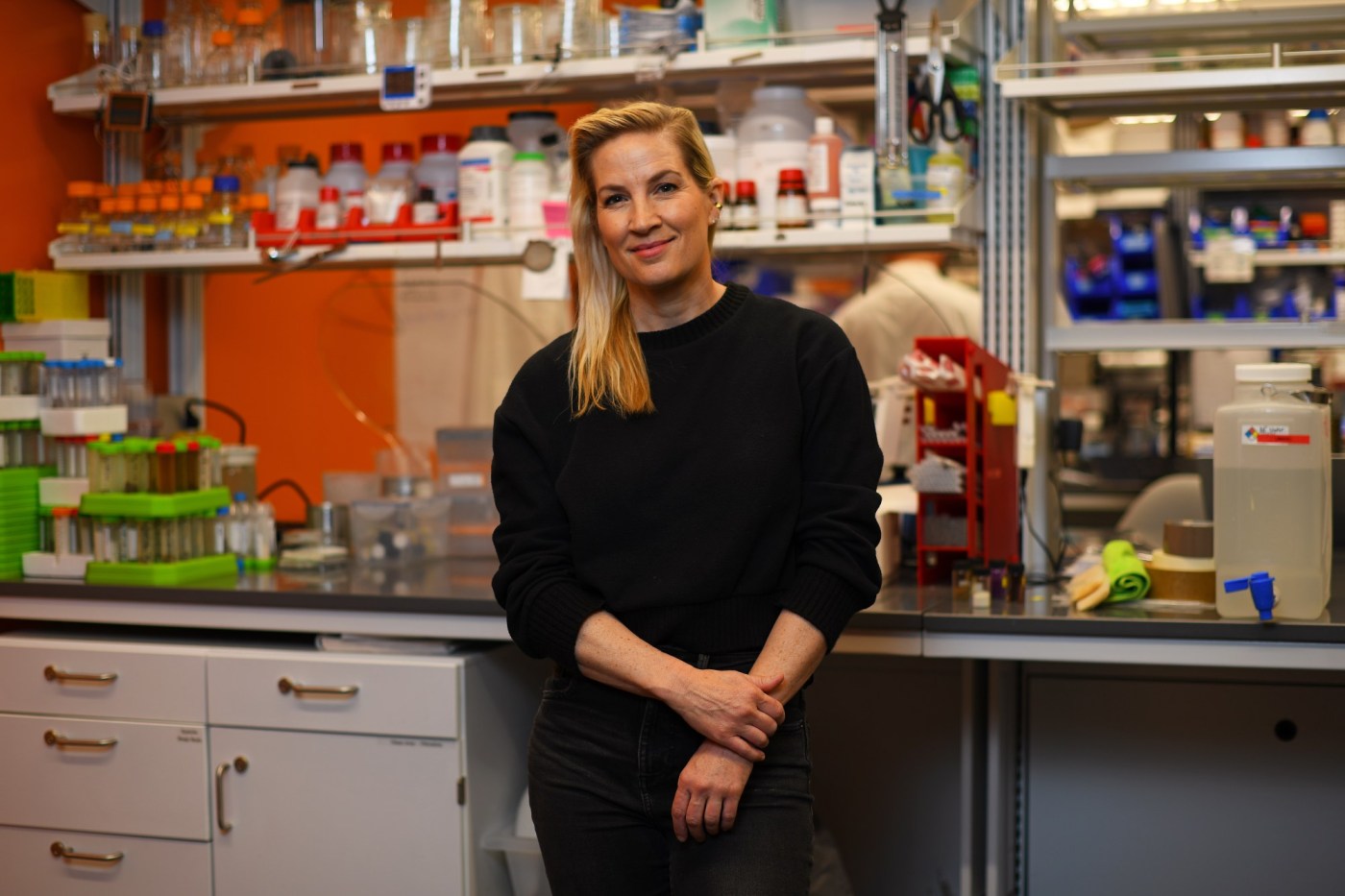
Umaro Foods CEO Beth Zotter holds a container of kelp in her right hand and a container of kelp protein powder in her left while at Bakar BioEnginuity Hub & Bakar Labs in Berkeley, Calif., on Monday, March 24, 2025. Umaro makes bacon and other products out of seaweed. (Jose Carlos Fajardo/Bay Area News Group)

Q: What’s this alginate stuff?

A: It’s a specialty chemical worth a lot of money – like, $20,000 a ton. Alginate is usually added as an ingredient into things you wouldn’t notice. It’s also used for the casings of sausages, so it makes a good, clear film. I don’t know if we’ll actually get this grant or if it will be canceled (by the current administration), but we recently won an award from the Department of Energy to use our alginate to make a biodegradable plastic film. Our partner on that award is (the San Leandro startup) Sway.

Q: Let’s talk about your bacon, because it’s served in about 500 restaurants nationwide – including the Bay Area’s Roam Artisan Burgers – and people seem to enjoy it. What makes it popular?

A: Our innovation is that we’ve used seaweed to encapsulate and contain a whole lot of fat. There’s a lot of really bad vegan bacon out there. Most of the other products are sort of like soggy, soy-based flab. But we’ve figured out a way to use seaweed gels to essentially make a solid, crispy fat analog that delivers a lot of flavor, because fat is where most of the flavor molecules hang out.

Q: This is not a health food?

A: It has a lot of fat, like bacon, but no cholesterol. We do not try to say it’s healthy. It’s just better than bacon…. It is shelf-stable, because it has a low moisture content. A lot of chefs really appreciate that they don’t have to use cold storage for the products. It’s also easy to cook, at two minutes in an air fryer, so in terms of convenience that’s another win.

Q: Where do you see seaweed fitting in with the future of food?

A: We see that climate change is driving major disruptions in water availability, as the weather patterns change. You’ve got increasing droughts and increasing flooding, coupled with extreme heat, which puts even more water stress on crops. That’s just going to be even more of a risk to the stability of our food supply. Drawing more of our protein and macronutrients from the ocean is essentially a risk-mitigation strategy.

Q: Is climate change a threat to seaweed farming?

A: Rising sea temperatures are the biggest threats. But like all the other crops, there are major breeding programs in place to create temperature-tolerant strains of seaweed.

Q: Where do you get the raw ingredients? The California coastline?

Umaro Foods CEO Beth Zotter holds a package of Umaro bacon while at Bakar BioEnginuity Hub & Bakar Labs in Berkeley, Calif., on Monday, March 24, 2025. Umaro makes bacon and other products out of seaweed. (Jose Carlos Fajardo/Bay Area News Group)

A: Seaweed is a very big industry in Asia, and that’s where we get it for now. Eventually, we would like to source from North America. But right now, the supply chain in Asia is much more mature and able to supply the volumes that we need to scale.

What’s compelling about seaweed is that it’s already a commodity. It’s already grown at commercial scale and large volume – 20 million tons a year. What we’re doing that no one else figured out how to do is to refine it into ingredients to allow it to be used in a much larger variety of food products. Especially in the Western world, some people don’t find seaweed very palatable, so by separating it into its protein and other components, we can more easily integrate it into food products.

Q: It sounds nicer than eating insects, at least?

A: I do hope we’re eating more cricket protein in the future. In terms of consumer perception, seaweed is considered to have a “health halo” so people feel healthy when they eat it. So we have that going for us.

Beth Zotter

Age: 47Position: Cofounder and CEO of Umaro FoodsEducation: B.A. Harvard University in environmental science/public policy; M.S. UC Berkeley in energy and resourcesResidence: Albany

Five things about Beth

1. She grew up in Fairfax, Virginia.2. She likes soccer and snowboarding, plus surfing when she gets the chance.3. She’s vegetarian and doesn’t like cooking: “Trader Joe’s pre-cooked lentils are one of my go-tos.”4. She helped build a seaweed farm off the coast of Maine, which survived 20-foot waves during a Nor’easter.5. She likes watching sci-fi shows like “Black Mirror”: “More and more I see reality replicating sci-fi, so I’ve become more of a sci-fi fan.”

Tariff turmoil: How Tesla and other companies are dealing with the uncertainty of the trade war

posted in: All news | 0

By DAMIAN J. TROISE, AP Business Writer

NEW YORK (AP) — Uncertainty over tariffs and an unpredictable trade war is weighing heavily on companies as they report their latest financial results and try to give investors financial forecasts.

Related Articles


Bessent assails IMF and World Bank and says there’s an ‘opportunity for a big deal’ with China


The startup behind Shark Tank’s seaweed-based bacon


Home buyers may face surprise credit hit from student loans


The world’s biggest companies have caused $28 trillion in climate damage, a new study estimates


EVs, tariffs in the spotlight as Chinese automakers take leading role at Shanghai auto show

Some tariffs remain in place against key U.S. trading partners, but others have been postponed to give nations time to negotiate. The tariff and trade picture has been shifting for months, sometimes changing drastically on a daily basis. Those shifts make it difficult for companies and investors to make a reliable assessment of any impact to costs and sales.

On Tuesday, Treasury Secretary Scott Bessent said he expects a “de-escalation” in the trade war between the U.S. and China, but cautioned that talks between the two sides had yet to formally start.

Here’s how several big companies are dealing with the tariff confusion:

Tesla

Tesla is in a better position than most car companies to deal with tariffs because it makes most of its U.S. cars domestically. But it still sources materials from other nations and will face import taxes.

The bigger impact will be seen in the company’s energy business. The company said the impact will be “outsized” because it sources LFP battery cells from China.

The broader trade war could also hurt the company as China, the world’s largest electric vehicle market, retaliates against the U.S. Tesla was forced earlier this month to stop taking orders from mainland customers for two models, its Model S and Model X. It makes the Model Y and Model 3 for the Chinese market at its factory in Shanghai.

CEO Elon Musk, an adviser to President Donald Trump, on Tuesday reiterated that he believes “lower tariffs are generally a good idea for prosperity.” But he added that ultimately the president decides on what tariffs to impose.

Akzo Nobel

The Amsterdam-based maker of paints and coatings for industrial and commercial use said the big risk from tariffs could come in the form of lower demand for its products.

The company said almost all sales of finished goods in the U.S. were locally produced, with the majority of raw materials locally sourced.

“Over the years, we deliberately localized both our procurement and production in the U.S.,” said CEO Gregoire Poux-Guillaume, in a conference call with analysts. “We also largely run China for China and use the rest of Asia instead as an export base.”

The company’s products range from paints and coatings for the automotive industry to the do-it-yourself homeowner. Broader tariffs could squeeze consumers and businesses and hurt sales.

Boston Scientific

The medical device maker said it expects most of the effecs of tariffs to hit the company during the second half of the year, but that it can absorb the impact.

The company raised its earnings and revenue forecasts for the year, despite the tariffs. It estimates a $200 million impact from tariffs in 2025, but said it can offset that through higher sales and reductions in discretionary spending.

The company said it has a long-standing supply chain around the globe and has made significant investments in the U.S.

Boeing

Boeing said much of its supply chain is in the U.S. and many of its imports from Canada and Mexico are exempt from tariffs under an existing trade agreement.

The company does have suppliers in Japan and Italy, but it expects to recover those tariff costs. The net annual cost of higher tariffs on the supply chain is less than $500 million.

A bigger concern is the potential for retaliatory tariffs, which could impact its ability to deliver aircraft. China, a key target for U.S. tariffs, has retaliated in part by no longer accepting deliveries of Boeing aircraft.

AT&T

AT&T, like its peers in the telecommunications sector, faces higher costs for cellphones and other equipment.

The company said it believes it can manage anticipated higher costs, based on the current pause in some tariffs and its supply chain.

“The magnitude of any increase will depend on a variety of factors, including how much of the tariffs the vendors pass on, the impact that the tariffs have on consumer and business demand,” said CEO John Stankey, on a conference call with analysts.

A little-known federal agency is at the center of Trump’s executive order to overhaul US elections

posted in: All news | 0

By CHRISTINA A. CASSIDY

ATLANTA (AP) — Florida’s “hanging chads” ballot controversy riveted the nation during the 2000 presidential contest and later prompted Congress to create an independent commission to help states update their voting equipment.

The U.S. Election Assistance Commission has operated in relative anonymity since, but is now central to President Donald Trump’sexecutive order seeking to overhaul elections. One of the commission’s boards will meet Thursday in North Carolina, the first commission-related meeting since the directives were announced.

Among other things, Trump directed the agency to update the national voter registration form to add a proof of citizenship requirement. But whether the president can order an independent agency to act and whether the commission has the authority to do what Trump wants will likely be settled in court.

FILE – Broward County, Fla. canvassing board member Judge Robert Rosenberg uses a magnifying glass to examine a disputed ballot at the Broward County Courthouse in Fort Lauderdale, Fla., Nov. 24, 2000. (AP Photo/Alan Diaz, File)

Why was the commission created?

Congress approved the Help America Vote Act in 2002 to help states replace outdated voting systems and improve the voting experience.

It passed overwhelmingly with bipartisan support and was signed into law by then-President George W. Bush, a Republican who won the 2000 presidential contest over Democrat Al Gore in a disputed election that went to the U.S. Supreme Court.

The culprit was a method of voting at the time in Florida that relied on so-called punch-card ballots, which required voters to mark their choices using a hand-held stylus. But thousands of voters didn’t punch their ballot choices completely, leaving it to local election workers — some using magnifying glasses — to divine their intent. The resulting chaos in the pivotal swing state and intense national attention turned “hanging” and “pregnant” chads into household terms.

The Supreme Court ultimately stopped the counting, leaving Bush with a 537-vote victory margin that gave him the Electoral Votes he needed to claim the presidency.

The 2002 law was designed to modernize the voting process. Under it, the Election Assistance Commission was given a number of mandates: distribute $2.8 billion in federal money for new voting equipment; create voluntary guidelines for voting systems and establish a federal testing and certification program for them; oversee the national voter registration form; and gather data about federal elections.

The four commissioners who lead the agency are nominated by the president based on recommendations from the majority and minority leaders in the U.S. House and Senate, then confirmed by the Senate. No political party can be represented by more than two commissioners.

At various points, the agency has faced budget cuts, staffing shortages and gridlock caused by vacancies in the commissioner positions. But a consistent budget and a quorum among the commissioners since 2019 has led to increased stability, with election officials praising its efforts in recent years.

FILE – An election worker walks near voting machines at the Fulton County Election Hub and Operation Center, Nov. 5, 2024, in Atlanta. (AP Photo/John Bazemore, File)

Trump wants to put his own stamp on elections

Trump has long been skeptical of how elections are run, making false claims that the 2020 election was “rigged” against him. Multiple reviews of that election confirmed his loss to Democrat Joe Biden.

He has continued to criticize voting processes since his win last November, including in his March 25 executive order, which calls for major changes that include a proof-of-citizenship requirement when people register to vote for federal elections.

While Trump directed several federal agencies to act, two of the order’s major provisions were directed at the Election Assistance Commission.

Related Articles


Israeli strike in Gaza kills 23 as Arab mediators seek long-term truce


US Sen. Dick Durbin of Illinois says he won’t run for sixth term


Trump administration is still resisting the judge’s orders in Abrego Garcia deportation case


IRS turmoil: Leadership churn, worker exodus and threats to groups’ tax-exempt status roil agency


Law firms fighting Trump to ask judges to permanently block executive orders

It was instructed to “take appropriate action” within 30 days to require documentary proof of citizenship on the national voter registration form. The order outlines acceptable documents as a U.S. passport, a REAL-ID compliant driver’s license or official military ID that “indicates the applicant is a citizen,” or a government-issued photo ID accompanied by proof of citizenship.

It also directed the commission to “take all appropriate action to cease” federal money for any state that fails to use the form that includes the proof-of-citizenship requirement, though a handful of states are exempt under federal law. Trump also wants the commission to revise standards for voting systems.

Election experts have said the changes are unrealistic given the process outlined in federal law, which includes reviews by advisory groups and a period for public comment. The last major update to the voluntary guidelines for voting systems took years and was approved by the commission in 2021.

“It’s practically impossible to demand that commissioners of the EAC create wholly new voting system guidelines based on highly questionable criteria within 180 days,” said David Becker, a former Justice Department lawyer who leads the Center for Election Innovation & Research. “It raises the question as to whether this was designed to create chaos since it cannot be practically and competently completed.”

Lawsuits say the commission is independent and not subject to Trump’s orders

Trump’s executive order has prompted lawsuits by voting rights groups, the Democratic Party and Democratic elected officials in 21 states. They say the president is exceeding his authority under the Constitution.

A lawsuit by 19 Democratic attorneys general argues that the commission was created by Congress to operate independently to protect elections and is required to make decisions “under standards of bipartisanship” and in collaboration with the states.

“The Elections EO seeks to eradicate all those safeguards — aiming to force the Commission to rubberstamp the President’s policy preferences on, among other things, voter registration and voting systems,” lawyers for the states wrote.

Justin Levitt, an expert in constitutional law who served previously as deputy assistant attorney general for the Justice Department’s civil rights division, said Congress established the Election Assistance Commission as independent of the president and did not give it any enforcement authority.

“It’s not like most of the other agencies in the federal government, and that makes a big difference in the amount that it can do or will do to further Trump’s agenda,” Levitt said. “Legally, that (order) has as much impact as if I told the EAC what to do or you told the EAC what to do.”

What happens next?

On Thursday, the commission’s Standards Board begins its annual meeting in North Carolina, where it will hear from election officials from across the country, many of whom are likely to have questions about the commission’s role under Trump’s order.

Earlier this month, the commission’s executive director sent a letter to state election officials summarizing the proof-of-citizenship requirement outlined in Trump’s order and asking how states would propose to implement it, if required, and what effect that would have on voter registration.

Chairman Donald Palmer said the agency was following the law, which governs the way any proposed change to the federal form can be made.

“That’s the process that we’ve done in the past, and that’s the process we did this time,” Palmer said. “In my mind, this is really to get information from the states.”

He praised the commission’s ability in recent years to find consensus and noted that the litigation would likely settle questions surrounding the executive order.

“We are in the executive branch, but we are an independent agency. And so those answers will – I’m sure those will be resolved,” he said.

Associated Press writer Ali Swenson in New York contributed to this report.

Scott Hildebrand tapped to be Birchwood Village city administrator

posted in: All news | 0

Scott Hildebrand, city administrator in Landfall and Maple Lake, Minn., is adding another city to his roster.

Hildebrand has been hired to be part-time city administrator/clerk of Birchwood Village. Hildebrand will work 20 hours per week; city officials expect he will work at least four hours in the office, on Thursdays, and be available by appointment if requested, according to the hiring letter.

Hildebrand will be paid $36 per hour and not receive any benefits, the letter states.

The Birchwood Village City Council agreed to a six-month contract with Hildebrand; a review of performance and general satisfaction regarding the relationship will be conducted after 90 days and again at the end of the term.

Mayor Jennifer Arsenault said Tuesday that she and the rest of the council are “delighted” to have Hildebrand on board.

The former city administrator, Rebecca Kellen, resigned on Feb. 7. She had been with the city for almost three years.

According to an article in the Maple Lake Messenger, Hildebrand was hired in July 2024 to be city administrator in Maple Lake, population 2,200. His starting salary was reported to be $101,358.

Since January 2024, he also has served as the part-time city administrator / HRA director in Landfall, an 840-resident mobile home park.

Hildebrand previously served as city administrator of Pine City, Minn.; village administrator of Turtle Lake, Wis.; city administrator of Valley Center, Kan.; professional standards manager of Rochester, Minn., and risk manager/assistant city attorney of Lenexa, Kan. He also has worked as a staff attorney for the League of Kansas Municipalities.

Hildebrand has a law degree from Washburn University School of Law and a bachelor’s degree in business administration from Oklahoma State University. He also has a certified public manager certificate from the University of Kansas.

Hildebrand did not immediately return a phone call or email seeking comment.

Related Articles


Arrest warrant issued for man who skipped end of Lake Elmo rape trial


Forest Lake newspaper will now be based in Stillwater


Woodbury duplex destroyed in fire


A Scandia pastor overcame addiction. Now he confronts the stigma in a podcast aimed at faith communities.


World Tai Chi Day event returns to Stillwater on April 26