Knights, Wild coaches balance stats and video with gut feelings

posted in: All news | 0

In the 2025 version of the National Hockey League, there has never been more information available to head coaches. The 32 men who run the bench for each of the league’s teams have a seemingly endless array of video analysis and advanced statistics and biometric numbers at their disposal.

If they choose to pay attention to all of what’s out there, it could, in theory, give people like Wild coach John Hynes and Golden Knights coach Bruce Cassidy a kind of “money ball on ice” template for finding hidden advantages that others cannot see.

But in both Hynes and Cassidy, you have veteran, experienced coaches who have been through numerous playoff series and sometimes have gut feelings they choose to follow despite what the numbers and the video clips might say.

Asked on Tuesday morning about the fact that the Wild are playing at Xcel Energy Center for the first time in this series, which allows the home coach more freedom to match lines with the visitors, Hynes noted that he has that freedom, and also has the freedom to put all of the analytics aside and roll his lines, which worked in Game 2.

“You want to let your team play,” he said. “We’ve been a good team on the road, too, and I think one of the reasons is you don’t get the matchup. There’s certain things you look for; I think there’s certain times in a game you might adjust.”

Cassidy also cautioned against over-analysis. For example, the top Vegas line of Jack Eichel, Mark Stone and Ivan Barbashev did not appear on the score sheet in the first two games, but Cassidy noted that all three have played well and have had scoring opportunities, so there’s no reason to do an extensive deep dive on their collective slow start.

“It’s early. I have all the faith in the world in those guys,” Cassidy said after Game 2. “And that gets over-analyzed early in a series too.”

That is maybe the mark of success in the modern NHL, the ability to take in all of the information available, and to know when a gut feeling overrules all of it.

“I think as the coach and coaches, and the management, you obsess over it,” Hynes said. “Then you’ve got to take a deep breath and understand that you make decisions for the right reasons, and you’ve just got to keep it simple.”

Silencing the Strip

As should be expected in the entertainment capital of the nation, they put on quite a show when the Vegas Golden Knights play at home. It starts with a parade to the rink an hour before puck drop featuring a drumline and cheerleaders followed by scores of fans for a franchise that is less than a decade old but already has two conference championships and a Stanley Cup to its credit.

Inside T-Mobile Arena there are showgirls and celebrities and an on-ice pregame show featuring castles and dragons and a sword-wielding Golden Knight in shining armor who vanquishes the evil knight who carries a Wild flag, much to the delight of the perpetual sellout crowd.

“This is one of my favorite places to play. I think the crowd’s great. There’s a lot of energy in the building, in the whole city, so that’s what playoffs is. It’s amped up,” Wild forward Matt Boldy said after Game 2. “Everything’s faster, quicker. It’s a different game. So, you want that energy, even though they’re not rooting for us, you try to use that as much as you can.”

Coming back to Minnesota for Game 3 after splitting their first two games in Nevada, the Wild players talked about a similar energy in downtown St. Paul, and the passion for the game in a community and a state where hockey is generations-old part of the culture.

“It just gives us energy. It’s a great building to play in, obviously,” Wild forward Gustav Nyquist said following the team’s Tuesday morning skate. “It’s gonna be loud tonight, so we’re excited for the game.”

And after all of the lights and noise and distractions, when the road team scores the first four goals of the game, leaving the Knights partisans stunned, it’s even more fun to visit Vegas.

“When they’re quiet, it means you’re doing a great job,” Boldy said.

Related Articles


NHL playoffs: Wild’s top line has gotten better of Knights


Wild dominate Vegas early, even series 1-1


Wild want ‘shot mentality’ to foil Vegas’ block party


Wild: Zeev Buium’s NHL debut was a mix of poise and promise


Wild forward Ryan Hartman didn’t take the Knights’ Game 1 bait
In unintended filing, federal attorneys poke holes in Trump administration’s effort to end NYC toll

posted in: All news | 0

By ANTHONY IZAGUIRRE

The federal prosecutor’s office in Manhattan accidentally filed an internal memo that poked holes in the Trump administration’s strategy to kill New York’s toll on driving in Manhattan — arguing the government should change tactics if it wants to block the nascent program.

Related Articles


Hegseth had an unsecured internet line set up in his office to connect to Signal, AP sources say


A wrong turn onto a bridge at the US-Canada border has a Detroit woman facing deportation


Green energy supporters pushed for faster permitting. Trump is doing it, but not for solar or wind


RFK Jr. recounts heroin addiction and spiritual awakening, urges focus on prevention and community


Judge blocks parts of Trump’s overhaul of US elections, including proof-of-citizenship requirement

The memo, intended for a U.S. Department of Transportation attorney, was inadvertently filed Wednesday night in New York’s lawsuit against the administration over its efforts to shut down the fee.

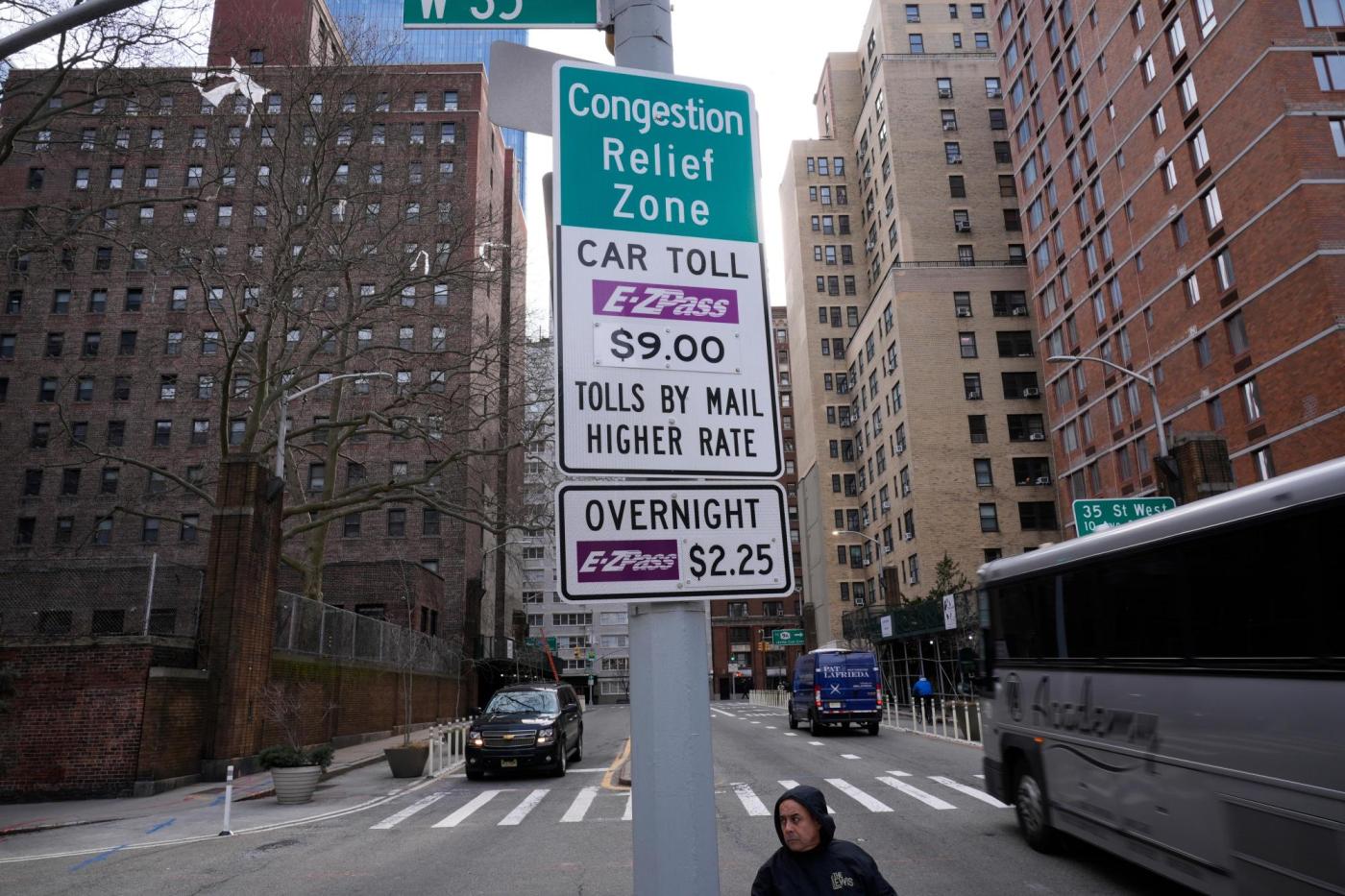
The blunder came days after the Trump administration gave New York a third ultimatum to stop collecting the toll, which started in January and charges most drivers $9 to enter the most traffic-snarled part of the borough.

In the memo, three assistant U.S. attorneys from the Southern District of New York wrote that there is “considerable litigation risk” in defending Transportation Secretary Sean Duffy’s decision to pull federal approval for the toll and that doing so would likely result in a legal loss.

Instead, the three attorneys wrote, the department might have better odds if it tried to end the toll through a different bureaucratic mechanism that would argue it no longer aligns with the federal government’s agenda.

Nicholas Biase, a spokesperson for the Southern District of New York, said in a statement Thursday that the filing was “a completely honest error and was not intentional in any way.”

The Transportation Department, meanwhile, took aim at the Manhattan federal prosecutor’s office and said it was pulling the Southern District off the case.

“Are SDNY lawyers on this case incompetent or was this their attempt to RESIST? At the very least, it’s legal malpractice,” a spokesperson for the agency said.

The statement comes after several top prosecutors in the office resigned and defiantly criticized their bosses in Washington, saying they were asked to handle a now-dismissed corruption case against Mayor Eric Adams in a manner they concluded was unethical, improper and wrong.

Jay Clayton, President Donald Trump’s nominee to lead the office, was sworn in this week.

Trump, whose namesake Trump Tower is within the “congestion pricing” tolling zone, has been a vocal critic of the program and had promised to kill it once he took office.

His administration in February ordered the state to shutter the program, saying it was revoking federal approval for the toll. Duffy has described the program as “a slap in the face to working class Americans and small business owners.”

Within minutes, New York filed suit in federal court to keep the program alive and said it would continue to collect the toll until ordered to stop by a judge.

The Transportation Department repeatedly has urged New York to shut down the toll and has threatened to pull funding and approvals from various transportation projects if it fails to comply.

The toll amount varies on the kind of vehicle and time of day. It has drawn some pushback from suburban commuters in the metropolitan area because it comes on top of existing tolls for crossing bridges and tunnels into the city.

Most drivers end up paying $9 to enter Manhattan south of Central Park on weekdays between 5 a.m. and 9 p.m. and on weekends between 9 a.m. and 9 p.m. The toll costs $2.25 during off hours for most vehicles.

New York officials have argued the program is helping to reduce traffic in the city and will eventually bring in billions of dollars for its subways, commuter trains and public buses.

Texas lawmakers approve $1B private school voucher plan

posted in: All news | 0

By JIM VERTUNO and NADIA LATHAN

AUSTIN, Texas (AP) — Texas lawmakers on Thursday passed a $1 billion education bill that allows families to use public money to pay for private school tuition, a major victory for school voucher proponents nationwide that was cheered on by President Donald Trump.

Related Articles


Judge blocks Trump push to cut funding to public schools over diversity programs


A new Minnesota cover crop could help make air travel greener, UMN St. Paul researchers say


International students stripped of legal status in the US are piling up wins in court


5 Concordia University graduates win first round in DHS lawsuit


Federal education cuts and Trump DEI demands leave states, teachers in limbo

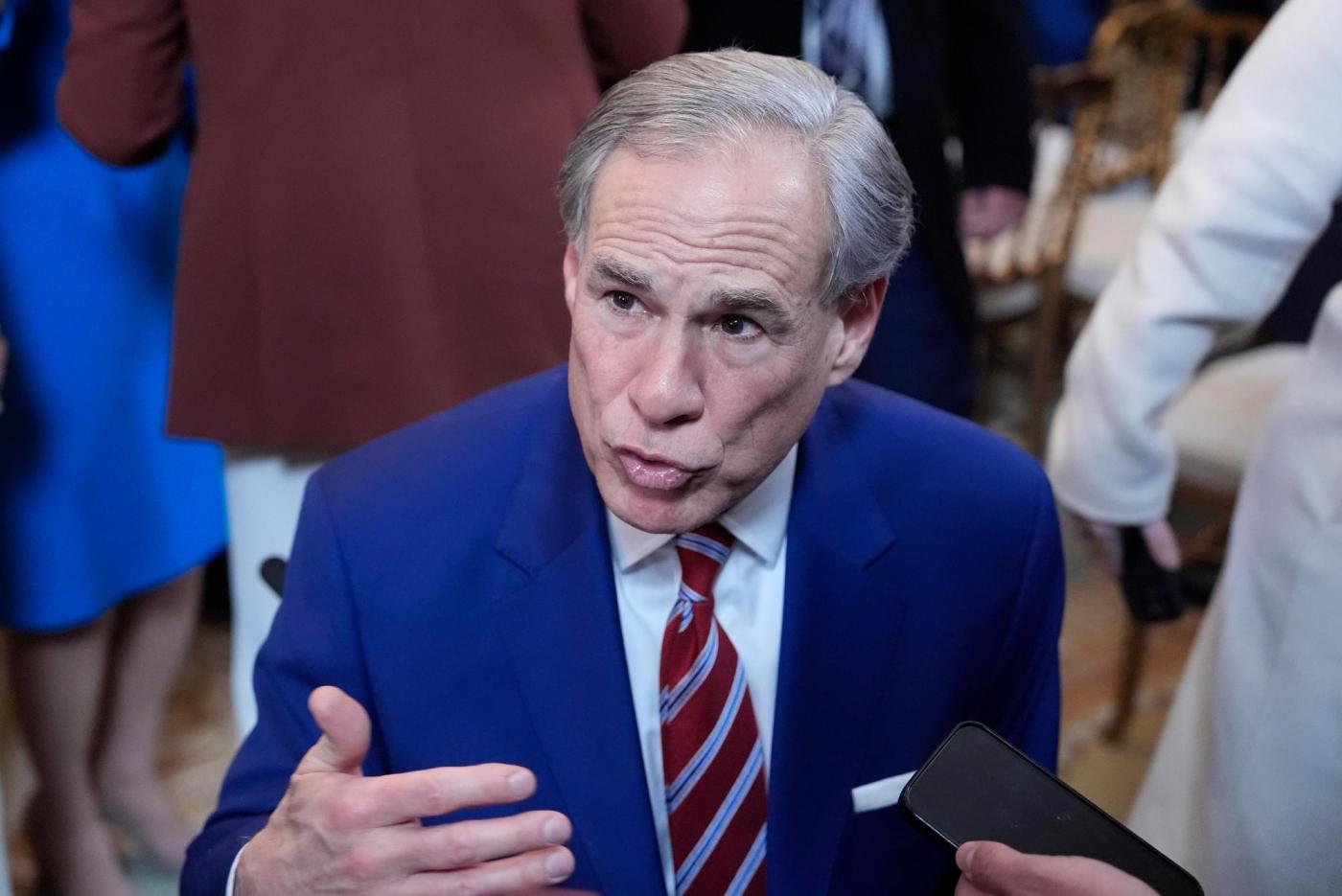
The measure won final approval from the state Senate and now heads to Republican Gov. Greg Abbott, who had muscled the GOP-majority Legislature to pass the bill and has vowed to quickly sign it into law.

More than 30 states have implemented some sort of voucher program in the U.S., and about a dozen states in recent years have launched or expanded programs that make most students eligible. Texas’ version will be among the largest in the nation and is seen as a major victory for proponents who hope to push a similar effort on the federal level.

“School choice has come to Texas,” said Lt. Gov. Dan Patrick, a Republican who controls the Senate who has pushed for a voucher program for nearly 20 years.

For decades, the push in Texas had failed in the face of stiff resistance from Democrats and rural Republicans who called it a threat to public schools in a state that now has more than 5 million students in public classrooms.

But supporters gradually gained ground and Abbott, a three-term governor, threw his political muscle behind it in the 2024 elections by backing numerous candidates who would support it. That effort built the majority support the issue needed after decades of failure.

Trump played a key role in getting the measure through a critical state House vote a week ago, when he spoke with a group of Republican lawmakers on a speakerphone call and urged them to approve it.

The program in its first year would be capped at $1 billion and used by up to 90,000 students, but it could grow to nearly $4.5 billion per year by 2030. The money can be used for private school tuition or costs for home-schooling and virtual learning programs. Families could get up to $10,000 each year per student under the program, and a student with disabilities would be eligible for as much as $30,000 per year.

Supporters of the measure say the vouchers can help parents get their children out of poor-performing public schools and create competition that will force public schools to improve.

“The one thing that is missing from our education process that has really made America great is competition,” said Republican state Sen. Bob Hall.

Critics, however, argue it will weaken public schools by draining money and resources and giving them to private schools, who can have selective enrollment and may not operate under some of the same rules.

And they argue it will put money in the pocket of wealthier families already sending their children to costly private schools.

The bill is “not about ‘school choice,’” the Senate Democratic caucus said in a statement. “It’s about public subsidization of private schools’ choice. It’s a step backwards for Texas.”

The issue is not settled among Republicans nationwide. On Monday, North Dakota’s Republican Gov. Kelly Armstrong vetoed a private school voucher program in that state, saying the bill fell “far short of truly expanding choice as it only impacts one sector of our student population.”

Lathan is a corps member for the Associated Press/Report for America Statehouse News Initiative. Report for America is a nonprofit national service program that places journalists in local newsrooms to report on undercovered issues.

A wrong turn onto a bridge at the US-Canada border has a Detroit woman facing deportation

posted in: All news | 0

By COREY WILLIAMS

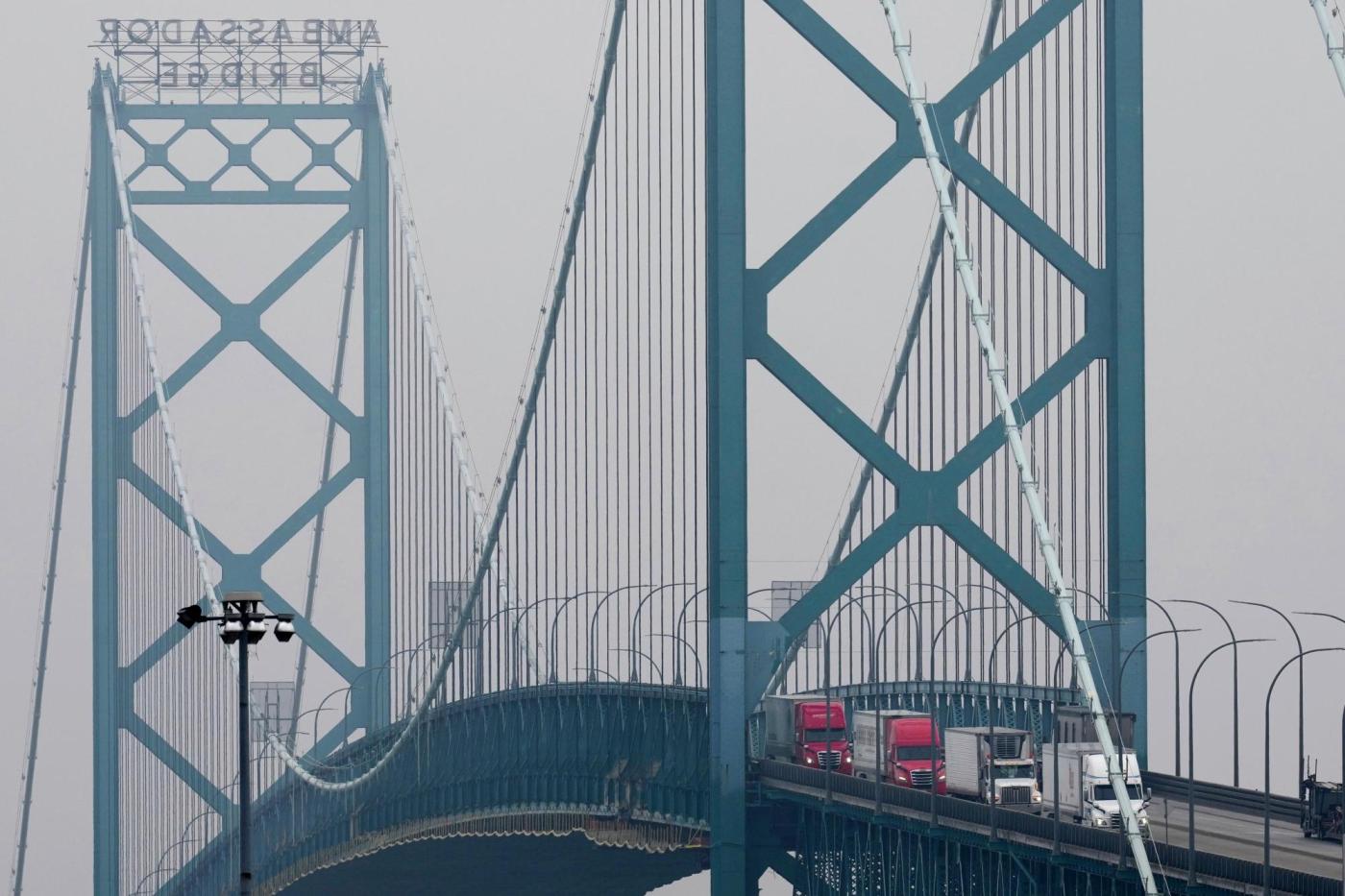
DETROIT (AP) — A woman from Guatemala says she and her two U.S.-born children were held for nearly a week by customs agents in Detroit after a phone app’s directions to the nearest Costco led them to an international bridge connecting the city to Canada.

Related Articles


Green energy supporters pushed for faster permitting. Trump is doing it, but not for solar or wind


RFK Jr. recounts heroin addiction and spiritual awakening, urges focus on prevention and community


Judge blocks parts of Trump’s overhaul of US elections, including proof-of-citizenship requirement


Judge rules the Trump administration violated a 2019 settlement in deporting a man to El Salvador


Lawsuits take aim at voter-approved transit projects worth billions

She now faces removal proceedings in June in immigration court, according to Ruby Robinson, senior managing attorney with the Michigan Immigrant Rights Center.

On Thursday, Robinson, U.S. Rep. Rashida Tlaib, and the ACLU of Michigan called for more accountability and transparency by U.S. Customs and Border Protection on detentions along the nation’s northern border with Canada.

“Our neighbors and families should not be disappearing because they made a wrong turn,” Tlaib said.

Though the northern border sees far fewer encounters with migrants than the U.S.-Mexico border, the woman’s case is not uncommon, according to Tlaib.

The Michigan Democrat said she was told on March 21 by CBP that about 213 people had been detained at the same location since January, with more than 90% mistakenly driving onto the bridge’s toll plaza. Tlaib also said she was told 12 families had been detained in the same building where Robinson’s client was held.

“We don’t know what exactly is happening. There’s a lack of transparency,” she said, adding that similar detentions likely are occurring elsewhere along the 5,525-mile northern border.

But Customs and Border Protection said agents encountered just over 200 undocumented people from Jan. 20 to March 21 at crossings in Detroit. About half were detained and turned over to ICE after secondary processing was complete, according to a CBP spokesman.

The Michigan Immigrant Rights Center is representing the Guatemalan woman. Robinson declined to release her name or age, only confirming that she has been in the U.S. about six years, but has no legal status. Her daughters, ages 5 and 1, were born in the U.S. Their father lives in Detroit.

She lives in Southwest Detroit, a neighborhood with a large Hispanic population that sits in the shadow of the Ambassador Bridge and just across the Detroit River from Windsor, Ontario.

On March 8, the woman and her daughters were in a vehicle being driven by her 19-year-old brother. She used a phone app to find the nearest Costco and didn’t realize the closest store was on the Canadian side of the bridge, Robinson said during a Zoom call with reporters.

They drove onto the bridge’s toll plaza, but didn’t go past the toll booths. They were stopped by CBP agents and taken to a nearby building where she was questioned and fingerprinted. She also signed a form stating she entered the U.S. illegally.

She said agents told her she was going to be deported and encouraged her to take her daughters with her back to Guatemala, according to Robinson.

They were held in a small, windowless room, slept on cots and given microwaveable food like ramen noodles and oatmeal. They were only allowed to leave the room to use the restroom and shower, she said.

By Monday night, March 10, her youngest daughter began developing a fever. The woman said agents told her they had no medication for the child. The older daughter would soon come down with a cough.

While going to the restroom that Tuesday, the family finally saw her brother in a hallway. The woman said he was in shackles. Her brother also has no legal status in the U.S. and works as a roofer with the father of her children, she said.

On Wednesday night, the girls were turned over to the woman’s sister-in-law. She was released the next day.

“When individuals violate immigration laws, their choices make them subject to detention and removal,” CBP Assistant Commissioner for Public Affairs Hilton Beckham said in a statement. “She admitted to unlawfully entering the U.S. in 2018. Per policy, CBP worked to find a suitable guardian for her U.S. citizen children. However, she initially chose to keep them with her, prolonging the detention period. Once the children were placed with a guardian, she was transferred to ICE.”

Such detentions are part of a pattern where short-term facilities are being used long-term by CBP, said Tlaib, who serves on the U.S. House Oversight Committee.

“The erosion of due process is a threat to all of us — no matter your name, no matter immigration status,” Tlaib said. “A wrong turn should not lead to a disappearance and an erosion of someone’s due process.”