One of the greatest perks of working for New York Times Cooking is that once in a while, I get to spend time in our gorgeous, light-filled studio working with our wildly talented, kind and funny food stylists, photo editors and photographers. (Pinch me.)
Despite what you may read on the internet about stylists using Elmer’s glue for milk or motor oil for syrup, what you see in our recipe photos is real, live food that has been made following the recipe to a T.
This means that, once we’ve gotten the perfect shot and the dish has been slid onto the communal table, all of us descend upon it, forks at the ready. I think every one of our recipes is delicious, but sometimes, as in life, there are standouts. Below are a few dishes that we couldn’t stop talking about (and eating).
1. Chicken Florentine
Chicken Florentine. A rich, shallot-y white wine sauce that’s been thickened with cream cheese coats pan-seared boneless chicken breasts and wilted spinach in this outrageously good dish from Dan Pelosi. Food styled by Simon Andrews. (Christopher Testani/The New York Times)
In this weeknight recipe, perfectly browned chicken breasts are smothered in a creamy spinach sauce that comes together with ease, all in one skillet. The highlight of this recipe is the buttery white-wine sauce, which is enriched and thickened with a secret ingredient: cream cheese. The sauce nicely coats the wilted spinach, though you can use sun-dried tomatoes, sauteed mushrooms, or canned artichokes instead of, or in addition to, the spinach. A side of mashed or roasted potatoes would round out this dish well, but some crusty bread to sop up every last bit is a must.
By Dan Pelosi
Yield: 4 servings
Total time: 30 minutes
INGREDIENTS
1/4 cup all-purpose flour
1/4 cup grated Parmesan, plus more for serving
Salt and black pepper
4 thin-cut boneless skinless chicken breasts (about 1 pound)
1 tablespoon olive oil
4 tablespoons butter (salted or unsalted)
1 medium shallot, minced
2 garlic cloves, minced
1/2 cup dry white wine
1/2 cup chicken broth
1 teaspoon dried basil (or 1 tablespoon chopped fresh basil)
1 teaspoon dried oregano (or 1 teaspoon chopped fresh oregano)
1/2 cup heavy cream
2 ounces cream cheese, at room temperature
2 cups packed baby spinach (about 3 ounces)
DIRECTIONS
1. On a plate, mix together the flour, Parmesan and 1 teaspoon each salt and pepper. Dredge each chicken breast in the mixture, evenly coating on both sides.
2. Heat a large pan over medium. Add olive oil and 2 tablespoons of butter to the pan and melt to combine. Add the chicken and cook until golden brown (but not cooked through), about 4 minutes on each side. Remove chicken from pan and set aside.
3. Add remaining 2 tablespoons of butter to the pan and let it melt. Add shallot, garlic and a pinch of salt and cook, stirring until the shallot is softened and the garlic is aromatic, about 2 minutes.
4. Add wine, broth, basil and oregano, and stir, scraping the browned bits from the bottom of the pan, until the liquid has reduced by about half, 3 to 4 minutes. Add the heavy cream and cream cheese and stir, allowing the cream cheese to soften and melt, until a thick sauce forms, about 6 minutes. Add baby spinach and stir until it is folded into the cream sauce and the spinach is beginning to wilt, about 1 minute.
5. Return the chicken breasts to the pan and simmer until the chicken is cooked through, 4 to 5 minutes. Remove from heat and serve immediately with freshly grated Parmesan on top.
2. Salmon Burgers
Salmon burgers. If you have a bag of frozen salmon in your freezer, it’s longing to be made into Mark Bittman’s salmon burgers. Food styled by Simon Andrews. (Christopher Testani/The New York Times)
For this recipe, you’ll want to grind part of the salmon in a food processor: It’ll bind the rest, which can be coarsely chopped to retain moisture during cooking. Some breadcrumbs keep the burger from becoming as densely packed as (bad) meatloaf. This approach, along with a few simple seasonings, produces delicious burgers in not much more time than it takes to make one from ground chuck. The only real trick is to avoid overcooking. Whether you saute, broil or grill this burger, it’s best when the center remains the color of … salmon. Two or three minutes a side usually does the trick.
By Mark Bittman
Yield: 4 servings
Total time: 20 minutes
INGREDIENTS
1 1/2 pounds skinless, boneless salmon
2 teaspoons Dijon mustard
2 shallots, peeled and cut into chunks
1/2 cup coarse breadcrumbs
1 tablespoon capers, drained
Salt and black pepper
2 tablespoons butter or olive oil
Lemon wedges
Tabasco sauce
DIRECTIONS
1. Cut the salmon into large chunks, and put about a quarter of it into the container of a food processor, along with the mustard. Turn the machine on, and let it run — stopping to scrape down the sides if necessary — until the mixture becomes pasty.
2. Add the shallots and the remaining salmon, and pulse the machine on and off until the fish is chopped and well combined with the puree. No piece should be larger than a 1/4 inch or so; be careful not make the mixture too fine.
3. Scrape the mixture into a bowl, and by hand, stir in the breadcrumbs, capers and some salt and pepper. Shape into four burgers. (You can cover and refrigerate the burgers for a few hours at this point.)
4. Place the butter or oil in a 12-inch nonstick skillet, and turn the heat to medium-high. When the butter foam subsides or the oil is hot, cook the burgers for 2 to 3 minutes a side, turning once. Alternatively, you can grill them: Let them firm up on the first side, grilling about 4 minutes, before turning over and finishing for just another minute or two. To check for doneness, make a small cut and peek inside. Be careful not to overcook. Serve on a bed of greens or on buns or by themselves, with lemon wedges and Tabasco or any dressing you like.
3. Mie Goreng
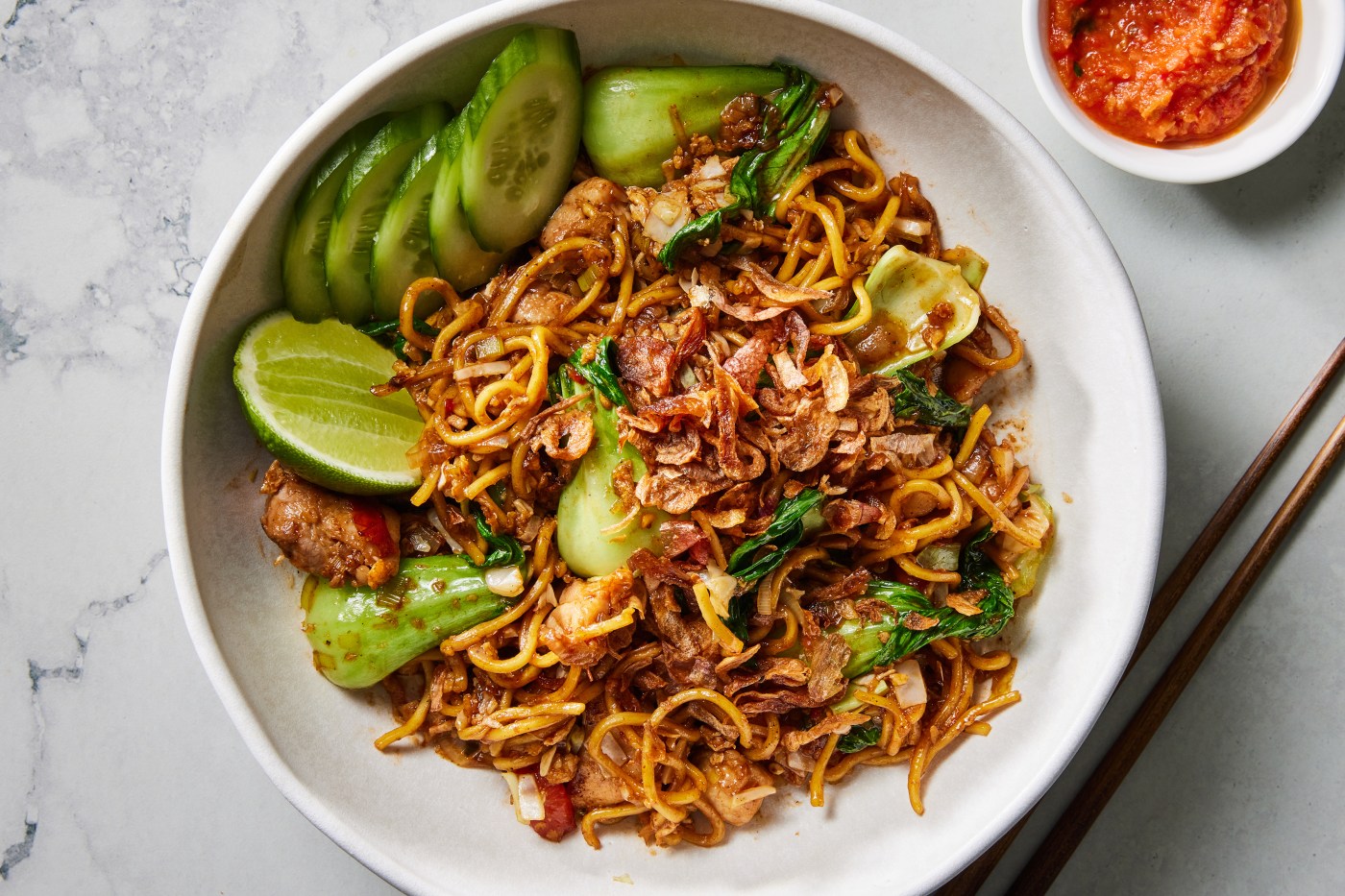
The key to achieving the signature sweet-smoky-salty flavor of Indonesian stir-fried noodles is to let the noodles cook, undisturbed, over high heat until you see small wisps of smoke. Javanese sweet soy sauce, also known as kecap manis, can be very sweet, so giving it a good cook will bring just enough of a bitter edge to its sweetness. If you’re making this dish for a crowd, don’t prepare more than two servings at a time, otherwise the noodles will crowd the pan and not brown properly, and you won’t get that smoky wok hei flavor. But don’t let all of this scare you from making mie goreng. This recipe, from Zulfikar Fahd, chef and owner of Java Bali Kitchen, an Indonesian pop-up restaurant in Toronto, is satisfying and versatile, a quick and filling meal that uses up the odds and ends in your fridge.
Recipe from Zulfikar Fahd
Adapted by Mia Leimkuhler
Yield: 2 servings
Total time: 30 minutes
INGREDIENTS
Vegetable or peanut oil, as needed
2 boneless, skinless chicken thighs, cut into 1-inch cubes, or 8 large peeled, deveined shrimp (about 1/2 pound), optional
Kosher salt
Ground white pepper
2 eggs
1 leek, white and light green part only, halved lengthwise and thinly sliced
2 shallots, chopped
4 garlic cloves, chopped
4 to 6 cherry tomatoes, halved
6 ounces cooked egg noodles, thin vermicelli or thick, flat rice noodles
2 tablespoons oyster sauce
1 to 4 teaspoons store-bought or homemade sambal oelek (optional)
3 tablespoons kecap manis (also sometimes labeled sweet soy sauce, preferably Javanese brands like ABC or Bango; see Tip below), plus more to taste
1 cup chopped green cabbage
4 bok choy or gai lan (Chinese broccoli), separated into individual stalks
1 tablespoon toasted sesame oil
Store-bought or homemade crispy fried shallots, lime wedges and sliced cucumber for serving
DIRECTIONS
1. Heat a wok or large cast-iron skillet on high until it’s very hot. (You should be able to hold your hand a few inches above the pan for just a few seconds.) Add 2 to 3 tablespoons of oil. If using chicken or shrimp, add it to the pan, season with salt and white pepper and cook until beginning to brown, 2 to 3 minutes.
2. Crack the egg into the wok, seasoning with more salt and white pepper, and scramble together with a spatula until the egg is just cooked. Turn the heat down to medium.
3. Add the leek, shallots and garlic, and stir until they start to soften and are fragrant, about a minute more.
4. Add the cherry tomatoes and egg noodles, and season with salt and white pepper. Stir until everything is combined. Stir in the oyster sauce and optional sambal oelek. If the noodles stick to the wok, add another tablespoon of oil.
5. Turn the heat to high, then add the kecap manis and quickly stir everything to combine. Let cook, undisturbed, over high heat until you see small wisps of smoke coming out of the noodles, about 1 minute, then stir again. The noodles will begin to turn darker in color and caramelize, taking on a smoky flavor called wok hei. Repeat this process, scraping the sides of your wok in between, until at least half the noodles are darkened, but not burned, 2 to 5 minutes more. Taste, adding more salt, white pepper and sweet soy sauce if needed.
6. Add the cabbage and bok choy and stir until combined. Turn off the heat and drizzle with the sesame oil.
7. Top each serving with crispy fried shallots and serve with lime wedges and cucumber slices.
Tips: Kecap manis, or sweet soy sauce, can be found in Asian grocery stores. You can also make your own with this recipe from chef Lara Lee: In a medium saucepan, bring 3/4 cup light soy sauce or gluten-free tamari with 1 1/4 packed cups palm sugar or light or dark brown sugar to a simmer over medium. Reduce heat to low and cook until mixture thickens to the texture of maple syrup, about 5 minutes. Let cool. Cover and refrigerate for up to a few weeks. Makes about 3/4 cup.
4. Cheesy Ham and Potato Soup
Cheesy ham and potato soup. Such simple, economical ingredients – ham, potatoes, broth, aromatics and butter – yield silky, luxurious results. Food styled by Rebecca Jurkevich. (David Malosh/The New York Times)
Cooked ham lends a surprising amount of flavor to this simple, hearty soup. Easy to put together using leftover ham or a ham steak, this recipe is perfect for a weeknight or a busy weekend. The ham, joined by soft chunks of potato as well as soup all-stars carrot, onion and celery, is bathed in a creamy broth thickened with a quick roux made from flour and butter. The soup, served hot and topped with a mound of melty cheddar and chopped fresh scallions, makes second helpings hard to resist.
By Dan Pelosi
Yield: 6 to 8 servings
Total time: 35 minutes
INGREDIENTS
2 tablespoons extra-virgin olive oil
1/2 white or yellow onion, diced
2 stalks celery, diced
1 medium carrot, diced
1 garlic clove, minced
Salt and freshly ground black pepper
4 cups chicken broth
1 1/2 pounds russet potatoes, peeled and cut into 1-inch cubes (about 4 cups)
1 1/2 to 1 3/4 cups diced cooked ham (8 to 9 ounces)
5 tablespoons unsalted butter
1/4 cup all-purpose flour
2 cups whole milk
Shredded cheddar, for serving
Chopped scallions, for serving
DIRECTIONS
1. Heat the olive oil in a large pot or Dutch oven over medium. Add the onion, celery, carrot, garlic and 1 teaspoon each salt and pepper and cook, stirring, for 2 to 3 minutes, until the onion is just softened and everything is fragrant.
2. Adjust the heat to medium-high, then add the broth, potatoes and ham to the pot and cover to bring to a boil. Reduce heat and simmer, covered, until potatoes are soft when pierced with a fork, 10 to 15 minutes.
3. Meanwhile, in a small saucepan over medium heat, melt the butter. Add the flour and whisk until light brown and fragrant, about 1 minute. Add milk and continue to whisk until thickened, making sure no lumps form, 4 to 5 minutes more.
4. Add the milk mixture to the pot. Stir until incorporated and the soup is fully warmed through and creamy, about 3 minutes. Taste and season with salt and pepper as needed. Serve warm, topped with shredded cheddar and chopped scallions. Soup can be refrigerated for up to 5 days.
5. Beef Fried Rice
Beef fried rice. Kay Chun’s tasty and adaptable beef fried rice uses the smart technique of velveting, a traditional Chinese technique that quickly tenderizes tougher cuts, like the skirt or sirloin called for here. Food styled by Simon Andrews. (Christopher Testani/The New York Times)
Fried rice is perfect for easy and fast weeknight cooking, as it is highly customizable and can be made with all sorts of veggies and protein. This beef version employs a traditional Chinese technique of velveting meat that quickly tenderizes tougher cuts. Simply mix the beef with cornstarch and oil (seasoned here with soy sauce) and let stand for 30 minutes (or even just 15 minutes, if that’s all you’ve got) before stir-frying until browned. Feel free to add more vegetables to this fried rice, like shredded cabbage or snow peas. Be sure to have all of your prep ready before cooking, as the process goes quickly.
By Kay Chun
Yield: 4 servings
Total time: 50 minutes
INGREDIENTS
4 tablespoons neutral oil, plus more if needed
2 tablespoons low-sodium soy sauce
1 tablespoon cornstarch
12 ounces skirt or sirloin beef, sliced 1/4-inch-thick then cut into bite-size pieces (about 1 inch)
Salt and pepper
1/2 cup finely chopped yellow onion
1/2 cup finely chopped carrot
3 garlic cloves, minced
1 teaspoon minced fresh ginger
4 cups day-old cooked rice (preferably jasmine)
3 large eggs, beaten
1/2 cup frozen peas
1/4 cup sliced scallions, plus more for garnish
1 teaspoon toasted sesame oil
DIRECTIONS
1. In a medium bowl, combine 1 tablespoon of the oil, 1 tablespoon of the soy sauce and the cornstarch and whisk until smooth. Add beef, season with salt and pepper, and toss to evenly coat. Let stand for 15 minutes, or even 30 minutes if time allows.
2. In a 12-inch nonstick skillet, heat 2 tablespoons of oil over medium-high. Add half of the beef and cook, stirring occasionally, just until browned, about 2 minutes. Using tongs, transfer beef to a plate and repeat with the remaining beef. You should have at least 2 tablespoons of fat remaining in the skillet (amount will vary depending on the beef); if necessary, add more oil to reach 2 tablespoons.
3. Add onion and carrot to the skillet and season with salt and pepper. Cook, stirring occasionally, until softened, 3 minutes. Add garlic and ginger and stir until fragrant, 30 seconds.
Related Articles
Make your own tortillas this Cinco de Mayo with this easy recipe
Spatchcock a chicken for an easy — and inexpensive — meal for 4
Recipe: Kimchi and shrimp-fried rice stir-fry packs a protein punch
The startup behind Shark Tank’s seaweed-based bacon
Recipes: Asparagus dresses up in this springy dinner party
4. Add rice, season with salt and pepper and cook, stirring, until well incorporated and warmed through, 2 minutes.
5. Push the rice to one side of the skillet and add the remaining 1 tablespoon oil to the empty side. Add eggs and stir until scrambled, then mix the eggs into the rice mixture. Add beef (and any accumulated juices), peas, scallions, sesame oil and the remaining 1 tablespoon soy sauce, and cook, stirring until mixture is well blended, 1 to 2 minutes longer. Season with salt and pepper.
6. Divide fried rice among bowls and top with more scallions. Serve warm.