Small tornado confirmed in southern Minnesota after Monday’s severe weather

posted in: All news | 0

Monday had most of the ingredients needed for severe weather in southern Minnesota, but the absence of certain conditions kept it from becoming the worst-case scenario.

Heavy rain, small hail and high winds were reported across south-central Minnesota, though the Twin Cities were largely unscathed.

As the storm barreled east, it produced a confirmed a small tornado in Rice County near Faribault and Kenyon, causing structure damage to a farm, according to National Weather Service storm reports.

It could’ve been worse along the storm’s line if any “discrete” cells had formed ahead of it, said NWS meteorologist Brennan Dettmann.

“We didn’t see much of that,” he said. “We mainly saw just the line, so all the damage we saw was confined to that line that moved through.”

If one or more of the cells had formed, the fuel coming from the line could’ve produced the severe outcomes warned about in early forecasts.

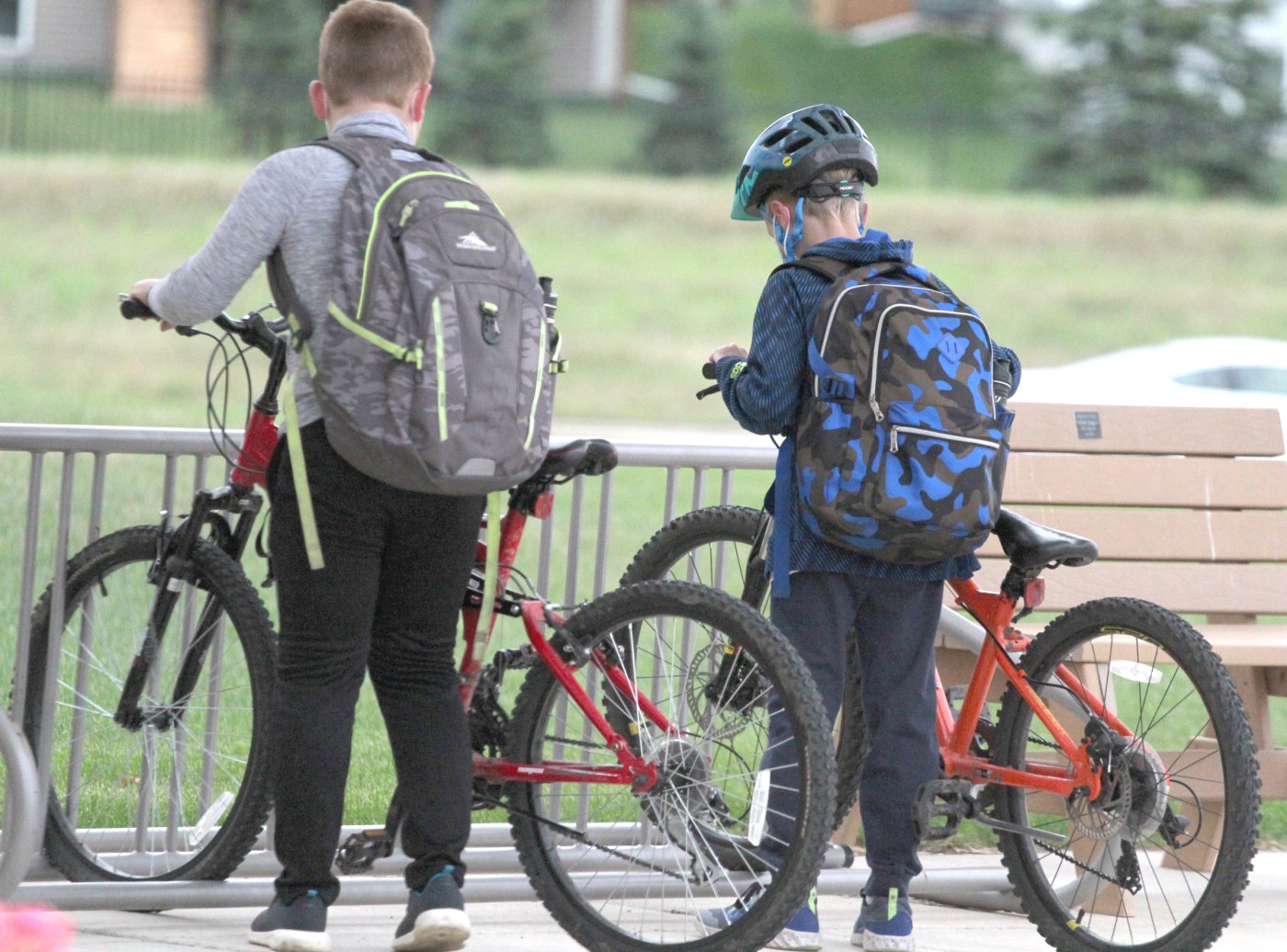
A number of school districts sent students and staff home early on Monday, anticipating the severe weather and possible tornadoes.

As it happened, the storm’s damage in south-central Minnesota was mostly limited to isolated tree damage and hail damage. NWS crews were out surveying the storm path in southern Minnesota and western Wisconsin to assess the aftermath, Dettmann said.

One initial report of a tornado near Fairmont turned out to be a “gustnado.” This phenomenon has similar rotation to a tornado at the surface without a connection to the base of the storm.

Four small tornadoes were also confirmed in southern Eau Claire County, Wis.

Related Articles


St. Paul schools, other districts cancel after-school activities Monday due to weather


Twin Cities dodge severe weather after Monday alert


National Weather Service to resume translating its products for non-English speakers


La Nina exits after three weak months, leaving Earth in neutral climate state


Storms tore up two of America’s most iconic trails. Federal cuts have disrupted repairs

Minnesota Senate OKs liquor bill with ‘social districts’ provision

posted in: All news | 0

The Minnesota Senate on Monday passed its omnibus liquor bill, which includes provisions to allow Minnesota cities to create “social districts” where alcohol could be consumed publicly.

The bill, SF2511 , authored by Sen. Matt Klein, DFL-Mendota Heights, passed in a 53-12 vote Monday after debate on the Senate floor. The bill includes a provision allowing cities statewide to establish “social districts” — designated areas where people can purchase beer, wine and cocktails from licensed establishments and legally consume them in specified public spaces, such as sidewalks and streets.

The Minnesota Legislature first passed a pilot program for a social district in Anoka County in 2022 and expanded the pilot program option to Stillwater and Shakopee in 2024.

The bill includes parameters for cities that want to pass a social district ordinance. Cities must establish specific boundaries and hours of operation, and alcohol must be bought from nearby licensed establishments, served in approved non-glass containers and consumed only within the district, according to the bill language.

Cities are barred from hosting cannabis events in the same space as designated social districts.

The bill also stipulates that cities must post clear signage and make a report on a social district’s impact within 24 months of its creation.

“With this provision, we can give our cities the freedom to innovate while maintaining the safeguards that Minnesotans expect,” Klein said in a statement following passage Monday. “I look forward to seeing social districts contribute to even more thriving, connected communities across our state.”

The social district legislation was originally authored by Sen. Aric Putnam, DFL–St. Cloud, in SF1182 , before being incorporated into the omnibus liquor policy bill. SF2511 now heads to the House for consideration.

MN House passes bill recognizing Hmong, Lao veterans of ‘Secret War’

posted in: All news | 0

Minnesota is on its way to officially recognizing the service of Hmong and Lao and other veterans who fought alongside the U.S. in the “Secret War” during the 1960s and 1970s in Laos.

A veterans and military affairs bill passed by the state House on Tuesday night creates a path to grant official state veteran status for fighters recruited into Special Guerrilla Units by the CIA during the Vietnam War to fight communist forces in Southeast Asia.

The anniversary of the fall of Saigon this week marks 50 years since the U.S. ended its involvement in Vietnam, and supporters of the bill gathered at the state Capitol with surviving veterans of the Secret War to call for greater recognition.

“Today, we say their service matters, their sacrifice matters, their story is American history,” said Rep. Jay Xiong, DFL-St. Paul, co-author of the veterans bill and the son and grandson of Hmong soldiers.

He added: “Recognizing SGUs isn’t just symbolic, it’s a long overdue act of respect.”

‘Burden of being forgotten’

Lee Pao Xiong, a professor from the Center for Hmong Studies at Concordia University, addresses the media at a Capitol news conference on Tuesday, April 29, 2025, along with state lawmakers and Hmong veterans of the "Secret War" in Laos in the 1960s and ’70s. (Alex Derosier / Pioneer Press)

Ya Lee, a Special Guerrilla Unit veteran who flew T-28 warplanes, said there is limited time to recognize surviving veterans for their sacrifices, and that they carry the “burden of being forgotten.”

Lee, who said he is among 10 remaining T-28 pilots living in the U.S., was among dozens of veterans at the Capitol on Tuesday who showed up in military uniforms to support the bill.

At a news conference promoting the bill, Rep. Kaohly Vang Her, DFL-St. Paul, said it’s not exactly clear how many SGU veterans remain in Minnesota, but that it’s likely fewer than 1,000.

During the 1960s and 1970s, many groups across Southeast Asia found themselves drawn into a U.S. war against communist forces within and beyond the borders of Vietnam.

Many faced persecution by their governments as a result, with many hundreds of thousands fleeing their homes and eventually ending up in the U.S. But official recognition for their contributions to the war efforts remained elusive for decades.

Legislation

The House passed a large veterans and military affairs bill containing the Secret War acknowledgement language by a vote of 126-6 on Tuesday, though it’ll need a little more work since it differs from the version passed by the Senate. Once those have been smoothed over in a conference committee, the House and Senate will have to vote once again before it can go to Gov. Tim Walz.

If signed into law by the governor, the bill would create a definition for veterans of the Secret War in Laos and criteria for eligibility for benefits and privileges for veterans. Those include designation as a veteran on driver’s licenses and ID cards, access to state veterans cemeteries, and access to preference in private employment.

Anyone who became a citizen under the Hmong Veterans Naturalization Act of 2000 will automatically get Secret War veteran status. Eligibility also extends to those who received a Medal of Honor, Purple Heart or other military award for service in support of the U.S. military operating in Laos.

Beyond immediate recognition of veterans who got citizenship for their service, the Minnesota commissioner of Veterans Affairs would be empowered to recognize veterans who served with a special guerrilla unit or other forces that operated from a base in Laos between February 1961 and May 1975.

State task force

A state task force created by the bill is charged with overseeing the process for official recognition. It is to include the Minnesota veterans commissioner, a U.S. Veterans Affairs Department official, a Hmong American Minnesota resident who served in the military, two Secret War veterans, a U.S. Vietnam veteran and other history and veterans’ issues specialists.

While the bill creates a process to recognize anyone involved in the Secret War in Laos, a group backing a bill earlier this legislative session to recognize Vietnamese, Lao and Cambodian veterans expressed disappointment that language didn’t mention those groups by name.

Bana Soumetho, who was born to Lao refugee parents in Thailand and has been working to establish explicit recognition for a broader group of Secret War veterans in state law, expressed her frustration in an email.

“This year marked what may have been the final meaningful opportunity for many of our aging veterans to receive public acknowledgment,” she wrote. “Instead, it became a painful reminder of how easily their stories can be overlooked — even when the intent is recognition.”

Related Articles


Disability funding, taxes at issue as MN Legislature crafts state budget


Ethics panel: MN Senate President must disclose possible future conflicts


Concern over vaccine misinformation prompts UMN initiative to preserve data


Walz seeks GOP help on budget, blasts Trump ‘chaos’ in State of the State speech


Jim Gelbmann: Our partisan endorsement process is unrepresentative, polarizing and self-serving

Jon Merrill returns to Wild defense corps for Game 5

posted in: All news | 0

LAS VEGAS – We are closing in on a decade since the Golden Knights played their first-ever games, in the fall of 2017, and still one can see plenty of Nevada hockey fans coming to games wearing the number 29 sweater of current Wild goalie Marc-Andre Fleury, from his time with Vegas.

After Tuesday’s morning skate at T-Mobile Arena, Jon Merrill joked that not as many Nevada hockey fans still wear his jersey from the 140 games the Wild defenseman played for Vegas around that same era. After watching the first four playoff games from the press box, Merrill was back in the Wild lineup for Game 5, after coach John Hynes opted for his experience over the rookie promise of Zeev Buium.

Merrill, 33, admitted it was heartbreaking to come out of the lineup at the start of the playoffs after logging 70 regular season games, but said that he was excited to be back on the ice and to be part of the Wild’s plan to re-capture home ice advantage.

“We play to win and not to lose. Go after them, stay aggressive,” Merrill said. “That’s been the difference in the series is our aggressiveness on the forecheck. So we’ll come out swinging tonight.”

Hynes made it clear that Buium’s healthy scratch for Game 5 was an acknowledgement of the Wild’s needs in Game 5 and not any kind of long-term change, but admitted that there has been a learning curve from the speed of the college game to the NHL pace, most notably in terms of opportunities to shoot the puck.

“I think there’s been times, maybe when he could trigger and is maybe used to having just a little bit more time and space than he does, where you’ve got to almost trigger right away when there’s a lane there,” Hynes said. “I think there’s other times where the shot lanes haven’t been there and to his credit, he hasn’t just shot the puck to shoot the puck.”

Familiarity breeds faceoffs

According to one NHL numbers-crunching website, the Wild were 28th out of the league’s 32 teams in faceoff win percentage, at 47.11 percent, during the regular season. Since starting with possession of the puck is a vital first step toward scoring goals, that’s a key number that can spell success in the regular season and in the playoffs.

While they had still lost more faceoffs than they had won in the first four postseason games, the Wild’s numbers are improving, and Hynes credited part of that to the fact that you’re playing the same team each night, and getting to know their faceoff men.

“I think it’s really digging in and understanding the importance of it,” Hynes said. “Sometimes it’s easier too when you’re not playing this center and that center and this center. … For the most part, there’s four guys you’re going against in a series.”

Hynes said the extra time against the same four Vegas centers over the course of a series allows Wild centers to study tendencies and learn what tactics might work best against a particular player.

Control your weapons

Penalties have become more of a factor in this series over the course of the first four games. Vegas was the least-penalized team in NHL history during the regular season, and officials for the most part let both teams play in the first few games.

The Wild got a big power play goal in Game 3, and they had an overtime power play in Game 4. The Knights tied the game late in a four-minute power play in Game 4, after Buium caught Vegas forward Mark Stone in the face with a high stick. Hynes said that penalties are going to happen, but the Wild can help themselves in the final two or three games of this series by keeping themselves under control.

“I think we want to retain the competitive nature that we played with. I think there’s some penalties – you know, we have some high sticks. We’ve got to control our sticks more. Obviously we had a too many men, so I think there’s some things in our control that we need to be a little bit aware of and better, and normally we are.”

Related Articles


During Wild’s injury woes, Matt Boldy blocked out the noise


Wild’s Marcus Foligno has been at his best in the playoffs


Even after tough loss, Hynes’ confidence in Wild remains unshakable


Buium’s penalty part of the learning curve for Wild rookie


John Shipley: Wild’s penalty kill has been a series killer for too long