With the press of a button on a transmitter Wednesday afternoon, Tom Newell made the sound of a quacking duck break the silence at Keystone Woods Wildlife Management Area in northern Washington County.
Craig Minder’s male yellow lab, Clifford, immediately stood at attention. Newell, of Scandia, then pressed another button to launch a ring-necked pheasant — already dead, and marked with an 8-inch colored streamer — into the air about 60 yards away, right where the sound of the duck quacking could be heard.
Minder pretended to shoot a wooden handler gun in the direction of the bird, and Newell pressed another button that sounded like a rifle firing. Clifford waited patiently to be instructed to retrieve. Once given the order, “Bird,” he had to use his nose and eyes to locate the prize.
Tom Newell, seated, and other members of the Northern Flight Hunting Retrievers Association watch Craig Minder, of Houlton, Wis., work with Clifford, his yellow lab, during field training at Keystone Woods Wildlife Management Area in northern Washington County on Wednesday, April 30, 2025. (Mary Divine / Pioneer Press)
“They have to stay at our side until the bird is down in the field for hunting,” Minder said. “When he brings it back, he has to deliver it ‘to hand.’ He can’t just drop it.”
Minder and Newell were among the 25 members of the Northern Flight Hunting Retrievers Association who gathered at Keystone Woods near the southeast corner of Manning Avenue and 155th Street late Wednesday afternoon to work on advanced field training with their retrievers.
The Minnesota Department of Natural Resources is allowing the Minnesota Federation of Field Trial Clubs to use the land from April 15 through Aug. 31 for hunting dog field trialing and training.
The organization is paying $6,970 for a “non-exclusive” lease, meaning that the land is still open to the public even when MFFTC members are using it, said Brandon Schad, the DNR’s assistant central regional wildlife manager.
The lease allows dogs to be off-leash on the 340 acres during a time (April 15 to July 15) when bird-nesting season normally requires dogs to be leashed in Wildlife Management Areas. It also allows for the use of non-toxic ammunition, release/taking of live birds and motor-vehicle use within the 340 acres, which also are not typically allowed in a Wildlife Management Area.
Some users of the 1,820-acre Keystone Woods Wildlife Management Area, which opened officially in October, question why the MFFTC is being allowed to use the land.
“Nothing against dog training or hunting, but it’s pretty disappointing that an 1,800-acre WMA, that was paid for with $27 million in public funds, is being partly leased to an exclusive group for such a paltry fee,” said Kent Grandlienard, former town board chair of Baytown Township.
Conservation advocates say the land, which includes woodlands, wetlands and prairies, has special ecological significance. Of particular concern is the rusty-patched bumblebee and Blanding’s turtle, both of which are federally listed as endangered species, said Laurie Schneider, executive director of the Pollinator Friendly Alliance.
Organization has used property for decades
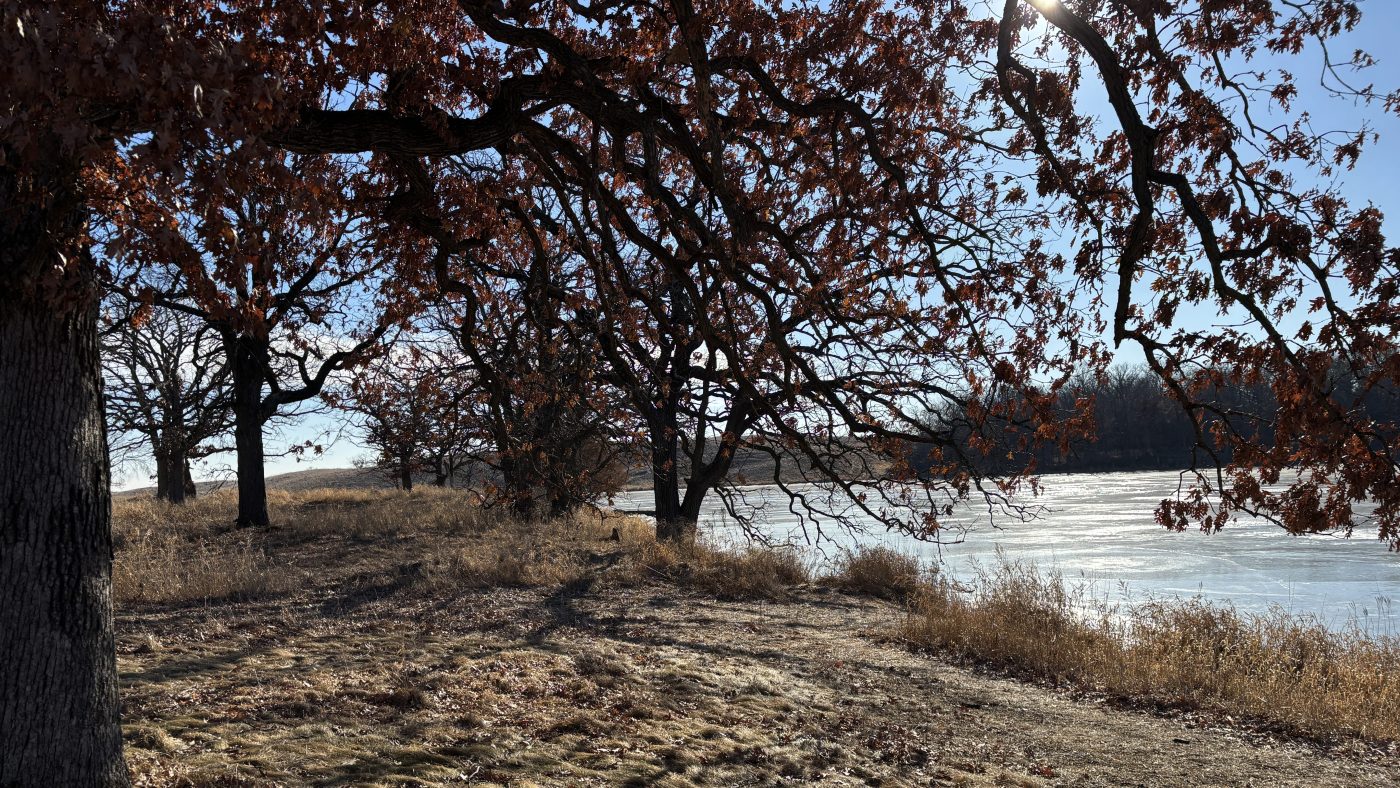
The area that the MFFTC is leasing covers about two-thirds of the grasslands north of the parking lot on Barker’s Lake Road, and about half of the shoreline of Barker’s Lake, Schad said.
The MFFTC, which has held dog field training and trials on the property for decades, last year leased 97 acres of the land from the DNR for $440, Schad said.
Under the terms of the current lease, no dog training may occur before noon between April 15 and May 31 to mitigate impacts to turkey hunters, he said. In addition, no live fire (including starter pistols) is allowed prior to 8 a.m. for the duration of the lease.
DNR officials have the right to adjust the times “to minimize or avoid neighbor conflicts,” the lease states, and will meet with MFFTC officials to discuss any proposed changes to shooting times at least 14 days in advance of any change. The lease ends on Aug. 31, the day before the early waterfowl-hunting season for ducks, geese and doves opens on Sept. 1, Schad said.
The DNR also allows field trialing/training at the Four Brooks WMA near Onamia; Four Brooks and Keystone Woods are the only two WMAs in the state that have leases with the MFFTC, Schad said.
Schad said there were no issues reported during the MFFTC’s lease last year at Keystone Woods. “We didn’t run into conflicts, and we did have other uses, whether it was by hunters or bird watchers during the time that the lease was in place last summer,” he said.
‘Strong feelings’ on both sides
During public-input sessions about the use of Keystone Woods earlier this year, DNR officials heard a lot of “strong feelings” on both sides of the issue, Schad said. “What the agency really looked to do was try and balance those … different ideologies,” he said.
MFFTC members originally proposed leasing an additional 100 acres, but DNR officials declined that request, Schad said.
A coalition of conservationists and organizations recently asked the DNR to enact a moratorium on further development and recreational activities at Keystone Woods WMA in 2025 until biological surveys and the ecological significance of the land are thoroughly examined.
“Unfortunately, the DNR chose to act prematurely and opened hunting and trapping at Keystone Woods in 2024 without giving worthy consideration for conserving at-risk and endangered wildlife species,” coalition members wrote in an April 10 letter to DNR officials. “The DNR’s initial emphasis demonstrates a clear need for more Minnesotans to be actively engaged in collaboration with the DNR so that conservation is maximized and not undermined by heavily promoting hunting, trapping, fishing and dog training.”
Schneider, one of the signatories on the letter, said the MFFTC members have been given the right to use the area around Barker’s Lake, which she called “one of the most beautiful areas” in the WMA.
“I don’t know how other non-hunting people–birders, hikers, visitors–will be able to use that land when they are out there hunting and shooting and firing their rifles, having their dogs off-leash,” said Schneider, who lives in Stillwater Township. “They’re out there killing birds, including waterfowl. That is public land. I don’t see how they can lease that out to a for-profit organization to use.”
Concerns about disrupting wildlife
Of special concern is a family of short-eared owls, a rare species that nests on the ground and has been spotted at the WMA, she said.
“It’s an overall concern of damage to the land and the at-risk animals that are there — from insects to birds to beaver,” she said. “The DNR is charged with protecting the state’s natural resources. Where is that coming in? You don’t see that being applied in their development of this land.”
Said Greg Burnes, president of the St. Paul Bird Alliance, formerly St. Paul Audubon: “What we have is public land paid for by the general public and managed through public funds being given over to a private group for their activities, which are not legal activities for the general public.”
The argument that the MFFTC has traditionally used the land for dog training and trialing and should be “grandfathered in” holds no water, he said.
“That was back when it was private land, and now it’s public land,” Burnes said. “If the private owners had had an ATV race track on their land, would the DNR allow that to be grandfathered in?”
The firing of weapons outside of the legal hunting season disrupts wildlife, particularly nesting birds, and limits the use of the land by the general public, “who paid for the land,” he said. “Who wants to go look for wildlife when there are guns going off? It’s just not a very inviting environment.”
Another area of concern: MFFTC members can release domestic-raised birds at the WMA, which could be a potential disease vector for wildlife, he said. Escaped birds also could interbreed with native birds and damage the wild gene pool, he said.
“They say allowing this will promote more people to get involved in hunting, but that’s at the expense of other groups getting to use the property for what they want to do,” he said. “Our birding group would like to get younger and other folks involved, but I can’t take them out on days that these folks are out there and gunfire is going off. That limits us in our ability to grow our base.”
Wildlife staff at the DNR are collaborating with colleagues in the agency’s Ecological and Water Resources division “to identify and define rare plant and animal communities on the WMA,” said Gretchen Miller, the central region’s wildlife manager. “While short-eared owls (a species of special concern in Minnesota) have been found at Keystone Woods WMA, all available data suggest that the owls are migratory in the area and prefer to nest further north and west in Minnesota.”
DNR officials have worked to “balance wildlife habitat and public-user experiences,” Miller said. Working with dog clubs “offers a great opportunity to get people outdoors on the WMA” and staff will be working with them “to monitor activities and their potential for impacts to the landscape,” she added.
Schad said the DNR agreed to just a one-year lease with the MFFTC to give the agency flexibility to “fine-tune and adjust” things if necessary.
“Both the DNR and the clubs want to get things right,” he said. “We want to do things very intentionally, and so we’re giving ourselves that flexibility.”
A balancing act
The size of Keystone Woods and its proximity to the metro area means the DNR is exploring additional opportunities at the site, including fishing piers and trails, that “might not be present on our typical WMAs to provide a greater user experience or a greater breadth of user experiences,” Schad said.
Dog training is a common avenue for people to get into hunting, “so we do see some benefits there, which is part of the reason that we’re working with the clubs on this and allowing it,” he said.
“What we’re trying to do is balance all these different uses and resource values, and I hope that we’ve done a pretty good job of that,” he said. “I think we have taken into consideration the wildlife needs, other users. There is still a vast majority (of the land) where these activities won’t occur. So if you’re not comfortable with it, there’s a lot of nice wetlands and lakes like Maple Marsh Lake where the activities will not be occurring.”
Related Articles
Investigation continues into cause of Woodbury house fire that killed singer Jill Sobule
Jill Sobule, singer-songwriter known for ‘I Kissed a Girl,’ dies in Woodbury fire
State fines Regions Hospital for improper medical waste disposal
Stillwater Lift Bridge opens for the season
St. Paul police plan to encrypt dispatches, as have Minneapolis, other agencies
John Zeman, president of the Minnesota Federation of Field Trial Clubs, said club members have been using the land, formerly the Kelley Land and Cattle Co., to train hunting dogs and hold dog events for close to 50 years.
The former cattle ranch, which had been owned by the same family since the 1950s, is considered one of the largest tracts of undeveloped land in the Twin Cities metropolitan area. The property has rolling hills and open grassland for training upland hunting dogs, and wetlands and ponds that provide areas for training retrieving and waterfowl hunting dogs, Zeman said.
Training generally starts in the spring, as soon as the snow melts, he said. Members primarily use pigeons, quail, pheasants and chukar partridge for training, he said.
Club members can have their dogs off-leash within the area of the land that the MFFTC is leasing before July 15, which is the end of the nesting season.
Dan Phelps, of Forest Lake, places a pen-raised pheasant in a remote-controlled winger during field training at Keystone Woods Wildlife Management Area in northern Washington County on Wednesday, April 30, 2025. (Mary Divine / Pioneer Press)
Club points to controlled training
The group represents about 30 different dog clubs, and leasing the land at Keystone Woods gives club members in the metro area an opportunity to “get to an area within a half-hour drive of the Twin Cities to be able to train their hunting dogs,” Zeman said.
Zeman, who trains pointing dogs, said club members rarely actually shoot birds during training. “With the pointing breeds like mine, we use homing pigeons quite a bit primarily,” he said. “Those homing pigeons just fly back to the coop; then we can recycle them. We can use them again. We plant the bird; the dog ‘points’ to the bird using their nose. We flush the bird, we fire a blank pistol to seemingly fire, and the bird flies all the way back home. These pigeons can fly up to 500 miles back to their home coop.”
When club members are out using guns, “it’s always in a safe manner in a safe place where there’s really no potential for somebody to get in the way,” he said. “That’s one of the reasons we’re in the areas that they chose to (let us use). We wanted to be well away from the main parking area. We’re fairly well off of the road and further back there than most people are going to go.”
Club members are allowed to park in a designated area where the general public is not allowed, separating them further, Zeman said. Club members are also allowed to use two ATVs at a time to haul equipment, he said.
All birds killed on the premises must be disposed of properly outside of the Keystone Woods WMA, under the terms of the lease.
Zeman said most of the birds used by club members come from highly regulated producers and that there have been no instances of the birds having avian flu or other diseases that he is aware of.
Club members encourage people who visit Keystone Woods to stop by and see the work that they are doing. “Every one of us dog trainers are dog enthusiasts, and we love to show off our dogs,” Zeman said. “There’s been no other component that has done more for retaining and recruiting new hunters than the dog.”
WMAs are established to protect lands and waters that have a high potential for wildlife production, public hunting, trapping, fishing and other compatible recreational uses, according to the DNR.
Zeman said most of the state’s 1,500 WMAs are used by hunters, especially pheasant and waterfowl hunters.
“The use of the dog component for folks enjoying wildlife management areas is huge,” he said. “You literally cannot ethically and effectively hunt upland birds or waterfowl without a dog. You have to have the dog in order to ethically recover shot-game birds, whether it be a duck that lands in the cattails, or a pheasant that hits the ground running like they tend to do when we hunt them.”
Each member of the Northern Flight Hunting Retrievers Association who trained a dog at Keystone Woods on Wednesday had to sign a contract stating that they had read and understood a list of rules prior to using the land.
The dogs, which were trained one by one, each had to retrieve three birds and two plastic training bumpers from five different hunting blinds.
During one retrieval, Minder used a loud whistle and hand signals to have his retriever Clifford retrieve a target that was 90 yards away. It took the dog no more than 30 seconds. When he was done, he raced back to Minder’s side.
“This is not a dog park,” said Chuck Stokes, club secretary and former board member. “We don’t let the dogs just run willy-nilly where they could possibly kick a nest up. In 24 years of training out here, one of my dogs has never kicked a nest up. This is controlled training to elevate our dogs so that they are the best we can have in the field — to conserve the game that we shoot when we hunt.”
Related Articles
Stillwater Lift Bridge opens for the season
Skywatch: Dippers and bears flying high
MN Health Department updates fish consumption guidelines for PFAS
Interested in remote work? The National Park Service may have a job for you
Bluebells and other spring flowers can be nature’s antidote to stressful times
Like Zeman, Stokes encourages members of the public who have concerns about the club’s use of the land to come watch club members — and their retrievers — in action.
“We’re doing everything we can to show the public, as well as the DNR, how good we take care of the property,” he said. “When it was the Kelley farm, we treated this as if it was our own. We are still doing that. We want everybody to know how much we value this place.”