Pleas from Savannah Guthrie’s family to finding missing mom turn from hopeful to desperate

posted in: All news | 0

By TY O’NEIL and JOHN SEEWER

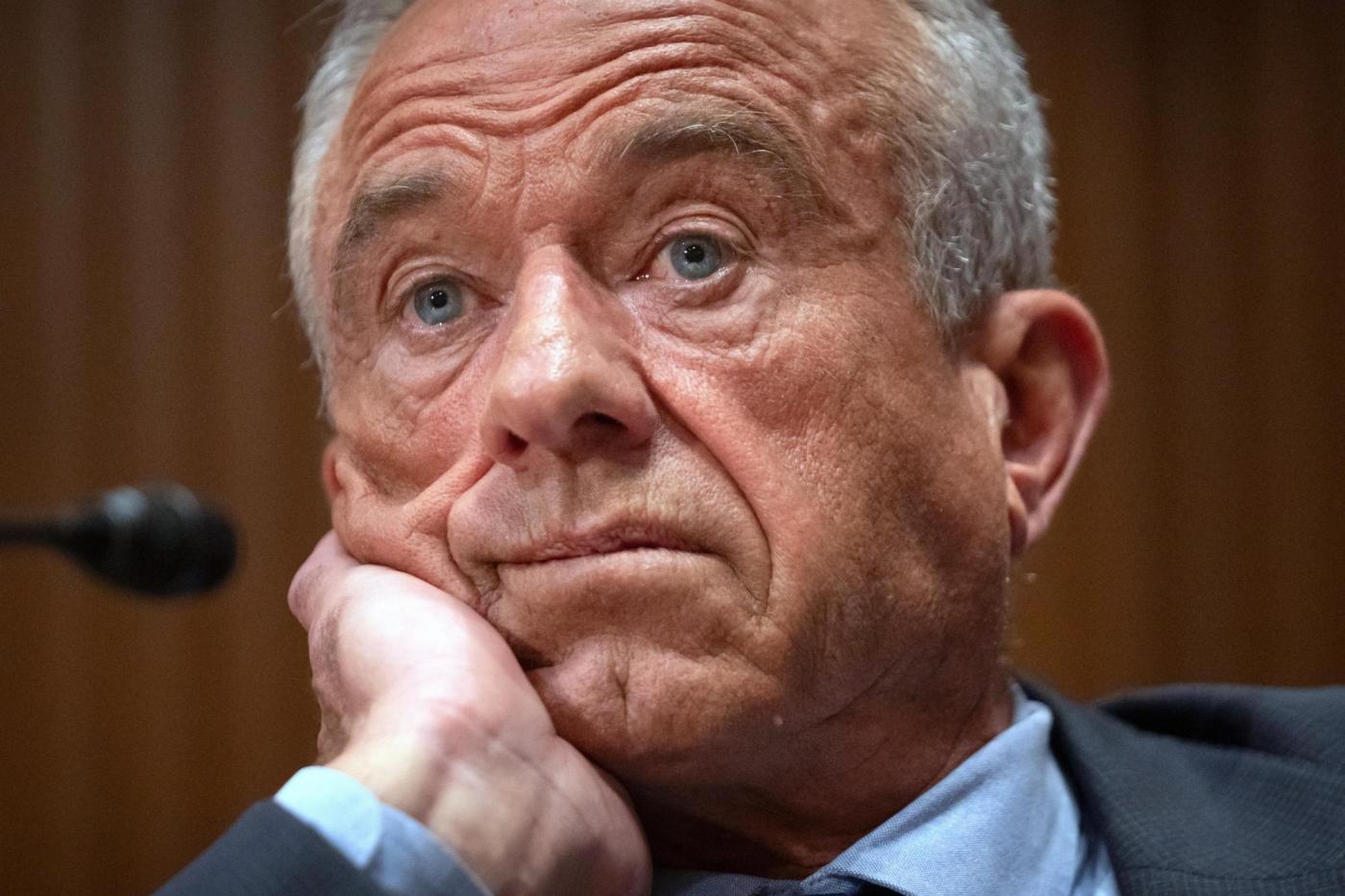
TUCSON, Ariz. (AP) — The heart-breaking messages made by “Today” show host Savannah Guthrie and her family have shifted from hopeful to desperate as they plead with the apparent kidnappers to hand over their missing mother.

More than a week into the search for Nancy Guthrie, there are more questions than answers about who abducted the 84-year-old from her home in Arizona and whether she is still alive.

Authorities have released few details, leaving it unclear if ransom notes demanding money with deadlines already passed were authentic and whether the Guthrie family has had any contact with the abductors.

Guthrie and her family have posted a series of videos over the past week, each striking a different tone. The latest message from Savannah Guthrie, in which she appeared alone, was more bleak.

“We are at an hour of desperation,” she said Monday, telling the public “We need your help.”

Authorities believe Nancy Guthrie was taken against her will from her house just outside Tucson. She was last seen there Jan. 31 and reported missing the next day after not attending church. DNA tests showed blood on Nancy Guthrie’s front porch was a match to her, and a doorbell camera was disconnected in the early hours of Sunday morning, Pima County Sheriff Chris Nanos has said.

Adding to the urgency is that authorities say Nancy Guthrie needs daily medication because she is said to have high blood pressure and heart issues, including a pacemaker.

Investigators were in her neighborhood several times over the past few days and plan to keep working Tuesday as they expand the search and follow up on new leads, the sheriff’s department said.

Three days after the search began, Savannah Guthrie and her two siblings sent their first public appeal to the kidnappers, telling them “we want to hear from you and we are ready to listen.”

In the recorded video, Guthrie said her family was aware of media reports about a ransom letter, but they first wanted proof their mother was alive. “Please reach out to us,” they said.

Law enforcement officials declined to say whether the letters sent to several media outlets were credible but said all tips were being investigated seriously.

The next day, Savannah Guthrie’s brother again told the kidnappers to reach out “so we can move forward.”

“Whoever is out there holding our mother, we want to hear from you. We haven’t heard anything directly,” Camron Guthrie said.

Related Articles


Record snow drought in Western US raises concern for a spring of water shortages and wildfires


US immigration court blocks deportation of Tufts graduate student from Turkey, her attorneys say


US stocks flirt with records as Hasbro soars but Coca-Cola slips


Retail sales unchanged in December from November, closing out year on a lackluster tone


Social media ‘addicting the brains of children,’ plaintiff’s lawyer argues in landmark trial

Then over the past weekend the family posted another a video — one that was more cryptic and generated even more speculation about Nancy Guthrie’s fate.

“We received your message, and we understand. We beg you now to return our mother to us so that we can celebrate with her,” said Savannah Guthrie, flanked by her siblings. “This is the only way we will have peace. This is very valuable to us, and we will pay.”

Up to that point, the family’s first three videos addressed the kidnappers directly.

But just ahead of Monday’s deadline spelled out in a purported note, Savannah Guthrie urged people nationwide to be on the lookout “no matter where you are, even if you’re far from Tucson, if you see anything, if you hear anything.”

Her turn to the public comes as much of the nation is closely following the dramatic twists and turns involving the longtime anchor of NBC’s morning show.

The FBI this week began posting digital billboards in major cities from Texas to California.

Connor Hagan, a spokesperson for the FBI, said Monday that the agency wasn’t aware of ongoing communication between Guthrie’s family and the suspected kidnappers. Authorities also had not identified any suspects or persons of interest, he said.

“Someone has that one piece of information that can help us bring Nancy home,” he said.

Seewer reported from Toledo, Ohio.

US ski resorts turn to drones to make it snow amid dire drought

posted in: All news | 0

By Kyle Stock, Bloomberg News

Despite a barren start to Colorado’s ski season, Winter Park Resort opened on Halloween and served up holiday powder.

Related Articles


Italy gets creative as it works to make art accessible for blind people


The worst (and best) US airports for flight disruptions


A historic house in Serbia’s capital hangs on with intimate theatrical productions


Super Bowl week sightseeing and adventure goes well beyond football in the Bay Area


Trevi Fountain fee goes into effect as Rome seeks to manage tourist flow at celebrated water feature

The ski area’s secret is a contraption a few miles upwind of the chairlifts that looks like a meat smoker strapped to the top of a ladder. When weather conditions are just right, a Winter Park contractor fires up the machine, burning a fine dust of silver iodide into the sky — a process known as cloud seeding. Ideally, the particles disappear into a cloud that is cold enough and wet enough to produce snow, but may need a nudge. The silver iodide becomes the nuclei for water droplets, like iron filings to a magnet. Those droplets freeze and fall from the sky as snowflakes, freshening up the slopes of the resort as it tries to lure the Gore-Tex-clad masses between Denver and larger, showier ski destinations further west.

Doug Laraby, who has helped run Winter Park for nearly four decades, says the resort leaned heavily on its cloud seeding equipment over the Christmas holiday, sprinkling the skies as fresh powder fell days before the critical New Years weekend. At the moment, Winter Park has more snow than Breckenridge, Keystone and a host of bigger resorts nearby.

“For us,” Laraby explains, “that was a million-dollar storm.”

Resorts are increasingly seeking solutions to freshen up the brown slopes spanning the American West this winter, even as the East Coast grapples with back-to-back storms. Last month, Vail Resorts Inc. — which owns nearly 50 resorts across the U.S. and Canada — said it would miss revenue projections due to subpar snowfall this season. The dramatic lack of precipitation in the Rockies “limited our ability to open terrain” and, in turn, crimped spending by both locals and destination guests, Chief Executive Officer Rob Katz said in a statement.

In a battle to improve — or at least maintain — snowpack in the face of rising temperatures and drought, Winter Park, operated by Vail rival Alterra Mountain Co., is one of a growing number of groups in the American West doubling down on cloud seeding, from state governments and ski hills to utilities and watershed management agencies.

Desperate for water — ideally snow — they’re banking on the strategy to buoy the $6 billion U.S. ski industry, while keeping rivers and reservoirs at healthy levels come spring. Despite the promise, though, companies are still trying to amass data showing the technology can actually deliver appreciable amounts of powder. And scientists studying cloud seeding have cast doubt on just how effective it is.

Katja Friedrich, an atmospheric science professor at the University of Colorado, concedes that cloud seeding works in a lab. “But out there,” she says, gesturing to cirrus clouds sweeping over the Front Range outside of her office, “it’s a totally different business.”

Storms are volatile, complex and unforgiving places to gather data. “The application is so far ahead of what the science actually shows,” Friedrich explains. “Usually, it’s the other way around.”

The idea of cloud seeding dates back to the 19th century, and it got an unexpected boost thanks to research at General Electric in the wake of World War II. DRI, a nonprofit research institute in Nevada, started cloud seeding in the 1960s. Putting particles in clouds to create precipitation gained traction in recent years as waves of drought hit the U.S., tallying $14 billion in damages in 2023 alone.

DRI now runs cloud-seeding operations all over the West, including the program at Winter Park. In 2023, the Winter Park generators burned for the equivalent of five straight days, planting an estimated 24 inches of powder on the slopes that wouldn’t have been there otherwise, according to DRI. That equates to 13% of what would have fallen naturally.

“The main driver [for our clients] is water resources,” says Frank McDonough, a DRI research scientist. But, he notes, “we can help the entire mountain economy.”

Private companies are also playing a growing role, most notably Rainmaker Technology Corp., a startup that is now the lead cloud seeding contractor for Utah, which has built one of the most aggressive programs in the American West. From a warehouse in Salt Lake City, founder Augustus Doricko, a 25-year-old with a resplendent mullet that belies his Connecticut childhood, manages a crew of 120, mostly young people working to make it snow on mountains they might otherwise be climbing or skiing.

When the weather looks right, Rainmaker crews pile into 12 pickups, each loaded with two drones, and convoy up the canyons of the Wasatch Mountains. They send half of the drones whirring into the soup of clouds and spray silver iodide for about an hour. When the machines come down to recharge, the team launches the second wave. The cycle is repeated until the clouds move on or get too warm.

Doricko says his company is creating a fresh supply of water with no ecological impact; silver iodide is inorganic and even if ingested, won’t dissolve in the human body.

This year, the state of Utah will pay Rainmaker $7.5 million, part of a cloud seeding blitz that began three years ago. With the Great Salt Lake at historic low levels, Utah lawmakers approved a tenfold increase in funding, committing at least $5 million a year to operations and another $12 million to upgrade and expand a fleet of almost 200 cloud seeding machines on the ground.

Rainmaker is charged with generating enough snow to help partially refill the lake. The company also has a contract with Snowbird Resort, located to the east of Salt Lake City, and much of its seeding will happen near Powder Mountain and Snowbasin resorts, located further north, although neither ski area is a client.

“Anything we can do to increase water levels is going to be well worth the funding,” says Jonathan Jennings, a meteorologist with the Utah Department of Natural Resources.

The list of stakeholders clamoring for more water in the American West is long, ranging from ski resorts to wildfire fighters, reservoir managers to farmers.

“Every state in the West is either cloud seeding or thinking of cloud seeding,” says Friedrich, the University of Colorado researcher.

It’s also popular, in part, because it’s cheap. Jennings estimates that it costs about $30 to produce 325,000 gallons of water, or what experts call an acre-foot of water. Recycling or desalinating a similar amount would cost somewhere around $1,000. Snowmaking, meanwhile, is more expensive and uses more water than it produces.

When Doricko visits potential customers, be they utilities, ski resorts or state agencies, his sales script is simple: “It’s the only way you can bring new water supply to the Rocky Mountain West.”

More often than not these days, the pitch lands. Idaho has also hired Rainmaker this winter, eager to fill its reservoirs and keep farmers happy. All told, the company has about 100 drones flying across Western skies.

In Colorado, where arid conditions have exacerbated wildfires, officials are curious about the capabilities of Rainmaker’s drones while waiting to see this winter’s snow tallies from Utah. In the meantime, they’re working to replace decades-old, ground-based seeding machines with ones that can be switched on remotely. Without the need of a human to light the burner, the new units can be tucked into more remote places and at higher elevations that are colder for longer, improving the odds for snow.

“We feel comfortable saying we can get an additional eight to 12% of precipitation per storm,” says Andrew Rickert, a weather modification program manager with the Colorado Water Conservation Board. “And if we have a great winter in Colorado, there are 30 to 35 storms we can seed.”

Friedrich isn’t so sure about that estimate, despite being regarded as a bit of a rockstar in the cloud seeding field. In 2017, her research team zig-zagged a plane rigged with seed flares through a cloud in Wyoming that wasn’t producing snow. Sure enough, snow fell in the same pattern as the flight, results that fueled much of the recent seeding boom.

However, Friedrich points out, there wasn’t that much snow. And she notes that much remains unknown, like how wind affects the amount of silver iodide that gets into a cloud, and whether the particles trigger much precipitation beyond what would occur naturally.

“I understand why people are buying it, because they’re so desperate,” she says. “But if you ask me, there’s no scientific proof” that it produces a meaningful amount of water. Friedrich is working on a new study to try to figure out how effective ground-based cloud seeding can be and the best operating conditions.

Cloud seeding has also faced pushback from conspiracy theorists who say it works too well. Despite no evidence, Rainmaker was inaccurately implicated in last summer’s deadly Texas floods, and bills to ban weather modification have been filed in dozens of statehouses across the U.S., including those of Colorado and Utah. Former Georgia Representative Marjorie Taylor Greene also introduced a federal cloud-seeding ban in Congress in the wake of last July’s floods.

Doricko, at Rainmaker, has been working to convince lawmakers that cloud seeding does no harm and, on the other front, win over skeptical scientists like Freidrich. Rainmaker spent much of the spring and summer building its own radar system and deploying a layer of on-the-ground weather stations to measure results. It’s also working with independent researchers to provided peer-reviewed validation. As Friedrich did years ago, Rainmaker tries to spray silver-iodide in zig-zag patterns, so its results are more visible on radar — a so-called “seeding signature.”

Doricko acknowledges the challenge of teasing out the exact influence of manmade cloud seeding — which he jokingly refers to as “magic beans” — from natural precipitation. “Our fundamental research on now at Rainmaker is all about what kitchen sink of sensors can we throw at this problem to actually validate” our work, he says.

Vail abandoned its cloud seeding program in 2020, shifting its resources to invest heavily in machines that use water to spray artificial snow. The newest snow guns monitor weather in real time and can be programmed remotely.

“This technology means that Vail can make the most of every moment that conditions allow for snowmaking,” says spokeswoman Michelle Dallal. Still, the resort is feeling the pinch of an abnormally dry winter.

State officials are trying to get Vail back on board. Cloud seeding, they argue, can be cheaper than snowmaking, both in terms of cost and carbon, and it adds water to the ecosystem, rather than taking a share of it away. The state is also trying to get other ski areas to buy in: This year, Colorado positioned a ground system to seed clouds on the slopes of Aspen, in hopes that the resort will help fund future programs.

Meanwhile, Winter Park has emerged as one of the state’s biggest cloud seeding cheerleaders. Laraby says only 10% of the mountain is covered by snowmaking gear, and there are no plans to install more. And yet, when the storms rolled through the state Dec. 28, Winter Park says its cloud-seeding efforts conjured 12 inches of snow, triple what fell on Vail.

“If you ask me, it enhances the efficiency of these storms,” Laraby says. “I think it’s awesome.”

©2026 Bloomberg News. Visit at bloomberg.com. Distributed by Tribune Content Agency, LLC.

Local Environmental Groups Are Still Reeling from Trump’s DOGE Cuts 

posted in: All news | 0

Toward the end of last February, as a chilly Dallas winter began to warm into a balmy Texas spring, Caleb Roberts hopped online to transfer federal funds to a local bank account. Roberts is the executive director of Downwinders at Risk, a Dallas-based nonprofit devoted to clean air advocacy. After eight months of bureaucratic red tape, the organization finally had access to the half-a-million dollars in federal grant funding they had been awarded by the Environmental Protection Agency (EPA)—or so they thought.

When Roberts reached the federal website used to access the money, he couldn’t log in. In the coming weeks, that story would repeat over and over with no explanation until they were told late last March that their grant had been suspended. On May 1, it was officially terminated. 

Downwinders wasn’t alone. Just over $118 million in environmental grants previously awarded to several Texas organizations were terminated by the EPA in the first three and a half months of Trump’s second presidential administration, according to documents obtained by the Texas Observer through an open records request with the EPA. Nonprofits that had built that funding into their budgets suddenly had to reverse course, canceling programs related to environmental education, air quality, waste contamination, and flood monitoring.

Many of the grants were initially appropriated by Congress under the Inflation Reduction Act, which was narrowly passed into law in 2022 during the Biden administration. The cancellations came at the direction of President Trump, who issued an executive order on inauguration day ordering that all federal IRA disbursements be halted. Democratic members of Congress and state attorneys general have called the action illegal. The grant cancellations are currently the subject of multiple pending lawsuits. 

At Downwinders, the money was earmarked to fund air monitoring systems in nine communities across the Metroplex—including in Arlington and Fort Worth. But after the termination, the group had to cancel the expansion and even pause maintenance on its existing stations.

The air quality data they’ve previously collected “has helped change some of the policy around environmental justice, around where industry should [develop] all throughout Dallas,” Roberts said.“To have $500,000 canceled and us not receive a dime of it … it ruins a bunch of the plans that these communities had to be able to advocate for themselves.”  

Roberts said that in the wake of the grant termination, fundraising efforts have been difficult to replicate, made worse by the uncertainty and lack of communication from the EPA.

“Where else do you find a large entity that will support the type of science that we’re looking to do?” Roberts said. “Without this, that information is gone, and now when people complain about things in their community, city council says they don’t have the information. They don’t have the data. They don’t know. And that’s just too convenient of a cop out for what should have been a conversation with tons and tons of data available.”

The canceled grants range from $50,000 to $60 million and impact causes in nearly every region of the Lone Star State. A $425,000 grant given to the Children’s Environmental Literacy Foundation (CELF) was being used to fund a three-year program for a cohort of Houston-area teachers to run a civic science project, taking students to research air and water quality along the Houston Ship Channel. Just a year into the initiative, CELF had to downsize its plans and are still searching for alternative funds.

“​​We get a lot of really great feedback from our teachers. I mean, that’s what puts the wind in our sails. We have teachers tell us all the time, ‘this is the best professional development I’ve ever been to,’” said Tara Stafford Ocansey, executive director of CELF, a nationwide organization dedicated to environmental education with one of two home bases in Houston. “The kind of work that we’re doing, it’s not partisan, it’s not political. It’s making sure that students feel a sense of belonging.”

CELF was left high and dry, waiting months after the grant termination for the EPA to reimburse expenses CELF had already accrued and unable to pay back their partner organization, the Galveston Bay Foundation.

CELF and others have appealed the cancellations in court though decisions are still pending; the EPA has cited President Trump’s executive orders as their legal justification for the grant terminations.

The EPA did not respond to requests for comment. Lee Zeldin, the EPA administrator, said in a March 2025 press release that the Agency’s grant terminations targeted “wasteful spending,” including on programs “related to DEI and environmental justice.”

Earthjustice, a nationwide environmental advocacy nonprofit, is helping lead the legal fight against the grant cancellations specifically, including one case that represents Downwinders, Air Alliance Houston, and 21 other organizations from across the country with canceled funds. That case is currently being appealed in the D.C. Circuit after a district court judge dismissed the challenge.

“They didn’t like this program because it was focused on environmental justice issues and communities that were disproportionately affected by climate change, and so they decided they wanted to eliminate it,” said Hana Vizcarra, a senior attorney at Earthjustice. “We contend that they don’t have the power to do so, that Congress created and appropriated this program. You can’t just ignore the will of Congress.”

Earthjustice claims that the terminations were made based on the communities they benefit and the causes they address. “When agencies make decisions, when they take action … it cannot be arbitrary and capricious,” Vizcarra said. “They have to consider the impacts that it will have and they have to be done based on reasoned decision making.”

One of the plaintiffs in the case, Air Alliance Houston, had received roughly $3 million in federal grants for endeavors along the Gulf Coast. Being based in the nation’s fourth most populated city and near one of the busiest ports in America makes the group’s work all the more critical, says its executive director Jennifer Hadayia. The region houses 49 percent of the country’s petroleum refining capacity and ranks in the top 10 worst cities for smog and particulate matter.

With those federal funds, the group’s goal was to expand an existing project called Air Mail, which currently works to engage Harris County residents in environmental permitting decisions, to nine additional counties along the Gulf through partnerships with local organizations. Now, after losing access to those federal funds, the group says those plans had to be put on hold. 

“Our contract, literally, the words written to which I put signature to paper, has conditions under which we can be legally canceled,” Hadayia told the Observer. “Anti-DEI and pro-fossil fuel policies were not there. Those aren’t allowable reasons to terminate the contract.”

Still, Air Alliance has been raising funds to reinstate the program without federal support, and upon the one-year anniversary of the termination, says it will be able to fund efforts in seven of the nine counties in which it was originally planning to expand. 

“We got this money legally. We passed all the hurdles. We passed the tests. We didn’t do anything to warrant a cancellation, except have a new president, to be frank,” Hadayia said. “We are going to bring this important service to the Texas Gulf Coast, with or without the EPA.”

Other groups that lost funding, however, may not be able to do the same. The City of Dallas said in an emailed statement that they had to terminate an air quality initiative when they lost $425,000. The City of Houston lost $21 million for flood control and pollution mitigation. The Big Bend Conservation Alliance, based in Presidio, was hit with $12.7 million in cuts for air quality monitoring and projects; Texas Southern University, a public historically black university, saw cuts of $60 million that would have been distributed across hundreds of hyper-local organizations; and Mission Waco lost $18.7 million for a broad range of projects across Central Texas. 

“These projects were on the ground, working to help communities be prepared for the next storm, to respond to increasing heat in their communities and to put people to work,” Vizcarra said. “It’s just amazing, when you dig into the projects that were in process, how many wonderful things were happening around the country.”

The post Local Environmental Groups Are Still Reeling from Trump’s DOGE Cuts  appeared first on The Texas Observer.

Why some women choose Galentines over Valentines. And how they might celebrate

posted in: All news | 0

By ALICIA RANCILIO, Associated Press

Christie O’Sullivan of Trinity, Florida, has spent 21 Valentine’s Days with her husband, but her favorite celebration was one spent with a girlfriend before she got married.

They took the day off work, got massages, and went out for cocktails and a fancy dinner.

“For me, it was 10 out of 10. That whole day was intentional,” said O’Sullivan. She remembers it as empowering “on a day that’s usually filled with pressure to be in a relationship, or sadness because I wasn’t currently in one.”

Galentine’s Day became a pop culture phenomenon with a 2010 episode of the TV comedy “Parks and Recreation” that celebrated female friendships around Valentine’s Day. Amy Poehler’s character, Leslie Knope, gathered her gal pals on Feb. 13.

“What’s Galentine’s Day? Oh, it’s only the best day of the year,” said Knope.

Honoring female friendships can happen any day of the year, of course. Whether on Feb. 13 or another day, here are some ways to create a fun-filled experience:

Heart-shaped sugar cookies are displayed in Berkley, Mich., on Jan. 27, 2026. (Liz Momblanco via AP)

Making it a party

Chela Pappaccioli of Franklin Lakes, New Jersey, has been hosting a Galentine’s Day bash at her home for the last three years. She has a bartender and a DJ hired, and this year invited 45 of her nearest and dearest. So far, she has 34 confirmations, and is assembling gift bags for her guests to take home. There are no men allowed “unless the bartender happens to be male.”

The event may be extravagant, but Pappaccioli says it’s worth it.

“It’s an escape to just be with your girls, be silly, do something fun and just focus on the friendships you’ve created and enjoying each other’s company,” she says.

Learning how to do something new

Liz Momblanco of Berkley, Michigan, who describes herself as a “serial hobbyist,” invites her friends to take classes like cookie and cake decorating, calligraphy and stained glass.

“I enjoy learning something new and having a shared experience,” said Momblanco, who has attended day retreats for women that offer activities like floral arranging, yoga or a cold plunge.

Marney Wolf, who runs the retreat company Luna Wolf, says providing an opportunity for art and creativity builds community.

“It bonds you, whether it’s the smallest thing or really deep. You watch these grown women turn into almost like a childlike kindergarten response like, ‘Oh my gosh! Good job! You’re so talented!’ That little lift is the easiest thing to do,” she said.

Related Articles


US ski resorts turn to drones to make it snow amid dire drought


Valentine’s Day: Chocolate and beer pairings to woo your date


Enter the 2026 Pioneer Press Peeps Diorama Contest


Boy who appeared in Bad Bunny’s Super Bowl show is not the 5-year-old detained by ICE in Minnesota


Backyard vegetable gardens are healthy for people and the planet. Here’s how to start yours

Filling a Valentine’s void

Wolf takes care to schedule Galentine’s-themed retreats near Valentine’s Day because some women don’t have someone to spend Feb. 14 with.

“I know it can be a really lonely time for people and I think some take it for granted,” she says.

Pappaccioli said a couple of divorced friends come to her party, and “even if you’re married it can be depressing because your husband may not be doing what you want or your boyfriend may not support you in the way you want,” she says.

“It’s nice to know that you don’t need that. You can still celebrate the holiday, but turn it around a little bit and celebrate the relationships you want to.”

Creating different kinds of bonds

Galentine’s Day get-togethers can forge new friendships. And spending quality time with a friend provides an opportunity to put the phone away, avoid distractions and build memories.

O’Sullivan is a social media strategist for businesses but appreciates that her bestie Valentine’s Day was without cellphones.

“We could be fully present — no photos, no texts, no nothing,” she says.

“So while that means there’s no actual record of that day occurring, it also means the details became a core memory without it.”

Some celebrate Galentine’s Day by just going out for coffee or playing cards. You might go with a group of women friends to a play or museum, or take a hike or a workout class.

Other ideas include thrift store shopping, country line dancing, roller skating, karaoke, junk journaling, and getting manicures and pedicures.