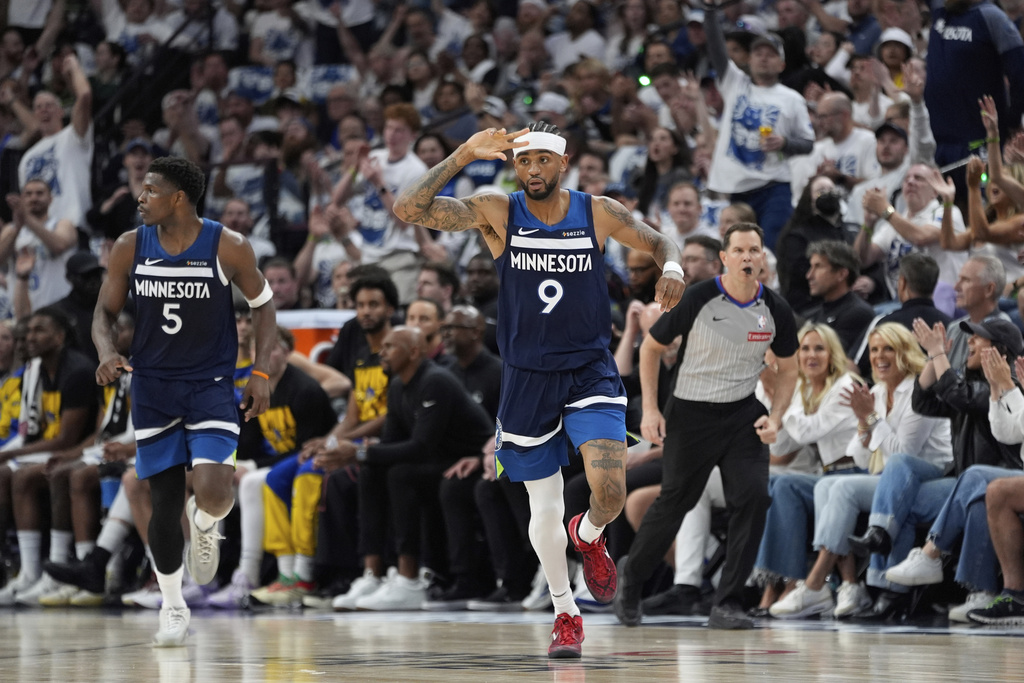
Nickeil Alexander-Walker met Timberwolves’ challenge in Game 2

posted in: All news | 0

Nickeil Alexander-Walker had struggled mightily through Minnesota’s first six playoff games. One or two bad games? That happens. But such a sustained stretch of struggles isn’t acceptable for one of the Timberwolves’ most consistent players during the regular season.

So on Wednesday, after Alexander-Walker tallied just one steal and no other helpful counting stats in 14 minutes of play in Game 1, Timberwolves coach Chris Finch and Co. challenged the two-way reserve wing to be the player he’d been all season for Minnesota.

The 26 year old responded with a 20-point showing in the Wolves’ Game 2 win over Golden State, a bout in which he was sound defensively while knocking down four triples.

“Nickeil was huge,” Finch said. ““We need him. We need his ability to guard multiple guys. We need his size, length, toughness. It was really important to get him a game like this (on Thursday).”

Alexander-Walker said he “embraced” the off-day message from the coaching staff, noting they wouldn’t get on him if they didn’t believe in his abilities.

“You can’t run away from a challenge,” he said. “If God is willing years from now, I can show my son what I was able to do and just a life lesson. When you face adversity, you’ve got to step up to it. You can’t back down.”

All while not allowing the struggles to occupy too much of his mind. Alexander-Walker was 10 for 46 (22%) from distance over his previous 11 games prior to Thursday’s victory. But you can’t will yourself out of a shooting slump.

Alexander-Walker said he had to trust the law of averages to eventually prevail.

“The more that I stress it, the more that I worry about finding it the more that I get in my head about, ‘Oh what do I need to do to get it going,’ the further I get to actually doing so,” he said. “You know, I read a bible sermon that just talked about having opportunity and talent, so to speak, is all God’s given blessing. So you know, he takes and he gives.”

All Alexander-Walker could do was continue to put in the work and trust his game. So, regardless of the results, he remained committed to being on the training table at 7:30 a.m. each day, getting in his treatment and a shooting session, then returning to the facility later in the day to lift weights and shoot again.

Rinse, repeat.

“He works his butt off every single day. He’s the first one in the gym every single day,” Wolves forward Julius Randle said. “So when somebody works like that, it’s only a matter of time before things turn around. He stays true to who he is, and continues to work and has a game like he had (Thursday). So hopefully he can keep building on it, because when he does that, it’s huge for our team.”

In the past, struggles would snowball on Alexander-Walker, who was susceptible to get into his own head at the first sign of struggles. But in these playoffs, he felt optimism was his biggest enemy. He was convincing himself that every single game was going to be ‘the game’ in which he broke through.

But he changed his approach on Thursday, instead focusing on the controllables. He was going to rebound and inject pace into the game, two facets that have nothing to do with making shots.

“I think that’s why it opened everything up, because I was able to kind of take that pressure off of being good on that side and just doing what my team needs me to do outside of just trying to score,” Alexander-Walker said.

That’s part of his magic. Alexander-Walker is a do-it-all guy for Minnesota. His value extends far beyond his shotmaking. Realizing as much unlocks his full potential.

“We needed him to take a deep breath and just kind of stay ready and confident. I thought he had turned down some shots over the last few games. We can’t have that. Everything flows from there for him. His creation and ability to attack the basket. All that,” Finch said. “After he makes a few plays he can be a little bit more aggressive for himself. You see that. … I think he definitely plays better when we have a good flow and he’s not looking to have to force himself into the offense.”
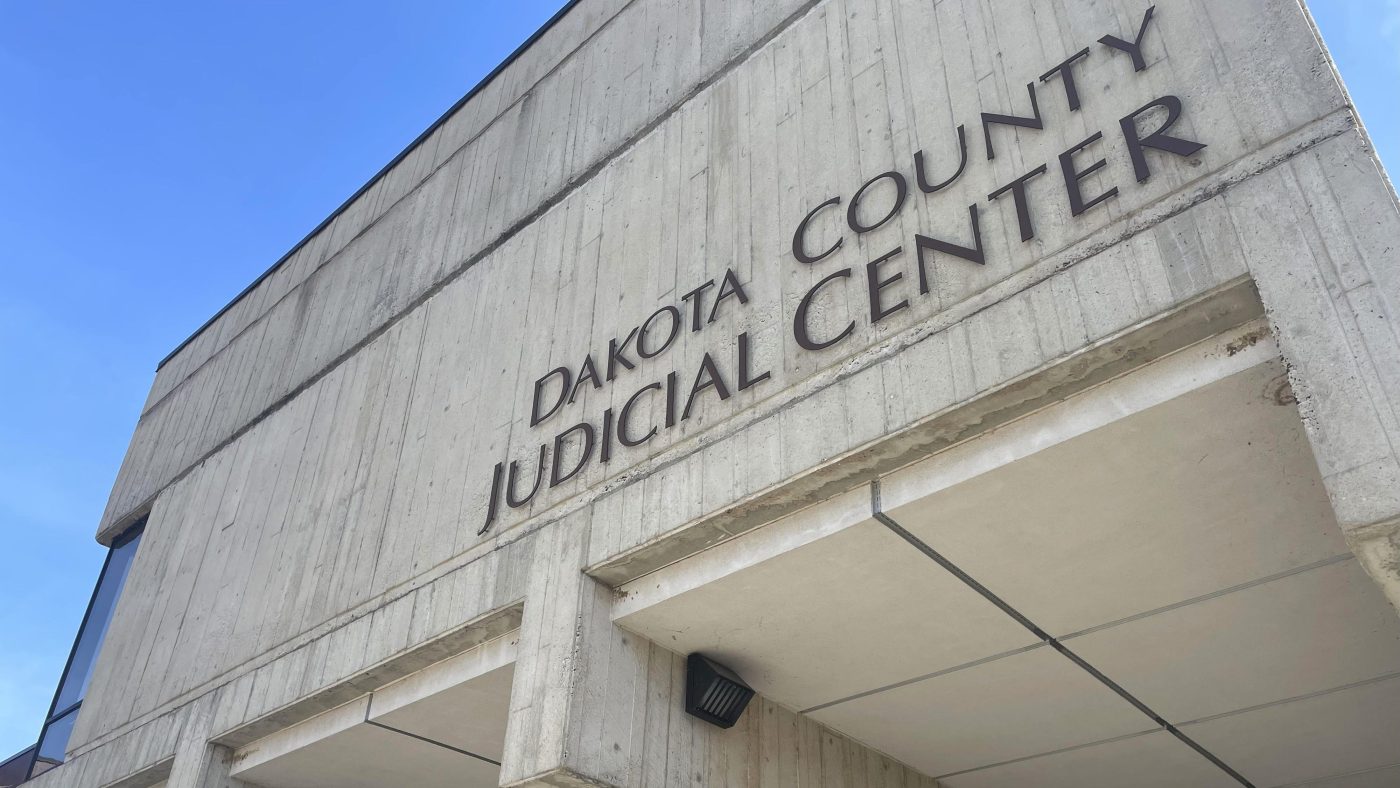

Burnsville mother of 3 had previous no-contact order against her killer, charges say

posted in: All news | 0

A man with a previous no-contact order against the mother of his three children stabbed her at least nine times at her Burnsville home on Wednesday, according to a criminal complaint filed Friday.

Danielle Grace Warren (Courtesy of GoFundMe)

The killing of 32-year-old Danielle Grace Warren at the hands of Jason Philip Filas came less than two months after police were called to the home after the 48-year-old allegedly physically assaulted her during an argument, court records say.

Warren told police that she feared Filas, who was charged with misdemeanor domestic abuse for the March 13 incident. He was later released from jail on conditional bond ahead of a next court appearance.

Warren also had a domestic assault no-contact order in place until April 23.

On Wednesday, police were sent to the home in the 2000 block of 117th Street East about 9:35 a.m. after Warren’s sister called 911 to report a domestic assault. She told the dispatcher she got a call from Warren, who said Filas was there and “freaking out,” the complaint says.

Officers saw blood on the front door handle. An officer went to the back, looked through a window and saw Warren near a couch. She appeared to be unresponsive and there was a large amount of blood visible.

Officers forced their way into the home and saw that Warren was sitting upright against the couch, with what appeared to be multiple stab and slashing wounds to her face, neck and chest.

A 12-inch kitchen knife with blood on it was in the hallway between the kitchen and living room.

Warren was pronounced dead at the scene. Two of Warren’s children, ages 5 and 9 months, were in the home. Filas had left.

Officers spoke with Warren’s sister, who said Warren called her about 9:30 a.m. and was scared because Filas was monitoring a security camera on their house remotely, and that he had seen another man leave the home that morning, the complaint says.

She said Warren told her she wanted to get her keys so she could leave and go to her home with the kids because of her fear of Filas.

Shortly after the call, Warren called again, her sister said, and pretended she was talking to police because Filas was in the house with her. Warren suddenly began screaming that he had a knife and to call 911.

As Warren continued to scream for her sister to hurry, the call disconnected.

She called 911, then Warren’s phone. Filas answered, and told her, “She should have never cheated on me. You better call 911,” the complaint says. The phone was then turned off.

Warren’s sister told officers she was aware Warren and Filas’ relationship was deteriorating in recent months. She said Filas had been angry with Warren recently, and had followed her to a store because he believed she was cheating on him.

Arrested after Lakeville traffic stop

Officers put out an alert to other law enforcement agencies to try and locate Filas.

Jason Philip Filas (Courtesy of the Dakota County Sheriff’s Office)

A Lakeville police officer saw Filas’ vehicle driving at a high rate of speed on Kenwood Trail in Lakeville around 10 a.m. and made a traffic stop. Filas, who was driving, was ordered to exit the vehicle and get to the ground.

While on the ground, Filas continually looked around the area while being detained and eventually stood up, the complaint says. He grabbed at his waistband and walked aggressively toward the officer, despite the officer’s commands for him to get back to the ground.

Filas made comments including “shoot me” and “you’re not going to shoot me” while he walked toward the officer, the complaint says. He ran, and officers deployed their Tasers twice before he was subdued and handcuffed.

Past incidents

In the March incident, officers were sent to the Burnsville home on a domestic assault call after Warren called another person. That person called 911, saying that a struggle and Warren crying could be heard in the background. Filas was yelling while Warren said, “please let go.”

“When officers spoke with (Warren) on March 13, (she) expressed fear that Filas was going to hurt her,” Friday’s complaint says.

Less than three weeks later, on April 2, Filas was charged with violating a domestic abuse no-contact order after he was pulled over for speeding in Burnsville and Warren was in the car with him. Filas pleaded guilty to the misdemeanor charge and an agreement with the prosecution called for a stayed jail term at sentencing, which was scheduled for July 9.

Related Articles


Founder of crypto platform Celsius Network is sentenced to 12 years in prison


Former Lakeland contract employee given probation for theft from city


Drunken driver who plowed into Park Tavern bar patio, killing 2, pleads guilty to murder


Woman found fatally stabbed after Burnsville police respond to domestic disturbance


Teen charged in fatal stabbing of St. Paul 19-year-old

At an April 23 hearing, Dakota County District Judge Matthew Schmidt canceled the no-contact order. Court documents do not make clear why the order was canceled.

Court appearance Friday

The Hennepin County Medical Examiner’s Office found Warren had a minimum of nine stab wounds to her head, neck and upper torso, according to Friday’s complaint in Dakota County District Court charging Filas with second-degree murder.

Filas, of Burnsville, remains jailed ahead of a first appearance on the charge scheduled for Friday afternoon.

Help for victims of domestic violence is available through the Day One hotline by calling 866-223-1111 or texting 612-399-9995.

‘DA POPE!’ Leo XIV’s Chicago roots unleash spate of holy humor

posted in: All news | 0

By MATT SEDENSKY

A Chicago-born cardinal walks into a conclave. The rest of the joke tells itself.

Related Articles


Pope Leo XIV celebrates first Mass as details emerge of how votes coalesced in the conclave


‘JD Vance is wrong’: New Pope Leo XIV has criticized Trump administration online


Local Catholic leaders praise ‘quietly competent’ new Chicago-born Pope Leo XIV


Robert Prevost, first pope from US in history of the Catholic Church, takes the name Leo XIV


Black smoke pours from Sistine Chapel chimney, indicating no pope was elected as conclave opens

In the breathless day since Pope Leo XIV’s election as the first American pontiff, the memes, doctored images and tongue-in-cheek references have piled up deeper than Chicago’s pizza and more loaded than its hot dog, seemingly irresistible to comics and commoners alike.

Stained-glass windows depicting a dunking Michael Jordan? A change in canon law to make ketchup-topped frankfurters a sin? Cameos in “The Bear”? All of it apparently as tempting as the forbidden fruit.

“You just saw a billion jokes,” says Chad Nackers, who was raised Catholic and now presides as editor-in-chief of The Onion, the satirical site that heralded Robert Prevost’s elevation with an image of the smiling pontiff encased in a poppyseed-dotted bun.

“Conclave Selects First Chicago-Style Pope,” read the headline.

Newly elected Pope Leo XIV, left, formerly Cardinal Robert Francis Prevost, appears on the central loggia of St. Peter’s Basilica at the Vatican shortly after his election as the 267th pontiff of the Roman Catholic Church, Thursday, May 8, 2025. (AP Photo/Domenico Stinellis)

The pageantry of the church and the idea of a man who acts as a voice for God, Nackers says, combine for fertile humorous ground no matter the pontiff. Having him hail from the U.S., though, and a city as distinct as Chicago, opens up a whole new world of funny.

“It’s just kind of ripe for humor,” Nackers says.

“DA POPE!” blared the front of the Chicago Sun-Times on Friday, one of countless spins on the city’s unique accent, immortalized in “Saturday Night Live” sketches. No matter how Pope Leo XIV actually appears, in this realm of humor, he’s a mustachioed everyman who swaps his Ts for Ds and his zucchetto for a Bears cap.

With the Second City in the spotlight, more Chicago tropes were trotted out than even the famed namesake improv troupe could dream up. The popemobile traded for the Dodge Monaco made famous in “The Blues Brothers”? Check. Twists on city-set shows and movies like “Chicago Hope,” er, “Chicago Pope”? Yup. Dreams of Portillo’s Italian beef sandwiches and the Chicago liqueur Malört taking the place of the bread and wine of communion? Yes, chef. Over and over again.

In sports-loving Chicago, city teams were spun in a swell of papal humor. Initial belief that the pope’s baseball loyalties were with the Cubs led content creator Caitlin Hendricks to muse that Leo ironically hates the Cardinals. As it turns out, though, it appears the man in white roots for the White Sox.

It didn’t stop those in Wrigleyville from eating up pope memes and feeling hometown pride. At the Sports World shop, one woman came in asking for a Cubs jersey with Pope Leo XIV’s name splayed across the back. Down the street at Wrigleyville Sports, Chad Grant said he wouldn’t hate Leo for rooting for the Sox, but that “I just feel bad, because he’s been used to losing for a little while.”

Late-night hosts, too, had a ball with an American’s ascension.

Jimmy Fallon mused of “deep-dish communion wafers” from a pope known as “Bobby Bratwurst.” Stephen Colbert, a devout Catholic who performs in a studio with nearly as much stained glass to rival St. Patrick’s Cathedral, offered patriotic “Pope-S-A” chants and mentions of “da prayers” in thick Chicago tongue.

“I’m actually surprised by how excited I am,” Jimmy Kimmel said in his first monologue after the news. “An American who grew up here, watched all the shows we watched, rooted for teams, is now in Rome at the head of the church … this must have been what it felt like when they opened the first Olive Garden.”

More will come, a cascade of Ferris Bueller jokes and asides on canonizing Mike Ditka. There will be Oprah exuberantly shouting “You get a new pope! And you get a new pope!” And more memes of the pope in a dyed-green Chicago River or atop its shiny “Cloud Gate” bean than anyone can count.

“There’s just a lot of joy in the city right now,” says Ashley Lenz, a theologian in Chicago who works for the Catholic prayer app Hallow. “There’s a certain delight of seeing something sacred break into the ordinary. The idea of a pope who’s stood in line at Portillo’s or cheered on the Sox makes it all feel closer to home. It makes the papacy feel human again.”

Associated Press writer Melina Walling contributed to this report from Chicago.

Matt Sedensky can be reached at msedensky@ap.org and https://x.com/sedensky.

Parmy Olson: AI chatbots want you hooked — maybe too hooked

posted in: All news | 0

AI companions programmed to forge emotional bonds are no longer confined to movie scripts. They are here, operating in a regulatory Wild West.

One app, Botify AI, recently drew scrutiny for featuring avatars of young actors sharing “hot photos” in sexually charged chats. The dating app Grindr, meanwhile, is developing AI boyfriends that can flirt, sext and maintain digital relationships with paid users, according to Platformer, a tech industry newsletter.

Grindr didn’t respond to a request for comment. And other apps like Replika, Talkie and Chai are designed to function as friends. Some, like Character.ai, draw in millions of users, many of them teenagers. As creators increasingly prioritize “emotional engagement” in their apps, they must also confront the risks of building systems that mimic intimacy and exploit people’s vulnerabilities.

The tech behind Botify and Grindr comes from Ex-Human, a San Francisco-based startup that builds chatbot platforms, and its founder believes in a future filled with AI relationships.

“My vision is that by 2030, our interactions with digital humans will become more frequent than those with organic humans,” Artem Rodichev, the founder of Ex-Human, said in an interview published on Substack last August.

He added that conversational AI should “prioritize emotional engagement” and that users were spending “hours” with his chatbots, longer than they were on Instagram, YouTube and TikTok.

Rodichev’s claims sound wild, but they’re consistent with the interviews I’ve conducted with teen users of Character.ai, most of whom said they were on it for several hours each day. One said they used it as much as seven hours a day. Interactions with such apps tend to last four times longer than the average time spent on OpenAI’s ChatGPT.

Even mainstream chatbots, though not explicitly designed as companions, contribute to this dynamic. Take ChatGPT, which has 400 million active users  and counting. Its programming includes guidelines for empathy and demonstrating “curiosity about the user.” A friend who recently asked it for travel tips with a baby was taken aback when, after providing advice, the tool casually added: “Safe travels — where are you headed, if you don’t mind my asking?”

An OpenAI spokesman told me the model was following guidelines around “showing interest and asking follow-up questions when the conversation leans towards a more casual and exploratory nature.”

But however well-intentioned the company may be, piling on the contrived empathy can get some users hooked, an issue even OpenAI has acknowledged. That seems to apply to those who are already susceptible: One 2022 study found that people who were lonely or had poor relationships tended to have the strongest AI attachments.

The core problem here is designing for attachment. A recent study by researchers at the Oxford Internet Institute and Google DeepMind warned that as AI assistants become more integrated in people’s lives, they’ll become psychologically “irreplaceable.” Humans will likely form stronger bonds, raising concerns about unhealthy ties and the potential for manipulation. Their recommendation? Technologists should design systems that actively discourage those kinds of outcomes.

Yet disturbingly, the rulebook is mostly empty. The European Union’s AI Act, hailed as a landmark and comprehensive law governing AI usage, fails to address the addictive potential of these virtual companions. While it does ban manipulative tactics that could cause clear harm, it overlooks the slow-burn influence of a chatbot designed to be your best friend, lover or “confidante,” as Microsoft Corp.’s head of consumer AI has extolled.

That loophole could leave users exposed to systems that are optimized for stickiness, much in the same way social media algorithms have been optimized to keep us scrolling.

“The problem remains these systems are by definition manipulative, because they’re supposed to make you feel like you’re talking to an actual person,” says Tomasz Hollanek, a technology ethics specialist at the University of Cambridge.

He’s working with developers of companion apps to find a critical yet counterintuitive solution by adding more “friction.” This means building in subtle checks or pauses, or ways of “flagging risks and eliciting consent,” he says, to prevent people from tumbling down an emotional rabbit hole without realizing it.

Legal complaints have shed light on some of the real-world consequences. Character.AI is facing a lawsuit from a mother alleging the app contributed to her teenage son’s suicide. Tech ethics groups have filed a complaint against Replika with the U.S. Federal Trade Commission, alleging that its chatbots spark psychological dependence and result in “consumer harm.”

Lawmakers are gradually starting to notice a problem too. California is considering legislation to ban AI companions for minors, while a New York bill aims to hold tech companies liable for chatbot-related harm. But the process is slow, while the technology is moving at lightning speed.

For now, the power to shape these interactions lies with developers. They can double down on crafting models that keep people hooked, or embed friction into their designs, as Hollanek suggests. That will determine whether AI becomes more of a tool to support the well-being of humans or one that monetizes our emotional needs.

Parmy Olson is a Bloomberg Opinion columnist covering technology. A former reporter for the Wall Street Journal and Forbes, she is author of “Supremacy: AI, ChatGPT and the Race That Will Change the World.”

Related Articles


Christopher Cokinos: To dumbly go where no space budget has gone before


Jonathan Levin: Warren Buffett caps a career built on humility


Parmy Olson: OpenAI can’t have its money both ways


Lisa Jarvis: RFK Jr.’s measles strategy is leading the US down a dark path


Erwin Chemerinsky: Trump wants to topple the republic’s last line of defense