A Texas Writer Tackles a Subject ‘Beckoning in the Shadows His Entire Life’

posted in: All news | 0

These days, the thrum of traffic and the roar of a bulldozer intrude on conversations at café tables clustered outside the Swedish Hill bakery, an Austin landmark where author Stephen Harrigan and a few writer friends have long gathered to swap ideas. Once Harrigan rode his Trek down the hill to grab a croissant and coffee here for around $1.25; the bill on a recent visit was 10 times higher and the crowded street challenging for cycling. Even this seemingly historic place is a mirage: The café has moved twice. Next door, the bulldozer is busy excavating a huge crater at its prior site.

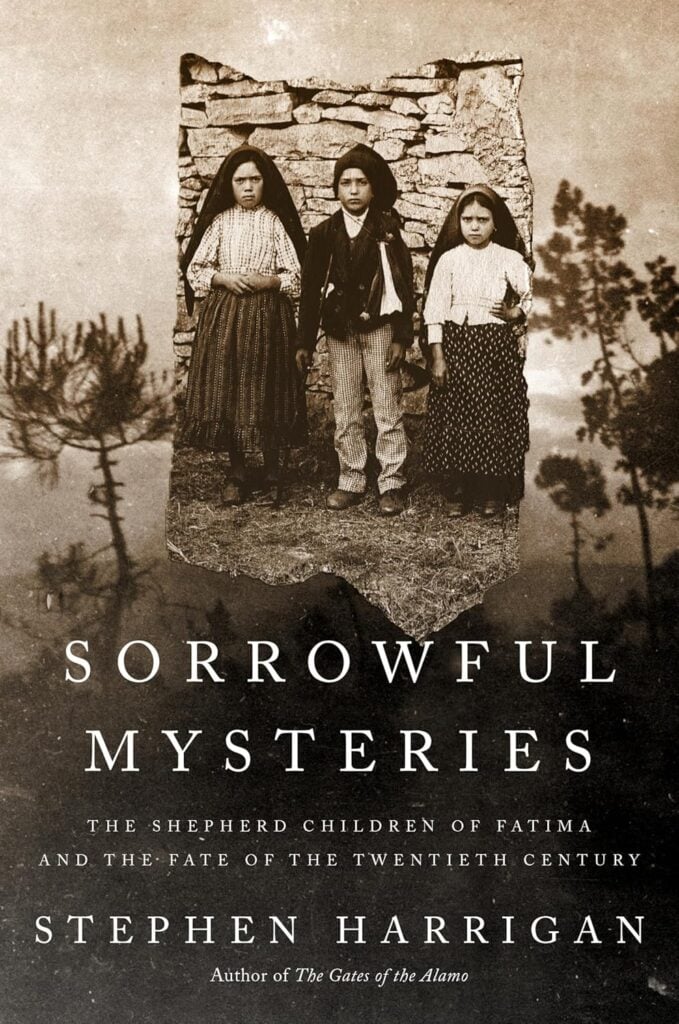
Change in Austin seems constant, yet Harrigan’s friends maintain their connection. Harrigan credits Lawrence Wright, his Pulitzer Prize-winning neighbor and the breakfast club founder, with inspiring his latest nonfiction book—an exploration of a peasant girl’s visions of the Virgin Mary on a remote mountaintop in Portugal: Sorrowful Mysteries, The Shepherd Children of Fatima and the Fate of the Twentieth Century (Alfred A. Knopf, April 2025).

Harrigan claims he originally intended to write only an article about this devout peasant girl, Lucia, and his long fascination with the secret prophecy she left behind after hearing her story from a nun at Catholic school in Abilene.

But Wright swears that his buddy needed only a nudge. “The mystery of the Fatima prophecies suffused his growing-up years, as it did for most Catholics in that era,” Wright told the Texas Observer. “It seemed a perfect match between a writer and a subject that has been beckoning in the shadows his entire life.”

Harrigan, who was born in Oklahoma City and raised in Abilene and Corpus Christi, is a prolific author of more than a dozen books—novels, nonfiction, essays—and about 40 screenplays, but he’d never before considered writing a memoir. “This is kind of a sideways memoir,” he said. “I haven’t lived a very memoirish life.”

Harrigan, one of the original staff writers of Texas Monthly magazine, claims to be only an accidental journalist. He became a “yard man” and began mowing lawns and writing articles to pay the bills after graduating from the University of Texas in 1970. Ten years later, novels “arose out of magazine pieces”: A story on the ruthless capture of wild dolphins for an aquarium formed his debut Aransas in 1980. The chronicle of an eccentric Italian sculptor who lived in San Antonio and left his legacy carved in statues across the Lone Star State inspired Remember Ben Clayton, his 2012 saga of family pride, loss, and estrangement.

Yet, when he first traveled to the Central Portuguese mountaintop where this peasant girl claimed to have seen her visions—his reporter’s journey became increasingly personal. Harrigan’s connection with Lucia and her two younger cousins, all of whom claimed to have communicated with the Virgin Mary in 1917, intersected with his earliest memories. He and these long-dead Catholic kids had all knelt to recite the same Latin words: Ave Maria, gratia plena… What’s more, he too had fervently believed in the power of a benevolent virgin, as he writes, “usually depicted wearing a blue cloak, her arms open at her sides and her hands open.” 

Like them, he grew up believing Mary never perished, but ascended to heaven. He felt moved when he visited the places those children lived and died—and when he strolled through the enormous shrine that stands in the place of a scraggly Holm Oak where they claimed to have seen a holy glowing orb.

The result of that exploration and reportage is a braided narrative of Harrigan’s life, which sees him forsake Catholicism as a UT student in Austin’s slacker years, and of the life of Lucia, the oldest of the three child visionaries and the only one to survive to adulthood. It’s also an exploration of the liturgy, history, and legends surrounding the Virgin Mary, Jesus’ mother, whose place of death remains a mystery for theologians and historians alike. He also explores why so many pilgrims still visit places where she’s supposedly reappeared, including Fatima, Portugal; Lourdes, France; and Mexico City.

The intriguing tale of Lucia’s secret letter, a prophecy from the Virgin that was given to the pope and was left unopened for decades, is the mystery that captivated Harrigan as a child. But, as an agnostic adult, he dug deeper into the life of the girl, depicted in his book’s cover photo wearing a head covering, a long dark skirt, and a piercing, haunted look. He writes naturally about this visionary, whose accounts of the virgin brought a horde of pilgrims—and financial ruin—to her parents’ grazing land. He writes compellingly of the interrogations and cruelty she faced, which drove her to seek the life of a cloistered nun. 

In his work, Harrigan often “seeks emotional linkages.” Bringing a long-dead Portuguese nun to life may seem like a challenge for the happily married father of three who left the church long ago. Yet he has no trouble relating to an impassioned female character, according to another long-time friend, the Austin novelist Elizabeth Crook, who recently collaborated with Harrigan on a screenplay based on The Which Way Tree, her tale of a girl’s quest to hunt down the mountain lion who killed her mother. “Steve just has an innate and uniquely perceptive understanding of human nature. He can put himself into the mind of his characters and intuit their motives with an unusual ease.”

In an outbuilding-turned-studio in Austin’s Tarrytown, Harrigan creates in a space surrounded by walls of books and a lifetime of memorabilia. On one shelf are three plastic dolls of the Portuguese prophet children. On another sits a glass votive featuring the president depicted in his 2017 novel, A Friend of Mr. Lincoln, which imagines a younger Abe as a droll, literary, and only locally famous lawyer.

Just above his office chair is a bumper sticker with the slogan: “Puedes exhumarlo?,” which one of his daughters printed up as a joke after Harrigan mangled the translation of his 1970s catchphrase: “Can you dig it?” He knows that really means: “Can you exhume it?” But, somehow, the slogan still fits a writer who digs up facts in “obscure corners” and writes amid piles of the evidence he’s accumulated. 

Perched atop one of the highest bookshelves stand vintage Western figurines, men on horseback representing historical and fictional characters, whom he calls “his oldest friends.” He was 5 when he got the first from his mother’s new husband. (His birth father, a WWII veteran and test pilot, died in a crash when his mother was pregnant with him.) 

Harrigan can easily reconnect with memories of his fatherless early boyhood, as he did in his 2022 novel The Leopard Is Loose—plunging into a world where shadows morph into monsters and real and imaginary threats mingle. He knows that visions and spirituality that sprout in a child never truly disappear in an adult. That connectedness lends Sorrowful Mysteries, an unexpectedly universal appeal: Readers simultaneously experience the wonder of childhood and the high price of unfettered belief. 

In search of this story—his own and Lucia’s—Harrigan visited the austere cell where the Portuguese peasant girl lived out her adult life in isolation as well as the hospital and mountainside hut where each of her younger cousins perished in the 1917 influenza pandemic. 

When he arrived one day on the Sierra de Aire, near the spot where all three claimed to have seen the Virgin, Harrigan experienced his own vision: a shaggy black dog creeping along a trail that connects the glitzy modern Fatima shrine to the humble village where Lucia was born. As he approached, Harrigan’s vision shifted, and he realized the doglike figure was a pilgrim—a woman on her knees crawling in the dirt. She, like him, was searching for the right path.

The post A Texas Writer Tackles a Subject ‘Beckoning in the Shadows His Entire Life’ appeared first on The Texas Observer.

How ancient reptile footprints are rewriting the history of when animals evolved to live on land

posted in: All news | 0

By CHRISTINA LARSON, AP Science Writer

WASHINGTON (AP) — Scientists in Australia have identified the oldest known fossil footprints of a reptile-like animal, dated to around 350 million years ago.

The discovery suggests that after the first animals emerged from the ocean around 400 million years ago, they evolved the ability to live exclusively on land much faster than previously assumed.

“We had thought the transition from fin to limb took much longer,” said California State University paleontologist Stuart Sumida, who was not involved in the new research.

Previously the earliest known reptile footprints, found in Canada, were dated to 318 million years ago.

The ancient footprints from Australia were found on a slab of sandstone recovered near Melbourne and show reptile-like feet with long toes and hooked claws.

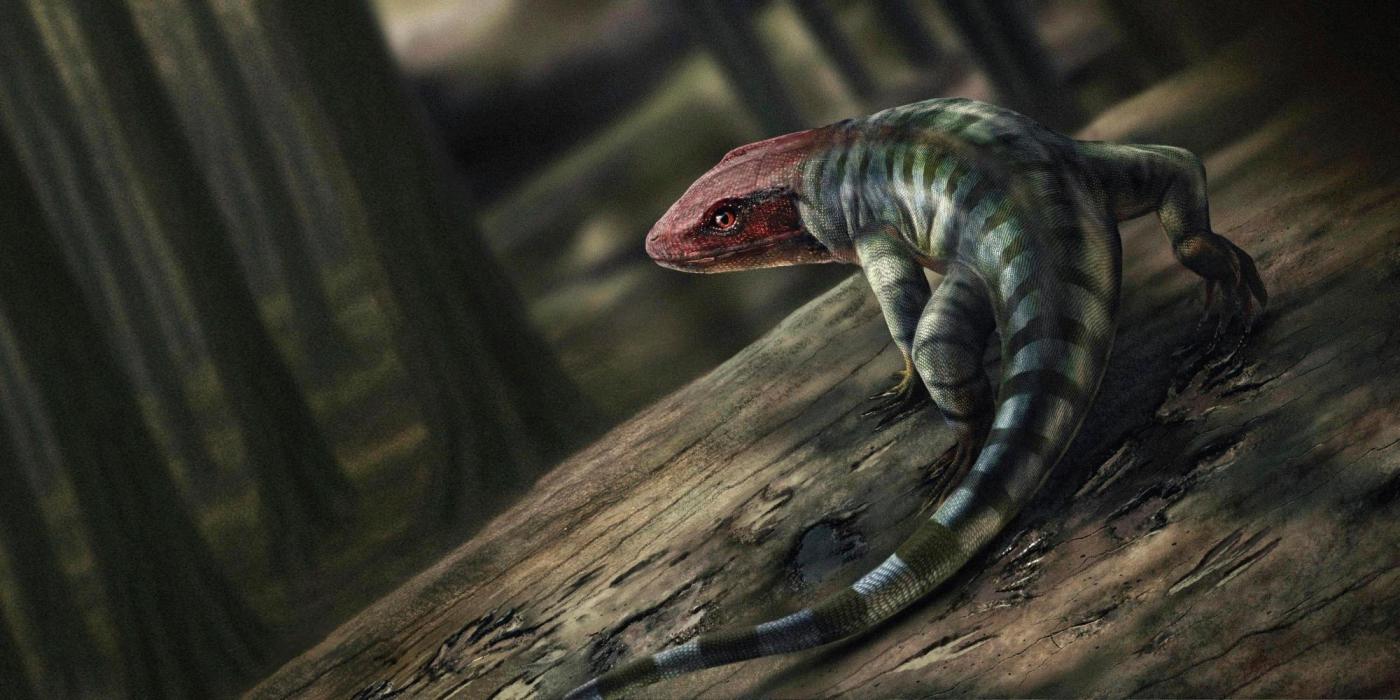
Scientists estimate the animal was about 2 1/2 feet (80 centimeters) long and may have resembled a modern monitor lizard. The findings were published Wednesday in Nature.

This image provided by Prof. Per Erik Ahlberg shows a slab of sandstone found near Melbourne, Australia preserving fossil footprints from a reptile-like animal that lived around 350 million years ago. The footprints are highlighted in yellow (front feet) and blue (back feet) and show the movements of three similar animals, researchers say. (Grzegorz Niedzwiedzki/Prof. Per Erik Ahlberg via AP)

The hooked claws are a crucial identification clue, said study co-author and paleontologist Per Ahlberg at Uppsala University in Sweden.

“It’s a walking animal,” he said.

Only animals that evolved to live solely on land ever developed claws. The earliest vertebrates — fish and amphibians – never developed hard nails and remained dependent on watery environments to lay eggs and reproduce.

Related Articles


EPA announces rollback for some Biden-era limits on ‘forever chemicals’ in drinking water


Bright auroras on Jupiter are captured by Webb Space Telescope


The researchers charged with defending the planet against asteroids


Chimpanzees drum with regular rhythm when they beat on tree trunks, a form of ancient communication


US infant mortality dropped in 2024. Experts partly credit RSV shots

But the branch of the evolutionary tree that led to modern reptiles, birds and mammals – known as amniotes — developed feet with nails or claws fit for walking on hard ground.

“This is the earliest evidence we’ve ever seen of an animal with claws,” said Sumida.

At the time the ancient reptile lived, the region was hot and steamy and vast forests began to cover the planet. Australia was part of the supercontinent Gondwana.

The fossil footprints record a series of events in one day, Ahlberg said. One reptile scampered across the ground before a light rain fell. Some raindrop dimples partially obscured its trackways. Then two more reptiles ran by in the opposite direction before the ground hardened and was covered in sediment.

Fossil “trackways are beautiful because they tell you how something lived, not just what something looked like,” said co-author John Long, a paleontologist at Flinders University in Australia.

The Associated Press Health and Science Department receives support from the Howard Hughes Medical Institute’s Science and Educational Media Group and the Robert Wood Johnson Foundation. The AP is solely responsible for all content.

Trump marvels at wealth of his Arab hosts while he eyes White House and Air Force One upgrades

posted in: All news | 0

By CHRIS MEGERIAN and ZEKE MILLER

DOHA, Qatar (AP) — Donald Trump is the most powerful and famous person on the planet, at the helm of the biggest economy and the strongest military.

But on his trip to the Middle East this week, the American president is sounding more than a little envious of his Arab hosts.

He admired the marble in the Qatari palace as “perfecto” and “very hard to buy.” He praised the “gleaming marvels” of the skyline in Saudi Arabia. And he groused about the “much smaller” and “much less impressive” plane that is Air Force One.

On his flight to the region, Trump said the Gulf states all have “these brand-new Boeing 747s,” while he was stuck using a version nearly 4 decades old.

The president is so impatient for a replacement plane that he is considering accepting a donated model from Qatar, despite concerns that it could be less secure, costly to retrofit and a violation of the U.S. Constitution’s prohibition on foreign gifts. He presented no national security imperative for a swift upgrade rather than waiting for Boeing to finish new Air Force One jets that have been in the works for years.

It sounded like a case of keeping up with the Joneses, only in this case the Joneses are oil-rich leaders of Middle Eastern autocracies. For a former real estate developer with flamboyant tastes, Trump’s trip has been a tantalizing peek into the lives of his more opulent counterparts.

“The job you’ve done is second to none,” Trump told Qatari Emir Tamim bin Hamad Al Thani, gazing up at his surroundings in the palace known as the Amiri Diwan. “You look at this, it’s so beautiful. As a construction person, I’m seeing perfect marble. This is what they call perfecto.”

There have been other lavish touches on the trip, which will wind up with a stop in the United Arab Emirates. Air Force One received fighter jet escorts, honor guards stood by with golden swords in Riyadh, Saudi Arabia, and the presidential limousine was welcomed by riders on camelback in Doha, Qatar.

“We appreciate those camels,” Trump told Al Thani. “I haven’t seen camels like that in a long time. That was some greeting.”

The Republican president’s admiration reflects an aesthetic and political vision at odds with American tradition. After declaring independence from the British monarchy, the Founding Fathers wanted to eschew anything that suggested royalty. Even as the United States emerged as the global superpower, the country and its leaders emphasized a facade of humility.

But that’s never been Trump’s style. The billionaire’s New York City penthouse is embellished with gold and marble, and parts of his Mar-a-Lago club in Florida are modeled after France’s Palace of Versailles.

Related Articles


Democratic congressman pushes articles of impeachment against Trump, but colleagues criticize it


Funds from migrants sent back home help fuel some towns’ economies. A GOP plan targets that


EPA announces rollback for some Biden-era limits on so-called forever chemicals in drinking water


Trump’s Middle East visit comes as his family deepens its business, crypto ties in the region


Trump administration rescinds curbs on AI chip exports to foreign markets

After winning a second term last year, Trump is eager to bring the same approach to the presidency, and it’s likely that his visit to the Middle East will fuel his desire for renovations. The White House, despite is grandeur, can be quite cramped. Office space is limited and state dinners are sometimes held in a fancy tent to accommodate enough guests.

Trump said he wants to build “a beautiful, beautiful ballroom like I have at Mar-a-Lago, as beautiful as can be.” He promised to foot the $100 million bill.

“I think we’ve outgrown the tent stuff, right, don’t you think?” he said recently.

Trump has also talked about paving over the lawn in the Rose Garden, turning it into a patio with “gorgeous stone” that would be easier for holding events.

Some upgrades have already taken place, particularly in the Oval Office. There are gold accents to the fireplace, doorway arches, walls and other areas of the room. The walls have become increasingly packed with portraits of past presidents. A model of a new Air Force One — complete with a paint scheme that echoes his personal jet — sits on a table in the center of the room.

One prized addition is a copy of the Declaration of Independence, which is concealed behind a curtain to protect it from sunlight. He sometimes dramatically unveils the document for guests.

“You see the new and improved Oval Office as it becomes more and more beautiful,” the president told Canadian Prime Minister Mark Carney during a recent visit. He said it’s been renovated “with great love and 24 karat gold — that always helps too.”

Megerian reported from Washington.

Democrats are deeply pessimistic about the future of their party, an AP-NORC poll finds

posted in: All news | 0

By STEVE PEOPLES and LINLEY SANDERS

NEW YORK (AP) — Six months after Donald Trump’s presidential victory, Democrats remain deeply pessimistic about the future of their party, although neither the Democratic Party nor the Republican Party is viewed favorably by a majority of U.S. adults.

Related Articles


Democratic congressman pushes articles of impeachment against Trump, but colleagues criticize it


Funds from migrants sent back home help fuel some towns’ economies. A GOP plan targets that


EPA announces rollback for some Biden-era limits on so-called forever chemicals in drinking water


Trump’s Middle East visit comes as his family deepens its business, crypto ties in the region


Trump administration rescinds curbs on AI chip exports to foreign markets

A new poll conducted earlier this month by The Associated Press-NORC Center for Public Affairs Research found that only about one-third of Democrats are “very optimistic” or even “somewhat optimistic” about their party’s future. That’s down sharply from July 2024, when about 6 in 10 Democrats said they had a positive outlook.

“I’m not real high on Democrats right now,” said poll respondent Damien Williams, a 48-year-old Democrat from Cahokia Heights, Illinois. “To me, they’re not doing enough to push back against Trump.”

The poll comes at a critical moment for the Democratic Party, which is desperately seeking momentum after losing the White House and both chambers of Congress in last fall’s general election. In the survey, Democrats offer mixed reviews for some of their party’s best-known elected officials — including Senate Democratic leader Chuck Schumer and Rep. Alexandria Ocasio-Cortez, both of New York — while reporting significant concerns about how leaders are chosen in the U.S. political system.

Williams, a member of the Teamsters union, said he likely won’t feel good about his party again “until somebody steps up in terms of being a leader that can bring positive change — an Obama-like figure.”

Republicans, meanwhile, are slightly more optimistic about the future of the GOP than they were last year.

The poll finds that about half of Republicans, 55%, are very or somewhat optimistic about their party’s future, up from 47% last summer. Still, only about 3 in 10 Republicans are optimistic about the state of U.S. politics, up from about 1 in 10 last summer.

Patrick Reynolds, a 50-year-old Republican community activist and pastor from Fort Worth, Texas, says he has conflicting feelings about Trump’s leadership and the future of his party.

He worries that too many Republicans in Congress are falling in line behind the Republican president and his chief ally and adviser, Elon Musk, who has led Trump’s push to slash the size of the federal government. Reynolds also says he’s concerned that Trump’s aggressive moves to combat illegal immigration may be violating the Constitution.

“How can we be the party of the rule of law when we’re violating constitutional principles?” Reynolds said. “I think there could be a (political) backlash.”

Neither political party is especially popular right now.

Overall, about 4 in 10 U.S. adults have a favorable view of the Republican Party while about one-third have a positive view of the Democratic Party.

This relatively weak support extends to some of each party’s most prominent officials.

Roughly 4 in 10 Americans have a favorable view of Bernie Sanders, a Vermont independent who has twice run for the Democratic presidential nomination and has toured the nation in recent months rallying anti-Trump resistance. Among self-described Democrats, about three-quarters view Sanders favorably.

About half of Democrats have a favorable view of Ocasio-Cortez, who has joined Sanders on the “Fighting Oligarchy” tour. She is less popular among U.S. adults overall — about 3 in 10 have a favorable opinion of the 35-year-old representative, who is sometimes mentioned as a potential presidential candidate in 2028.

Rep. Alexandra Ocasio-Cortez, D-N.Y., holds hands with Sen. Bernie Sanders, I-Vt., during a “Fighting Oligarchy” event at the Ford Idaho Center in Nampa, Idaho, Monday, April 14, 2025. (AP Photo/Kyle Green)

Schumer, the top Senate Democrat, is less popular than Sanders or Ocasio-Cortez.

Just about one-third of Democrats have a somewhat or very favorable view of the 74-year-old senator, who took a hit from many liberals for acceding to a Republican-led funding bill that kept the government open. The share of Democrats who view Schumer positively has fallen since December 2024, when about half had a somewhat or very favorable view. Among all adults, his favorability stands at 21%.

“I just feel like the majority of the old Democratic Party needs to go,” said Democrat Monica Brown, a 61-year-old social worker from Knoxville, Tennessee. “They’re not in tune with the new generation. They’re not in tune with the new world. We’ve got such division within the party.”

On the GOP side, Secretary of State Marco Rubio, a former Florida senator, is more popular than several other high-profile Republicans.

About 6 in 10 Republicans view Rubio favorably, although that number falls to about one-third among all adults. About half of Republicans have a positive opinion of House Speaker Mike Johnson of Louisiana, while around one-quarter of U.S. adults feel the same. That’s roughly the same level of support for Defense Secretary Pete Hegseth, a former Fox News Channel host who earns favorable ratings from 44% of Republicans and about one-quarter of Americans overall.

Beyond their negative outlook on the future of their party, 55% of Democrats are also pessimistic about the way leaders are chosen in the U.S. The figure is up slightly from 46% last summer, when President Joe Biden was still in the White House.

Ethan Jackline, sits next to a flag planted by a friend as they attend a ‘Fighting Oligarchy’ rally with Sen. Bernie Sanders (I-VT) and Rep. Alexandria Ocasio-Cortez (D-NY) in Folsom, Calif., Tuesday, April 15, 2025. (Stephen Lam/San Francisco Chronicle via AP)

Linda Sleet, a 69-year-old retiree who lives in Venice, Florida, raised specific concerns about the way congressional districts are drawn and the Electoral College that is used to determine presidential contests instead of the popular vote.

“I don’t have confidence in the system,” Sleet said. “I think it served a purpose way back when. It does not now.”

Williams, the Teamster from Illinois, said he’s unhappy with just about everything to do with U.S. politics.

“I’m going to need to see some wins for America, for humanity, before I can be optimistic right now,” he said. “Every day is just a constant barrage of negative feelings and news politically. It’s all screwed up right now.”

Sanders reported from Washington.

The AP-NORC poll of 1,175 adults was conducted May 1-5, using a sample drawn from NORC’s probability-based AmeriSpeak Panel, which is designed to be representative of the U.S. population. The margin of sampling error for adults overall is plus or minus 4 percentage points.